Skip to content

Tag: Publishing

From Thomas Mann to Amazon — The Art of Literary Publishing in New York

The Millions has a long, but very interesting (and, at times, surprisingly blunt) essay by veteran Doubleday editor Gerald Howard on editing and literary publishing in New York:

At the simplest, most basic level, I’ve been reading for a living for 37 years. I arrived at New American Library with a literary and intellectual sensibility formed by the unruly rebellions of the ’60s and the spiritual deflations of the ’70s, with a taste for the novelists and thinkers who had either helped to cause or best reflected and interpreted those rebellions and deflations. I’ve read thousands of books and proposals since then, and I believe I am a better reader than I was at age 27 — I know more because I’ve read more and my judgments are (I sure hope) better informed and more mature. But at the primal level where reader meets text and experiences emotions ranging from boredom and impatience to I-love-this-and-have-to-have-to-publish-it excitement, I think I am still that young man in the hunt and on the make, always searching for the big wow. This process takes place in the private arena of the mind and is entirely unrelated to the corporate arrangements of my employer. It is, quite literally, where I live, where I feel I am most myself.

As for the editing of those books that wow me when happy circumstances dictate that I get to acquire them, that process too takes place in a private arena. When I encounter a sentence that is inelegant or ungrammatical or inefficient or ambiguous in meaning, or a scene in a novel that is implausible or overdone or superfluous, or a plot that drags or goes off course or beggars credulity, or a line of exposition that falls short of the necessary clarity, or feel that some subject is missing and requires coverage, I point those things out to the author and with a carefully calculated mixture of firmness and solicitude suggest ways they might be remedied. I do this usually at nights and on weekends, sometimes on my bus ride to and from work, very occasionally in my office on slow days with my door closed (yes, I have an office with a door that closes), with a complete absence of business calculation beyond the largest context — that a book that is bad or just not good enough is a book that will embarrass me and my employer and be poorly received and will not sell.

But as I read those submissions and edit those manuscripts, on another cognitive plane I am reality testing what I am reading. What other books — the fabled and often tiresome “comp titles” — are like this one, and how did those books sell? (We are always fighting the last war.) Is it too similar to something we published recently or are publishing in the near future, or to a book some other house has or shortly will publish? Are there visual images in the book that might be utilized on the cover? What writers of note can I bug for prepublication blurbs? Is there something about the author, some intriguing or unusual backstory, some charisma radiating off the page (and maybe the author photo? Don’t act so shocked) that suggests that he or she will be a publicity asset? What might a reasonable advance be, given the amounts that have been paid recently for similar books, or might reason for some reason be thrown out the window? (A friend and colleague of mine refers to this feeling as “Let’s get stupid.” More on this matter shortly.) What colleagues in the company, in the editorial department, in marketing, publicity, and sales, could I ask to read the book to drum up support for it? What is my “handle” going to be — the phrases or brief sentences that briskly encapsulate a book’s subject matter and commercial appeal? These and all sorts of other questions will be popping up in my brain, and inevitably there is some crosstalk and bleed-through between the two cognitive spheres. If you want total purity in these matters, go join an Irish monastery and work on illuminated manuscripts, not a New York publishing house. Or at the very least a quiet and scholarly and well-endowed university press.

Well worth reading from beginning to end, the essay is an excerpt from the forthcoming Literary Publishing in the Twenty-First Century edited by Travis Kurowski, Wayne Miller, and Kevin Prufer (to be published by Milkweed Editions in April 2016), which on this evidence of this alone will be essential reading for publishing folks1.


Comments closed

New Directions Staying Small

Maria Bustillos visits New Directions and talks to publisher and president Barbara Epler about the business for The New Yorker:

Today’s visitor to New Directions’ elegantly shabby offices, in Chelsea, may stand on the nineteenth-floor balcony beside Epler, who is in her fifties and has a big, throaty laugh, under a pair of carved stone lions silently roaring high above, downtown and the Hudson River spread out beneath, and be forgiven for thinking that he has somehow stepped into a lovely and improbable alternate universe.

Inside, there are small, quiet, old-fashioned offices, one per person. On the walls, there are treasures: the firm’s original colophon, the unmistakable work of Rockwell Kent; an original Alvin Lustig mechanical with tissue overlay for the jacket of “Nightwood”; notes written on the famous prescription pad of WILLIAM C. WILLIAMS, M. D.; a photograph of Laughlin, who died in 1997, in silhouette. Epler, who joined the company as an editorial assistant fresh out of college, in 1984, and went on to become editor-in-chief in 1996, publisher in 2008, and president in 2011, seemed to be giving not an office tour so much as a museum one, especially when she opened the door to a small room containing one copy of each of nearly all of the more than thirteen hundred books published here so far. Céline, Nabokov, Tranströmer and Bolaño, Williams and Neruda and Sartre and Brecht and so many others: Laughlin believed in keeping the good stuff in print (or reprint). Many are bound in Lustig’s iconic, modernist covers.

“Andy Warhol used to design for us before he was famous,” she said. “Isn’t that a scream?”

Comments closed

Jeff Shotts: Artful and Enduring Experiences

citizen

At Literary Hub,  Jeff Shotts discusses his work an editor at Minneapolis-based publisher Graywolf Press with Kerri Arsenault:

At Graywolf, we choose what we choose because these books deal with uncomfortable issues. Sometimes we need comfort, but what comforts us as readers, when so much of the rest of the world is hard at work to comfort us? I am made more uncomfortable by passivity, invisibility, and perfection. And readers want books like Citizen, which directly confronts race, or’On Immunity, which takes on vaccination and cultural fear, or D. A. Powell’s exquisite, lyrical trilogy collected in Repast, on illness and HIV, or Solmaz Sharif’s upcoming Look, which describes the casualties of war, one of which is our language.

All of these books we choose because of the issues they confront, yes, and also because of how they confront them. The language, style, and form of the books Graywolf publishes are meant to challenge you, provoke you, keep you reading, immerse you in experiences that you can’t shake off after you look up from their pages. Not all these experiences are loud or ugly, and many of them are also subtle, internal, joyous, and beautiful. But we hope all these experiences are artful and enduring…

…It’s a risk in this climate to publish the kinds of books we do—poetry and translations, essays and short stories, works of social justice and artful language. But we continue to recognize that many, many people are excited by these kinds of books: they want to read them, share them, hand-sell them, download them, review them, teach them, study them, engage with them, maybe throw them across the room. As an independent, nonprofit, mission-driven publisher, Graywolf and our titles exist in the same marketplace as countless, more commercial publishers and their titles, and these books have to compete for attention, review coverage, bookstore placement, online positioning, distribution, sales, awards, event listings, and on and on and on. It’s a risk in most every way, but given the extraordinary success many titles have had in these last few years, I think more and more people inside and outside the industry are giving Graywolf books an extra look and an additional boost.

Comments closed

Chris Jackson: Building a Literary Movement

Chris Jackson Credit Shaniqwa Jarvis for The New York Times

New York Times Vinson Cunningham profiles Chris Jackson, executive editor at Spiegel & Grau and editor of award-winning author Ta-Nehisi Coates:

Jackson’s role… is to perform nothing less than a kind of magic. He stands between the largely white culture-making machinery and artists writing from the margins of society, as well as between the work of those writers and the largely white critical apparatus that dictates their success, in both cases saying: This, believe it or not, is something you need to hear.

The book that perhaps best encapsulates that ethos is one of Jackson’s first, ‘‘Step Into a World: A Global Anthology of the New Black Literature,’’ published in 2000. The collection, which he and the ‘‘Real World’’ star turned hip-hop journalist Kevin Powell compiled, brought together a cohort of writers — Junot Díaz, Edwidge Danticat, Paul Beatty, Hilton Als, Claudia Rankine and others — who have today come to form a loosely generational, unabashedly multicultural alternate literary establishment. ‘‘Step Into a World’’ marked a turning point for Jackson, who had until then been publishing reference works that were the stock in trade of John Wiley & Sons, where he worked at the time.

‘‘I’ll never forget a reading we did for that book,’’ he told me. ‘‘It was at the Schomburg’’ — the Harlem library that is a repository of black literature and history — ‘‘and there were so many people there, not just publishing people, as we usually think of them, but people from the neighborhood, and they were picking up this book.’’ He paused here, after uttering the word book, and his abiding wonder at the power of the object was almost tangible. ‘‘This book, containing all these ideas that were so important to me. They were picking it up and leaving with it, and it was such a wonderful literalization of the transmission of ideas.’’

Comments closed

Where Pilgrims Arrive in Bewilderment

let us compare

In a long profile for the Globe and Mail, book review editor Mark Medley visits Nicky Drumbolis owner of the singular Letters Bookshop in Thunder Bay:

Walking through the store is an overwhelming experience. Everywhere I look I spot something I’ve never seen before and will probably never see again. I could have picked a single shelf of a single bookcase and spent my entire visit studying its contents. Not that Mr. Drumbolis would have let me do that. As we amble up and down the aisles, he is constantly narrating, constantly picking out items at random and telling their story – how he acquired it, or who published it, or whatever happened to its author – which often leads into another, entirely different story, and another book, and so on, until I can’t remember which book started the conversation in the first place.

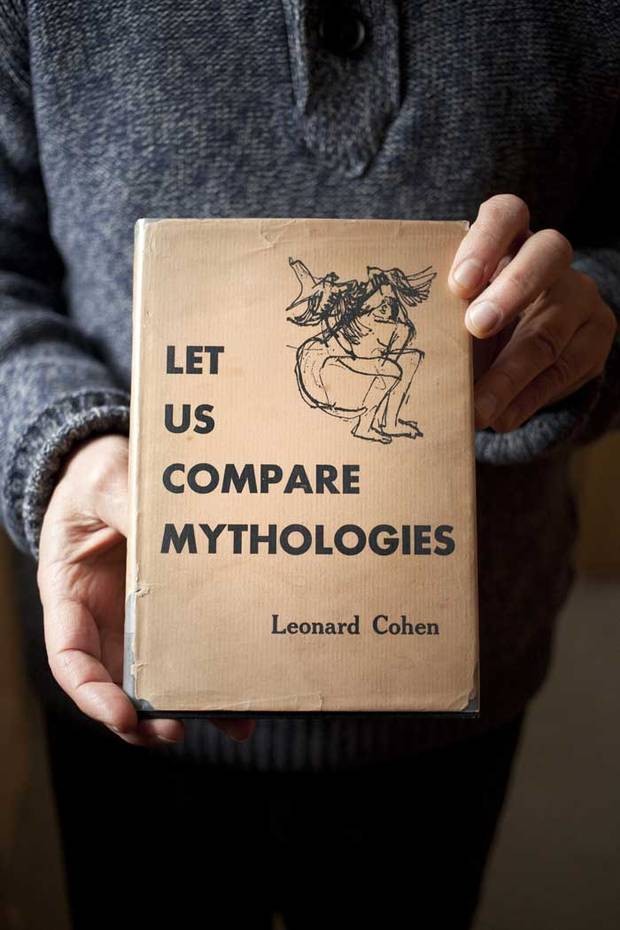
He throws around words like “shit kicker” or “heavyweight” to describe books he particularly loves, his voice growing progressively louder and more animated, the longer he talks. He pulls out a first edition of Leonard Cohen’s 1956 debut Let Us Compare Mythologies, part of what is probably the most extensive sampling in existence of Montreal’s legendary Contact Press, which helped to launch Margaret Atwood, Irving Layton, Raymond Souster and others. Now here’s his Franz Kafka collection, and over here Ezra Pound, and Charles Bukowski, and a few remaining titles from his collection of William S. Burroughs, most of which he sold years ago to David Cronenberg around the time the director was adapting the Burroughs novel, Naked Lunch.

“Henry James,” he says, tapping a shelf filled with first editions of the American master. “The guy I wanted to read cover to cover before I died. I don’t think I’ll get to it now.”

Comments closed

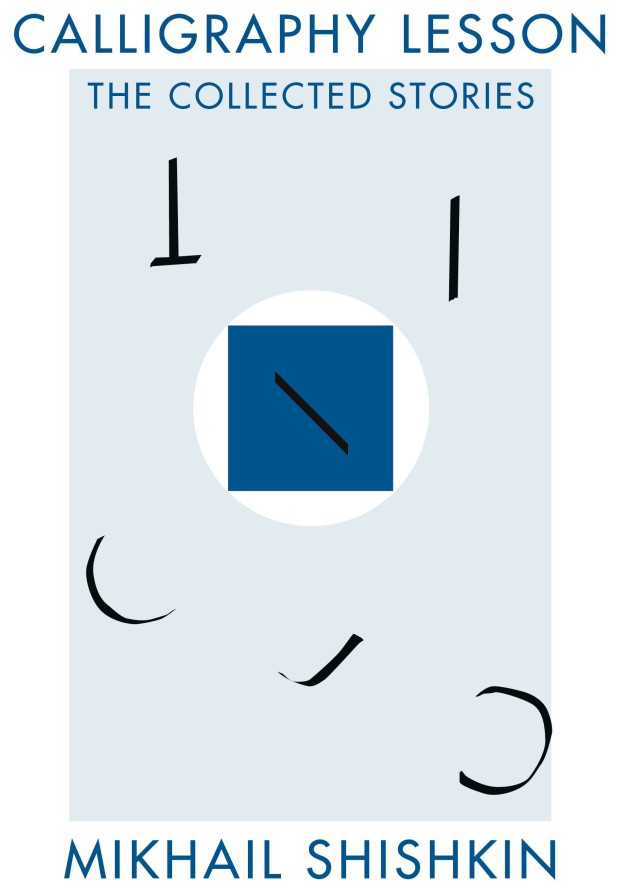
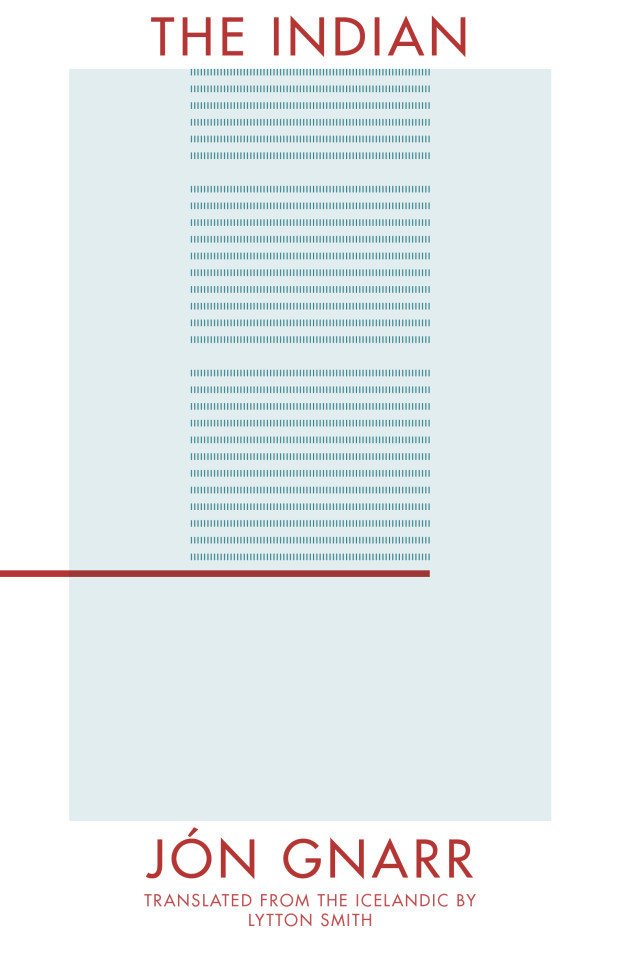
Deep Vellum Book Cover Design by Anna Zylicz

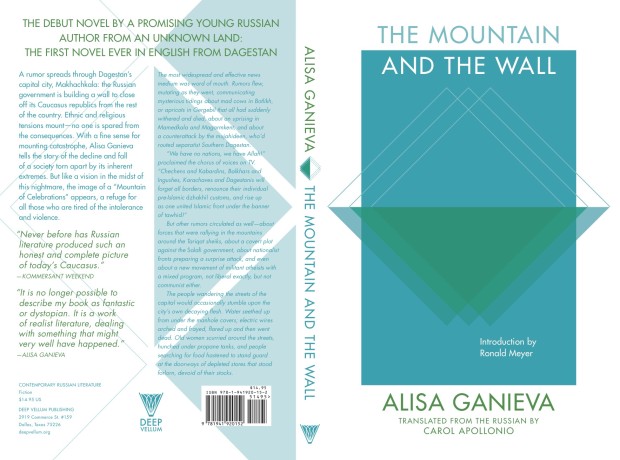
Mountain and the Wall Full design by Anna Zylicz

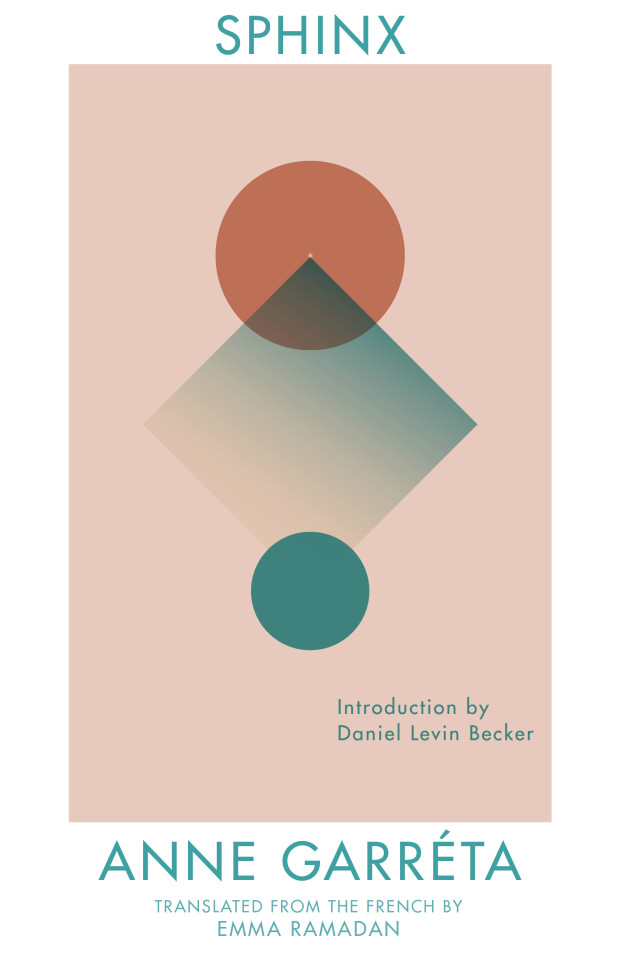
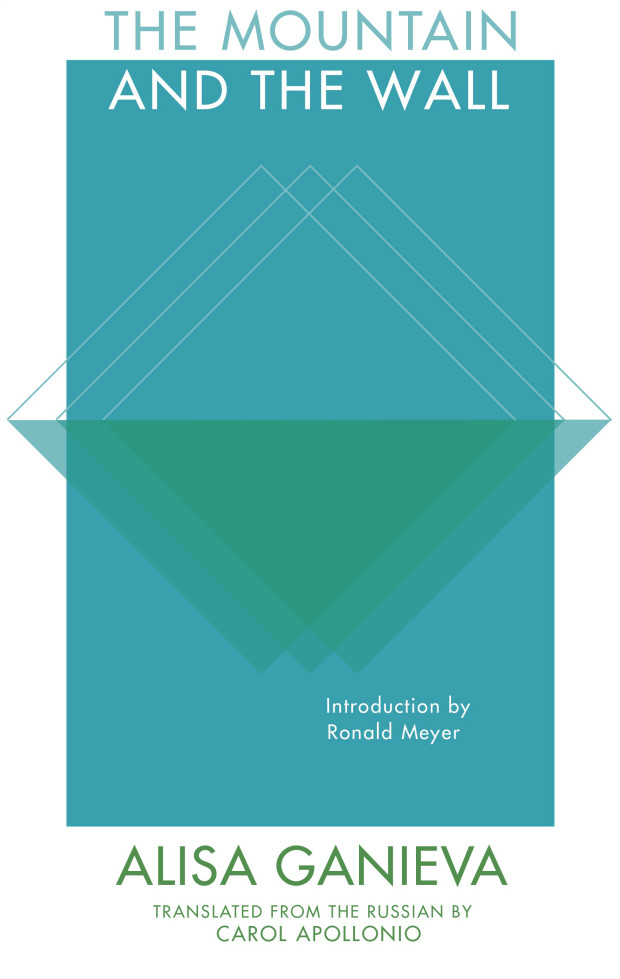
At the Toronto launch of John Freeman’s new anthology last night — encouragingly called ’10 Reasons to Not Shoot Yourself in the Face Over the State of Literature’ — Literary Hub‘s Jonny Diamond mentioned design as a reason to be optimistic about current state of publishing. In particular, Jonny called out the book covers of Deep Vellum, a Dallas-based literary non-profit that publishes literature in translation.1 The covers, designed by Anna Zylicz, are strange, minimal, and instantly recognizable. There’s something of a hard-edged Peter Saville feel to them. I especially like the cover for Sphinx by Anne Garréta. Anna Zylicz is clearly a designer to watch.

sphinx design by Anna Zylicz

Mountain and the Wall design by Anna Zylicz

Calligraphy Lesson by Anna Zylicz

Indian design by Anna Zylicz

1 Comment

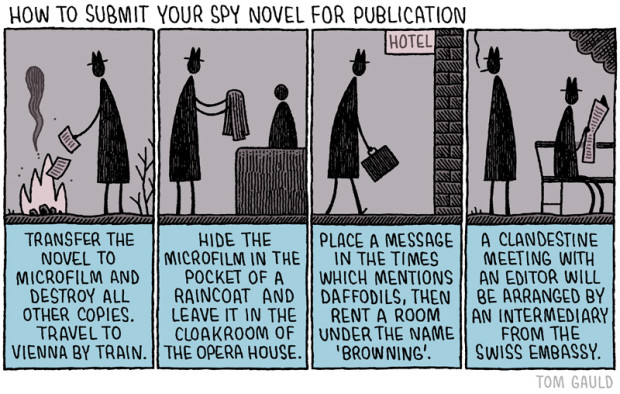
How to Submit Your Spy Novel for Publication

spy novel tom gauld

Tom Gauld.

Comments closed

Graywolf Press: Saying Yes When Others Say No

Writing at NY Magazine’s Vulture, Boris Kachka, whose book Hothouse on Farrar, Straus & Giroux was published in paperback last year, profiles nonprofit literary publisher Graywolf Press:

Publishing just over 30 books a year, Graywolf has had authors win four NBCC awards, a National Book Award, two Pulitzers, and a Nobel Prize — all in the last six years. This year, it will exceed $2 million in sales for the first time. No other independent press, never mind a 41-year-old nonprofit, has come so far so fast. It didn’t happen by accident.

“I think of success as being able to say yes to something that doesn’t necessarily look like a commercial winner,” says Fiona McCrae, Graywolf’s publisher since 1994, over yogurt and decaf on one of her monthly visits to New York. “Knowing something is good and having to say no, that seems to me the bigger failure.” An affably owlish Brit, McCrae started out in London’s legendary literary Faber & Faber before transferring to its small American spinoff in Boston. Three years later, she heard that Graywolf’s founder was resigning.

Scott Walker began hand-sewing poetry chapbooks in Port Townsend, Washington, in 1974. While picking up poets like Tess Gallagher and Jane Kenyon, Walker turned Graywolf Press into a nonprofit and relocated to the Twin Cities, home to a thriving philanthropic base (which also supports nonprofit presses Milkweed and Coffee House). But in the ’90s, a publishing slump hit Graywolf particularly hard; Walker resigned and his board eventually hired McCrae. At the time, she had zero experience in nonprofits — possibly to Graywolf’s benefit, because she chafed at the complacency to which nonprofits are prone. “There’s got to be a way in which you absolutely value Graywolf,” she says, “but like, come on, everybody! Other small presses are not the measure. Do you say, ‘For our size, we get more attention, so that’s it,’ or do you say, ‘Where can we go?’

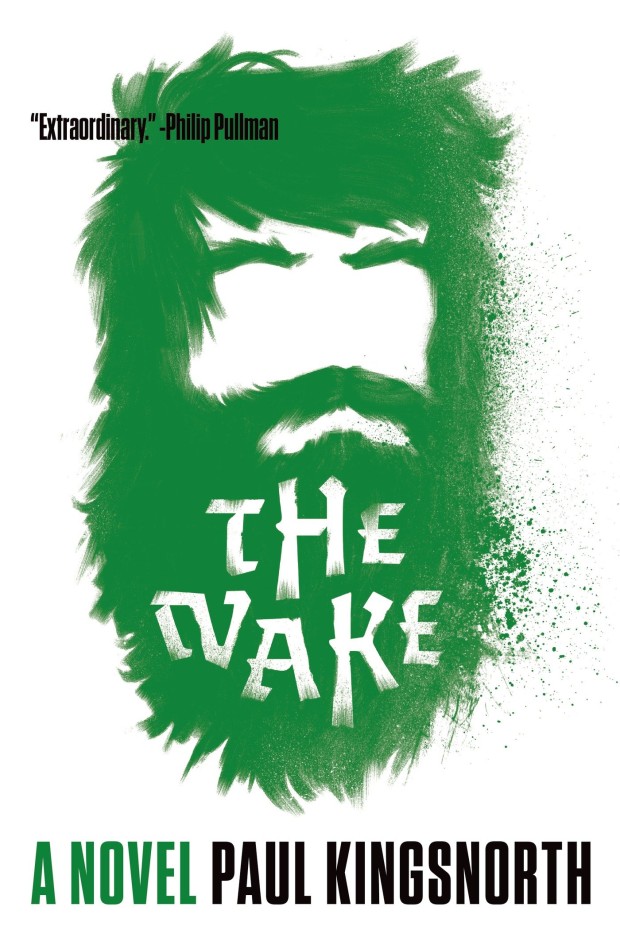
And speaking of Graywolf, I am looking forward to picking up a copy  The Wake by Paul Kingsnorth, which they are publishing in North America this month (can anyone tell me who designed the cover?)

the wake


2 Comments

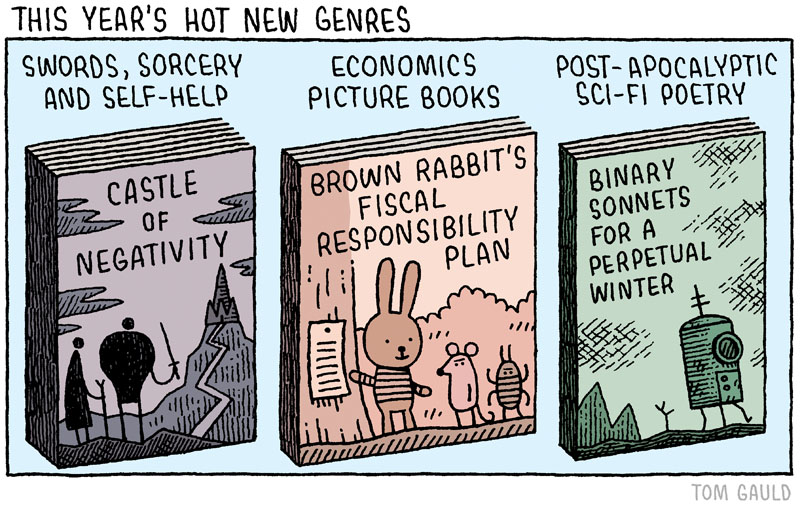
This Year’s Hot New Genres

hot new genres tom gauld

Tom Gauld.

Comments closed

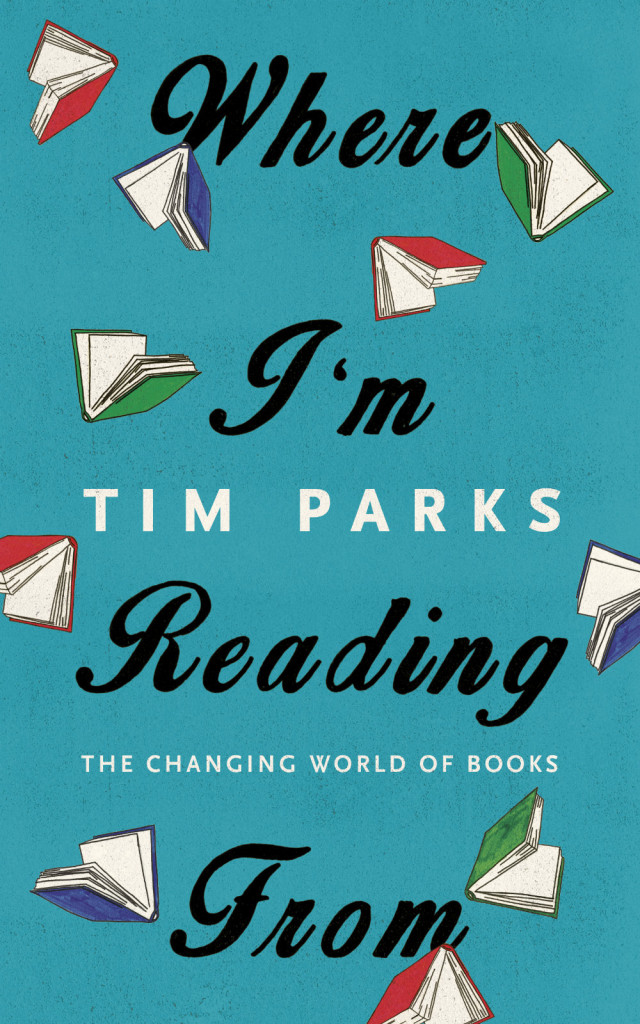
Tim Parks on Where I’m Reading From

Where I'm Reading From (1)

At BOMB Magazine, writer Tim Park discusses his new book Where I’m Reading From, a collection of his essays from the NYRB Blog, with Scott Esposito (co-author of The End of Oulipo):

In a way, this book is an autobiography of someone brought up with a very particular relation to books, in a religious family, in an English literary tradition, who on becoming an adult, for private personal reasons, set himself literary goals that were gradually revealed as spurious. Also, it’s about a person from the literary center—English, London— who has spent more than thirty years in another country, Italy, that is out of the literary mainstream. And a writer who also, by chance, became a translator and went on to teach translation. My life has been a long process of awakening to the reality, the changing reality, of the contemporary book world, which is a million miles from the naïve vision I had when I started writing books at twenty-two. Since it is in the publishers’ interests, and indeed the University’s, to sustain a false picture of what the book world is like and what the contemporary experience of books amounts to, my articles were a response to this, and an attempt to get my own head straight about what I’m really doing and the environment I move in. One is seeking at last to be unblinkered about it all.

And, if you missed it, Park reviewed What We See When Read by designer Peter Mendelsund on the NYRB Blog earlier this month:

One of the pleasures of his book is his honesty and perplexity at the discovery that every account he offers of the process of visualization very quickly falls apart under pressure. We do not really “see” characters such as Anna Karenina or Captain Ahab, he concludes, or indeed the places described in novels, and insofar as we do perhaps see or glimpse them, what we are seeing is something we have imagined, not what the author saw. Even when there are illustrations, as in many nineteenth-century novels, they only impose their view of the characters very briefly. A couple of pages later they have become as fluid and vague as so much of visual memory. At one point Mendelsund posits the idea that perhaps we read in order not to be oppressed by the visual, in order not to see.

(Pictured above is the cover of the UK edition, published by Harvill Secker in December last year, of Where I’m Reading From designed by James Paul Jones. The US edition, which has a more utilitarian cover, was just published by New York Review of Books)

Comments closed

25 Years of Drawn and Quarterly

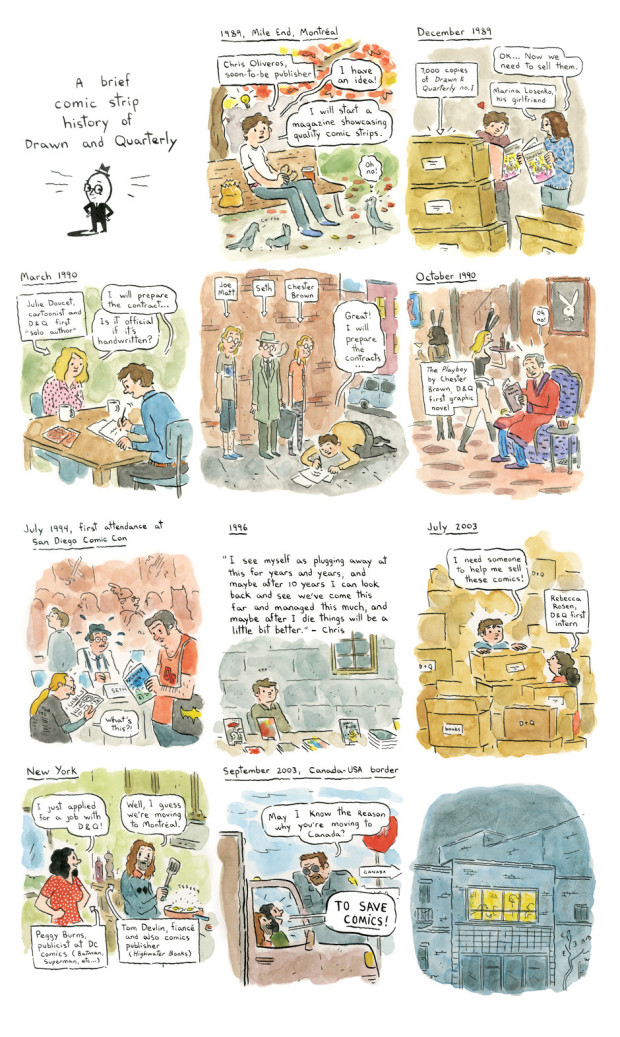
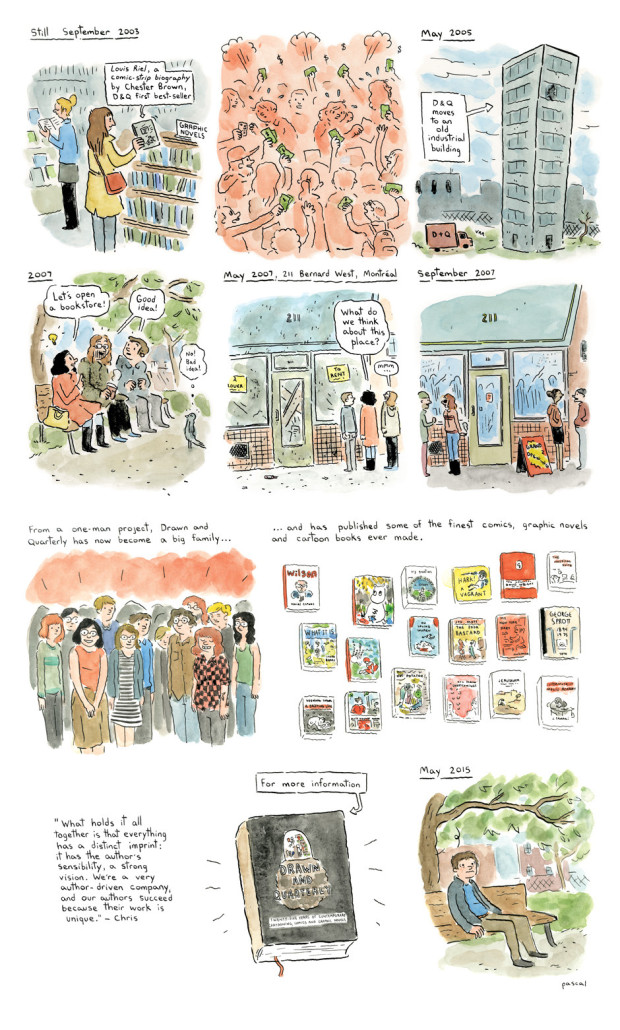
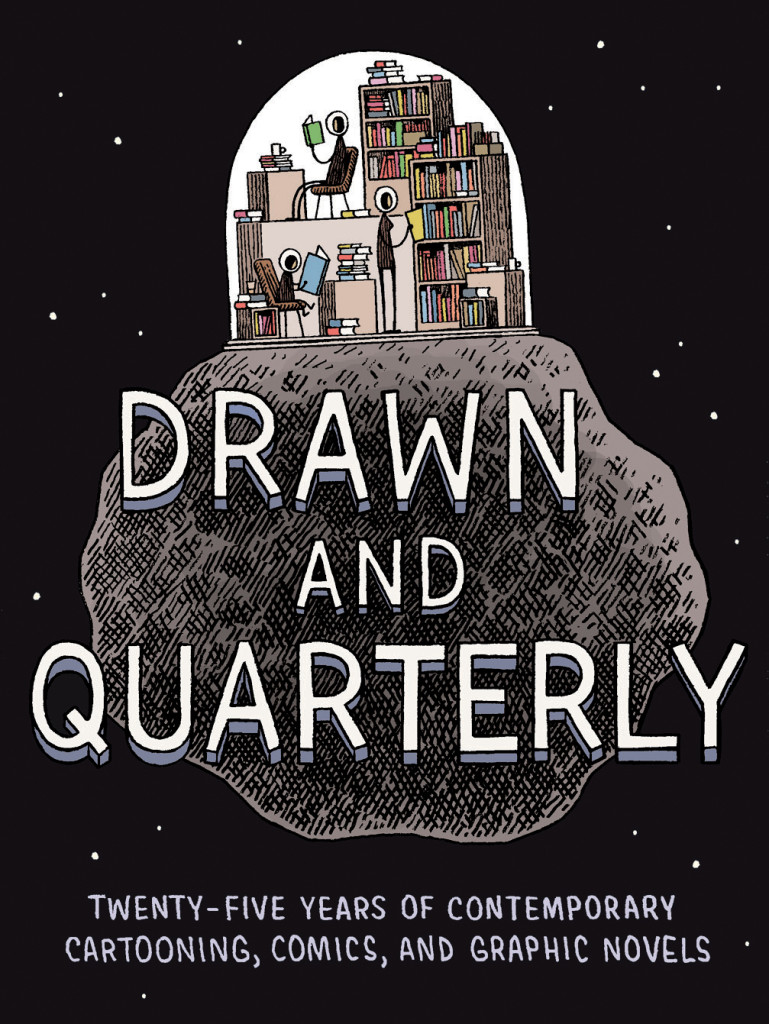
This past weekend at the Toronto Comic Arts Festival, Montreal publisher Drawn and Quarterly celebrated their 25th anniversary. D+Q cartoonist Pascal Girard (Petty Theft, Reunion, Bigfoot) drew a history of the publisher for the National Post:
tcaf_comichistory1

tcaf_comichistory2

While in a lengthy profile of the publisher by Mark Medley, the Globe and Mail revealed that founder Chris Oliveros is handing the company over to long-time collaborators Tom Devlin and Peggy Burns:

If Drawn and Quarterly is “like a big family,” as Chester Brown described the company to me earlier this week, then, in a sense, the family is losing its father.

A little more than a year ago, Oliveros pulled aside Burns and Devlin, his longest-serving co-workers, and told them he was thinking of stepping down, and that he wanted them to take over the company.

“It was a complete surprise,” says Devlin. “We kind of assumed he’d just do it forever.”

Burns says she burst into tears upon hearing the news.

“I’ve personally taken it as far as I can take it,” says Oliveros. “It would have been fine if I continued. It’s not like they were telling me to go or anything. I could have been around for the 30th anniversary, for the 35th, and the 40th, if I’m still alive, but I just feel, you know what, I don’t think I can accomplish – me, personally – I don’t think I can accomplish more.”

A new book celebrating the publisher, Drawn and Quarterly: Twenty-Five Years of Contemporary Cartooning, Comics, and Graphic Novelswill be published later this month.

DQ25_tomgauld

Comments closed

Too Many Books

At the NYRB Blog, Tim Parks wonders if there are just too many books:

Is there a relationship between the quantity of books available to us, the ease with which they can be written and published, and our reading experience?

At present, for example, it’s hard not to feel that we are in an era of massive overproduction. Just when we were already overwhelmed with paper books, often setting them aside after only a few pages in anxious search of something more satisfying, along came the Internet and the e-book so that, wonderfully, we now have access to hundreds of thousands of contemporary novels and poems from this very space into which I am writing.

Inevitably, this tends to diminish the seriousness with which I approach any particular book. Certainly the notion that these works could ever be arranged in any satisfactory order, or that any credible canon will ever emerge, is gone forever.

1 Comment