Skip to content

Tag: Publishing

There’s no one saying, “You can’t do this in a book for children.”

The New York Times profiles Julie Strauss-Gabel, the publisher of Dutton Children’s Books:

She became publisher of Dutton in 2011, and right away, it was clear this was going to be a different sort of imprint. She whittled down the list from about 50 titles a year for children of all ages, to about 10 books, with a focus on high-quality young adult fiction.

“There was nobody doing just what I do now 20 years ago,” she said. “It would have been unheard-of for a children’s publisher not to do picture books”…

…For such a small list — this year, Dutton will publish a mere eight titles — Ms. Strauss-Gabel’s books are strikingly diverse, covering science fiction and dystopian worlds, psychological suspense and works of social realism. She favors realistic, contemporary fiction, though lately she has been acquiring more memoirs and nonfiction.

“We’re in an era where the definition of a young adult book is completely up for grabs, and people are willing to reinvent it,” she said. “There’s no one saying, ‘You can’t do this in a book for children.’ ”

Comments closed

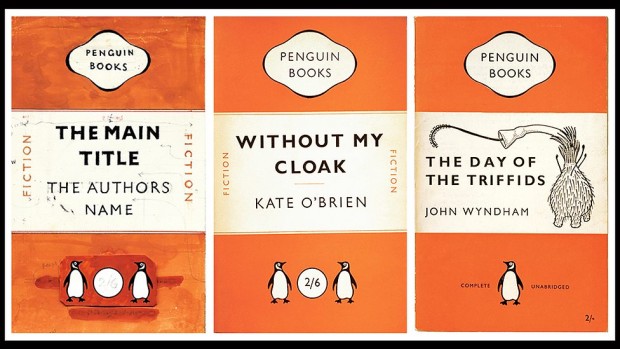
Affordable, Unabridged and Pocket-sized: 80 Years of Penguin Books

penguin

At BBC Arts, Brian Morton writes about 80 years of Penguin paperbacks:

The ubiquity of Penguin books in modern British publishing conceals a paradox best expressed by founder Allen Lane’s colleague and biographer Jack Morpurgo, who said that even in Allen Lane’s lifetime, Penguin became “the least typical member of the genus it was said to have created”.

There had been paperbacks before Penguin – all French books were paperback for instance and Woolworth’s, soon to be a key outlet for the new imprint, sold their own cheap editions – but few ranged so eclectically and wide.

And, in a second article, he looks at the legacy of their covers:

No other house had quite Penguin’s confidence in design. Pan Books, which began publication a decade after, in the mid 40s, were defined by a Mervyn Peake colophon of the god playing his pipes, a hint perhaps that here was a house that wasn’t going to trouble you with books on microeconomics or English churches… but with something more sensuous and possibly sensual…

…At the opposite extreme, but no less successful in their way, were the Fontana Modern Masters which began publication under Frank Kermode’s editorship in the 1970s, combining seriousness, a quick-crib approach to major thinkers and a stunning simple visual device, which was that each group of books featured a tessellating cut-up of an abstract painting by Oliver Bevan.

Buy them all, lay them out on your table and you had a bit of modern art. Painterly abstraction and san-serif typeface seemed to go together and seemed to fit as well as Bevan’s angles…

…But it was Penguin which continued to perfect the idea of cheap books as items that might be collected and displayed.

Comments closed

The War of Words

Keith Gessen, writer and author of All the Sad Young Literary Men, has a long article in the December issue of Vanity Fair on the ongoing hostilities between Amazon and Hachette. Essentially it’s a timely primer on how the retailer’s relationship with publishers sank to its current low, but it is worth reading for literary agent Andrew Wylie’s thoughts on the matter alone:

The issues at the heart of the conflict are both margin and price, according to Wylie. Publishers have been slow to recognize the danger of percentage creep, he told me. “There was a European publisher in here recently who proudly sat on that sofa and said, ‘I’ve worked everything out with Amazon. I’ve given them 45 percent.’ I said, ‘Really?’ He said, ‘But they wanted 50 percent.’ ” The European publisher thought he had won. Wylie stared incredulously at the memory of this encounter. “He’s a moron!”

Losing the fight over margins would be an immediate blow to the publishers’ profits, but losing control over pricing could be fatal. “If Amazon succeeds,” said Wylie, “they will lower the retail price—$9.99, $6.99, $3.99, $1.99. And instead of making $4 on your hardcover, you’ll be making 10 cents a copy on all editions. And, Keith, you will not be able to afford to write a book.… No one, unless they have inherited $50 million, will be able to afford to write a serious work of history, of poetry, of biography, a novel—anything. The stakes are Western culture.”

Western culture I could take or leave, but the part about me sent a chill down my spine. This is not what you want to hear from your literary agent. Surely we’ll think of something, I said to Wylie, if Amazon does win?

“You think?”

Wylie was not in the mood for a pep talk.

If you don’t have the strength to wade through the whole thing (and who can blame you?), Gessen discussed the piece with Leonard Lopate on WNYC today:

 WNYC Leonard Lopate: Why the Amazon-Hachette Fight Matters and What it Means for Publishing mp3

But for more Wylisms, the man himself was in Toronto recently and Mike Doherty interviewed him for the National Post:

Wylie readily admits, in his Massachusetts drawl, that he was once a big supporter of [Amazon], going so far as to call up CEO and founder Jeff Bezos and offer to help him expand into Europe. He praised the idea that, unlike in a bookstore, backlist and literary titles could be on equal footing with bestsellers — the industry dependence on which he calls a “coked-up, crazy, wild weekend-in-Vegas approach to publishing.” Amazon’s dedication to the long tail, he thought, was key, but then with the introduction of the Kindle, he says, “the dark side of their intention began to be visible.”

Wylie was in town to deliver the keynote address at the International Festival of Authors.

Comments closed

Gerhard Steidl Interview — The Talks

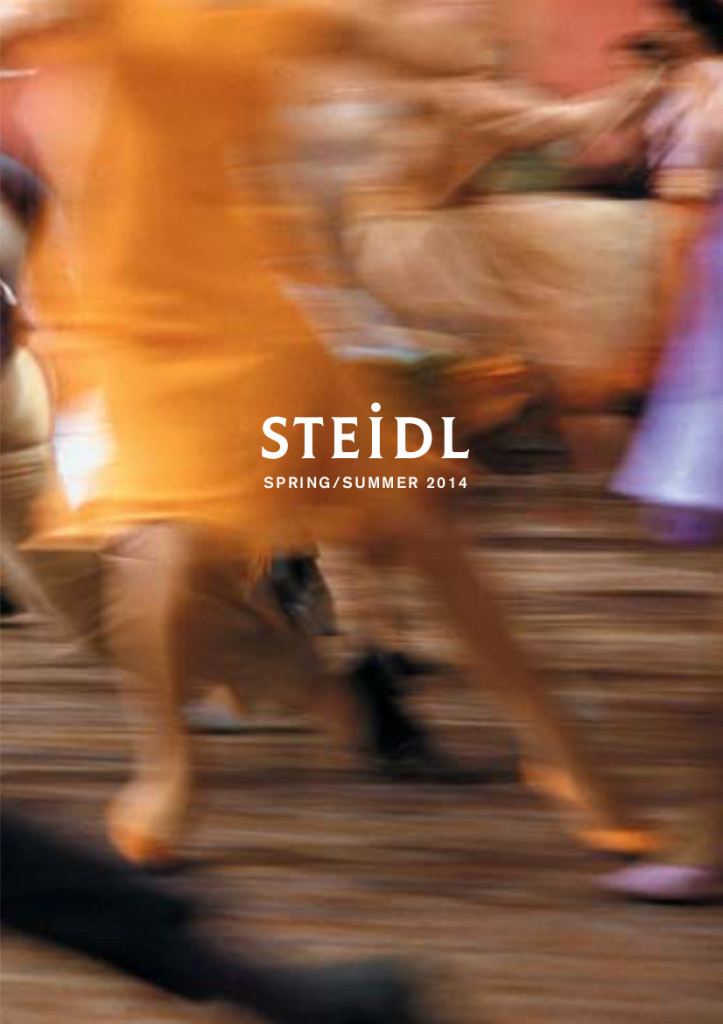
Steidl_SS_14
The Talks has a nice new interview with German art book publisher Gerhard Steidl:

Most of the publishing houses in the world are owned by shareholder companies and their interest is to make profit. My publishing house is a private business. I founded it in 1968 and it is still owned by me. It is a family business. It is a Manufaktur and we don’t set any limits on cost. A Steidl book is always made in Germany, in Göttingen, in Düstere Straße 4 and there is a guy, Gerhard Steidl, who is hands on. So, believe it or not, I oversee every sheet that tumbles out of our press. This craftsmanship and this know-how we bring to every one of our babies, our books, makes a huge difference compared to the production processes of other companies.

plakat_steidl_lowres

Steidl was, of course, the subject of the 2010 documentary How to Make a Book with Steidl:

Comments closed

Graywolf and the Art of Independent Publishing

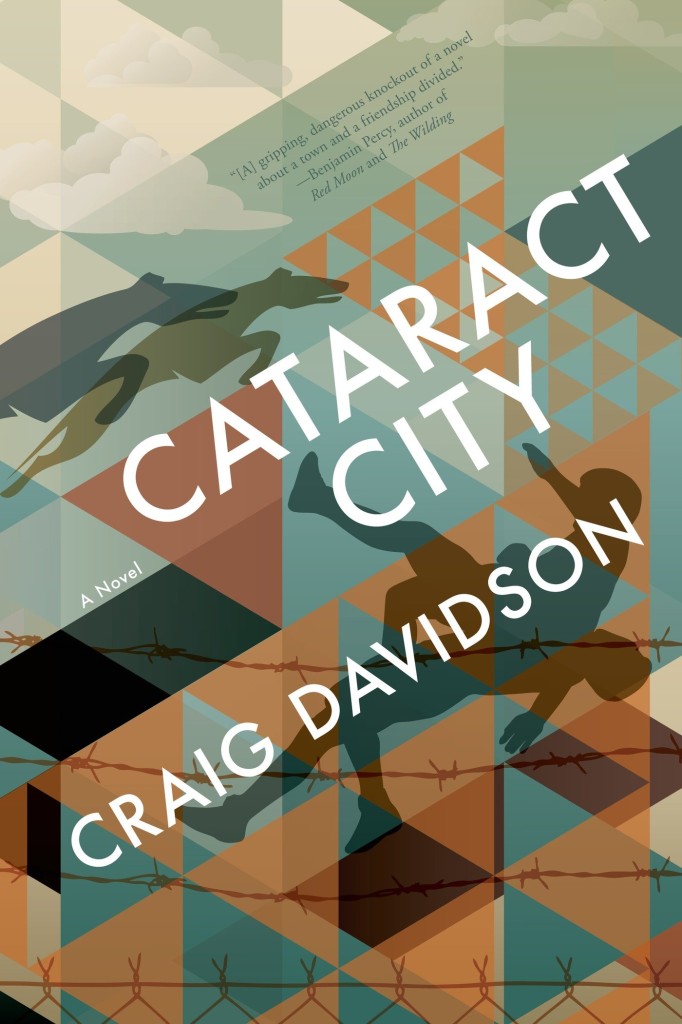
cataract-city

At Guernica Magazine, Jonathan Lee interviews Fiona McCrae, the publisher at American independent press Graywolf:

Any day of the week you can see that the big publishers are publishing some great books… But I think sometimes the context they’re working in involves the wrong kind of economic stress—or at least, a focus on economics and commerce that is not always conducive to interesting literary dialogue, or finding the new things that are happening at the edges of the literary culture. A very big publisher is unlikely to publish poetry unless the poets have already proven themselves—made it. And they are unlikely to go anywhere near essays, or hybrid books that fall between genres or play with conventions. Translation. Short stories. Criticism. We’re able to publish all these things, but someone who is required to hit X financial target each year is unlikely to go anywhere near those areas of literature…

There are dozens of obstacles to any given book succeeding. If a book succeeds it always does so against the odds. The odds in one generation might relate to the fact that people would rather be watching television than reading your book. The odds in the next generation might be that they’d rather be on their computer than reading your book. Once it was that people would rather be riding a bicycle than reading your book. It doesn’t do any good to be talking, as an author or publisher, about the obstacles. There are better uses of energy, I think. Yes, we can all feel helpless and wary in this industry sometimes, but it’s better, as a publisher, to look at the ways in which e-books and Twitter and so on can help us reach new readers, rather than treating social media as an enemy to literature.

Just last Friday, Publishers Weekly ran a short piece about the surprise success of Leslie Jamison’s The Empathy Exams, winner of the Graywolf Press Nonfiction Prize:

The Empathy Exams has already gone through five print runs, and a sixth print run of 10,000 copies has been scheduled, bringing the total number of copies in print to 25,500.

Graywolf, the small literary press in Minneapolis that published The Empathy Exams, is no stranger to media attention, having published books that have won National Book Awards and Pulitzer Prizes. While the publisher expected that the collection, which won the 2011 Graywolf Nonfiction Prize on the basis of a partial manuscript, would receive positive media attention, it is still a bit taken aback at the degree of acclaim. The buzz began months ago, when the key independent booksellers who received early galleys started talking it up on social media and recommending it to their colleagues. The bookseller chatter picked up steam at Winter Institute, which Jamison attended. It has continued through this past month, when Jamison launched her book tour at Yale University in New Haven, where she is pursuing a Ph.D in literature, followed by a more formal launch at Common Good Books in St. Paul, Minn. She has been speaking before standing-room-only crowds at indies around the country since then.

Well played.

(Disclosure: Graywolf Press are distributed in Canada by my employer Raincoast Books)

Comments closed

Stephen Page: Past, Present and Future

The Bookseller has posted an edited transcript of a recent speech by Stephen Page, chief executive of Faber & Faber, at the IPG and Publishing Scotland conferences:

One joy of digital is that it promotes thinking about all incarnations of reading, from the insubstantial to the disposable to the luxurious. We’re back to a place where we must imagine all the means we have of expressing value for a text. Where a reader will buy a £100 edition, let’s make that, and a 99p e-book where that’s appropriate… In the future we’ll spend a lot more time talking and listening to consumers. Whether they’ll listen will depend on our skills and the degree of fandom for the writer. If we’re successful, we’ll get a conversation going among consumers, and if we’re really skilful they’ll come back to talk some more. Having the systems and skills to do this will be the core to a publisher’s commercial opportunity, alongside taste.

Comments closed

Cheap Words: George Packer on Amazon

The book folks have surely seen this already, but at The New Yorker George Packer takes a long hard look at Amazon:

Before Google, and long before Facebook, Bezos had realized that the greatest value of an online company lay in the consumer data it collected. Two decades later, Amazon sells a bewildering array of products: lawnmowers, iPods, art work, toys, diapers, dildos, shoes, bike racks, gun safes, 3-D printers. Amazon’s code of corporate secrecy is extreme—it won’t confirm how many Seattle employees it has, or how many Kindle e-readers have been sold—so it’s impossible to know for sure, but, according to one publisher’s estimate, book sales in the U.S. now make up no more than seven per cent of the company’s roughly seventy-five billion dollars in annual revenue.

Origins, though, leave lasting marks, and Amazon remains intimately tangled up in books. Few notice if Amazon prices an electronics store out of business (except its staff); but, in the influential, self-conscious world of people who care about reading, Amazon’s unparalleled power generates endless discussion, along with paranoia, resentment, confusion, and yearning. For its part, Amazon continues to expend considerable effort both to dominate this small, fragile market and to win the hearts and minds of readers. To many book professionals, Amazon is a ruthless predator. The company claims to want a more literate world—and it came along when the book world was in distress, offering a vital new source of sales. But then it started asking a lot of personal questions, and it created dependency and harshly exploited its leverage; eventually, the book world realized that Amazon had its house keys and its bank-account number, and wondered if that had been the intention all along.

It’s very comprehensive piece and well worth taking the time to read all the way through. At the LA Times Jacket Copy blog, Carolyn Kellog spoke to Packer about how the article came about:

Packer… included a suggestion from super-agent Andrew Wylie that publishers stop selling their books to Amazon altogether. Does Packer think that’s viable? “It’s a pretty radical solution, if you think about what it would do to their sales” he said. “I don’t know enough to agree or disagree.”

But in terms of telling the story, it was helpful. “It seemed like a way to jolt the picture productively. When you’re been an industry for a long time, you can’t imagine things differently. Maybe publishers need to think disruptively and not be victims.”

UPDATE: Packer has posted a short, but interesting, follow-up essay, ‘Amazon and the Perils of Non-Disclosure, at The New Yorker:

To Amazon, any piece of information could give its competitors an advantage. But what if those competitors’ main advantage is the walled-off, impenetrable nature of the company? If Amazon were just selling clothes, this might not be a potentially fatal flaw. But, as I wrote, the company has become a book publisher and a production company, and its owner has bought a major newspaper. Amazon is up to its neck in the world of culture, where nothing good can be done without a little light and air. The fact that Bezos visited his newspaper last month with more stealth than George W. Bush flying into Baghdad—a visit that was so well hidden even from people at the famously wide-open Post that I managed to break the story in these pages—struck me as particularly bizarre. Why not just show up? Because secrecy is in Amazon’s marrow. I’m certain that, sooner or later, this is going to create problems for Bezos’s newspaper, and I’m fairly sure that one reason for the failure of Amazon’s trade-publishing arm has to do with its isolation from the larger publishing world. If editors can’t gossip, speak to reporters, and pick up intel, they’re less likely to spot new talent and incubate ideas. They’re also less likely to be trusted by writers. Book culture and non-disclosure agreements are inimical.
 

1 Comment

Miriam Markowitz: ‘Here Comes Everybody’

I am very late to this, but Miriam Markowitz’s article for The NationHere Comes Everybody‘, on women and book publishing in 2013, is well worth reading:

More nuanced fiction that isn’t of an obvious commercial genre—much of which is written by women—often brushes up against the literary. Publishers have various terms for the books that straddle this line. One of the ugliest and yet most useful is “upmarket.” The writers who may be lumped in this category are diverse in their output and their ambitions.

One commercial editor told me that many of her writers once cherished literary aspirations, but that they’re comfortable in the “upmarket” category, in part because it’s more lucrative. “If you cash in on the monetary market, you won’t get prestige. A lot of writers are OK with that.” Few writers have control over their covers, let alone the way their books are marketed, but if an agent or publisher says that this lacy dress or that whispery veil might entice more readers, who are they to object? Readers of literary fiction, especially women, will buy commercial titles as well. But the phenomenal popularity of Fifty Shades of Grey or the Twilight series or Nora Roberts among women who do not specifically identify as “readers” suggests that the reverse is less true. It’s hard to blame women writers for trying their hand at the commercial market when the literary one is so inhospitable.

For writers of work that is unambiguously ambitious, this choice is more difficult in that it may not be an option at all.

Comments closed

Triumph of the English Major

Book editor Gerald Howard had lovely op-ed in this weekend’s New York Times called ‘Triumph of the English Major’:

Almost any cultural transaction involving a sum of money represents, as Samuel Johnson famously said of second marriages, the triumph of hope over experience. We live in a time when college enrollment in the humanities is declining precipitously, in good part because majoring in such subjects seems unlikely to result in gainful employment in a strapped economy and thus would be a waste of hard-earned (or usuriously borrowed) tuition dollars.

Somehow our culture has persuaded itself that the naked quest for financial gain, often through the devising and trading, on monstrous amounts of (very low interest) borrowed money, of what Warren Buffett has called instruments of mass destruction, is a more urgent and honorable calling than the passionate pursuit of truth and beauty.

I’ve tried to suggest that at least a portion of that pursuit can have gratifying economic results. (Plus it will not plunge us into an endless recession!) But that’s not really the point. The point is truth and beauty, without which our lives will lack grace and meaning and our civilization will be spiritually hollowed out and the historical bottom line will be that future epochs will remember us as a coarse and philistine people who squandered our bottomlessly rich cultural inheritance for short-term and meaningless financial advantage.

Read it. It’s a wonderful thing (and I’m not even an English Major).

Comments closed

Little Books


Music critic Carl Wilson, author of the 33⅓ title  Let’s Talk About Love: A Journey to the End of Taste, on small books for The Globe & Mail:

The little book that abounds in much: It’s a goal widely aspired to these days. The wish is that a short book can navigate both print and digital with buoyant grace, where a bigger one might capsize. “Somewhere between a long magazine article and a book” is the sweet spot that many publishers describe. They picture customers polishing off a volume on a short plane ride or a round-trip transit commute, on a tablet or in an easy-to-hold compact volume.

Such books can bring the urgency of a manifesto. They can provide literary sustenance without the commitment a thick tome demands. And, properly designed, they stoke a fetish for tiny, perfect, collectible objects.

What could be better? It’s an in-between form for transitional times. It’s a nod to collective attention-deficit and the Internet’s “too long; didn’t read” syndrome. Whether it succeeds in practice is another question: Is the little book as unsinkable a prospect as its advocates hope? Or is it a pursuit as vexed as the one in Melville’s following novel, for the great white whale?

I like short books as much as the next guy, but I’m yet to be convinced that they’re going to save publishing. And, as if prove the point, Wilson’s own short book is becoming a longer one. (On the plus side, the article was accompanied by a rather lovely illustration by Drew Shannon)

Comments closed

Barbara Epstein, David Levine, and Graydon Carter on Magazine Publishing


Monday’s edition of CBC Radio show Ideas featured Michael Enright in conversation with the New York Review of Book‘s co-founder Barbara Epstein, caricaturist David Levine, and long-time Vanity Fair editor Graydon Carter:

CBC Radio IDEAS: Barbara Epstein/David Levine/Graydon Carter mp3

Comments closed

New Republic: Who Said the Book Industry is Dying?

The latest issue of the New Republic looks at the book publishing industry and it includes an article by Evan Hughes on the relative health of the book business:

At the individual level, everyone in the trade—whether executive, editor, agent, author, or bookseller—faces threats to his or her livelihood: self-publishing, mergers and “efficiencies,” and, yes, the suspicious motives of Amazon executives. But the book itself is hanging on and even thriving. More than any major cultural product, it has retained its essential worth.Of course, publishers think that $9.99 is still too low for popular e-books, an assessment that drove their ill-fated effort to work with Apple to take control of what they cost… It may be that a higher price would be more equitable. But other media still have reason to look at the relative economic health of the book with envy.

There is also includes a much-tweeted  interview with literary agent Andrew Wylie. Wylie is, of course, eminently quotable (I think my favourite line from the interview is this: “We’re selling books. It’s a tiny little business. It doesn’t have to be Walmartized.”) and interviewer Laura Bennett has posted some choice outtakes from her print piece.

Comments closed