Skip to content

Tag: Publishing

Don’t Panic

The news heard ‘round the publishing world” is how Sarah Weinman described  the decision of Houghton Mifflin Harcourt (HMH) — the US publisher of Philip Roth, Gunter Grass and José Saramago — to temporarily stop acquiring manuscripts.

Certainly the story has been ricocheting around the book blogs — and beyond — for the last week as everyone tried to figure out what the wider implications were.

GalleyCat, Sarah’s former stomping ground, quoted Janet Reid of FinePrint Literary Management :

“I think it’s smoke and mirrors,” she said of the announcement. “If they want something, they’re going to get it.” She pointed out that some HMH editors were known, even before yesterday’s freeze, for extremely judicious buying practices, and questioned how much less they could acquire (other than, of course, nothing)… “This is a whirlwind blown out of proportion to what it really is,” Reid continued, calling yesterday’s buzz a consequence of “the first huge economic downturn in the age of transparency.”

And, as the dust settled, HMH themselves tried to played things down.

According to The New York Times,  Jeremy Dickens, president of Education Media (HMH’s owners),  simply wanted HMH to be “extremely prudent about the way that we allocate our capital and where we make our investment decisions.” And HMH’s distinctly chipper-sounding spokesman Josef Rosenfeld described the new policy as “freeze-lite”  to the Associated Press:

“A headline about a freeze is very appealing, but in reality all we’re doing is taking a good, hard look at everything that comes in, much the way this company is watching all expenses and expenditures… It’s just a higher degree of scrutiny.”

Back at Confessions of an Idiosyncratic Mind, Sarah cited literary agent Colleen Lindsay’s advice not to over-react (“publishers do this kind of thing all the time”), but sounded unconvinced:

“So no, we’re not in panic mode, not yet. But as long as… HMH’s parent company… continues to take a bath and the economy stays moribund (or worsens in the first quarter of ’09), the gloom feels rather warranted, even if it’s only a metaphorical sign of what may well come in other places.”

Personally, I was reserving judgment on the whole situation. But, I have to admit, Sarah was looking bloody prescient this afternoon when AP reported  HMH senior vp and publisher Becky Saletin had resigned, and The New York Observer began speculation that “the C.E.O. of HMH’s parent company, a man named Barry O’Callaghan whose core business in K-12 textbooks is not generating enough money to offset his massive debt, will sell the trade division and its illustrious backlist.”

Yikes.

Comments closed
Monday Miscellany

A bolt of electricity: PW polls publishers on the challenges and opportunities facing their digital publishing programs. It’s a fascinating glimpse of where the likes of Random House, Simon & Schuster, and Penguin are heading… A must read I would say…

Narrative medicine: Exposure to literature can influence how young doctors approach their clinical work according to the New York Times (via Guy Kawasaki):

“The idea of combining literature and medicine — or narrative medicine as it is sometimes called — has played a part in medical education for over 40 years. Studies have repeatedly shown that such literary training can strengthen and support the compassionate instincts of doctors.”

In need of a good editor: Book Lover Cynthia Crossen laments the decline of editorial rigour in the WSJ:

“Editors are the invisible heroes of the publishing industry, and as publishing companies cut corners, they cut editors… But without strong editors, writers are like cars with accelerators but no brakes”

Comments closed

Faber: Looking Back, Going Forward

Not some dusty, elbow-patched publisher: The Bookseller talks to CEO and publisher Stephen Page about Faber & Faber’s legacy and their plans for the future:

“We are in a moment of major, major change. Which from a brand like Faber is not threatening, only exciting, stimulating and interesting… The happy residue of the past 80 years is that we have this great history with six Booker winners and 11 Nobel laureates. Yet if we sit still and admire ourselves, this will only have a half-life and it will cool.”

Founded by Geoffrey Faber and T S Eliot, Faber published some of the defining books of the 20th Century including James Joyce’s Finnegans Wake, Sylvia Plath’s The Bell Jar, William Golding’s Lord of the Flies, and Samuel Beckett’s Waiting for Godot. They celebrate their 80th anniversary next year.

Link

Comments closed

Not Quite A Crisis

According Carolyn Reidy, president and CEO of Simon & Schuster, a worse publishing environment may be on the way, reports Publishers Weekly:

Reidy said she hesitated to use the word “crisis” but “there is no question that we are currently dealing with a set of problems that will test us to our limits.” Critical issues facing publishers included: significant decrease in retail traffic, less consumer purchasing, a gloomy economic forecast, declining backlist sales, brand name authors continuing to sell but “everything else is far off normal levels,” and retail partners who demand more favorable terms and concessions “as if we are the answer to their problems,” she said. Other pre-existing problems she enumerated include retailers competing with publishers, low barriers to self-publishing, and the economics of digital publishing that appear to bring in less revenue.”

Tough times indeed, but it is not quite the end of the world apparently. Although publishers must adapt to new realities, and change business practices, the current situation is an opportunity rather than a threat:

“now we have the chance to actually find the reader where they are spending their time—in front of a screen—and cement a relationship with them through e-mail newsletters, viral marketing, mobile delivery and other tools.” Publishing survives, she noted, because readers have a fundamental need for information, inspiration, and entertainment, “and they get that in a book, directly from an author, in an unfiltered way that they cannot get from any other medium.”

Notably, Reidy urges publishers to make entire catalogues available as e-books and to create adopt print-on-demand when a title’s  sales begin to slow.

Link

Comments closed

Bracing for the Worst

“[E]veryone in publishing is bracing for a difficult holiday season while trying to remain optimistic about the enduring allure of books.”

Motoko Rich looks at the recent spate of publishing lay-offs, and what holiday season holds for the book industry, in today’s New York Times:

“I think that people have not been reading for the past year because they’ve been checking political blogs every 20 minutes,” said Larry Weissman, a literary agent. “At some point I think people are going to say, ‘You know what, this is not nourishing.’ I think and I hope — and maybe it’s just blind hope — I think there is a yearning for authenticity out there, and people are going to go back to the things that really matter, and one of those things, I hope, will be reading books.”

Link

Comments closed

Media’s Last Die Hard?

The full transcript of Victoria Barnsley’s speech ‘Media’s Last Die Hard?’ (mentioned yesterday) is now available on The Bookseller website:

“the pivotal question for publishers, as we confront the opportunities and threats of digitisation, isn’t a reductive one – it isn’t about asking if the physical book is dead.  It’s about asking, what we’re going to be doing, in the next 10 years, to engage with an increasing number of digital natives – writers and readers alike, while at the same time, building rich temples of content, in all their printed or electronic glory.”

Essential reading.

Comments closed

Monday Miscellany, Oct 27th, 2008

A day at the International Festival of Authors in Toronto and I’m running a wee bit behind, but–better late than never–here’s an evening edition of Monday Miscellany…

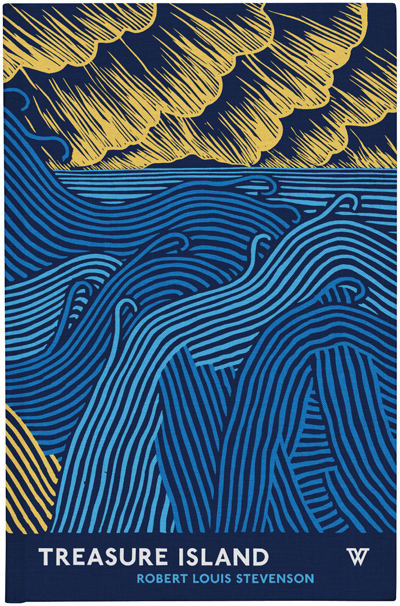
Ex-Penguin designer David Pearson  hopes to “reaffirm traditional methods of book production” with his new venture White Books according the Creative Review:
“Working on the premise that the ‘classics’ are usually the books that are treasured most, we’re aiming to create a package that stands a chance of ageing as gracefully as the writing within. Owing to the arrival of eBooks, many have prophesied the death of the printed word but we see this simply as an opportunity to turn the spotlight back on the traditional methods and to luxuriate in the craft and tactility of the physical book and the printed page.”

More on White Books at The Bookseller.

David Ulin sees a silver lining in the economic downturn (when am I allowed to start calling it a recession?) in the LA Times:

No more will publishers or writers have time or money for ephemera. During the Great Depression, even popular literature got serious: The 1930s saw the birth of noir. As the money dries up, so too, one hopes, does the gadabout nature of literary culture, the breathless gossip, all the endless hue and cry… [W]ith hard times upon us, it doesn’t seem too much to ask that this signal the start of a more stripped down, less self-absorbed period, in which we set aside the sound and fury and focus on the writing rather than the noise.

But this was the money quote for me:

“Don’t get me wrong: I’m all in favor of new technology, new delivery systems, new venues where the conversation about literature might take place. But the unrelenting insistence on newness has led down any number of blind alleys, perhaps most distressingly the ridiculous (and ongoing) print-versus-Web non-controversy, which has been promulgated almost exclusively by the least insightful people on both sides.”

Yes. Yes indeed.

Agent and former publisher Larry Kirshbaum at the HarperStudio’s The 26th Story:

“I would like to see publishers doing more marginal titles electronically — with creative Internet promotion —  as their test market, then go to print if there’s a sufficient response. This is not just a matter of ecology (e.g. avoiding waste), it’s promoting the idea that every book that is published physically will get significant attention by the publisher, the retailer and hopefully the consumer.”

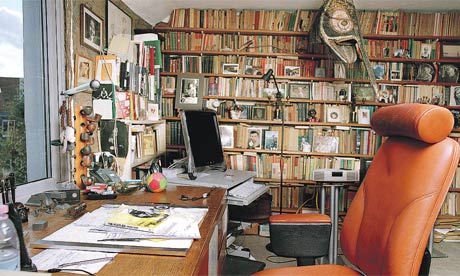
Writer Al Alvarez’s awesome looking chair (pictured).

Author and controversial critic James Wood talks about his recent book How Fiction Works on KCRW’s Bookworm:

Comments closed

Midweek Miscellany, Oct 22th, 2008

Having skipped Monday (thanks Amazon grid!), here’s a bumper Midweek Miscellany for your (digested) reading pleasure…

Publishers put on a brave face on the economic downturn in Frankfurt according to the Washington Post (thanks for link Stephanie!):

“While luxuries are increasingly unaffordable, most people still have enough money to buy a book, and booksellers could even use the opportunity to stage a resurgence”

Traditional book binders John and Ardis Mankin featured in the San Diego Union Tribune (via Shelf Awareness):

“Our main machinery is our hands,” said Ardis, 74. “Technology can’t do what we do.”

The Serif Fairy (pictured) for the junior typographer in all of us (via Design Observer).

The Legendary Mr. Typewriter: Reveries on Martin K. Tytell the owner of the Tytell Typewriter Company, in Lower Manhattan who died, age 94, on September 11th, 2008. If I could  type for tuppence and wasn’t a pathological re-writer, I would definitely use a typewriter…

Books for Bibilophiles’   in The Observer:

“At a time when bibliophiles are an endangered species, these books about books tell us why it’s reading that makes us human”

Literary agent Pat Kavanagh, “doyenne of the London literary scene”, has died:

“She had the values of an earlier generation. People like Kingsley Amis loved Pat. She was old school but she never seemed jaded. We all thought she would always be there, that she would never retire.”

Jonathan Ross revisits Watchmen by Alan Moore and Dave Gibbons for The Times (via LinkMachineGo):

“But what makes this a genre-transcending bona fide masterpiece is that… Moore and Gibbons… manage to deliver a devastating critique that cuts to the very heart of the pitiful, timid male fantasy that is the superhero genre at its purest and worst: muscular men and busty women in tight costumes solving all the world’s problems with a well-placed punch”

Over and out…

2 Comments

On Being Skipped

GalleyCat pointed me in the direction of  a refreshingly frank essay by Andrew Wheeler, Marketing Manager for John Wiley & Sons, about books that are passed over, or  skipped’,  by a bookstore:

“bookstores are businesses, not public conveniences. No store has the responsibility to carry every book published… I market books for a living, so I can tell you an unpleasant truth: the order for any book, from any account, starts at zero. The publisher’s sales rep walks in the door with tipsheets and covers, past sales figures and promotional plans, to convince that bookseller’s buyer to buy that book. In many categories… the chain buyers say “yes” the overwhelming majority of the time. But not all the time. Sometimes, that buyer is not convinced, and the order stays at zero.”

None of what Andrew says will be news to any one working in publishing — skips are an accepted, if unpleasant, part of the business — but, as Andrew notes, authors on the receiving end of skips are outraged by them, and I’m sure more than a few debut authors will be shocked to discover that there is such a thing and that it happens frequently enough to have its own terminology.

In most cases agents or publishers don’t discuss the possibility of skips with their authors before they actually happen — no one wants to be that pessimistic about a book’s chances! But that is not to say we should be less than forthright about the realities of business, or pretend that this doesn’t happen.

I recently had an exchange with a freelance publicist who told me with all confidence that he was going to book his client-author on national radio and television. Knowing the book, and having had some experience of the challenges of book publicity, I just about spat out my coffee. Charitably he was naively optimistic. Uncharitably, he was bullshitting me, and probably his client, to justify his hourly rate.

A publicist, however good he or she is, cannot guarantee an author publicity any more than the greatest sales rep can guarantee sales or prevent the dreaded ‘skip’. You can charm and you can twist arms,  but ultimately the decision lies with someone else — a producer, a book review editor, or a buyer — with a set of priorities different to your own. To pretend otherwise, leaving things unspoken  or offering overconfident assurances is a disservice to your author, and will probably bite you in the ass in the long run as a publisher (or freelance publicist).

Authors, unsurprisingly, have a tendency to be smart people. By and large they don’t want to be left in the dark, or have their hopes unrealistically raised. Sure they should take some responsibility — ask questions and educate themselves  — but we should  be honest and upfront about how the book business works, putting books in their proper context and giving an author a realistic sense of what is possible.

Comments closed

Midweek Miscellany Oct 15th, 2008

Are New York publishers going through some kind of existential crisis?

A chill wind is blowing through publishing according to Leon Neyfakh in the New York Observer. He’s marginally less apocalyptic than some, but he’s still pretty gloomy:

“A frost is coming to publishing. And while the much ballyhooed death of the industry this is not, the ecosystem to which our book makers are accustomed is about to be unmistakably disrupted. At hand is the twilight of an era most did not expect to miss, but will.”

On the other hand…

Old-fashioned publishing is booming for Marvel according to Fortune Magazine:

“There’s a few interesting messages in this, not least of which is the reminder that new formats of media don’t necessarily replace old, and that some habits don’t change as quickly as people think.”

Former CEO Peter Olson  discusses his exit from Random House in Portfolio magazine:

“I think concerns about the book business dying are overdone. Storytelling—the generating of content for all kinds of media—is essential. Books play a key role.”

On a more cheery note…

Children’s Books That Designers Love: Kids books with “insanely cool typography” by  Bruni Munari and Cas. Opt. favourite Paul Rand (pictured).

Liz Thomson and Nicholas Clee, former editors of Publishing News and The Bookseller respectively, have launched BookBrunch an “information site and daily news service for the book industry.” (via Me And My Big Mouth)

Designer Stephen Bayley interviewed by his son Bruno for Vice Magazine. I rather liked this line:

“Heritage is important but you must also build the heritage of the future. The best idea ever on history was in an Italian novel The Leopard by Giuseppe Tomasi di Lampedusa, which was published posthumously. It had this line about the decline of a Sicilian dynasty: “If you want things to stay the same, they are going to have to change”. That is entirely my view. Without change everything is stultified.”

2 Comments

Monday Miscellany, Oct 13th, 2008

A belated Happy (Canadian) Thanksgiving and a belated Monday Miscellany (on Tuesday)…

An interesting  Q & A with George Jones, President and Chief Executive Officer of Borders Group, on HarperStudio’s The 26th Story Blog:

“I do not agree that it’s all doom and gloom in the book business… I think people are always going to want books…they will always want to be entertained and informed by books and I do not see that changing.  It’s true that the format books take may change over time and evolve, and the places where people buy books and how they access them have changed over time and will change further, but books themselves will always be part of our culture and our world in my opinion.”

Marketing in Tough Times. The American Booksellers Association ask successful booksellers to share their advice on marketing  during the economic downturn.

Book-lined stairs (pictured) designed by Levitate Architects for a space-challenged London apartment, as seen on the lovely Apartment Therapy (via image bookmarking site FFFFound).

50 of your favourite words on the BBC online magazine (as inspired by Ammon Shea’s book READING THE OED). I’m rather partial to ‘metanoia’ – “the act or process of changing one’s mind or way of life” – myself…

Comments closed

Mamet to Pinter to Beckett

The maverick publisher of Grove Press Barney Rosset is to receive a lifetime achievement award on November 19th, 2008, from the National Book Foundation in honor of his many contributions to American publishing, according to the New York Times:

In its heyday during the 1960s, Grove Press was famous for publishing books nobody else would touch. The Grove list included writers like Samuel Beckett, Jean Genet, William S. Burroughs, Che Guevara and Malcolm X, and the books, with their distinctive black-and-white covers, were reliably ahead of their time and often fascinated by sex.

Also the subject of a new documentary ‘Obscene’ about his life and work, Mr. Rosset said:

“All my life I followed the things that I liked — people, things, books — and when things were offered to me, I published them. I never did anything I really didn’t like. I had no set plan, but on the other hand we sometimes found ourselves on a trail. For example, out of Beckett came Pinter, and Pinter was responsible for Mamet. It was like a baseball team — Mamet to Pinter to Beckett… Should we have had more of a business plan?” he added. “Probably. But then the publishers that did have business plans didn’t do any better.”

Link

UPDATE:

More on Barney Rosset and ‘Obscene’ at New York Magazine

Comments closed