Skip to content

Tag: new yorker

When a Bookstore Closes, an Argument Ends

Writing at the New Yorker, Adam Gopnik considers the closing of La Hune in Paris, and what is lost when a bookstore closes:

The forces that brought La Hune down are, sadly and predictably, the same forces that destroyed Rizzoli, on 57th Street, or the old Books & Co., on Madison Avenue: the ruthless depredations of the Internet (Amazon is regarded warily in France, and pays a bookstore-protection tax, but it is there), alongside the transformation upward (or is it downward?) of the inner cores of big cities into tar pits for a mono-culture of luxury. Where La Hune last stood, Dior now stands.

These laments can all be dismissed as mere nostalgia—though, since nostalgia starts the very moment our experience becomes past, it can never be so easily dismissed. And the case for minimal regret about such transformations, or easy acceptance of them, is plain enough and not hard to make. Bookstores open and they close, following the path of bright young people as migratory birds follow the sun. In Paris, good bookstores have opened in, or migrated to, the popular quartiers of the 15th and 19th arrondissements, just as a few independent bookstores in [New York] have migrated to the sunnier climes of Brooklyn. Anyway (the more impatient counter argument goes on), a bookstore is only a platform for the purchase of literature, and platforms move and change with every new age, gathering and then shedding the moss of our memories as they roll on. Someday, someone will be writing a nostalgic account of one-click shopping on Amazon. Indeed, if videocassettes had lingered longer, we’d have sad feelings about the passing of Blockbuster. Some members of Generation X probably do now.

Yet the emotions that such losses stir can’t be dismissed quite so blithely—talking to Parisian friends, I found they shared my sense of something that it would be indecent to call grief but inadequate to call sadness.

I’m actually OK with it all being nostalgia. I just like bookstores, and it makes me sad when good ones close.  That said, Luc Sante’s reality-check did make me laugh:

Comments closed

Henrietta’s Reading Adventures

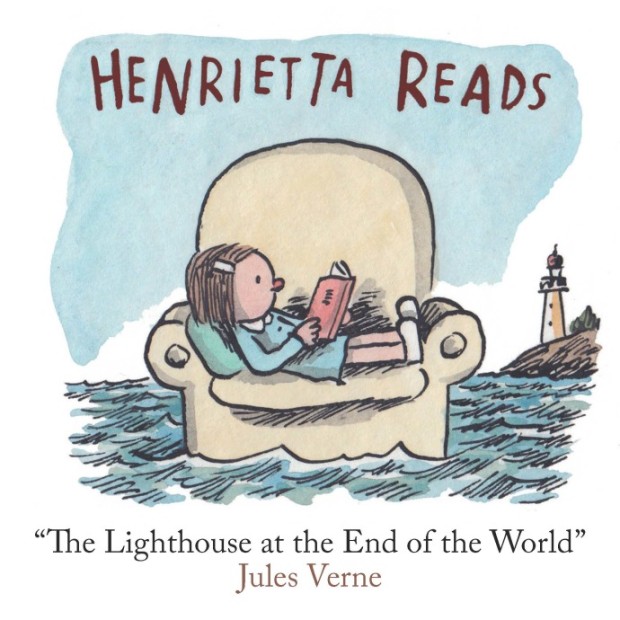
Henrietta-Reading-01-690

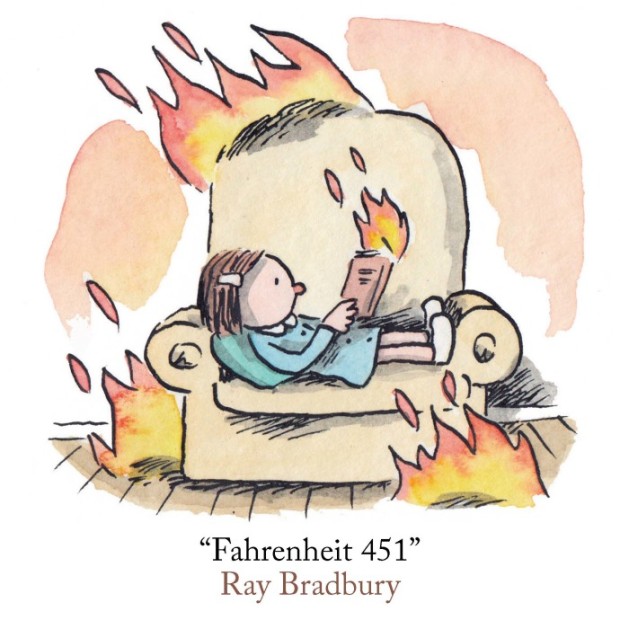
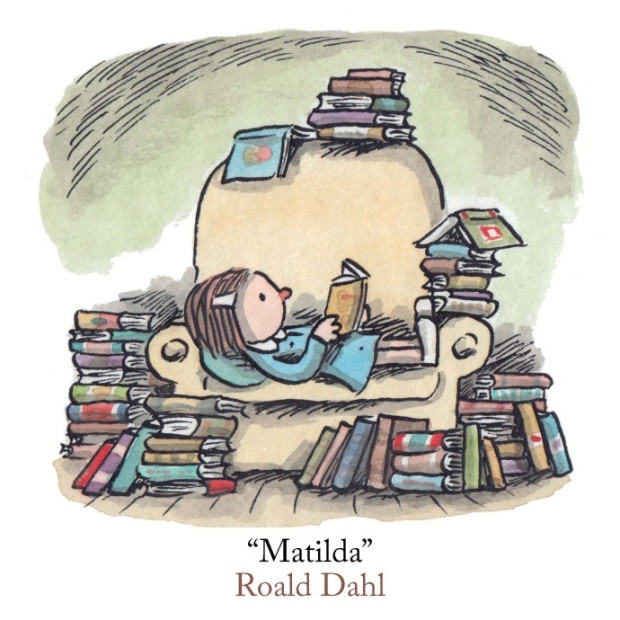
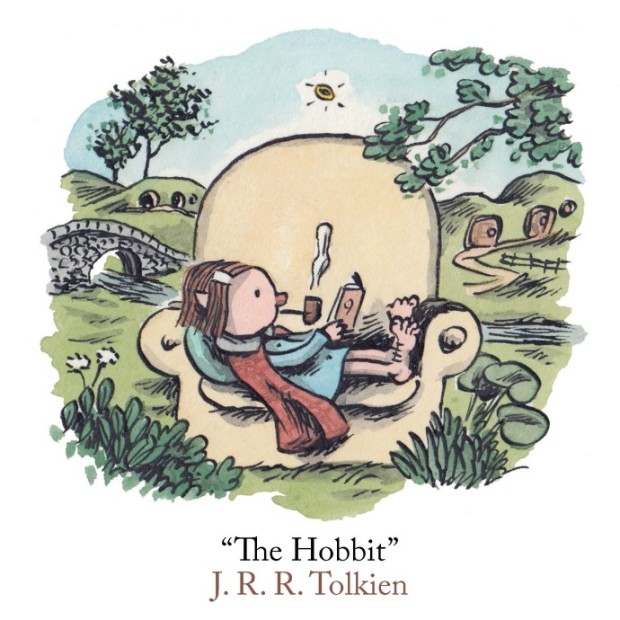
The New Yorker has posted a lovely series of cartoons about reading by Argentinian cartoonist Liniers. Henrietta — along with her cat Fellini and teddy bear Mandlebaum — is a regular character from Liniers newspaper comic strip Macanudo.

Henrietta-Reading-5-2-690 Henrietta-Reading-09-690  Henrietta-Reading-17-690

Two collections of Liniers’ Macanudo strip are available in English from Enchanted Lion Books, with third one available this fall. There is also a new book featuring Henrietta coming from TOON Books in September.

(via Pickle Me This)

Comments closed

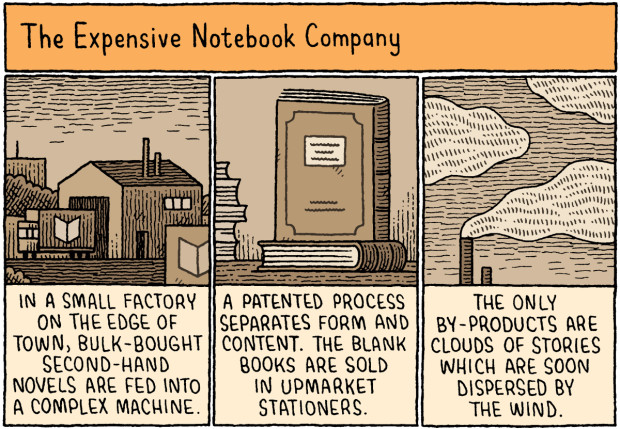
The Expensive Notebook Company

I know it’s the second Tom Gauld cartoon I’ve posted today, but this one for The New Yorker is magnificent:

Gauld-Expensive-Notebook-Company-1200

1 Comment

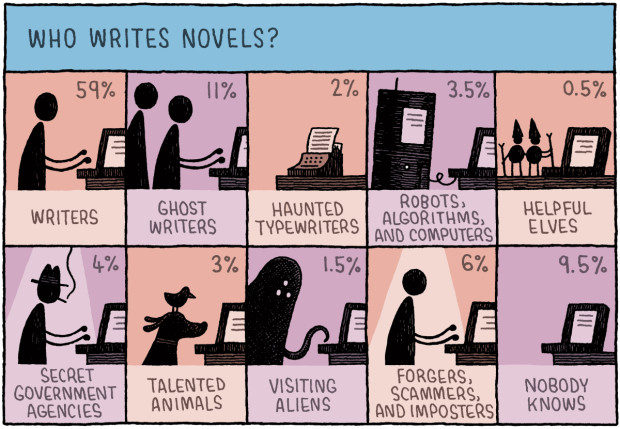
Who Writes Novels?

Gauld-Who-Writes-Novels-526-1200

Tom Gauld for The New Yorker.

Comments closed

Françoise Mouly on Voice

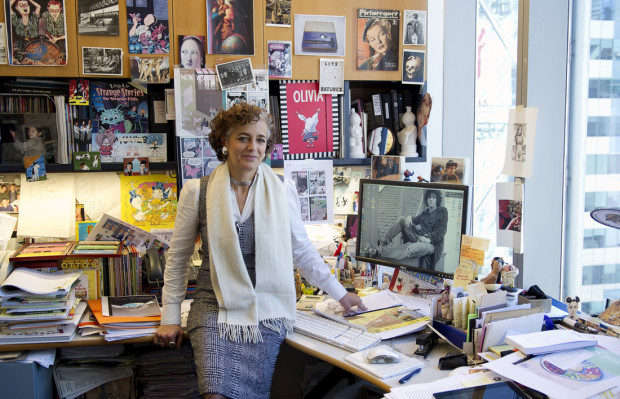
francoise-mouly-photo-sarah-shatz.

Grace Bello interviews the always interesting Françoise Mouly, art director of The New Yorker and founder of Toon Books, for Guernica:

I know what I respond to is a voice. A voice is not just a stylistic thing, but it means someone who really has something to say. I think a lot of what I get from books—whether they be books of comics or books of literature—is a window into somebody’s mind and their way of thinking. I love it when it’s so specific. It’s a new way to look at the world. It’s as if I could get in and see it through their eyes. It also reaches a level of universality because, somehow, I can recognize some of my feelings in seeing somebody who is actually expressing their own inner reality. Even though Flaubert has not been in Madame Bovary’s skin, you do get a sense of what it’s like to be that person. It’s a kind of empathic response when you’re reading it.

Comments closed

I’ve Been Thinking…

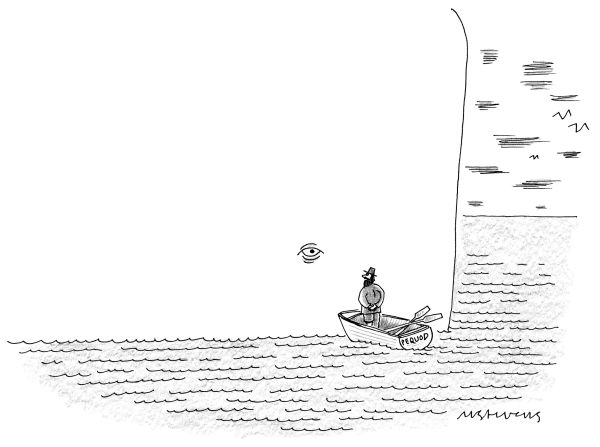
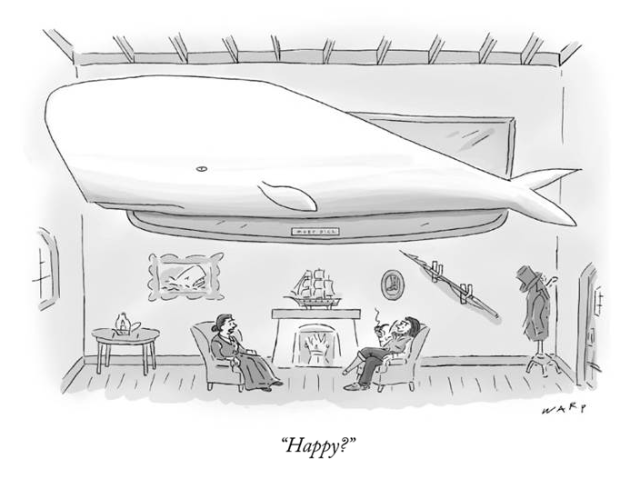
Posting Kim Warp’s Moby Dick cartoon last week reminded me to post this The New Yorker cartoon by Mick Stevens from February:

ive-been-thinking

(There’s probably a New Yorker book Moby Dick Cartoons, isn’t there?)

Comments closed

Happy?

happy

Kim Warp for The New Yorker.

(via This Isn’t Happiness)

1 Comment

Comma Queen: Possessed

In the second episode of The New Yorker‘s Comma Queen video series, copy editor Mary Norris tackles using an apostrophe to form the possessive:


I am one of those people who annoy Norris by dropping the ‘s’ after the apostrophe when a name ends in ‘s’. I’m sure she is right — I’m certainly not going to argue with her! — but the exceptions seem completely infuriatingly arbitrary to me!

UPDATE: Mary Norris, whose memoir Between You & Me is out next week, is profiled in today’s New York Times:

Ms. Norris says she tries not to bring her work home with her. But she often has to restrain herself. Bad punctuation leaps out at her. Sloppy diction and grammatical errors in conversation register as minor assaults on her ear, as if her headphones had suddenly erupted into high-pitched feedback.

Her pet peeves include poorly punctuated signs; people who call the serial comma the Oxford comma; the wrong sort of pencil; the misuse of “who” and “whom” and other crimes against the accusative; book introductions by writers other than the author; incorrectly deployed apostrophes; people she meets on vacation who harass her about The New Yorker’s style; and grammatical errors in popular songs. She is particularly irked, she said, by the line “Till the stars fall from the sky for you and I” from “Touch Me” by the Doors.

Me, I’m just irked by The Doors.


Comments closed

Comma Queen

The New Yorker has launched a new video series “devoted to language in all its facets” called Comma Queen. In the first episode, copy editor Mary Norris talks about commas, the “little squiggle” with “a history rich in controversy”:


On a related note, Julia Holmes reviews Mary Norris’ book, Between You & Me: Confessions of a Comma Queen, for the New Republic:

copy-editing can also be a soul-crushing enterprise. Not the work itself, which is perfectly pleasant and definitely necessary, but the surprising and strictly enforced class system that almost always accompanies it. Magazines are rigidly hierarchical places, no matter how outwardly easygoing and free-spirited and ad hoc they may endeavor to look on a visit to the office. A funny thing about publishing is that it’s populated almost exclusively by frustrated writers. It’s a kind of slow-burn Stanford Prison Experiment, in which former English majors are randomly assigned the roles of language guard and word prisoner, affirming once more how quickly and insanely people will adapt to new, relative states of power and powerlessness.

Mary Norris’s very funny, lucid, and lively new book, Between You & Me: Confessions of a Comma Queen, illuminates this shadow world at last. It’s part memoir, part language guide, and part personal account of life at The New Yorker (where Norris has worked as a copy editor since 1978). “One of the things I like about my job,” she writes, “is that it draws on the entire person: not just your knowledge of grammar and punctuation and usage and foreign languages and literature but also your experience of travel, gardening, shipping, singing, plumbing, Catholicism, midwesternism, mozzarella, the A train, New Jersey.”

Norris exemplifies what David Foster Wallace observed in “Authority and American Usage”: “We tend to like and trust experts whose expertise is born of a real love for their specialty instead of just a desire to be expert at something.”

Comments closed

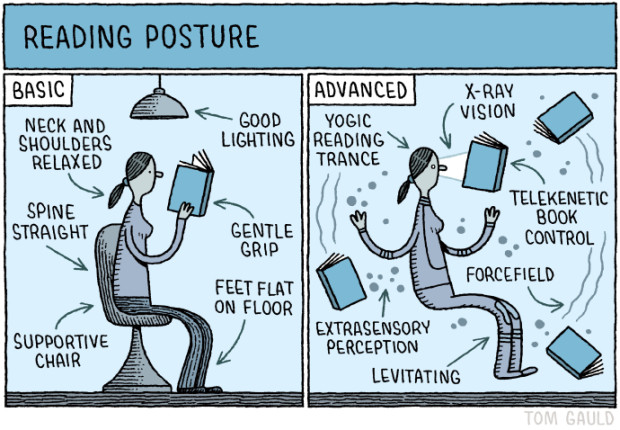
Reading Posture

Gauld-Cartoon-2-23-690

Tom Gauld for The New Yorker.

Comments closed

Learning to Love the House Style

In a long and charming essay for The New Yorker, the magazine’s query proofreader Mary Norris muses on her career, and the history and uses of the comma:

Then I was allowed to work on the copydesk. It changed the way I read prose—I was paid to find mistakes, and it was a long time before I could once again read for pleasure. I spontaneously copy-edited everything I laid eyes on. I had a paperback edition of Faulkner’s “The Hamlet” that was so riddled with typos that it almost ruined Flem Snopes for me. But, as I relaxed on the copydesk, I was sometimes even able to enjoy myself. There were writers who weren’t very good and yet were impossible to improve, like figure skaters who hit all the technical marks but have a limited artistic appeal and sport unflattering costumes. There were competent writers on interesting subjects who were just careless enough in their spelling and punctuation to keep a girl occupied. And there were writers whose prose came in so highly polished that I couldn’t believe I was getting paid to read them: John Updike, Pauline Kael, Mark Singer, Ian Frazier! In a way, these were the hardest, because the prose lulled me into complacency. They transcended the office of the copy editor. It was hard to stay alert for opportunities to meddle in an immaculate manuscript, yet if you missed something you couldn’t use that as an excuse.

Norris’s book, Between You & Me: Confessions of a Comma Queen, will be published by W. W. Norton in April.

Comments closed

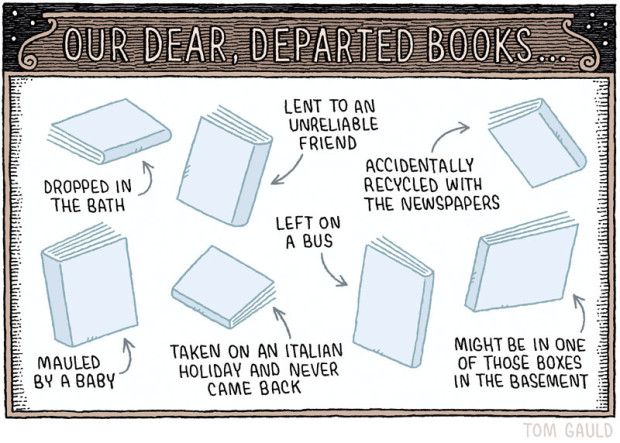
Our Dear, Departed Books…

dear-departed-books

Tom Gauld for the New Yorker.

Comments closed