Skip to content

Tag: New York

NYCTA Graphics Standards Manual Reissue

standards-manual

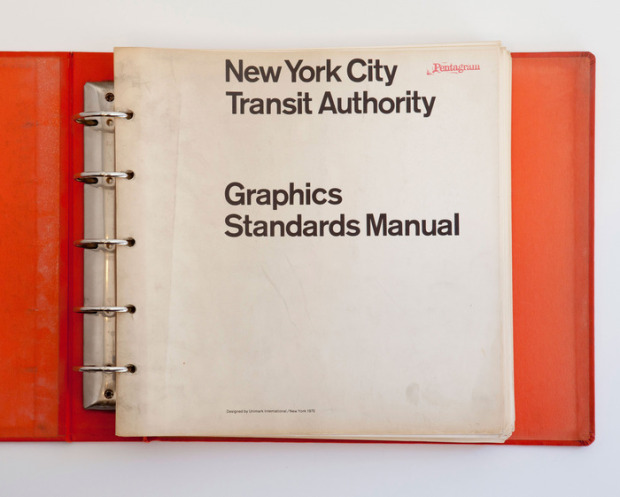
If you’ve been on Twitter for past couple of days you’ll have no doubt noticed that the design community (or the sizeable type-obsessed segment of it) is very excited that designers Jesse Reed and Hamish Smyth, founders of thestandardsmanual.com, have started a Kickstarter project to reissue the 1970 NYC Transit Authority Graphics Standards Manual by Unimark’s Massimo Vignelli and Bob Noorda as a full-size, limited edition book:

Every single day, millions of New Yorkers rely on the subway to get around the city, and you can’t use the subway without encountering the signage designed by Unimark. Over the years many changes have taken place (such as the switch from Standard Medium to Helvetica), but it is a testament to the quality of the work that, 44 years later, the signage holds up.

And perhaps on a deeper level, the signage has given the subway a voice. When a lot of people think of New York City, these signs pop into their head. We feel a tremendous responsibility to publish not only an important piece of design history, but an important part of New York City’s history.

Even if you can’t afford the book itself — it starts at $133USD if you live in Canada, more if you are in the EU —  you can back the project for as little as $3, and the project’s video featuring Pentagram‘s Michael Bierut on the graphic standards manual is well worth watching:

You can also see scans from a copy of the manual discovered the basement of design firm Pentagram in 2012 on thestandardsmanual.com.

Comments closed

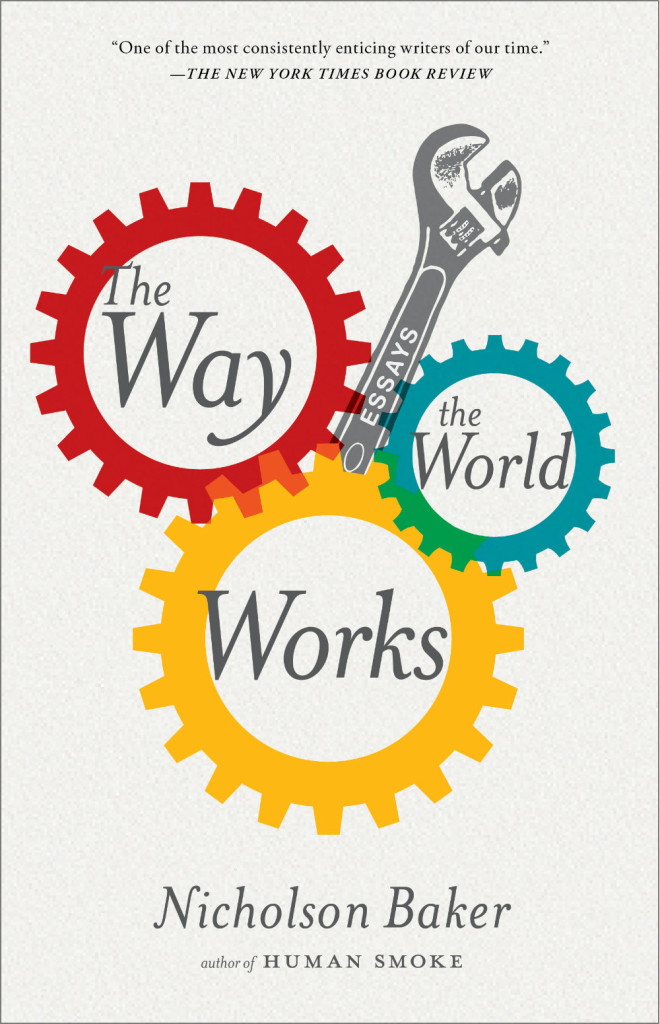
Nicholson Baker: “Wrapping Sentences Around Things”

Way-The-World-Works
This made a couple of people in my Twitter feed very, very happy today — author Nicholson Baker talking about writing, design and the influence of his parents, who both studied at Parsons School of Design in New York, at Lingua Franca: The 2014 D-Crit Conference at the School of Visual Arts last week:

As Michael Bierut noted on Twitter, Nicholson Baker’s father was a graphic designer who worked for the great Erik Nitsche! Who knew?

(via @acejet170)

Comments closed

Q & A with Isabel Urbina Peña

Untitled-2

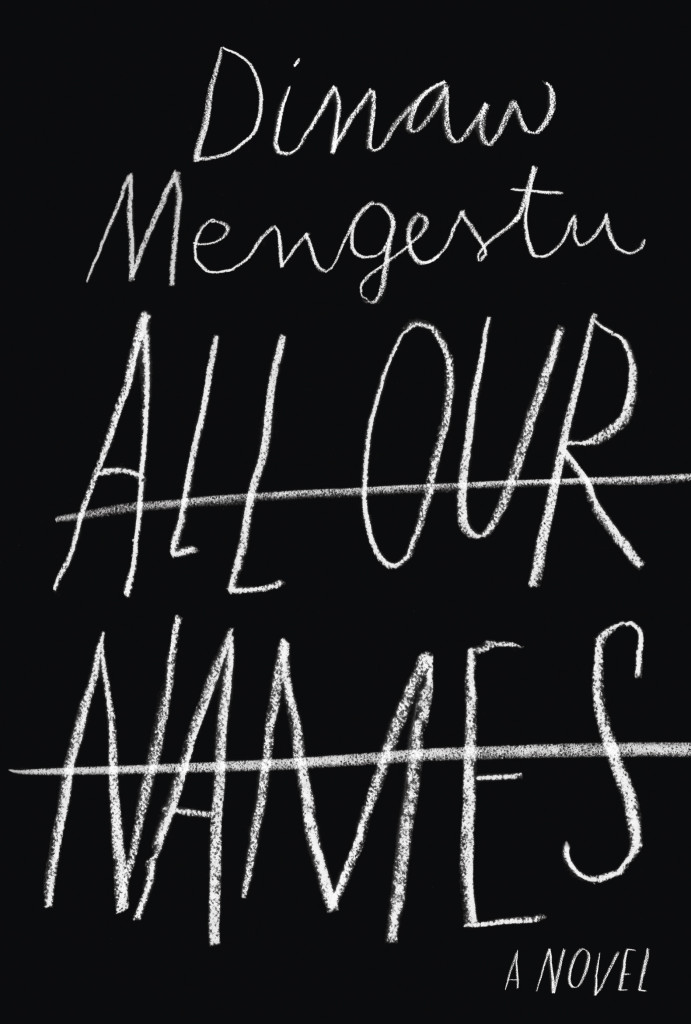
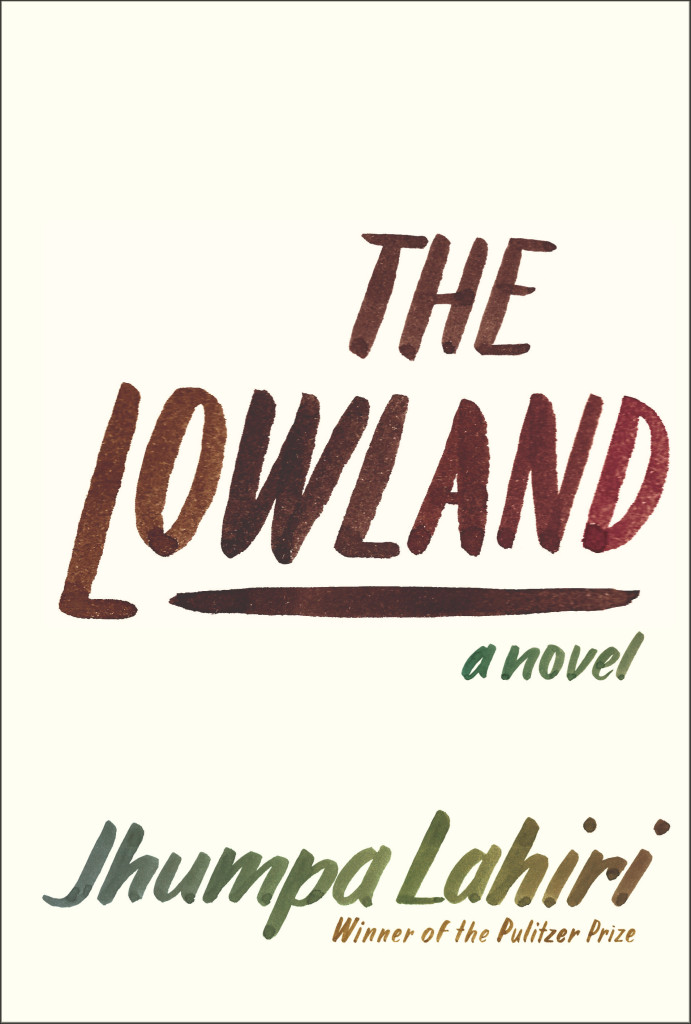
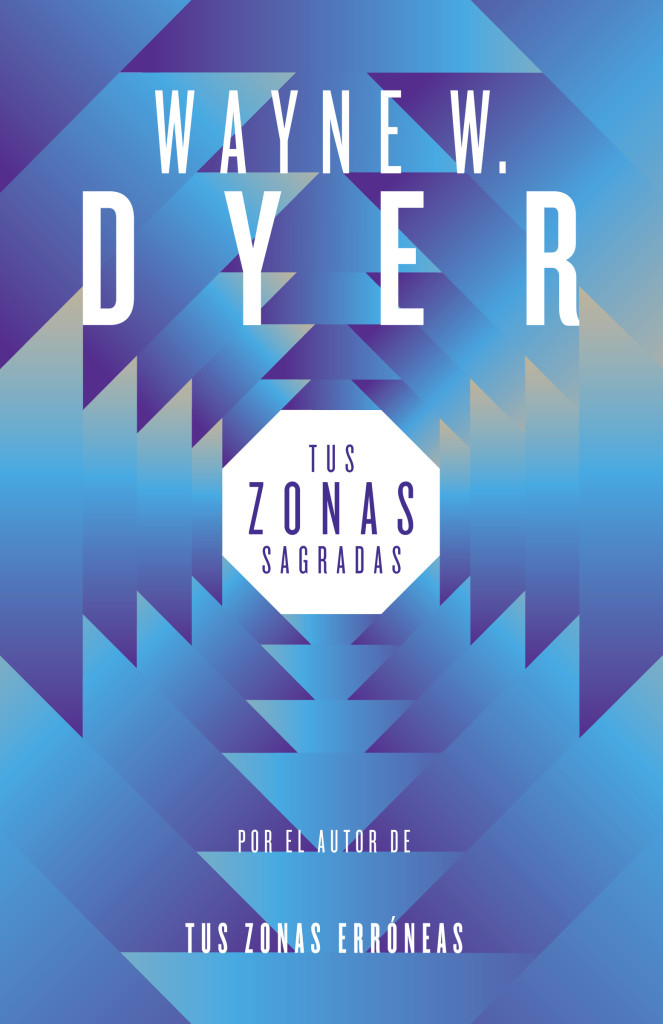
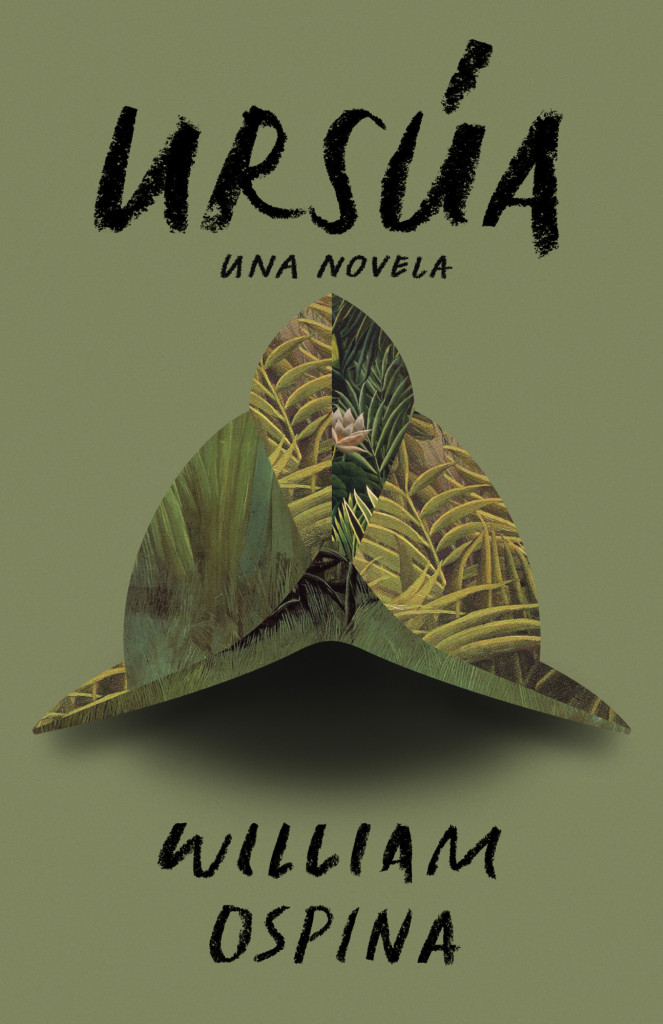
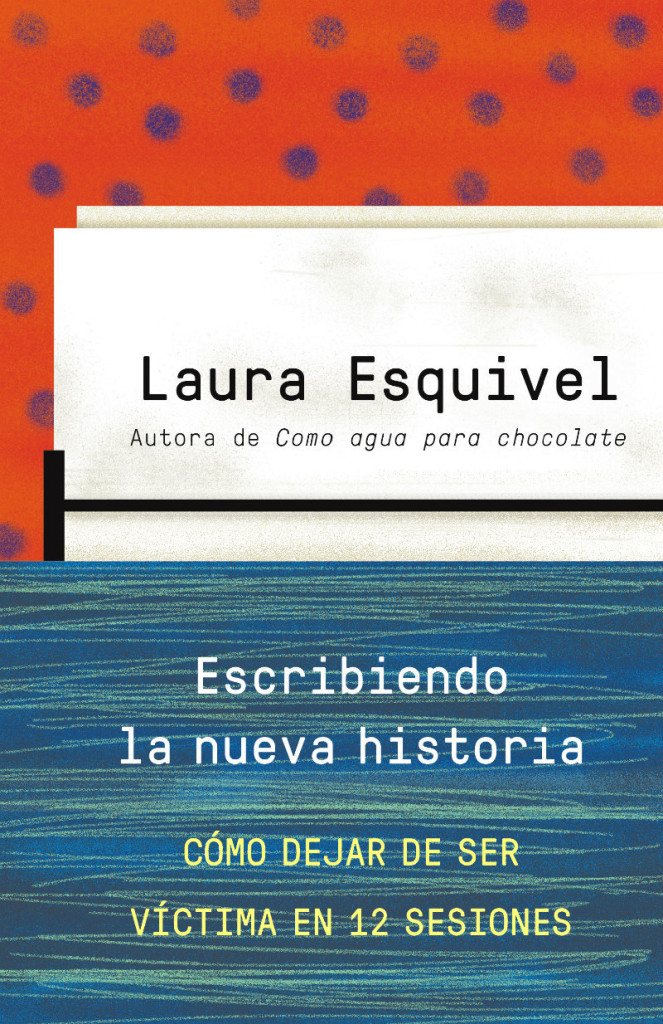
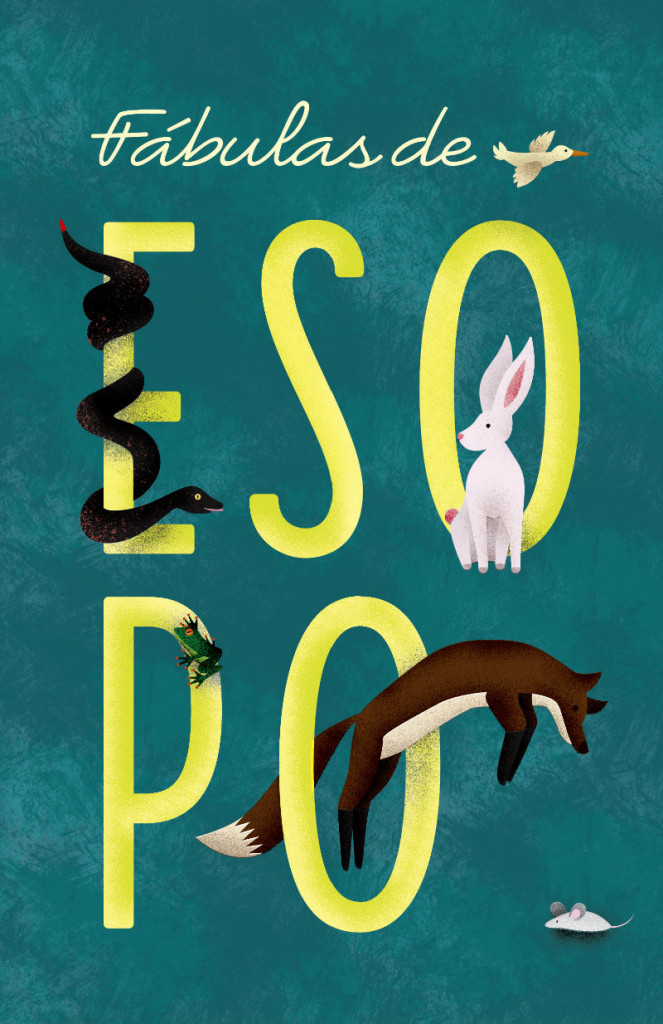
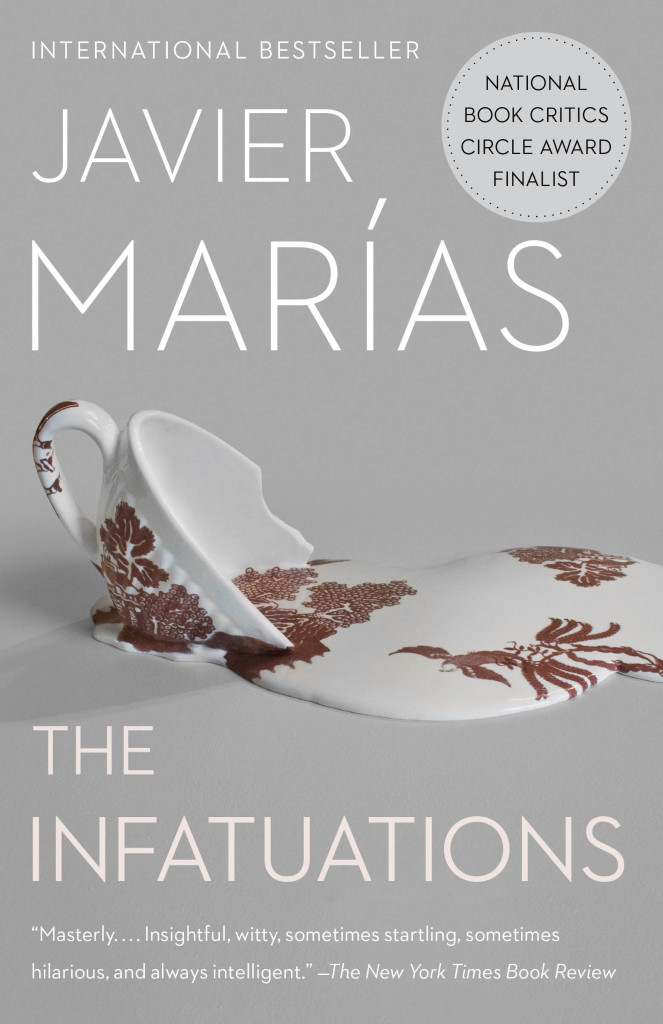
If you’ve walked into a North American bookstore recently, or you’ve been paying attention to the book reviews on this side of the Atlantic, you will have no doubt seen the stylish black cover for All Our Names by Dinaw Mengestu with its distinctive chalkboard lettering. Or perhaps you remember the hand-lettered cover for the Knopf edition of The Lowland by Jhumpa Lahiri? It was one of my favourite covers of the past year. Both are the work of Venezuelan designer Isabel Urbina Peña. Now based in New York City, Isabel is a cover designer for Random House and creator of a typographic zine called Rants from a Stranger.

Since relaunching her website earlier this year, Isabel’s cover designs have been featured on numerous blogs already (including here), but I was thrilled to have the opportunity to talk to her earlier this month about her work and career in greater depth.

Isabel and I corresponded by email. Here is our conversation:
Untitled-3

Do you remember when you first became interested in design?

I think because of my parents, art was in my life since I can remember. But, when I was in 7th grade there was a big boom of internet start-ups in Venezuela and I remember clearly “deciding” that I wanted to be a graphic designer then…I was 13 and the concept of what graphic design was at the time was probably wrong, but that moment definitely steered me in this direction. Also, there was a moment in my “foundation year” in college where one of my type teachers talked about how the “typographer” was present in the page, but invisible to the reader and that just flipped a switch in my brain.

Is anyone else in your family creative?

Both of my parents are architects and they really motivated my sister and me creatively while growing up.

We spent half of our childhoods going to museums, plays, as well as ceramic, poetry and creative writing classes. My dad also paints and belongs to a drawing circle. When I was little he would sit with me and walk me through art books or give me a canvas and ask me to paint from inspiration, or even from some big painting like Van Gogh’s sunflowers. Paul Klee, Gauguin and Chagall are a few of the artists that I discovered through them when I was six or seven… I have to say my mind was blown, I still cherish those moments.
Untitled-2

Were there a lot of books in your house growing up?

A ton. My dad also reads a LOT… So he wanted me to be “a reader.” I would get books for Christmas, birthdays, holidays, regular days…no Nintendo growing up… believe me that was tough, haha. He really sparked a love for reading and I would find new material everywhere; at my grandma’s I would read through all my uncle’s adventure books; at garage sales I started picking up Penguin paperbacks because they looked so simple and literary. Reading felt like something my dad and I shared, but it was also mine to discover.

Did you study design in Venezuela?

Yes, I studied at a small school called ProDiseño. Until very recently the “campus” was literally a two-flight house with a tub and a living room. Classes were really small, so everyone knew each other. The school started after a group of 80 students from IDD (Instituto de Diseño Neumann) left to start their own school. Neumann was founded by a large group of European immigrants who taught them design through the Bauhaus principles. Prodiseño had a very strong inclination towards clean, conceptual design. Everything had a purpose and “a why.” The content always came first; then the form. It was a very special experience and it prepared me to do anything (design, typography, illustration, animation, motion graphics…) and most importantly taught me to learn how to “think.” It was a very complete, Renaissance-style education.
Untitled-4

Is there a strong arts/design community in Caracas?

Definitely, though it is a rather small one compared to New York City, it is very interesting.

There are a lot of events that support the arts and design and mostly DIY culture. A lot of self-proposed shows and collectives that put on parties with great visuals and self-produced posters. Also, a lot of zines and self-published publications are popping all over town.

How is living in New York different?

Well, New York is different in every way: from the variety of people you meet to the cultural experiences that are available to you. Living here, for me, has been a rich experience loaded with references of all kinds, and motivation. If anything it makes me expect more from myself and aim higher.

How long have you lived there?

This is my 6th year in New York, but it honestly feels like I just got here. Of course, I’ve learned so much and evolved, but it feels like it never gets old.
escribiendolanuevahistoria_web

Does what’s going on in Venezuela worry you?

YES, I am glad you asked.

I am extremely worried by what’s going on in Venezuela and I think not enough people know about our situation. Protests started almost two months ago and people are being murdered and attacked on the streets daily and there doesn’t seem to be any change in the attitude of the current government. The truth is the people have the right to protest for the many problems that Venezuelan people are dealing with right now (the extreme insecurity they live in, the rapidly increasing inflation rates, the scarcity of many basic necessities and the extreme corruption, just to name a few) and the way that the government is handling this protests is, just, criminal. There are human right violations occurring left and right and even though there is proof (video and photos) for a lot of these events, the government is turning a blind eye and not doing anything to impart justice. Instead they focus their efforts in bullying opposition leaders and undermining the people’s rights. It is very, very sad and scary for all Venezuelan people and unfortunately change won’t come easily… but Venezuelans are still fighting hard, hopefully with a brighter future awaiting for all.

Can you describe your process for designing a book cover?

I start by reading the book and the TI (Title Info) sheet, getting familiar with the author and his backlist, if there is one. I take a bunch of notes and list ideas while and after I’m reading. I try to list everything—you never know when the “silliest” idea will spark something good. I’ll do a mood board and sketch a selection of these ideas in small (2 x 3 inches or so) detailed thumbnails with pencil and paper. Depending on the book, developing these ideas might be on or off the computer. I do a lot of paperback-size pencil sketches to define a lot of the lettering shapes and details.

Sometimes I will ink and do minimal clean up in the computer and sometimes I digitize the lettering in a font editing software and make the comps. Once I do that, I usually present a range of “developed” ideas and looks to my art director. We discuss if we need to adjust or tighten anything and then show the editors.
fabulasdeesopo_web

What are your favourite kinds of projects to work on?

Honestly, I am quite new at this, and I try to get the most out of any project. Figuring out what best represents the book I’m working on is one of the things I enjoy the most. That said, I really love doing all the cover art from scratch, and creating a “unique” design with custom lettering and illustrations.

Can you tell me about your zine “Rants from a Stranger”?

Rants from a Stranger is a self-published “booklet” inspired by zines, graphic novels, comics and the DIY culture. I like to call it a “typographic novel,” though it doesn’t really qualify as a graphic novel because of its length, and it is more on the zine realm. I love type and lettering and this was the perfect excuse to hand-letter more and produce a periodical self-published piece where I had full control of the creative direction.

I thought it would be fun and different to develop a series of “comics” without illustrations and solely use lettering as the “characters” of the story. So far there are two black and white issues and the third issue (special edition, in color) is coming out in late April as a collaboration with a very talented musician and artist from Venezuela, Mariana Martin Capriles, aka Mpeach. I’m really excited about this issue because of our collaboration, and also because it comes with a paper record player and a flexi EP record of her new song, “Boogaloo Mutante.”

Who are some of your design heroes?

Gerd Leufert, Gego (Gertrude Goldschmidt) and Nedo Mión Ferraro were very important figures in my formation as a designer and I still look through their books every time I have a chance. Their students, now well known graphic designers, and former teachers of mine, like Álvaro Sotillo, Gabriela Fontanillas and Carlos Rodríguez have always inspired me through their impeccable work and dedication.

Doyald Young’s lettering work take my breath away, and old school type designers like W.A. Dwiggins and Frederic Goudy are daily inspirations.

Who do you think is doing interesting work right now?

So many brilliant folks out there! Freddy Arenas, my super talented other half, does amazing motion graphics and illustration.

In the cover design world, my co-workers are doing great stuff, all the time. Linda Huang, Joan Wong, Pablo Delcán, Kelly Blair, Megan Wilson, Peter Mendelsund, Carol Carson, Stephanie Ross… From the type, design, art and illustration world Jesse Ragan, Village, Kris Sowersby, OCD, Steve Powers (ESPO), Sergio Barrios, Wayne WhiteCraig Ward, Alex Trochut, Elizabeth Carey Smith, Gustavo Dao, Suzi Sadler, Ryan Bernis, Priyanka Batra, Sasha Prood, Ping Zhu, Victo Ngai, Elana Schenkler, Geoff McFetridge, Nobrow Press, quite a mix…

I could keep going…

What advice would you give a designer starting their career?

Try harder. I think it’s really important to be critical of your own work and be able to accept its faults. Always, strive for more and be hungry. At the same time, embrace your mistakes, learn from them and move on to the next project. I am a big fan of tweaking and fixing til the end of days… but sometimes you just have to learn to let go of projects and keep going. Erik van Blokland said to our Cooper Type class (regarding typeface design), “Release early and release often; recognize what you did wrong in the project and try again.” I remind myself to do that everyday.

I think you should always try to work in what you love and feel passionate about. Even if it means reinventing yourself and making up your own projects in your spare time. This is where the good work will be. Don’t be afraid to make changes and try different things if you need to.
Untitled-10

What’s in your ‘to read’ pile?

I’m currently reading Americanah by Chimamanda Ngozi Adichie and Inter Views by James Hillman. I really want to read Dissident Gardens by Jonathan Lethem, My Age of Anxiety by Scott Stossel and The Goldfinch by Donna Tartt from this past season.

Someday, I’d love to re-read Cortazar’s Hopscotch (Rayuela) and all of Jorge Luis Borges.

The list goes on…

Do you have system for organizing your books?

Ha, no. I used to be very organized and had them alphabetically, color code them, etc… Those days are over… Nowadays, I move them around pretty often and they stay wherever they land.

Do you have a favourite book?

Not really a favourite single book, but I do have an influential shortlist: Virginia Woolf’s The Waves, L’Étranger by Albert Camus, Cuentos de Amor, Locura y Muerte by Horacio Quiroga, Piedra de Mar by Francisco Massiani, Ficciones by Jorge Luis Borges, Oscar Wilde’s Collection by Siruela (Biblioteca de Babel).

Thanks Isabel!
4 Comments

Mourning Local Bookstores

Writing for the New York Times, Julie Bosman recently looked at how surging rents are forcing bookstores from Manhattan:

The closings have alarmed preservationists, publishers and authors, who said the fading away of bookstores amounted to a crisis that called for intervention from the newly minted mayor of New York City, Bill de Blasio, who has vowed to offer greater support to small businesses.

[Author Robert] Caro said in an interview that he is heartbroken by the loss of bookstores from Manhattan, calling it “a profoundly significant and depressing indication of where our culture is.”

“How can Manhattan be a cultural or literary center of the world when the number of bookstores has become so insignificant?” he asked. “You really say, has nobody in city government ever considered this and what can be done about it?”

There has, of course, been a similar trend in Toronto with the Cookbook store, the Annex location of Book City, and the Bloor West Village Chapters all closing (or about to) in recent months.

On a happier note though, Bosman notes that some stores are thriving by locating to other, more affordable neighbourhoods in New York (and beyond):

just as many writers have fled to Brooklyn or Queens in search of more affordable housing, some bookstore owners have followed. Greenlight Bookstore in Fort Greene opened in 2009 to robust business and year-over-year increases in sales.

In December, Christine Onorati, the co-owner of Word bookstore in Greenpoint, Brooklyn, opened a second store in Jersey City. Ms. Onorati said she never looked seriously at Manhattan because the rents were so unaffordable…

…After spending years scouring Manhattan for a second location, Ms. McNally of McNally Jackson abandoned her search. At the urging of a former employee, she began looking in Brooklyn and settled on Williamsburg, where she found a “magnificent,” loftlike space with a 20-foot ceiling.

I hope this will be true of Toronto too even though it is much smaller than New York (New York has more than twice the population of Toronto). But here, despite some well-defined neighbourhoods, bookstores seem to have been slow to follow their customers (and their families) to more affordable areas of the city. My neighbourhood, where I’ve lived for 8 years, is filling up with young families and yet many store fronts remain stubbornly empty. And while I consider myself lucky to still have a bookstore, Book City’s Danforth location, only four subway stops away, it feel like a very different neighbourhood. I would love to be able to walk to a bookstore with my kids, or stop in to browse on my way home.

Perhaps the bookstores further afield, in communities like Burlington and Hamilton, are doing better? I hope so.

Still, I will leave the final word to Rebecca Mead, author of My Life in Middlemarch, who has written a sharp response to the New York Times article for  The New Yorker:

Those of us who cherish our local bookstores do so not simply because they are convenient—how great to be able to run out for milk and also pick up the new Karl Ove Knausgaard!—but also because we feel a duty to support them, because we believe in their mission. When books can be bought so cheaply online, or at one of the dwindling number of discount retailers, paying more to shop at a local bookstore feels virtuous, like buying locally sourced organic vegetables, or checking to see if a T-shirt is made in the U.S.A. It can be gratifying to the point of smugness to feel that one is being pluralistic, liberal, and humane; shopping at an independent bookstore may be one of the diminishing opportunities to experience that feeling in first-class New York City. Still, when I consider the vanished bookstores of Manhattan, I mourn not just their passing but the loss of a certain kind of book-buying innocence—a time when where one bought a book did not constitute a political statement, and reading it did not feel like participating in a requiem.

Comments closed

Modernity as Catastrophe

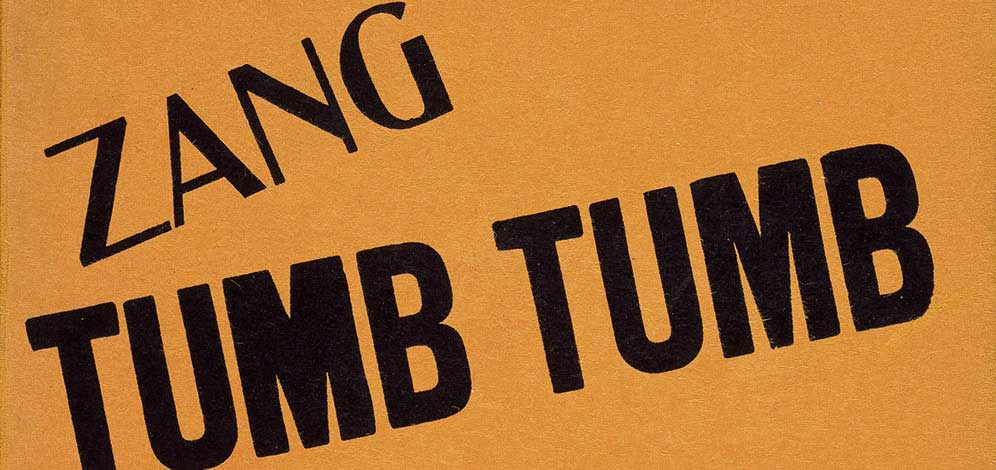
futurism_words_marinetti_zang_tumb_tumb

At the London Review of BooksHal Foster reviews the exhibition of Italian Futurism currently at the Guggenheim in New York:

Futurism wasn’t all bravado; it did have an aesthetic (or anti-aesthetic) of its own, which was to modernise the arts through a mimicry of the effects of new media, such as the adaptation of chronophotography and cinema to painting, photography and sculpture, or the application of the phonograph to musical performance. More ambitiously, the futurists sought to refashion the human sensorium along the lines of these new techniques of perception, and to this end they updated the ideas of synaesthesia, or the fusion of the senses, and kinaesthesia, or the mixing of bodies in motion and at rest. At the same time (and this is just one of many contradictions), the futurists were conservative stylistically; for all their nationalist pride, they relied on French sources, especially the divisionist brushstroke of neo-impressionist painting, which they adapted to themes of the modern city. Thus in Street Light (1909) Giacomo Balla offers the streetlamp as an improvement on the moon: both kinds of illumination are represented as waves of energy, but the artificial light dominates the natural one. So too in The City Rises (1910-11) Boccioni shows us the metropolis as a firestorm of colour greater than any in nature, where construction is difficult to distinguish from destruction; here the futurists thrill to modernity as catastrophe.

Comments closed

Jasper Johns: Regrets

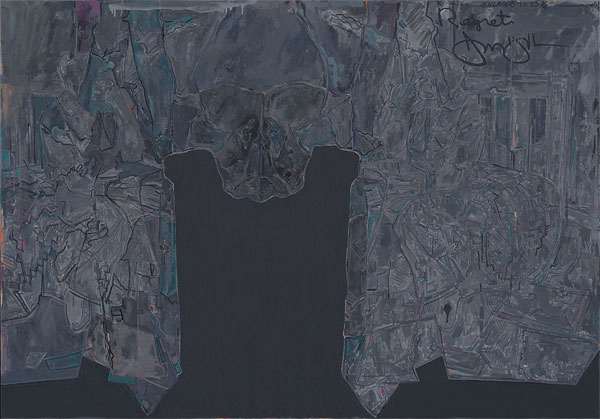
regrets-jasper-johns

At the Financial TimesJulie L. Belcove talks to 83-year-old painter Jasper Johns about ‘Regrets’, a new series of paintings to be exhibited at MOMA next month:

Johns began “Regrets” after he came across an old photograph in a 2012 auction catalogue from Christie’s, London – though he seems little concerned with the image’s context or provenance. “It was a sale of – who’s the other artist? Francis Bacon.” On the block was Bacon’s “Study for Self-Portrait” (1964) and the catalogue had published the source material, a portfolio of photo­graphs found in Bacon’s studio after his death in 1992. Taken by the photographer John Deakin, the pictures were of Bacon’s friend and fellow artist Lucian Freud. Bacon had married Freud’s body with his own face in “Self-Portrait”. “This is the one that struck me,” Johns says, pointing to the image of Freud perched on the quilt-covered bed and hiding his face in his hand, newspapers at his feet. The photograph was paint-splattered and torn, with a large chunk of the lower left side missing ­altogether, and the creases and voids – the photograph as object – were as interesting to Johns as the image itself. “Bacon mistreated the photographs ­physically, is what it looks like,” Johns says. “I just saw that and it caught my eye.”

‘Jasper Johns, Regrets’ opens at the Museum of Modern Art, New York, on March 15, 2014.

Comments closed

In Thrall to Machines: Italian Futurism, 1909–1944

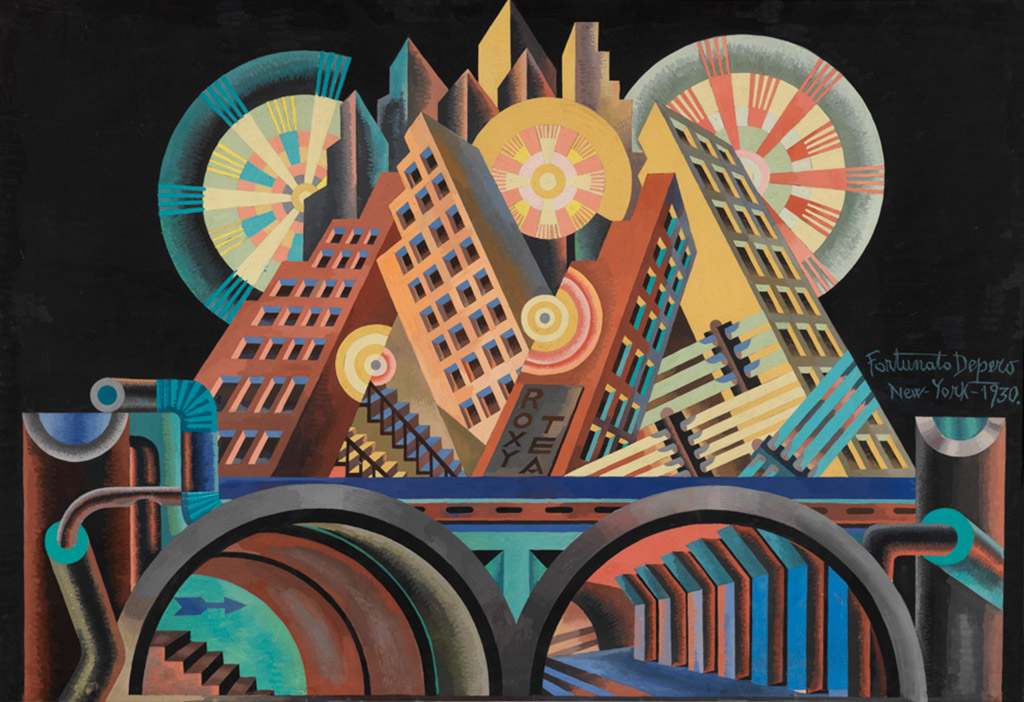
ex_depero_Skyscrapers-and-Tunnels

The New York Times reviews Italian Futurism, 1909–1944: Reconstructing the Universe, a new exhibition at the Guggenheim:

Was any avowedly modern art movement as obnoxious and noisily contradictory as Italian Futurism? By turn aesthetically revolutionary and politically reactionary, farsighted and visually challenged, not to mention officially misogynist, it is both a stain on the Modernist brand and a point of pride. It needs all the help it can get and it receives a large dose from “Italian Futurism, 1909-1944: Reconstructing the Universe,” an epic exhibition at the Guggenheim Museum.

Cool Hunting talks to curator Vivien Greene about the exhibition:

The show has a lot of didactics. Some of the artwork addresses that directly, so it’s easy enough to see their ideas, but we walk people through it as well. They celebrated war as this kind of cleansing medium, and a part of it was because Italy was seen as being so staid and so bourgeois, and after Italian unification in 1860, all those ideals of the Risorgimento really never come to fruition. So this idea of burn down the past and start fresh, be super modern—there were a lot of ideas of regeneration. But they also were very pro war because they wanted to enter World War One to get back the lands that were still under the rule of the Austro-Hungarian empire that were part of the Italian peninsula. So that’s a really practical historical reason that goes beyond you know, Sorelian ideas of the mob and violence—although Georges Sorel does inform them too, but sort of at different levels… [They] also were very aggressive: they start off as a left-wing revolutionary movement and then—how it often happens when you’re at one extreme of something totalitarian—you shift to the other and end up being on the right. They disagreed with the anarchists because the anarchists, although they were running around throwing bombs, had a more pacifist goal in mind.

Italian Futurism, 1909–1944: Reconstructing the Universe opens 21 February 2014 and runs through 1 September 2014.

(pictured above: Fortunato Depero, Skyscrapers and Tunnels (Gratticieli e tunnel), 1930.)

Comments closed

The Chelsea Hotel: Dream Palace or Trauma Ward?

Peter Conrad reviews Inside the Dream Palace: The Life and Times of New York’s Legendary Chelsea Hotel by Sherill Tippins for The Observer:

In the seething, druggy summer of 1969, a room in the Chelsea hotel gave me my first view of New York. The establishment – a Queen Anne folly with a rooftop pyramid on West 23rd Street, opened in 1884 – was not quite the dream palace of Sherill Tippins’s title: it struck me more as a trauma ward. Pimps and pushers loitered in the lobby; a transvestite dispensed room keys behind a shield of bulletproof glass; a trip upstairs in the elevator could get you high in more ways than one, given the captive cloud of pot fumes in the clanking box. The marble stairwell resounded to the ululations of resident rock bands, and once in a corridor I collided with shaggy Janis Joplin, awash in a swill of Librium, tranquillisers and heroin topped up by Southern Comfort, as she staggered towards the overdose that killed her a year later. I had never felt so grubby, so at risk, or so excited.

Comments closed

Save the Rizzoli Bookstore in New York

The Rizzoli Bookstore is one of the most beautiful bookstores in the world and an icon of New York City architecture. Unfortunately the owners of 31 West 57th Street, the store’s home for 30 years, have recently announced their plan to demolish the six-story, 109-year-old building and replace it with a highrise “ultraluxury” tower.  The Landmarks Preservation Commission, whose mission is “to be responsible for protecting New York City’s architecturally, historically, and culturally significant buildings,” has declined to grant landmark status to the building on the grounds that the property “lacks the architectural significance necessary to meet the criteria for designation,” despite its apparent architectural and cultural importance. A campaign to save the store, and a petition to have 31 West 57th Street designated an individual and interior landmark have been started.

You can read more about the plans to demolish the building in The New York Times. While at The New Yorker, Jon Michaud wrote about his time working at the store:

Many of the things that Rizzoli offered its customers (and its staff) are now easily obtainable online: international periodicals, European popular music, and books in foreign languages. But there is nothing online that will replace the ambiance of the place. With its vaulted atrium, marble flooring, and wood-panelled shelving units, Rizzoli looked like the private library of a Medici prince, the sort of place where an Umberto Eco character would hunt down an ancient secret.

Please sign the petition.

Comments closed

Saul Leiter: No Project, Only Pictures


I missed this when it was posted last month: Brian Dillon on New York photographer Saul Leiter, who died on November 26th, for the London Review of Books blog:

Leiter used cheap film that gave his images a muted quality, and the slowness of the stock made it harder to capture the momentary dramas of the street that Klein or Cartier-Bresson could freeze in fast black and white. Technical constraints cannot, however, quite explain what Leiter did with colour and composition. Time and again in the 1950s he depicts New York under snow, with just a red umbrella or a pair of temporary stop lights to punctuate the dirty white. He used the whitewashed windows of defunct stores to silhouette the odd scurrying figure, little more than a smudge of overcoat, shopping bags or another umbrella – always umbrellas. He was a connoisseur of the effects of condensation.
Comments closed

Art Spiegelman: The Horror of the Blank Page

Artist Molly Crabapple interviews (and draws!) Art Spiegelman for Vice magazine:

Because of Photoshop we all know that photographs lie every second that they open up their mouths. You can’t really trust a photograph. It could have just as easily been a photoshopped collage. So, it’s probably more plausible to trust an artist. You get to feel whether you trust them or not… Artists tend to have to reveal more of themselves even when they try to be as scrupulous as Joe Sacco. It has a place insofar as concentrating on something has a place. We’re living in an ADD universe. The computer encourages that second-to-second dopamine rush as you go from click to click. What’s valuable about comics and print is they actually are a venue where you end up spending time.

Art Spiegelman’s Co-Mix: A Retrospective runs November 8th – March 23rd at the Jewish Museum in New York City.

1 Comment

Luc Sante on Inside Llewyn Davis

The excellent Luc Sante reviews Inside Llewyn Davisthe Coen Brother’s movie about a Greenwich Village folk singer, for the New York Review Books:

Then again, it could be said that historical fiction, like science fiction, is really always about the present. Llewyn Davis is a creature of the here and now, not of 1961. He has none of the communitarian goodwill, the erudite passion, or the optimistic idealism that marked the period. He is a confused, irascible striver who isn’t sure what he is striving for, apparently seeking a career when folk music was about the last place you’d look for one. It is suggested that he has been flopping on friends’ floors for months, when, at the time, people generally only did that when they first hit town, since it wasn’t hard to scratch up the twenty or thirty bucks a month it took to rent a tenement flat fifty years ago.

But if you excise the period details, he makes sense. Whereas in a better time he would spend five or ten years woodshedding and developing a soul, he has no choice but to enter some kind of race right away or die on the vine. He is consistently crass because he feels threatened by people and ideas he can’t dominate—and he can’t dominate very much because he feels threatened. (How else to explain his heckling an Appalachian singer, complete with autoharp and authentically awkward?) Somehow he has made a connection to something that is genuine and profound—the haunting music—but circumstances force him to treat it as a card to play rather than as a path to explore.

As Sante notes in the review, while the film is based on musician Dave Van Ronk’s memoir The Mayor of MacDougal Street, it isn’t really about Van Ronk at all:

The impression is that of a young man who has a great many more mistakes to make in life before he wises up, if indeed such a thing is ever to happen, but who channels the accrued wisdom of the ages when he enters the folk-lyric continuum, becoming an entirely different person. This suggests a description not so much of Van Ronk—or Paxton, or Ochs, or Elliott—as of the man who upset the apple cart: Bob Dylan.

I can’t wait to see this movie.


Comments closed