Trends come and go, but the best seller remains essentially serendipitous. An editor can be no more certain of finding the next one than a writer can be assured of writing it. “As a rule of thumb,” writes John Sutherland, an English scholar who has studied the phenomenon, “what defines the bestseller is bestselling. Nothing else.”
Dystopia — Malcolm McDowell, Jan Harlan and Christiane Kubrick discuss the remastered 40th anniversary edition of Stanley Kubrick’s adaptation of A Clockwork Orange with Guardian film critic Xan Brooks (video).
Multitasking — Wyndham Wallace on the demands currently placed on musicians for The Quietus (via BookTwo):
“When you’re in Hollywood and you’re a comedian,” another tragically deceased stand-up, Mitch Hedberg, joked, perhaps bitterly, “everybody wants you to do things besides comedy. They say, ‘OK, you’re a stand-up comedian. Can you act? Can you write? Write us a script?’ It’s as though if I were a cook and I worked my ass off to become a good cook, they said, ‘All right, you’re a cook. Can you farm?’” This is the position in which our musicians now find themselves. They’re expected to multitask in order to succeed. Their time is now demanded in so many different realms that music is no longer their business.
And lastly…
Old ‘Boofy’ Halberstam — P. G. Wodehouse’s American Pyscho at McSweeney’s Internet Tendency:
“What, old ‘Boofy’ Halberstam on some kind of psychotic killing spree? That’s hardly the sort of thing that would stand up in court—I mean to say, there was that business with the policeman’s helmet back at Harvard, true enough, but even so—”
“Not to worry, Patrick. You see, yesterday evening I took the further liberty of murdering Mr. Halberstam.”
What I do is to sit alone in a room with a screen in front of me, a book more than likely to my left, held open by the weight of a discarded piece of chain, and within reach walls full of more books which are not just books but also tools and at the same time both extensions of and bastions for my existence. Some of them I have even made myself. With this screen and books and book-shaped tools I chase down words. And by placing these words in alphabetical order and by naming and defining and providing a word-based background for their existence and more words that illustrate examples of their use I create yet another book which is designated more than any other type to be a tool in its turn.
“In thinking about new media, we measure what we do now against a nostalgic baseline. We compare the way we really do use digital media to the way we imagine we once used printed media, so that we take the reading of printed books to stand for all sorts of values we think we used to have, like sustained attention, linear thinking, noninstrumental appreciation,” Price said. “But if you just count how many pages came off of the printing press at any moment, never in any historical period have books, let alone literary works, been the majority of printed production.”
What Are You? — A wonderful essay by Alexander Chee, author of the novel Edinburgh, on comics, identity and American culture at The Morning News:
At the supermarket when people asked my white mom, “Whose little boy is this?” sometimes I would defiantly insist I was hers, sometimes say nothing, but I’d glare each time as if I had eyebeams that could vaporize them… No one else was like me, except my sister and brother… In the bathroom I sometimes imagined myself as I would have been with either a white face or an Asian one, looking into the hazel part of my eye and seeing the green extend across all the way, or watch it shrink back, covered by brown. The freckles would blanch away or extend until they met and my face turned darker.
It would have been easier to be a mutant, I decided. I sometimes told myself I was one, that it was the only explanation for the reason so many people asked me “What are you?”
The Ludovico Treatment — Steve Rose on Stanley Kubrick’s film adaptation of A Clockwork Orange, released 40 years ago, for The Guardian:
Beyond the UK, the movie has never been out of currency, particularly in the US, and particularly among the young. Its sci-fi stylings have aged remarkably well, and its almost abstract portrayal of out-of-control youth and paternalistic society have made it something of a teenage rite of passage, the movie equivalent of The Catcher in the Rye. Remarkably, it has been a style guide for pretty much every subsequent musical genre… On the big screen, meanwhile, every time you see a gang walking along in slow-motion, a speeded-up party scene, a slow pan out from a closeup of a face, a torture scene set to cheerful music, the chances are it was plundered from Kubrick’s original.
There Are Enough Chairs — A short interview with designer Dieter Rams in the New York Times:
Most of the things are done already — you can’t make it better. Look at chairs: there are enough chairs. There are bad chairs, some good ones, mostly bad ones. But there are, even with a chair, possibilities to make it more comfortable or, from the economic point, you can make it cheaper, save some material or you can try new materials.
And finally…
Because it’s Friday, and because I can, The Velvet Underground Oh! Sweet Nuthin’:
50 / 50 — An interesting Design Observer piece by Ernest Beck on the controversy around AIGA’s 50 Books/50 Covers and the changing roles of book designers:
“The design aspect hasn’t changed, but it will,” notes [Chris] Sergio, who like other book designers believes that books and covers will endure in both print and electronic versions. “Digital versus print is a zero-sum argument,” he says. “These roads are not mutually exclusive. If anything, we want to see more competition and more critical exploration [of book design]. That’s why it would have been a shame to blend it all down into one big thing.”
Paula Scher, a partner at Pentagram Design, agrees that book design — in whatever form — is important because people still relate to visual imagery. “It’s the emotional connection,” she says. “People still remember record covers although nobody has records anymore.” Book jackets matter, whether they are on a piece of paper or in an electronic version, she continues “because when none of it matters because it’s digital or nobody does it or it doesn’t save the planet, then we murder our own craft and give excuses to be mediocre and lower standards bit by bit.”
Robert Burton, the Oxford anatomist of melancholy, confessed in 1621 that he was drowning in books, pamphlets, news and opinions. All the twittering and tweeting today, the blogs and wikis and apparent determination to archive even the most ephemeral and trivial thought has, as James Gleick observes in this magisterial survey, something of the Borgesian about it. Nothing is forgotten; the world imprints itself on the informatosphere at a scale approaching 1:1, each moment of reality creating an indelible replica.
“I certainly feel like I’m getting somewhere that I wanted to get to as a writer of words. I wanted to get better, I wanted to be more coherent, I wanted there to be a greater strength and depth emotionally, and all these things require work – to hone something, to get rid of any superfluous language. I’m inspired by the other great writers I go back to and read again and again, and think how did they do that?”
Such as? She indicates a volume of Harold Pinter’s poetry that she has brought with her. “Pinter leaves me speechless. Just unbelievable. A poem like ‘American Football’ or ‘The Disappeared’. TS Eliot of course. Ted Hughes. WB Yeats. James Joyce.” She leans forward, freshly excited. “Just that feeling of reading something profound and having your breath quite literally taken away by the end of a piece. I’m reading John Burnside’s poems at the moment. Do you know his work? I’m getting that feeling – just reaching the end of every poem, going ‘Oh my God!'” She clutches her chest and laughs. “And all of these writers offer me a greater understanding of what it is to be alive, and that is such an incredible thing art can do for other people. It made me want to try and get close to this strange, mysterious thing that people can do with words.”
It’s certainly easier to know one set of rigid rules than to develop a fingertip-feel for the nuances of syntax, word choice and mechanics. This is why the book “Elements of Style” is such a hit. William Strunk and E.B. White’s canonised system for language use is short and sharply worded. Read, memorise and you need never think again… Readers are taught any number of things, such as when to use “that” instead of “which” and how one should never begin a sentence with “However, …”. But such guidelines should be understood as the authors’ preferences, not grammatical commandments.
Writing in English offers far more room for manoeuvre than some may realise… A lot of people don’t like this fluidity. Life is tricky in a world without rules. Fortunately, language does have rules, but they are more like bedrock principles than a detailed set of by-laws covering every do and don’t. A good usage dictionary should explain the principles, not simply command.
Tick, Tick, Tick… — A lovely essay by Zadie Smith about Christian Marclay’s art film The Clock — a 24-hour montage of film and television clips about time — for the NYRB:
Marclay manages to deliver connections at once so lovely and so unlikely that you can’t really see how they were managed: you have to chalk it up to blessed serendipity. Guns in one film meet guns in another, and kisses, kisses; drivers in color wave through drivers in black-and-white so they might overtake them.
And still The Clock keeps perfect time. And speaks of time. By mixing the sound so artfully across visual boundaries (Marclay’s previous work is primarily in sound), The Clock endows each clip with something like perdurance, extending it in time, like a four-dimensional object. As far as the philosophy of time goes, Marclay’s with Heraclitus rather than Parmenides: the present reaches into the future, the past decays in the present. It’s all about the sound. The more frequently you visit The Clock the more tempted you are to watch it with your eyes closed… Nostalgia is continually aroused and teased; you miss clips the moment they’re gone, and cling to the aural afterglow of what has passed even as you focus on what is coming, what keeps coming.
The Real Story — An interesting and passionate post by the publishers of Two Ravens Press about the whys and wherefores of being a small press and the economic realities they face:
Why do small publishers bother? There are undoubtedly as many reasons as there are small publishers, but for people like us it’s because we’re tired of seeing the same old stuff on the bookshelves year after year after year. Safe books, based on the books that sold millions the previous year. Books that take few chances, books that fail to do anything to change the way we look at the world or ourselves. I wanted to go into a bookstore and be surprised. I wanted writing that was different, language that sang. And that’s why we started Two Ravens Press: to publish those books that big publishers were hardly bothering with any more. That’s also why the glib so-called ‘solutions’ to all the problems of an independent publisher like us that consist of helpful statements like ‘you need to have the commercial successes to fund the losses you’ll make on the literary, innovative stuff’ make absolutely no sense at all. Everyone else is publishing the commercial stuff. I don’t want to. Not doing that is my whole raison d’être. That’s the whole point! I don’t LIKE commercial stuff. I don’t think it ought to be banned, I don’t look down my nose at it, sometimes (but not often) I’ll even read it. But I don’t want to be yet another publisher churning out more of the same old writing. I want to do something different. I want literature.
This approach — a smaller number of shows, painstakingly assembled and treated more like small movies than like regularly scheduled programs — addresses a different tension, around new habits of media consumption. That is the tension between relevance and disposability. Discussions of technology and media tend to focus on speed — what’s the fastest way to break the story, consume the story, influence the story? After all, media consumers today seem like info-rats chewing through heaps of micro-facts and instant-expiration data points.
But the other interesting thing about media these days is that it can stand perfectly still. In fact it loiters: shows don’t simply spill over the airwaves and evaporate; they linger on DVRs, DVDs, various online services. Newspaper articles pile up in Web “archives.” And clearly we still accept, still crave, some deeper media experience too. In experimenting with a show that produces (at most) 10 episodes a year, WNYC was specifically thinking of HBO’s success in building powerful cultural franchises that ignore the mores of traditional broadcasting.
And finally…
Wall of Sound — Nikil Saval on how the iPod has changed the way we listen and respond to music:
The great 1990s magazine the Baffler spent its first half-decade analyzing how the culture industry managed, with increasing success, to recognize new musical trends and package them and sell them back at a markup to the people who’d pioneered them. The Baffler looked back to the punk scene of the early ’80s for inspiration; it spoke up for small labels that sold music to local constituencies. If you couldn’t get what you wanted on the radio, you would have to find it left of the dial—and keep looking over your shoulder for the man.
The danger now is different. The man no longer needs a monopoly on musical taste. He just wants a few cents on the dollar of every song you download, he doesn’t care what that song says. Other times he doesn’t even care if you pay that dollar, as long as you listen to your stolen music on his portable MP3 player, store it on his Apple computer, send it to your friends through his Verizon network. To paraphrase Yeltsin’s famous offer to the Chechens, take as much free music as you can stomach. We’ll see where it gets you.
FF Spinoza — A nice looking new type family designed by New York-based art director Max Phillips:
With the goal of readability in mind, Phillips named the typeface after 17th century rationalist and lens-grinder Baruch Spinoza, a man whose job it was to help people see clearly.
The family is meant as an elegant workhorse, a classic text family with just enough individual character to hold its own in display sizes. It was inspired by mid-century German book faces like Trump Mediæval and Aldus, and by the types of Nicolas Kis. The forms are narrow and economical, with open counters. The line is firm and distinct. It has strong thick strokes and serifs to help it grip the page. Its intended virtues are firmness, clarity and modesty.
Interestingly, Phillips is also author of the Shamus Award-winning mystery Fade to Blonde, and co-founder of the pulp-infused Hard Case Crime imprint.
Though Helvetica was always the choice font for typographic synchronization, it was simply too expensive to ship over from Amsterdam, where it was made (back in the days of metal type, lead font plates had to be imported, a costly endeavor, since the plates had to be custom manufactured to fit American printing presses). In the early sixties (much like today) New York City Transit just didn’t have the money. Instead, the MTA used a similar font called Standard, or Akzidenz-Grotesk, which took nineteen years to fully phase out. It wasn’t until 1989 that the MTA officially ratified the decision to replace it with Helvetica in its “Sign Manual.”
The review is accompanied by a slideshow of images from the book.
[T]here will always be a tradition, running underneath the more visible forms of pop and rock music. At certain times it comes into focus and is a fairly hip reference point for various artists; at other times – much of the 80s and early 90s, for example – it’s practically invisible and/or unredeemable.
Right now we’re on an upswing, possible as an inevitable reaction to the huge leaps forward in digital and electronic music in the 90s; also because, when making or locating all sorts of music has become so easy and accessible, there’s a certain nostalgia for an indefinable organic quality to the production and a sense that music can be about more than purely formal concerns. This, I’m sure, is connected at some instinctive level with the destabilising effects of recent political developments here. It’s very noticeable that folk revivals tend to occur when people are afraid of something being irretrievably lost.
I must confess to being intrigued by culturomics… Having said that, I still want to hold onto the idea of algorithmic culture. I prefer the term because it places the algorithm center-stage rather than allowing it to recede into the background, as does culturomics. Algorithmic culture encourages us to see computational process not as a window onto the world but as an instrument of order and authoritative decision making. The point of algorithmic culture, both terminologically and methodologically, is to help us understand the politics of algorithms and thus to approach them and the work they do more circumspectly, even critically.
And finally…
Just a reminder that the late and final deadline for AIGA’s reinstated 50 Books/50 Covers is April 21, 2011.
With LCD Soundsystem playing their last show in New York last week, M ss ng P eces has just posted a really great interview with James Murphy from the band. Obviously this has nothing whatsoever to do with books as such, but Murphy does muse on how technology is affecting how we discover and create art, which is (needless to say) very relevant to readers and the book industry a like:
“I was eager to be Judy’s model and to have the opportunity to work with a true artist. I felt protected in the atmosphere we created together. We had an inner narrative, producing our own unspoken film, with or without a camera.” — Patti Smith
Which brings us to the embarrassing part. Blaming the studios for everything lets another culprit off too easily: us. We can complain until we’re hoarse that Hollywood abandoned us by ceasing to make the kinds of movies we want to see, but it’s just as true that we abandoned Hollywood. Studios make movies for people who go to the movies, and the fact is, we don’t go anymore—and by we, I mean the complaining class, of which, if you’ve read this far, you are absolutely a member. We stay home, and we do it for countless reasons… The urgency of seeing movies the way they’re presumably intended to be seen has given way to the primacy of privacy and the security of knowing that there’s really almost no risk of missing a movie you want to see and never having another opportunity to see it. Put simply, we’d rather stay home, and movies are made for people who’d rather go out.
This, after all, is a label that is thriving in an industry that is supposed to be dying.
“It’s not dying . . . it’s changing,” says Russell. “But then it always has been, as is the whole world. I just don’t think about the future at all. It’s not my responsibility.”
Really? He doesn’t have a strategy?
“Yeah – put good records out. That’s it. I’m sure there are people thinking about stuff like copyright and downloading, but . . . you don’t want an author to be thinking about Kindles and shit like that, do you? I mean, we do our best, but we definitely don’t offer any solutions for the music industry.”
Completely unrelated to books, but too good to miss nevertheless… An hour-long interview with legendary singer and civil rights activist Mavis Staples for CBC Radio’s Tapestry:
I began, of course, as a poet, but the power of rock ‘n’ roll — rock ‘n’ roll was really the canopy of our cultural voice, and especially in the ’60s, late ’60s and early ’70s, that — and our rock stars, the people who were building that voice, whether it was John Lennon or Neil Young or Bob Dylan, or whoever it was, they were infusing politics and — and political ideology, social justice, sexual energy, poetics, all within the canopy of rock ‘n’ roll, and striving to make this a universal language. It was a real mission.And I — I wanted to add to that.Writing poetry is beautiful, but, when I was young, I wanted to be part of this important cultural voice.
Morley’s post about critics, and meeting Alex Ross, is also worth reading:
I’ve always liked a critic who doesn’t think like anyone else. Someone who takes me so much by surprise with their opinions, approach and rigour that they themselves become a kind of artist. I like a critic who demonstrates that they deserve to evaluate and document the work and art of others by writing in such a way that the work makes more sense, sometimes only makes sense, because of what they write and why they write it. I loved critics, whether it was Kenneth Tynan, Susan Sontag, Tom Wolfe, Richard Meltzer, John Updike, Roland Barthes, Pauline Kael, Angela Carter or Lester Bangs, for the way they made it clear, with such evangelical poise, precision and purpose, that without the great critic, the world, and the worlds of those that made up the world, was never properly finished off.
 An incredible Flickr set of 20th Century avant-garde book covers (via Quipsologies).

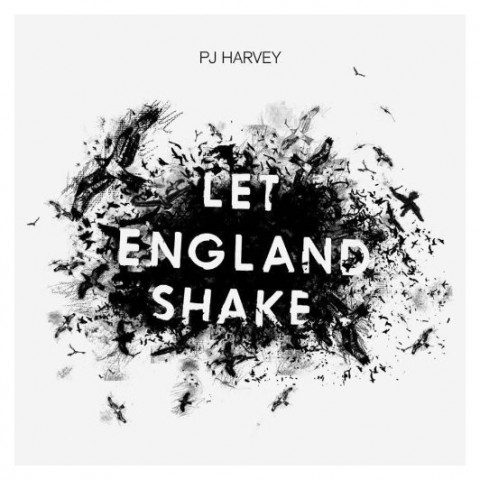 P. J. Harvey