
Music journalist Simon Reyolds talks to Michael Silverblatt about his book Retromania: Pop Culture’s Addiction to Its Own Past on KCRW’s Bookworm:
Comments closedBooks, Design and Culture
Music journalist Simon Reyolds talks to Michael Silverblatt about his book Retromania: Pop Culture’s Addiction to Its Own Past on KCRW’s Bookworm:
Comments closed
Writer and music critic Tom Piazza discusses his new collection of essays, Devil Sent the Rain: Music and Writing in Desperate America, on NPR’s Weekend Edition:
NPR WEEKEND EDITION: Tom Piazza Devil Sent the Rain mp3
(via Largehearted Boy)
Comments closedSuperhybridity — Tom Payne reviews Retromania by Simon Reynolds for The New York Times:
It’s not so much the selling-out that saddens Reynolds. Rather, it’s our ready acceptance that the past is our only future: that after postmodernism, with its weary, overinformed view that there is nothing new to say, comes something called “superhybridity.” Superhybridity, a concept borrowed from an art magazine, exists because the Internet can bring whatever we want into our hard drives, so that we can sample it or mash it up: no culture, from any time or place, can be remote from us.
Anger — In light of the recent riots in Britain, Chris Arnot looks at the legacy of Alan Sillitoe (Saturday Night and Sunday Morning) with the author’s son David:
Something about the sudden switch from menace to charm, coupled with that jack-the-lad swagger, briefly brings to mind Arthur Seaton, the antihero of Saturday Night and Sunday Morning… Arthur had already shrugged off the collectivist values of the postwar years. He was “trying to screw the world … because it’s trying to screw me.”
“Currently my head is empty. I am on holiday.” — Wim Crouwel at Designers & Books.
The Weird Outsider — A long profile of Jared Lanier, author of You Are Not A Gadget, in the New Yorker:
Like an innovative painter who alternately courts and scorns the establishment, Lanier often seems torn between embracing and repudiating his newly influential status. As we drove, he mentioned, with some pride, that he had been “banned” from the TED conferences last year, after publishing an essay about the narcissistic nature of the event in a London magazine. (A spokesperson for TED said that Lanier is welcome at the conferences.) He purported to be similarly unimpressed by Davos, the economic conference, which he has attended “a billion times.” “At one point, I was in an elevator with Newt Gingrich and Hamid Karzai,” he said. “There are really only so many times you want to be in that situation.”
And finally…
Writer Chuck Klosterman interviews Bill James, inventor of sabermetrics — the “ideological engine” behind Moneyball, Michael Lewis’ book on baseball — and author of a new book Popular Crime: Reflections on the Celebration of Violence, for Grantland:
This line is fascinating if you’re interested in crime fiction:
The whole idea of Sherlock Holmes is dangerous because it encourages people to think that — if they’re intelligent enough — they could put all the pieces together in absolute terms. But the human mind is not sophisticated enough to do that. People are not that smart. It’s not that Sherlock Holmes would need to be twice as smart as the average person; he’d have to be a billion times as smart as the average person.
But this is just great:
Comments closedThere were so many terrible things done by kings and emperors and everyday normal people that are just incomprehensible today. The historian Suetonius writes about how Nero — beyond the many thousands of people he killed in his official duties— liked to sneak out of the palace at night and murder people in the streets, purely for entertainment. Now, whatever you may think of our recent presidents, it’s pretty safe to say they didn’t do that.
 Nicholas Carr, author of The Shallows, reviews Retromania by Simon Reynolds for The New Republic:
Who wants yesterday’s papers?” sang Mick Jagger in 1967. “Who wants yesterday’s girl?” The answer, in the Swinging 60s, was obvious: “Nobody in the world.” That was then. Now we seem to want nothing more than to read yesterday’s papers and carry on with yesterday’s girl. Popular culture has become obsessed with the past—with recycling it, rehashing it, replaying it. Though we live in a fast-forward age, we cannot take our finger off the rewind button.
And Mr. Reynolds has been a busy man. Not only is his book also reviewed at the A.V. Club, he is interviewed about it at Pitchfork, The Quietus and The Second Pass.
Shiny and New — Designer Matt Roeser talks about his New Cover project with Ian Shimkoviak at Covered Up:
I love physical books. I have more books than I have space for in my house, but there’s just something about a physical book that is so appealing to me that an e-book will never be able to replicate. Now, whether the rest of the world feels that same way is yet to be seen. I definitely think there is a large population that doesn’t care how they’re experiencing the book; they just want to be able to read it.
And finally…
Drinking, Gambling and Grandma — Lorrie Moore, author of A Gate at the Stairs, on the TV show Friday Night Lights for the NYRB:
The series wants Dillon [Texas] to function as a microcosm of larger working- and middle-class America: it takes its fifty or so hours and opens a window on American family, education, community race relations, athletics, social class and its various brokennesses. But lest you go away, it keeps you involved with the drama of high school—its romantic student soap operas, its tense and dire administrative politics, plus the multigenerational home life that has dads in prison, dads in Iraq, dads gambling and drinking and roaming around the country while Grandma sits in the front room.
Comments closed
A Period of Digestion — Music journalist and author Simon Reyolds talks about his new book Retromania: Pop Culture’s Addiction To Its Own Past with the A.V. Club:
[S]o much happened in the 20th century and things moved so fast, and you had this enormous capitalist engine generating all these toys and gadgets and things that became rapidly obsolescent. It’s all piled up, hasn’t it? And you think of the sheer amount of recording that went on. It always blows my mind whenever I go record shopping how many records I’ve never seen before. I’ve been in record stores forever, decades I’ve been looking through them, and I still see things I’ve never seen, artists I’ve never heard of. The sheer amount of recording that was done, it is almost like this universe of music. Daniel Lopatin in the book actually says it’s a period of digestion, we’re digesting and processing all this stuff that happened musically and in other senses in this really runaway, fast period of time of production. And perhaps that’s fine. Perhaps that’s what we need.
And on a not unrelated note…
A wide-ranging interview with Alan Moore about his new book, Extraordinary Gentlemen: Century 1969, comics and popular culture, for Wired:
[T]he overall legacy of the first decade of the 21st century has been one wherein culture mirrors what was going on in our politics during those years. We had a form of politics that was concerned with spin and surface at the expense of any kind of moral or even rational content. In keeping with our well-spun political landscape, I think a lot of contemporary art, if it has a concept it is a concept in the advertising sense. It’s a little mental pun, something that you can use to sell cars or burgers. But in terms of art, once you’ve got the idea of joke, if you like, there is absolutely no need to ever look at those works again.
And sticking with comics…
From Superheroes to Superbrands — Paul Gravett on Grant Morrison’s new book Supergods: Our World in the Age of the Superhero and the poor treatment of the original creators of the comic book superheroes (thx Ed):
How easy is it for fans and pros today, so hypnotised since childhood by these ubiquitous, constantly repromoted properties, to ignore their tarnished histories? I’ve talked recently to some fan readers who are troubled when I mention this horrific, disfigured portrait lurking beneath the polished profiles, masks and capes, hidden in the attic, but who can’t seem to help themselves from still wanting to follow these perfect-looking, super-powered Dorian Grays, no matter what. Morrison prefers to elevate the superhero as an indestructible concept, almost an independent, self-actualising entity, acknowledging only slightly its murkier commercial side, but glossing over the exploitation rife in this business, then and now. Unlike earlier ‘public domain’ gods and goddesses from antiquity and religious faiths, Superheroes are as much Superbrands, properties that must make profits for DC, part of Time-Warner-AOL, and Marvel, bought by Disney. While Morrison and his ilk earn tidy sums from endless, spiralling makeovers of these franchises, both publishers are aggressively fighting lawsuits over ownership against the estates of Siegel and of Jack Kirby, joint architect of the Marvel Universe.
And finally…
A fascinating article by Adrian Hon on ‘cargo cults’ and Unbound, a crowdfunding site for books, in The Telegraph (via Waxy):
Unbound isn’t some fly-by-night operation; it was heavily promoted at the Hay Festival, it’s received gushing praise across the media – yet it may end up with a one in six success rate.
So, why was Unbound set up in the first place? It’s because they constructed a cargo cult, believing that if they mimicked the superficial elements of successful crowdfunding, they could enjoy the same success as others – but perhaps even more, thanks to their relationships with publishers, agents, authors, and the media.
It is perhaps a little unfair to single out Unbound. Traditional publishers who jump on the latest genre bandwagon without truly understanding what made the original popular are just as guilty.
Comments closed
Author and journalist Dorian Lynskey talks about his book 33 Revolutions per Minute: A History of Protest Songs with Ramona Koval on The Book Show:
THE BOOK SHOW: Dorian Lynskey — The History of the Protest Song
Comments closed
Furious — Writer and herstorian Trina Robbins talks to Imprint about her new book on pioneering female cartoonist Tarpé Mills and her newspaper strip Miss Fury:
I’ve always been a lover of noir and of good adventure strips in the noir mode, as typified by Milton Caniff’s Terry and the Pirates. They are adventures that are good, fun escapist reading. As you know, there were a number of cartoonists during the 1940s who worked in that genre, but only Tarpé Mills was a woman. That alone would have been enough to attract her to me. But add to that: good art, solid storytelling, memorable characters… including three of the strongest female characters in comics…
Mills’s characters also wore great fashions… at a time when many of the male cartoonists dressed their female characters in featureless red strapless evening gowns or equally featureless short red V-necked dresses. Of course there are exceptions – Caniff was very up on women’s styles. But I think in general one sign that a comic is by a woman is that attention is paid to the clothing – Miss Fury, Brenda Starr, Mopsy, I could go on and on – and that men tend not to show much awareness of what real women are wearing, even today… especially today!

And on the subject of comics…
Word as Pictures — Designer Rob Harrigan has launched a new series of interviews about design and comics. First off is designer Rian Hughes:
Comics, in a broader sense, are simply words and pictures – and words AS pictures, which as a designer, and especially as a font designer, is what fascinates me the most. The formal aspects of communication – this is the very language designers manipulate for their own ends, the medium culture uses to spread memes.

Still Great, Still in Production — Alexander Lange reviews Dieter Rams: As Little Design as Possible by Sophie Lovell for The Architect’s Newspaper:
Open Dieter Rams: As Little Design as Possible. Turn to page 64. There you will find the Braun product line circa 1963. I would buy any one of those products today, save the cameras, were they sold in stores. Which is to say, you will get no argument from me about Rams’ greatness as an industrial designer and the superiority of his achievement as head of Braun’s product design department from 1961 to 1995, where he designed or co-designed 500 products, lighters, door handles, coffee grinders, hi-fis and televisions, hair dryers, and cameras. Plus those Vitsoe 606 shelves, still great, still in production.
And finally…

Steven Heller on designer, art director and inventor of the album cover Alex Steinweiss, who died on Sunday aged 94, for The New York Times:
Comments closedMr. Steinweiss preferred metaphor to literalism, and his covers often used collages of musical and cultural symbols. For a Bartok piano concerto, he rejected a portrait of Bartok, using instead the hammers, keys and strings of a piano placed against a stylized backdrop. For a recording of Gershwin’s “Rhapsody in Blue,” he used an illustration of a piano on a dark blue field illuminated only by an abstract street lamp, with a stylized silhouetted skyline in the background…
Mr. Steinweiss said he was destined to be a commercial artist. In high school he marveled at his classmates who “could take a brush, dip it in some paint and make letters,” he recalled. “So I said to myself, if some day I could become a good sign painter, that would be terrific!”

60 Years of Innovation — The estimable John Self on publisher Peter Owen for The Guardian:
It cannot simply be good luck that leads one man to publish such an embarrassingly long list of riches. Owen is clear that both “literary acumen and a business mind” are essential. He has survived where other publishing houses forging a similar path, such as those of Marion Boyars and John Calder, have been closed or sold, and had their lists filleted by larger houses; if you are just “an editor buying books you like, with no idea how to run a business,” Owen says, “you don’t stand a chance.” For him, a distinctive look helped: bold (and presumably inexpensive) two-colour covers by Keith Cunningham may have lacked the cool of Jan Tschichold’s Penguin templates, but gave the list a uniform feel. The odd commercial success helped more, with titles which caught the public mood such as Siddhartha and The Man Who Planted Trees. Owen may not always have liked his authors (Salvador Dali was “a creep [but] not as mad as you’d think. When you mentioned money, he suddenly became very sane”), but it’s hard to question his commitment to new and avant-garde writing.
Goodbye To All That — The Economist glumly ponders the fate of Borders and independent bookstores:
The problem, however, is that no one seems willing to buy full-price books anymore. Campaigns to get people to buy books from their local bookstores—such as “Save Bookstores Day” on June 25th—miss the point. While there is demand for real bricks-and-mortar places to gather, drink coffee and read new books, such places can’t exist if the market can’t accommodate them… [T]he market is squeezing out a meaningful public space. It will be interesting to see what fills the void these bookstores leave behind.
“Interesting” is probably not the adjective I would have used personally…

Dead Cool — Comics critic Paul Gravett talks about his new book 1001 Comics You Must Read Before You Die with Bleeding Cool:
Initially, the American publishers tried to insist that every one of 1001 Comics must be available in English. But I had to insist that this would exclude loads of absolute masterpieces, and it wouldn’t make the book work in the other languages it is going to appear in, such as French or German. So somewhere around 12 per cent or so of the 1001 are not available in English, at least not yet. I seriously hope that exposure in 1001 will alert publishers and motivate them to translate them.
And finally…
Naomi Yang, designer, visual artist, publisher and founding member of the band Galaxie 500, talks with Print Magazine:
A book has always been an object! That is what can be so wonderful about them and so different than a digital book—or even a print-on-demand book. A book is an entire world: you see the cover, you pick it up, you feel the material of the cover, you turn it over, you read the back—and then you open it! You get the progression of the half-title, the title page, the table of contents and then that first page of text, that first line. And there are so many small things, the page numbers, the running heads, the proportions of the margins—the same elements in each book—but how will you do it this time?
1 Comment
Jarvis Cocker talks to Faber Publishing Director Lee Brackstone about songwriting and the publication of Mother, Brother, Lover, his first collection of lyrics:
Mother, Brother, Lover will be published by Faber in October.
(via Largehearted Boy)
Comments closed
Author Jennifer Egan discusses music, Proust and, of course, her Pulitzer Prize winning novel A Visit From the Goon Squad with Eleanor Wachtel for CBC Radio’s Writers & C0mpany:
CBC RADIO WRITERS & Co. – Jennifer Egan
The paperback cover for the US edition of A Visit From the Goon Squad (pictured above), was designed by the talented Jamie Keenan.
Comments closed
A little late on this, but 50 Watts has posted the winners of Polish Book Cover contest. Will Schofield’s co-judges were Aleksandra and Daniel Mizieliński, editors of 1000 Polish Book Covers, and Peter Mendelsund. All the amazing entries are here. Pictured above: A Clockwork Orange by Chris Taylor.
Fragments of Experience — The Guardian reviews Modernist America by Richard Pells:
Film editing, he tells us, owes debts to cubism, futurism and surrealism. Cutting from one shot to another enables the cinema to “create a feeling of movement as well as a sometimes fractured sense of time and reality. The fragments of experience, captured in a single shot and then juxtaposed with other shots to produce a multiplicity of perspectives, are the cornerstones of the cinema, and they are also central to the modernist view of the world.”
Music from Nowhere — Rob Young, author of Electric Eden, interviewed in the LA Times:
[P]art of my argument is that the British folk revival did actually begin much earlier than… the 1950s — you have to look back at the late 19th century and the Victorian folk collectors… [William] Morris is important because what you find in the 1880s and ’90s is a surge of conservation and preservation projects starting up, mainly by people who were horrified at the destructive effects of industrial progress on the landscape, the environment and the labor conditions of the working class. Morris was at the forefront of this, and his time-travel novel “News from Nowhere” sets out the utopian conditions of a better world in which the future is actually like a medieval golden age.
Gestalt-Ingenieur — Dieter Rams on design, Jonathan Ives and Apple for The Daily Telegraph:
I am troubled by the devaluing of the word ‘design’. I find myself now being somewhat embarrassed to be called a designer. In fact I prefer the German term, Gestalt-Ingenieur. Apple and Vitsoe are relatively lone voices treating the discipline of design seriously in all corners of their businesses. They understand that design is not simply an adjective to place in front of a product’s name to somehow artificially enhance its value. Ever fewer people appear to understand that design is a serious profession; and for our future welfare we need more companies to take that profession seriously.
And finally…
Music for Dieter Rams — a mini-album by Jon Brooks (via The Donut Project):
“Every sound on this record, from the melodic sounds to the percussion, the atmospheric effects to the bass lines originates from the Braun AB-30 alarm clock.”
Awesome.
Comments closed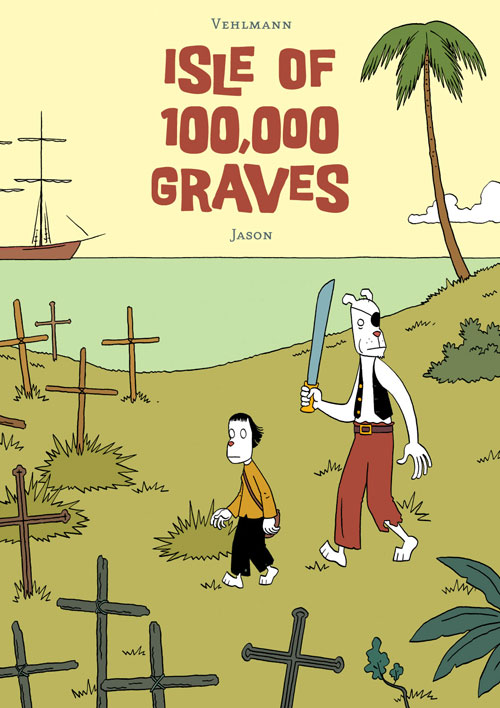
An introductory reading guide to the work of Norwegian cartoonist Jason from Robot 6:
Since his U.S. debut in 2001, Jason has produced 15 books, with nary a drop in quality. More to the point, he’s been able to use and play with a lot of familiar genre cliches — movie monsters, the big heist, the man accused of a crime he didn’t commit — and make them seem fresh and inviting.
That’s largely because his characters are usually grounded in a strong emotional reality. What often drives them are not simplistic ideals about right and wrong but love, longing, guilt and anxiety, the same stuff that drives most of us. What’s especially fascinating about his work, though, is how he’s able to convey all these roiling emotions with such a… minimalist style… Anyone interested in learning about timing and tempo… should be studying Jason’s comics.
Jason’s latest book Isle of 100,000 Graves is released this month.
Let’s Put It This Way — Cartoonist Ivan Brunetti profiled in The Chicago Tribune:
When people talk about Brunetti, they often couch it with a “Let’s put it this way.” Francoise Mouly, the longtime art director of the New Yorker, said, “Let’s put it this way — Ivan will never be comforted in life.” She said it in her native French lilt, with the breeziness of tone and the bluntness of meaning we associate with the French. But without malice or sarcasm, only lament and concern. There is no comforting Ivan Brunetti.
(I am still slightly traumatized by Brunetti’s Misery Loves Comedy)
The Poverty of Abundance — Sukhdev Sandhu, author of London Calling: How Black and Asian Writers Imagined a City, reviews Retromania: Pop Culture’s Addiction to its Own Past by Simon Reynolds for The Observer:
Retromania is a book about the poverty of abundance. At malls, on mobile-phone ads, in the background as we work at our computers: pop, usually in the form of anorexically thin MP3 sound, is everywhere these days. Perhaps that ubiquity puts a brake on its ability to astound or shape-shift. Perhaps the process of circulating and accessing music has become more exciting than the practice of listening to it.
Future Classics — Agent Andrew Wylie in The WSJ:
[T]he business we’re in is to identify and capture and anticipate the value of books that are inherently classics, future classics… Sure, writers these days can go directly to readers, without publishers or agents. But there needs to be a chain of people who have authority and can help convey what is essential. We spend most of our time strongly supporting work that we believe is significant.
And finally…
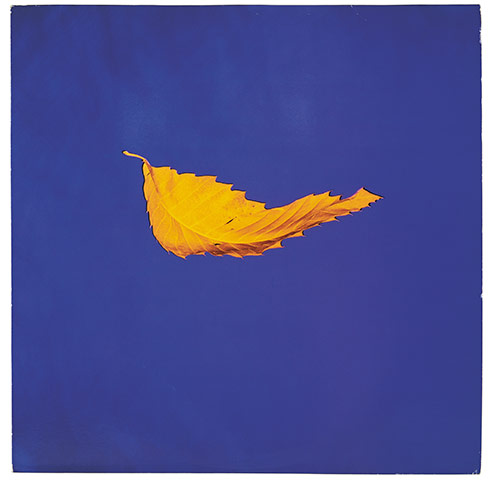 Peter Saville discusses his favourite designs for Joy Division and New Order with The Guardian.