Skip to content

Tag: music

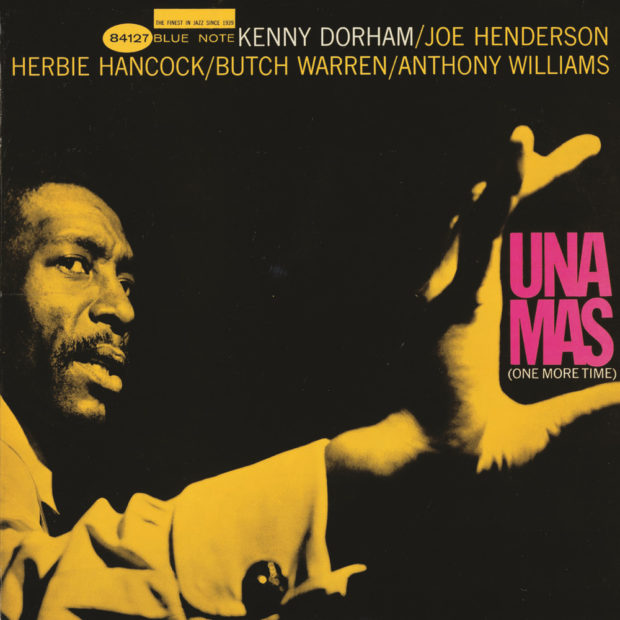
How Reid Miles Created the Blue Note Look

In the latest episode of Vox’s Earworm video series, producer Estelle Caswell takes a look at the classic record covers of the jazz label Blue Note designed by Reid Miles and frequently featuring the photographs of Francis Woolf:  

(via Michael Bierut)

1 Comment

Alan Aldridge 1943-2017

British artist and designer Alan Aldridge died last week aged 73. In the words of designer Mike Dempsey, Aldridge “was a major influence on the British design and illustration scene in the 1960’s.” Although he is perhaps best known for his work for The Beatles, The Who and Elton John (not to mention his infamous poster for Andy Warhol’s film Chelsea Girls) it began, Dempsey notes, “with his controversial post as fiction art director of Penguin Books in 1965 where he challenged the status quo, upsetting many on the way.”

The Guardian obituary explains how Aldridge got his start in design:  

Sheer chutzpah won him his first job at a design agency, where he passed off his girlfriend’s portfolio of work as his own and was hired for £3 a week. “I blag beautifully,” as he put it. When he turned up to work the following Monday and was told to wear a suit, he went to Bethnal Green baths and stole one.

He drew portraits in his spare time, and as news of his abilities spread, he was recruited as a trainee by Germano Facetti, the art director at Penguin Books. Aldridge worked his way up to designing book covers, then was offered a job as a junior visualiser at the Sunday Times. The paper had the UK’s first colour supplement, offering new opportunities in design and photography that Aldridge was keen to exploit.

His most memorable contribution was his transformation of a Mini into a four-wheeled work of art, handpainted by Aldridge in a hectic 24-hour session. It was the magazine’s cover image in October 1965, with the title Automania. Meanwhile he had still been creating covers for Penguin, and was lured away from the Sunday Times to become Penguin’s fiction art director. Aldridge set about creating a radical, freewheeling new look for Penguin’s catalogue.

Aldridge talked more about this unorthodox beginning in this video:

My introduction to Aldridge was the revised 1971 edition of The Penguin Book of Comics, the book he conceived with George Perry (the cover of the first edition, originally published in 1967, is pictured above). I found it on the shelf in my grandparents house and pored over the pages of reproduced art. The book was my first introduction to American comics, and the idea that comics could be taken (somewhat) seriously. I found Aldridge’s illustrations, which also appear throughout the book, confusing and fascinating in equal measure. I know they reminded me of Heinz Edelmann’s art for Yellow Submarine — I think for a while I assumed they were by the same person — but you can read about Aldridge’s own work with The Beatles in this 2005 article from Eye Magazine

Aldridge refused to call himself an artist, illustrator, or designer. Instead he was a self-styled ‘graphic entertainer’, a precursor of today’s designer-entrepreneur, who had created a moderately successful product called ‘Put-Ons’, tattoo skin transfers. He was also always pitching projects that could turn a profit. He even convinced Albert Grossman, Bob Dylan’s manager, to produce a book of Dylan lyrics. But when Sgt. Pepper’s was released in 1967, Aldridge had an idea that promised surefire success.

‘I noticed the initials of ‘Lucy in the Sky with Diamonds’ spelled LSD and decided that it would be fun to explore visually the hidden meaning in the Pepper’s lyrics. I called Paul (who I’d never met, but had his home phone number) and said I’d like to interview him [about this], and much to my amazement he not only said yes, he said let’s do it now and come right away to his house in St John’s Wood. You don’t argue with an edict like that.’ The interview and accompanying illustrations appeared in 1967 in The Observer under the headline: ‘A Good Guru’s Guide to the Beatles Sinister Songbook.’ Bags of fan mail rapidly followed. ‘It didn’t take a brain surgeon to figure out that I was on to something. So I pitched a dummy of the book, The Beatles Illustrated Lyrics, which had three or four spreads of illustrated lyrics, to Peter Brown (Beatle manager Brian Epstein’s partner for many years) at Apple. The book would have all the lyrics from ‘Love Me Do’ to ‘A Day In The Life’ illustrated by famous artists; I think I even mentioned getting Picasso, Dali and Magritte! Peter showed the layouts to John and Paul and got the boys’ okay.’

Having Lennon and McCartney’s sanction, however, did not mean Aldridge instantly nailed the book. He still had to present the project to Dick James, owner of Northern Songs, which published and co-owned the Lennon / McCartney lyrics. ‘Dick liked what he saw, then curve-balled me,’ Aldridge winces. ‘An American publisher had come to him with a similar deal, and had offered a lot of money, but since I had the boys’ okay he’d give me two weeks to get a publishing deal that gave him an advance of £20,000, a huge sum in 1968.’ For a week, Aldridge phoned every publishing house in London and New York, explaining the urgency. He was, however, turned down by everyone. ‘Not because of the large advance, but because they all thought the Beatle phenomena wouldn’t last another year.’

The Man with Kaleidoscope Eyes: The Art of Alan Aldridge, a catalogue of Aldridge’s work, is available from Abrams.
Comments closed

Gimme Danger

A Jim Jarmusch documentary about Iggy Pop and The Stooges? YES.

Gimme Danger is scheduled for a limited release on October 28th.

Comments closed

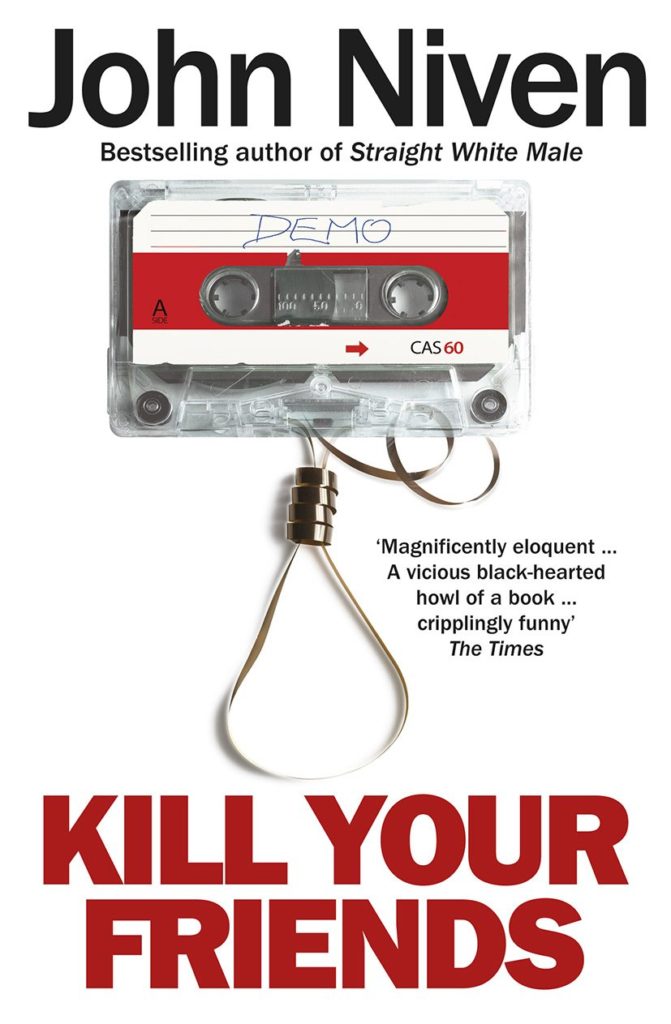
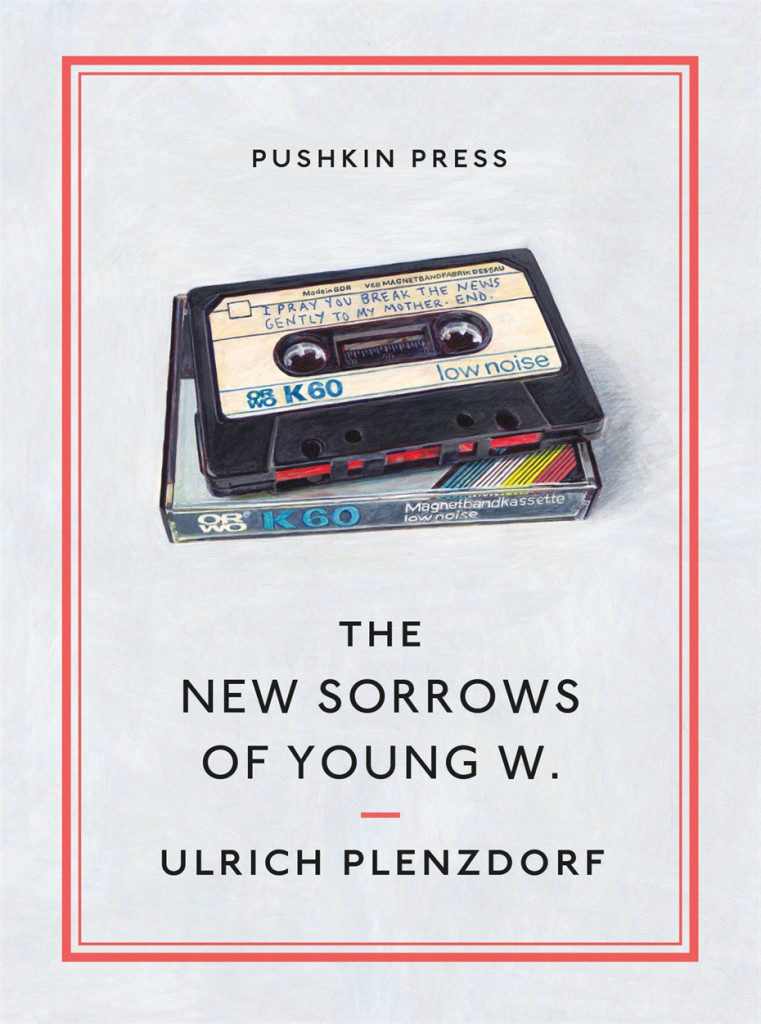
Today in Micro-Trends: Cassette Tape Book Covers

This is another one of those posts that started out on Twitter — a flippant tweet from me sparking a conversation about books with cassette tapes and vinyl records on their covers. It turns out that putting a record on a cover has become quite popular. Unfortunately the composition of many of these covers is often strikingly similar, even if the tone/intent is different.

The combination of clunky retro-future technology of cassettes and the DIY aesthetic of mix tapes, on the other hand, provides a richer vein of inspiration…

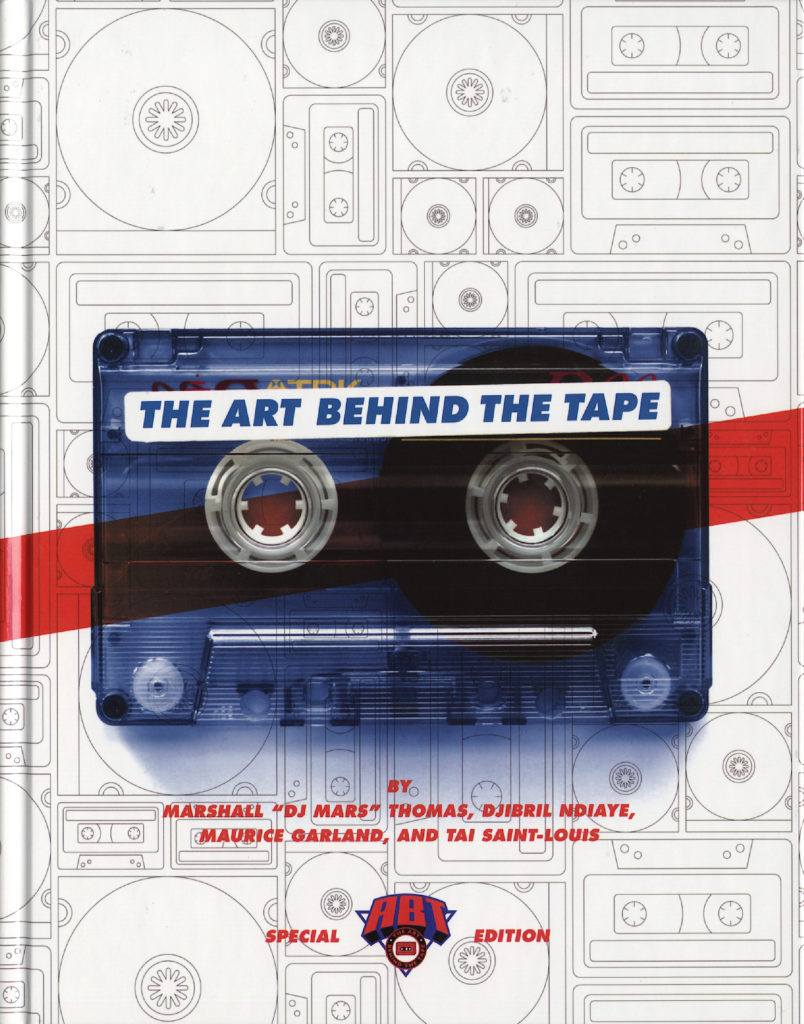
Art Behind the Mixtape design UnderConsideration
The Art Behind the Tape by Marshall “DJ Mars” Thomas, Djibril Ndiaye, Maurice Garland, and Tai Saint-Louis; design UnderConsideration (2015)

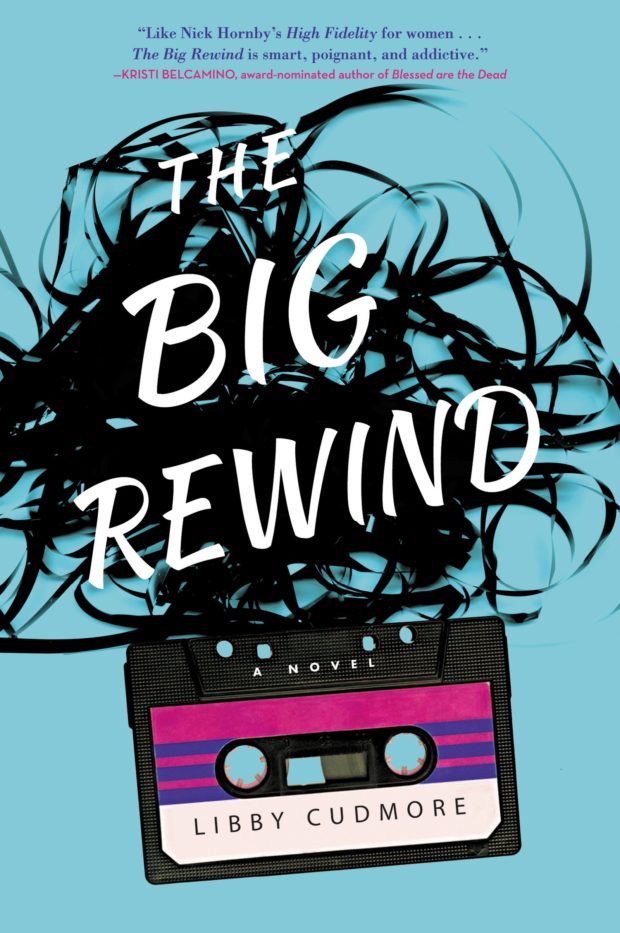
Big Rewind design Regina Starace
The Big Rewind by Libby Cudmore; design by design Regina Starace (William Morrrow / February 2016)

Counter Narratives Palgrave Macmillan
The Counter-narratives of Radical Theology and Popular Music edited by Michael Grimshaw; design Palgrave Macmillan Design (Palgrave Macmillan / May 2014)

don't-you-forget-about-me
Don’t You Forget About Me by Jancee Dunn; design by Catherine Casalino (Villard Books / July 2008)

9781846146459
Earthbound by Paul Morley; design by Jim Stoddart (Penguin / August 2013)

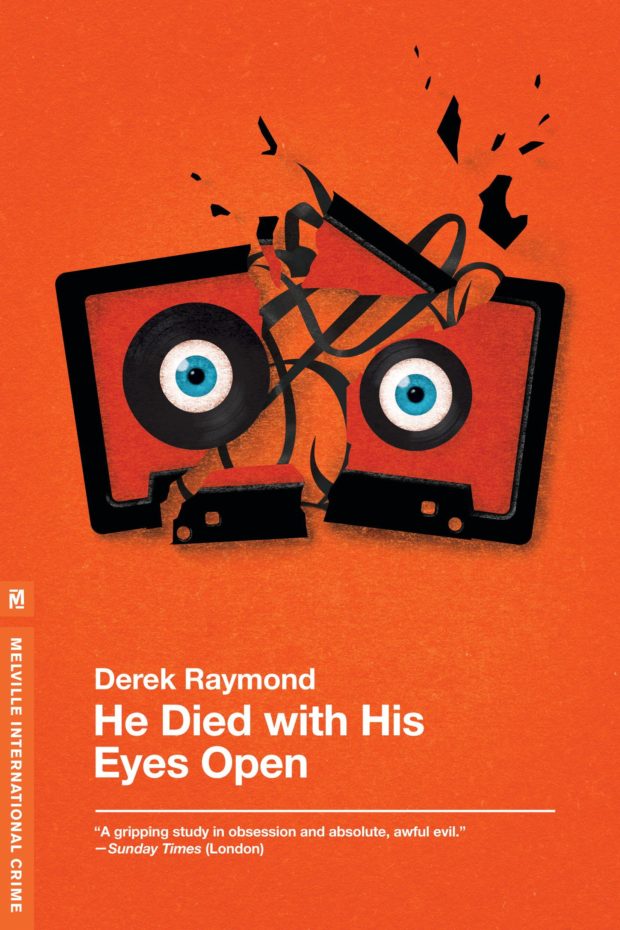
he died with his eyes open design Christopher King
He Died with His Eyes Open by Derek Raymond; design by Christopher Brian King (Melville House / October 2011)

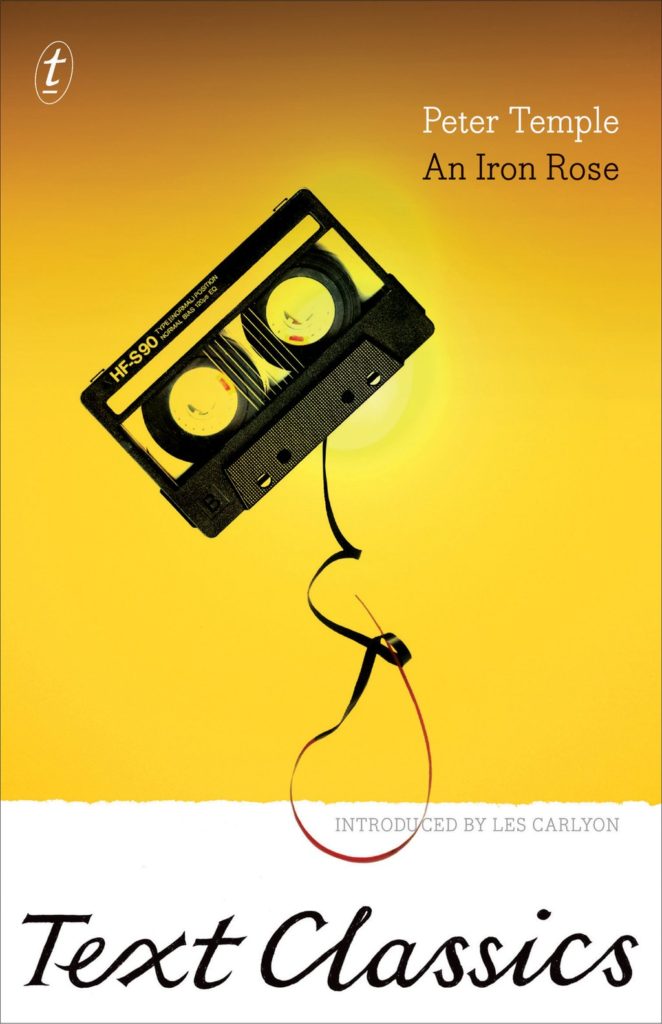
Iron Rose design W H Chong
An Iron Rose by Peter Temple; design by W. H. Chong (Text / June 2016)

Kill Your Friends design Glenn ONeill photo colin thomas
Kill Your Friends by John Niven; design by Glenn ONeill; Photograph Colin Thomas (Cornerstone / July 2014)

Landscapes of the Metropolis of Death design Jim Stoddart
Landscapes of the Metropolis of Death by Otto Dov Kulka; design by Jim Stoddart (Penguin / March 2014)

UMN28 Walsh Bootlegs D1.indd
Bar Yarns and Manic Depressive Mix Tapes by Jim Walsh; design by Michel Vrana; lettering by Robert Lawson (University of Minnesota Press / NYP)

New Sorrows design Clare Skeats
The New Sorrows of the Young W. by Ulrich Plenzdorf; design Clare Skeats; cover art by Joel Penkman; series design David Pearson (Pushkin Press / September 2015)


Signal to Noise by Silvia Moreno-Garcia; design by Erik Mohr (Solaris / October 2015)

Tape
Tape by Steven Camden; cover art by Keri Smith (HarperCollins Children’s Books / January 2014)

Tsar of Love and Techno design Christopher Brand Photography Bobby Doherty
Tsar of Love and Techno by Anthony Marra; design Christopher Brand; photography Bobby Doherty (Hogarth / October 2015)

(I also rather like this tape-related killed cover by designer Na Kim)

So there you have it — cassette tape book covers are a thing. But please let’s not get started on VHS tape book covers…

Comments closed

David Bowie’s Forgotten Non-Fiction Books

David Bowie Non-Fiction Tom Gauld

Tom Gauld for The Guardian.

(And, on a related note, if you are looking for Bowie links, Daniel Benneworth-Gray is compiling a list)

Comments closed

Love Among the Ruins

Jacket design by Cardon Webb; jacket photograph Orgasmic Man by Peter Hujar 1987

At the New York Times, Edmund White examines our enduring fascination with the New York of the 1970s:

Recently there’s been, in TV and film and certainly in books, an intense yearning for a specific five-year period in New York City, those years between the blackout in 1977, and 1982, when AIDS was finally named by the Centers for Disease Control. First was Rachel Kushner’s 2013 novel ‘‘The Flamethrowers,’’ whose heroine is a sharp-eyed bystander in the SoHo art scene, and now… ‘‘City on Fire’’ by Garth Risk Hallberg, which also concerns itself with the same time period. There are two television series in development that take place in the late 1970s as well, one directed by Martin Scorsese and co-written with Mick Jagger; the other by Baz Luhrmann. Next year, the Whitney will mount the first retrospective of David Wojnarowicz, the ultimate East Village grunge artist, in over 15 years; the work of his lover, the photographer Peter Hujar — which has recently been used both for an advertising campaign for the men’s wear designer Patrik Ervell and on the cover of… Hanya Yanagihara’s novel ‘‘A Little Life’’ — will be the subject of a forthcoming retrospective at New York’s Morgan Library.

COLLECTIVELY, THESE WORKS express a craving for the city that, while at its worst, was also more democratic: a place and a time in which, rich or poor, you were stuck together in the misery (and the freedom) of the place, where not even money could insulate you. They are a reaction to what feels like a safer, more burnished and efficient (but cornerless and predictable) city. Even those of us who claim not to miss those years don’t quite sound convinced. ‘‘Well, I sure don’t have nostalgia about being mugged,’’ John Waters told me. Though then he continued: ‘‘But I do get a little weary when I realize that if anybody could find one dangerous block left in the city, there’d be a stampede of restaurant owners fighting each other off to open there first. It seems almost impossible to remember that just going out in New York was once dangerous. Do any artistic troublemakers want to feel that their city may be the safest in America? Who’s going to write a book about walking the safe streets of Manhattan? It’s always right before a storm that the air is filled with dangerous possibilities.’’

m train design carol devine carson
Jacket design by Carol Devine Carson; jacket photograph by Claire Alexandra Hatfield

Similiarly, at the Guardian, Glenn Kenny looks at our obsession with the New York of Lou Reed and Patti Smith:

The New York we aspired to was Lou [Reed]’s, not Liza Minnelli’s, or a little later, Frank Sinatra’s. (The New York we aspired to was also Martin Scorsese’s, too, as it happened, and it’s almost entirely forgotten that it’s in his movie of the same name that the future anthem New York, New York made its first bow.) And these days, “wild side” New York is gazed at in rearview with fervent affection, in works by Edmund White, Patti Smith, Brad Gooch and others. (Not to mention those, like Garth Risk Hallberg or Rachel Kushner, who are too young to have their own memories to work with.) Smith’s books, in particular, seem to have hit a nerve. Her new book M Train is a more impressionistic sequel to her National Book award winning memoir of 2011, Just Kids, which is currently being developed as – weirdly enough, for me and perhaps for her – a Showtime TV miniseries.

The place these books conjure is both very scary, and very exhilarating. Not a place where some kind of arty misfit or wannabe arty necessarily wanted to live, but rather a place where one such creature could live. And hence, a place where one such young creature had to live.

Comments closed

Glenn Gould and the Gas Mask

In an interview with CBC Radio in 1958, pianist Glenn Gould recounted how he came to play Beethoven in a gas mask. Now CBC Music have turned that anecdote into a charming short film illustrated by designer Heather Collett, and animated by Philip Street and John Fraser:

1 Comment

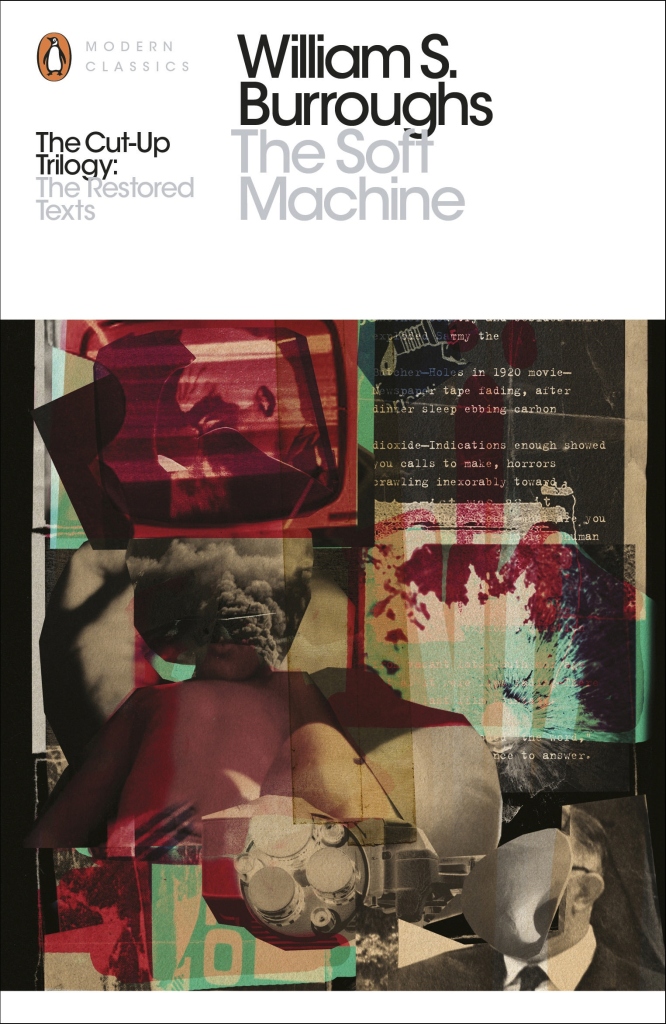
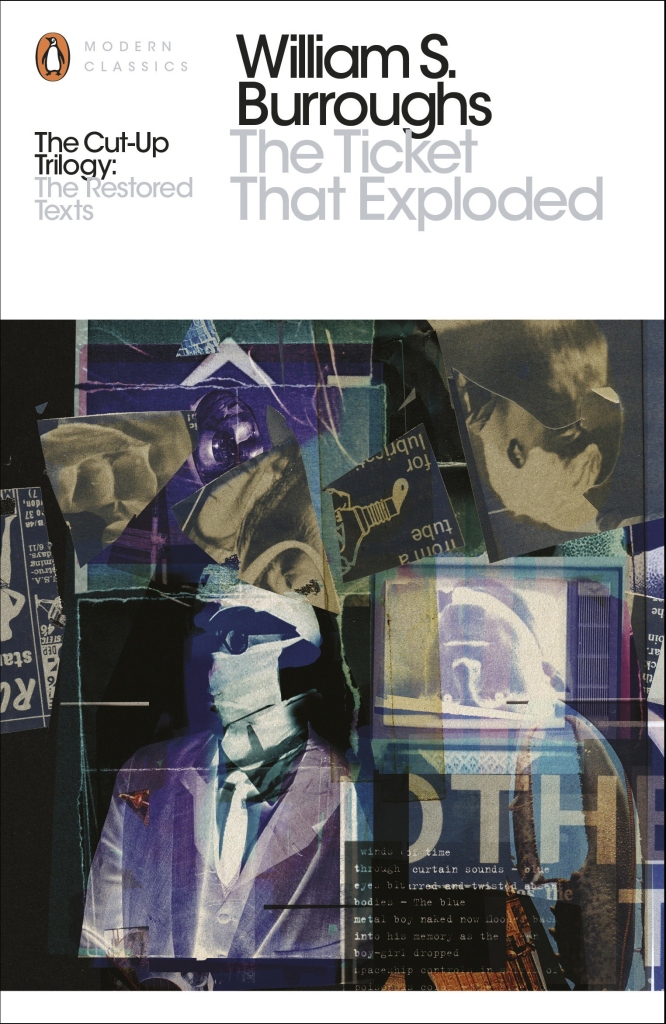
Penguin Modern Classics The Cut-Up Trilogy by William Burroughs

Following on from yesterday’s post on Penguin’s pocket hardback classics, Penguin Modern Classics are also reissuing William Burroughs’ cut-up trilogy with menacingly dark collage cover art by Julian House:

9780141396064

9780141189789

9780141189772

Comments closed

Iggy Pop’s BBC Music John Peel Lecture

Last week, Iggy Pop delivered this year’s BBC Music John Peel Lecture on the topic of ‘Free Music in a Capitalist Society’ at Radio Festival 2014 in Salford:

I worked half of my life for free. I didn’t really think about that one way or the other, until the masters of the record industry kept complaining that I wasn’t making them any money. To tell you the truth, when it comes to art, money is an unimportant detail. It just happens to be a huge one unimportant detail. But, a good LP is a being, it’s not a product. It has a life-force, a personality, and a history, just like you and me. It can be your friend. Try explaining that to a weasel.

As I learned when I hit 30 +, and realized I was penniless, and almost unable to get my music released, music had become an industrial art and it was the people who excelled at the industry who got to make the art. I had to sell most of my future rights to keep making records to keep going. And now, thanks to digital advances, we have a very large industry, which is laughably maybe almost entirely pirate so nobody can collect shit. Well, it was to be expected. Everybody made a lot of money reselling all of recorded musical history in CD form back in the 90s, but now the cat is out of the bag and the new electronic devices which estrange people from their morals also make it easier to steal music than to pay for it. So there’s gonna be a correction.

You can read the complete transcript here, or listen to it (for the next couple of weeks at least) on the BBC’s iPlayer. You can also download it as a podcast for posterity.

Iggy Pop’s BBC Music John Peel Lecture 2014 mp3

Comments closed

Eve Babitz: Muse and Writer

Lili Anolik on the stranger-than-fiction life of Eve Babitz, “an irresistible hybrid of boho intellectual and L.A. party girl”, for Vanity Fair:

Eve Babitz’s claims to fame rest, in large measure, on her claims on the famous. She’s the goddaughter, of course, of one of the most influential composers of the 20th century. Then there’s that photograph of the chess match with Marcel Duchamp, Eve contemplating her next move without so much as a fig leaf for cover. And what about the series of Adams, better known than the original, some of them, to whom she offered her forbidden fruit? Jim Morrison, Steve Martin, Ed Ruscha, J. D. Souther, Stephen Stills, Glenn Frey, Harrison Ford, Warren Zevon, Ahmet Ertegun all took a bite at one time or another.

If that were her whole story, however, Eve wouldn’t be a whole story. She’d be a footnote. A minor figure of glamour in America’s cultural history. A groupie with a provocative pedigree. She’d be Edie Sedgwick, basically: so relentless a companion to celebrity that she became a bit of one herself, the spotlight just naturally spilling over onto her, making her luminous, too. But she’s not. Eve is Edie cut with Gertrude Stein and a little Louise Brooks thrown in.

Why?… Eve could write.

(pictured above: Eve Babitz, chessboard, and Marcel Duchamp, photograph by Julian Wasser, 1963)

Comments closed

Sounds from a Concrete Island

I’m sure there are some of you who’ve already heard of UK sound artist Janek Schaefer. He has, after all, been recording and creating sound installations for past 20 years, and he even won the British Composer of the Year award in Sonic Art a few years ago. But, personally, I hadn’t heard of Schaefer until I heard a track from his new album on Tom Ravenscroft’s BBC 6Music radio show this evening.

Lay-by Lullaby, released this week on the 12K music label, uses “location recordings made in the middle of the night above the M3 motorway, right at the end of the road where JG Ballard lived, a couple of miles from Schaefer’s studio on the far west edge of London.”

Now, admittedly, the M3 has a special place in my psyche — I drove up and down it rather a lot in my late teens, often late at night — but more significantly Ballard also wrote his “seminal works on car culture” — Crash (1973) and Concrete Island (1974) — as the motorway was being built past the front of his house.

Schaefer’s 73 minute album was created last year as an installation for his show ’Collecting Connections’ at the Agency gallery in London. Apparently the sounds were played on infinite loop through a car radio installed in a little leather travel case and amplified by a pair of reclining traffic cones.

In other Ballard news, director Ben Wheatley announced earlier this week that he would start shooting his adaptation of High-Rise in June with Tom Hiddleston in the lead role.
High-Rise
The teaser poster for the film was created by artist Jay Shaw. You can read more about Shaw’s work, including his poster for Wheatley’s current film, A Field in England, which opened in New York this week, in Adrian Curry’s column for MUBI this week.

Comments closed

Pete Seeger & Llewyn Davis

Leo Braudy, author of Trying to Be Cool: Growing Up in the 1950s, on the late Pete Seeger and the Coen brothers’ film Inside Llewyn Davis, at the LA Review of Books:

Llewyn is the solitary fame seeker, doomed to be disappointed. Perhaps the Coens think he needs a brother to accompany him or be his manager, rather than his critical sister? Always he sings alone… and glares when the audience or even a friend tries to join in. For a story about the folk scene of the 1950s, there is little sense of the unconfined energies of the period, the sense of bonding and belonging that someone like Seeger, Dave Van Ronk, Ramblin’ Jack Elliott, Joan Baez, Phil Ochs, or a host of others could elicit in their audiences. Nor is there anything in Inside Llewyn Davis about the politics that the folk movement wore so explicitly on its sleeve.

Pete Seeger was nothing like Llewyn Davis. He was an emissary from the Popular Front of the 1930s, when leftwing politics was merged with American history and ideals through theater, art, and song. He had a long, rich life, long enough to see changes in American culture unimaginable in the 1950s, and he kept singing. And we, whenever we weren’t too cool to do so, sang along with him.

Comments closed