Skip to content

Tag: music

David Byrne on Creativity and Constraints

David Byrne talks about music, technology and his recent book How Music Works (now out in paperback), at Salon:

I’m not saying that the artist doesn’t put their feelings into it, or any part of their biography, but that there’s a lot of constraints and considerations and templates that they work with – unconscious decisions or constraints put upon them that guide what they’re going to do… Our imaginations are constrained by all these other things — which is a good thing. There’s kind of a process of evolution that goes on where the creative part of you adapts to whatever circumstances are available to you. And if you decide you want to make pop songs, or whatever, there’s a format. You can push the boundaries pretty far, but it’s still a recognized thing. And if you’re going to do something at Lincoln Center, there’s a pretty prescribed set of things you are going to do. You can push that form, but kind of from inside the genre. So I guess I’m saying that a lot of creative decisions are kind of made for us, and the trick is then working creatively within those constraints.

Comments closed

Luc Sante on Inside Llewyn Davis

The excellent Luc Sante reviews Inside Llewyn Davisthe Coen Brother’s movie about a Greenwich Village folk singer, for the New York Review Books:

Then again, it could be said that historical fiction, like science fiction, is really always about the present. Llewyn Davis is a creature of the here and now, not of 1961. He has none of the communitarian goodwill, the erudite passion, or the optimistic idealism that marked the period. He is a confused, irascible striver who isn’t sure what he is striving for, apparently seeking a career when folk music was about the last place you’d look for one. It is suggested that he has been flopping on friends’ floors for months, when, at the time, people generally only did that when they first hit town, since it wasn’t hard to scratch up the twenty or thirty bucks a month it took to rent a tenement flat fifty years ago.

But if you excise the period details, he makes sense. Whereas in a better time he would spend five or ten years woodshedding and developing a soul, he has no choice but to enter some kind of race right away or die on the vine. He is consistently crass because he feels threatened by people and ideas he can’t dominate—and he can’t dominate very much because he feels threatened. (How else to explain his heckling an Appalachian singer, complete with autoharp and authentically awkward?) Somehow he has made a connection to something that is genuine and profound—the haunting music—but circumstances force him to treat it as a card to play rather than as a path to explore.

As Sante notes in the review, while the film is based on musician Dave Van Ronk’s memoir The Mayor of MacDougal Street, it isn’t really about Van Ronk at all:

The impression is that of a young man who has a great many more mistakes to make in life before he wises up, if indeed such a thing is ever to happen, but who channels the accrued wisdom of the ages when he enters the folk-lyric continuum, becoming an entirely different person. This suggests a description not so much of Van Ronk—or Paxton, or Ochs, or Elliott—as of the man who upset the apple cart: Bob Dylan.

I can’t wait to see this movie.


Comments closed

Luc Sante on Lou Reed (1942 – 2013)

I wasn’t going to say anything about the death of Lou Reed — what is there to say? Like so many people, I discovered his music in my teens and was just as thrilled and confused by The Velvet Underground as anyone else — but I did want to post a link to a short New Yorker essay by Low Life author Luc Sante that seems to capture something of the man’s complexity, and the dark, ambiguous appeal of the VU:

The least you could say about Reed is that he was complicated. He was lyrical and crass, empathetic and narcissistic, feminine and masculine, a gawky adolescent and an old soak, a regular guy and a willful deviant, an artisan and a vandal. As a teen-ager he was administered electroshock, intended to cure him of either homosexuality or generalized waywardness, depending on which interviews you read. He studied poetry with Delmore Schwartz and songcraft in the teen-pop-counterfeiting ateliers of Pickwick Records, then absorbed the avant-garde trance state from La Monte Young via John Cale and Angus MacLise—but since he was already tuning his guitar strings all to one note when he met them maybe he’d absorbed it on his own.

The Velvet Underground, fruit of all those disparate lessons, encompassed so many contradictions it initially weirded out nearly everybody. Reed employed the marble-voiced Nico—foisted on the band by Svengali pro tem Andy Warhol—as a Brechtian device to spike his tender ballads, while pushing a wall of noise and lyrics about dope and queer sex directly in your face. That first record (“The Velvet Underground & Nico”) travelled by word of mouth for years, going from zero to classic entirely behind the industry’s back. It was among other things an aggressive declaration of New York gutter realism in a time of rising California pie-eyed bliss. It may well have launched fifty thousand bands, and it may also have launched a hundred thousand chippy dope habits. And at length it spoke to a million teen-agers, one by one, in the existential darkness of their bedrooms.

The first VU song I ever heard was I’m Waiting for the Man. It was a staple on Annie Nightingale‘s Sunday evening request show on BBC Radio 1 in the late 1980s and it sounded, if not exactly dangerous, then certainly wayward, grubby and glamorous in a way that only New York rock ‘n’ roll can. It sparked an unhealthy interest in the band that’s never quite gone away. The VU track that captures all their brilliant contradictions is probably the epic Sister Ray. But I couldn’t find the full 17:27 version (15 minutes might be enough anyway), and I’m not sure I want to end on that note, so here is Some Kinda Love from the VU’s eponymous 1969 album instead:


Comments closed

The Heads of State: The Great Discontent


Designers Jason Kernevich and Dusty Summers talk about their work, inspirations and starting up their own studio The Heads of State (10 years ago now!), at The Great Discontent:

Dusty: I remember looking at album covers when I was 13 and can recall the smell of the ink on the booklet for In Utero. I knew that was graphic design, but it was more about the album and the beautiful artwork. I think that’s where my interest in design started.

Jason: Yeah. I made this fateful choice of wearing a Sonic Youth t-shirt to a guidance counselor recruitment. It had a Raymond Pettibon drawing on it and my recruiter said, “That’s Raymond Pettibon. He’s in the MoMa.” That made a connection for me that something could live in the punk and fine art worlds at the same time. Then, when someone at Tyler made a statement that the record covers Pettibon did for Black Flag were graphic design, that connected it even more for me.


I talked to Jason and Dusty about their book cover design and other work way back in 2010.

Comments closed

Beauty in Danger


The rather lovely experimental animated short Beauty in Danger is collaboration between MK12 and New York-based artist Brian Alfred, with a score by Ian Williams from Battles. I don’t know what it means, but I’m not sure it matters…

And if liked that (and why wouldn’t you?) now would seem like a good time to remind you about MK12’s short experimental film TELEPHONEME from a couple of years ago.

Comments closed

Boards of Canada: Electronica By Hand

The New York Times interviews Mike Sandison and Marcus Eoin of the Boards of Canada:

I think the digital world suffers from being just so literal, so deliberate and sober. As with digital photography, people have gotten used to applying simulated filters onto their pictures just to inject a bit of romance into the thing, because the raw pictures are so flat. But in the analog realm these beautiful things just happen by themselves without your conscious effort. You could say the wobbles and flutters in our music are equivalent to something like weeds overgrowing an old building. Nobody puts the weeds there, but nature comes along and makes the scene very tragic and beautiful.

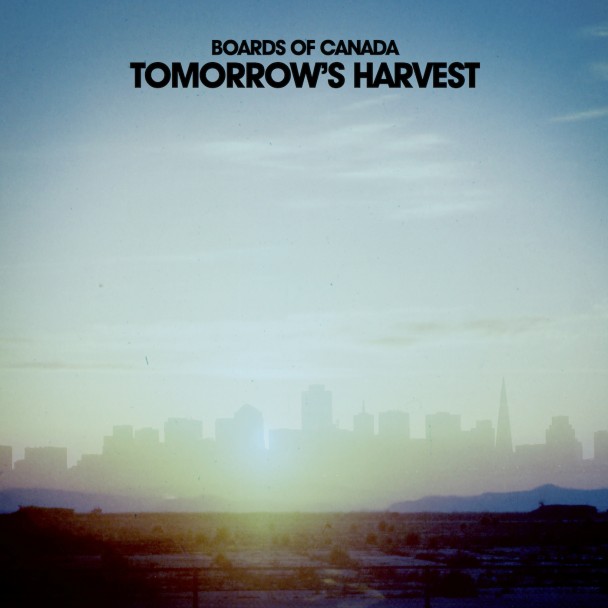
Dorian Lynskey (who wrote 33 Revolutions Per Minute: A History of Protest Songs from Billie Holiday to Green Day) reviews the new Boards of Canada album, Tomorrow’s Harvest, for The Guardian:

Tomorrow’s Harvest is their most cinematic and vast-sounding album yet, suggestive of barren plains and burning skies, wonder and dread, watching and being watched… It’s the kind of music that gives rise to strange notions. Boards of Canada sow a few clues as to their own intentions while leaving space for each listener’s pet theories. The title of the loping, suspenseful Jacquard Causeway seemingly indicates French geneticist Albert Jacquard, a proponent of “degrowth”: the idea of increasing happiness by working and consuming less. Alongside such titles as Sick Times and Collapse, it implies a concern with dwindling resources which infects the album title with apocalyptic menace akin to John Christopher’s 1956 eco-horror novel The Death of Grass.

Certainly this track, ‘Reach for the Dead’, sounds like music from a lost dystopian science fiction movie:

Comments closed

Peter Saville at The Talks

Graphic designer Peter Saville discusses his work and influences with The Talks:

It seemed we were in a revolution in our microcosm of youth culture and we had to propose a new way forward, so I began to reference early modernism – Malevich’s Black Square, Constructivism, Modernism in Germany, De Stijl in Holland, Marinetti and the Futurists in Italy. So when I met with Tony Wilson, with whom I would later start Factory Records, and said, “Can I do something?” and he said, “Yes, we’re having a night called The Factory, do a poster,” I knew exactly what I wanted. I knew I wanted to reference Tschichold, one of the pioneers of modern typography, a Swiss designer… [From]  then on the visual side of Factory ended up being my responsibility. For instance, Joy Division gave me some elements when they were ready to do Unknown Pleasures and I was just allowed to do it the way I wanted to do it. And when there was a second album they came to me: “What have you got?” And that’s where the Closer cover came from.


The Talks

Comments closed

Something for the Weekend

Excitingly Wrong — An interview with Peter Mendelsund at Porter Square Books:

I am always interested by anything graphical that strikes me as (this is difficult to put into words) excitingly wrong. There is a cool-factor to certain images that lie just on this side of disagreeable…pictorial effects that make me think “this will bother a lot of unimaginative people.” Whenever I see something like that, a piece of art or graphic design that has that special kind of wrongness about it, I think “I need to do something like this myself.” Attendant to this is always the feeling of “in the future, this will be done a lot.” In other words, today’s ugly is tomorrow’s beautiful.

Lurking Menace — Ostensibly reviewing David Bowie Is, the catalogue for the current V & A exhibition, and Bowie’s new album, The Next Day, Ian Buruma looks back at the performer’s career at the NYRB:

[Bowie] drew his inspiration from anything that happened to catch his fancy: Christopher Isherwood’s Berlin of the 1930s, Hollywood divas of the 1940s, Kabuki theater, William Burroughs, English mummers, Jean Cocteau, Andy Warhol, French chansons, Buñuel’s surrealism, and Stanley Kubrick’s movies, especially A Clockwork Orange, whose mixture of high culture, science fiction, and lurking menace suited Bowie to the ground. Artists and filmmakers have often created interesting results by refining popular culture into high art. Bowie did the opposite: he would, as he once explained in an interview, plunder high art and take it down to the street; that was his brand of rock-and-roll theater.

This Movie is About Hope — Film Comment has a transcript of Steven Soderbergh’s San Francisco International Film Festival ‘State of Cinema Address’:

 The simplest way that I can describe it is that a movie is something you see, and cinema is something that’s made. It has nothing to do with the captured medium, it doesn’t have anything to do with where the screen is, if it’s in your bedroom, your iPad, it doesn’t even really have to be a movie. It could be a commercial, it could be something on YouTube. Cinema is a specificity of vision. It’s an approach in which everything matters. It’s the polar opposite of generic or arbitrary and the result is as unique as a signature or a fingerprint. It isn’t made by a committee, and it isn’t made by a company, and it isn’t made by the audience. It means that if this filmmaker didn’t do it, it either wouldn’t exist at all, or it wouldn’t exist in anything like this form.

Read the whole thing. It reminded me of William Goldman’s famous comment about Hollywood in Adventures in the Screen Trade: “nobody knows anything.”

See also: At the New York Times film critic A. O. Scott looks at Soderbergh’s ‘Twitter narrativeGlue.

And finally…

Just to the Right of Karl Marx — At the Financial Times, Julia Hobsbawn remembers her father, the historian Eric Hobsbawn:

The cemetery plot, situated as my husband Alaric wryly pointed out later “just to the right of Karl Marx”, had been freshly dug…  My mum Marlene had bought the plot in an expensive and expansive act of love several years earlier. She is 81 and was my father’s unsung muse for 50 years, dealing constantly with demands on his time from students, publishers, editors and broadcasters while acting as his general reader…

My dad was pleased knowing that he would end up there. Highgate Cemetery’s east wing is full of iconoclasts from the intelligentsia. I can picture him, glasses pushed up over his high forehead, peering longsightedly at the guide produced by the Friends of Highgate Cemetery Trust about its history, hoovering up the text and filleting it for us in an exact and pithy way. “Ah yes,” he might say, energised like a freshly charged battery by what he had just read, “you see what is really interesting about this is…”

Comments closed

Midweek Miscellany

Keeping it Simple — Gilbert Hernandez who has two new books out, Julio’s Day and Marble Season, talks about his work at the LA Times Hero Complex blog:

“What I’m really trying to do is streamline my work, to make it an easier read,” he said. “I’ve always admired newspaper comic strips that are very simple and direct, don’t have a lot of dialogue, don’t have a lot of exposition. When I look back at a lot of the comics that are overwritten, like the beloved old Marvel comics, I edit them in my head, to see how modern readers might become more interested in following them. When I look at my old stuff, like ‘Poison River’ and the early ‘Palomar’ stuff, I sometimes think it’s too dense to enjoy. For me, anyway.”

Mechanics — Tom Whipple on algorithms for Intelligent Life:

What has changed is what algorithms are doing. The first algorithm was created in the ninth century by the Arabic scholar Al Khwarizami—from whose name the word is a corruption. Ever since, they have been mechanistic, rational procedures that interact with mechanistic, rational systems. Today, though, they are beginning to interact with humans. The advantage is obvious. Drawing in more data than any human ever could, they spot correlations that no human would… Their strength is that they can take in that information in ways we cannot quickly understand. But the fact that we cannot understand it is also a weakness.

Cardboard Boxes — At The New York Times, Dwight Garner on packing up his family’s favourite picture books:

In the past, when I’ve had to pack my personal library, what I’ve boxed are talismans of intense yet essentially private experience. Picture books aren’t like this. When you’re putting away these square, dog-eared, popcorn-butter-stained things, you’re confronting an entire cosmos of collective memory… They occupy places in our family’s shared consciousness as indelibly as do summer vacations, trips to the hospital or injured birds cared for in cardboard boxes.

And finally (but most importantly)…

A profile of Kim Gordon at Elle Magazine:

Sonic Youth is not just revered within the indie rock world; it’s an indelible part of American pop-cultural history, a sort of byword for tasteful and progressive art that’s also popular. “She was a forerunner, musically,” says Kathleen Hanna, of the riot grrrl band Bikini Kill and later the dance-rock group Le Tigre. “Just knowing a woman was in a band trading lead vocals, playing bass, and being a visual artist at the same time made me feel less alone.” Hanna met Gordon when she came to a Bikini Kill show in the early ’90s. “She invited my band to stay at her and Thurston’s apartment,” Hanna says. “As a radical feminist singer, I wasn’t particularly 
well liked. I was in a punk underground scene dominated by hardcore dudes who yelled mean shit at me every night, and journalists routinely called my voice shrill, unlistenable. Kim made me feel accepted in a way I hadn’t before. Fucking Kim Gordon thought I was on the right track, haters be damned. It made the bullshit easier to take, knowing she was in my corner.”

(Tasteful is not a word I would necessarily use in association with Sonic Youth, but hey… )

3 Comments

Last Shop Standing

Saturday is Record Store Day and the 2012 documentary Last Shop Standing, the official film of the year’s celebration, will finally be available on DVD in the US and Canada.

Inspired by the book of the same name by Graham Jones, the film looks at the rise, fall and rebirth of independent record shops in the UK and features interviews with record shop owners, industry folks, and musicians including  Johnny Marr, Paul Weller, Billy Bragg, Nerina Pallot, Richard Hawley and Clint Boon:

1 Comment

Midweek Miscellany

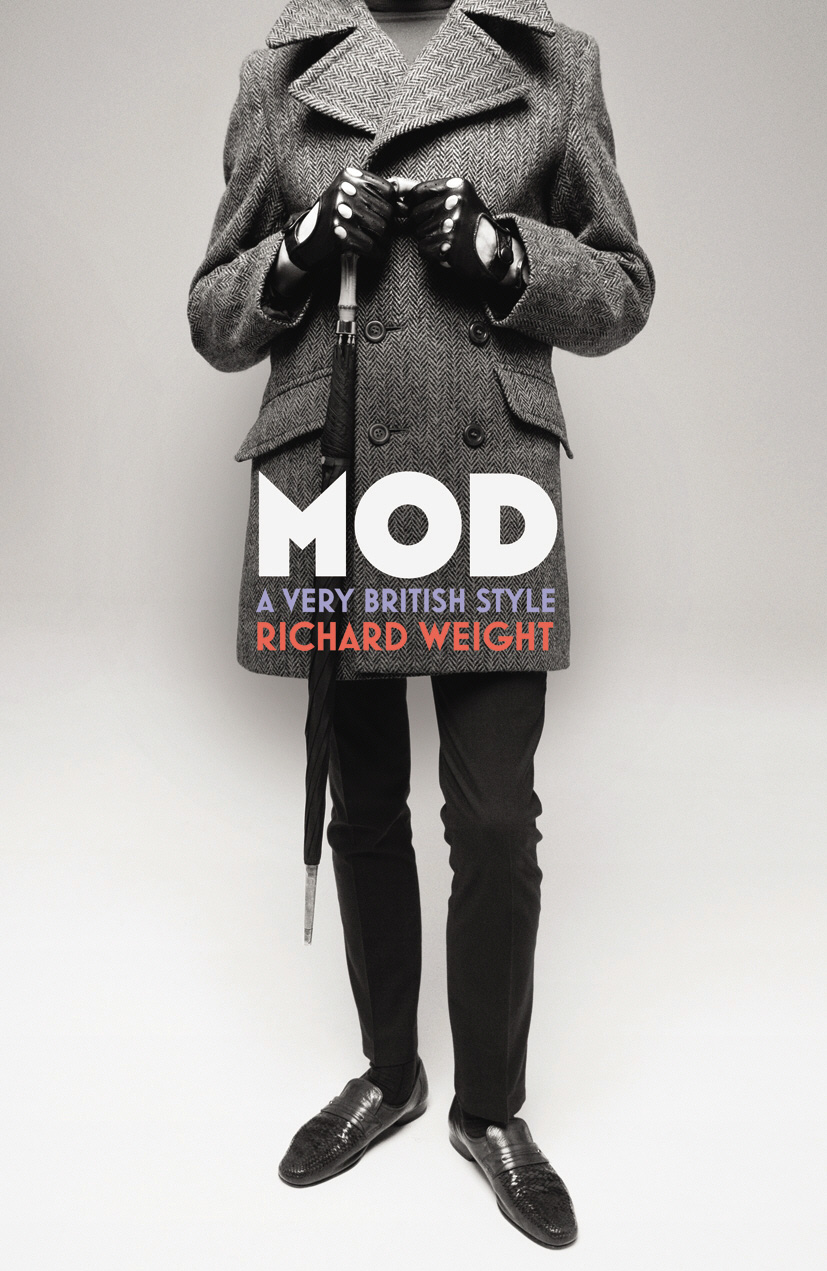
Ian Thompson reviews Mod: A Very British Style by Richard Weight for The Observer:

Mod’s first choice of music was jazz, Richard Weight reminds us. Miles Davis in particular became a fashion icon for blue-eyed soul brothers everywhere in Britain. The photograph of Davis on the cover of his celebrated 1958 Milestones album – Sta-Prest trousers, button-down Ivy League shirt – became a sort of mod pin-up. Mods (“modernists”) were among the first white Britons to embrace west-coast jazz, which had been galvanized by the Birth of the Cool sessions led by Davis in New York from 1949-50.

See also: Gavin James Bower’s review for The Independent.

It is What it is  — Five designers, Craig Mod, Rodrigo Corral, Michael Fusco, John Gall, and Jon Gray, on the books that inspire them, at the Virginia Quarterly Review.

Here’s Mr. Gall:

The clearest explanation of a good cover that I have ever heard came from Michael Beirut. I was a guest invited to critique a book-cover project he had given to his Yale students. As I was struggling to express some notion about why a particular concept may or may not be working, he got right to the point: “It has to look like what it is.” Indeed.


The Darkness — Sarah Weinman profiles Canadian author and illustrator Jon Klassen (I Want My Hat Back, This is Not My Hat, and The Dark) for Maclean’s:

Klassen’s style shies away from sentimentality. Instead it shows young children the consequences of bad behaviour through the prism of humour, a technique that hearkens back to books for children by the likes of Shel Silverstein and Roald Dahl.

And finally…

On the Exaggerated Reports of a Decline in British Fiction at the White Review:

Our peculiar creed is mortally suspicious of untrammelled aestheticism, endlessly asserting the primacy of content over form. In accounts of British writing, even now – long after such a thing could be anything other than a rather quaint anachronism of an old culture war – the avant-garde features as a kind of bogeyman. One whose dandified aestheticism belies a questionable politics, a moral compass gone awry; who must be beaten back by decency and common sense. Literary experiment still tends to be perceived as a pernicious form of French ‘flu: of course we should still be bloody grateful for the English Channel, separating, as it does, steady, dependable old Blighty from that kind of thing.

1 Comment

Something (Late) for the Weekend

Enjoy Your Cigarette — Tom Cox reviews Penguin’s Underground Lines boxed set for The Guardian:

Underground Lines often matches its writers to its tracks very well, in terms of temperament as well as personal history. The Jubilee line, so often associated with capitalism and the Docklands development, is a good match for John O’Farrell, a writer whose wit was marinated in the political 1980s. The nervy prose of William Leith could not be more apt for the rather fraught Northern line, and his manic, anxious account of being evacuated from a train that was filling with smoke is probably the most addictively readable thing here. “People never tell you to have a pleasant journey on the underground, just as people will say, ‘Enjoy your meal,’ but never ‘Enjoy your cigarette,'” he writes.

Dirty Lit — Edward Jay Epstein at the NYRB Blog on being taught literature by Nabokov:

He made it clear from the first lecture that he had little interest in fraternizing with students, who would be known not by their name but by their seat number. Mine was 121. He said his only rule was that we could not leave his lecture, even to use the bathroom, without a doctor’s note.

He then described his requisites for reading the assigned books. He said we did not need to know anything about their historical context, and that we should under no circumstance identify with any of the characters in them, since novels are works of pure invention. The authors, he continued, had one and only one purpose: to enchant the reader. So all we needed to appreciate them, aside from a pocket dictionary and a good memory, was our own spines. He assured us that the authors he had selected—Leo Tolstoy, Nikolai Gogol, Marcel Proust, James Joyce, Jane Austen, Franz Kafka, Gustave Flaubert, and Robert Louis Stevenson—would produce tingling we could detect in our spines.

Exploded Hearts — Melville House’s Christopher King on his cover design for How to Keep Your Volkswagen Alive by Christopher Boucher, at Talking Covers:

In the end, I did what I usually do, which is to steal an idea for the cover directly from the manuscript. In this case, the narrator’s son—who, again, is a car—has a heart in place of an engine, so I printed off an image I found online and showed it to our publishers:

“It’ll be like this exploded diagram of a car, but with a heart in place of the engine.”

“OK!”

And finally…

The Wall Street Journal looks at ‘The Improbable Rise of NPR Music‘ which, for all of the WSJ’s obvious churlishness, manages to be fascinating despite itself:

NPR Music’s breadth, depth and ability to break new material are its main strengths. The site offers music that appeals to rock, jazz and classical lovers—all under one roof. Still another advantage is NPR Music’s ties to “All Things Considered” and “Morning Edition,” which, even if Washington-centric, have music woven into their fabric and provide news for the site as well as a familiar storytelling style.

NPR Music in its present form just turned five. “It’s the closest thing we have to a pure startup inside what is now a 40-plus-year-old institution,” says Kinsey Wilson, NPR’s executive vice president and chief content officer. “This group of now roughly 20 people has had an opportunity to invent something from scratch.”

(via Largehearted Boy)

Comments closed