Skip to content

Tag: Miscellany

Midweek Miscellany, March 18th, 2009

The BombAlison Forner‘s cover design for Stephen M. Younger’s history of nuclear weapons (Ecco June 2009), seen at Book Covers Anonymous.


Has the computer democratised design? — Designer Peter Saville (perhaps best known for his iconic designs for Factory Records) at D&AD President’s Lecture earlier this month (above). More interesting snippets from the talk are available here (via The Strange Attractor).

Reminder — Writer Charlie Stross on why there isn’t a tipjar on his blog (via Times Emit):

If I put a Paypal tipjar on this blog to take conscience money from folks who’ve downloaded a (cough) unauthorized ebook or two, the money would come to me, not to the publisher. And without the publisher those books wouldn’t exist: wouldn’t have been commissioned, wouldn’t have been edited, wouldn’t have been corrected and marketed and sold in whatever form filtered onto the unauthorized ebook market. (Yes, they commission books, and pay authors for them up-front — a vital part of the process, because most of us can’t afford to take a year to write a book on spec and then hope somebody liked it enough to buy it…)

“We publish books and give them away – free” — Concord Free Press (via Scott Pack):

All 1,500 copies of our first free book, Give and Take, are circulating through the world—from New England to New Zealand, Soho to Slovakia. Our readers are making voluntary donations to charities or people in need. We ask them (nicely, of course) to give, then pass the book on, so that every time it changes hands, it generates more contributions.

Comments closed

Monday Miscellany, March 16th, 2009

Beyond Miffy —  Caustic Cover Critic on Dutch illustrator and graphic designer Dick Bruna, best known for Miffy, but who also designed some very cool book covers for crime novels (picture above).

Cautiously Hopeful — Literary agent Nathan Bransford, who has been talking about remaining positive in the face of negativity on his own blog recently,  interviewed by Alan Rinzler on The Book Deal blog:

The role of publishers especially is going to change dramatically as there will be tremendous downward pressure on prices and publishers increasingly retrench behind “known” commodities and bestsellers.

Publishers will live and die by their big bets if they aren’t cultivating any small bets that have the potential of panning out in a big way.

6 Projects That Could Change Publishing for the Better — Michael Tamblyn’s  presentation from the BNC Tech Forum is available online.

Open Baskerville — An open source project to create a digital version of Fry’s Baskerville,  originally created by  Isaac Moore a punchcutter at the typefoundry of Joseph Fry in the 18th Century (via Eightface):

With the written word an absolute fundamental component of daily communication, typography and fonts have are vital to providing aesthetic harmony and legibility to our textual works. There are thousands of fonts available, of which only a small number are useful or any good for setting vast quantities of text, and of which an even smaller number are available to be freely distributed and shared. This project aims to help close that hole, beginning with a Baskerville revival.

Optic Nerve — the fabulous Adrian Tomine interviewed at the Creative Review (illustration above).

Why Kindle On The iPhone Matters — Michael Gaudet on the iPhone Kindle app at E-Reads:

What Amazon is finally acknowledging is that E-Books are a multi-device service and that Kindle is not just a device but an E-Book platform. E-Books may be commodities, but reading is a user habit that has always required a distribution service that anticipates the creative ways readers are looking to acquire new content.

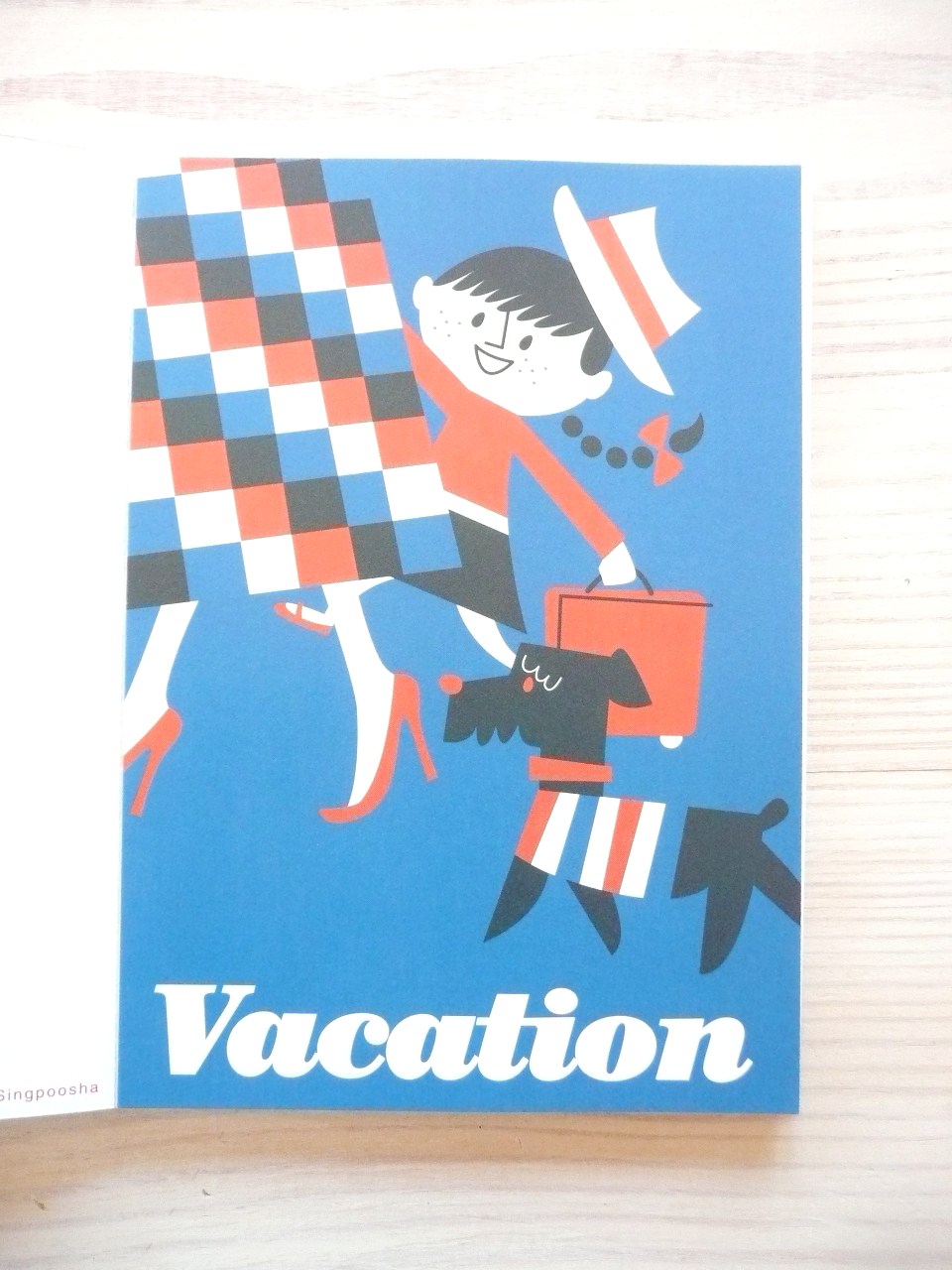
Books and Stuff — Illustrator and designer Amy Cartwright, who blogs about vintage kids books and modern design at Stickers and Stuff, shares some wonderful pictures of her favorite books and “the stories behind some of her finds” at the always awesome Grain Edit (including the Cosy Tomato Post Card Book pictured above).

Comments closed

Midweek Miscellany, March 11th, 2009

Rare (and not so rare)Joel Kral‘s fabulous collection of book covers on  Flickr (via Monoscope):

These are some of the rare (and not so rare) books that I have collected over the past 13 years. They range from graphic design, architecture, art, typography, illustration, skateboarding, graffiti, etc.

Literary Fibs“Miserable writerist” Charlie Brooker responds  to the claim that 65% of us lie about the novels we’ve read in a bid to impress people:

The… irony is that while people lie about having read highbrow novels in order to impress each other, a massive percentage of highbrow novels aren’t worth reading anyway because the authors are too busy trying to impress the reader (who, we now know, probably hasn’t bothered turning up)

Shelved Books — “A blog dedicated to the cover that never happened” by designer Kimberly Glyder.

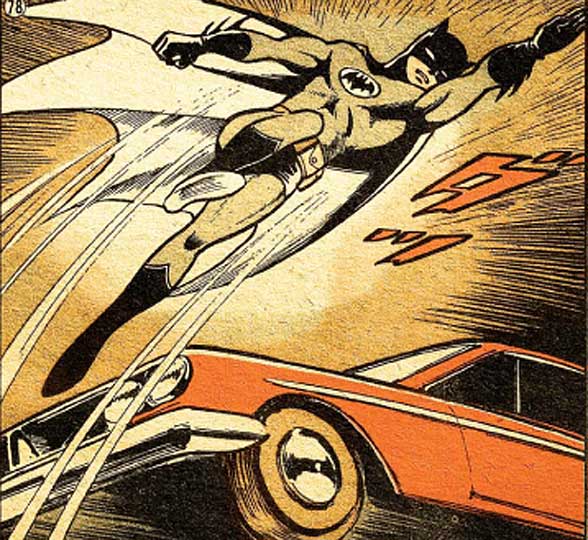
Day to Day Batman — Chip Kidd, the self-described “Indiana Jones of Forgotten Japanese Batman Comics”,  talks about Bat-Manga! on NPR (pictured above).

Isn’t that enough?Jeff Gordiner, Editor-at-Large at Details magazine and author of X Saves the World, interviewed at The Raleigh Quarterly (via@RonHogan):

Other than Philip Roth, though, almost everybody’s writing too much. Blogs, chat rooms, Twitter, Facebook status updates —there’s a wordy data glut going on, and it’s made me more reverent than ever of strategic silence. I’m fond of the J.D. Salinger approach — just evaporating from public view. Is it wrong that Salinger hasn’t left us with 30 or 40 books?

Snooty British traditions and  New York brashness — the National Post talks to Nicole Winstanley about Penguin Canada’s new imprint Hamish Hamilton Canada. This is the 4th installment of the Post‘s  ‘The Ecology of Books’ series. Part one is about literary agents, part two looks at literary journals, part three is a fascinating profile of McClelland & Stewart’s Ellen Seligman.

The Periodic Table of Typefaces —  (pictured above)

And finally, Alan Taylor has launched  ‘meta-blog’ Big Picture Notes to accompany the Boston Globe‘s brilliant photo blog The Big Picture.  Great stuff.

Comments closed

Something for the Weekend, March 6th, 2009

Abecediary — Steven Heller on alphabet books (Die Flucht Nach ABECEDERIA by the French comic artist Blexbolex pictured above).

Imprints in the 21st Century — Admittedly HarperCollins new Imprint It Books is an easy target (NB use of “tap into the zeitgeist” in a sentence = fail), but Mike Shatzkin does a good job of explaining why their strategy is past its sell by date (and beginning to smell):

General trade publishers need to see, and apparently don’t,  that their legacy brands are B2B [business-to-business]. They should be exploited that way. They need brands that can work B2C [business-to-consumer], but it will require discipline, focus, and an audience-first picture of what to publish to accomplish that.

Writing for a Living — Luminaries such as Will Self, Joyce Carol Oates, and AL Kennedy (quoted below) discuss whether writing is a joy or a chore in The Guardian:

“The joy of writing for a living is that you get to do it all the time. The misery is that you have to, whether you’re in the mood or not.”

Hugh at BookOven is angry this week.  He wants to know why publishers are not selling directly to customers from their website and why they make e-books so complicated. I think Hugh underestimates the time/money/skill-deficit obstacles publishers face in regard to both problems. I suspect Hugh thinks I’m an apologist and will be first up against the wall when the revolution comes.


Book Design Made Easy — cartoonist Tom Gauld is making his genius cartoons from The Guardian available on Flickr (via Drawn!, source of so many life-improving things).

4 Comments

Something for the Weekend, Feb 27th, 2009

The 5 Rules of Book Cover Design Book — John Gall, VP and art Director at Vintage, talks about designing books at Barnes & Noble (video). There is also a nice print interview with John Gall from 2007 at STEP Inside Design magazine and another interview with the designer from the same year  at fwis Covers website (which is worth it just for the immortal line: “I want a telepathic dog.”) (John Gall at the Book Cover ArchivePragmatism: A Reader designed by John Gall,  pictured above)

Fear, panic, and a little bit of hope — Sarah Weinman discusses the perilous state of  the publishing industry on NHPR’s Word of Mouth.

Chapters-Indigo‘s move into e-books, Shortcovers, goes live to much curiousity and twittering. The Globe and Mail has the basics, The National Post’s The Ampersand rounds up some of the reactions, but O’Reilly’s TOC seems to sum up the general mood: “A Good Start, But Room for Reader Improvement”. Michael Serbinis, the executive VP, writes about the first day on the Shortcovers blog.

(NB – I’ve sort of been ignoring the Kindle2 stuff as it’s not available in Canada, but — just to have some balance — E-Reads has a nice round up of the coverage).

Influence the futureAnthro Goggles lists the first 4 SF books you should read if you work in social media.

Jacket Copy — An interesting interview with David L. Ulin, book editor of the Los Angeles Times (who folded their standalone book section 6-months ago), in PW:

Ulin takes a realistic, broad-ranging view of how book coverage will be presented in the future. “I’m committed to both print and Web. There are two readerships, and I’m not sure they’re the same. My main interest is, how do we get the most book coverage to the most people?” Ideally, Ulin would welcome a return to the stand-alone book review. “But we don’t have one now, and we’re not going to have one,” he says.

modernism 101 : from aalto to zwart — “We specialize in rare and out-of-print design books and periodicals. Our carefully-selected online inventory spotlights both famous and forgotten modernist architects, photographers, typographers, and industrial designers in all their published glory.” How could I not link to this? Even if you can’t afford the books (which I can’t) you can at least look at the covers! (The Twentieth Century Book by John Lewis pictured above). (via ISO150)

And on a related bookporn note, Grain Edit has some rather nice pictures of Typographica, the design journal edited by Herman Spencer…

Comments closed

Midweek Miscellany, Feb 25th, 2009

“Facts are stranger than fiction”The Toronto Star profiles  The Monkey’s Paw bookshop and owner Stephen Fowler (pictured):

“Books have been totally superseded by digital. A generation ago, books were not only the primary, but the only way we stored and transmitted culture. Books were culture. And they’re not any more. They’re these odd anachronisms,” Fowler says. “But that doesn’t mean they don’t contain all sorts of treasures. They’re beautiful and interesting and they have fascinating content and startling stuff in them.”

The serendipity of accidental discovery — Allison Arieff profiles William Stout, publisher and owner of the eponymous architecture and design bookstore in San Francisco, for the New York Times:

I love the tangents an afternoon spent searching the Internet can generate… But I realize as well that it’s contributing to a sort of collective ADD that makes ambling through aisles of a place like Stout Books feel that much more special, requiring an altogether different commitment of time, care and attention.

A Publisher’s Decalogue — 10 (+1) good rules for publishers from Alma Books (via The Book Depository Blog).

The E-Book Difference — The Book Oven’s Hugh McGuire on why publishers need to get to grips with e-books and mobile devices:

The reason digital and ebooks are going to become more important is that’s where the eyeballs are going to be. And if you can’t find more ways to get eyeballs on digital books, then I do fear for the future of (traditional) book publishing.

Making Magic — A sprawling interview with the brilliant (and possibly quite bonkers) Alan Moore in Wired:

I thought that a book like Watchmen would perhaps unlock a lot of potential creativity… I was hoping naively for a great rash of individual comic books that were exploring different storytelling ideas and trying to break new ground… That isn’t really what happened. Instead it seemed that the existence of Watchmen had pretty much doomed the mainstream comic industry

Borderless thinking —  Graham Vickers looks at how digital is rewriting the rules for publishers and distributors in The Guardian:

The most creative ideas are still to be found outside the orbit of the traditional media… in places where there were no predefined models, and no pre-existing ground rules to impede borderless thinking.

Daily Routines — A blog about how writers, artists, and other interesting people organize their days. For someone who endlessly struggles with their daily routine, I find this fascinating.

2 Comments

Midweek Miscellany Feb 18th, 2009


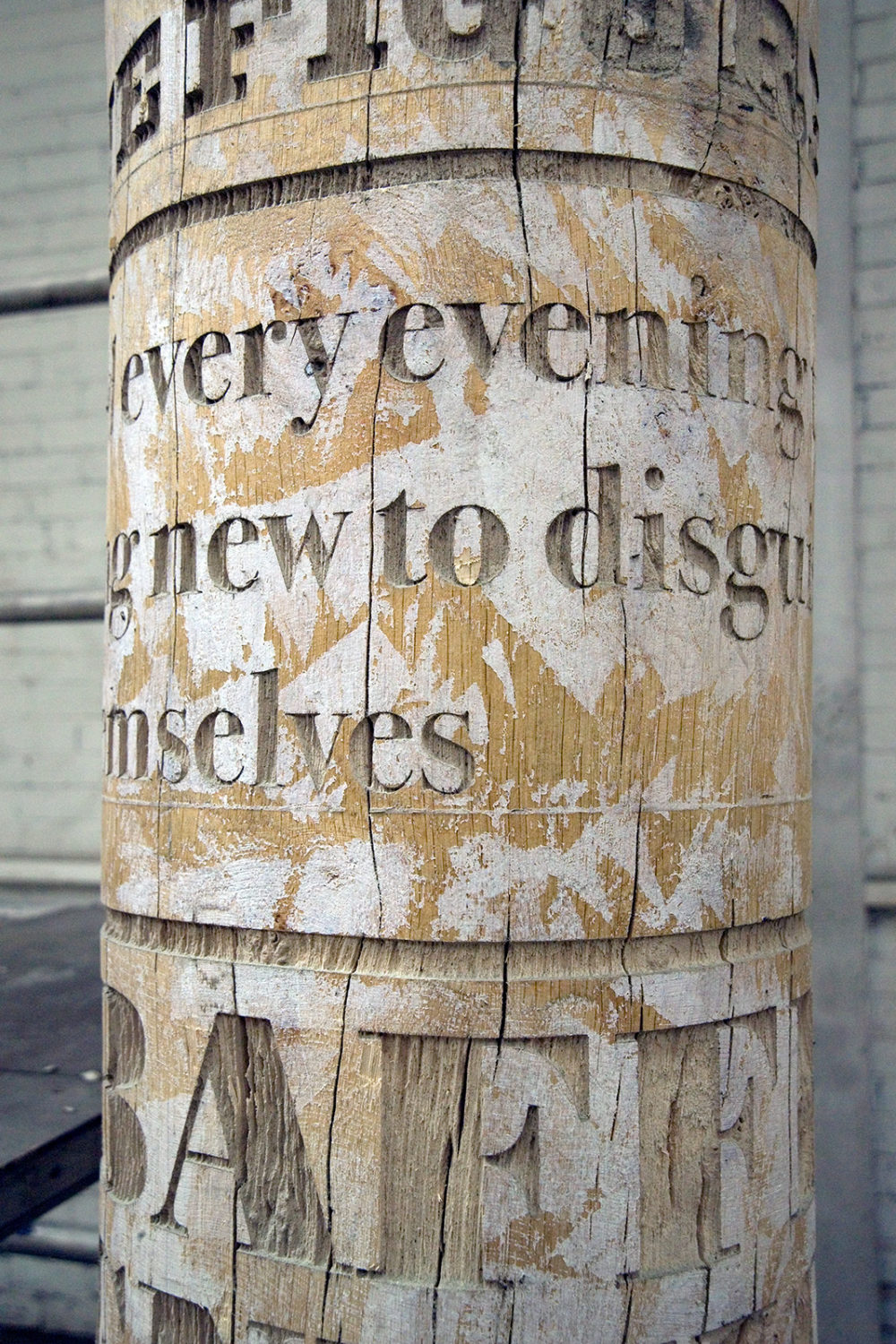
Typographic Trees — I saw pictures of the latest collaboration between artist Gordon Young and design studio why not associates a while back, but a mention in the latest issue of Creative Review is the perfect excuse to post a couple of images of these lovely sculptures for Crawley Library in West Sussex. It’s probably worth mentioning that (unsurprisingly) why not also do a nice line book design.

An interview with Allan Kornblum, publisher at nonprofit literary publisher Coffee House Press, is the latest installment in Scott Esposito’s How to Publish in a Recession series  at Conversational Reading:

Now with Borders on the brink, and former readers becoming would-be writers and self-publishing books instead of reading books, a major shake-up was inevitable… The recession isn’t the only factor driving changes in writing and publishing. Writers on the one hand, and book and magazine publishers on the other, are both trying to figure out what the changes in information technology will mean. Will books get shorter, so they can be read on a cell phone? Will nonfiction migrate to ebooks, while literature stays on the printed page? Will backlist titles become downloadable PDFs? Will future desktop printers include binding equipment?

Funeral in Berlin — Possibly the most badass cover ever (pictured above) and part of the amazing collection in the Penguin Paperback Spotters’ Guild Flickr pool (first seen at FFFFound). And funnily enough it is apparently Len Deighton’s 80th Birthday.

30 Novels Worth Buying for the Cover Alone — “A book must stand out on the bookstore bookshelf yet cover designers rarely receive the recognition that authors do.” And  in “appreciation of these unsung artists”, Beth Carswell chooses her 30 favourite fiction covers for AbeBooks.

MinuteMen — a retro-Nintendo-style-arcade-kung-fu-kick-punch-jump-game promoting the new Watchmen movie. Smartass viral marketing if you like that kind of thing. And if you listen closely, that sound you hear is Alan Moore’s teeth grinding away in Northampton. Buy the book.  (via GalleyCat).

How do you define good design? Gary Hustwit, director of Helvetica, interviewed about his new film Objectified at the Dwell Magazine blog:

If it didn’t exist, would anyone really miss it? Would it leave a hole in anyone’s life?

If we asked ourselves this question in publishing more often, how many books would actually get published? And would publishers be in the mess they’re in now? Answers on a postcard please.

And finally, Spy Vibe — a blog dedicated to 1960’s spy style! This is so cool I can’t even be bothered to find a tenuous link to books or publishing (although there surely is one)…

2 Comments

Something for the Weekend, Feb 13th, 2008

Apologies for the rant about the Globe and Mail this morning (note to self: don’t blog without coffee). Hopefully a highly-caffeinated design-heavy post for the weekend will make up for it…

First off, Jenny Griggs’ gorgeous typographic designs for Peter Carey’s backlist (pictured above) described by the great man himself as “A triumph!!!!!! Fucking fantastic!!” (Jenny talks about her more recent papercut designs at FaceOut Books)

M.S. Corley re-images the Lemony Snicket (pictured above) and Harry Potter series as Penguin Classics (via the BDR)

Metacovers — Joseph at the BDR looks at books on book covers (see above!).


The Way Through Doors — written by Jesse Ball; stunning minimal cover design by Helen Yentus for Vintage. Not quite a ‘metacover’ but I still love it (pictured above — seen at the Book Cover Archive of course)

Holey Font! – “How much of a letter can be removed while maintaining readability?” EcoFont has tiny holes and uses up to 20% less ink. Based on Verdana, and developed by SPRANQ in the Netherlands, it’s free to download, and free to use. And it seems to work.

And lastly, The Book Depository Live — Watch what books people buy from The Book Depository around the world in real time. Very cool. (via @paperbackjack)

1 Comment

Monday Miscellany, February 9th, 2009

“Books exist because we want and need them” — A slide show of pages from Robert Bringhurst’s new book The Surface of Meaning: Books And Book Design In Canada (pictured) published by CCSP Press in The Globe and Mail. (Disclosure: The Surface of Meaning is distributed by Raincoast in Canada).

A bookshop is a dynamite-shed — Bookride have posted a splendid John Cowper Powys rant about second-hand bookshops:

[A] bookshop — especially a second-hand bookshop — is an arsenal of explosives, an armoury of revolutions, an opium den of reactions. And just because books are the repository of all the redemptions and damnations, all the sanities and insanities, of the divine anarchy of the soul, they are still, as they have always been, an object of suspicion to every kind of ruling authority.

Pessimism Porn — Hugo Lindgren explains his addiction to nightmarish economic news  in New York Magazine:

“[E]cono-porn… feeds a powerful sense of intellectual vanity. You walk the streets feeling superior to all these heedless knaves who have no clue what’s coming down the pike. By making yourself miserable about the frightful hell that awaits us, you feel better. Pessimism can be bliss too.”

Publishing certainly has its fair share of addicts…

Visionary locations — Toby Litt on J.G. Ballard in the Guardian:

“Plenty of other writers now fictionally venture into multistorey carparks, airport hospital wards, decaying hotels, but they do so in the knowledge that they’re trespassing on Ballard’s territory. He was here first; he was the pioneer – back when these places were seen as totally unliterary. What could possibly happen on a motorway embankment that was of interest?”

Finding alternative best sellers — Toronto bookshop This Is Ain’t The Rosedale Library profiled by Brian Joseph Davis in the Globe and Mail.

Is CondéNet Dead? — Slate’s The Big Money examine how “a publishing giant failed to get the Web”. Lessons (if more were needed) for book publishers (via @jafurtado):

“To say that we’re just a magazine company in this day and age is like saying that we’re a buggy company.”

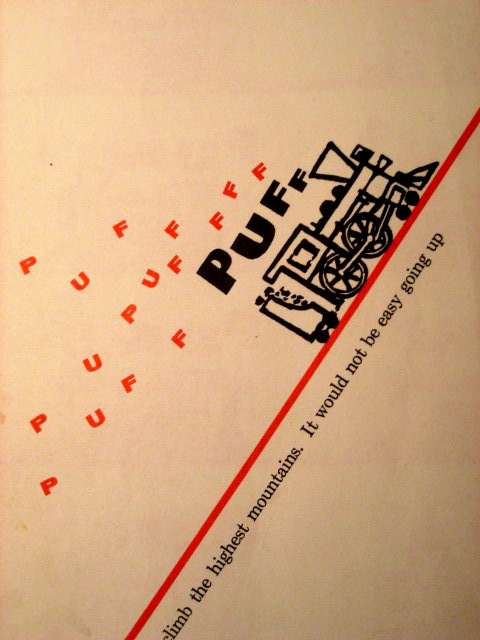
PUFF — lovely pictures of PUFF by William Wondriska (published in 1960 by Pantheon Books Inc.) at the wonderful Grain Edit (pictured above).

Image Spark— A neat image bookmarking tool. V. excited about this as you can probably imagine… (via @michaelSurtees/DesignNotes) .

1 Comment

Midweek Miscellany, February 4th, 2009

Slow Burner (above) — a rather awesome — if slightly racy — cover seen at the Bookkake Blog.

How to Publish in a Recession Part 3 — The always interesting Richard Nash, the editorial director of Soft Skull Press and the executive editor of Counterpoint, talks to Scott Esposito at Conversational Reading.

The Once and Future e-book: On Reading in the Digital Age — A fascinating article on the past, present, and future of e-books and e-book readers by John Siracusa at Ars Technica.  I think — like many —  he underestimates the challenges (such as rights issues and, on a really basic level, a lack of expertise and human resources) publishers face making their titles available as e-books, but this really is a must-read.

Book Expo Canada is officially dead. It is an ex-trade show– Surprising precisely no one. The Globe and Mail has publisher reactions and a postmortem interview with Tom Best, vice president, marketing, at H.B. Fenn. What troubles me is the belief that we need something to replace it…

There’s so much written about how publishers don’t know what they’re doing… But how do you know what to do?”The New York Observer talks to former PW editor Sara Nelson:

You’re making a bet on who’s gonna like something a year and a half from now. That’s without even getting into the economy or anything—just, ‘What’s the mood of a number of people going to be a year and a half from now?’ If you thought too much about that, you’d shoot yourself.”

“We are on the verge of an explosion in independent book publishing” — Hugh McGuire of Librivox and The Book Oven chats to Allentrepreneur.

The Google Paradox — Andrew Keen, author of The Cult of the Amateur, on two new books published (in the conventional way) about Google:

“the more Google does to kill the traditional publishing industry with the free online content from its search engine, the more books will get written about the central role of Google in our new digital economy… The irony of Elsewhere USA and What Would Google Do? is that both books rely on the five hundred year-old technology of Johannes Gutenberg’s moveable type to explain the wrenching digital transformation of the 21st century.”

Who is on twitter? — I think I fall into the cateogory of “people who are concerned about the collapse of the publishing industry.” (Thanks Sio!)

Comments closed

Something for the Weekend, Jan 23rd, 2009

Big Mouth Strikes Again — The Friday Project’s charming Scott Pack interviewed at North Meadow Media:

people who have dealt with me directly are pleasantly surprised that I am not the complete cunt I am sometimes made out to be. I am a bit of an arse but not quite as bad as my press would suggest.

Books Unbound — author Lev Grossman’s (much linked to) thoughts on the evolution of publishing for Time magazine. Meh.

Unhappily ever afterThe Guardian’s Nick Laird  reviews Richard Yates’ Revolutionary Road, and asks is it “too good a novel to make a great film”?:

It is a solid and noble effort that succumbs to what should be a moral of literary adaptation: bad books can make great movies, but a great book hardly ever does. And though you can see what tempted the movie men – that great dialogue! those poignant characters! – with Yates it’s the sentences themselves that are truly panoramic, and no matter what you do, they’re going to get left behind.

That may all be true, but to be honest, the wayward casting in Sam Mendes film adaptation is so catastrophically contrary to the characters in my mind that I can’t bring myself to see it anyway.

BlogTO profile one of Toronto’s best independent bookshops Ben McNally Books. Lovely bloke that Ben McNally . BlogTO have profiles of other Toronto bookstores here.

Toronto gets another new literary festival. I can hardly contain myself.

The message is the subject — Jenny Tondera interviews Dutch designer Wim Crouwel, creator of the ‘New Alphabet’ (pictured above and famously tea-leafed by Peter Saville for the album cover of Joy Division’s Substance), about the Bauhaus for Geotypografika. Jenny also interviews Michael Bierut, Experimental Jetset, Steven Heller, Paula Scher, Ellen Lupton, and Jessica Helfland.

2 Comments

Something for the Weekend Jan. 9th, 2009

Curation, Appeciation, Organization: The Book Cover Archive goes live with “cross-indexed meta data” (and blog)! LOVE this. Nice work fellas. (via SwissMiss)

Skinny tight jeans and mild panic: The Scotsman profiles Canongate’s Jamie Byng.

Almost half of Canadians can’t name a single Canadian author according to the hand-wringing National Post… Or to put it another way, over half of Canadians CAN actually name a Canadian author? It could be worse (really)…

Canadian booksellers manage a “late holiday rally” in December reports PW:

Retailers large and small were unanimous in their opinion that books proved to be an excellent recession gift, with the value proposition of books being improved in part by fact that the actual price of books have fallen relative to U.S. prices.

A .38 shell for independent bookshops: The Guardian‘s Stuart Evers considers consumer apathy and the imminent closure of the Murder One bookshop on Charing Cross Road in London:

These kinds of shops are facing a long, bloody battle – and one which, without significant reinforcements, they are likely to lose. As we hear of the travesty of another brilliant independent going down, we’ll mourn the loss, wring our hands and damn Amazon and the supermarkets and Waterstone’s. Yet perhaps the most important detail we’ll probably keep under wraps: the last time we actually spent any money there.

Hapless Houghton Mifflin Harcourt reinstate editor Drenka Willen after Noble prize-winner Günter Grass intervenes.

Nostalgic book covers a hit for Penguin in Australia— 50 titles released with covers in the original orange-and-cream designs are selling strongly:

“They are instantly recognisable and have an emotional pull… Most people or their parents have got second-hand or old Penguins at home that have the same livery. But it’s not only pulling on that nostalgic lever, it’s also got that retro coolness. We’ve found that younger readers have been really drawn to them.”

“To say his work was inspirational is an understatement”: The New York Times profiles the late Barney Bubbles  whose iconic album cover designs (for the likes of Elvis Costello, Ian Dury, and The Damned) are celebrated in Paul Gorman’s new book “Reasons to Be Cheerful: The Life and Work of Barney Bubbles” published by Adelita (pictured).

Comments closed