Skip to content

Tag: Miscellany

Monday Miscellany, April 27th, 2009

Every battle is won before it is even fought — Amazon acquires Stanza. Like just about everyone else, I was completely blindsided by this. But should we have seen it coming?

The Black Series — Paperback covers from 1960’s Swedish crime series “Svarta serien”  illustrated by Per Åhlin seen at Martin Klasch’s blog.

100 Books on Typography — Compiled by Charles Nix president of the Type Directors Club (via Design Observer).

Writing Without Words — Stefanie Posavec’s gorgeous visualizations of text and the writing styles of various authors (via @Ashbury&Ashbury).

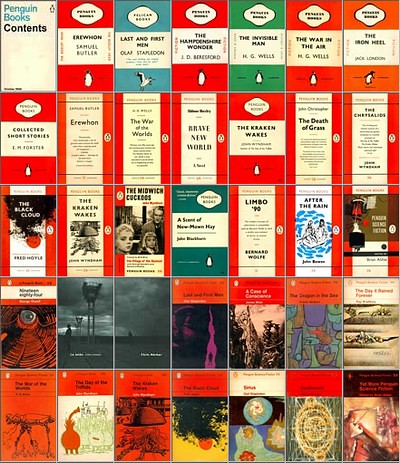
The Art of Penguin Science Fiction—  James Pardey is creating an archive of Penguin science fiction cover designs. If I have one complaint it’s that you can’t see larger versions of the covers, but otherwise it is brilliant (via Ace Jet 170).

Comments closed

Something For The Weekend, April 25th,2009

Comic Shelves by Oscar Nunez for Fusca Design (via The Ephemerist)

Goodnight Mechanical Dinosaur — Neil Gaiman on Batman in Wired (via LinkMachineGo):

[T]he great thing about Batman and Superman, in truth, is that they are literally transcendent. They are better than most of the stories they are in. That’s just Sturgeon’s Law: “90 percent of everything is crap.” Can you imagine how many thousands, or millions, of words have been written on Batman? Try to read them and you’re looking at 100,000 pages, perhaps a million, and you can assume that 90 percent of it is crap. Yet the 10 percent, and even better the 1 percent of that 10 perfect, is absolutely glorious. That pays for everything.

Tea and Cake — Louise Tucker chats to colleague Scott Pack about The Friday Project on HarperCollins’ 5th Estate blog:

It is still the only imprint to specialise in taking great web content and making books from it. That gives us a much wider brief than most people think…

Our future plans are very exciting. Our author deals will now all be profit-share arrangements with us splitting the profits of the books 50/50 with the authors. We are soon to announce some bold eBook initiatives and there is more to come.

Figuring it Out — Type legend Erik Spiekermann, co-author of Stop Stealing Sheep, on the basics of typography.  Not new, but still a great primer/reminder.


Will it sell in Moosejaw? — Book designers Bill Douglas (The Bang), Ingrid Paulson, (Ingrid Paulson Design), Angel Guerra (Archetype Design), Terri Nimmo, (Random House), and Kelly Hill, (Random House), discuss their craft in The National Post (Ingrid Paulson’s cover design for Kate Ausptiz’s The War Memoir of HRH Wallis Duchess of Windsor pictured above).

Wrapper’s Delight — A librarian at the Bodleian Library has found the earliest-known book dust jacket in an archive of book-trade ephemera:

Unlike today’s dust jackets, wrappers of the early 19th century were used to enfold the book completely, like a parcel. Traces of sealing wax where the paper was secured can still be seen on the Bodleian’s discovery, along with pointed creases at the edges where the paper had been folded, showing the shape of the book it had enclosed.

Comments closed

Midweek Miscellany, April 22nd, 2009

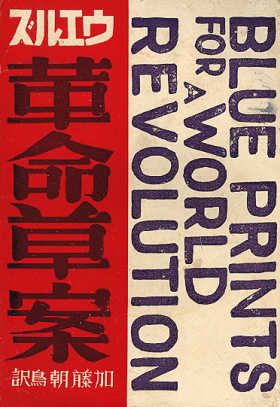
Blue Prints for a World Revolution — seen at the Antiquarian Bookshop 108 Buddhas, which has an amazing collection of avant-garde journals and books from Japan and Eastern Europe  in their gallery section (via Michelle McCormick’s Inspiration Resource ).

12 Steps to Better Book Publishing — Good stuff from Jonathan Karp, publisher and editor-in-chief of Twelve Books in Publishers Weekly:

It seems likely that the influence and cultural centrality of major publishers, as well as other producers of information and entertainment, will diminish as digital technology enables more and more people to create and share their work. This is exactly why publishers must distinguish themselves by doing better what they’ve always done best: champion books that offer carefully conceived context, style and authority.

The State of the IndustryNeil Nyren, senior VP, publisher and editor in chief of G.P. Putnam’s Sons talks to author  J.T. Ellison at Murderati (via @sarahw).

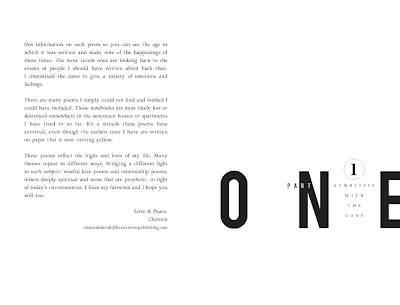
Poetic Interiors — Some lovely typography for Arrays of Conscious by Chanson Duvall at Beyond the Covers.

Embracing Change — Victoria Barnsley, chief executive and publisher at HarperCollins UK,  profiled in The Guardian:

There are still concerns about the digital future, such as how to continue making money. “There are some very big questions that we still have to answer – the biggest one being value,” says Barnsley. “How to make sure that consumers are going to be prepared to pay for digital content, because a lot of them are getting quite used to getting it for free?”

And yet…

Why newspapers can’t charge for online content — Dan Kennedy elsewhere in The Guardian:

I have no philosophical objection to the idea that news organizations ought to be able to charge for their online content. The problem is that it’s highly unlikely to work – mainly because there are too many sources of free, high-quality news with which they’re competing.

Font of Ill Will — Vincent Connare, designer of Comic Sans, profiled at the WSJ:

The font, a casual script designed to look like comic-book lettering, is the bane of graphic designers, other aesthetes and Internet geeks. It is a punch line: “Comic Sans walks into a bar, bartender says, ‘We don’t serve your type.'”

And finally…

Soldiers of Lead — An introduction to layout and typography for use in the Labour Party  (via Design Observer).

Comments closed

Something for the Weekend, April 17th, 2009


Isotype — Gerd Arntz’s amazing pictograms and visual signs for the visual language Isotype at the beautifully designed The Gerd Arntz Web Archive (pictured above).

Jacket(s) — Much as I admire Chip Kidd’s book covers, most of them are just too familiar to re-post here. But I hadn’t seen this ingeniously layered design for Kenzo Kitakata’s Ashes before even though it was published by Vertical in 2003 (pictured above). Seeing it all laid out, it’s really hard to begrudge Mr. Kidd’s reputation for awesomeness.

We like to be part of something — Nick Harkaway on connections:

A paper book has a history. Somewhere, at some time, an author wrote it all down, printed it out, gave it to an editor, who also worked over it. The book was typeset – yes, on a computer, these days, but still — and finally pressed and packaged and distributed. There is a chain of physical events which leads from me to you. With old editions, it’s even more direct. With signed ones, it’s a handshake. We like to connect. And digital books feel as if they’re trapped behind glass. The book is in the machine, and we can’t open the cover and touch the pages.

Black, white and read all overCreative Review looks at Faber & Faber‘s new editions of 20th Century poetry. The books feature specially commissioned woodcut and linocut cover illustrations.  The new editions are part of the Faber’s 80th anniversary celebrations. You can see more of the cover images at designer Miriam Rosenbloom’s design:related page.

The Disappointment Brokers — I going to go out on a limb and say this is another must-read for book-industry types from Poets & Writers — Literary agents Anna Stein, Jim Rutman, Maria Massie, and Peter Steinberg have a fascinating conversation about their profession and the state of the industry:

here’s the silver lining: [The industry’s] unhealthy enough that it’s an exciting time. It’s broken enough that publishers and agents and everyone has to change. Everyone has to rethink what they’re doing. So we have a group responsibility, and an opportunity, in a way that the industry has probably never seen before.

The Legacy of ModernismSpiegel Online celebrates 90 years of Bauhaus (via @PD_Smith).

Comments closed

Midweek Miscellany, April 15th, 2009

The #amazonfail shitstorm — from Amazon’s awful “ham-fisted”  glitch (a phrase so dirty it’s probably de-listed from their own searches) to the seething self-righteous indignation on Twitter — has been enough to make me want turn off the internet and go back to bed. But if you need  an overview of the whole sorry story, business reporter Andrea James has done a very thorough job following it for Amazon’s local newspaper the Seattle Post-Intelligencer, and summaries, shivering with schadenfreude, can be found in the New York Times, The Guardian, Wall Street Journal, and the National Post.  No doubt the other major dailies were all over it too…

Former PW editor Sara Nelson at The Daily Beast , Evgeny Morozov at Foreign Policy, and the Vromans Bookstore Blog offer some alternative perspectives.

But I’ve got to say I agree with Jessa Crispin at BookSlut: “I’m bored with this.”

(UPDATE: Clay Shirky has written perhaps the most thoughtful post on #amazonfail I’ve read to date: The Failure of #amazonfail)

Lets. Move. On…

Straight Up — Knopf designer Peter Mendelsund who moonlights as art director of Vertical Press and blogs at Jacket Mechanical,  interviewed at the always ace FaceOut Books (Smell Man by Munenori Harada, designed by Peter Mendelsund pictured above).


Contact — Filmmaker and writer Adam Harrison Levy on William Klein’s recent appearance in New York and the importance book-signings (William Klein: Buicks, 2 tiered, New York, 1955, Howard Greenberg Gallery, pictured above):

A book signing is a manifestation of an urge to recover something that we, as a culture, fear losing — namely the hand of the artist in the age of mechanical (and digital) reproduction. Now more than ever it seems that we want to get close to creativity: to hear the voice and see the skin and experience the physical presence of the person who made something that we deem to be meaningful. Is this because so much of our lives now is mediated through a screen?

What Went Wrong? — An interesting article (and something of a mea culpa) in the Boston Globe about the mistakes and missed opportunities made by newspapers underestimating the impact of the web.

In Perpetua — MyFonts strike up a ‘dialogue’ with Eric Gill (1882 – 1940), stonecarver, graphic artist, type designer and writer:

If we insist on the ornamental we are not making the best of our system of manufacture, we are not getting the things that system makes best. The process by which a railway locomotive has become the beautiful thing it now is, this process must be welcomed in all other departments of manufacture. … And ornamental typography is to be avoided no less than ornamental architecture in an industrial civilization.

We Love Typography —  “FFFFound for all things type, typography, lettering, & signage” created by I Love Typography in collaboration with Kari Pätilä.

And finally, I would like to pass on my condolences to the friends and family of Derek Weiler, editor of the Quill & Quire, who died at the weekend, aged 40.

Comments closed

Something for the Weekend

The Alcuin Society announced the 2008 Awards for Excellence in Book Design in Canada this week. Utopia/Dystopia by Geoffrey James, designed by George Vaitkunas, published by Douglas & McIntyre, (pictured above) won first prize in the pictorial category. A full list of the winners is available here (PDF).

The Hidden RevolutionInside Higher Ed discusses an article (sadly not available online) by Sandy Thatcher, director of the Penn State University Press, about digital publishing at university presses:

Thatcher’s argument, in brief, is that the peculiar challenges faced by university presses have given them an incentive to use digital resources in ways that put them somewhat ahead of their peers in the world of trade or mass-market publishing. Given the small market for most scholarly titles, academic publishers were in a unique position to benefit from short-run digital publishing (SRDP) and print-on-demand (POD) technologies.

Ten Grids That Changed the WorldSwiss Legacy reviews Hannah B Higgins’ The Grid Book:

Charting the evolution of each grid, from the Paleolithic brick of ancient Mesopotamia through the virtual connections of the Internet, Higgins demonstrates that once a grid is invented, it may bend, crumble, or shatter, but its organizing principle never disappears.

Also: The Grid Book reviewed in The Guardian.

The Need for Balance — Novelist Victoria Strauss at Writer Beware on fatuous articles about self-publishing:

For most writers… the path of self-publishing offers substantial downsides and pitfalls… and successes… remain few and far between. These hard facts are way less sexy than the vision of a brave new technological world that makes it possible for (a few) authors to bypass the traditional route to success–but they are no less real. In my opinion, journalists who write about this issue have a responsibility to cover both sides.

Taking the Internet and Printing it Out — Ben Terrett (Noisy Decent Graphics and Really Interesting Group) talks about publishing Things Our Friends Have Written on the Internet — a newspaper collecting some of the best blog posts of 2008 — with Nora Young on CBC Radio’s Spark.

This week’s Spark also has a neat interview with YouTube remix genius Kutiman. If you haven’t seen/heard Kutiman’s Thru You music project, check  out The Mother of All Funk Chords.

“God Damn That’s A Good Looking Blue” — Winston Eggleston talks about his father, the photographer William Eggleston (whose work was recently used for the cover NYTBR):

Comments closed

Monday Miscellany, April 6th, 2009

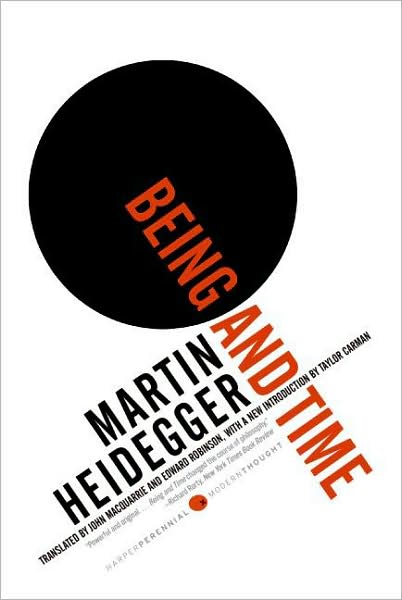
Gregg Kulick‘s design for Being and Time (pictured above) seen at The BDR (of course). You can see more of Gregg’s work on his website.

Try before you buy — Matthew Baldacci, VP of of marketing and publishing operations at St Martin’s Press, talks to Book Business about ‘Read-it-First’, a free email service that allows subscribers to sample books before they decide to buy them (via Joe Wikert).

Can ‘Curation’ Save Media? — Steve Rosenbaum at The Business Insider:

Curation is the new role of media professionals.

Separating the wheat from the chaff, assigning editorial weight, and — most importantly — giving folks who don’t want to spend their lives looking for an editorial needle in a haystack a high-quality collection of content that is contextual and coherent. It’s what we always expected from our media, and now they’ve got the tools to do it better.

City of Juxtapostions — a short Q & A with Portuguese designer and illustrator Cristiana Couceiro (mentioned previously here for her New York Times Book Review cover illustration) at Untrendy Graphics:

Lisbon is deliciously decadent, ripped in time, full of vintage elements. And I let myself get lost in those little details. In shops that closed down, but which still hold, intact, beautiful examples of typography and logotypes on the shop windows. On neighbourhood hair-dressers and groceries. Lisbon seems to fluctuate between the old and the new.

The Fox — A beautiful cover design  seen at Sci-Fi-O-Rama. Apparently the illustration was originally used for 1967 movie adaption of D.H. Lawrence’s novella (via The Ministry of Type).

Comments closed

Something For The Weekend, April 3rd, 2009

On a very wet and miserable day in Toronto, it only seems appropriate to start with a couple of books about the rain and then move on to some steaming hot coffee before all the usual book miscellany…

Stickers and Stuff lauds Helen Borten’s lovely illustrations for Franklyn M. Branley’s book Rain and Hail (pictured above). And  Andy Smith shares some of his illustrations for his silkscreen book The Rainy Season on his blog (pictured below).

And, while were on the subject of Andy Smith, he’s posted some of his book jacket work  on Flickr (via Beyond the Covers).

The Daily Grind — Benjamin Obler, author of Javascotia, on his 5 Favourite Cups of Coffee in a Day at the Penguin blog:

It’s so obvious, I know, but the morning cup — the first — morning cup — is like the pioneer. The self-sacrificer. Without it, there would be no others… Even on a regular day, it’s a workhorse.

Head On — Indie heartthrob Richard Nash talks to Interview Magazine (via Booksquare):

It is very complicated for an unknown writer to reach an audience of readers given the vast numbers of unknown writers out there. How do people find out about it? So I believe in the role of intermediaries. People always look to trusted friends who might be more expert or knowledgeable in a given area for advice about things… The question is, who are going to be those people. The model is going to shift from kind of a gatekeeper model to an advisor/service model.

Mr. Nash was also interviewed by BookSlut back in March.

I watch you read — Julie Wilson,  AKA Seen Reading and publicist for Canadian publisher Anansi,  is now blogging for Walrus magazine.

Atomized — Mark Coker, CEO of e-publishing service Smashwords, talks about e-books and iPhones with Maria Schneider at  Editor Unleashed.

Bite-Size Edits — The Book Oven launches “a tool that makes proofreading easy and might just be the most fun you’ve ever had spotting typos with your clothes on.” The Book Oven blog has more. (NB Bite-Size Edits is still in private alpha, but  I have a couple of invitations so email/DM me or leave a comment below if you would like to be involved).

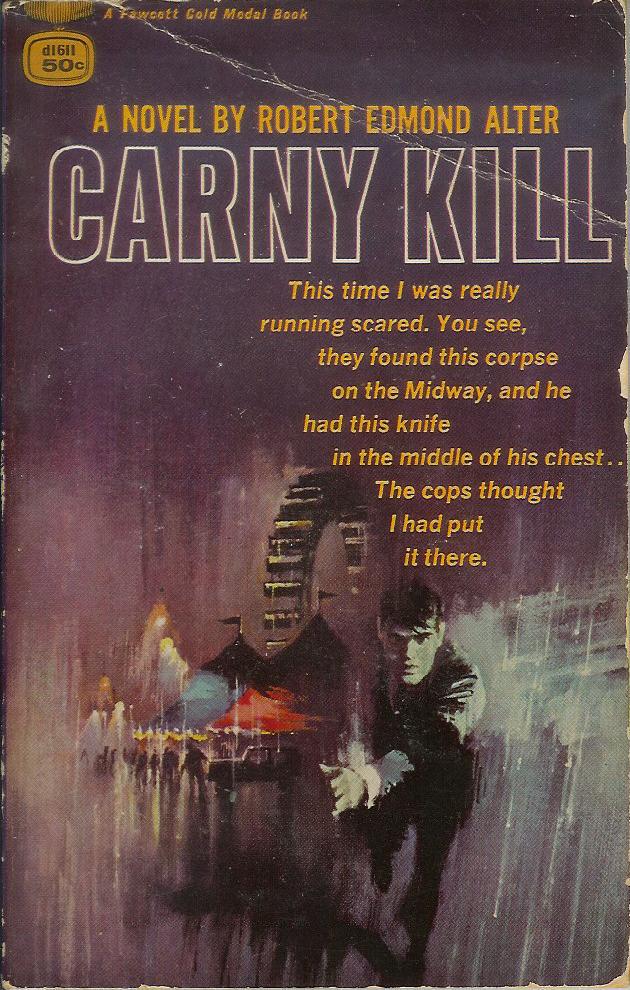
And finally, Carny Kill as seen at Pop Sensation (words fail):

Comments closed

Monday Miscellany, March 30th, 2009

Oh. My. GoshJon Klassen’s lovely illustrations and designs for the movie adaptation of Coraline.

Schadenfreude — Literary agent Nathan Bransford on the “death” of the publishing business:

There are definitely problems with the business… But the industry is not stupid. Like any massive industry that is comprised of tens of thousands of individuals, it is a human institution with some institutional problems and weaknesses. But despite a reading public whose appetite for books is not growing at a particularly fast rate, despite tremendous competition from other media, we’re still here, and we’re doing way better than a lot of industries, including ones comprised of supposed geniuses and masters of the universe.

Japan’s 21st Century Cultural AmbassadorRoland Kelts, author of Japanamerica, profiles Haruki Murakami for 3:AM Magazine.

Isolating the CommonplaceThe New York Times Book Review‘s photography editor Jeffery Scales discusses the William Eggleston photograph used illustrate Edmund White’s review of  Everything Ravaged, Everything Burned by (the improbably — yet charmingly — named) Wells Tower.

Give me Twitter or give me deathThe Globe and Mail‘s Ian Brown possibly overthinks things…

1 Comment

Something for the Weekend, March 27th 2009

Alternative MangaEric Skillman on designing a template for Top Shelf’s AX: Alternative Manga series at his blog Cozy Lummox.

FiledBy — a social network for authors and their readers, co-founded by Peter Clifton and Mike Shatzkin.

Extended Grey Skies — Henry Sene Yee on designing the cover of David Cullen’s  Columbine:

In the end, I didn’t want to say anything or felt the need to frame the book in any Point-of-View. What really needs to be said? The Publisher had already set the tone for me. As far as the cover copy, there was no author’s name, no descriptive subtitle, no high school, just the word COLUMBINE on the front cover. That said it all.

Router — Jeremy Mickel on the year-and-a-half process of designing his first typeface at I Love Typography:

Several designers have told me how important it is to have a specific use and point size in mind. The idea is that if you try and design a font that’s good for everything, it might not be REALLY good at anything. But if the font works really well for one specific use, then it can probably work well for lots of others.

In search of Chandler — Editorial Assistant Anna Kelly recounts her search for the original jackets of Raymond Chandler’s The Big Sleep, Farewell, My Lovely, The Little Sister, The Lady in the Lake, and The Long Good-bye for Hamish Hamilton’s new reissued editions. Chandler died 50 years ago this week.

And finally, I’ve mentioned Tom Gauld’s Flickr page previously but,  honestly, it’s so good who cares? Tom’s just uploaded some of his sketchbooks and needless to say they’re genius. You can see Tom’s books at Cabanon Press.

2 Comments

Monday Miscellany, March 23rd, 2009

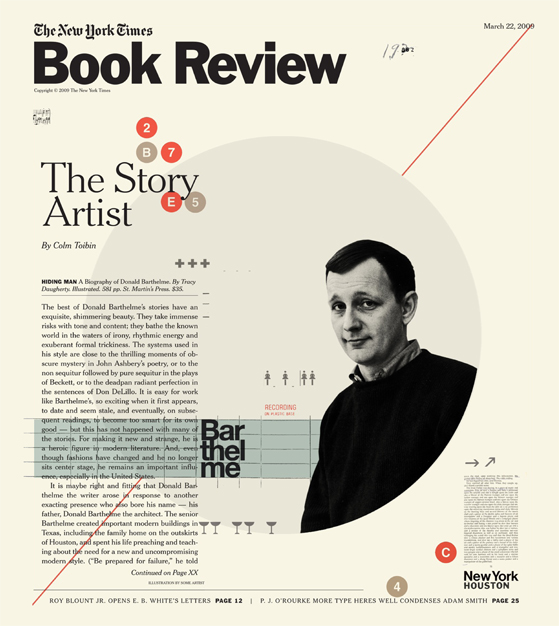
The Story Artist — Stand back and admire Cristiana Couceira’s cover for the New York Times Book Review (pictured above) illustrating Colm Toibin’s review of Hiding Man: A Biography of Donald Barthelme by Tracy Daugherty (St. Martin’s Press).  You can see more of Cristiana’s fabulous work at her blog Sete Dias.

ma collection de boîtes de conserves — Cartoonist Guy Delisle, author of Shenzhen, Pyongyang, and Burma Chronicles, displays his charming recycled pen-holders. Guy also has some great sketches of Jerusalem on his blog (an experience that is probably even better if your French is not rubbish like mine). (Via the D+Q blog and full disclosure etc: Raincoast Books distribute D+Q in Canada).

And speaking of D+Q,  John Wray’s much-praised novel Lowboy features a cover  by the very talented Adrian Tomine (pictured above). And über-critic James Wood reviews Lowboy in the latest New Yorker.

Paper Egg — Tobias Carroll has posted an interesting interview with Jonathan Messinger, co-publisher at  Featherproof Books:

[T]he line we’ve been delivering for a while now is that printed books will, eventually, go the way of vinyl. At some point, digital distribution will be the predominant method, but there will still be those who value and collect print, as people do records now (a fact that, it seems, has created a strong niche market for cool vinyl releases). But I’m not so sure that I completely buy that analogy, as fun as it is to repeat. Really, the debate seems pointless to me. What it always devolves to is one person clinging to what they’ve grown up with and accustomed to—the printed book, this classic, vaunted, untouchable commodity—and self-appointed visionaries who see digital distro as the obvious wave of the future, plowing down the fogies and fuddy-duddies.

If we de-politicize it, it becomes a much more open, interesting discussion. My feeling is that both media offer something that the other doesn’t. So why should one replace the other? … I’d rather just think about how best to use print creatively—what can it do that nothing else can, what are its limits and how do we test them?

Information revolution, c. 1455 — Murray Whyte looks at the “Gutenberg moment” in the Toronto Star:

as we appear finally to face the end, or partial end, of the Gutenberg era … it’s worth noting that sometimes, those things we view in hindsight as revolution are, in their own time, little more than a pebble in the pond, the resulting ripples needing generations, if not centuries, to be fully felt.

Comments closed

Something for the Weekend, March 20th, 2009

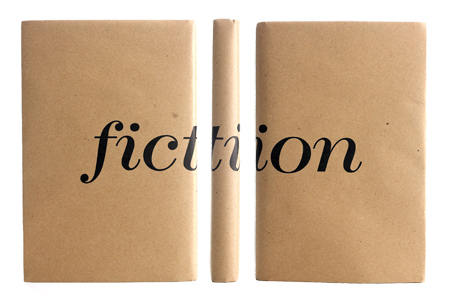
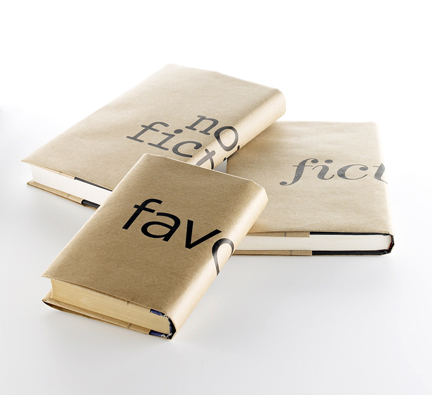
Book City Jackets— Printed at a small press in downtown New York, these lovely “updated versions of the classic paperbag bookcover” are made from recycled paper and sized to fit almost any book (pictured above). And they have a blog!  (via swissmiss & Design*Sponge).

Near Heretical — The inimitable Mike Shatkin on the story of DRM.

Don’t kill me, Robert BringhurstNic Boshart, BookNet Canada intern and coordinating editor at Invisible Publishing, offers another nice round-up of lessons for small presses from the BookNet Tech Forum.

Wish you were hereSeen Reading‘s collaborative Google map of independent bookstores.

That elusive viral componentWired on Random House, Simon & Schuster, Workman Publishing Co., Berrett-Koehler, Thomas Nelson, and Manning Publications making e-books and excerpts available on Scribd:

For book publishers, Scribd is not the only platform they are utilizing with the rising e-book hype, but the viral components are limited elsewhere… Along with navigation features like search and zoom, the books can be download (as a .pdf) and viewed on compatible e-book readers or shared across numerous social networks including Digg, Facebook and Twitter.

“The YouTube for print”PW has more on Scribd.

Sony e-book reader gets 500,000 books from Google, but Sara Nelson doesn’t think it will be enough in the LA Times:

Sony seems, instead, to be hitting hard on the theme that it’s giving options to publishers, who have not been shy about their complicated feelings toward Amazon and the power it wields.

Making public domain books more available is all to the good. But at the moment, Sony’s move appears to be too little, too late.

2 Comments