Skip to content

Tag: literature

Something for the Weekend

Decaying Rabelaisians — An interesting look at the current state of French literature by Florence Uniacke for The Spectator:

Will Hobson, former contributing editor at Granta, says that fiction, philosophy, memoir and non-fiction (amongst other genres) are not clearly defined in France like they are in the UK, and this ‘super-genre’ doesn’t tend to sit well with English readers. The French philosophise, intellectualise, internalise, characterise and analyse; and in the mean time the storyline forgets to materialise. It’s not hard to believe that an English translation of The Roving Shadows by Pascal Guignard, winner of the Prix Goncourt in 2002, which was described as ‘a sequence of beginnings of novels, stories, landscapes and autobiographical fragments’, sold hardly any copies.

Lowered Expectations — Philip Lopate on essays and doubt, for the New York Times:

I like the freedom that comes with lowered expectations. In the area of literary nonfiction, memoirs attract much more attention than essay collections, which are published in a modest, quasi-invisible manner, in keeping with anticipated lower sales. But despite periodic warnings of the essay’s demise, the stuff does continue to be published; if anything, the essay has experienced a slight resurgence of late. I wonder if that may be because it is attuned to the current mood, speaks to the present moment. At bottom, we are deeply unsure and divided, and the essay feasts on doubt.

See also: Adam Kirsch on the ‘new essayists’ for The New Republic (which only reinforces my belief that I am the only person in the known world who was ambivalent about Pulphead and hasn’t the slightest interest in How Should A Person Be)

The Dream Book of Blank Pages — Andrew Gallix on unread (and unreadable) books for The Guardian:

There was a time when a learned fellow (literally, a Renaissance man) could read all the major extant works published in the western world. Information overload soon put paid to that. Since there is “no end” to “making many books” – as the Old Testament book Ecclesiastes prophesied, anticipating our digital age – the realm of the unread has spread like a spilt bottle of correction fluid. The librarian in Robert Musil’s The Man Without Qualities only scans titles and tables of contents: his library symbolises the impossibility of reading everything today. The proliferation of lists of novels that you must, allegedly, have perused in your lifetime, reflects this problem while compounding it. On a recent visit to a high street bookshop, I ogled a well-stacked display table devoted to “great” novels “you always meant to read”. We measure out our lives with unread books, as well as coffee spoons.

And finally…

A wonderful post by Charles Simic on Aperture Magazine, for the NYRB Blog:

In one of the older issues, Minor White had an essay called “What is Meant by ‘Reading’ Photographs” that made a big impression on me. He writes in it about hearing photographers often say that if they could write they would not take pictures. With me, I realized, it was the other way around. If I could take pictures, I would not write poems—or at least, this is what I thought every time I fell in love with some photograph in the office, in many cases with one that I had already seen, but somehow, to my surprise, failed to properly notice before. There is a wonderful moment when we realize that the picture we’ve been looking at for a long time has become a part of us as much as some childhood memory or some dream we once had. The attentive eye makes the world interesting. A good photograph, like a good poem, is a self-contained little universe inexhaustible to scrutiny.

Comments closed

Shirley Tucker on Book Design

The Bell Jar by Sylvia Plath was first published in 1963 under the pseudonym Victoria Lucas. To mark the book’s 50th anniversary, Faber & Faber have posted a series of fascinating video interviews with Shirley Tucker, who designed the cover of their original 1966 edition.

After studying graphic art at the Royal College, Tucker spent several years working in Penguin’s design department, then headed by the distinguished German designer Hans Schmoller. She joined Faber in 1959 and worked alongside another great German emigre typographer, Berthold Wolpe (who created the Albertus typeface used on many of Faber’s typographic covers). Tucker worked in Faber production department until her retirement in 1987.

Shirley Tucker on Designing Book Covers:

Shirley Tucker on her Favourite Faber Covers:

Shirley Tucker on Berthold Wolpe:

1 Comment

Susan Sontag on Writers and Company

Eleanor Wachtel’s conversation with the late American writer and critic Susan Sontag, originally recorded in 2000, was recently rebroadcast by CBC Radio’s Writers and Company:

CBC Radio Writers and Company: Susan Sontag mp3

Comments closed

Q & A with P. D. Smith

City A Guidebook for the Urban Age is the fascinating new book by British writer and reviewer by Peter D. Smith. Published by Bloomsbury, it is a wonderfully meandering collection of essays on cultural history of the world’s cities and an exploration of architecture and urban life from the earliest cities in Mesopotamia to the future dystopias of The Sleeper Awakes and Blade Runner.

I first came across Peter via his reviews for The Guardian newspaper and his lively Twitter feed which, if you are interested, provides the curious with steady stream links about books, history, science and architecture of the kind one might expect from another cultural magpie, William GibsonCity was still a work in progress at that point and having followed it’s development over the past couple of years, I was glad to finally have the opportunity to read it last month. It didn’t disappoint.

Peter and I talked by email…

When did you first become interested in writing?

As a child I was always writing stories, usually fantasy or science fiction. When I was about thirteen we had to write a story for school during the summer holiday. Mine was a space opera about bug-eyed aliens on a distant world. By the end of the holidays I had filled a whole exercise book and even designed a cover for it. I doubt my poor teacher read it all. But I got top marks for effort at least.Afterwards the other kids in my class started reading it and passing it around. Then this boy from another class got hold of it. He had close-cropped hair and wore Doc Martens boots. Weedy bookworms like me generally tried to keep out of his way, but one day he stopped me outside the school gates. I thought he was going to hit me. Instead he started talking about my story. He liked it! I was astonished and I’ve never forgotten that moment. It taught me something about writing and its ability to connect with people.

Your previous books are about superweapons and Albert Einstein. Why did you decide to write a book about cities?

My doctorate was about scientific ideas in German literature, from Goethe to Brecht. The biography of Einstein and the cultural history of doomsday weapons grew directly out of my interest in the way science and culture influence each other. But for my next book I wanted to do something a bit different, from the point of view of both subject and style. I like subjects that cross boundaries and, right from the start, I loved the idea of writing a history of cities. It allowed me to explore everything from the technology of cities to the invention of writing and theatre. It also gave me the opportunity to experiment with different narrative structures. The vast scale of the subject meant it was impossible to explore in a straightforward narrative. Eventually I decided to write it as a guidebook to an imaginary Everycity. Of course, this brought its own challenges, but it was also fun. Most importantly, it made the whole project – which is in a sense a survey of civilisation – manageable as well as opening up the idea of the city, both as an idea and as a physical reality.

Is learning more about the subject you’re interested in part of the impulse for your writing?

Absolutely. I love researching a new idea. Writing a book is a bit like juggling with different bits of information, ideas, places, and characters. You have to keep them all up in the air, then gradually bring them down to the ground in some kind of order. It’s always an immense challenge and sometimes you feel you’re not up to it. But it’s a great thrill when you find something new – an idea, a fact, a juxtaposition. That’s what makes it all worthwhile.

Which books most influenced your thinking about cities?

Lewis Mumford’s The City in History was one of the books that inspired me initially. It’s an immensely impressive survey. Similarly impressive in both scale and erudition is Peter Hall’s Cities in Civilisation. The sheer imaginative range of Geoff Manaugh’s writing on architecture and urbanism on BLDGBLOG is also a constant source of inspiration. And, of course, Italo Calvino’s wonderful Invisible Cities was always there in the background. It’s such an evocative piece of writing about cities and the urban experience.

Why do you think there has been renewed interest in urban living in recent years?

In the US, the 2011 census showed that more young people are choosing to live in cities. For the first time in a century, big cities in America are growing at a faster rate than the suburbs. That’s happening elsewhere too. Perhaps this is because, after the recession, people are less inclined, or able, to buy homes and prefer to rent instead. Or it could be that a new, wired generation has rediscovered the joys of urban life: of living somewhere with public transport, where you can experience diverse cultures and lifestyles, and where you can tap into the creative buzz of city life. In the developing world cities are also growing at an unprecedented rate, morphing into megacities of 20 or even 30 million people. They are the largest artificial structures ever built. People are drawn to them as they have always been – to find work, education, health care, or to escape the confined world of the village. As the medieval German saying goes: Stadtluft macht frei – city air sets you free.

The book covers a lot of different topics, but the idea of ‘the city’ is a vast, open-ended subject. Were there things you were sorry to leave out?

Yes, certainly. There were many topics that had to be dropped. They included urban myths, street painters, and secret cities, like the ones built during the cold war. Even without these, the first draft was too long and more material had to be cut. But I’m very happy with the finished text. Sometimes in a book like this, less is more.

One of the more sobering part of the book addresses climate change. But you see cities as part of the solution. Why is that?

The population of the world is rising inexorably and cities are growing larger. We need to reduce the ecological footprint of our cities. This can be done with good planning and the use of cutting-edge technologies to reduce greenhouse gas emissions. Cities can be green: they can generate their own energy, they can provide bicycle lanes and efficient public transport, they can even grow some of their food in rooftop greenhouses. Concentrating people in cities is a highly efficient way of supplying large numbers of people with clean water, healthcare and energy. By contrast, suburban living, where everyone drives cars and lives in detachedhouses, is wasteful of scarce resources and is unsustainable as a model for the world as a whole. Although New Yorkers produce many times more greenhouse gasses than those who live in Mumbai, New Yorkers are responsible for only a third of the carbon dioxide of the typical American. City living can certainly be part of the solution to the environmental challenges of the future.

Has new technology changed how we live in cities?

Yes, new technologies are always changing the shape of cities. Think of the automobile. The internal combustion engine has had a huge impact on cities and how we live in them, as did railways and subways. In the future, cities will be more aware of their inhabitants. Surveillance technologies and electronic chips and sensors will pervade the structures and spaces of the city. Buildings and streets will respond to your presence, automatically adjusting things like air temperature and lighting. But no matter how advanced our technology becomes, cities will still have to satisfy the same kind of demands that city dwellers have had for millennia. We are social animals and our greatest cities will always be dynamic centres of work, culture, entertainment, and shopping.

Why do you think Blade Runner’s dystopian portrayal of Los Angeles has become the prevalent cinematic vision of the city of the future? 

It’s true – in modern fiction and film, future cities are usually depicted as dystopias. Blade Runner – one of my favourite films – draws on a rich fictional tradition, including HG Wells’ The Sleeper Awakes and Fritz Lang’s Metropolis. But this has not always been the case. In the Renaissance, dreaming up ideal cities seems to have been something of a philosophical game among intellectuals and artists. They wanted to reform society and they believed people could be improved by creating perfect cities. The quest for ideal cities continued among architects and city planners into the twentieth century. But writers and filmmakers became more pessimistic about the urban future. Today these dystopian visions have become something of a cliché. People are no longer fleeing the city as they were in the second half of the twentieth century. Maybe the time is ripe for a new idealism about the urban future. As Calvino said, ‘With cities, it is as with dreams: everything imaginable can be dreamed…’.

Do listen to music while you write? What did you listen to writing City?

Yes, I do usually listen to music, both while reading and writing. If I’m writing non-fiction it tends to be classical music, such as Mozart or Bach, especially the cello suites played by Paul Tortelier, which I really love. But it depends on my mood. Sometimes I’ll choose something by Michael Nyman, Keith Jarrett or Brian Eno’s Apollo soundtrack, which is one of my favourites. If I’m writing fiction then it can be anything from Radiohead or Bjork, to Pink Floyd or Talking Heads.

What books have you read recently?

Fiction: Balzac’s Old Man Goriot, Dashiell Hammett’s Red Harvest, Nick Harkaway’s Angelmaker, and Sam Thompson’s Communion Town. Non-fiction: Taras Grescoe’s Straphanger, Roger Crowley’s City of Fortune, and Man Ray’s Self-Portrait.

Do you have a favourite book?

Mervyn Peake’s Titus Groan. Gormenghast is such a powerful imaginary architectural space – a kind of Gothic megastructure. It’s a remarkable creation.

What are you working on right now?

A new non-fiction book about the city of crime. It’s still in its early stages but I’m enjoying it immensely. It’s a wonderful excuse to watch film noir and to read lots of great crime fiction.

Are you concerned about the future of books and book reviews?

Not really. The world of publishing – both of books and newspapers – is certainly changing. I’m writing this on my new iPad which I’ve bought mostly in order to be able to read e-books. I’ve run out of shelf space in my house, so I’m going to expand my library into the digital realm. I’ll always love paper books, just because that’s the technology I’ve grown up with. But a new generation will grow up using e-readers and they’ll see (and read) things differently. I think people will always want to read book reviews in newspapers, whether they are on paper or online. But now book lovers also read and write book blogs and they want to discuss what they’re reading on Twitter. Once if your book didn’t get reviewed in the press that was probably the end of the story. Now a book can become a bestseller because enough people rave about it online. Clearly there are major challenges facing publishers, especially regarding piracy and the pricing of books in an age when many people seem to think they should be free. There’s no doubt it’s a tough time to be making a living as a writer! Plus ça change…

Thanks Peter!

Comments closed

Midweek Miscellany

Paul Gravett on piecing together the early history of comics:

You’d think by now that the history of a medium as global and influential as comics would be fully researched and written, but this is not the case. In contrast to the more varied and international perspectives available on film or literature, the majority of English-language reference books on comics plough through the well-worn furrows of the 20th century American newspaper strip and comic book, re-affirming old “truths” and historical “facts”. Objectivity and lack of bias are practically impossible, because by putting into print your history, your version of the “facts,” your inclusions and omissions determine who and what are significant. In the process, almost inevitably, supposedly “minor” or “peripheral” figures and events can be overlooked.

Wading Through the Rubbish — Boyd Tonkin, literary editor for The Independent, on the need for taste-makers:

a healthy publishing landscape… should still leave room for strong-minded indies who publish a few books a year simply because a couple of committed individuals love them. Whether one mind or many makes the choice, what matters is that they pick the brightest and boldest in their field rather than drift with the current and follow the herd. This isn’t “elitism” but exactly the contrary: a respect for your readers, and a determination that they should not have to waste time by wading through industrial volumes of rubbish.

And finally…

Dead Oxonians — Adrian Wooldridge on the posthumous publishing careers of political philosopher Isaiah Berlin and historian Hugh Trevor-Roper, for Intelligent Life:

[The] mix of worldliness and unworldliness—familiarity with affairs of state coupled with philosophical detachment—holds the key to the continued appeal of both men. They chose to address big subjects rather than solve academic crossword puzzles. They wrote for the educated public, not just cloistered scholars. Berlin produced a stream of essays on great political thinkers ranging from German nationalists to Russian novelists. Trevor-Roper roamed across the centuries: though his first love was the 17th century, he also wrote about Hitler’s Germany, the rise of medieval Europe, and, in one of his liveliest books, an Edwardian fantasist, forger and sex maniac, Sir Edmund Backhouse.


Comments closed

Something for the Weekend

Do It Yourself — John Self, of the excellent Asylum blog, on the power of independent readers, at The Guardian:

if publishers and authors are limited in what they can do for a book online, who is left? They want to harness word of mouth, and power lies collectively in the independent readers – you and me. Can we make a difference when the bookselling world is full of outlets, online and off, which primarily sell what already sells, or can be related to a proven success (“It’s Fifty Shades of Grey meets Harry Potter!”)? If social media has inspired a new age of grassroots political activism, why not literary activism, too?

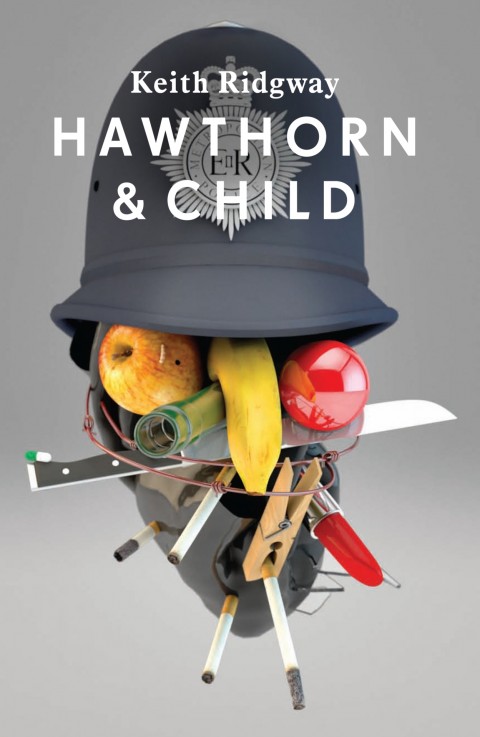
I picked up Keith Ridgway’s new book Hawthorn & Child almost entirely on the basis of John’s recommendation (I also read Colony by Hugo Wilcken, one of my favourite books of recent years, as a result of John’s review). The astonishing cover (pictured above) is by Tom Darracott by the way.

(Semi) Colonoscopy — Mary Norris on how to use the semicolon, at The New Yorker:

So the semicolon is exactly what it looks like: a subtle hybrid of colon and comma. Actually, in ancient Greek, the same symbol was used to indicate a question.

And it still seems to have a vestigial interrogative quality to it, a cue to the reader that the writer is not finished yet; she is holding her breath.

And finally…

Imaginary Buildings — Jimmy Stamp on the locations of 221B Baker Street, for The Smithsonian:

The mystery of 221B Baker Street is not one of secret passages or hidden symbols. Rather, it could be described as a sort of existential spatial riddle: how can a space that is not a space be where it is not? According to Arthur Conan Doyle’s stories, Sherlock Holmes and John Watson lived at 221B Baker Street from 1881 to 1904. But 221B Baker street did not exist in 1881, nor did it exist in 1887 when A Study in Scarlet was published and Baker Street house numbers only extended into the 100s. It was a purely fictional address – emphasis on was. Time marches on, Baker Streets are renumbered, and 221Bs are revealed…

Comments closed

Midweek Miscellany

Literary prints by Evan Robertson, AKA Obvious State.

Chairman of the Bored — Bruce Handy on collecting boring books:

My hobby has two rules: I buy books only on the street. (Uniquely boring books must present themselves willingly; you can’t hunt them down.) And the titles must meet a standard of boring intrigue that I have a hard time putting into words, beyond “I know it when I see it.” This is where — if I may shed any pretense of modesty — taste and connoisseurship come into play.

Niche — Will Brooker, author of Hunting the Dark Knight, on comic books at The Browser:

[Comics] are a unique storytelling medium. They can tell a story in a way that no other medium can. But I’m not evangelical about comics, and I don’t have a problem if they’re a niche interest. There was a time in the eighties when everyone thought comics were going to break through. They were sold in bookshops. “Sequential art”, “post-textual literature” and all kinds of other pretentious terms were bandied about. I don’t think that’s necessary. Comics are their own thing, and work on their own terms, in different ways to novels and films.

See also: Superman: The High-Flying History of America’s Most Enduring Hero by Larry Tye reviewed for The New York Times.

And finally…

Steven Hyden on My Bloody Valentine album Loveless at Grantland:

Listening to Loveless is not unlike the sensation of having just endured a two-hour sonic hurricane, then feeling an intense yet melodic pounding in your eardrums for the next week. And I mean that in the most pleasant way imaginable. What took so long for Shields to find in the studio was the ecstatic pleasure point buried in the suffocating psychic evisceration caused by pure unadulterated volume. On most rock records, the music drowns out the lyrics; on Loveless, the music drowns out the music.

2 Comments

Something for the Weekend

A stunning jacket design by the great Isaac Tobin for After Freud Left, published by University of Chicago Press.

You can read my interview with Isaac from 2009 here.

Bauhütte to Bauhaus — A fascinating overview of the Bauhaus by Frank Whitford, author of the Thames & Hudson ‘World of Art’ book Bauhaus,  for the TLS:

The structure of the Bauhaus… followed, as Gropius thought, medieval principles. He coined the school’s name so as to echo the word Bauhütte, in the Middle Ages the German for a guild of masons, builders and decorators. And the teaching was based on specialist workshops where you learned your trade by carrying out actual projects, graduating from apprentice to journeyman and master. The teachers were at first called Masters and not Professors, a revolution in a country where academic snobbery was the norm.

Calligraphica — A new tumblr devoted to calligraphy and hand drawn type (pictured above: ‘One Hope One Quest’, by Greg Papagrigoriou).

Persuasion — Michael Bierut talks to Designers & Books about his collection 79 Short Essays on Design:

Even the best designers have to persuade people all the time. They have to persuade people to hire them; then they have to persuade people to go with the recommended solution; then they have to persuade people to realize that solution in the best possible way. Simply showing someone a nice design is almost never enough. This constant effort—and all the rejection that inevitably ensues—obviously requires healthy confidence and nerves of steel, if not a strong ego.

And finally…

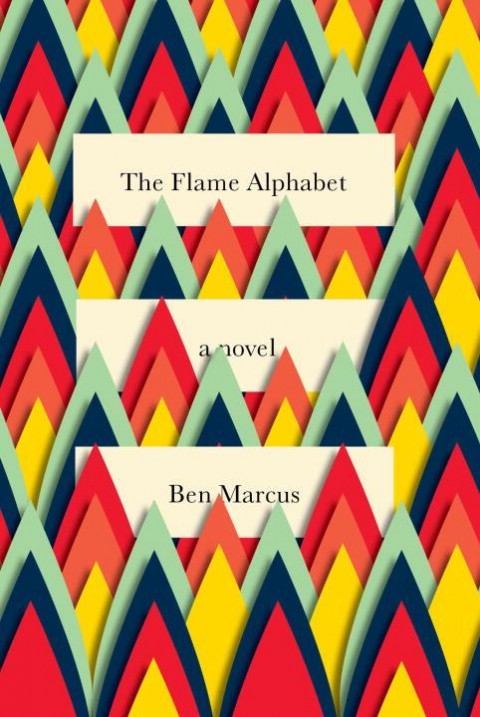
Critic James Lasdun reviews The Flame Alphabet by Ben Marcus for The Guardian:

Language, the debasement, banality and ultimate toxicity thereof, is his subject. It’s a staple topic of avant garde literature, from the Prenzlauer Berg writers of the former East Germany to the Language poets of the American academy. All proceed, more or less, on the basis that verbal communication has been fatally corrupted by political or literary abuse and can be rescued only by a total dismantling and reassembly. Results vary (I’ve yet to read a Language poem that didn’t make me want to dissolve it in acid), but Marcus’s own, especially in The Age of Wire and String, have been haunting and inventive.

Comments closed

Haruki Murakami Bingo by Grant Snider

‘Haruki Murakami Bingo’ by Grant Snider for the New York Times Book Review. Well played, sir.

Comments closed

Behind Every Great Novelist Is… by Grant Snider

Another charming illustration by Grant Snider for the New York Times Book Review. It appears alongside a review of John Sutherland’s Lives of the Novelists. Nicely done, sir. Nicely done.

Comments closed

The Penguin English Library

Award-winning director Woof Wan-Bau has created a wonderfully weird animated short for the launch of the  Penguin English Library:

(via Ace Jet 170)

1 Comment

Midweek Miscellany

Everybody Thinks Their an Auteur” — Film director and critic Peter Bogdanovich at New York Daily News book blog Page Views:

Auteurism today? Well, everybody thinks they’re an auteur. But nobody seems to understand what the whole auteur thing was. It wasn’t a theory as far as the French were concerned. It was a political statement called la politique des auteurs. Truffaut and Godard were attacking the old-fashioned, well-made film, Franch or American. They thought Howard Hawks was an infinitely better director than Fred Zinnemann. They thought Alfred Hitchcock was a greater director than David Lean. They were against Marcel Carné  and for Jean Renoir. Personal films were what they looking for, where a director’s personality dominated despite who wrote it or who was in it or who photographed it.

Nothing But a Number — An interview with Gary Shteyngart, author of Super Sad True Love Story, at CultureMap Austin:

“There’s a kind of anxiety, I think. When you’re ranked you sort of know who you are and where you stand, and people become obsessed in their rankings. The quantitative takes the place of qualitative.”

Does this mean we are starting to reject the belief that we will never be just a number? “That’s the big generational shift from the ’60s of ‘I am not a number’ to 2012, where ‘I am a number but hopefully I’m a good number. I’m a high number,’” he laughs.

A Slow Books Manifesto: “Read books. As often as you can. Mostly classics.”

Not Your Conventional Hell — British horror writer Ramsey Campbell (The Darkest Part of the Woods) on the mighty H. P. Lovecraft for the BBC:

Lovecraft developed his own invented mythology, at least as influential on fantastic fiction as Tolkien’s work. Most of it is set in a New England steeped in history and in hidden occult influences, although the monstrous creatures glimpsed by his characters are frequently from outer space rather than from any conventional hell.

And finally…

Do We Need Stories? — Tim Parks continues his one-man argument with everything Jonathan Franzen has ever said ever:

Of course as a novelist it is convenient to think that by the nature of the job one is on the side of the good, supplying an urgent and general need. I can also imagine readers drawing comfort from the idea that their fiction habit is essential sustenance and not a luxury. But what is the nature of this need? What would happen if it wasn’t met? We might also ask: why does Franzen refer to complex stories? And why is it important not to be interrupted by Twitter and Facebook? Are such interruptions any worse than an old land line phone call, or simply friends and family buzzing around your writing table? Jane Austen, we recall, loved to write in domestic spaces where she was open to constant interruption.

Comments closed