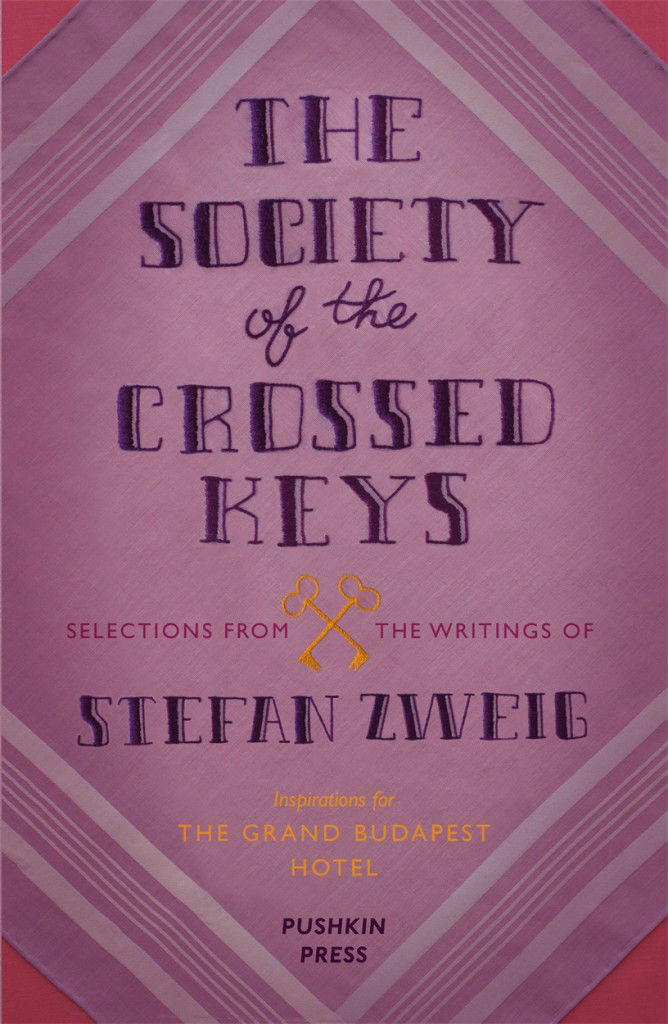
Zweig’s world is the world of the exile: the world of those displaced — by war, imprisonment, or by life, for whom hotels on Lake Geneva or the French Riviera are the only safe, if liminal, spaces. His characters are bereft of any sense of belonging; in the absence of a network, a sense of home, their emotions are heightened and their actions become ever more erratic. Thus in “Amok,” a doctor working in India finds himself blackmailing a patient for sex, painfully aware of how his self-imposed exile is disconnecting him from his own personal morality. In “Incident on Lake Geneva,” a Russian prisoner of war attempting to return home is stymied by a series of redrawn borders he does not understand; he tries to swim across, only to drown.
Such stories, of course, are colored by their political context: Zweig’s world is a world cut loose from itself. People’s bonds to their sense of self, of home, of country, of allegiance, have all been severed. But even consciously temporal stories like “Mendel the Bibliophile” — about a Viennese book collector sent to a concentration camp, and “The Invisible Collection,” about a blind art collector unaware of the fact that his family has sold his beloved prints to cope with rising German inflation — transcend their political context. They are, at their core, about the human need to connect, to ascribe meaning to what is not there, to look too fondly on an easier and imagined past as a means of coping with the at times impossible demands of real life.
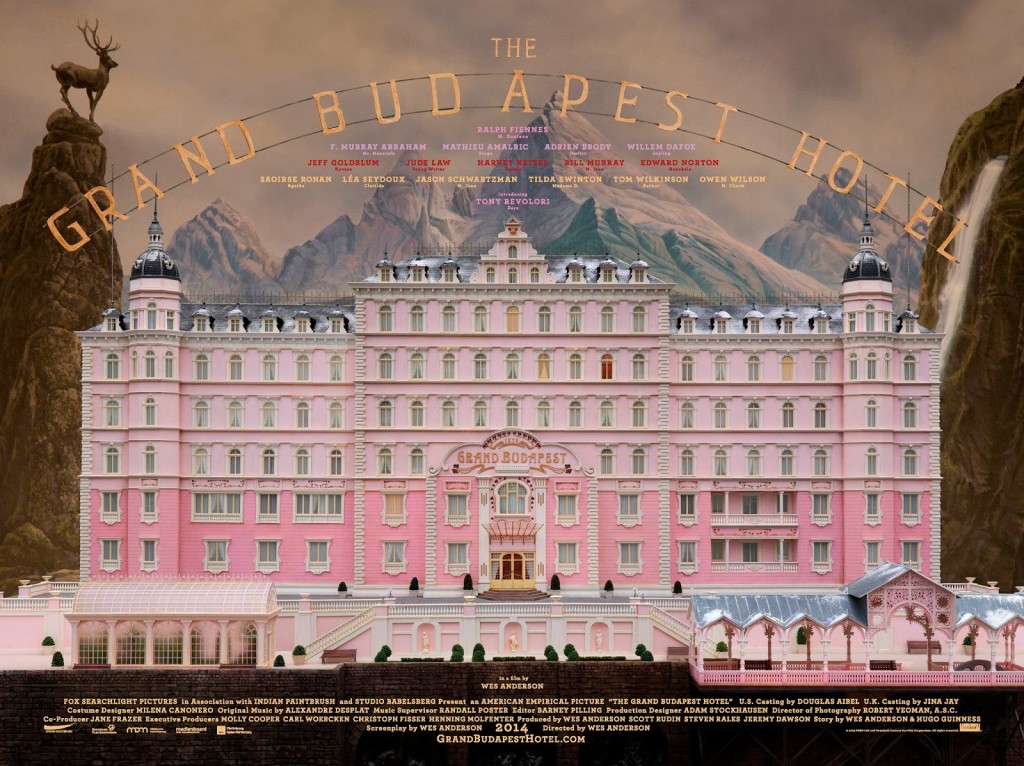
Meanwhile, in the new issue of the London Review of Books, Michael Wood reviews the Zweig-inspired The Grand Budapest Hotel:
Zweig was born in an actual Europe and left, in the 1930s, to die in an actual Brazil… Best known during his lifetime for his vast and immensely readable biographies (of Dickens, Dostoevsky, Marie Antoinette, Mary Queen of Scots), he has recently been resurrected (in English, that is, since in French and German he hadn’t died) as the author of brilliant and bitter, if slightly too well-made fictions. It is from Joan Acocella’s fine introduction to one of them (Beware of Pity) that I take the fact that Zweig wrote a book called The World of Yesterday and the notion that he ‘saw himself as a citizen not of any one country, but of Europe as a whole.’ Of course Zweig was more serious about that world than the movie is or wants to be. He thought he had lived there. The movie thinks no one did.
I really wasn’t going to post anything else about Wes Anderson and Stefan Zweig, but film critic Max Nelson’s review of The Grand Budapest Hotel for the LA Review of Books is one of the best things I’ve read on the subject:
Like much of Zweig’s fiction, The Grand Budapest Hotel ends on an elegiac note. But what exactly is it elegizing? Agatha is too indistinct and vaguely defined a character for the movie to work as a tribute to lost love; her closest, warmest scenes with Zero pale in comparison to, say, Sam and Susie’s beachside dance in Moonrise Kingdom, Mr. Fox’s mid-film confrontation with his wife, or Margot and Richie’s devastating brief encounter late in Tenenbaums. You could argue that Zero, in Zweigian fashion, is conflating Agatha with the whole of prewar European life: its varied perfumes, its elaborately decorated baked goods, and its general sense of romance and adventure. But unlike prewar Vienna, prewar Zubrowka never existed anywhere other than in Anderson’s imagination. It’s difficult to imagine Zweig setting, for instance, Letter from an Unknown Woman or Journey into the Past in a fantasy country; like many of the author’s stories, they speak directly to his acute awareness of having caught the tail end of a particularly vivid chapter in his own national history. “I pity those,” he wrote, “who were not young during the last years of confidence in Europe,” for “whoever experienced that epoch… knows that all since has been retrogression and gloom.” If The Grand Budapest Hotel is an elegy for the codes and manners of fin-de-siècle Europe, then Anderson is trapped in a potentially disingenuous position: that of eulogizing a world he only ever could have accessed through the nostalgia-drenched writings of its earlier elegists, and which he can only now evoke on his own, imagined terms.
There’s a wonderful photochrom of the hotel that I always thought of as sort of the model for our hotel, which is the Hotel Pupp in Karlovy Vary, which was in Carlsbad. The thing we learned when we visited all sorts of places that we found on this collection of pictures was that none of them were enough like what they once were to work for us. But the photochrom images seemed to tap into a truth about Zweig’s vision of the world that I was able to draw on in developing a visual aura for the film.
In The Post Office Girl, Zweig’s description of the grand hotel in Switzerland is so evocative. The protagonist is a girl who works in the post office. She’s invited to stay in this hotel as a gift from her rich aunt, and when she arrives in this place, the management thinks she’s there to make a delivery. Her suitcase is a basket. Finally they realise she’s actually going to be a guest in the hotel, which is unlike anywhere she’s ever been. Her point of view about this treatment she receives, and her experience of walking in and realising, “This is where I’m going to sleep”, is so powerful. But also that by the time her holiday abruptly ends, she is already addicted to this other way of life, and her existence is so dramatically changed, and a sort of desperation comes over her — and then a connection she makes with someone who is in his own desperate state. The idea of that work being something that had been out of print for that long is sort of surreal.
At a recent event at the New York Public Library, Anderson similarly discussed Zweig’s work with Paul Holdengräber:
The movie itself was reviewed all over place the last week, but I quite enjoyed Richard Brody’s review for The New Yorker:
Perhaps more than ever, Anderson takes a joyful yet aching delight in recreating the styles of bygone days. The hotel is like a majestically confected cake on the outside and a jewel box on the inside, adorned with staff and guests whose uniforms and fashions are nuanced to the buttons, and whose behavior is self-controlled to the glance. Yet also, more than in any of his other films, that very recreation is his subject. “The Grand Budapest Hotel” is about the spiritual heritage and the political force of those long-vanished styles—about the substance of style, not just the style of his Old World characters but also, crucially, Anderson’s own. This isn’t Anderson’s most personal film, in the strict sense, but it is, alongside “The Life Aquatic with Steve Zissou,” his most reflexive one—even more so because the new film exposes the inner workings not just of his practice of filmmaking but of his sensibility.
UPDATE:Creative Review talks to the film’s lead graphic designer Annie Atkins about her work:
We actually used comparatively few typefaces in the movie, as most lettering was created by hand. Wes and Adam had been on location recces all around Eastern Europe and had references of all kinds of hand-made signage from the last 100 years or so. The beautiful thing about period filmmaking is that you’re creating graphic design for a time before graphic designers existed, per sé. It was really the craftsmen who were the designers: the blacksmith designed the lettering in the cast iron gates; the glazier sculpted the lettering in the stained glass; the sign-painter drew the lettering for the shopfronts; the printer chose the type blocks for the stationery…
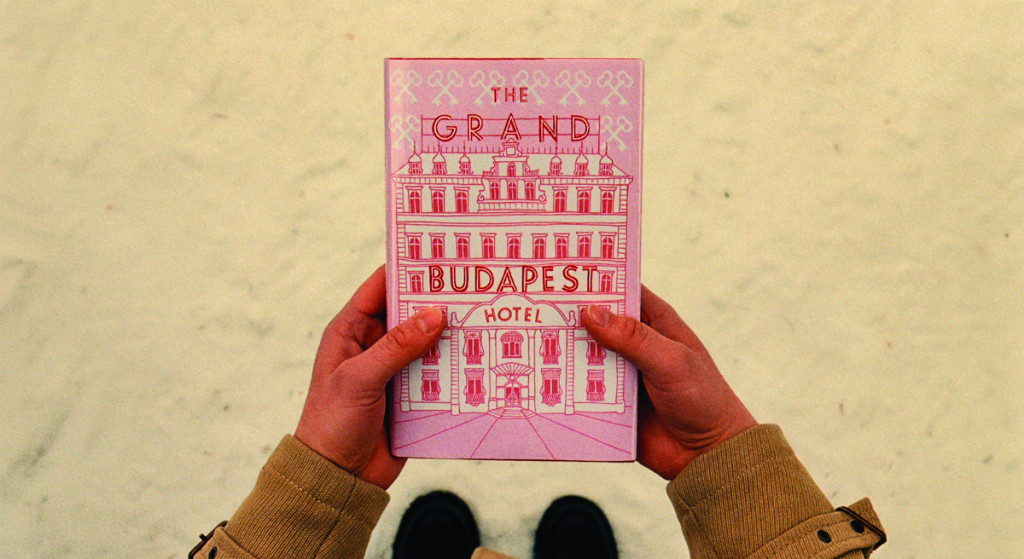
… My absolute favourite piece is the book itself that opens the story. It’s a modern pink hardback with a drawing of the hotel on the front, and the name of the movie as the hotel sign. It’s a relatively simple piece, but it’s really special having a prop that you made with the movie’s name on it like that. I remember Wes had sent me a quick sketch showing his idea for the book, and I really loved being able to help make that work for him. I treasure that piece, actually – we made three for the shoot, in case one got dropped in the snow, and so I brought one home with me.
Writing the Moomins afforded an escape at war’s end. After a quiet start, the series took off in the fifties, bringing welcome financial stability—but the success also represented a kind of detour. Jansson’s ambitions for painting never left her. Now free time was scarce, thanks to an unceasing flow of fan mail, the minutiae of merchandising, processions of visitors, and, until Lars, one of her brothers, took over, the arduous demands of the comic strip. For a while, there was no pleasure to be found in working. Thankfully, social media didn’t exist yet: “I could vomit over Moomintroll,” she wrote. “I shall never again be able to write about those happy idiots who forgive one another and never realize they’re being fooled.”
As with someone like Kafka, it is hard to know how literally to take Jansson’s obstacles. To some degree, her entrapment was avoidable: to be so involved in the products, to answer every letter, seem Moominish ideas—either that or, for a person who so prized being left free and alone, they’re plain masochistic. Were an analogous scenario to occur in the books, the hassles would be washed away by flood, to be followed by a celebratory picnic. As it was, Jansson believed that her nature didn’t give her a choice.
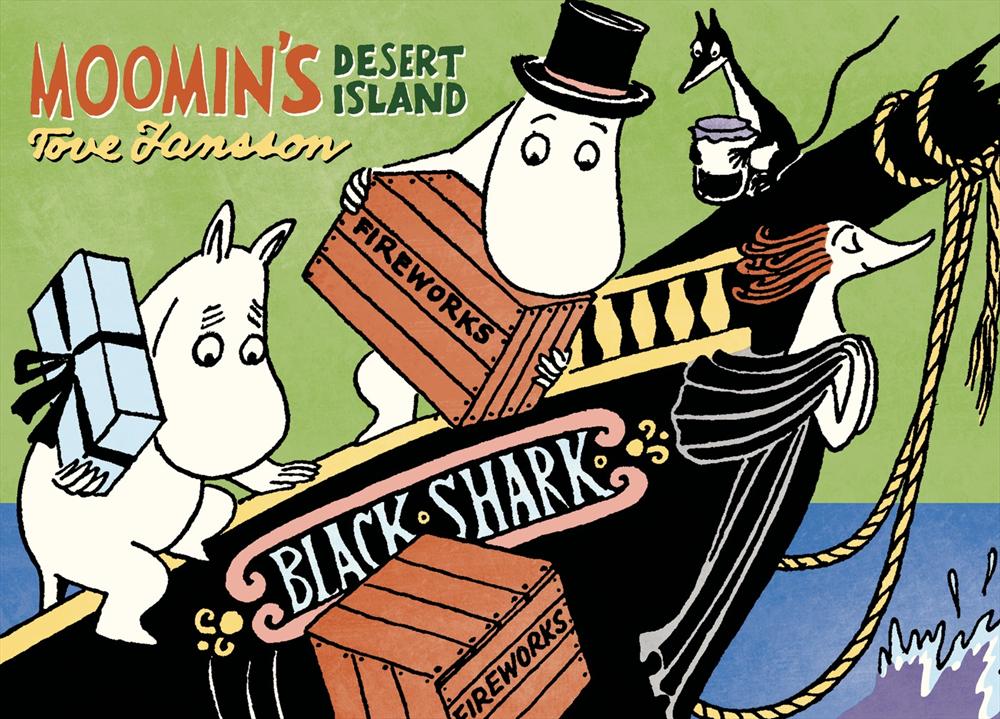
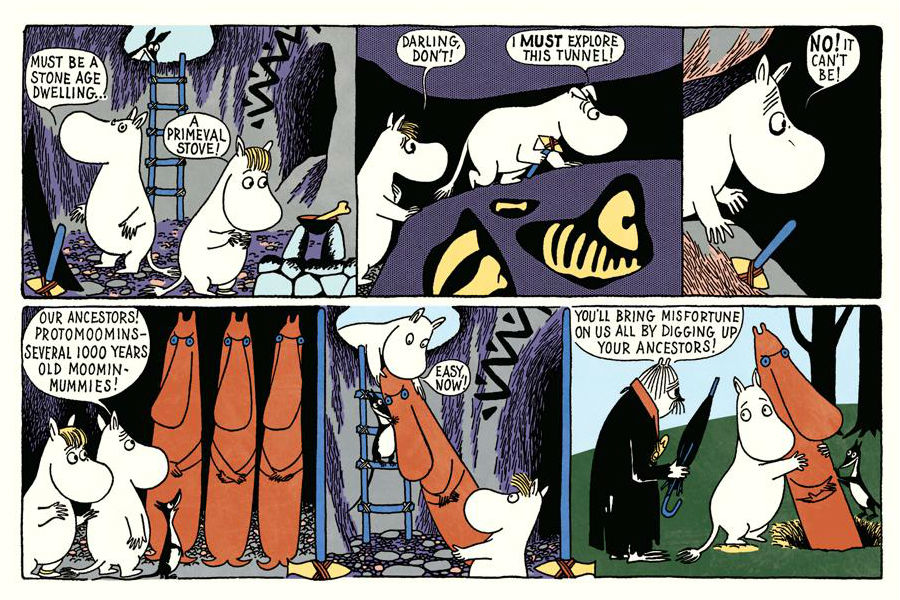
On related note, Montreal’s Drawn Quarterly have just published two new paperback books in their lovely series of classic Moomin comic strips reworked in full colour, Moomin and the Golden Tail and Moomin’s Desert Island(pictured above).
(NB: the Moomin storybooks, published by FSG, and the Moomin comic books, published by D+Q, are distributed by my employer Raincoast Books. Sorry I seem to be doing this so much lately!)
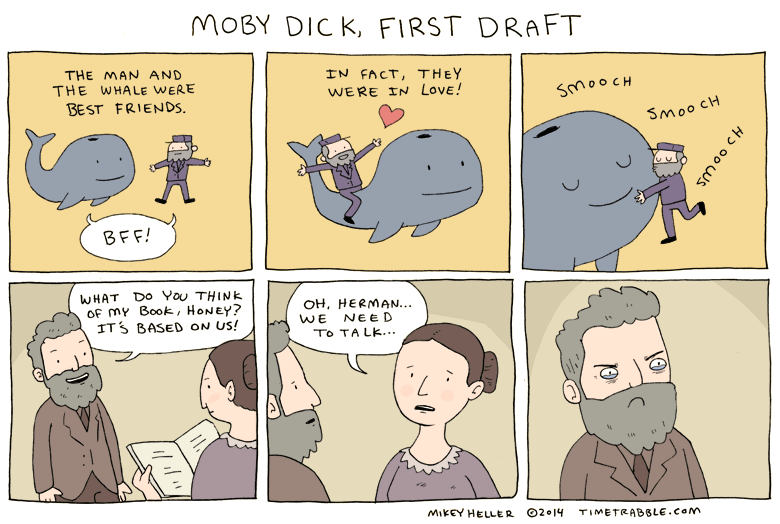
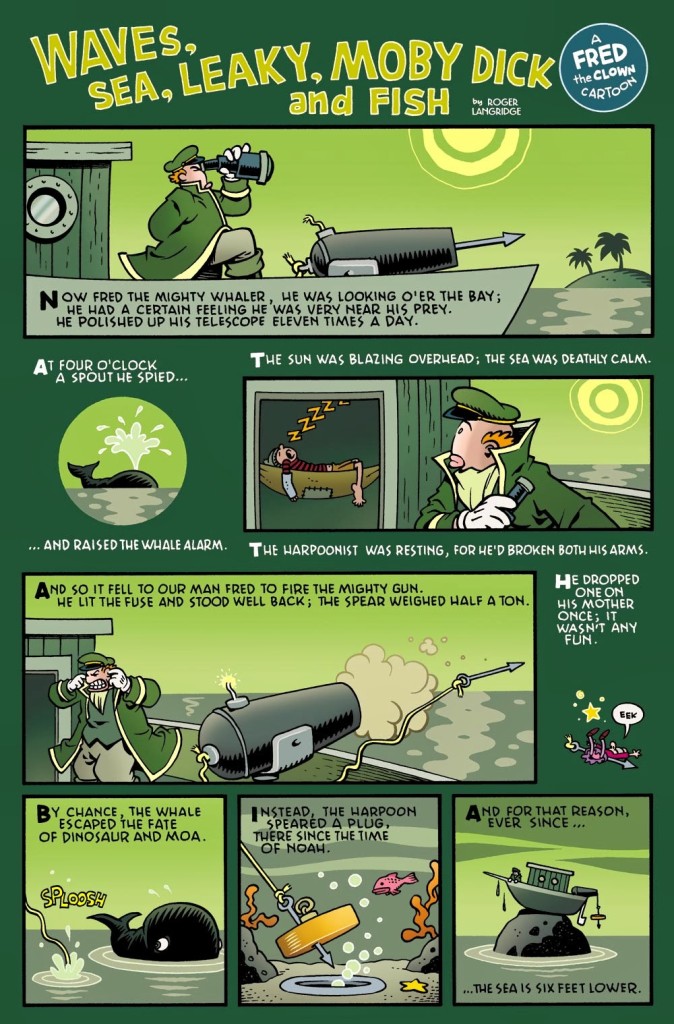
By some strange coincidence, Mikey Heller’s Time Trabble strip is the second comic about Moby Dick I’ve seen recently. Here’s Roger Langridge’s version featuring Fred the Clown:
It’s just been announced that Haruki Murakami’s next novel, Colorless Tsukuru Tazaki and His Years of Pilgrimage, will be published on August 12th in the UK and US by Harvill Secker and A. A. Knopf respectively. The cover of the US edition is above, the UK edition below.
US Edition
UK Edition
I would assume that the US cover is designed by Chip Kidd (correct me if I’m wrong); please let me know if you know who Suzanne Dean designed the UK cover (thank you @BookCovrs).
Author Rachel Kushner discusses her novel The Flamethrowers(now out in paperback), and the importance of images to her work, with The Quietus:
I’m inspired by visual art and film… Whether or not I’m writing about those mediums directly, as I sometimes do in Flamethrowers, I’m always thinking about images… I always wanted to have images in a book, and with [The Flamethrowers], after I got to have my choice of the image on the North American cover, I got a little bold, and asked about putting images inside. My editor said yes, so I quickly put together a short list of ideal visual passages. I didn’t want anything that would illustrate the narrative. I wanted, instead, images as kind of pauses, or counterpoints, but that would complicate, function in a relation, but not an obvious one. There’s a Richard Prince image, and he’s a shadow presence over the course of the book (one of the characters is also the name of Prince’s alter-ego, John Dogg). There’s a photograph by Aldo Bonasia, of a riot and police tear-gassing the rioters, in Italy. There’s a still from the movie Wanda, which figures in the book…
Funnily enough, I have feeling that Scribner have actually stuck closer to the hardcover for the front of the US paperback edition and slapped needless award stickers all over it, but I prefer the restraint of the version above left. The cover on the right is the UK paperback — a vast improvement on that mystifying hardcover).
I am very late to this, but Miriam Markowitz’s article for The Nation ‘Here Comes Everybody‘, on women and book publishing in 2013, is well worth reading:
More nuanced fiction that isn’t of an obvious commercial genre—much of which is written by women—often brushes up against the literary. Publishers have various terms for the books that straddle this line. One of the ugliest and yet most useful is “upmarket.” The writers who may be lumped in this category are diverse in their output and their ambitions.
One commercial editor told me that many of her writers once cherished literary aspirations, but that they’re comfortable in the “upmarket” category, in part because it’s more lucrative. “If you cash in on the monetary market, you won’t get prestige. A lot of writers are OK with that.” Few writers have control over their covers, let alone the way their books are marketed, but if an agent or publisher says that this lacy dress or that whispery veil might entice more readers, who are they to object? Readers of literary fiction, especially women, will buy commercial titles as well. But the phenomenal popularity of Fifty Shades of Grey or the Twilight series or Nora Roberts among women who do not specifically identify as “readers” suggests that the reverse is less true. It’s hard to blame women writers for trying their hand at the commercial market when the literary one is so inhospitable.
For writers of work that is unambiguously ambitious, this choice is more difficult in that it may not be an option at all.
Book editor Gerald Howard had lovely op-ed in this weekend’s New York Times called ‘Triumph of the English Major’:
Almost any cultural transaction involving a sum of money represents, as Samuel Johnson famously said of second marriages, the triumph of hope over experience. We live in a time when college enrollment in the humanities is declining precipitously, in good part because majoring in such subjects seems unlikely to result in gainful employment in a strapped economy and thus would be a waste of hard-earned (or usuriously borrowed) tuition dollars.
Somehow our culture has persuaded itself that the naked quest for financial gain, often through the devising and trading, on monstrous amounts of (very low interest) borrowed money, of what Warren Buffett has called instruments of mass destruction, is a more urgent and honorable calling than the passionate pursuit of truth and beauty.
I’ve tried to suggest that at least a portion of that pursuit can have gratifying economic results. (Plus it will not plunge us into an endless recession!) But that’s not really the point. The point is truth and beauty, without which our lives will lack grace and meaning and our civilization will be spiritually hollowed out and the historical bottom line will be that future epochs will remember us as a coarse and philistine people who squandered our bottomlessly rich cultural inheritance for short-term and meaningless financial advantage.
Read it. It’s a wonderful thing (and I’m not even an English Major).
It’s tempting to ask just how transgressive a novel, especially a best-selling novel, can be—and whether taking a stand against mainstream values makes you subversive or just modern. In other words: Is Kushner the flamethrower for real?
The answer is, basically, yes, in both senses of the phrase: She knows what she writes about, and she’s dead serious about her ideals. There’s plenty of room in The Flamethrowers for the dark side of that idealism—murdered businessmen, casually discarded girlfriends, movements warped by violence. In many ways it’s the subject of the book. But if something ardent and glamorizing blazes through, like the flashy World War I brigade of the title, that’s because Kushner herself is a believer, a genuine and unself-conscious exponent of what she might call the radical gesture—even if those gestures are more common now among academics and art stars than any genuine underclass. In a forthcoming interview with Tin House, she calls her shimmering mosaic of a second novel a “paean, maybe, to things that have long interested me. Nothing is in the book that I had to learn about. Instead, it is filled with things I already knew … drawn from my taste, my life, my sensibility.”