Skip to content

Tag: literature

The Many Ways a Book Cover is Rejected

Is That Kafka design Erik Carter

In an excellent post for The Literary Hub, designer Erik Carter writes about designing the cover of Reiner Stach’s Is That Kafka? 99 Finds for New Directions, and the process of getting a book cover approved:

The actual process of designing a book jacket is more than just reading the book and making a beautiful image with your favorite font and slapping it on the front. A good cover should represent the spirit of the book and celebrate what makes that book unique. So then why do so many covers fall for the same visual clichés as so many other covers? Go on down to your local online book dealer and you’ll see bargain bin stock photos adorned with tiny endorsements about how this book is so, so much better than other one you’re about to click on. In order to get a book cover approved you have to get the sign off from the art director that you’re working for, the marketing department, the author, the editors, sometimes even the author’s spouse, their milkman, or their next door neighbor. It’s a nimble game of politics that you have to play to get the vision that you have for a cover into the bookstore. And it’s a game where design is often the loser. The publisher wants the book to sell, the designer wants the book to look good, and the author wants the cover to match their vision of what the cover of their book should be. And almost always, these three are at odds. There is a lack of definition for “what looks good” and a shaky science as to “what will sell” and authors are so close to their books it can be difficult to find out what it is that they actually want. The language of aesthetics and the aesthetics of language need to trust each other. It’s important for designers to be more acclimated with what it is that a publisher is looking for as to what will sell. Compromising that business by stretching your typefaces to the point of unreadability may not do you any favors. Ultimately it’s the author’s book, and they know it far better than you do, so really it’s their opinion that matters the most, even if they are not familiar with the fundamentals of good design.
Comments closed

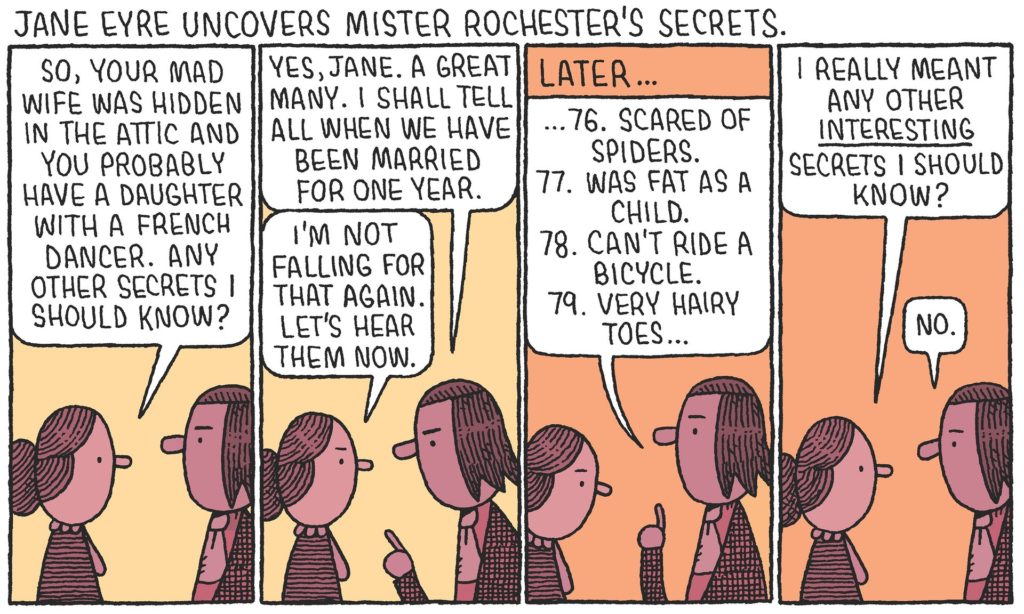
Jane Eyre Uncovers Mister Rochester’s Secrets

Jane Eyre Tom Gauld

Tom Gauld for The Guardian.

Comments closed

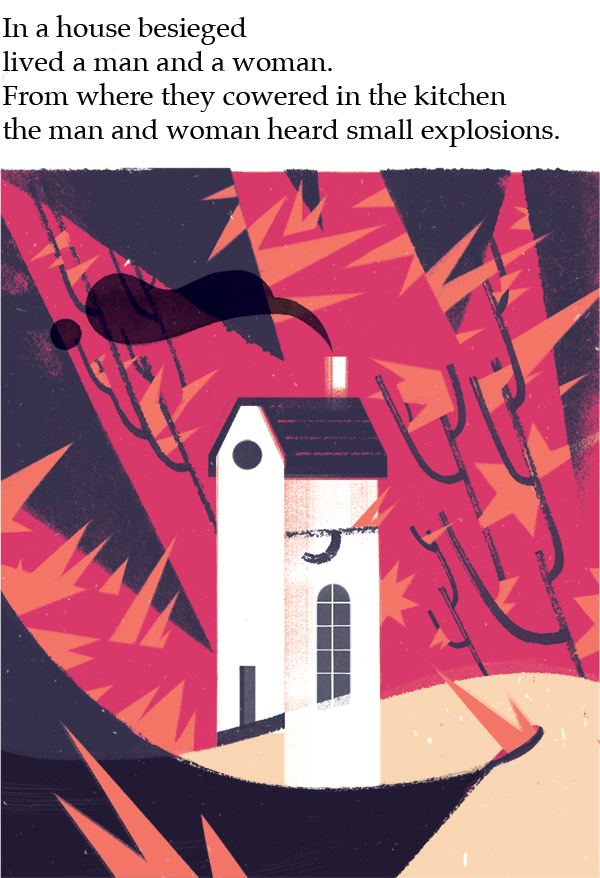
In A House Besieged: An Illustrated Adaptation

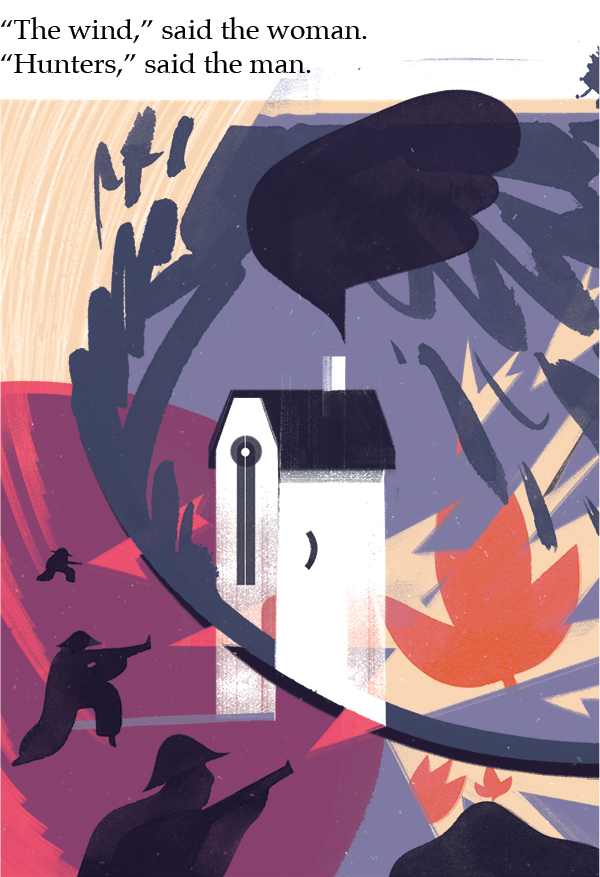
Illustrator Roman Muradov has drawn a beautiful adaptation of Lydia Davis’s (very) short story ‘In a House Besieged’ — originally published in the collection Break It Down (1986) — for The Paris Review:

housebeseiged1-1
housebeseiged2

You can read the rest of the story here.

Comments closed

Lost Literature

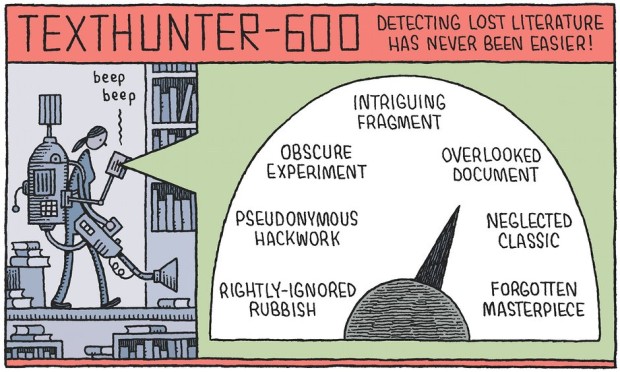
texthunter tom gauld

Tom Gauld on lost literature for The Guardian.

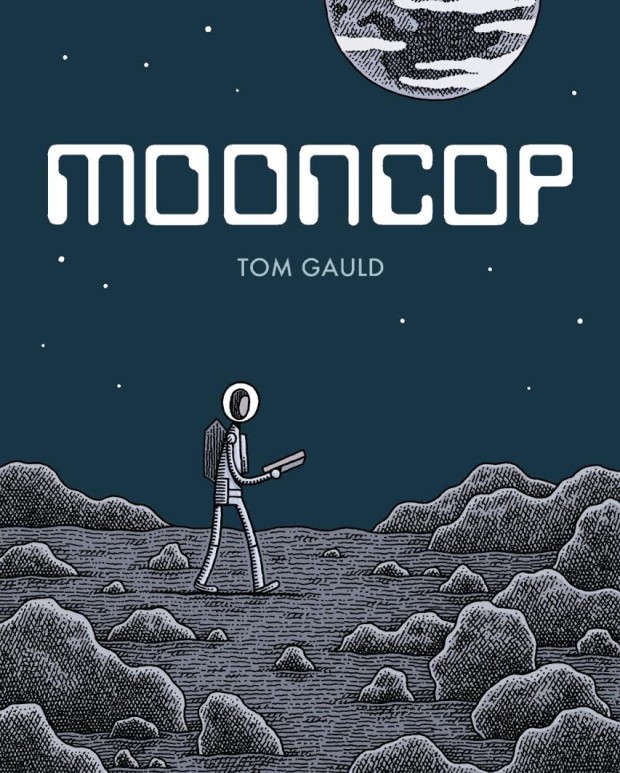
And in related news, Tom’s new book Mooncop will be published by Drawn & Quarterly in September. Can’t wait.

mooncop.casewrap


Comments closed

Lead the Autobiographical Novelist to the Literary Prize

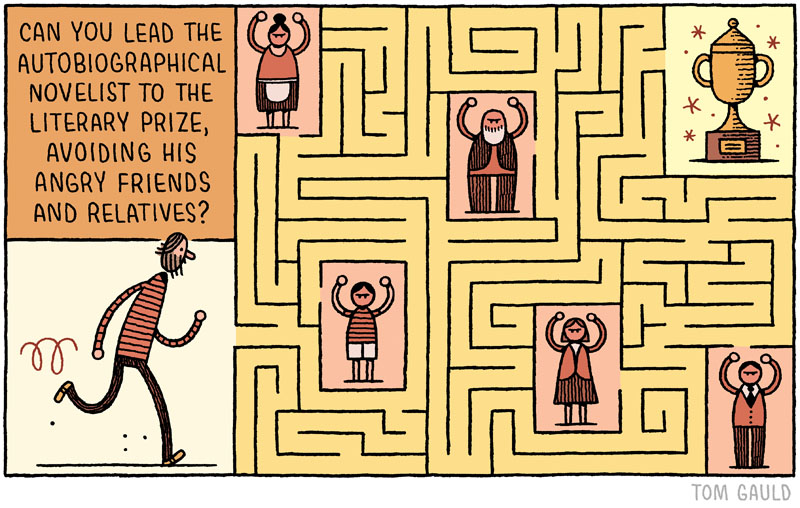
autobiographical novelist Tom Gauld

Tom Gauld on Karl Ove Knausgaard for The Guardian.

Comments closed

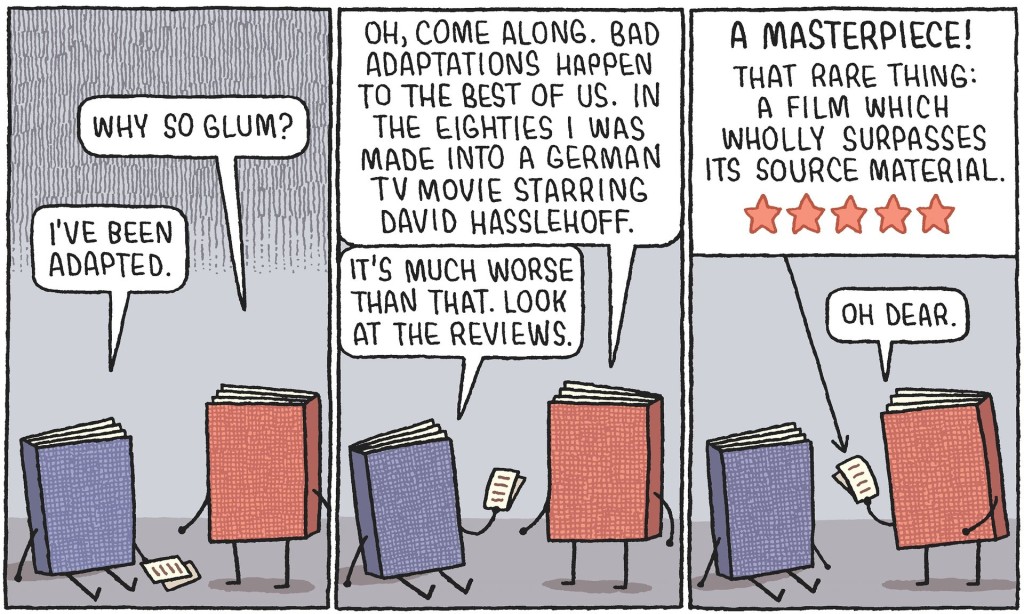
Adaptation

why so glum

Tom Gauld for The Guardian

Comments closed

From Thomas Mann to Amazon — The Art of Literary Publishing in New York

The Millions has a long, but very interesting (and, at times, surprisingly blunt) essay by veteran Doubleday editor Gerald Howard on editing and literary publishing in New York:

At the simplest, most basic level, I’ve been reading for a living for 37 years. I arrived at New American Library with a literary and intellectual sensibility formed by the unruly rebellions of the ’60s and the spiritual deflations of the ’70s, with a taste for the novelists and thinkers who had either helped to cause or best reflected and interpreted those rebellions and deflations. I’ve read thousands of books and proposals since then, and I believe I am a better reader than I was at age 27 — I know more because I’ve read more and my judgments are (I sure hope) better informed and more mature. But at the primal level where reader meets text and experiences emotions ranging from boredom and impatience to I-love-this-and-have-to-have-to-publish-it excitement, I think I am still that young man in the hunt and on the make, always searching for the big wow. This process takes place in the private arena of the mind and is entirely unrelated to the corporate arrangements of my employer. It is, quite literally, where I live, where I feel I am most myself.

As for the editing of those books that wow me when happy circumstances dictate that I get to acquire them, that process too takes place in a private arena. When I encounter a sentence that is inelegant or ungrammatical or inefficient or ambiguous in meaning, or a scene in a novel that is implausible or overdone or superfluous, or a plot that drags or goes off course or beggars credulity, or a line of exposition that falls short of the necessary clarity, or feel that some subject is missing and requires coverage, I point those things out to the author and with a carefully calculated mixture of firmness and solicitude suggest ways they might be remedied. I do this usually at nights and on weekends, sometimes on my bus ride to and from work, very occasionally in my office on slow days with my door closed (yes, I have an office with a door that closes), with a complete absence of business calculation beyond the largest context — that a book that is bad or just not good enough is a book that will embarrass me and my employer and be poorly received and will not sell.

But as I read those submissions and edit those manuscripts, on another cognitive plane I am reality testing what I am reading. What other books — the fabled and often tiresome “comp titles” — are like this one, and how did those books sell? (We are always fighting the last war.) Is it too similar to something we published recently or are publishing in the near future, or to a book some other house has or shortly will publish? Are there visual images in the book that might be utilized on the cover? What writers of note can I bug for prepublication blurbs? Is there something about the author, some intriguing or unusual backstory, some charisma radiating off the page (and maybe the author photo? Don’t act so shocked) that suggests that he or she will be a publicity asset? What might a reasonable advance be, given the amounts that have been paid recently for similar books, or might reason for some reason be thrown out the window? (A friend and colleague of mine refers to this feeling as “Let’s get stupid.” More on this matter shortly.) What colleagues in the company, in the editorial department, in marketing, publicity, and sales, could I ask to read the book to drum up support for it? What is my “handle” going to be — the phrases or brief sentences that briskly encapsulate a book’s subject matter and commercial appeal? These and all sorts of other questions will be popping up in my brain, and inevitably there is some crosstalk and bleed-through between the two cognitive spheres. If you want total purity in these matters, go join an Irish monastery and work on illuminated manuscripts, not a New York publishing house. Or at the very least a quiet and scholarly and well-endowed university press.

Well worth reading from beginning to end, the essay is an excerpt from the forthcoming Literary Publishing in the Twenty-First Century edited by Travis Kurowski, Wayne Miller, and Kevin Prufer (to be published by Milkweed Editions in April 2016), which on this evidence of this alone will be essential reading for publishing folks1.

Comments closed

New Directions Staying Small

Maria Bustillos visits New Directions and talks to publisher and president Barbara Epler about the business for The New Yorker:

Today’s visitor to New Directions’ elegantly shabby offices, in Chelsea, may stand on the nineteenth-floor balcony beside Epler, who is in her fifties and has a big, throaty laugh, under a pair of carved stone lions silently roaring high above, downtown and the Hudson River spread out beneath, and be forgiven for thinking that he has somehow stepped into a lovely and improbable alternate universe.

Inside, there are small, quiet, old-fashioned offices, one per person. On the walls, there are treasures: the firm’s original colophon, the unmistakable work of Rockwell Kent; an original Alvin Lustig mechanical with tissue overlay for the jacket of “Nightwood”; notes written on the famous prescription pad of WILLIAM C. WILLIAMS, M. D.; a photograph of Laughlin, who died in 1997, in silhouette. Epler, who joined the company as an editorial assistant fresh out of college, in 1984, and went on to become editor-in-chief in 1996, publisher in 2008, and president in 2011, seemed to be giving not an office tour so much as a museum one, especially when she opened the door to a small room containing one copy of each of nearly all of the more than thirteen hundred books published here so far. Céline, Nabokov, Tranströmer and Bolaño, Williams and Neruda and Sartre and Brecht and so many others: Laughlin believed in keeping the good stuff in print (or reprint). Many are bound in Lustig’s iconic, modernist covers.

“Andy Warhol used to design for us before he was famous,” she said. “Isn’t that a scream?”

Comments closed

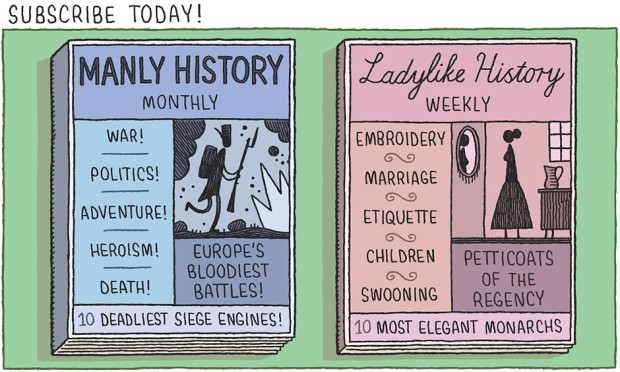
Subscribe Today!

Subscribe Today

Tom Gauld on sexism in history writing for The Guardian.

5 Comments

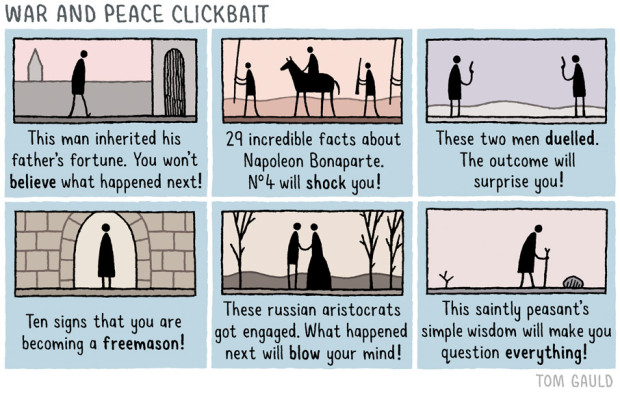
War and Peace Clickbait

War and Peace Clickbait Tom Gauld

Tom Gauld for The Guardian.

Comments closed

Jeff Shotts: Artful and Enduring Experiences

citizen

At Literary Hub,  Jeff Shotts discusses his work an editor at Minneapolis-based publisher Graywolf Press with Kerri Arsenault:

At Graywolf, we choose what we choose because these books deal with uncomfortable issues. Sometimes we need comfort, but what comforts us as readers, when so much of the rest of the world is hard at work to comfort us? I am made more uncomfortable by passivity, invisibility, and perfection. And readers want books like Citizen, which directly confronts race, or’On Immunity, which takes on vaccination and cultural fear, or D. A. Powell’s exquisite, lyrical trilogy collected in Repast, on illness and HIV, or Solmaz Sharif’s upcoming Look, which describes the casualties of war, one of which is our language.

All of these books we choose because of the issues they confront, yes, and also because of how they confront them. The language, style, and form of the books Graywolf publishes are meant to challenge you, provoke you, keep you reading, immerse you in experiences that you can’t shake off after you look up from their pages. Not all these experiences are loud or ugly, and many of them are also subtle, internal, joyous, and beautiful. But we hope all these experiences are artful and enduring…

…It’s a risk in this climate to publish the kinds of books we do—poetry and translations, essays and short stories, works of social justice and artful language. But we continue to recognize that many, many people are excited by these kinds of books: they want to read them, share them, hand-sell them, download them, review them, teach them, study them, engage with them, maybe throw them across the room. As an independent, nonprofit, mission-driven publisher, Graywolf and our titles exist in the same marketplace as countless, more commercial publishers and their titles, and these books have to compete for attention, review coverage, bookstore placement, online positioning, distribution, sales, awards, event listings, and on and on and on. It’s a risk in most every way, but given the extraordinary success many titles have had in these last few years, I think more and more people inside and outside the industry are giving Graywolf books an extra look and an additional boost.

Comments closed

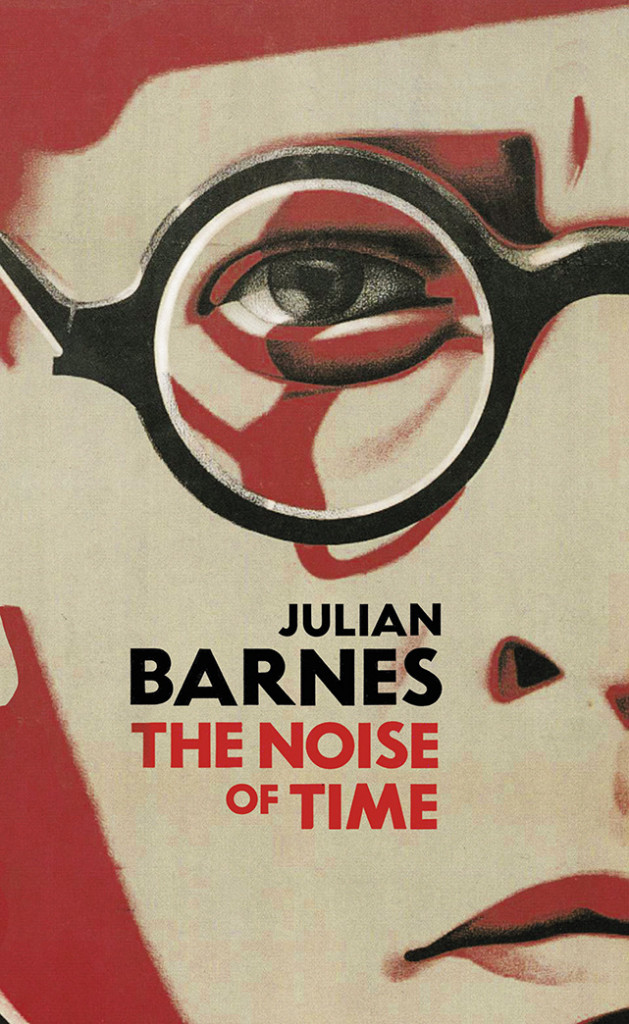
Julian Barnes and Suzanne Dean in Conversation

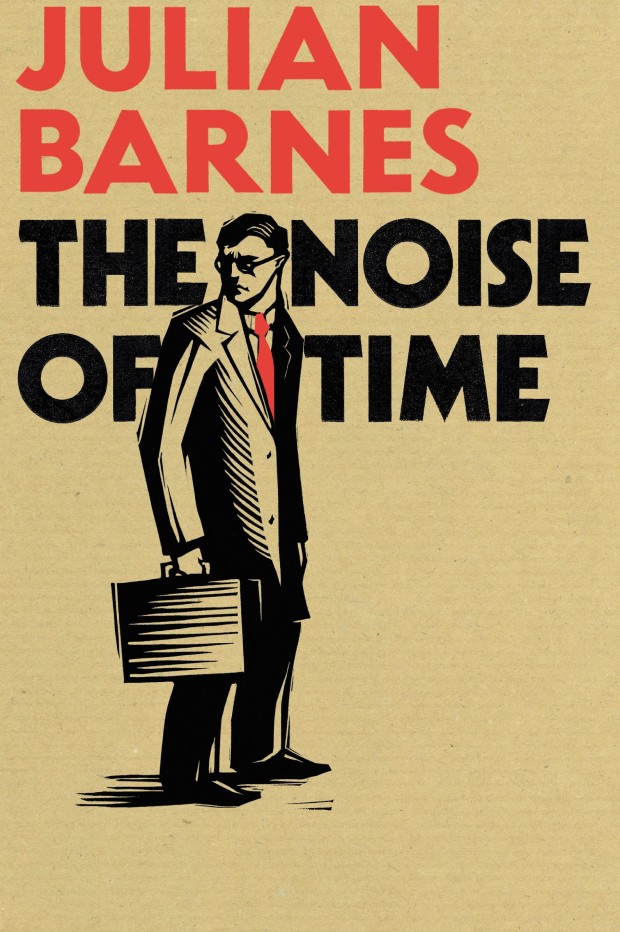
Noise of Time

At the Penguin Blog, author Julian Barnes and designer Suzanne Dean discuss their 20 year creative relationship with Alex Clark:

“What’s so nice about working with Julian is the trust; I think that’s really important. There’s nothing more heartbreaking than producing something and someone can’t understand what you’re trying to show them. I think over time you build up that trust and you know that I’ll be working my very hardest to give you the best cover I possibly can. I really am so desperate to produce perfection each time and I want it to be better each time.”

You can listen to the full conversation on the Vintage Books podcast:


And you can read more about the cover design of Julian Barnes’ new novel, The Noise of Time, on CMYK, the Vintage design blog.

noise of time alt

Comments closed