Skip to content

Tag: literature

Ursula K. Le Guin | Writers & Co.

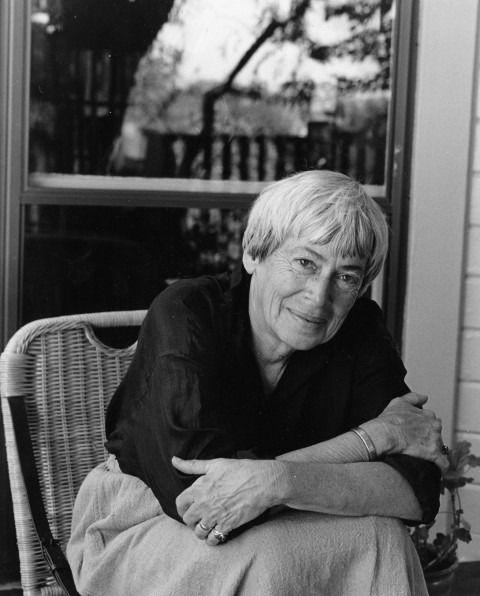
Author Ursula K. Le Guin talks to Eleanor Wachtel about writing, science fiction and short stories in this archive interview for CBC Radio show Writers & Co. from 1993:

CBC Radio Writers & Co: Ursula K. Le Guin 

At the end of the interview, Le Guin reads her short story ‘Crosswords’ from the collection Searoad.

(image: Copyright © by Marian Wood Kolisch)

Comments closed

Live and Breath Imagination

In this lovely video for Crane.tv, Sylvia Whitman, manager of Shakespeare & Co. and daughter of founder George Whitman, talks about the storied Parisian store and the wonder of good independent bookshops:

(via Port Magazine)

Comments closed

Richard Price Paperbacks | Henry Sene Yee

Columbine and A Wall in Palestine: cover designs by Henry Sene Yee

Henry Sene Yee is a designer and art director at Picador USA. The very of his best work (and all of it is good) — his cover designs for Columbine by Dave Cullen and A Wall in Palestine by René Backmann to pick two recent examples — combine judiciously selected and smartly cropped photographs with bold typographic choices.

Given the poignancy of the images he chooses and the respect he gives to them within his compositions — the room he gives them to breath —  it isn’t surprising that Henry is a photographer himself, regularly capturing scenes of daily life in his beloved New York through a lens.

Photo by Henry Sene Yee

The author Richard Price, who has also written for the HBO series The Wire, was born in and raised in the Bronx. Several of his novels, including Clockers and Freedomland (both adapted to movies), are set in the in fictional town of Dempsy, New Jersey.

Photo by Henry Sene Yee

Over the last couple of years Henry, who also happened to grow up in New Jersey, has designed covers for Picador’s recent reissues of Price’s novels.

Bringing his understanding of photography and type to the designs Henry has, like Price himself, avoided the expected crime fiction clichés.

As fan of Price’s work as well as Henry’s, I thought I would take to the opportunity to ask the designer how he approached the covers.

Here is his reply:

Lush Life: cover design by Aaron Artessa

It started when Picador published the paperback edition of Richard Price’s bestseller Lush Life. Because of its success, the FSG cover was reproduced in ads and displayed prominently in bookstores. Repackaging the cover for paperback would not take advantage of the public familiarity with it so it was decided to keep the original jacket design [by Aaron Artessa].

Clockers final cover by Henry Sene Yee

Clockers: unused designs by Henry Sene Yee

Clockers, probably Price’s most well known backlist was also acquired by us and was reprinted to coincide. It was designed as a stand alone. I couldn’t see how I would or need to relate it to Lush Life.

Bloodbrothers final cover by Henry Sene Yee

It was followed by his next backlist title Bloodbrothers, which was also designed as a stand alone. That book’s themes reminded me of photographer Bruce Davidson’s beautiful 1970s NYC Subway photos. I found this great Davidson photograph from his gang series and kept the colors simple.

The Breaks final cover by Henry Sene Yee

We later acquired The Breaks and Ladies’ Man and I had no intention to follow any previous Price’s look since there was none. Photo research found some great images similar in look to the Davidsons. My two favorite photos happen to both be horizontal and the initial layouts looked similar to Bloodbrothers. I tried to distinguish them by using different colors in the background, type. But in the end, it was just distracting from the great photos. So I decided to have them match Bloodbrothers, keeping the type and same palette of black, warm gray duotones, cream and warm red.

Ladies man final cover by Henry Sene Yee

The Breaks and Ladies Man: unused designs by Henry Sene Yee

Thanks Henry!

Disclosure: As of Fall 2011, book published by Picador will be distributed to independent bookstores and libraries in Canada by my employer Raincoast Books as part of a new distribution arrangement with Macmillan US. For the record, Henry and I discussed featuring his work on The Casual Optimist several times well before details of this deal was known to either of us.
1 Comment

David Lodge | Writers & Company

In another great archive interview for Writers & Company, author David Lodge talks to Eleanor Wachtel about artificial intelligence, consciousness and his 2002 novel Thinks:

CBC RADIO WRITERS & COMPANY: David Lodge, Think

Comments closed

New Genres by Tom Gauld

I love these new illustrations by the super-talented Tom Gauld for an article in The Washington Post Book Review about genre fiction:

You can see more of Tom’s work and his regular literary cartoons for The Guardian on Flickr.

Comments closed

Jennifer Egan | Writers & Co.

Author Jennifer Egan discusses music, Proust and, of course, her Pulitzer Prize winning novel A Visit From the Goon Squad with Eleanor Wachtel for CBC Radio’s Writers & C0mpany:

CBC RADIO WRITERS & Co. – Jennifer Egan

The paperback cover for the US edition of A Visit From the Goon Squad (pictured above), was designed by the talented Jamie Keenan.

Comments closed

Something for the Weekend

A lovely new cover design by Dan Mogford for All Over the Map by Michael Sorkin (Verso Books).

In an epic two part interview for Bomb Magazine, George Saunders, author of Pastoralia, talks about writing with Patrick Dacey.

From part one:

[O]ne of the challenges of the writing life is to find new things to say and/or new ways to say them. And this is a paradox, because when you write your first book, you actually carve out a great deal of what you’ll end up working with for the rest of your life… [T]hat’s genuinely exciting. But then there’s the next 60 years to get through (!).

From part two:

Sometimes when I read new fiction, I feel that the writers of it, myself included, have a somewhat dysfunctional relationship with our own culture. I don’t mean we disapprove of it. I mean that we have absorbed so much habitual disapproval of it that we are no longer able to see it, and therefore are unable to disapprove of it properly. How can you disapprove (or approve) of something you no longer see? If your palette of possible modes of representation has been habitually narrowed and restricted (to the edgy, the snarky, the hip, etc., etc.), if that palette has been shorn of, say, the spiritual, the ineffable, the earnest, the mysterious—of awe, wonder, humility, the truly unanswerable questions—then there isn’t much hope of any real newness there.

Just as an aside, I love this cover for Pastoralia (I’m not sure who the designer is though. Anyone?):

Mom — A short interview with Gene Hackman in GQ. I’ve always been a fan of Hackman’s acting, what I didn’t realise is that he is also a novelist:

Yeah, they tell you not to write about your mom in books, but I don’t know how you keep from doing that.

Fantastic. Hackman’s most recent novel is Payback at Morning Creek.

And finally…

A gallery of vintage Irish book covers from the 1920’s to 1970’s curated by Niall McCormack, a graphic designer based in Dublin. Pictured above: Cuir Síos Air, Fallons. Cover design by Cor Klaasen. (Via The Donut Project).

Comments closed

Midweek Miscellany

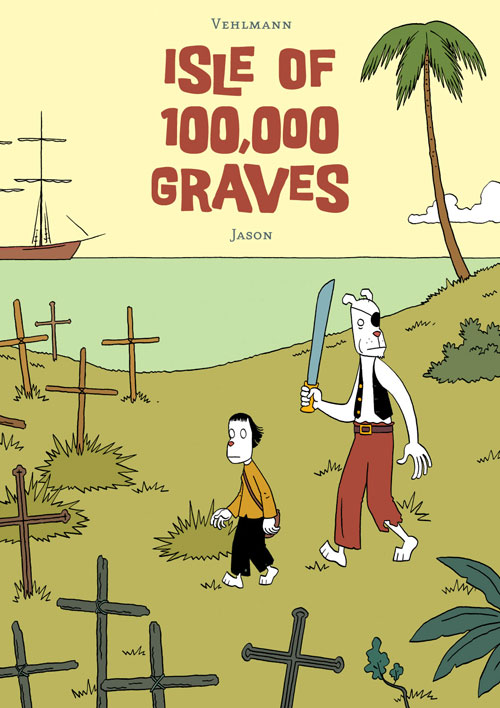
An introductory reading guide to the work of Norwegian cartoonist Jason from Robot 6:

Since his U.S. debut in 2001, Jason has produced 15 books, with nary a drop in quality. More to the point, he’s been able to use and play with a lot of familiar genre cliches — movie monsters, the big heist, the man accused of a crime he didn’t commit — and make them seem fresh and inviting.

That’s largely because his characters are usually grounded in a strong emotional reality. What often drives them are not simplistic ideals about right and wrong but love, longing, guilt and anxiety, the same stuff that drives most of us. What’s especially fascinating about his work, though, is how he’s able to convey all these roiling emotions with such a… minimalist style… Anyone interested in learning about timing and tempo… should be studying Jason’s comics.

Jason’s latest book Isle of 100,000 Graves is released this month.

Let’s Put It This Way — Cartoonist Ivan Brunetti profiled in The Chicago Tribune:

When people talk about Brunetti, they often couch it with a “Let’s put it this way.” Francoise Mouly, the longtime art director of the New Yorker, said, “Let’s put it this way — Ivan will never be comforted in life.” She said it in her native French lilt, with the breeziness of tone and the bluntness of meaning we associate with the French. But without malice or sarcasm, only lament and concern. There is no comforting Ivan Brunetti.

(I am still slightly traumatized by Brunetti’s Misery Loves Comedy)

The Poverty of Abundance — Sukhdev Sandhu, author of London Calling: How Black and Asian Writers Imagined a City, reviews Retromania: Pop Culture’s Addiction to its Own Past by Simon Reynolds for The Observer:

Retromania is a book about the poverty of abundance. At malls, on mobile-phone ads, in the background as we work at our computers: pop, usually in the form of anorexically thin MP3 sound, is everywhere these days. Perhaps that ubiquity puts a brake on its ability to astound or shape-shift. Perhaps the process of circulating and accessing music has become more exciting than the practice of listening to it.

Future Classics — Agent Andrew Wylie in The WSJ:

[T]he business we’re in is to identify and capture and anticipate the value of books that are inherently classics, future classics… Sure, writers these days can go directly to readers, without publishers or agents. But there needs to be a chain of people who have authority and can help convey what is essential. We spend most of our time strongly supporting work that we believe is significant.

And finally…

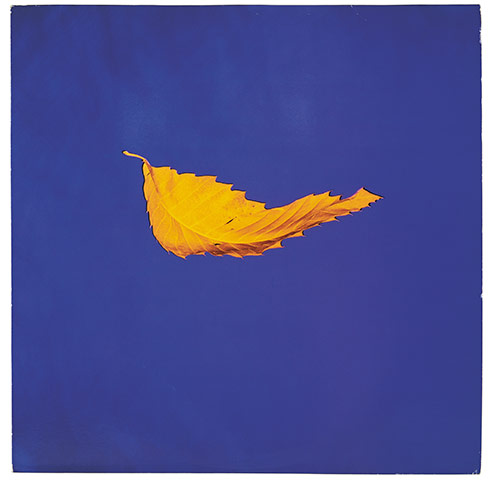
Peter Saville discusses his favourite designs for Joy Division and New Order with The Guardian.

Comments closed

Something for the Weekend

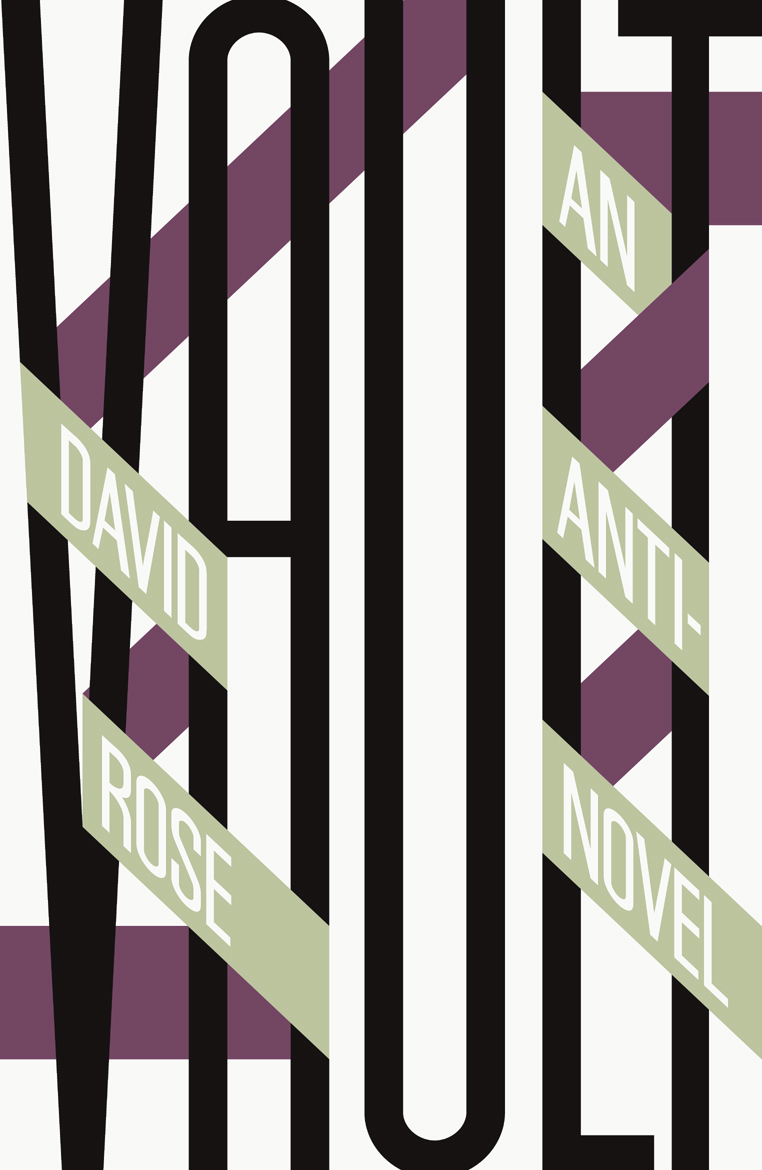
A distinctively typographic cover by David Pearson for Vault by David Rose, new from Salt Publishing.

Giving Up Irony — John Self reviews Edward St. Aubyn’s At Last:

The author’s background, like Patrick’s, is of inherited wealth; perhaps it is this which enables him to treat his characters mockingly and sympathetically at the same time. His brittle, witty prose evokes comparisons with Evelyn Waugh, whose snobbish attraction to the upper classes, looking in on them from without, contrasts with St Aubyn’s cool-eyed appraisal. The phrase “a handful of dust”, quietly slipped into At Last, could be an acknowledgement of the similarities and contrasts.

Patrick is like his creator, not just in his background, but in his stylistic weaknesses:

“It’s the hardest addiction of all. Forget heroin. Just try giving up irony, that deep down need to mean two things at once, to be in two places at once, not to be there for the catastrophe of a fixed meaning.”

The Architecture of the Secret Lair — Mark Lamster for Design Observer:

The Bin Laden compound makes an interesting contrast with the secret modern lairs created for Bond villains by the legendary production designer Ken Adam. These have routinely been described as unrealistic, insofar as they could never be built without drawing attention. It’s curious now, in retrospect, to think that it was fear that kept the local population from Dr. No’s island hideaway (which was just off British and American territory). Though Bond films make us think of visual extravagance, the most visually arresting set from the film was the rather raw interrogation room, with its cross-beam, ocular ceiling. What was in Osama’s basement?

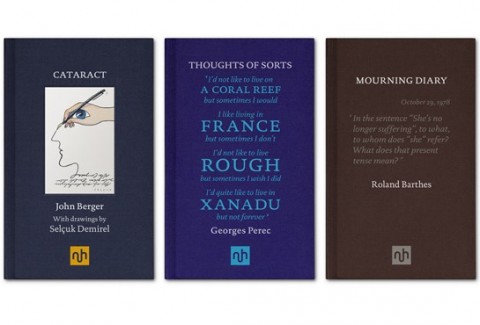
Notting Hill Editions, a new publishing imprint devoted to the essay, launches this month with books by from John Berger, Georges Perec and Roland Barthes among others. The typographic covers were designed by Garvin Hirst at Berlin-based design consultancy Flok.

And finally…

The Burden of Entertainment — Woody Allen discusses five books that still resonate with him:

The Catcher in the Rye has always had special meaning for me because I read it when I was young – eighteen or so. It resonated with my fantasies about Manhattan, the Upper East Side and New York City in general.

It was such a relief from the other books I was reading at the time, which all had a quality of homework to them. For me, reading Middlemarch or Sentimental Education was work, whereas reading The Catcher in the Rye was pure pleasure. The burden of entertainment is on the author. Salinger fulfils that obligation from the first sentence on.

Reading and pleasure didn’t go together for me when I was younger. Reading was something you did for school, something you did for obligation, something you did if you wanted to take out a certain kind of woman. It wasn’t something I did for fun. But Catcher in the Rye was different. It was amusing, it was in my vernacular, and the atmosphere held great emotional resonance for me. I reread it on a few occasions and I always get a kick out of it.

new publishing imprint launching in May, which is dedicated to revitalising and celebrating the essay.
1 Comment

Edward St Aubyn | Open Book

Author Edward St. Aubyn talks to Mariella Frostrup about his brilliant, funny, and very, very harrowing semi-autobiographical novels for BBC Radio’s Open Book:

BBC RADIO OPEN BOOK: Edward St. Aubyn

At Last, Edward St. Aubyn’s new novel, and the conclusion of the Melrose series, is being published next month.

Comments closed

Louis Menand | The Big Think

In a really fascinating 28 minute interview from last year, Louis Menand — Professor of English at Harvard University, critic and author most recently of The Marketplace of Ideas — discusses books, culture, criticism, science, education (and more in between) with the Big Think:


(via Mark Athitakis. I can’t quite believe I didn’t see this earlier!)

Comments closed

Grossman on Franzen Redux

Literary editor Lev Grossman (author of The Magicians) discusses why Time put Jonathan Franzen on the front cover the magazine of with Ramona Koval on ABC Radio National’s The Book Show:

ABC RADIO NATIONAL THE BOOK SHOW: LEV GROSSMAN

Comments closed