Skip to content

Tag: literature

Something for the Weekend

Luc Sante, author of Low Life: Lures and Snares of Old New York, has posted an amazing selection of vintage French photographic noir book covers at John Gall’s blog Spine Out.

On the Defensive — Sam Lipsyte, author of The Ask, on teaching creative writing in The Financial Times:

When you teach creative writing, you are already on the defensive. People love to poke you in the chest and cry, “But you can’t teach writing!” This is precisely what I think about automobile driving but I let them rant while I rub the sore part where they poked me. I don’t know why people get so worked up about this subject. Nobody has asked them to teach creative writing or even to learn it. Apprenticeship, the sharing of history and technique, has always been a central feature of art-making. Yet people cling to a romantic idea of the self-made genius toiling away in a garret or napping undisturbed in a sleep module.

Books on Wheels — A really lovely article about bookmobiles from the Smithsonian Magazine:

Bookmobiles, the man said, had been a fundamental inspiration while growing up in rural Mississippi in the mid-1960s. The public library had been closed to blacks—but the bookmobile stopped right on his street, a portal into the world of literature.

The gentleman was W. Ralph Eubanks: today an acclaimed author, and Director of Publishing for the Library of Congress… “The librarians did not care that I was barefoot, and wearing a pair of raggedy shorts. All they cared about was that I wanted to read—and to help me find something I would enjoy reading.”

Eubanks’ story is just one example of the pivotal role bookmobiles have played in literary culture, and individual lives, for more than 150 years.

Strides at The Strand — Nancy Bass Wyden, co-owner of The Strand bookstore in New York, interviewed in The Daily Beast:

We have taken strides to grow with our customers and listen to their needs. When customers started requesting New York Times bestsellers, we started carrying new books and featuring them on tables in the front of the store; when customers started talking about the Internet, we got online; when Amazon and B&N.com became “competitors,” we partnered with them.

And finally…

The Trial — Judith Butler in the LRB on the implications of the ongoing and complex legal battle in Tel Aviv over several boxes of Kafka’s original writings:

Had the works been destroyed, perhaps the ghosts would not be fed – though Kafka could not have anticipated how limitlessly parasitic the forces of nationalism and profit would be, even as he knew those spectral forces were waiting.

Comments closed

Richard Ford | Writer’s & Co.

An interview with Richard Ford, recorded onstage at a special PEN benefit at the International Festival of Authors in Toronto, on CBC Radio’s Writers & Company:

CBC Radio Writer’s & Co. Richard Ford Mp3

Comments closed

Q & A with John Williams, The Second Pass

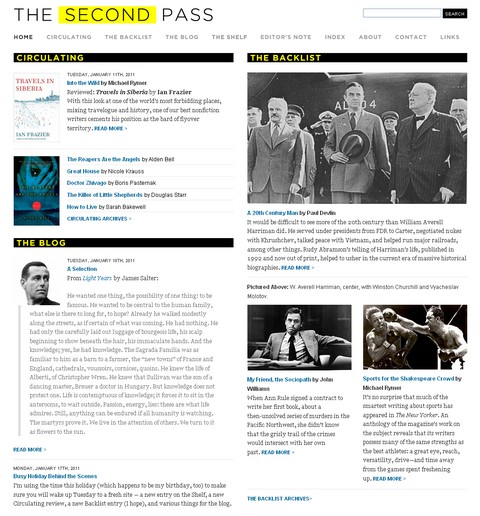
I feel a special admiration for The Second Pass. Launched almost two years ago — shortly after first tentative posts at The Casual Optimist — and with a list of whip-smart contributors, it seemed to signify a second wave online literary journals that built on the success of groundbreaking sites like  Bookslut and ReadySteadyBlog. Well-designed and appropriately eclectic, it had wider horizons than ailing newspaper review pages, and yet Brooklyn-based founder John Williams — who previously worked in publishing — seemed less prone to the snark so commonplace among some of the more established online literary set.

I was, needless to say, surprised when I first received an email from John. The idea that he had even heard of the less-than whip-smart The Casual Optimist seemed so… unlikely. And yet, John and I have remained in touch on and off for the past year and half, and I have even contributed to The Second Pass, so I thought it was high time I talked to him about the site and its recent book party in Brooklyn.

We corresponded by email…

For those people unfamiliar with the site, could you describe The Second Pass?

The site is an online magazine devoted to books new and old. It features reviews of new books, essays about older and more obscure books, and a blog about books of all stripes. That’s the basics. It’s a place where serious readers of all kinds can enjoy themselves and, from time to time, maybe learn about a book or author they might not otherwise learn about.

What makes The Second Pass unique?

Unique is a strong word. There are other sites and publications that pay attention to obscure books, but I think the site’s regular devotion to it — including out-of-print books — is rare, if not entirely unique. I also like to think the writing is generally at a level that separates it from many other online-only enterprises.

What lessons have you learned in the first 20 months of editing the site?

Plan ahead. And have contingency plans. I’ve learned those lessons, though I’m still learning to act on them.

Appearance and readability often seem to be an afterthought for websites about books, but that doesn’t seem to be the case with The Second Pass. Did a lot of planning go into the design of the site?

Yes, my friend Strath Shepard spent time coming up with several visual ideas for the site, and I chose from among them — any one of which I would have been thrilled with. I wanted to make sure the site looked good, because I think design is as important online as anywhere else. It should be strong and inviting without being an obstruction or a distraction, in my opinion.

Is it easier or more difficult for independent online literary journals to find an audience today?

Easier than it was in the past online? I’m not sure about that. My unscientific sense is that many more people are spending time online, but that the idea of a big audience for niche blogs or journals is more or less a dead dream. Reaching a certain core number of readers is easy enough online, if you’re patient and steady in your production, but I think the audience for serious books coverage is inherently limited in a way that can be hard to admit. I would rather try to reach the maximum of that particular audience (and I have no idea what that number would be; my site’s traffic is surely a tiny sliver of it) than start throwing too many things at the wall to try to reach a more general audience. I think the pressing need for lots of traffic is reflected at a place like The Huffington Post, where the books coverage is a hodgepodge of too-frequently-published pieces that don’t feel unified in any satisfying way. But those people who work for places where increasing traffic is paramount — to paraphrase David Letterman, I wouldn’t give their troubles to a monkey on a rock. I’m happy there’s no one above me worrying about traffic.

What other book sites do you read regularly?

Maud Newton, The Book Bench, Paris Review Daily, Bookslut, The Millions, John Self, Levi Stahl’s I’ve Been Reading Lately, the Barnes & Noble Review, Mark Athitakis, Novel Readings, and yours. Those might be the ones I check most regularly, off the top of my head, but I drop in on many more, most or all of them on the links page at The Second Pass.

Where does the name of your blog, A Special Way of Being Afraid, come from?

It comes from a Philip Larkin poem called “Aubade,” which is a terrifying and beautiful confrontation of the fear of death. It begins: “I work all day, and get half-drunk at night. / Waking at four to soundless dark, I stare.” And a bit later: “This is a special way of being afraid / No trick dispels. Religion used to try…” It’s always been one of my favorite poems, and I thought that phrase would make a good blog name, back in 2005, when I started it. I still like the name.

How has the experience as founder and editor of The Second Pass been different from blogging?

I started the older blog while working for a big publishing house, partly as a way to maintain the habit of writing and to develop my own voice while in a job that made it difficult to find time for those things. Especially in the beginning, I felt it was important to keep the blog regularly updated, for the exercise of it and for building readership, however modest. I feel that pressure more keenly with The Second Pass, since I have more ambitions for it. Ideally, I would update it far more often than I do. I also work with other people on The Second Pass. I wear all the hats, but I rely on reviews and essays from other writers, a social part of the experience that I really enjoy but that makes it different from the more dictatorial nature of the blog.

The blog is also more wide-ranging. I’m probably a reader first and foremost, but I’m also a longtime fan of music, movies, and sports, among other things. Not to mention the more personal things I might ruminate about over there. I still consider the blog a useful outlet for those things, though I’ve been terribly neglecting it for the past several months, if not longer.

The Second Pass held its first event in November. What made you decide to throw a party?

I had been meaning to have a party ever since last March, when the site celebrated its one-year anniversary, but was stymied by various obstacles that wouldn’t have stymied someone with more resolve. I thought it would be fun to have a party, and figured it couldn’t hurt the site’s visibility. Plus, I wanted to showcase some of the fantastic people who have written for the site.

Who read at the event?

Carlene Bauer, Will Blythe, and Maud Newton read from works of fiction in progress. Jason Zinoman read from his book about horror movies in the 1960s and ’70s, which is being published here next summer. And Lauren Kaminsky read an excerpt from a terrifically weird book called Listen, Little Man by Wilhelm Reich, a screed written by an Austrian psychoanalyst who worked with Freud and later seemed to have cracked up pretty good. I’m hoping Lauren will write about the book (and him) for the site at some point.

Do you think the evening was a success? And will you be organizing more events in future?

I thought it was a big success. I’m biased, of course, but the readers couldn’t have done a better job, there was plenty of wine and food, and everyone seemed to have a good time. Melville House, an independent publisher and bookstore in Brooklyn, was a gracious host. And yes, I’m certainly hoping to do it again, perhaps in Manhattan next time, when the site turns two (which happens March 10) or soon after.

Do you think interest in live book events will see the same kind of revival that live music events have in recent years?

I think live book events, at least in New York, have been thriving in recent years. My dirty little secret is that I find many traditional readings dull. Not all, but many. Lots of good writers just aren’t good readers, which is no knock on them. It’s not their job, and they’re very different skills. Only a few lucky people have both. I think it’s also asking a lot of a text to keep people interested for a long stretch of time while it’s read aloud. (I’m not a big fan of audio books for that reason, though this is probably saying much more about my aural attention span than about the worth of audio books.)

Who are some of your other favourite authors?

William Trevor, Richard Russo (especially pre-Pulitzer), Marilynne Robinson, David James Duncan, Dostoevsky, Lorrie Moore, Wilfrid Sheed, Nabokov, William James, Martin Amis (back when), Iris Murdoch, Richard Ford (the Bascombe books, particularly), to name a few.

What were your favourite books of 2010?

I recently finished The Killer of Little Shepherds by Douglas Starr, a nonfiction story set in late-19th-century France, which tells the parallel stories of a serial killer on the loose and a criminologist who was doing a lot to introduce the set of forensic techniques that we now, thanks to TV, simply refer to as “CSI.” It’s a gripping story, smartly told. I also enjoyed Brady Udall’s The Lonely Polygamist. He’s an old-fashioned storyteller, sweeping and just the right amount of sentimental, and this novel is about a Mormon with four wives and 28 children.

What books are you looking forward to reading in 2011?

I’m glad you asked this, because it reminded me that I’m behind in figuring out what the site will cover this year. I’m a fan of Jonathan Coe’s work, and his new novel, The Terrible Privacy of Maxwell Sim, is coming in March. Just today, I received a galley of House of Exile by Evelyn Juers, a biography of Heinrich Mann, his wife Nelly, and their circle of famous friends. I’ve been looking forward to its U.S. publication since I read a terrific review in the TLS. And of course, there’s David Foster Wallace’s novel in April. Though I’m skeptical of posthumous releases, including this one, I’m as curious as every other fan of his.

Thanks John!

Photo credit: Justin Lane

credit Justin LaneJ
Comments closed

Midweek Miscellany

Canadian illustrator and typographer Darren Booth at From The Desks Of

There’s on more on Darren’s cover for An Object of Beauty on his blog.

Misery — Editor and author Diana Athill profiled at The Telegraph (via PD Smith):

‘I have always been a watcher,’ she says. ‘Of myself in particular. Even at times of acute unhappiness I’ve watched myself being unhappy. I also think I’m one of those people who has never been wholly involved in an emotion, but then I think a lot of writers are like that.’

Is Modernism Boring? — Rhys Tranter at The Spectator Book Blog:

If modernism means anything in Woolf or Joyce, it is the struggle for what it means to be modern. Both present us with an array of fascinatingly complex characters, seeking to question their identity and their place in the modern age. Language becomes a character, too, an all-pervading texture that sets the mood of each story, and playfully subverts the ABC plots of yesteryear. Amid a proliferation of new technologies, of political upheaval and social change, Joyce, Woolf and the literary modernists actively interrogate the way we perceive the world around us, in ways still relevant today. In this way, modernism is not something we leave on our shelves and neglect to pick up. Modernism is that which speaks to modern life.

What’s the Worst that can Happen? — Gary Shteyngart, author of the dystopian Super Sad True Love Story, interviewed at the new and great looking book blog Full Stop:

Most people don’t care anymore because they’re beyond caring. The endless cult of self-expression that makes people stream or write about themselves day in and day out without any kind of filter. If you write a novel, you’re often writing about yourself as well, but you’re clearly filtering it through a bunch of things, not least of which is technique. So it’s not an entirely plausible future, but in some ways it could be. What if all the worst things happen politically, socially, and in terms of our literacy?

Top 10 fonts of 2010 lists from You Work For Them and Fontwerk (Google Translate version here).

And finally…

The 50 best comic book covers of 2010 as chosen by Robot 6

4 Comments

Something for the Weekend

I’ve not been entirely convinced by all of the artists’ books covers I’ve seen coming out the Never Judge…? show at StolenSpace in London (to be fair, I’ve not been to the exhibition in person), but Gary Taxali’s design for The Confederacy of Dunces is just great. I believe this edition will be available from Penguin UK in April 2011. There’s more on the exhibition at Creative Review.

What Font Should I Use?Smashing Magazine’s 5 principles for choosing and using typefaces.

The Collectors — NPR on e-readers, data collection and personal privacy (via MobyLives):

Most e-readers, like Amazon’s Kindle, have an antenna that lets users instantly download new books. But the technology also makes it possible for the device to transmit information back to the manufacturer.

“They know how fast you read because you have to click to turn the page,” says Cindy Cohn, legal director at the nonprofit Electronic Frontier Foundation. “It knows if you skip to the end to read how it turns out…”And it’s not just what pages you read; it may also monitor where you read them. Kindles, iPads and other e-readers have geo-location abilities; using GPS or data from Wi-Fi and cell phone towers, it wouldn’t be difficult for the devices to track their own locations in the physical world.

(It’s also worth noting, as Steven W. Beattie does, that this all applies equally (if not more so) to  Kobo’s new Reading Life app.)

Not Just a Stereotype — Michael Bhaskar, Digital Publishing Manager at Profile Books, offers some final thoughts on 2010 at Book Brunch, dispelling a few myths along the way:

Like many groups, publishers are easily stereotyped, and like such groups too, they find that the media usually plays along with the stereotype rather than discovering the nuances behind it. So we hear about a slightly staid world of boring pedants, blinking helplessly at the on-rushing lights of the digital juggernaut and eagerly burrowing their way back to the 1950s… But this isn’t the industry I know. Far from being terrified of digital, publishing has actually already become well adapted to the digital world.

In his recent study of publishing, Cambridge academic John Thompson makes the point that, from the industry’s point of view, much of the digital transition has already taken place. In the workflows of most publishers the only time we see printed material is at the very end of the process… The day to day reality of a publishing house is one of dealing with digital products…

Wave of Information — Gary Shteyngart, author of Super Sad True Love Story, in conversation with Robert Birnbaum for The Morning News:

Sure the novel has survived. Television, radio, telegraph, film—just about anything that has been thrown at it. It’s a very durable form. And the novels are getting better and better. I am shocked at the quality of literature. What I worry about more than anything is—maybe this anecdotal “living in New York”—is the exhaustion of people… The difficulty people have of opening up a book after a day of being bombarded with bits of information, most of it useless. And much, if redundant, certainly information that is ceaseless. Ceaseless waves of it. You come home, the quest for narrative is still there—you want narrative. What’s the water-cooler discussion going to be about? It’ll be about Mad Men, which you can sit there and passively take in—it’s a wonderful show—as opposed to something that requires a mass of concentration and effort. That’s my fear. Who knows, maybe it’s completely unfounded.

And finally…

Carolyn Kellogg chooses her 13 favourite bookplates from Etsy for the LA Times ‘Jacket Copy’ blog (pictured above: Skull and Crossbones bookplates by rxletterpress).

1 Comment

Gary Shteyngart, Paid in Cheese

Gary Shteyngart, author of Absurdistan and Super Sad True Love Story, interviewed by Eleanor Wachtel for CBC Radio’s Writers & Company:

Writers & Co Interview with Gary Shteyngart Mp3

Comments closed

Jonathan Franzen, Writers & Co.

The J-Franz, author of Freedom, talks to Eleanor Wachtel for CBC Radio’s Writers & Company:

Writers & Co Jonathan Franzen Mp3

Comments closed

Tom McCarthy, Writers & Co.

Tom McCarthy, author of C, interviewed by Eleanor Wachtel for CBC Radio’s Writers & Company:

Writers & Co Interview with Tom McCarthy Mp3

Comments closed

Midweek Miscellany

The Sentimentalists by Johanna Skibsrud has won the Giller Prize. Earlier this week The Globe and Mail profiled printer and publisher Gaspereau Press:

The house paper is Rolland’s Zephyr Antique Laid, which the Gaspereau website describes as “a creamy, sensual book paper.” The Quebec paper manufacturer Cascades makes it by special order for a handful of literary presses. Covers, meanwhile, are printed on Neenah Classic Laid from the U.S. papermaker Neenah. For the jacket of The Sentimentalists, Steeves selected a camel-hair colour to show off the cover illustration, a pencil sketch of a Vietnam soldier by Ontario engraver Wesley Bates who is a regular contributor at Gaspereau. Not coincidentally, The Sentimentalists has already won the Alcuin Society’s award for Excellence in Book Design in Canada.

(Well played Gaspereau, well played…)

Punk-As-Fuck — A fascinating history of Soft Skull Press, whose offices in New York closed last week:

“It will never be anything but a chronic uphill battle to run an indie publishing company,” says Johnny Temple, owner of Brooklyn-based indie publisher Akashic Books (and former Girls Against Boys bassist). “I think the efforts that Sander Hicks made when he started Soft Skull, and then Richard Nash after he took over, were pretty heroic in terms of trying to keep an independent publishing company with a radical vision afloat. Soft Skull was a company of righteous outsiders and has traditionally been a great home for people who don’t fit into mainstream society. What was particularly great was that Soft Skull has developed over time an international reputation. It wasn’t the only place for someone with a devoutly outsider sensibility, but it was one of the very best.”

MobyLives has a typically searing post on the closure of Soft Skull’s office in NYC. And while we’re on the subject, Publishing Perspectives has a Q & A with Richard Nash about his new venture Cursor.

Text for Nothing? — Ben Ehrenreich on Tom McCarthy and his novel C for The Nation:

In C, Nabokovian wordplay abounds. The characters not only have names, but each name is a web of echoes and allusions. So let Carrefax lead you to “carapace”—insects are important here—or to “caracole,” with its spiraling, cryptlike depths, even to deathly “catafalque.” Dig in deeper and you’ll find “fax,” of course, short for “facsimile” and denoting not only technology and transmission but replication—key concerns in C‘s cosmography. And in that prefix you might hear kara, Turkish for “black,” or perhaps even kar, Syldavian for “king” (Syldavian being the language spoken in the fictional Balkan nation of Syldavia, where, you may recall, brave Tintin foiled a Bordurian plot to steal King Ottokar’s scepter). Jam these associations together if you like—”black king of technological transmission” is not a bad descriptor for young Serge—or let the allusions drift and frolic, as McCarthy suggests in his Tintin study, as a “dynamic set of overlayings and cross-encodings…that resonate at levels far beyond that of any individual, re-encrypting themselves as they speak.”

And finally…

Raincoast Books has entered a team for this year’s Movember in support of Prostate Cancer Canada. If you would like to support Raincoast and/or “The Wagstache” (AKA my personal attempt to look like Daniel Plainview), you can follow our progress here. Any donations — big or small — are greatly appreciated.

Comments closed

Something for the Weekend

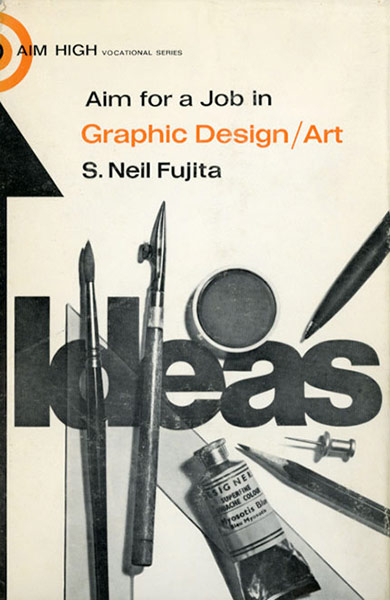
The Guardian‘s obituary for graphic designer S. Neil Fujita, who died last month aged 89, and a slideshow of his work, which included album covers for artists Dave Brubeck and Miles Davis, and book covers for John Updike, Truman Capote, and Mario Puzo.

The New York Times obituary, which ran in October, is here.

And a 2007 Steven Heller interview with S. Neil Fujita for AIGA is here.

Dead AirMike Doherty talks to Tom McCarthy about his most recent novel C for the CBC:

While researching the project, McCarthy was struck by the fact that Guglielmo Marconi and Alexander Graham Bell, the inventors of the radio and telephone, respectively, had originally sought to contact the dead. McCarthy dreamed up a character whose sister dies in early age; working as a radio operator later in life, he finds coded messages everywhere around him, perhaps from his sibling. McCarthy viewed this story as a Trojan Horse into which he could “smuggle” his “philosophical and avant-garde preoccupations,” in a “conventional Dickensian trajectory from birth to death in a historical setting. I thought, This is a winner. Surely some f—er’s going to publish this one!'”

You can find my conversation with Tom and book designer Peter Mendelsund about C here.

Pass NotesMobyLives talks to John Williams founder of online literary journal The Second Pass:

I found after leaving publishing that I was reading a lot of older books, some classics and some that I had just happened upon foraging at the Strand and other places. I thought there was room online to treat reading the way a lot of big readers actually do it, which is not to simply go straight through all the new releases but to haphazardly combine some new books with some old ones, some very popular books with some that have been out of print for decades. Plus, I was hearing a lot of moaning about the fate of books coverage in the age of the dying newspaper, and I thought trying to do something about it would be much more fun than talking about it (and much, much more fun than listening to other people talk about it). And it has been.

It just so happens that I will be chatting with John soon as well… Fingers crossed.

Comments closed

Don’t Go To The Castle

Kate Beaton’s Dracula at Hark, a Vagrant!:

Comments closed

John Le Carré’s Final TV Interview?

John Le Carré talks to Jon Snow of Channel 4 News about his new book, Our Kind of Traitor, in what the author says is his final British television interview:

Snow blogged about the experience of interviewing Le Carré here.

(via PD Smith)

Comments closed