Skip to content

Tag: E-books

Doctorow at Bloomsbury

Whether you agree with him or not, this is an interesting — if scatter-gun — talk by Cory Doctorow on publishing, e-books, pricing, and DRM (and more) at UK publisher Bloomsbury:

There are some additional notes (and a couple of corrections!) at Cory Doctorow’s website.

(via Ted Striphas’ The Late Age of Print)

1 Comment

Something for the Weekend

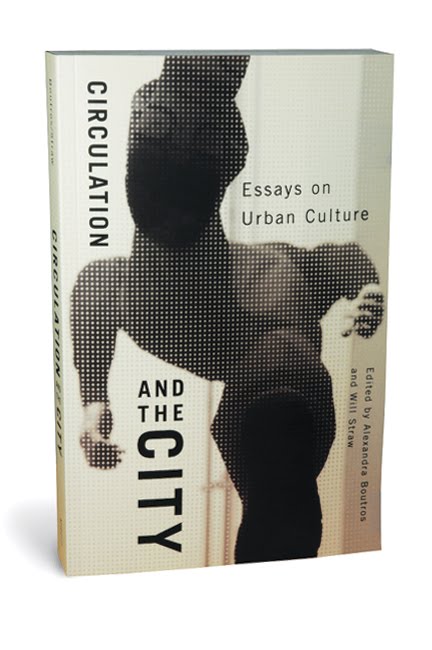
Circulation and the City design by David Drummond

New from David Drummond

The Original Spirit — Toronto indie institution This Ain’t The Rosedale Library (one of the 10 best bookshops in the world according to The Guardian) featured at Books@Torontoist, with some nice quotes from owner Charlie Huisken:

“creative knowledge [is] accumulative and comes from many sources… Being an autodidact has served me well”

Books in the Age of the iPad — Craig Mod’s article on printed books and digital publishing caused much of a flutter on Twitter yesterday. I’m not sure that I entirely agree with his thesis — which seems to imply that some kinds of content can be completely divorced from their media — but his website is beautifully designed, and more importantly he makes some interesting points. I especially like his conclusion:

I propose the following to be considered whenever we think of printing a book:

  • The Books We Make embrace their physicality — working in concert with the content to illuminate the narrative.
  • The Books We Make are confident in form and usage of material.
  • The Books We Make exploit the advantages of print.
  • The Books We Make are built to last

In that vein, more on David Pearson‘s beautiful book cover designs for Cormac McCarthy at We Made This. I love that he used rubber stamps…

And finally… Jaron Lanier, author of You Are Not A Gadget, talks about the failure of Web2.0 with Aleks Krotoski of The Guardian:

3 Comments

The Discussion That Will Not Die!

Tales from the Crypt Bronte

Now the dust has almost settled on the Amazon-Macmillan dispute, John Sargent, CEO of Macmillan, laid out their new position on availability, pricing and the (much discussed) agency model yesterday:

We will price our e-books at a wide variety of prices. In the ink-on-paper world we publish new books in different formats (hardcover, trade paperback, and mass market paperback) at prices that generally range from $35.00 to $5.99. In the digital world we will price each book individually as we do today… For physical books, the majority of new release hardcovers are published in cheaper paperback versions over time. We will mirror this price reduction in the digital world.

This follows hot on the heels Motoko Rich’s second stab at explaining the issues around pricing for The New York Times (her previous — fairly woeful — attempt is here):

Publishers argue that it would be difficult to sustain a vibrant business on much lower prices. Margins would be squeezed, and it would become more difficult to nurture new authors…“You’re less apt to take a chance on an important first novel if you don’t have the profit margin on the volume of the big books,” said Lindy Hess, director of the Columbia Publishing Course, a program that trains young aspirants for jobs in the publishing industry. “The truth about this business is that, with rare exceptions, nobody makes a great deal of money.”

This echoes similar points made by Lydia Dishman’s in an earlier article, “The Case Against Dirt-Cheap E-Books”, at BNET:

If massive sales are the only aim, content is devalued to the point of creating digital pulp. Maybe no one old enough to remember real pulp fiction (not the Tarantino film) is reading this, but the only thing that lives on from that era are histories of the pulp fiction genre, not the actual books, which by definition were cheaply produced and contained even “cheaper” content. Pulp’s inherently ephemeral — not exactly a stable foundation for a new business model.

Pricing seems to be the issue that just will not go away right now, and none of the points raised here are new. But I guess the upside is that there is now some more informed discussion going on and publishers are beginning to take it seriously. That, and John Sargent giving other CEO’s a free lesson in communications and transparency.

(Image from R. Sikoryak‘s Masterpiece Comics published by Drawn & Quarterly)

2 Comments

Monday Miscellany

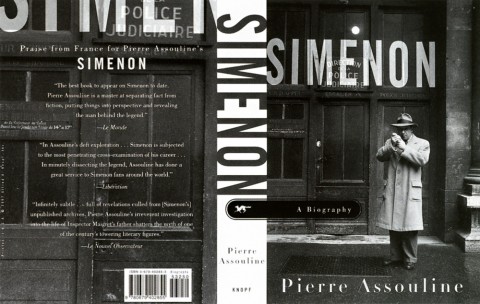
Simenon designed by Archie Ferguson

Pub Psychology — Archie Ferguson, formerly of Knopf and now art director at HarperCollins, interviewed at the CoveredUp blog:

Publishing has always seemed a lot more glamorous than it is. And if it ever was glamorous, those days are long, long gone. These days I spend a lot of time answering emails – not phone calls – from far and wide, running up and down the stairs… doing damage-control, and feeling more like I’m a psychologist as much as anything else.

Virtual CityJonathan Lethem, author of Chronic City, interviewed in The New Statesman:

Manhattan, the great secular-commercial metropolis, the world’s first and greatest city founded on concepts other than religious or national identity – and therefore a kind of science-fiction city, a conceptual project, a place unnaturally subject to the distorting forces of capital, ideology, projection, wish-fulfilment and so on – has become…a place both persistently real and unreal. Or, an unreal place where real people are living out their existence… What’s gone wrong and right in this place has a special amount to tell us.

The difference between Time Roman and Times New Roman — Because I know you’re curious.

The Form of a Book — Another lovely, insightful post from A Working Library:

On the page, the rhythm of the text emerges from both the macro design—the pleasing shape of the page, the proper amount of thumb space—and the micro—the right amount of leading, the evenness of the word spacing, the correct break of a line. On the screen, the rhythm of a text encompasses all of these things and more—the placement of a link, the shift from text to video and back again, the movement from one text to another. The rhythm becomes more complex as the orchestra gets larger, but the desire for rhythm does not subside.

In order to create this rhythm, the book must be designed and composed for the screen. A beautiful digital text can no more be arrived at by “converting” from a print design than a beautiful print book can be created by converting a Word file. The digital book will never come into its own so long as it is treated as a byproduct, unworthy of attention.

2 Comments

Midweek Miscellany

EndGrain — A “directory and aggregator for wood type and letterpress works and information on the web.” Lovely.

Crash — Iain Sinclair (author, most recently, of Hackney, That Rose-Red Empire — just out in paperback by the way) on JG Ballard’s artistic legacy:

A late moralist, he practised undeceived reportage, not prophecy: closer to Orwell than HG Wells. Closer to Orson Welles than to either. Closer to Hitchcock. Take out the moving ­figures on staircases that go nowhere and stick with hollow architecture that co-authors subversive drama

Picture Book Report — 15 artists create illustrations inspired by their favourite books. Pictured below: Kali Ciesemier‘s take on Sabriel by Garth Nix. I’m also looking forward to Robot Johnny‘s take on The Hitchhiker’s Guide to the Galaxy (via The Art Department).

Indigo 2.0Canadian Business magazine on Indigo and their digital book division Kobo:

“Kobo has been across the smartphone space from the beginning,” says Lisa Charters, senior vice-president and director of digital for Random House Canada. “And that unique offering is really important to us as publishers, because we want consumers to have all options to read e-books, and not necessarily have to purchase a $300 device.”

What’s more, says New York publishing consultant Mike Shatzkin, “they beat Google into the cloud.” Kobo’s library system is based in cloud computing. When you buy a Kobo book, it resides on Kobo’s servers and you access it via your device of choice. So when you squeeze in 20 pages of The Lost Symbol on your laptop in the morning, and later that day open the Kobo application on your BlackBerry, Kobo automatically plops you down on page 21.

Interesting stuff, although I do wish journalists could stay away from the Gutenberg clichés (and Dan Brown. Barf).

And finally…

Reserve Window Design — “We hired our good friend John Downer, who is a professional sign painter & typographer, to fly to LA to do gold leaf lettering on our store window & transom. Glass gilding is becoming a lost art that only a few dozen people in the United States still know how perform” (via We Love Typography):

4 Comments

Workflow Part 2

One of the ‘joys’ of not getting quite enough sleep at night is that you don’t always say things with the kind of nuance that you might intend. Sometimes the coffee speaks for you.

Unfortunately that happened yesterday with my post about production, which was taken in some quarters as a damning indictment of publishers, rather than a post about some of the problems we face creating decent e-books. Coffee 1, Optimist 0.

Anyway, after I published the post, I was chatting with a friend and colleague at one of the big publishers about their production process. She told me that although they have been converting PDF files into e-books, they are moving towards changing their workflow. This can’t happen overnight though, she said. Changing something that complicated takes time, especially when people have to learn new skills.

She also reminded me that we have to put things into context. Publishers are not the hold-outs they are often portrayed as (or at least not all of them are) — e-books are still only a small part of the overall business, and even though we’ve seen a rapid growth in the market, it is not the same for every genre, category, or publisher. New devices (with different standards) are also appearing on the market with alarming regularity.

None of which means that publishers should sit on their hands of course. But — as my friend rightly pointed out — this a process not “a flip a switch situation.”

10 Comments

Midweek Miscellany

A Wall in Palestine — more quiet mastery from Henry Sene Yee who excels in projects that require maximum discretion and minimal commentary. Like his cover design for ColumbineA Wall in Palestine is notable for what it leaves out. An early contender for cover the year. You heard it here first.

Making the World Fun to Look At — The Cleveland Plain Dealer has (what is believed to be) the first interview with Bill Watterson, creator of Calvin and Hobbes,  since 1989:

I think some of the reason “Calvin and Hobbes” still finds an audience today is because I chose not to run the wheels off it.

I’ve never regretted stopping when I did.

Amen.

Seven Things Publishers Need to Remember — A nice post by Kobo Books exec (and compulsive list maker) Michael Tamblyn on e-books and pricing:

A reader should never have to worry about “leaving books behind” or “losing their library”. If you can’t download it and move it somewhere else, it’s worth less. Seriously. They’re books, not Atari 2600 video game cartridges.

(But I’m waiting for the “7 Things E-tailers Need to Remember” post Michael. When’s that coming? You can post here if you want)

The Lost 1970 Man Booker Prize — Commemorating novels missed out because of rule changes in 1971. Bonkers. But kind of great.

Problem SolverIan Shimkoviak of The Book Designers interviews the legendary Carin Goldberg for their new blog CoveredUp:

I’m not a sentimentalist. The e-book is inevitable. And they make sense. The publishing industry can’t sustain the old/current model for making/selling books. It’s wasteful and unsustainable. They have to embrace change. Good content will continue to be created whether it’s represented on paper or on a screen.  And there will always be a market, albeit small, for beautiful picture books. The role of the graphic designer is shrinking but it’s in our court to get involved in the next wave of imagery and ideas.

And finally…

Jonathan Lethem, author of Chronic City (which I liked, but wanted to like more), interviewed on KCRW’s Bookworm (via the incroyable Largehearted Boy):

2 Comments

Obligatory Apple/Amazon Post

It somehow seems terribly appropriate that I spent the week Apple unveiled the iPad battling with problems with my own PC laptop (*sigh*) and missed a lot of the excitement.

Even at the best of times, I am usually at least a day behind the news cycle, and so not for the first time, I thought I’d write a post as a way to get myself up to speed over the weekend. But, just when I started to think I had a handle on it all, I got sideswiped by the not unrelated kerfuffle between Macmillan and Amazon… (*sigh*)

Needless to say, things are happening at a frightening pace and so this post will probably be out of date even before it is live. It should also go without saying — although I’d better say it anyway — that any opinions expressed here are my own, not those of my employer…

So, as I was saying, Apple launched the iPad and iBooks store.

Many in the tech crowd — who were apparently expecting Jesus 2.0 — were, unsurprisingly, a little disappointed by the name and the lack of features such as multitasking, Flash, and a camera.

But, even if you don’t accept that disappointment is the condition of our age, the loquacious Stephen Fry pointed out that many the same critics were also underwhelmed by the iPhone and look how that turned out:

[E]ven if they couldn’t see that three billion apps would be downloaded in two years… could they not see that this device was gorgeous, beautifully made, very powerful and capable of development into something extraordinary? I see those qualities in the iPad. Like the first iPhone, iPad 1.0 is a John the Baptist preparing the way of what is to come, but also like iPhone 1.0 (and Jokanaan himself too come to that) iPad 1.0 is still fantastic enough in its own right to be classed as a stunningly exciting object, one that you will want now and one that will not be matched this year by any company.

Fry believes (and rightly I think) that the big impact of iPad will be on the media and the way we consume it:

[I]t is a whole new kind of device. And it will change so much. Newspapers, magazines, literature, academic textbooks, brochures, fliers and pamphlets are going to be transformed.

Ivor Tossell makes a similar point in today’s The Globe and Mail. According to Tossell, the iPad will essentially be used to “piss away time on the Internet”:

[S]o now we have a tablet that’s perfect for the couch, and the restaurant table, and the party, and the lecture hall; for reading in the bathroom, for floating in space, and possibly for using in the space-bathroom. Who knows – the future is grand… The question, in the end, isn’t whether you want to spend hundreds of dollars on a new tablet computer. It’s about whether you really want the Internet lying around the house like that.

Of course, this is not news to book folk. I think we have always seen e-readers as a new way to read in the bath.

Nevertheless, the iPad’s sleek design, intuitive interface, and startling low starting price of $499 USD, make it welcome alternative to Amazon’s somewhat ‘fugly’ Kindle. Mashable (although they were not alone) were quick to give reasons why the Kindle is Dead (while others have been equally quick explain why it isn’t).

And then there is the iBooks store. Not only does it support e-Pub, but most of major publishing houses — Penguin, HarperCollins, Simon & Schuster, Macmillan and Hachette (although notably NOT Random House) — have signed up. As Sarah Weiman noted at Daily Finance :

If it wasn’t clear that iPad and iBooks are two shots across the bow of Amazon’s…. Kindle e-reader, Jobs’s left-handed compliments drove the point home: “Amazon has done a great job of pioneering this….We’re going to stand on their shoulders”

It has, of course, been something of an open, if largely misunderstood, secret that publishers are not happy with Amazon pressuring them on prices, discounts, and marketing dollars (although I’m not quite sure anyone expected Steve Jobs to say it aloud) and so it is not surprising that publishers are embracing the iPad. But, with apps for the kindle, better terms for self-published authors, and persistently loud (if vague) announcements about sales, Amazon had clearly been preparing for this moment for some time.

It was still a shock however, when after a disagreement of pricing and terms, Amazon (briefly) upped the stakes even further by withdrawing both print and digital titles published by Macmillan from their site. That Macmillan was coincidentally one of the publishers signed up for iBooks was not lost on people.

As Cory Doctorow notes at BoingBoing, Macmillan were not blameless, but Amazon — perhaps fearing a PR disaster after Macmillan CEO John Sargent went public — quickly capitulated (albeit grudgingly and, as Fast Company and Moby Lives noted, somewhat disingenuously) and things are beginning to quieten down, at least for now.

Others — notably Andrew Wheeler (a braver soul than me), the indefatigable Sarah Weinman, and author John Scalzi (another brave soul), not to mention the mainstream media et al — have done a far better job of unpacking this farrago than I could, especially since I have to be somewhat guarded in what I say.  I’m just going to end by saying that this fight was probably inevitable — predictable even — but, if nothing else, this is surely a sign of things to come…

Update:

For more of the industry nitty-gritty and some (estimated) numbers around the Amazon-Macmillan disagreement, Mike Shatzkin’s post on the subject is also worth reading…

Update 2:

Two things:

One, if I was going to rewrite the part of this post about Amazon (heaven help me), I would  say — and say early — that despite all of the complaints about Amazon, they are good at selling stuff. Publishers like Amazon’s sales figures and relatively low return rates. If Amazon were just rubbish, this wouldn’t be half as complicated as it is…

Two, I wanted to post this from Bobby Solomon’s blog Kitsune Noir on the iPad:

For those who are disappointed by it, who think it’s a rehash of the iPhone, I honestly feel bad for you. I know it doesn’t cook you toast, and I know you wanted it to have lasers, but you’re completely overlooking the fact that no one else on Earth could make a device anything like this. Please prove me wrong, I would love to see some competition on this device…  P.S. They could call it the iDouche for all I care, if it’s amazing who gives a rip?
6 Comments

Heads Will Roll

Steve Osgoode, Director of Digital Marketing and Business Development at HarperCollins Canada, pointed me (and everyone else on Twitter) to an interesting post on e-books at An American Editor by Rich Adin. It’s a nice coda to the Guy LeCharles Gonzalez post I mentioned yesterday:

No industry changes overnight, so it is certain that publishers aren’t going to change their business model tomorrow just because a handful of people demand it… But the anger of the devotees, as few as they may be in number, continues and becomes increasingly strident, with neither side willing to “hear” the other.

Adin goes on to raise some interesting points. I do, however, have problems with his argument that the internet has fostered a sense of entitlement:

The Age of the Internet has birthed a belief among some consumers that they are entitled to everything they want when they want it at a price they want to pay…  Entitlement says I have rights that are more valuable than your rights (or that you have no rights)…

There is certainly some grain of truth to this and, to be fair, Adin’s argument is more nuanced than the quotation suggests. But it is also a dangerously seductive argument for publishers who don’t want to take full responsibility for their actions.

On a basic level, blaming the consumer and/or accusing them of being uppity (or worse, criminals) is not a good business strategy. Figuring out what they will pay for is a much better idea.

Customers don’t necessarily want cheap — they want value. Sure, everyone likes cheap stuff in the short term — free is even better — and yet most people know that in the end you get what you pay for. Quality costs.

Consumers will pay for things when they believe they are worth it, and as publishers, we need to recognise we aren’t always providing real value for money. We publish too many books and (shh… whisper it) a lot of them aren’t very good. We can do better. How many books really do need to be released in hardcover a full year before they’re available as paperbacks (or e-books) for example?

I also don’t think you can ignore that consumer attitudes are being led by businesses — that publishers have been all too willing to oblige — who have an interests in devaluing creative content as much as possible. Cheap content gets people in to stores and sells devices and publishers have benefited from this in the short-term. But we need to realise that cheapening our own content is like pissing in the pool. Not cool and not a good idea — even if it feels good at the time…

That all said, I think Adin recognises that it is not a one way street. He argues that publishers and consumers need to compromise:

The ebookers have thrown down the gauntlet, the publishers need to pick it up and accept the challenge. Simply because some ebookers have decided that publishers have no role to play in the future ebook world doesn’t make it so. Publishers need to redefine themselves in 21st century terms, not rehash 20th century concepts.

This, at least, seems spot on to me…

Read the whole article.

7 Comments

“E” is for Experiment (Not E-books)

Guy LeCharles Gonzalez, Audience Development Director at F+W Media, had an interesting op-ed at Publishing Perspectives last week about e-books and e-readers:

[T]here is a lot of R&D money being poured into [e-readers] — that’s how technology companies work — and one or more of them may eventually click with consumers, but right now it’s a fledgling market and the hype surrounding it has reached irrational levels in publishing circles… There are many fundamental business issues that need to be addressed related to e-books — rights, royalties, pricing, distribution, marketing — and it’s up to publishers, agents and authors to figure them out together and not be distracted by every new shiny object the technology companies come up with.

Although clearly not a big advocate for e-readers, Guy raises a lot of the question marks that I think still hang over the devices in a fairly balanced way, and the article as a whole expresses a lot of the doubts I hear from other quietly skeptical people in publishing.

Needless to say, the whole thing is worth reading and Guy has more to say on the subject at his blog loudpoet.

1 Comment

More than…

In a recent op-ed for The NY Times, ‘There’s More to Publishing Than Meets the Screen’, Jonathan Galassi, president of Farrar, Straus & Giroux, asked:

Are e-books a new frontier in publishing, a fresh version of the author’s work? Or are they simply the latest editions of the books produced by publishers like Random House?

This is essentially a more articulate framing of a question I asked here a couple of weeks ago. But unsurprisingly Galassi offers a far more compelling defence of Random House than I could manage:

[S]hould another company be able to issue e-book versions of Random House’s editions without its involvement? An e-book version of Mr. Styron’s “The Confessions of Nat Turner” will contain more than the author’s original words. It will also comprise Mr. Loomis’s editing, as well as all the labor of copy editing, designing and producing, not to mention marketing and sales, that went into making it a desirable candidate for e-book distribution. Mr. Styron’s books took the form they have, are what they are today, not only because of his remarkable genius but also, as he himself acknowledged, because of the dedicated work of those at Random House.

I think the point here is that books are often a collaboration between author and publisher, and in this sense publishers add value — or, at least, they did in the past. Galassi’s example is Styron, but we now know that Raymond Carver’s editor Gordon Lish was instrumental in defining the author’s trademark style. No doubt there are other high profile examples…

As Peter Ginna, director of Bloomsbury Press, points out in this post, and in a comment on my post here, there are definitely some issues around royalty payments that Random House need to address. But while e-books are little more than converting the file format of a work, I do have some sympathy for Random House’s argument about rights.

2 Comments

Midweek Miscellany

Reading a Book is Reading a Book — Peter Ginna has another thoughtful post on about the Random House e-book rights controversy (which better articulates some of what I was trying to get at here).

A Decade of Fear — David Ulin, book editor of The LA Times, looks back at the last 10 years (and forward to the next).

Book Lovers Never Go To Bed Alone — a Tumblr collection of  bookshelves (via index//mb)

Hello, I’m Robot! — A somewhat surreal — but definitely awesome — Soviet kids’ book at A Journey Round My Skull

And…

Russian Artists and The Children’s Book 1890-1992 — 512 pages, full color with over 1100 images. Written and privately published by Albert Lemmens and Serge Stommels in The Netherlands. Yours for only $195 plus shipping (seen at The Daily Heller).

And…

Three Designers from Moscow — MyFonts interviews Russian type designers Vera Evstafieva, Alexandra Korolkova and Elena Novoselova.

And… Thinking of MyFonts…

…They’ve just released the rather lovely exljbris slab serif Museo Slab. Regular Museo Slab and Museo Slab Italic are free downloads.

The Book Design Review‘s Favourite Covers of 2009 — All good choices. Go vote. Now.

And… Have I mentioned just how incredible Peter Mendelsund’s new Foucault covers are…? I did? OK. Just want to make sure…

RUSSIAN ARTISTS AND THE CHILDREN’S BOOK 1890-1992.
1 Comment