Skip to content

Tag: E-books

The ‘Future Book’ is Here

I haven’t posted anything about books and technology here for a while, but I thought this recent Wired piece by Craig Mod on the “Future Book” was quite interesting: 

Physical books today look like physical books of last century. And digital books of today look, feel, and function almost identically to digital books of 10 years ago, when the Kindle launched… Yet here’s the surprise: We were looking for the Future Book in the wrong place. It’s not the form, necessarily, that needed to evolve—I think we can agree that, in an age of infinite distraction, one of the strongest assets of a “book” as a book is its singular, sustained, distraction-free, blissfully immutable voice. Instead, technology changed everything that enables a book, fomenting a quiet revolution. Funding, printing, fulfillment, community-building—everything leading up to and supporting a book has shifted meaningfully, even if the containers haven’t. Perhaps the form and interactivity of what we consider a “standard book” will change in the future, as screens become as cheap and durable as paper. But the books made today, held in our hands, digital or print, are Future Books, unfuturistic and inert may they seem.

Comments closed

Vintage Shorts Designed by Joan Wong

battle-of-ap-bac

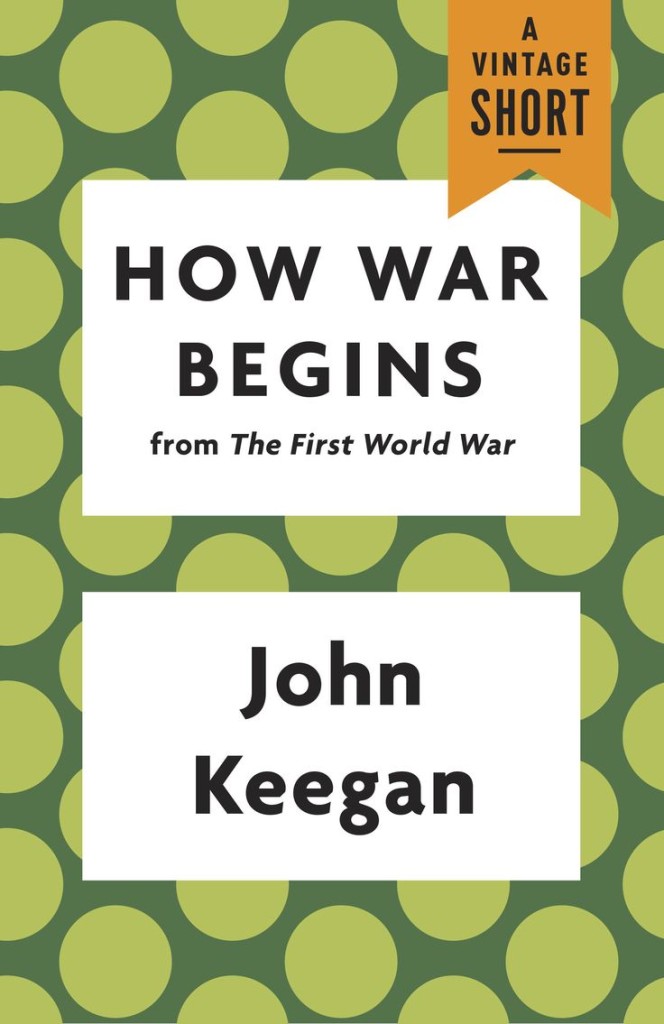
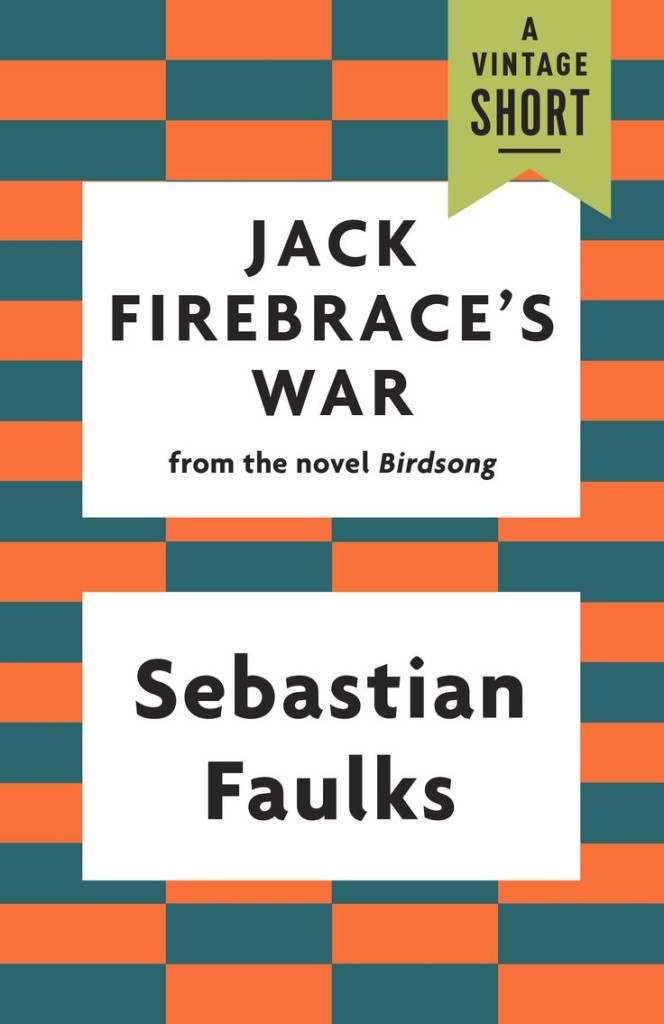
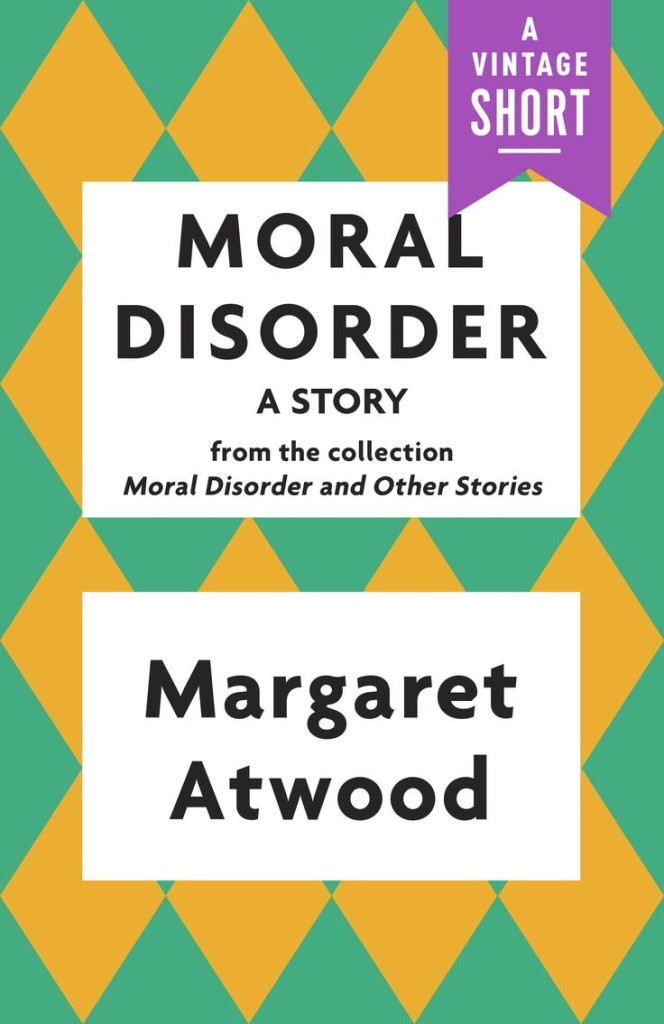
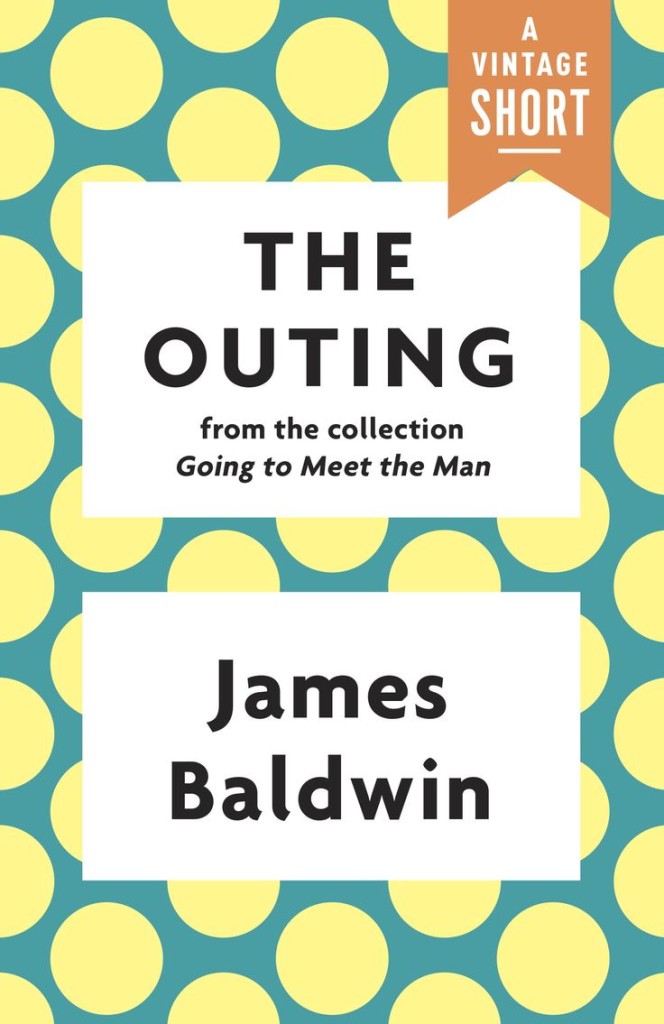
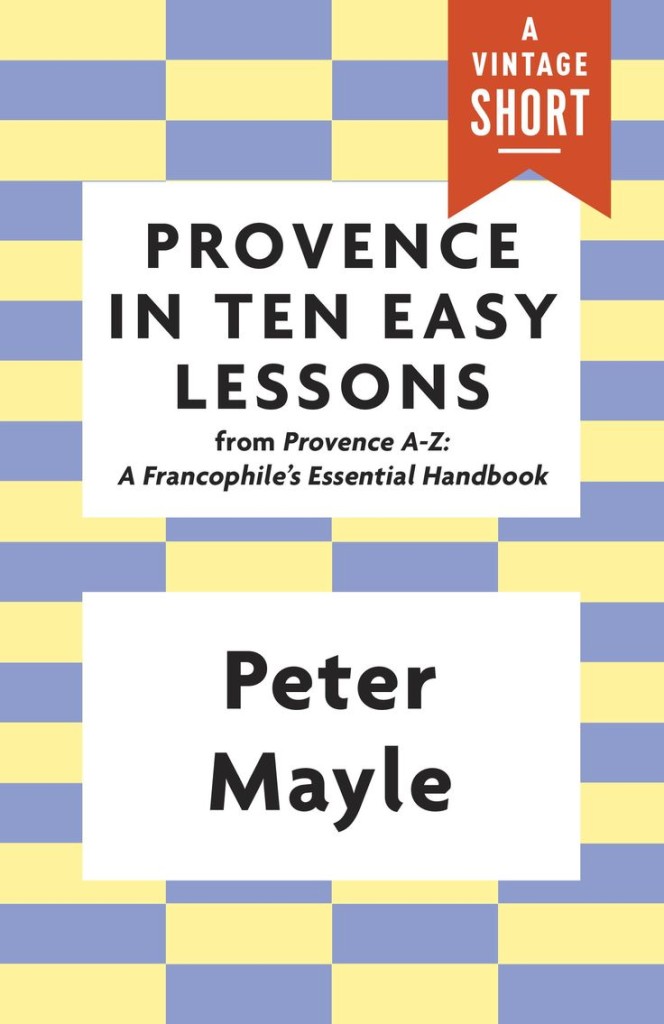
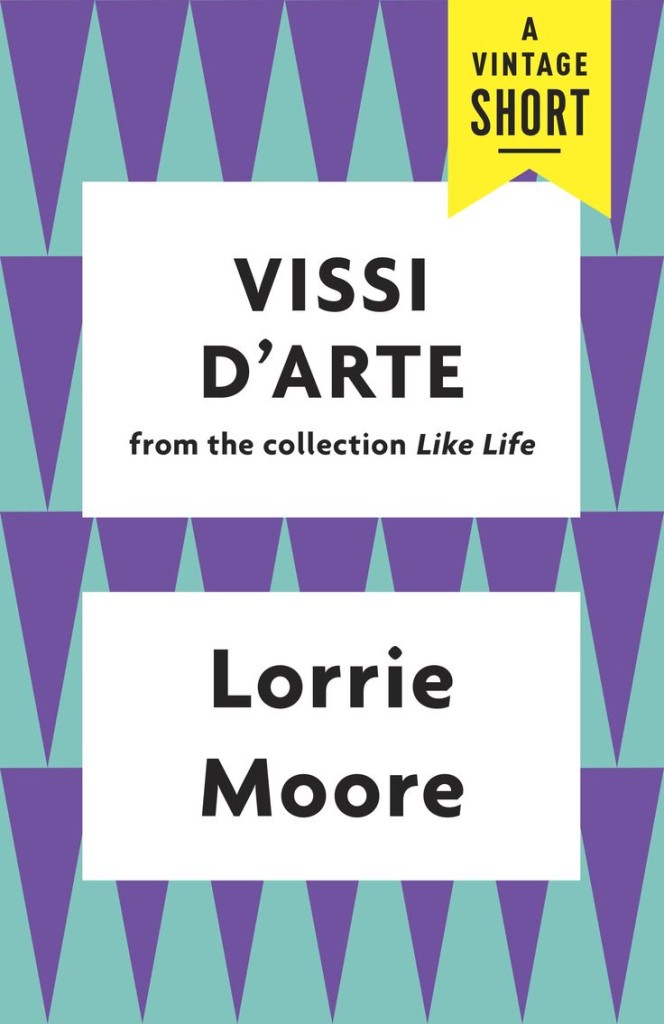
Vintage Books (US) recently announced Vintage Shorts, a series of stories, excerpts and other short pieces exclusively available as eBooks. The bold, geometric ‘covers’ were designed by the talented Joan Wong.

And, in case you were wondering, the typeface is Agenda, designed by Greg Thompson for Font Bureau. Apparently it was inspired by Edward Johnston’s typeface for the London Underground, so no wonder I like it!

Waiting for a Goal by Bill Buford
1 Comment

Joost Swarte: Tumult in the Book World


This wonderful illustration by Dutch cartoonist Joost Swarte accompanied a discussion on traditional bookstores in the digital marketplace in last Sunday’s New York Times.

4 Comments

Midweek Miscellany

Ghost Shapes — Writer Warren Ellis talks comics and, very briefly, his new novel Gun Machine at Robot Six:

Gun Machine is as much about the ghost shape of Manhattan’s previous settlements and roadways as it is about its modern architecture, and the invisible channels of wireless communication around which that structure now bends. I see — or at least I look for — the foundations of deep time, and the deals we do with it.

See also: A.V. Club’s review of Gun Machine:

In Ellis’ world, everything is all-caps, all the time, and any character who can ask for a cup of coffee in a way that doesn’t call for at least one exclamation point is a spoilsport. Gun Machine, Ellis’ second prose novel, is in exactly the same style and spirit as his comics; like his first novel, Crooked Little Vein, it gives the impression that Ellis didn’t write it as a comic only because pictures would have slowed down the action.

Sounds about right. The book is also reviewed at The New York Times(That fabulous cover for Gun Machine was designed by Keith Hayes designed by Oliver Munday with art direction by Keith Hayes by the way).

Be Still My Exploding Heart — Stephen Page, head of Faber & Faber, on the Penguin-Random House merger and what it means for the industry at large, at The Guardian:

Authors are talked about as brands in their own right, and this is correct. Publishers rarely achieve the status of becoming consumer brands of scale and significance. Is the next story for publishing going to be one dominated by global and local author and publisher brands, especially in niches? Authors and readers are at the centre of the world of books, and finding new ways to serve them will create further different structures. This merger may be seen as a starting pistol or perhaps an explosion in the heart of the old order dominated by the book trade.

Disposable by Design — Nicholas Carr on e-books and the apparent resilience of print books, at the Wall Street Journal:

From the start, e-book purchases have skewed disproportionately toward fiction, with novels representing close to two-thirds of sales. Digital best-seller lists are dominated in particular by genre novels, like thrillers and romances. Screen reading seems particularly well-suited to the kind of light entertainments that have traditionally been sold in supermarkets and airports as mass-market paperbacks… Readers of weightier fare, including literary fiction and narrative nonfiction, have been less inclined to go digital. They seem to prefer the heft and durability, the tactile pleasures, of what we still call “real books”—the kind you can set on a shelf. E-books, in other words, may turn out to be just another format—an even lighter-weight, more disposable paperback. That would fit with the discovery that once people start buying digital books, they don’t necessarily stop buying printed ones.

An alternative, more circumspect, version of the article can be found on Carr’s blog:

None of this means that, in the end, e-books won’t come to dominate book sales. My own sense is that they probably will. But, as we enter 2013, I’m considerably less confident in that prediction than I was a few years back, when, in the wake of the initial Kindle surge, e-book sales were growing at 200 or 300 percent annually. At the very least, it seems like the transition from print to electronic will take a lot longer than people expected.

And perhaps most interesting of all, Carr has posted a series of exchanges with Clay Shirky and Kevin Kelly about the post.

Covering some similar ground, only bleaker, Dennis Johnson’s striking post on the slow death of Barnes & Noble is also essential reading:

Perhaps the most disturbing thing about all this is the fact that, as with the demise of Borders, the demise of B&N has nothing to do with what its customers actually wanted, what’s best for mother literature or free speech, or anything other than made-up trends covering for killer capitalism. There’s still plenty of evidence that people like bookstores, for example, and even sales of hardcovers — let alone print books — are holding on. And so the lust for higher margins — whether from Godiva chocolates or ebooks — turned into fool’s gold for B&N. It’s perhaps a typical death in the Free Trade era, when companies lose all sight of their identity in the blinding light of the bottom line … but it’s the wrong death for a bookseller.

Somewhere in there, Johnson quotes this article by David Streitfeld in the New York Times, which makes the rather chilling point about a demise of Borders in 2011. Not only did it have a negative effect on the sale of print books, it was bad for e-books too. “Readers could no longer see what they wanted to go home and order.”

Sigh…

4 Comments

Chip Kidd on the Future of Book Covers

Billy Batson Chip Kidd, associate art director at publisher Alfred A. Knopf (as if you didn’t know), talks to NPR’s Weekend Edition about the future of book cover design:

NPR WEEKEND EDITION: In the E-Book World, Are Book Covers a Dying Art?

2 Comments

New On Your E-Reader…

Used book simulation…

By Tom Gauld of course…

Comments closed

Something for the Weekend

Chris Ware’s astonishing cover for Crockett Johnson and Ruth Krauss: How an Unlikely Couple Found Love, Dodged the FBI, and Transformed Children’s Literature by Philip Nel. See the full thing in detail here.

A free interactive e-book about British artist Francis Bacon created by the estate of the artist and Katharina Günther is available from iTunes (via A Piece of Monologue).

Page 1: Great Expectations, the first book by GraphicDesign&, “collects the responses of 70 international graphic designers when posed with the same brief – to design and lay out the first page of Great Expectations by Charles Dickens.” The Creative Review and We Made This have more on the project.

And finally…

Jon Contino’s beautiful cover  illustration for The Marlowe Papers by Ros Barber. You can’t really tell from the image above, but the apple is actually brown foil, the grub and stalk in are in gold on finished book. You can see better in these pictures Contino posted to Instagram:

Comments closed

Midweek Miscellany

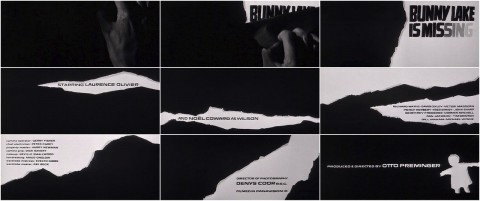
The excellent Art of the Title looks at the opening sequences to Anatomy of a Murder and Bunny Lake is Missing by Saul Bass.

Just Getting Started — Bill Moran on the Hamilton Wood Type and Printing Museum in Two Rivers, Wisconsin, for Design Observer:

When you hold a piece of wood type in your hands this deceptively simple piece of mass communication rewards you with its grace but also surprises with its weight. End grain maple is cut from the cross section of a tree yielding a harder and heavier piece of wood. Using the end grain of the wood improves durability with most wood type that was made in the nineteenth century still fully functional a century after its date of manufacture.

Leading the Blind — Nick Harkaway, author of The Blind Giant: Being Human in a Digital World, on book publishers and technology at The Guardian:

There’s a willingness to think: we’ll let everyone else figure out how the market should work, and then we’ll just supply books in the same way that we did to bookshops to electronic sellers like Amazon, Apple and Google. But booksellers are tied to publishing – they need conventional publishing models to continue – but for those companies that’s not the case. Amazon is an infrastructure company; Apple sells hardware; Google is really an advertising company. You can’t afford as a publisher to have those companies control your route to market.

Creative Paralysis — Michelle Dean on the future of ‘serious’ publishing at The Rumpus:

I don’t think there is anyone out there who has recently looked at the state of book publishing, I mean really looked, and not tightened her grip on her wineglass… I don’t work inside or report on publishing, but what limited exposure I do have suggests that there is indeed a crisis on the horizon. Anyone who’s ever wanted to see their name in print on the cover of a book — biography or novel, chapbook or memoir — ought to be thinking about that, about how to sustain the world of books. But the focus on the internet as the death of culture, which drones on in tired refrain on certain book sites, strikes me as bizarre, and overstated, not to mention creatively paralyzing.

And finally…

Eleanor Wachtel interviews composer Philip Glass for CBC Radio:

CBC Radio Ideas: Wachtel on the Arts with Philip Glass mp3

Comments closed

Midweek Miscellany

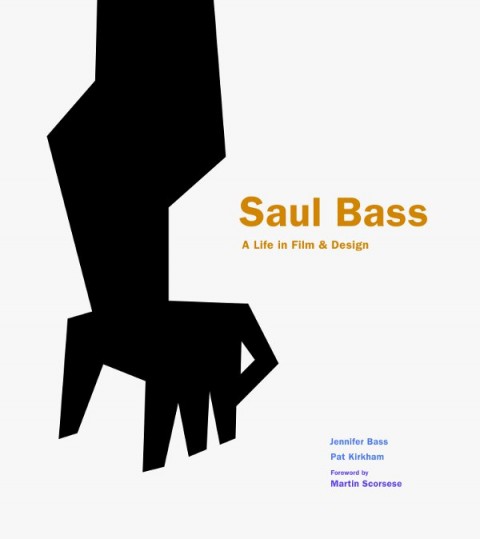
Lyra Kilston reviews Saul Bass: A Life in Film and Design for the LA Review of Books.

The Well-Made Book — An interesting article by Michael Agresta on how printed books, and their design, are changing in the digital age:

Now, as we move into the digital age, the well-made copy has come to occupy a familiar, almost nostalgic middle ground between the aura of an original and the ghostly quality of a computer file. A mass-produced paper book, though bulkier and more expensive, may continue to be more desirable because it carries with it this material presence. And presence means something—or it can, at least, in the hands of a good book designer.

Innards and Interiors — The Bauhaus: Art as Life exhibition at the Barbican reviewed at The Financial Times:

Paul Klee favoured risotto with steamed calf’s heart, sour liver and lung ragout: in the kitchen, as in his paintings, he was obsessed with innards, interiors, reconfiguring essential forms. Wassily Kandinsky lived in a streamlined white apartment but, incongruously, cooked on a “kamin” – a Russian wood-burning stove made from heavily ornamented black iron. Josef Albers claimed “I paint the way I spread butter on pumpernickel” – robustly and straightforwardly; he called the colour mixes in his “Homage to the Square” series his “recipes”. And Swiss painter and vegetarian zealot Johannes Itten was driven out of Weimar because he hijacked the Bauhaus kitchen and alienated director Walter Gropius by producing only “uncooked mush smothered in garlic”. The Barbican’s new exhibition… gives a whole new flavour to the story of the art school long seen to embody sober, purist German modernism.

Weird Comics — Local small press publisher Annie Koyama profiled in the Quill & Quire:

Koyama says her strategy for the year ahead is “to throw everything against the wall and see what sticks,” but she acknowledges her biggest business challenge is twofold: increasing print runs to improve margins and lining up reliable distribution for the fledgling firm. After working around the clock for nearly four years… she says her goal now is to create a sustainable enterprise that can continue to fulfill its artist-centric mandate… She’s also considering expanding into children’s books. But not in the way you’d expect. “While there are a million good kids’ books out there, there aren’t a million good kids’ comics I can see – especially not weird ones,” she says.

And finally…

Maurice Sendak, “author of splendid nightmares” has passed away aged 83. The New Yorker has made a short Art Spiegelman comic about meeting Sendak available online. And here is a wonderful interview with author from December last year:

Comments closed

Something for the Weekend

Sturm und Drang — Author Nick Harkaway (Angelmaker and the forthcoming The Blind Giant: Being Human in a Digital World) on Amazon and the publishing industry for The Guardian:

The most thunderous argument in Amazon’s favour is that the market has spoken, and demands cheaper product. This one I find utterly bizarre. We know very well, in this post-crash age, that the market can be an idiot. The market wanted easy credit extended to all, low taxes and plenty of public spending. The end result was a financial catastrophe that has just plunged us into a double-dip recession and shows no sign of being played out. Sometimes, things cost more than we want. That is a truth we were encouraged to forget in the 90s, but it’s one we’re going to have to remember.

See also: Jason Epstein in the NYRB and Dennis Johnson’s on-going commentary on the Department of Justice’s legal shenanigans at MobyLives (archive).

Literature Needs More Than E-booksJames Bridle for Wired Magazine:

What we are coming to realise is that no one thing can pick up where the book left off; instead it is everything, all of our networks, our services, our devices, the internet plus everything else, which will carry literature forward. Literature is unique among art forms in that it is enacted entirely in the minds of author and reader; a psychic dance. Literature is everything, and thus everything must be employed in its support. And publishers, so long accustomed to doing a couple of things well, are adrift in a world that needs them to do everything — or GTFO.

And finally…

No Sympathy for the Creative Class — A fascinating piece by Scott Timberg for Salon:

Creative types, we suspect, are supposed to struggle. Artists themselves often romanticize their fraught early years: Patti Smith’s memoir “Just Kids” and the various versions of the busker’s tale “Once” show how powerful this can be. But these stories often stop before the reality that follows artistic inspiration begins: Smith was ultimately able to commit her life to music because of a network of clubs, music labels and publishers. And however romantic life on the edge seems when viewed from a distance, “Once’s” Guy can’t keep busking forever.

Yes, the Internet makes it possible to connect artists directly to fans and patrons. There are stories of fans funding the next album by a favorite musician — but those musicians, as well, acquired that audience in part through the now-melted creative-class infrastructure that boosted Smith.

(And on that cheery note, have a good weekend).

Comments closed

E-Books Can’t Burn

Author Tim Parks has an interesting post on the virtues of e-books on the NYRB blog:

The e-book, by eliminating all variations in the appearance and weight of the material object we hold in our hand and by discouraging anything but our focus on where we are in the sequence of words (the page once read disappears, the page to come has yet to appear) would seem to bring us closer than the paper book to the essence of the literary experience. Certainly it offers a more austere, direct engagement with the words appearing before us and disappearing behind us than the traditional paper book offers, giving no fetishistic gratification as we cover our walls with famous names. It is as if one had been freed from everything extraneous and distracting surrounding the text to focus on the pleasure of the words themselves…Add to that the e-book’s ease of transport, its international vocation (could the Iron Curtain have kept out e-books?), its indestructibility (you can’t burn e-books), its promise that all books will be able to remain forever in print and what is more available at reasonable prices, and it becomes harder and harder to see why the literati are not giving the phenomenon a more generous welcome.

It is encouraging to see a writer at the venerable NYRB enthusing about e-books, but two things immediately spring to mind. First, that reading on the screen might present more, not fewer, distractions than reading an unconnected book. And, second, the idea that e-books — which can not only be monitored but endlessly rewritten and immediately deleted across an entire network without a reader’s permission — are some how less vulnerable than paper-ones seems, to put it politely, naive.

2 Comments

Chabon by Connie Gabbert

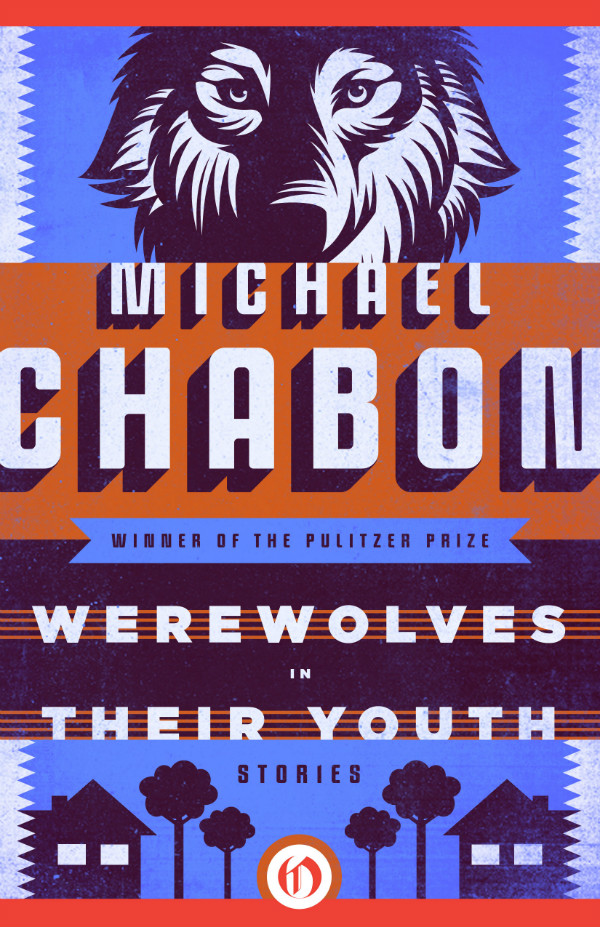
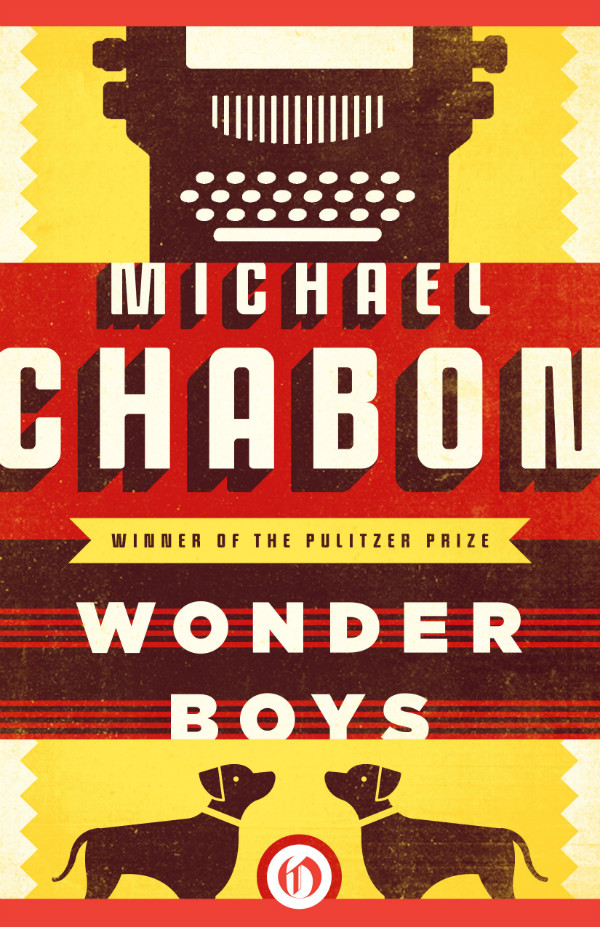
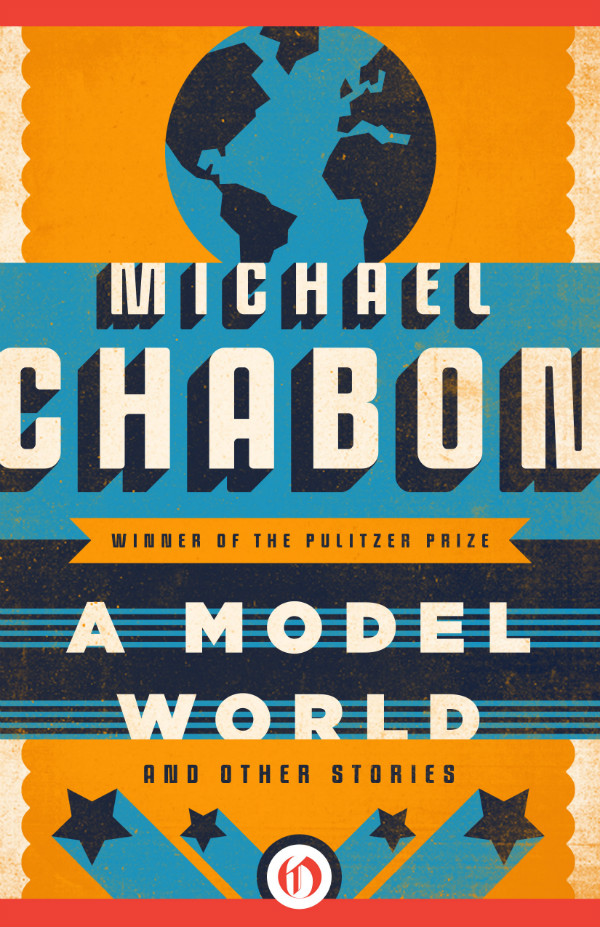
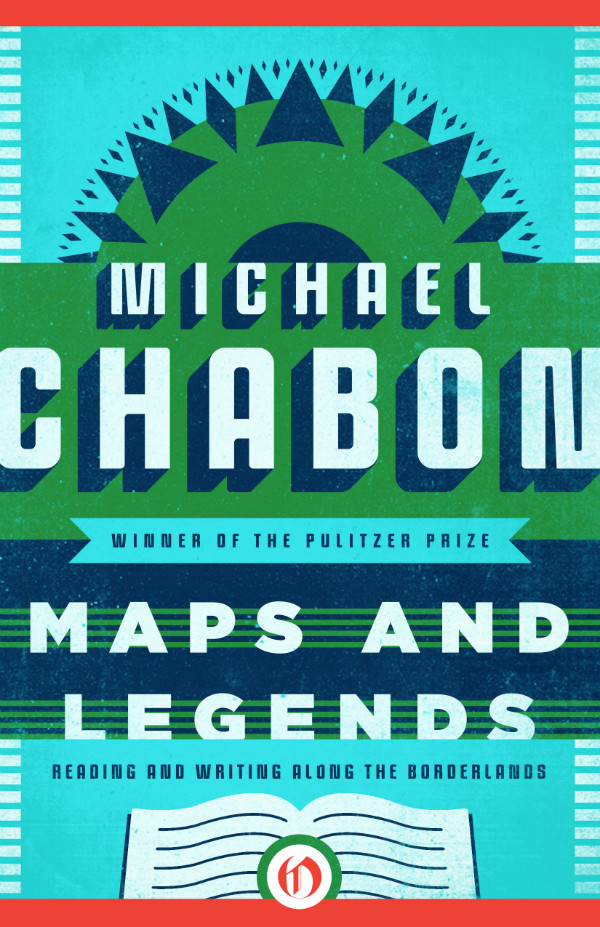
These stunning Michael Chabon covers are the work of Oregon-based designer Connie Gabbert. Although evocative in some way of faded ink, old-time letterpress, silkscreened posters and linocuts illustrations, interestingly these designs will never see actually see print themselves.

Connie knew from the start that they would be e-books and would not go to press, but apparently the design process was not that different, at least not to begin with. “It’s when the covers are approved that the process feels different,” she says. “There is no spine to build, no back cover copy, no print files to prepare. It is a bit sad to know that I won’t see the finals printed, but it’s also interesting to be a part of the e-book industry and to see the packaging exist only online.”

According to Connie, the challenge was actually making the approved cover direction work for the other four titles in the series. “The first approved cover was for Wonder Boys, and from there, I had to come up with new color palettes and new imagery for the rest of the series,” she says. “The goal was to make them look unified but individually unique. I really liked how Richard Bravery achieved this with his Chabon series, keeping the type in a fixed location, while the imagery changed from cover to cover… [T]he first stab at these covers was hand-lettered. While I love working illustrated type into cover designs, the final type feels very fitting for Chabon and the covers that he already has. I’m not often asked to create masculine covers, so it was a fun change of pace.”

You can read more about Connie’s type choices for these covers at Fonts in Use, and see more of her work on her website and design:related.

Comments closed