Skip to content

Tag: Comics

‘Modern Cartoonist: The Art of Daniel Clowes’ in Chicago


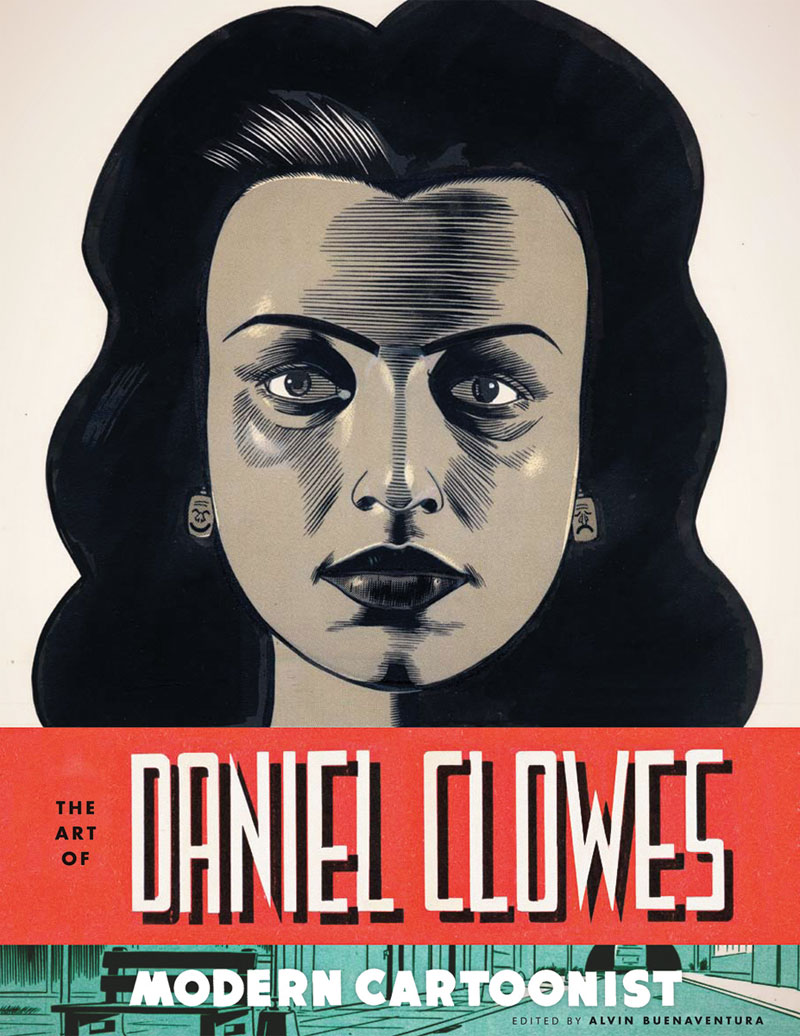
The exhibition of cartoonist Daniel Clowes’ art work that first appeared at the Oakland Museum of California last year, is travelling to the Museum of Contemporary Art in Chicago. Opening at the end of June, Portuguese TV channel Canal180 has (weirdly / not weirdly?) posted a short (English-language) video about the show:

The show is accompanied by the book Modern Cartoonist: The Art of Daniel Clowes published by Abrams.

Comments closed

Alan Moore: The Believer Interview

At The Believer magazine, Peter Bebergal, author of Too Much to Dream: A Psychedelic American Boyhoodtalks to Alan Moore about his epic work-in-progress Jerusalem, magic, art, gods, and demons:

Magic and art tend to share a lot of the same language. They both talk about evocation, invocation, and conjuring. If you’re trying to conjure a character, then maybe you should treat that with the respect that you would if you were trying to conjure a demon. Because if an image of a god is a god, then in some sense the image of a demon is a demon. I’m thinking of people like Malcolm Lowry, the exquisite author of Under the Volcano.There are kabbalistic demons that are lurking all the way through Under the Volcano, and I assume they were probably similar forces to the ones that eventually overwhelmed Lowry’s life, such as the drinking and the madness. When I hear alcoholics talk about having their demons, I think that they’re probably absolutely literally correct.

Thankfully, they also talk a little bit about comics as well:

Superheroes are the copyrighted property of big corporations. They are purely commercial entities; they are purely about making a buck. That’s not to say that there haven’t been some wonderful creations in the course of the history of the superhero comic, but to compare them with gods is fairly pointless. Yes, you can make obvious comparisons by saying the golden-age Flash looks a bit like Hermes, as he’s got wings on his helmet, or the golden-age Hawkman looks a bit like Horus because he’s got a hawk head. But this is just to say that comics creators through the decades have taken their inspiration where they can find it.

The accompanying illustration of Moore is, of course, by American cartoonist Charles Burns (Black Hole / X’ed Out / The Hive ).

An exhibition of Burns‘ portraits for The Believer is running at the Adam Baumgold Gallery in New York until July 26, 2013.

Comments closed

The Open Book by Bob Staake


A young reader goes on an adventure in this charming wordless comic by Bob Staake for the New York Times.

Publishers Weekly recently posted an interview with Staake about his new book, Bluebird, which is also wordless:

I love writing visually, and wordlessly, because this is was how I read books as a kid. I didn’t really read, but I was a voracious page turner. Nothing would delight me more than pulling out old National Geographics and encyclopedias and looking through the pictures. For years, I have said that this is how children learn how to read. They don’t read, they look. Parents sometimes denigrate the importance of looking in favor of reading the words. It is just as important.

Great stuff.

Comments closed

Something for the Weekend

They Call it Madness — Jess Nevins  reviews the H.P. Lovecraft collection The Classic Horror Stories for the L.A. Review of Books:

Lovecraft was not the best of his era in any of the genres he wrote in. Clark Ashton Smith was a better stylist. Algernon Blackwood wrote better horror. Olaf Stapledon wrote better science fiction. Yet it is Lovecraft who has been canonized with a Library of America edition, who has provided the source material for academic writings, comic books, and even game shows like Jeopardy, and who has been assimilated by capitalist culture to the point that there are plushies made of his characters.

One would never have guessed this fate for Lovecraft at the time of his death in 1937…

Nevins has been heroically annotating all of The League of Extraordinary Gentlemen series by Alan Moore and Kevin O’Neill and, most recently, compiled notes to the very Lovecraftian Nemo: Heart of Ice (pictured above). But before you get sucked in, be warned: the annotations have a kind of Borgesian horror all of their own.

(And while were on the subject of Lovecraft and comics, you could do worse than picking up I. N. J. Culbard’s adaptations of The Mountains of Madness and The Case of Charles Dexter Ward published by SelfMadeHero)

Also at the LA Review of Books, Michael Nordine on enigmatic filmmaker Terrence Malick:

Malick has the rare distinction of becoming a celebrity — at least in part — for rejecting the notion of celebrity. At a time when we’re given a direct line into our favorite stars’ streams of consciousness via the social media avenue of our choosing, the 69-year-old continues to let his films speak for themselves. When he was nominated for Best Director at the 1998 Academy Awards, the picture that appeared onscreen was of a chair with his name on it; at last year’s ceremony, a different on-set photo from the same production was used. Each new project of Malick’s is said to come with a contractual stipulation that no photos of him may be used in the film’s promotional materials. No matter: people have repeatedly proven able and willing to create an image of their own. That this picture is incomplete at best and may well be wholly inaccurate matters little. Now more than ever, it seems we still can’t conceive of a famous person who doesn’t want to be famous, and even caricatures are more satisfying than a note reading “not pictured” in the celebrity yearbook.

And finally…

David Berry in conversation Art Spiegelman and Françoise Mouly at the National Post. Here’s Mouly’s take on RAW:

Basically, there were no venues for comics, and I just thought, “Well, I can do it myself.” The idea was to show people what actually could be done … that it wasn’t so much a style that was one answer to where comics should go, but was more that each person had their own voice.

Comments closed

Something for the Weekend

Arresting Charm — Writer and artist Howard Chaykin on the late Carmine Infantino who died April 4th:

My best friend Michael Abramowitz was a huge fan of Carmine’s, and I held and hold his tenure on The Flash from 1956 to 1965 in great affection. Infantino’s Flash was infused with a sleek modernism absent from other work of the period, a look and sensibility utterly different from that of his peers. His work was profoundly two dimensional, apparently uninterested in deep space. He frequently used the lower panel border as his horizon, with figures standing on that line, creating an effect somewhat like a stage apron, with flat shapes serving to represent middle and deep distance. It sounds odd, and it was, but it had an arresting charm. Infantino’s work, viewed today, is far more sophisticated, but also more emotionally detached, than that of his colleagues.

You can see more Carmine Infantino covers at The Golden Age blog.

Accidental Publishing — A feature on Seattle’ comics publisher Fantagraphics in Publishers Weekly:

The Fantagraphics publishing program began “almost by accident” in 1981, according to Groth, and over the last three decades has grown to feature some of the most critically acclaimed comics artists in the U.S. and from around the world. The Fantagraphics list includes the work of the Hernandez brothers (Love and Rockets), Daniel Clowes (EightballGhost World), Chris Ware (The ACME Novelty Library), and Jim Woodring (Frank, Weathercraft) and has grown to include multi-volume archival reprint projects such as R. Crumb’s The Complete Crumb Comics and Charles Schulz’s Peanuts. By championing the comics medium and the creators it has published, Fantagraphics has been instrumental in raising the profile of graphic fiction as an art form that transcends the superheroes and monsters that established the medium so many decades ago.

The Only Kind of Geography — Writer Alan Moore on psychogeography and, in particular, his work with Eddie Campbell on From Hell (via LinkMachineGo):

My approach, in keeping with Theophile Gautier’s elegant definition of Decadent literature as being capable of plundering from the most ancient past or the most recent ‘technical vocabularies’ (which is also a good working definition of postmodernism), would be to see the current model of psychogeography as evolving from and thus essentially containing earlier versions of the practice, making these original techniques available to modern artists as important tools within their repertoire. For example, one need not subscribe to any nebulous New Age conceptions with regard to ‘ley lines’ to appreciate that Brecon visionary Alfred Watkins’s idea of linking geographic points into a web of sightlines could have modern application if regarded as a linkage of ideas, as in both Iain Sinclair’s work and in my own From Hell.

Psychic Garburator — Margaret Atwood on dreams at the NYRB Blog:

Most dreams of writers aren’t about dead people or writing, and—like everyone else’s dreams—they aren’t very memorable. They just seem to be the products of a psychic garburator chewing through the potato peels and coffee grounds of the day and burping them up to you as mush. If you keep a dream journal, your mind will obligingly supply you with more dreams and shapelier ones, but you don’t always want that, nor can you necessarily make any sense of what you may have so vividly dreamt. Why, for instance, did I dream I had surged up through the lawn of Toronto’s Victoria College and clomped into the library, decomposing and covered with mud? The librarian didn’t notice a thing, which, in the dream, I found surprising. Was this an anxiety dream? If so, which anxiety?

See also: Leon Neyfakh on Margaret Atwood at Technology at The New Republic.

And finally…

An interview with Patti Smith at LA Weekly:

I’m much too self-centeredly ambitious to simply be content with the transfer of success from one realm to another. I would rather write or record something great and have it overlooked than do mediocre work and have it be popular. My goals are really work-oriented. I don’t stay in one discipline because it’s more lucrative than another. In fact, the most successful thing I ever did was Just Kids, for which I had absolutely no expectations. I just wanted to do a beautiful little book that would give Robert [Mapplethorpe] to the people. And then it became a global success. It’s so funny, because Robert always cared about me becoming successful, while I never did. It’s almost like he was suddenly saying, “Dammit, Patti, you’re gonna be successful, even if I have to make it happen!” I always laugh when I think that my greatest success came through Robert.

Comments closed

Day Jobs of Poets by Grant Snider


The new comic from Grant Snider, ‘The Day Jobs of Poets’, comes with the following disclaimer:

“there’s no evidence that Emily Dickinson liked cats, but her sister Lavinia was cat-obsessed. So Emily must have been forced to cat-sit occasionally.”

The comic is available as a poster from Grant’s shop.

Comments closed

Tom Gauld Book Covers

The esteemed Tom Gauld recently posted a delightfully bonkers new cover illustration for Stevyn Colgan’s book Constable Colgan’s Connect-O-Scopeand I thought it was about time we had a retrospective of Tom’s book covers around here:

The Three Musketeers by Alexandre Dumas (2007)

The Tribes of Britain by David Miles (2006)

Strange Eventful Histories by Shiamin Kwa (2012)

Stories by Neil Gaiman and Al Sarrantonio (2011)

Shadow Show edited by Sam Weller and Mort Castle (2012)

Family Fang by Kevin Wilson (2011)

The Damned Busters by Matthew Hughes (2011)

Costume Not Included by Matthew Hughes (2012)

Hell To Pay by Matthew Hughes (2013)

Nobrow #6 by various (2012)

Goliath by Tom Gauld (2012)

And finally, Tom’s new book You’re All Just Jealous of My Jetpack has just been published:

You can read my Q & A with Tom here.

(full disclosure etc., Tom’s two most recent books, Goliath and You’re Just Jealous of My Jetpack, are published in North America by Drawn & Quarterly and distributed in Canada by my employer Raincoast Books)

Comments closed

Midweek Miscellany

Keeping it Simple — Gilbert Hernandez who has two new books out, Julio’s Day and Marble Season, talks about his work at the LA Times Hero Complex blog:

“What I’m really trying to do is streamline my work, to make it an easier read,” he said. “I’ve always admired newspaper comic strips that are very simple and direct, don’t have a lot of dialogue, don’t have a lot of exposition. When I look back at a lot of the comics that are overwritten, like the beloved old Marvel comics, I edit them in my head, to see how modern readers might become more interested in following them. When I look at my old stuff, like ‘Poison River’ and the early ‘Palomar’ stuff, I sometimes think it’s too dense to enjoy. For me, anyway.”

Mechanics — Tom Whipple on algorithms for Intelligent Life:

What has changed is what algorithms are doing. The first algorithm was created in the ninth century by the Arabic scholar Al Khwarizami—from whose name the word is a corruption. Ever since, they have been mechanistic, rational procedures that interact with mechanistic, rational systems. Today, though, they are beginning to interact with humans. The advantage is obvious. Drawing in more data than any human ever could, they spot correlations that no human would… Their strength is that they can take in that information in ways we cannot quickly understand. But the fact that we cannot understand it is also a weakness.

Cardboard Boxes — At The New York Times, Dwight Garner on packing up his family’s favourite picture books:

In the past, when I’ve had to pack my personal library, what I’ve boxed are talismans of intense yet essentially private experience. Picture books aren’t like this. When you’re putting away these square, dog-eared, popcorn-butter-stained things, you’re confronting an entire cosmos of collective memory… They occupy places in our family’s shared consciousness as indelibly as do summer vacations, trips to the hospital or injured birds cared for in cardboard boxes.

And finally (but most importantly)…

A profile of Kim Gordon at Elle Magazine:

Sonic Youth is not just revered within the indie rock world; it’s an indelible part of American pop-cultural history, a sort of byword for tasteful and progressive art that’s also popular. “She was a forerunner, musically,” says Kathleen Hanna, of the riot grrrl band Bikini Kill and later the dance-rock group Le Tigre. “Just knowing a woman was in a band trading lead vocals, playing bass, and being a visual artist at the same time made me feel less alone.” Hanna met Gordon when she came to a Bikini Kill show in the early ’90s. “She invited my band to stay at her and Thurston’s apartment,” Hanna says. “As a radical feminist singer, I wasn’t particularly 
well liked. I was in a punk underground scene dominated by hardcore dudes who yelled mean shit at me every night, and journalists routinely called my voice shrill, unlistenable. Kim made me feel accepted in a way I hadn’t before. Fucking Kim Gordon thought I was on the right track, haters be damned. It made the bullshit easier to take, knowing she was in my corner.”

(Tasteful is not a word I would necessarily use in association with Sonic Youth, but hey… )

3 Comments

Something for the Weekend

Making Bird Noises — Dwight Garner profiles novelist John Le Carré, for the New York Times:

In his lesser books, le Carré’s prose can thin out perilously, but at his best, he’s among the finest writers alive. There’s a reason Philip Roth has called “A Perfect Spy,” le Carré’s 1986 autobiographical work of fiction, “the best English novel since the war.” The Times of London ranked him 22nd on a list of the 50 greatest writers since 1945. His books are less about espionage than they are about human frailty and desire; they’re about how we are, all of us, spies of a sort.

See also: Mark Lawson reviews Le Carré’s latest, A Delicate Truth, for The Guardian.

(Pictured above: the cover to the US edition, illustrated by Matt Taylor)

And while we’re at it… James Campbell reviews Kurt Vonnegut: Letters edited by Dan Wakefield, which has just been released in the UK:

[Anatole] Broyard was scarcely wrong to say that Vonnegut’s reputation suffered a blow with each new book; he is a classic example of a writer whose renown endures through the success of a single novel. Yet the tone was ever recognisable, and even lesser-known books – SlapstickDeadeye DickHocus Pocus – sold well. In response to a question from a reader in 1991 about the relationship of his style to “jazz and comedians”, he replied: “I don’t think about it much, but now that you’ve asked, it seems right to say that my writing is of a piece with nightclub exhibitionism … lower class, intuitive, moody, and anxious to hold the attention of a potentially hostile audience.”

New England — Alan Moore talks to Pádraig Ó Méalóid about League of Extraordinary Gentlemen, Nemo: Heart of Ice, his unfinished novel Jerusalem, and his Lovecraftian work-in-progress Providence:

with Providence, what I am doing is, I’m looking as much at American society in 1919 as I am looking at Lovecraft, in terms of my research, and I am connecting up Lovecraft’s themes, and Lovecraft’s personality, to a certain degree, with the tensions that were then incredibly evident in American society… It’s starting from – if Lovecraft’s characters, if Lovecraft’s monsters, if Lovecraft’s locales actually existed in A Real World, then what would they really be like, and what would the world be like?

In part two of the interview, Moore discusses his recent film projects and other work.

Who? — Steven Heller talks to Unit Editions Adrian Shaugnessy about Jurriaan Schrofer (1926-90): Restless Typographer at Imprint. It’s a rather short interview, but there are some lovely illustrations!

Any finally…

Still my favourite thing on the internet this week:

Phillip Marsden’s one-page comic strip ‘Hipster Hairdo’ for Off Life #4 (PDF).


Comments closed

Something for the Weekend

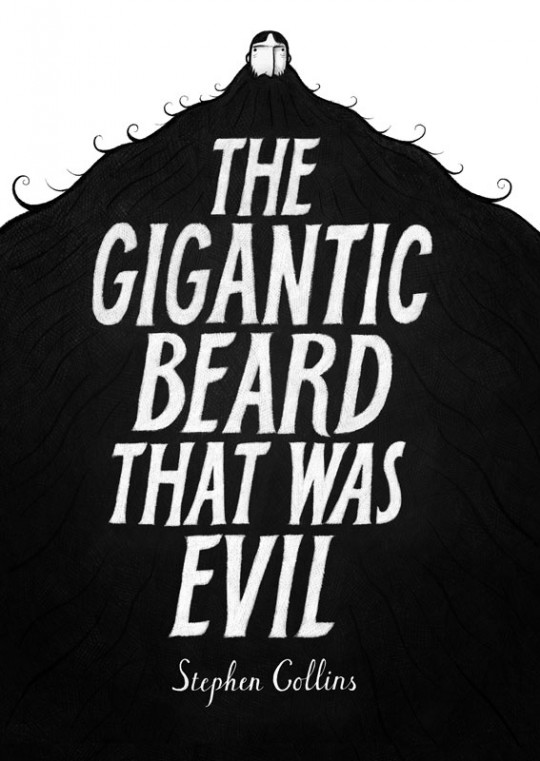
The Gigantic Beard That Was Evil by Stephen Collins is out next month. The launch party is at Gosh in London (but I just wanted to post the cover because it is fantastic).

Belief in the Writer — Mark Danner talks to Robert Silvers, founding editor of the New York Review of Books, at New York Magazine:

I believe in the writer—the writer, above all. That’s how we started off: admiring the writer. We organized the New York Review according to the writers we admired most: Edmund Wilson, Wystan Auden, Fred Dupee, Norman, Bill, Lizzie, Mary among them. Each of them had a confident sense of their own prose, and it meant a great deal to them—the matter of a comma, a semicolon, a word—and it does to our writers today. And so, when it comes to making a change, we should not do it without their permission. If a moment comes at some point where we see something should be improved, we don’t just scribble it in but call them up wherever they are. And that is, I think, crucial.

Consternation — Renata Adler, whose novels Speedboat and Pitch Dark have just been reissed by NYRB Classics, in conversation at The Believer:

it used to be one way a young writer made it in New York. He would attack, in a small obscure publication, someone very strong, highly regarded, whom a few people may already have hated. Then the young writer might gain a small following. When he looked for a job, an assignment, and an editor asked, “What have you published?” he could reply, “Well, this piece.” The editor might say, “Oh, yeah, that was met with a lot of consternation.” And a portfolio began. This isn’t the way it goes now. More like a race to join the herd of received ideas and agreement.

But, too mean versus too nice? I don’t know. Nice criticism is good when it tells you something. A lot of negative “criticism” isn’t criticism at all: it’s just nasty, “writerly” cliché and invective.

Isolation — Antonia Quirke reviews the movie Oblivion for the Financial Times. The movie itself sounds immediately forgettable, but this is spot on:

It’s the sense of isolation in good science fiction that we really dig. Studios refuse to get it into their skulls, but audiences have tremendous patience for the sci-fi blues – long lonely sequences with things feeling a bit lost or off, followed by a little bit of tension and action. We don’t really need much more.

And finally…

Who can resist academic hoaxes? When Dickens Met Dostoevsky:

It is not only that the apparent practice of submitting articles under fictitious names to scholarly journals might well have a chilling effect on the ability of really existing independent scholars to place their work. Nor is it just the embarrassment caused to editors who might in an ideal world have taken more pains to check the contributions of Stephanie Harvey or Trevor McGovern, but who accepted them in good faith, partly out of a wish to make their publications as inclusive as possible. The worst thing here, if they are fictitious, is a violation of the trust that remains a constitutive element of the humanities. There is, it seems to me, a fundamental difference between posting partisan, anonymous reviews on Amazon, where there is no assumption of proper evaluative standards or impartiality, and placing similar reviews or hoaxing articles in academic journals, which are still the most hallowed sites for the development and transmission of humanistic ideas. The former is a cheap act of virtual graffiti; the latter may be the closest a secular scholar can come to desecration.

The whole thing is bonkers.

(Next you’ll be telling me Sherlock Holmes didn’t meet Sigmund Freud).

1 Comment

Books Are Amazing, Guys


Books. Will. Never. Be. Cool.

The latest Supermutant Magic Academy webcomic by Jillian Tamaki.

Between this, Richard Nash, Evan Hughes, and Mike Shatkin, books have been having a rough time this week. (But I’m still keeping the faith).

Comments closed

Midweek Miscellany

WHAAM! — Comics historian Paul Gravett on Roy Lichtenstein’s appropriation from comics:

Lichtenstein’s… success, his getting away with turning supposedly anonymous ‘found’ comic art into high-priced paintings, continues to directly encourage others to do the same. But there is a difference—comics are no longer uncredited, trashy mass culture, and what worked as a lucrative schtick back in the Sixties art world is now largely drained and devoid of any shock value or irony… Five decades on… it is high time for the comics world and the art world to properly debate these issues, and to celebrate these hugely talented but still largely ignored visual storytellers.

(Pictured above: a page from ‘The Star Jockey’ drawn by Irv Novick, from All-American Men of War #89 February 1962)

See also: David Barsalou’s Deconstructing Lichtenstein project

(If Gravett underestimate’s Lichtenstein’s ingenuity in recontextualizing comic book panels, and his lasting influence on art AND comics, it is truly astonishing to see how poor Lichtenstein’s paintings are in direct comparison to the work he borrowed from.)

Blowing Shit Up — A long essay by Richard Nash on the business of literature at the VQR:

Selling a book, print or digital, turns out to be far from the only way to generate revenue from all the remarkable cultural activity that goes into the creation and dissemination of literature and ideas. Recall again all the schmoozing, learning, practice, hustling, reading upon reading upon reading that goes into the various editorial components of publishing; the pattern recognition; the storytelling that editors do, that sales reps do, that publicists do, that the bookstore staff does. Recall the average feted poet who makes more money at a weekend visiting-writer gig than her royalties are likely to earn her in an entire year. You begin to realize that the business of literature is the business of making culture, not just the business of manufacturing bound books. This, in turn, means that the increased difficulty of selling bound books in a traditional manner (and the lower price point in selling digital books) is not going to be a significant challenge over the long run, except to free the business of literature from the limitations imposed when one is producing things rather than ideas and stories. Book culture is not print fetishism; it is the swirl and gurgle of idea and style in the expression of stories and concepts—the conversation, polemic, narrative force that goes on within and between texts, within and between people as they write, revise, discover, and respond to those texts.

See Also: Book Publishers Scramble to Rewrite Their Future by Evan Hughes for Wired.

And finally…

The New Statesman has posted five classic book reviews from their archive, including V. S. Pritchett’s review of 1984 by George Orwell:

Nineteen Eighty-Four is a book that goes through the reader like an east wind, cracking the skin, opening the sores; hope has died in Mr Orwell’s wintry mind, and only pain is known. I do not think I have ever read a novel more frightening and depressing; and yet, such are the originality, the suspense, the speed of writing and withering indignation that it is impossible to put the book down. The faults of Orwell as a writer – monotony, nagging, the lonely schoolboy shambling down the one dispiriting track – are transformed now he rises to a large subject. He is the most devastating pamphleteer alive because he is the plainest and most individual…


Comments closed