Skip to content

Tag: Comics

Q & A with Gene Luen Yang

I wouldn’t be surprised if you were feeling a little disillusioned with comics right now — frictionless superhero movies that deliver ever-diminishing emotional returns; ham-fisted editorial decisions; disputes over rights, compensation and artwork; violence; stupidity; institutional misogyny and racism; and generic blandness will do that.

Beyond the multiplexes and controversies, however, it is actually a quite an exciting time to be reading comics.

There are signs — Brian K. Vaughan and Fiona Staples‘ space opera Saga, Hawkeye by Matt Fraction, David Aja and Javier Pulido, and Scott Snyder and Greg Capullo‘s horror-driven Batman spring to mind — that genre comics may still have some life in them.

Classic series and newspaper strips are being properly curated and are more available than before. Under-appreciated artists are being rediscovered.

Alternative cartoonists such as Peter Bagge, Alison Bechdel, Chester Brown, Jaime and Gilbert Hernandez, Rutu Modan, and Chris Ware are producing some of the best work of their careers. The art of Daniel Clowes and Art Spiegelman is being recognised with gallery exhibitions.

And sitting somewhere between in the alt. auteurs and the superheroes, cartoonists like Emily Carroll, Becky Cloonan, Tom Gauld, Faith Erin Hicks, Hope Larson, Bryan Lee O’Malley, Luke Pearson, Noelle Stevenson — artists who have absorbed a diverse range of influences — are carving out niches for themselves, often combining and subverting genres and styles to produce uniquely personal visions.

It’s in this last, loose group of cartoonists1 — the one between the experimental and the mainstream — that I’d put artist and writer Gene Luen Yang.

Best known for his work on the Avatar: The Last Airbender graphic novels, and the critically acclaimed American Born Chinese, Gene’s most recent work is Boxers & Saints, an ambitious two-volume historical graphical novel telling parallel stories of two young on the opposite sides of the Boxer Rebellion. Already shortlisted for the National Book Award for Young People’s Literature and listed amongst Publishers Weekly‘s best books of the year — it is a remarkably mature, compassionate, and accomplished work that is at times funny, at times tragic, but always very human.

I recently met Gene while he was in Toronto to promote Boxers & Saints. I was impressed by his thoughts on being a cartoonist and on the medium itself, and we spent a good couple of hours talking books, comics, and movies. We have since corresponded by email for this Q & A.

American Born Chinese and Boxers & Saints are distributed in Canada by my employer Raincoast Books, and parts of this interview have appeared previously on the Raincoast blog.

  1. These are, admittedly, all very arbitrary, untidy and personal lists and categorizations — nobody who’s interesting fits exactly.
2 Comments

Jeet Heer: In Love With Art and The Superhero Reader


At the Comics Reporter, Jeet Heer discusses his two recent books on comics, The Superhero Reader edited with Charles Hatfield and Kent Worcester, and In Love With Art: Françoise Mouly’s Adventures in Comics with Art Spiegelman, with Tom Spurgeon: 

Strange to say, when I work on a biographical essay, I’m also often writing a type of disguised autobiography. The introduction to the first volume of the Walt and Skeezix books deals with father/son relationships. I wrote it not long after my father died. The introduction of first volume of the Orphan Annie series touches on the fact that Harold Gray never had kids and examines the theme of infertility in the strip. It was written while my partner and I were struggling with our own fertility problems. In the case of Mouly, yes, it’s true that she, like me, learned English as a second language, aided by comics. And in general, Mouly’s experiences as an immigrant speak to my own history (and perhaps even more, the lives of my parents). Mouly’s cultural interests are another commonality. One of the nicest compliments I’ve received is from Mouly herself, who told my publisher that she was happy that I wrote this book because I was someone who not only knew about comics but had a wider cultural frame of reference. One of the attractive things about Mouly is that she understands comics but has a horizon that is wider than comics culture. It might be a form of pernicious self-flattery, but I like to think the same is true of me.

The fact that Mouly is such an anomalous figure in comics makes her story interesting to me since I also feel like I’m an odd duck in the comics world. Even when I was a kid first reading comics, I paid attention to the credits to see if there were other outsiders in the field. I got a secret thrill whenever I saw Ben Oda (hey, he doesn’t sound like he’s white!) listed as letterer. And I took note of the few women in comics as well, not just Mouly but also Marie Severin, or Glynis Wein. Even as a kid, I noticed that the few women in comics were almost invariably colorists. I often wondered why. I wasn’t a particularly politically astute kid but I did notice a few things.

3 Comments

Out of Skin by Emily Carroll


Just in time for Halloween and clocks going back, Canadian artist Emily Carroll has posted a chilling new webcomic called Out of Skin. Although it can be read a standalone story,  Carroll says on her blog that she considers it “part of a trilogy in terms of setting & theme” with her earlier comics His Face All Red and Margot’s Room, both of which are well worth reading if you haven’t doesn’t already.

Happy Halloween!

Comments closed

Horror Story by Grant Snider

Grant Snider’s new Halloween horror story will chill the hearts of writers everywhere: 


Comments closed

Chip Kidd: Obsessed with Batman


In this interview from the AGI Open in London earlier this year, Chip Kidd talks about his work designing books covers, his involvement with comics and, of course, his obsession with Batman:


You can read recent interviews with Chip discussing his new book Go: A Kidd’s Guide to Graphic Design at Publishers Weekly and The New York Times.

Comments closed

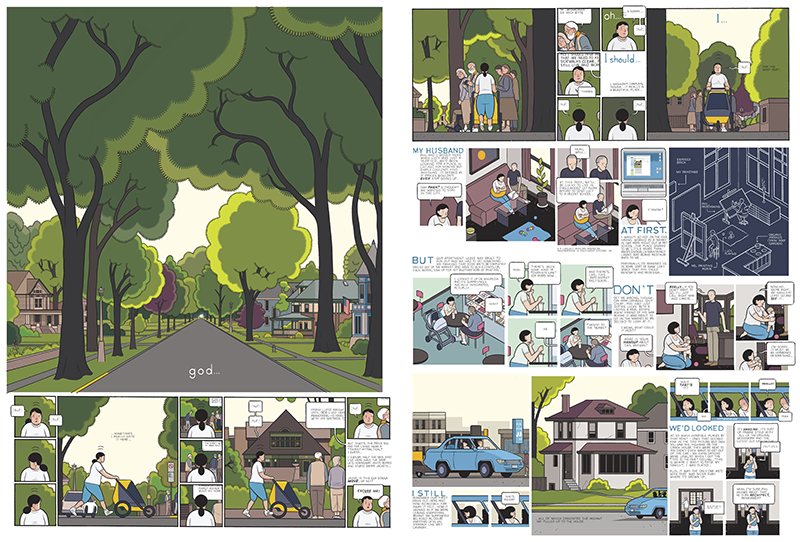
Chris Ware: The Magic of Comics

Following his appearance at the Edinburgh international book fair, Cartoonist Chris Ware spoke with Stuart Kelly of The Guardian about his recent work Building Stories:

“As soon as a screen can produce something that can move, it becomes a passive medium, whereas I feel that comics are a very active medium. The appeal is they masquerade as a passive medium, but they’re not at all. It takes a lot of effort to read comics, even though it seems like they’re easy. It seems like they need to be fixed on paper to have a certain power – my wife always tells me never to use the word magic, but I can’t help it, there is no other word: there is a magic when you read an image that you know doesn’t move but you have a sense that something is moving, if not on the page then in your mind.”

Read the whole interview.

Comments closed

Jonathan Lethem: Nibbling Around the Edges of Culture

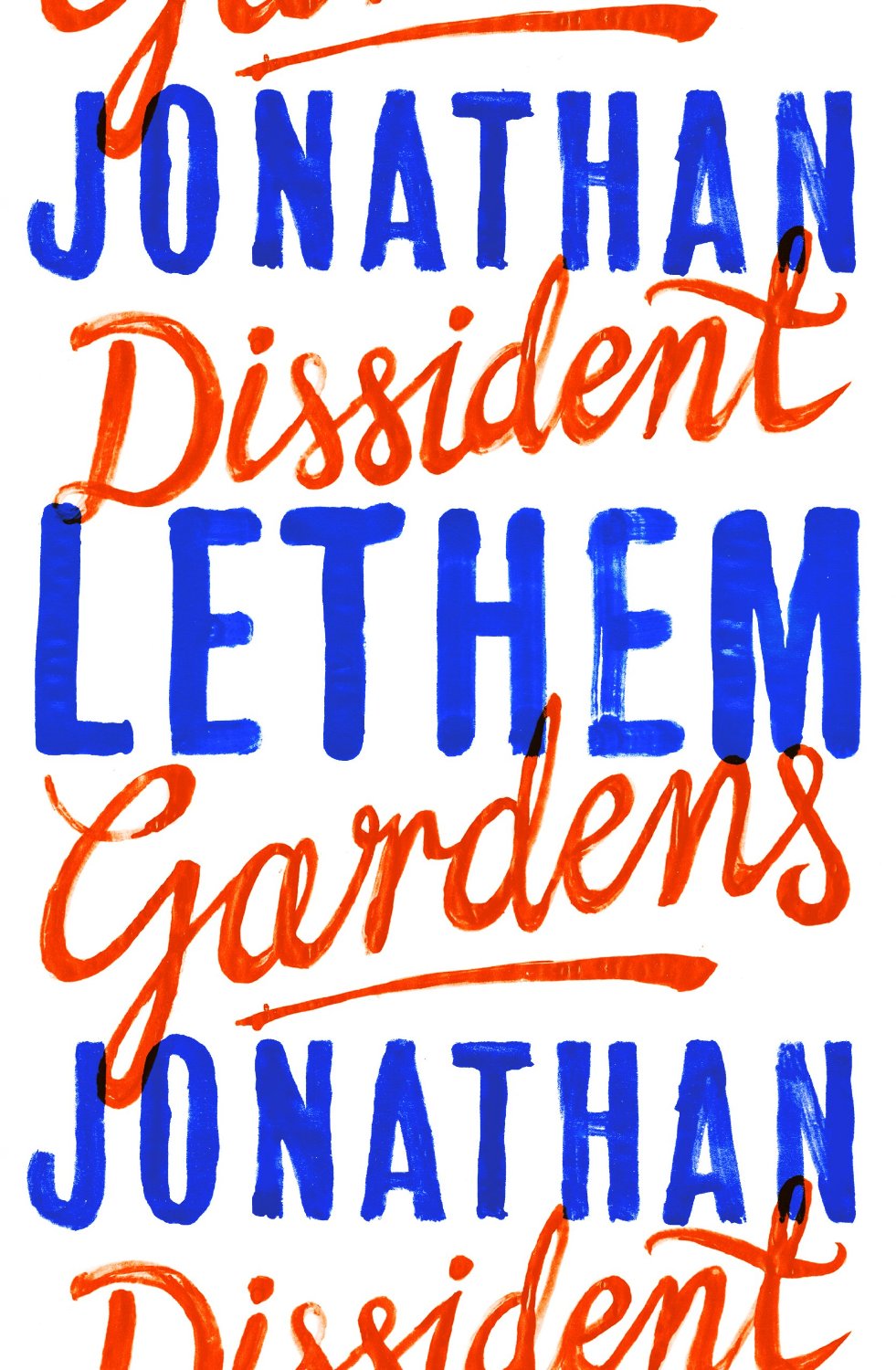
Jonathan Lethem discusses science fiction, comics and his new novel Dissident Gardens with Jesse Hicks at The Verge:

I like that Philip K. Dick and the science fiction writers that I fell in love with were intrinsically in this termite role, nibbling around the edges of the culture. I know it was uncomfortable for them, and it certainly didn’t pay as well as they might have liked, but it meant that their work had a relevance and vitality and disreputable energy that, for me as a younger reader, hands-down won over the official literary product of the same time period.

Though one of the things that’s wrong with marginal identities is that you tend to act as though the big hegemonic center is all one thing itself. “The mainstream” doesn’t agree with itself or make any kind of sense or have a coherent position, except in the very small matter of believing itself to be the only action. That’s the only thing it agrees about. [laughter] The rest of it, if you really pay any attention and care, and I started to care about all kinds of novels and all kinds of literary ventures, and possibilities — different kinds of lives that writers led — the rest of the mainstream is pretty much at one another’s throats over various matters of style and politics, minor grudges and so forth. But it looks like one big thing if you’re in exile from it.

Comments closed

Q & A with Luke Pearson

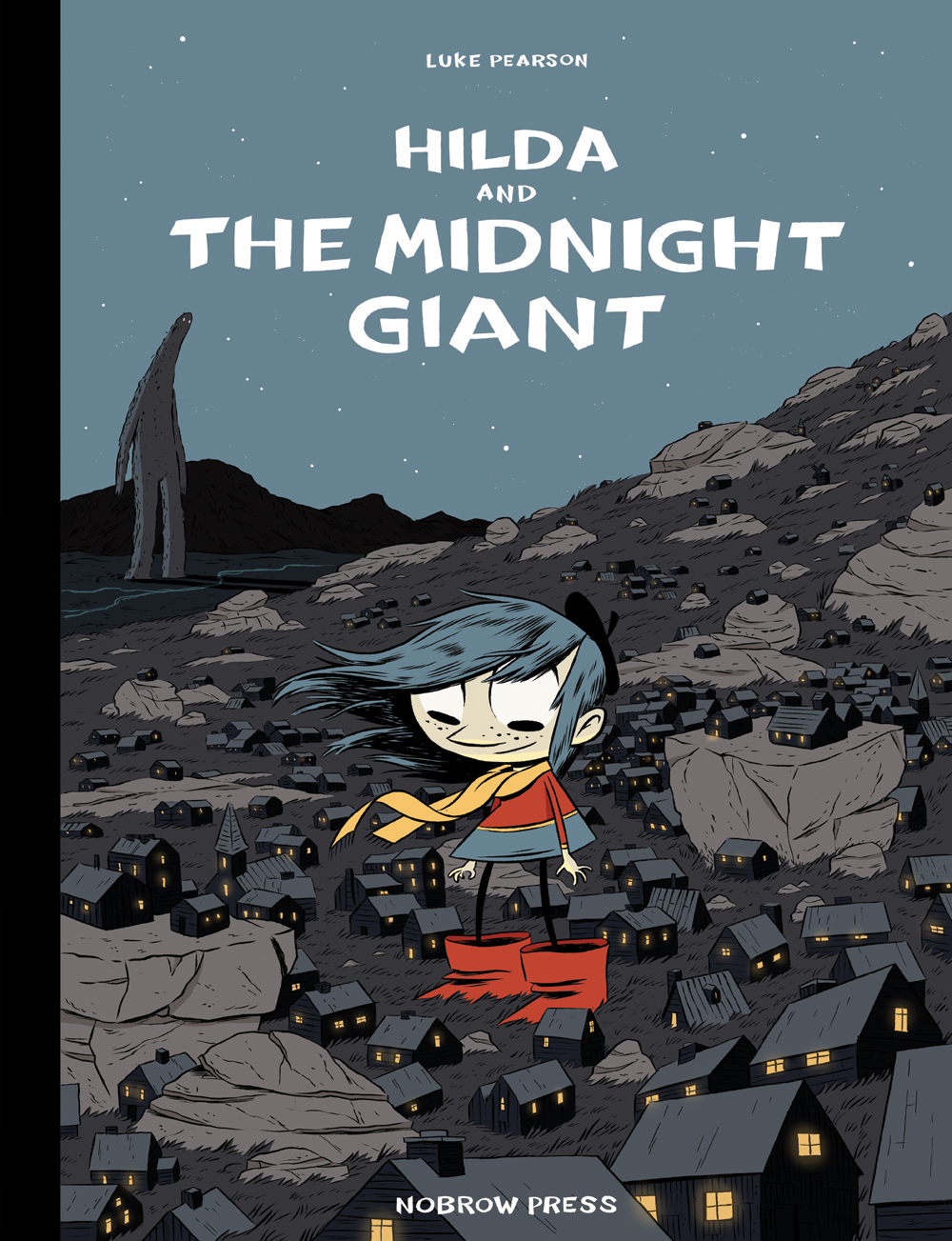
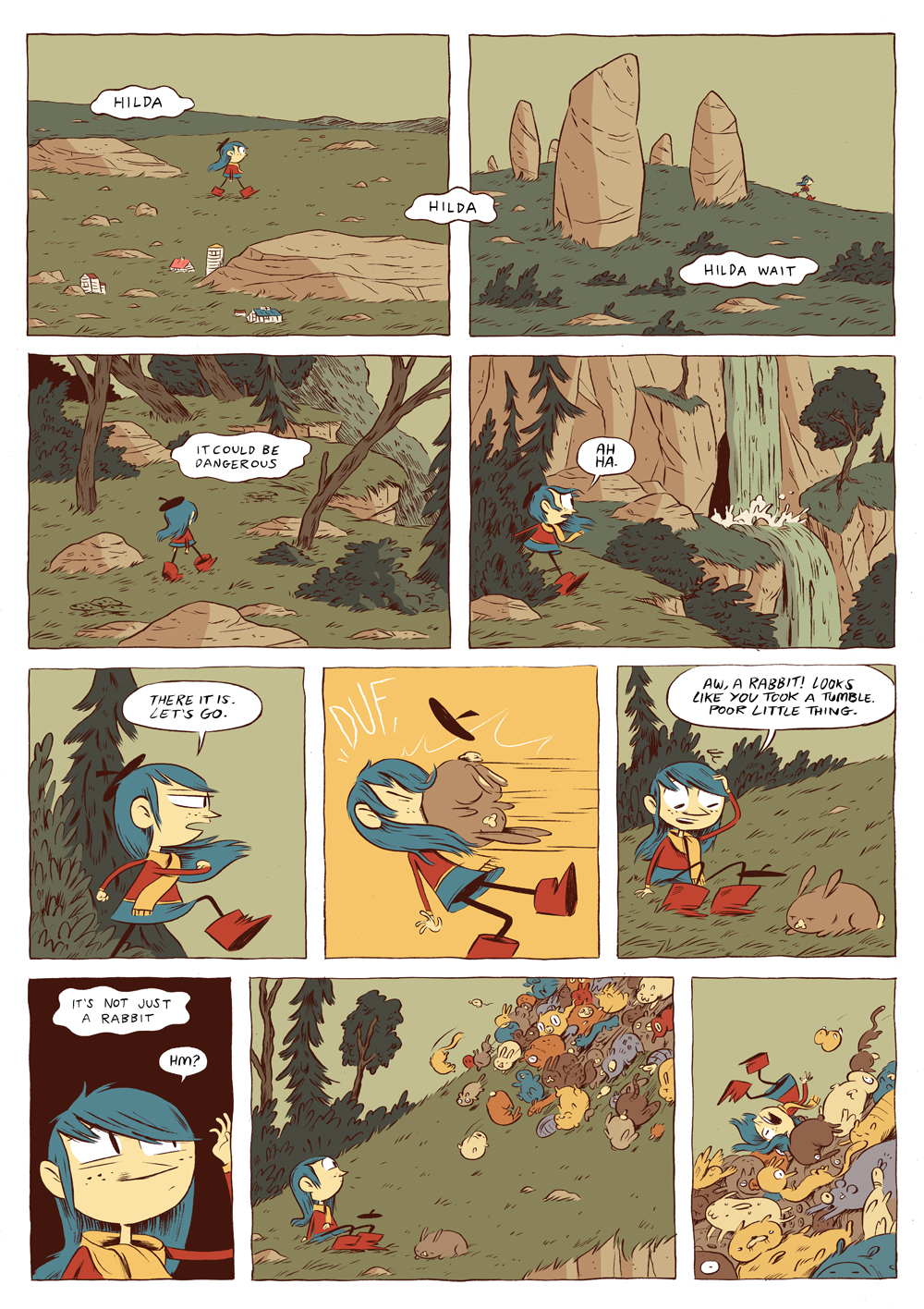
I’ve been a fan of Luke Pearson‘s work since picking up a copy of Hilda and the Midnight Giant from Nobrow Press a year or so ago. The beautiful illustrations, quality printing and oversize format gave it the exotic feel of the comics albums British school kids used to sneak back from vacations in France (and maybe still do?). Despite my immediate sense of nostalgia, the comic itself was fresh, different and delightfully free of cynicism. I read it over and over with my kids, and then savoured it on my own after they were asleep.

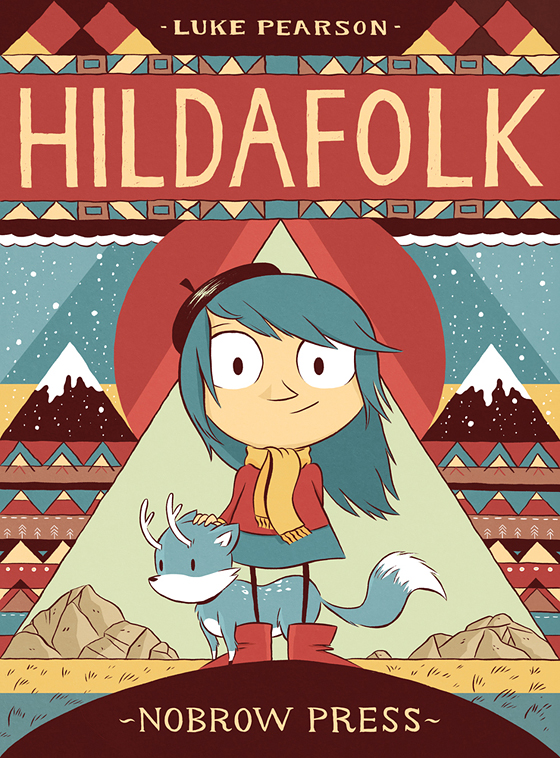
Happy to find a kids comic that adults could also love, I quickly went back and found a copy of Hildafolk (recently reissued in hardcover as Hilda and the Troll) and bought Hilda and the Bird Parade as soon as it was published. While seemingly drawing inspiration from Northern European stories and Tove Jansson’s magical Moomin books, Hilda’s world has it’s own, unique mythology — a strange wood man, truculent elves, troll rocks, sea spirits, salt lions, flying furballs, and lonely, ancient giants. The wide-eyed and blue-haired child and her mother are a curious and reassuring modern presence in this old and magical world. The fantastical is everyday to them — something to be fitted around work and school. Their problems are the problems of the real world — where to live, how to make friends with the neighbours, how to do the right thing…
This juxtaposition of the modern and the magical is also evident in Luke’s comics for adults. But where the Hilda comics are unabashedly bright and joyful, the adult comics are filled with melancholy and sadness. Like Kevin Huizenga‘s Glenn Ganges comics, the fantastical in Luke’s adult comics is shadowy, nightmarish, and all the more unsettling for its appearance in mundane, familiar settings. The monsters and ghosts in stories like like You Mustn’t Be Afraid (included in the anthology Nobrow 7: Brave New Worlds), and the full-length graphic novel Everything We Missare the personal demons (sometimes scary, sometimes familiar) of the world weary, not the new friends of a child in unexplored territory. But for all their apparent differences, at their heart the Hilda stories and Luke’s adult comics are fundamentally about the same things: people, relationships, and about understanding one’s place in the world.

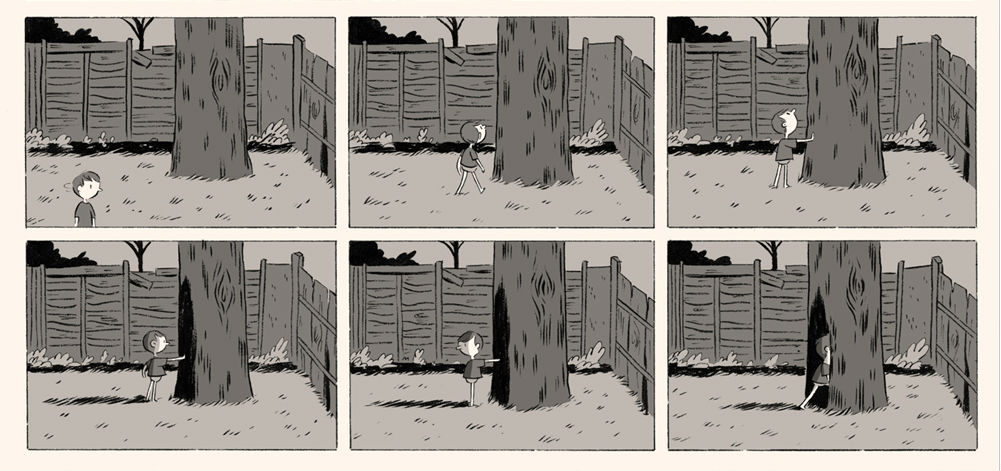
I recently spoke to Luke for the Raincoast Blog about ‘The Boy Who Drew Cats,’ his wonderful contribution to the newly published kids anthology Fairy Tale Comics. Here, we talk about his influences, his comics and his book cover illustrations. We corresponded by email.
When did you first start drawing comics?

When I was very young. I think I probably started drawing speech bubbles as soon as I figured out how to draw people. I used to draw comics about a character called Super Rabbit and show it to my grandparents.

Did you always want to be a professional cartoonist?

I probably did at some point when I was a child. It was obviously something I always thought about, but I was only really familiar with the smallest selection of comics and was entirely ignorant to how the industry worked, so it seemed like a crazy, unachievable dream to ever expect to get to that point. I eventually wound up going to university to study illustration and going into that I was prepared to basically just try and be an illustrator and it was only through the process of that that I remembered that comics were something that I still liked doing and that it was actually weird that I wouldn’t be doing them.
What was the inspiration for the Hilda books?

I draw really heavily on Scandinavian folklore (particularly Icelandic and Norwegian) for the Hilda comics. I got hooked on that initially from researching Icelandic folktales for a map project we were set at university. I really liked how strange and low-key they were. Not much happens and then the weirdest thing will happen, but it’s described really plainly and matter-of-factly and then it will end really abruptly. I tried to fuse some of the stuff I’d read for that with memories from an earlier family holiday to Norway which had a big effect on me and set a bunch of ideas in motion that for a long time I had nothing to do with.
The series has drawn comparisons to Tove Jansson beloved Moomin stories. Has Jansson been an influence on your work?

The 1990 tv series was my first exposure and I always felt like it was key in the shaping of my psyche somehow. I came relatively late to discovering the full breadth of what she did. If I had to choose to have an idol, I guess she would be it, maybe. So obviously she is a big influence on me, as a cartoonist, illustrator and a writer. I always feel a bit weird about any comparison though, because I can’t tell if it’s meant kindly or if it’s more like ‘I can see where you steal your ideas’. Hilda was designed very self consciously, at least initially, to resemble a kinder Little My.
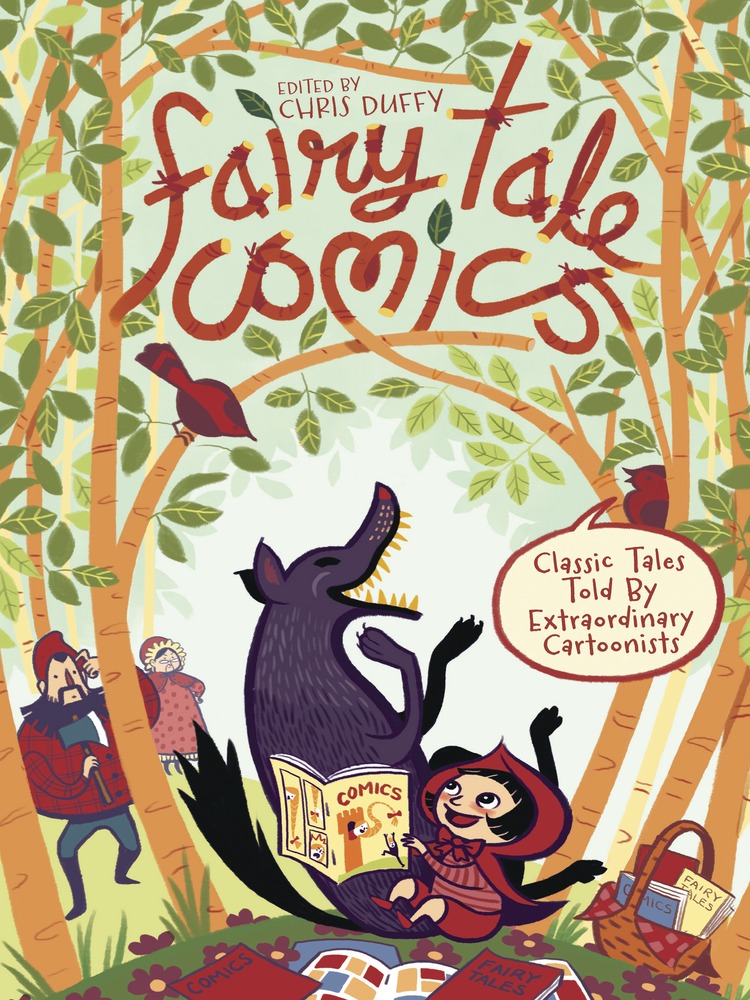
Your contribution to Fairy Tale Comics, ‘The Boy Who Drew Cats’, has a similar magical quality to Hilda. What attracted you to the story?

It was actually one of a couple of stories suggested to me by Chris Duffy, who edited the book. I liked how far removed it felt from the kind of Brothers Grimm stories that I generally think of when I think ‘fairytales’. It’s more like a horror story with a lot of weird details that seemed fun to me. I liked the Japanese setting. I was also completely unfamiliar with it so I didn’t have to feel the weight of past interpretations on me as I adapted it.
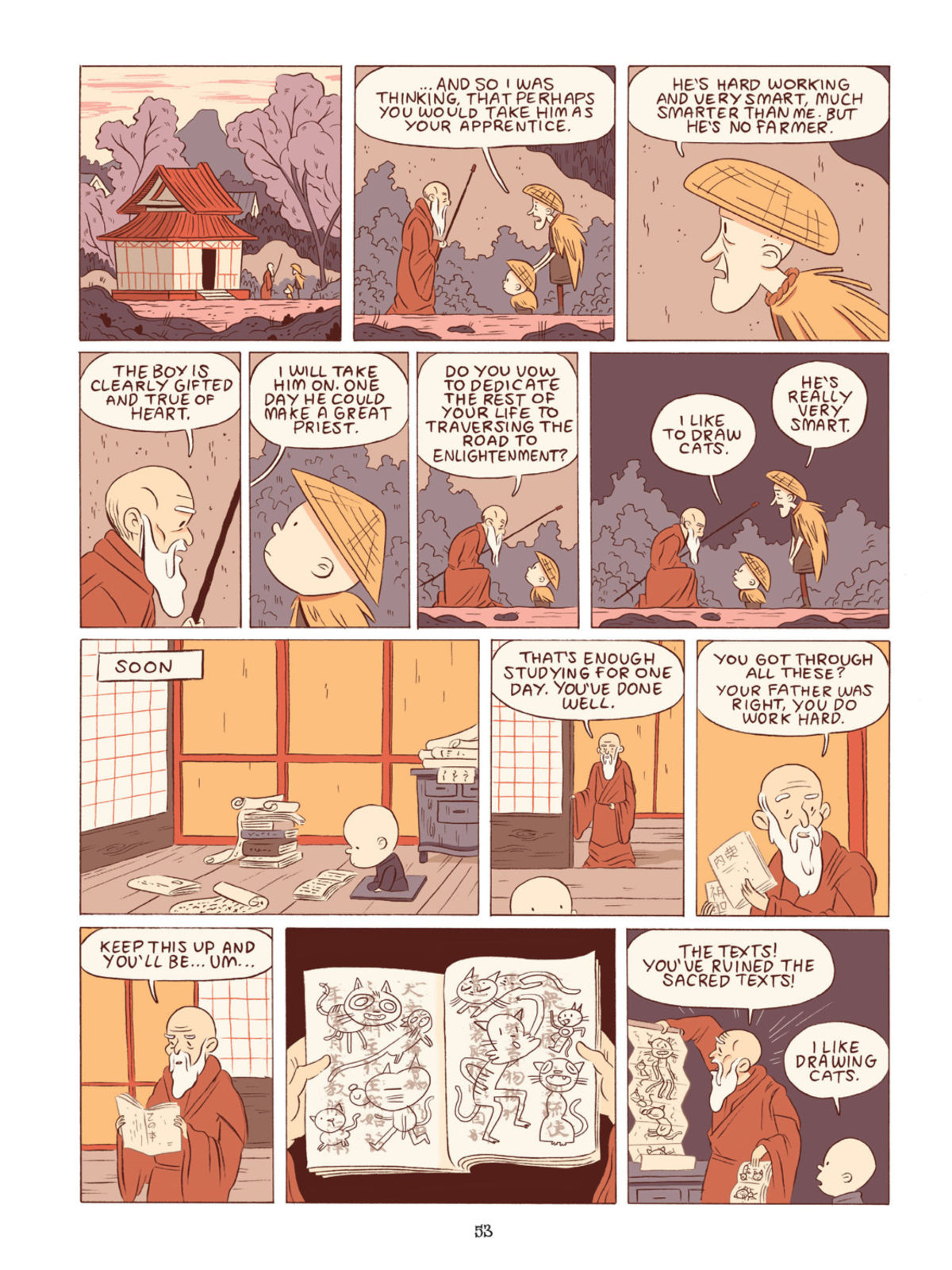
I love that the child at the centre of ‘The Boy Who Drew Cats’ looks a lot like Harold from ‘Harold and the Purple’ Crayon. Has Crockett Johnson been an influence on your work?

Actually no! I’m not super familiar with Crockett Johnson’s work at all. He actually started off as Charlie Brown and then I pulled his features around a bit.
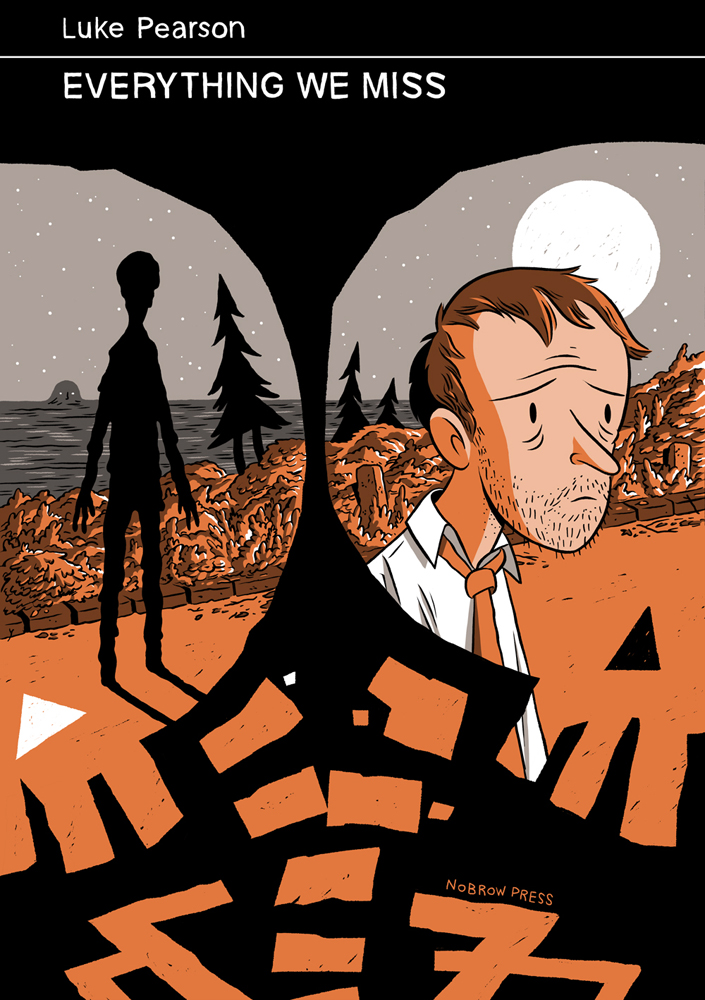
Do you approach your comics for kids differently from your adult comics?

I think this is the only kids comic I’ve done that isn’t a Hilda comic. Usually I’d point out that I draw my kids comics (Hilda) in a different style to how I tend to draw my adult stuff. I guess really I’m just talking eyes here. Hilda is full colour with big eyes and my other comics tend to be limited colour with dot eyes. This is full colour with dot eyes so I guess it sits in the middle. Less superficially, I’d say I try to be really clear in regards to storytelling and try and wrap things up neatly with my children’s work.

Briefly, could you describe your working process?

I generally draw and ink on paper, scan, colour in photoshop. I switch between brush pens, brushes, fineliners and dip pens. I don’t have any particular paper that I always use. I’m starting to enjoy occasionally inking in photoshop now, which I’m just using a wacom tablet for.
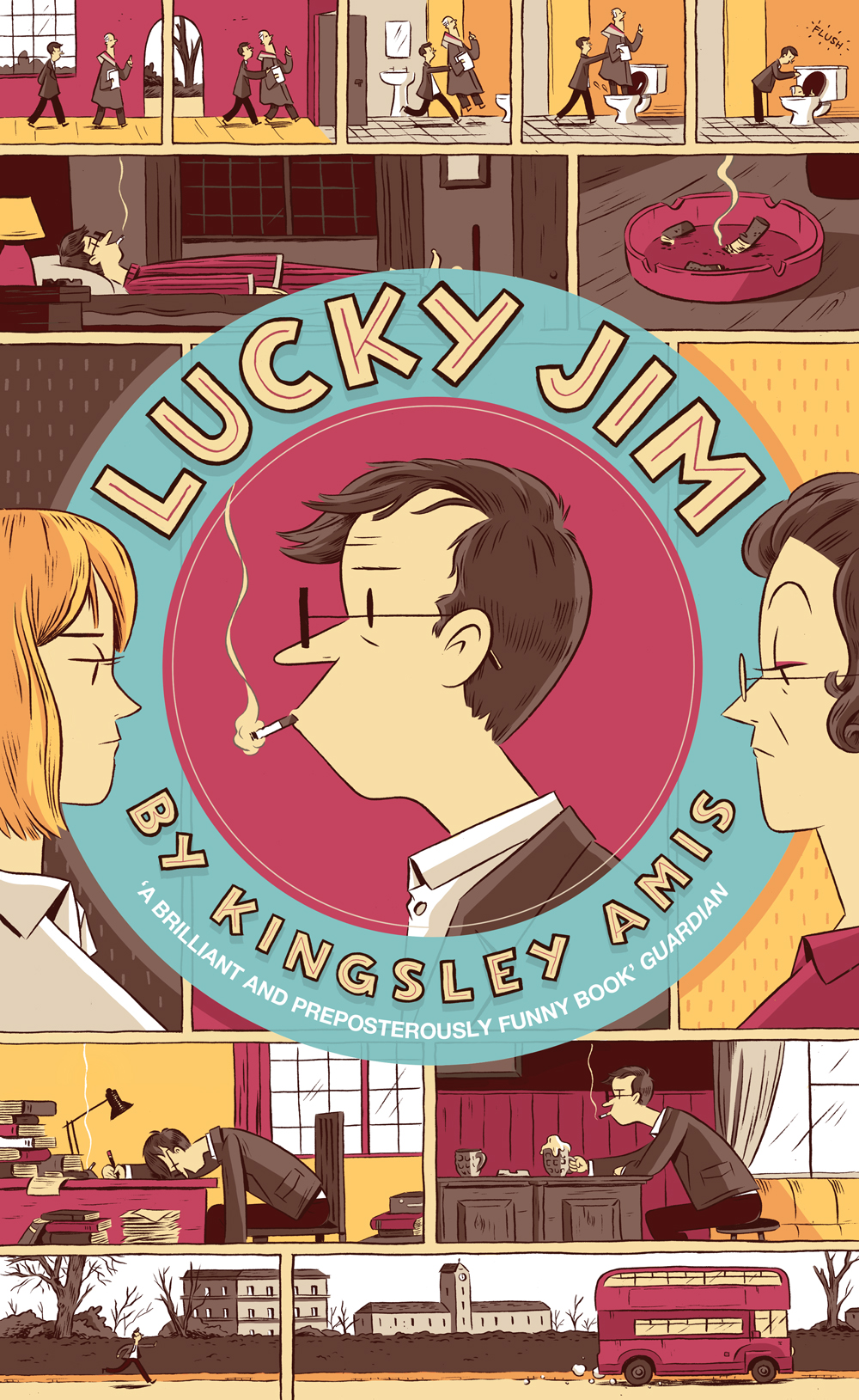
How is illustrating a book cover different from drawing comics?

Other than involving the same technical skills, it’s different in every way. I guess you are kind of trying to ‘tell a story’ with a cover, but really you just want to create an image that’s striking, intriguing, aesthetically pleasing and somehow captures the tone of the book. I’d say it feels a lot easier than a comics page, because you can just spend all your time fine tuning and perfecting this one thing until it’s ready, rather than having to worry about fifteen different images and making sure they all look good and all fit on the page and make sense when read one after the other. That said, it’s a totally different thing and requires different skills.

Are there any books you would love to illustrate?

Watership Down or something by Franz Kafka. I wouldn’t want to do them in the style I draw my comics though. My taste in book covers is not quite in sync with the ones I’ve actually drawn.

What have you read recently?

I just finished reading Tenth of December by George Saunders. I just bought a couple of collections of Michael Dougan comics which I really like.

How did you get involved with Adventure Time?

I got an email asking if I wanted to take a storyboard test, which I took and I guess they liked it. There’s no interesting story there really. I’ve boarded on two episodes so far, ‘Candy Streets’ and ‘Frost & Fire’ and should be doing some more some time soon.
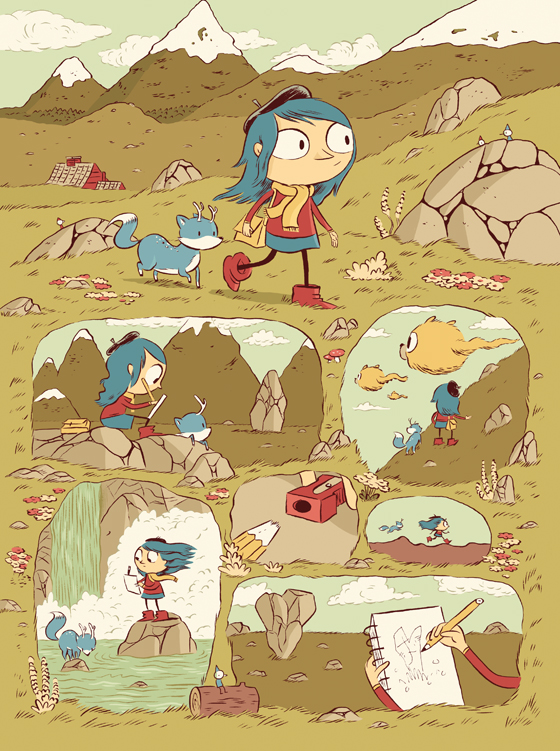
Where do you look for inspiration, and who are some of your cartooning heroes?

I try to just pay attention to things and take everything in as inspiration in some way or another. But you know, I also just look at tumblr and stuff like every one else does. Some of my heroes are Tove Jansson, Chris Ware, Osamu Tezuka, Gene Deitch and Philippa Rice.

Who else do you think is doing interesting work right now?

Loads of people, but the more I list the more I feel like I’m missing out. My favourite cartoonist right now is Anatola Howard.

Have you thought about creating web-comics?

Yes, but I can’t see myself ever having a dedicated site for a specific regularly updated comic. I usually put my shorter comics online if I can and I wish I could do that more often. I can definitely see myself doing a regularly updated thing for a limited period of time at some point.

Do you worry about the future of books and print?

I can’t say it’s ever kept me up at night.

Thanks Luke!

2 Comments

Jonathan Franzen Says No

So good, Tom… So, so good.

4 Comments

Warren Ellis Has Arrived

“I’m a comic book writer. I still don’t think this is going to be run by The Paris Review.”


Warren Ellis, author of Gun Machine and Dead Pig Collector, in conversation with Molly Crabapple for The Paris Review:

I try not to get involved in the business of prediction. It’s a quick way to look like an idiot. There’s an expectation around writers of science fiction, which I sometimes am, that we’re predictors of the future, that that is the business of science fiction. Which we’re not, and never were.

Science fiction is social fiction. That’s the line from Mary Shelley through H. G. Wells and Aldous Huxley and George Orwell to the politically committed writers of the sixties and seventies. It’s about using speculation as a tool with which to examine the contemporary condition. The closest it comes to prediction is in the provision of long-range weather warnings.

Comments closed

Cartoon College


Following a group of aspiring indie cartoonists struggling through two gruelling years at the Center for Cartoon Studies in White River Junction, Vermont, and featuring candid interviews with the likes Chris Ware, Scott McCloud, Lynda Barry, Charles Burns, Françoise Mouly, Art Spiegelman and Jules Feiffer, Cartoon College looks like a fascinating documentary about “one of the world’s most tedious artistic disciplines:”

The film was released on iTunes this week, with the DVD available in July.

Comments closed

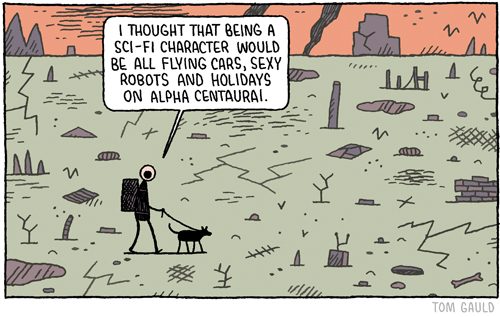
Flying Cars, Sexy Robots and Holidays on Alpha Centaurai


Didn’t we all… (Tom’s new collection of comics, You’re All Just Jealous of My Jetpack, is out now.)

Comments closed