
A lovely new video featuring the work of British type designer, illustrator and artist Seb Lester:
Comments closedBooks, Design and Culture
A lovely new video featuring the work of British type designer, illustrator and artist Seb Lester:
Comments closedNo Idea What I’m Doing — Keith Ridgway, author most recently of Hawthorn & Child, on writing fiction:
I have no idea what I’m doing. All the decisions I appear to have made—about plots and characters and where to start and when to stop—are not decisions at all. They are compromises. A book is whittled down from hope, and when I start to cut my fingers I push it away from me to see what others make of it. And I wait in terror for the judgements of those others—judgements that seem, whether positive or negative, unjust, because they are about something that I didn’t really do. They are about something that happened to me. It’s a little like crawling from a car crash to be greeted by a panel of strangers holding up score cards.
A Dog’s Cock — The history of the exclamation mark:
no one really knows the history of the punctuation mark. The current running theory is that it comes from Latin. In Latin, the exclamation of joy was io, where the i was written above the o. And, since all their letters were written as capitals, an I with an o below it looks a lot like an exclamation point.
But it wasn’t until 1970 that the exclamation point had its own key on the keyboard. Before that, you had to type a period, and then use the backspace to go back and stick an apostrophe above it. When people dictated things to secretaries they would say “bang” to mark the exclamation point. Hence the interobang (?!) – a combination of a question (?) and an exclamation point (!). In the printing world, the exclamation point is called “a screamer, a gasper, a startler or a dog’s cock.”
One more on the late Robert Hughes at The Economist:
As our lives grow increasingly distracted and overstimulated, the critic has become both more and less relevant in the service of cultural sieve, filtering out the good from the bad. Mr Hughes didn’t subscribe to such categorical certainties. In turn he placed as much emphasis on the context of a work as he did on its content. To Mr Hughes, experiencing art wasn’t about passing a few hours in some museum, but what made those few hours meaningful to be alive.
And finally…
Larry Tye talks about his new book Superman: The High-Flying History of America’s Most Enduring Hero, on CBC Radio’s The Current:
CBC RADIO THE CURRENT: Superman: The High-Flying History of America’s Most Enduring Hero mp3
Comments closedA few remembrances of art critic Robert Hughes, author of The Shock of the New, Nothing If Not Critical and Things I Didn’t Know among others, who died earlier this week aged 74…
Maria Bustillos for The Awl:
“The Shock of the New”… brought him fame, and no wonder. It’s a marvel: a solid education in post-Impressionist modern art of the 20th century in the form of a luscious entertainment stretching over hours and hours; awareness, scholarship, wit, and a visual sensitivity matched for once by an equally sensitive sense of language, all delivered in a brisk, whip-smart, slightly clipped Anglo-Australian voice of enormous power and beauty.
Adam Gopnik for The New Yorker:
Hughes believed in modern art with something close to innocence. Although “The Shock of the New” is in many ways an account of the tragedy of modernism—the tragedy of Utopias unachieved, historical triumphs made hollow, evasions of market values that ended by serving them—that tragedy is more than set off by the triumph of modern artists.
Jonathan Jones for The Guardian:
Hughes believed in modern art, whose story he told more eloquently than anyone else ever has. He was not some stick-in-the-mud. But he compared art in the 1900s with the art of today and observed that even our best do not deserve comparison with the pioneers of modernism. This is a truth that is hard to refute. The words of Robert Hughes have cost me a lot of sleep.
I’m sure there are many more… What a loss…
See also: obituaries in The Guardian, New York Times, and The Telegraph.
Fertilizer — The always fascinating Jeet Heer reviews Blown Covers: New Yorker Covers You Were Never Meant to See by Françoise Mouly, for the LA Review of Books:
the deeper value of Blown Covers is the insight it gives us into Mouly’s editing process. Editing is a very difficult art to write about, being by its very nature invisible, and based on thousands of tacit, unstated backstage decisions. Blown Covers shows that every idea that makes the page requires an editorial environment where new concepts are constantly being generated. Since the rejection rate is high, this can be frustrating for artists, but Mouly gets around this problem in part by allowing her artists to go all out during the brainstorming sessions, so that even if the idea doesn’t make the cover there is still the pleasure of daring to think of something new and fresh. The failed ideas are the necessary fertilizers of successful covers.
And finally…

Collective Unintelligence — James Gleick, author of The Information, on Autocorrect, for the New York Times:
In the past, we were responsible for our own typographical errors. Now Autocorrect has taken charge. This is no small matter. It is a step in our evolution — the grafting of silicon into our formerly carbon-based species, in the name of collective intelligence. Or unintelligence as the case may be.
2 Comments

An interview with award-winning Toronto-based illustrator Gary Taxali at GrainEdit.
How Disappointing — Book designer Peter Mendelsund on what we picture in our minds when we read literary works:
“Call me Ishmael.” What happens when you read this line? You are being addressed, but by whom? Chances are you hear the line (in your mind’s ear) before you picture the speaker. I can hear Ishmael’s words more clearly than I can see his face. (Audition requires different neurological processes than vision, or smell. And I would submit that we hear more when we read than we see). Picturing Ishmael requires a strong resolve.
But if you indeed took the trouble to summon an image of Ishmael what did you come up with? A sea-faring man of some sort? Is this a picture or a category? Do you picture Richard Basehart, the actor in the John Huston adaptation? How disappointing.
(All I can say is that the follow-up essay had better be about comic books, Peter!)
The Secret Detectives — An interview with Patti Smith in The Telegraph:
“When I was young I knew William Burroughs really well. And William’s secret desire, which he never quite did, was to write a straightforward detective novel. How good would that have been! And I used to say, ‘you have to do it William!’ And he’d say” – Smith gives a passable impersonation of the Burroughsian growl – “‘Oh, I don’t know, one of these days.’ William was like the embodiment of a detective, I just loved him so much.”
Our Greatest Creation — Jonathan Glancey, The Guardian‘s former architecture and design correspondent, reviews City: A Guidebook for the Urban Age by P.D. Smith:
The stuff of lofty intentions and grubby backstreet life, the city represents much of our restless and contradictory natures. “In this dynamic, cosmopolitan space,” Smith writes, “lies the wellspring of our creativity as a species. The greatest cities nurture and stimulate ideas in science and the arts that are the very heart of human civilisation. For this reason, sustainable, humane and well-governed cities are our best hope for the future.”
Amen.
Hiding in Plain Sight — Type designer Ramiro Espinoza on ‘Amsterdamse Krulletter’, the curly lettering painted on the windows of traditional pubs in Amsterdam, and his only typographic revival Krul:
The fact that such gorgeous and original letters have largely been ignored in a country with such a rich type- and letter-making tradition reminds me of the plot of Edgar Allan Poe’s famous story “The Purloined Letter”. In the story, an important document cannot be found because it is lying in plain sight. Sometimes things can become invisible to us because of their very familiarity.

Avant Garde — Adrian Shaughnessy on life and work of designer Herb Lubalin at Imprint:
I have a pet theory about why Lubalin is currently popular: In the eyes of many designers, he offers a way of designing—and of communicating—that doesn’t require expensive art direction, over-manicured photography, or grandiose presentation. Lubalin proved that to be effective, all you need is a typeface and a good idea. In other words, he is a designer for the age of austerity.
Unit Editions’ forthcoming limited edition monograph, Herb Lubalin: American Graphic Designer, 1918–81, will be available in August.
And finally (and also at Imprint)…

An interview with designer and collage artist Graham Moore, who incorporates mid-century modern ephemera and fragments from billboard posters into his work.
Comments closed

Chris Ware’s astonishing cover for Crockett Johnson and Ruth Krauss: How an Unlikely Couple Found Love, Dodged the FBI, and Transformed Children’s Literature by Philip Nel. See the full thing in detail here.
A free interactive e-book about British artist Francis Bacon created by the estate of the artist and Katharina Günther is available from iTunes (via A Piece of Monologue).

Page 1: Great Expectations, the first book by GraphicDesign&, “collects the responses of 70 international graphic designers when posed with the same brief – to design and lay out the first page of Great Expectations by Charles Dickens.” The Creative Review and We Made This have more on the project.
And finally…

Jon Contino’s beautiful cover illustration for The Marlowe Papers by Ros Barber. You can’t really tell from the image above, but the apple is actually brown foil, the grub and stalk in are in gold on finished book. You can see better in these pictures Contino posted to Instagram:


It Will All Be Over Before You Know It… — A six-page, six-chapter comic by the brilliant Richard Sala (a must for fans of Edward Gorey, I’d say).
Something Lost — Edmund de Waal, ceramicist and author of The Hare with Amber Eyes, on inspiration for writing and art at The Browser:
[T]here is still something extraordinary about art which comes out of an encounter between a person and a material. The further you get away from that, the more you get into something which is commodified and reduced to a series of other people’s interactions with it. There is something extraordinary which is lost.
Talking Covers — A new blog, edited by writer Sean Manning, where authors, designers, and artists discuss book covers. The cover to Sean’s own book, The Things That Need Doing is discussed here.
The Solitary World — Ellen Handler Spitz, author of Illuminating Childhood, on the late Maurice Sendak:
Sendak knew from within the profound sense in which every child, from time to time, perceives himself or herself to be alone—an outsider—and feels the need to retreat into some private space, some nook or secret hiding place. Sendak’s books are themselves such places; they can so function even when being read aloud by an adult. Sendak’s supreme gift, as visual artist as well as author, was to discover pictorial as well as verbal and narrative means to portray the existential separateness of childhood.
And finally…
Championship Hoarding — Steven Heller on “stuff”:
It is one thing to have stuff and another to collect it. It is one thing to accumulate stuff and another to exhibit it. What’s the point in just keeping stuff in drawers, out of view? Stuff is/are trophies, evidence of championship hoarding — finding the perfect rarity that no one else has found. Collecting stuff can be competitive, even if only in the mind. Therefore, showing one’s bounty is essential to having stuff. So the vehicle for display is just as essential as the objects themselves.
Have a great weekend.
Comments closed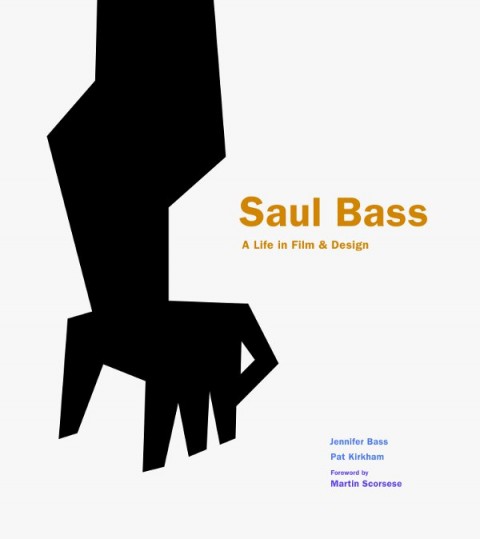
Lyra Kilston reviews Saul Bass: A Life in Film and Design for the LA Review of Books.
The Well-Made Book — An interesting article by Michael Agresta on how printed books, and their design, are changing in the digital age:
Now, as we move into the digital age, the well-made copy has come to occupy a familiar, almost nostalgic middle ground between the aura of an original and the ghostly quality of a computer file. A mass-produced paper book, though bulkier and more expensive, may continue to be more desirable because it carries with it this material presence. And presence means something—or it can, at least, in the hands of a good book designer.

Innards and Interiors — The Bauhaus: Art as Life exhibition at the Barbican reviewed at The Financial Times:
Paul Klee favoured risotto with steamed calf’s heart, sour liver and lung ragout: in the kitchen, as in his paintings, he was obsessed with innards, interiors, reconfiguring essential forms. Wassily Kandinsky lived in a streamlined white apartment but, incongruously, cooked on a “kamin” – a Russian wood-burning stove made from heavily ornamented black iron. Josef Albers claimed “I paint the way I spread butter on pumpernickel” – robustly and straightforwardly; he called the colour mixes in his “Homage to the Square” series his “recipes”. And Swiss painter and vegetarian zealot Johannes Itten was driven out of Weimar because he hijacked the Bauhaus kitchen and alienated director Walter Gropius by producing only “uncooked mush smothered in garlic”. The Barbican’s new exhibition… gives a whole new flavour to the story of the art school long seen to embody sober, purist German modernism.
Weird Comics — Local small press publisher Annie Koyama profiled in the Quill & Quire:
Koyama says her strategy for the year ahead is “to throw everything against the wall and see what sticks,” but she acknowledges her biggest business challenge is twofold: increasing print runs to improve margins and lining up reliable distribution for the fledgling firm. After working around the clock for nearly four years… she says her goal now is to create a sustainable enterprise that can continue to fulfill its artist-centric mandate… She’s also considering expanding into children’s books. But not in the way you’d expect. “While there are a million good kids’ books out there, there aren’t a million good kids’ comics I can see – especially not weird ones,” she says.
And finally…

Maurice Sendak, “author of splendid nightmares” has passed away aged 83. The New Yorker has made a short Art Spiegelman comic about meeting Sendak available online. And here is a wonderful interview with author from December last year:
Comments closedInsufficiently Bored — An essay by author Toby Litt on technology and reading (and writing) at Granta:
Proposition: ‘The human race is no longer sufficiently bored with life to be distracted by an art form as boring as the novel.’
Perhaps novels will continue, but instead of the machine it will be the connectivity that stops, or becomes secondary.
What we’re going to see more and more of is the pseudo-contemporary novel – in which characters are, for some reason, cut off from one another, technologically cut off. Already, many contemporary novels avoid the truly contemporary (which is hyperconnectivity).

Rereading All Over Again — Bharat Tandon reviews On Rereading by Patricia Meyer Spacks and Second Reading by Jonathan Yardley for the TLS:
[If] rereading… teaches us anything, it is that the conjunctions between readerly and textual lives will always be unpredictable and promiscuous ones. “What did you make of that book?”, runs the conventional phrase. As we revisit the objects of our reading, like recognizable but weathered landmarks, there can be no full going back, because we are not exactly the same people we were; but the consolation of rereading is the knowledge that we are these different people in part because of what those books have made of us.
Artwork Confidential — An interview with Daniel Clowes about the first retrospective museum exhibition of his work, “Modern Cartoonist: The Art of Daniel Clowes, and the accompanying monograph at Publishers Weekly:
[T]he work wasn’t created to be seen on a wall. The final artwork is the book. But I collect original artwork. It has a meaning to me that goes beyond the printed page. It’s the only [kind of] artwork you can see on a wall that you may already have a personal relationship with. If you read the story that that artwork comes from, you have a connection to it in a way you don’t have with a painting or something that’s only intended to be seen in that context. That made it interesting to me. There’s something about that final piece as an artifact of the printed work that gives it a certain value and magic. My goal with both [the exhibition and the book] is to get people interested in the work and then to read the books. If that is achieved, then both of these will have been a success.
And finally…
Six Degrees of Aggregation — A really fascinating history of the Huffington Post at the CJR:
Comments closedHuffington Post, they understood, was not an enterprise whose core purpose was the creation of works of journalism—as significant or mundane as that can be. It was in the content business, which created all sorts of possibilities of what it could gather and, with a new headline and assorted tags, send back out, HuffPost’s logo affixed. Content would come to mean original reporting by Sam Stein or Ryan Grim from Washington, as well as Alec Baldwin’s blog, Robert Reich’s rants about the forsaking of the American worker, a “Best Retro Bathing Suits” slide show, “Why Women Gladly Date Ugly Men,” David Wood’s Pulitzer Prize-winning 10-part series on wounded veterans, “Nine Year Old Girl’s Twin Found Inside Her Stomach,” campaign dispatches from the Off The Bus citizen journalists, “Angelina and Brad Wow at Cannes,” and “Multitasking Wilts Your Results and Relationships”—as well as Nico Pitney’s blogging on the violence after the disputed 2009 Iranian presidential elections and the 111,000 comments it generated. Because comment was content, too.
Michael Salu, artistic director of Granta, talks to Crane TV about his work, influences and personal style:
Comments closed‘Ink & Paper’ is a bitter-sweet short film directed by Ben Proudfoot about Los Angeles paper company McManus & Morgan Paper and their next-door neighbour Aardvark Letterpress:
(Happy New Year)
Comments closed
Jacob Covey’s stunning cover for Nancy Is Happy: Complete Dailies 1943-1945 due in March 2012 from Fantagraphics.
Anxiety and Time — Adam Roberts, author of By Light Alone, on science fiction at The Browser:
The common belief that SF is in some sense “about” the future isn’t wholly wrongheaded. One feature of 19th and 20th century science fiction is that it is fascinated with time in a deep way. Time only opens up, as a wholly new dimension to be imaginatively explored, at the very end of the 18th century. It’s a puzzle, actually, why this should be. [The critic] Darko Suvin thinks it has something to do with the French Revolution. But before about 1800 people almost never wrote stories set in the future, and then after 1800 lots of people did just that. SF as a mode of projecting oneself into the to-come connects powerfully with human concerns in the way that specific prophesy – pedantic, fiddly, bound to be wrong – doesn’t.
Writing Machines — Tom McCarthy on technology in The Guardian:
I must belong to the only generation of writers who’ve written with all three of inkpen, typewriter and computer. It definitely matters: the technology colours not only the rhythm but the whole logic of what you write. Think of Kafka’s obsession with writing machines: the harrow that inscribes the law onto the skin in In the Penal Colony or the mysterious writing desk in Amerika: writing technologies themselves are imbued with terrifying and sacred dimensions, and become the subject, not just the medium, of the story. I used to have a beautiful old German typewriter, that you had to throw your fingers at and the keys would smash into the roller. It felt like a machine-gun or something.
And finally…
Brian Appleyard on Andy Warhol for Intelligent Life magazine:
Comments closedWarhol now endorses a way of life. One simple technology—silk-screen printing—dominated his career. But it was enough to show today’s technology-laden, hyper-connected youth that they could do it too. With the instant publication of digital pictures and videos, anybody can become a cyber-Warhol, swimming in the great ocean that pop imagery has become. Apple’s Photo Booth software reduces the whole thing to a single click—just by selecting “pop art” under “effects” you can change your face into a very credible Warhol multiple self-portrait. Andy, in death, is a generation’s mentor.
The Dark Room — Filmmaker Grant Gee talks to BookForum about his new film Patience, which explores the work of author W.G. Sebald and his book Rings of Saturn:
There is one reference in an essay he wrote about Kings of the Road by Wim Wenders. He opens the essay with an interesting recollection of watching the film. He’s that generation; he’s absolutely of Wenders’ generation. Once you know that, you can feel the similarities between Wenders and Sebald, but Sebald willfully took himself away from that culture. I think of Sebald more as a photographer. There’s a quote I read somewhere where says he wasn’t very interested in school and he spent most of his time in the darkroom of the school’s photography lab. And there is something—I’m not sure if I’ve made this up or imagined it—about the way images work in his book: it feels to me like a black-and-white print developed under a red light, like it comes up out of whiteness, and if you leave it there it will black out in the tray.
Baggage — David Cronenberg talks to FilmComment about A Dangerous Method, his film on Freud, Jung and Sabina Spielrein:
I don’t care what baggage people think I will bring to the movie. I don’t have that baggage. Once I decide on a project, I am honorable about how I treat it. I am not trying to put some false Cronenbergian imprint on it. Let’s just do the movie. Part of the project was the resurrection of the people and the era. That means it has to be as accurate as possible. I want the people to be as alive as they can be. I want to be able to smell them and hear them in a way that we can’t. It’s a matter of affection. I would like to have known them. That’s the only agenda I have—to honor the accuracy of these people and what they said.
And on the subject of Freud… Comic book creators discuss how mainstream comics portray women and how things can be improved at Comics Alliance. An interesting read.
And finally…

SUPERTYPE! — A collection of vintage comic book mastheads from the man who brought you 4CP and Comic Book Cartography (via Subtraction).
Comments closed