Skip to content

Tag: art

All That Remains

From its abstract roots in Cubism to the political and counter culture movements of Dada and Punk, collage has always been a product of its environment. With the rise of 24 hour media cycles, social networks and search engines, contemporary culture has effectively rendered print media obsolete, creating a virtual boom in discarded paper ephemera for collage artists to examine and reinvent. Through these discarded remnants collage artists have become the archivists and activists of this post modern age, paralleling the frenetic pace in which we live while exposing the voyeuristic and often disjointed nature of popular culture.

If you’re going to be in New York at the end of this month, you might want to check out All That Remains, an exhibition of international collage at the Ugly Art Room in Brooklyn. Among the exhibitors is one John Gall, art director at Vintage/Anchor Books. You can read my interview with John about his collage here.

UGLY ART ROOM PRESENTS: ALL THAT REMAINS

October 21st – November 19th, 2011
Ugly Art Room (via Picture Farm)
338 Wythe Ave, Brooklyn, NY 11211

Opening Reception: 7-9pm, Friday, October 21st, 2011

Comments closed

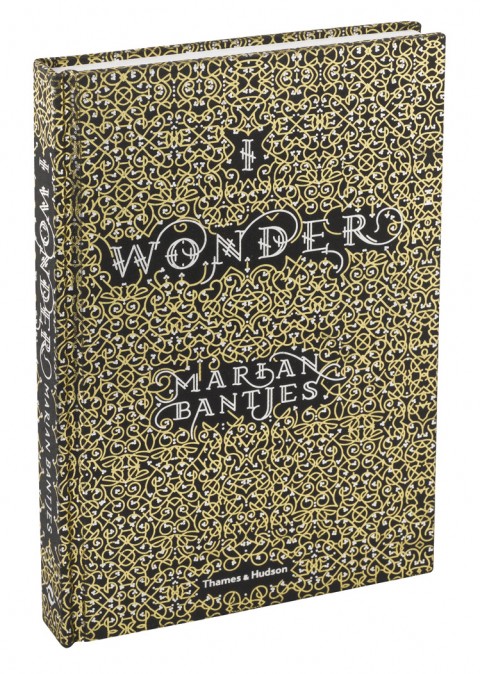
Marian Bantjes | Creative Inspirations

Lynda.com have made a full-length documentary about graphic artist Marian Bantjes. Currently it’s only available to members, but here is a short trailer for the film:

2 Comments

Something for the Weekend

The Technological Sublime — Rick Poyner on the science fiction artist Chris Foss and Hardwarea new book collecting his work, at Design Observer:

These visionary images have a stillness, a control of atmosphere and a mood of mystery and wonder, even when something huge, alien, imponderable and beyond our terrestrial grasp is taking place. Foss loves the paintings of J.M.W. Turner and his finest pictures, often from the 1970s, seem as much concerned with ambience and painterly effect — they are cosmic cousins of Turner’s Rain, Steam and Speed, at least in spirit — as with the engineering of the vast structures they depict. They are also early visual encapsulations of what came to be known in the 1990s as the technological sublime. The vertiginous sense of awe, wonder, poetry and terror that people experienced in nature, when opening their senses to the sky, mountains, forests, rivers or oceans, could now be felt when contemplating the frightening immensity of a machine’s harnessed power, the magical effectiveness of electricity, or the boundless matrix of digital connection.

(Pictured above: Chris Foss, The Bloodstar Conspiracy by Stephen Goldin and E. E. “Doc” Smith, Panther, 1978)

Those Who Can… — Eric Olsen, journalist, editor and co-author of We Wanted To Be Writers, discusses writing and picks 5 books on the subject:

There are always ways that you can help a writer along. You’re not going to take a mediocre writer and turn him or her into a great writer, and there are also some things that can’t be taught, like the basic desire to be a writer. That seems to be a given. You’re not going to make someone want to be a writer. Sometimes what goes on in a writing workshop is that you convince the writer that he doesn’t want to be a writer. That is a kind of teaching too…

 The Source Code of Our Being — Tom McCarthy, author of Remainder and C, on the influence of Freud:

As a writer, I’m in love with Freud. I can’t imagine any serious writer not being. Freud, ultimately, concerned himself not with the mind, nor with the individual, but with the question of meaning’s emergence in the world, and of the mechanisms through which this emergence takes place. What, according to him, are these mechanisms? Why, they’re substitution and elision, condensation and displacement, metaphor, metonymy — in short, the very mechanisms at work in a poem or a novel. For Freud, if you want to understand mental and social life you don’t take a biopsy of a murderer’s brain or observe groups of people in a room: you study Antigone and Hamlet. That’s why his case-histories read like Gothic novels. It’s why his best patients are fictional characters like Jensen’s Norbert and Goethe’s Werther. And it’s why his preferred model for memory is a mystic writing pad.

And finally…

A short film homage to author Jorge Luis Borges by Ian Ruschel:

Comments closed

Steampunk | Off Book

The latest episode of the PBS Arts series Off Book explores the Steampunk aesthetic and art movement:

It’s a little a bit disappointing that the video doesn’t feature any books. Didn’t it all start with Jules Verne and H.G. Wells?

Comments closed

Q & A with Tom Gauld

Tom Gauld is a cartoonist and illustrator based in London. I first came across his work a few years ago in a book called Both published by Bloomsbury in 2003. Both (sadly now out of print) collected comics by Tom and Simone Lia originally self-published as First and Second under their imprint Cabanon Press.

Since then Tom’s book cover illustrations and literary cartoons have featured regularly here and on The Accidental Optimist. His work is funny (oh so funny) — silly even — but it combines pathos with the farcical. His heroes are unlikely or put-upon; his robots lonely, mundane or murderous; detectives are clueless; scientists baffled. Everyone (including the robots), it seems, would rather have stayed at home with a cup of tea and a good book. There is a gentle subversiveness to it all, although it is never mean-spirited. I hesitate to describe it as Pythonesque, but it is in a way. Tom’s machines all look as if they go ‘ping’. Other references include superheroes (less than you might think), adventure serials, mysteries, literary fiction, 1970’s science-fiction, Stanley Kubrick, fairy tales, and old Open University TV shows. It’s eccentric to say the least, but wonderful nonetheless.

Tom and I corresponded by email.

When did you first start drawing cartoons?

I’ve drawn for as long as I can remember and I drew a lot of cartoons when I was at school, but I suppose it was when I was studying at Edinburgh College of Art (around 1998) that I really began drawing comics and cartoons seriously.

Why did you start self-publishing your work?

I first self-published a comic called  First with my friend Simone Lia in 2001 when we were studying at the Royal college of Art in London. I’d say we did it partly because we didn’t know anyone else who would publish it, but also because I was interested in the business of designing and hand making the whole object. I had bought a self-published comic called OAF by Mat Brinkman a few years earlier and it inspired me to self-publish: it was small and hand-made and quite rough, but really unique and lovely. I suppose I’d seen self-published stuff before, but OAF really excited me.

Was the design of your books always important to you?

Yes, definitely. I think with any book, but particularly with a picture book of some kind, the experience for the reader begins before they even pick up the book. So I try to make every aspect of my own books contribute towards the story or idea. When I started, I was as much interested in designing, making and publishing a book as I was in the actual stories within.

Is Cabanon Press on permanent hiatus?

I wouldn’t want to say that Simone and I won’t ever start it up again. But we don’t have any plans to do anything with it for the moment. I’m still self-publishing things, but for Cabanon to work I think it has to be something Simone and I do together and we’re too busy with other things.

Where are your cartoons published now?

I do a weekly cartoon for The Guardian which appears in the (art and books) Review every Saturday, some of these cartoons also appear in The Believer’s comics section. I do something to accompany the The New York Times “Riff” essay every Sunday but that’s usually more an illustration than a cartoon. I also regularly put my work on my Flickr photostream.

Briefly, could you describe your working process?

I sit and think and doodle in my sketchbook until I have a good idea. Then I’ll make rough pencil sketches on copier paper till I have things worked out visually. Then I hone these sketches on paper and in photoshop till I have a rough version of the image which I can send to anyone who needs to approve it. Then I will print out the image and use a lightbox to trace an ink version which I crosshatch then scan back into the computer where I can clean it up, tweak bits and add any colour. I love using the computer but I try to stay away from it till I’ve done most of the thinking for an idea, looked at it from all sides, because I feel that once the computer is involved things are on an inevitable path to being finished. Whereas in my sketchbook the possibilities are endless.

How is illustrating a book cover different from your weekly cartoons?

It’s very different. I feel more pressure doing a book cover than almost anything else, I think “This author has probably spent years writing this book: I mustn’t mess it all up with a crap cover”. So I have to try and find a way to react to the book and make something which is suitable, but is also strong and interesting in its own way.

Are you planning any more full-length comics?

My forthcoming book Goliath is really the first time I’ve written a book-length narrative (albeit quite a short book) and I found it much harder than writing short pieces, but I’m happy with the result now. I will probably write another one, but not straight away. I’ve got a couple of shortish things I want to do, then after that I don’t know what I’ll do.

Where do you look for inspiration, and who are some of your cartooning heroes?

I listen to the radio, watch TV and films, go to museums and most of all read.

Cartooning heroes: William Heath-Robinson, Gary Larson, Roz Chast, Richard McGuire, Ben Katchor, Daniel Clowes, Chris Ware, Jochen Gerner.

How has Edward Gorey influenced your work?

I’m a big fan of Edward Gorey. I discovered his work when I was at college and immediately wanted to seek out everything he’d ever produced. I like that what he makes is unclassifiable: he makes picture books for adults which aren’t comics, many are self-published but they’re beautifully produced. I love his drawing, the odd narratives, the design of the books, the compositions, the hand drawn typography: everything really. The way I crosshatch (with small “patches” of short lines rather than long ones) I learned from Gorey.

Are you obsessed with robots?

I think I probably am a bit. I find they are very good props/characters for my stories and ideas. I like the inherent sadness in robots: they are sentient beings but also products which can break or be discarded (in my stories anyway). Also, they are much easier to draw than real people.

Who else do you think is doing interesting work right now?

Jon McNaught, Kate Beaton, Anders Nilson, Sammy Harkham.

What are a few of your favourite books?

Off the top of my head:

The Inheritors by William Golding
The Vinegar Works by Edward Gorey
Tinker, Tailor, Soldier, Spy by John le Carre
Teratoid Heights by Mat Brinkman
The Summer Book by Tove Jansson
The Stanley Kubrick Archives by Alison Castle

Are there any books you would love to illustrate? 

I’d like to do a book of fairy-tales or folk-tales.

What have you read recently?

The Thousand Autumns of Jacob de Zoet by David Mitchell
Through the Language Glass by Guy Deutscher (A fascinating book about language and colour)
The Annotated Brothers Grimm by Maria Tatar
The Cardboard Valise by Ben Katchor

What’s next for books and print?

One thing which might happen with the rise of e-books is that the books that DO get published in paper may have to justify themselves by being better made, designed and illustrated. That would make me happy.

Thanks, Tom!

For the sake of full disclosure,  I should mention that Tom’s forthcoming book Goliath, will be published by Drawn & Quarterly and distributed in Canada by my employer Raincoast Books.

7 Comments

MetaMaus | Bookworm

With the release of MetaMaus later this fall, Art Spiegelman discusses comics and the original two volumes of Maus with Michael Silverblatt in an archive interview for Bookworm in 1992:

Comments closed

Laurence King on the Future of Design Publishing

In a great interview for Design Observer, UK publisher Laurence King discusses the future of design publishing with Mark Lamster:

Illustrated book publishers, and in particular art publishers, need bookshops to survive, especially the increasingly rare specialist ones where there are discerning buyers who understand art, architecture and design. I think that these need to be treated with a great deal of care by publishers because all too often they serve as shop windows for Amazon. They are more important to us than sales through them indicate. It would be great if they could use their reputations and expert knowledge to become competitive with Amazon on-line. But I dread the day when art publishers have to set up loss-making showrooms to exhibit our books, just because we went on being tough with the specialist booksellers. At the same time, booksellers need to reinvent themselves quite fast, which is obviously difficult.

Laurence King published Bibliographic: 100 Classic Graphic Design Books — one of my favourite visual books from the last couple of years — in 2009, and later this fall, they’re publishing a huge, long-awaited, monograph on designer Saul Bass. Can’t wait.

Full disclosure: Laurence King is distributed in Canada by my employer Raincoast Books. 

Comments closed

New Genres by Tom Gauld

I love these new illustrations by the super-talented Tom Gauld for an article in The Washington Post Book Review about genre fiction:

You can see more of Tom’s work and his regular literary cartoons for The Guardian on Flickr.

Comments closed

Moving Pictures

Continuing today’s theme of being late to everything, I just finished reading Moving Pictures by Kathryn and Stuart Immonen.

Published in 2010 by Top Shelf, the book was heralded on a lot of best of the year lists and it’s been sitting in my ‘to read’ pile for months.

I’m sorry I waited so long. It is wonderful…

Dave Howard interviewed Kathryn and Stuart Immonen about the book for The Torontoist last year.

1 Comment

Penguin Book Cover Mystery

Plant, Trilogy and Balthus, 1982

Do you recognise these books?

Plant, Trilogy and Balthus is going to be part of an exhibition on the work of Canadian painter Frederick Hagan (1918–2003)  at the MacLaren Art Centre this summer and curator Ben Portis would like your helps identifying the Penguin paperbacks in the picture (click the image above for a closer look).

The only other clues we have are that the books form a trilogy and were published prior to 1982.

If you recognise the books or have any further thoughts or suggestions, please leave a comment below or drop me a line and I’ll pass them on to Ben.

Here are the full details of the painting:

Plant, Trilogy and Balthus, 1982
Frederick Hagan (Canadian, 1918–2003)
oil on hardboard
40.4 x 60.6 cm

Thanks!

5 Comments

Midweek Miscellany

Scripts: Elegant Lettering from Design’s Golden Age — new from Steven Heller and Louise Fili, published by Thames & Hudson.

50/50 — Designer Andrew Henderson, curator of Lovely Book Covers, is going to spend 50 days designing 50 covers based on the 50 most influential books of the last 50 years.

See also: Matt Roeser’s New Cover project.

Why She Fell — An interesting article by Daniel Mendelsohn on Spider-Man and Julie Taymor’s ill-fated musical Spider-Man: Turn Off the Dark, in the NYRB:

What made Spider-Man unusual among superheroes when he debuted wasn’t so much the arachnid powers he derived from the radioactive spider…, but his very ordinariness. Bullied at school, worried about girls and money, fussing at and fussed at by his foster parents, the kindly Aunt May and Uncle Ben, Peter Parker is a regular lower-middle-class Joe with pretty average teenager problems… It’s not hard to see how all this made Spider-Man popular among teenaged comic book readers in the 1960s, that decade of the teenager. Indeed, the series marked the beginning of what one historian of the genre called a “revolution” — a newfound interest on the part of comic book creators in emphasizing the protagonist’s “everyday problems” rather than the glamour of being a superhero… The emphasis on Spidey’s ordinary humanness explains why this series, as opposed to a number of other superhero comics, is laden with “heavy doses of soap-opera and elements of melodrama.”

Sheep — Philosopher Simon Blackwell reviews How to Write a Sentence: And How to Read One by Stanley Fish for The New Republic:

It is wrong to think that the sentence is a mere slave, whose function is to bear content, which, while being the really important thing, is also something that could equally have been borne by another. Change the shape and ring, and you change everything. The balance, the alliterations, the variation, the melody, the lights glimmering in the words, can work together to transform even an ugly thought into something iridescent, as when Eli Wallach in The Magnificent Seven expressed his character’s indifference to the suffering he brings the peasants in one perfect, albeit perfectly brutal, sentence: “If God didn’t want them sheared, he would not have made them sheep.” As Fish says in his analysis of this example, here the “air of finality and certainty” is clinched by “the parallelism of clauses that also feature the patterned repetition of consonants and vowels” and then, of course the inevitability of that last dismissive word. If the devil has the best tunes, sometimes the bandits have the best sentences.

And finally…

The aforementioned Steven Heller on the paintings of Paul Rand at Design Observer:

[He] proceeded to tell me how he liked working in all media, including photography and painting and how it influences what he does and how rarely these “other things” are seen in print or elsewhere. Actually, he used excellent judgment insofar as the paintings and watercolors were appealing for their humor and craft, but they were paeans to Klee (and even Cezanne). They were not his true métier (pardon my French). They showed his interests and represented his eye, but painting was not his signature work…

What is there to say about these paintings and watercolors? Are they building blocks or respites from the rigors of graphic design? When I said, “Paul, one of the things I like about you, is that you don’t pretend to be a painter” he had a knowing look. I don’t think he wanted to be a painter, but he wanted to integrate art into graphic design, which he did so very well.

Comments closed

Pencil It In

In this really nice short video for The Toronto Comics Art Festival, local cartoonists talk about their tools of choice:

(via Drawn!)

Comments closed