Skip to content

Category: Miscellany

Midweek Miscellany

Designer Catherine Casalino discusses her cover design for Darren Shan’s Procession of the Dead at Faceout Books.

50 / 50 — An interesting Design Observer piece by Ernest Beck on the controversy around AIGA’s 50 Books/50 Covers and the changing roles of book designers:

“The design aspect hasn’t changed, but it will,” notes [Chris] Sergio, who like other book designers believes that books and covers will endure in both print and electronic versions. “Digital versus print is a zero-sum argument,” he says. “These roads are not mutually exclusive. If anything, we want to see more competition and more critical exploration [of book design]. That’s why it would have been a shame to blend it all down into one big thing.”

Paula Scher, a partner at Pentagram Design, agrees that book design — in whatever form — is important because people still relate to visual imagery. “It’s the emotional connection,” she says. “People still remember record covers although nobody has records anymore.” Book jackets matter, whether they are on a piece of paper or in an electronic version, she continues “because when none of it matters because it’s digital or nobody does it or it doesn’t save the planet, then we murder our own craft and give excuses to be mediocre and lower standards bit by bit.”

Indelible Replicas — Author Philip Ball (Unnatural: The Heretical Idea of Making People) reviews The Information by James Gleick for The Observer:

Robert Burton, the Oxford anatomist of melancholy, confessed in 1621 that he was drowning in books, pamphlets, news and opinions. All the twittering and tweeting today, the blogs and wikis and apparent determination to archive even the most ephemeral and trivial thought has, as James Gleick observes in this magisterial survey, something of the Borgesian about it. Nothing is forgotten; the world imprints itself on the informatosphere at a scale approaching 1:1, each moment of reality creating an indelible replica.

Also in The Observer

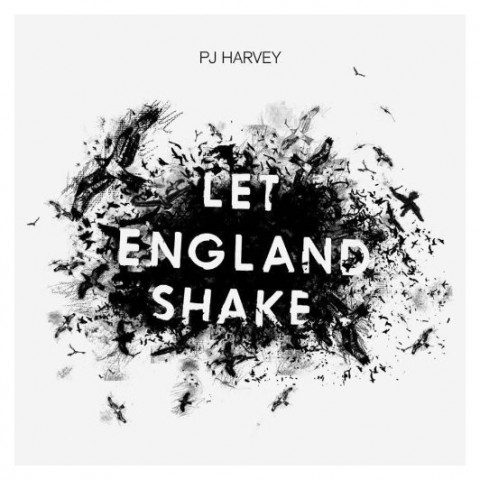
P. J. Harvey on writing and her new album Let England Shake (via A Piece of Monologue):

“I certainly feel like I’m getting somewhere that I wanted to get to as a writer of words. I wanted to get better, I wanted to be more coherent, I wanted there to be a greater strength and depth emotionally, and all these things require work – to hone something, to get rid of any superfluous language. I’m inspired by the other great writers I go back to and read again and again, and think how did they do that?”

Such as? She indicates a volume of Harold Pinter’s poetry that she has brought with her. “Pinter leaves me speechless. Just unbelievable. A poem like ‘American Football’ or ‘The Disappeared’. TS Eliot of course. Ted Hughes. WB Yeats. James Joyce.” She leans forward, freshly excited. “Just that feeling of reading something profound and having your breath quite literally taken away by the end of a piece. I’m reading John Burnside’s poems at the moment. Do you know his work? I’m getting that feeling – just reaching the end of every poem, going ‘Oh my God!'” She clutches her chest and laughs. “And all of these writers offer me a greater understanding of what it is to be alive, and that is such an incredible thing art can do for other people. It made me want to try and get close to this strange, mysterious thing that people can do with words.”

And finally…

The Local Grammar Nazi — Robert Lane Greene, author of You Are What You Speak, on the fluidity of language:

It’s certainly easier to know one set of rigid rules than to develop a fingertip-feel for the nuances of syntax, word choice and mechanics. This is why the book “Elements of Style” is such a hit. William Strunk and E.B. White’s canonised system for language use is short and sharply worded. Read, memorise and you need never think again… Readers are taught any number of things, such as when to use “that” instead of “which” and how one should never begin a sentence with “However, …”. But such guidelines should be understood as the authors’ preferences, not grammatical commandments.

Writing in English offers far more room for manoeuvre than some may realise… A lot of people don’t like this fluidity. Life is tricky in a world without rules. Fortunately, language does have rules, but they are more like bedrock principles than a detailed set of by-laws covering every do and don’t. A good usage dictionary should explain the principles, not simply command.

Comments closed

Something for the Weekend

Visual Vocabulary — An interesting interview with book designer Peter Mendelsund at Czech Position:

I definitely take into account the author’s native culture, though whether I choose to adopt something stylistic from this culture depends on the vagaries of the particular project. There are times when one wants to accentuate the universal aspects of a writer’s work; and there are times when one wants to situate an author in a specific time and place… With Kafka, I would argue that his greatness lies in the universality of his ideas, that his writing transcends time and place… Conversely, with many other writers, nationality is at the core of their work — their great subject is place and contextual identity. They may write about Czech-ness, or English-ness, etc. These are the books where it makes the most sense to bring the local artistic tropes and visual cues to bear. For what it’s worth, I love delving into the visual vocabulary of different cultures.

The Casual Optimist interview with Peter is here, and you can read my 2-cents on his Kafka redesigns here.

The Polish Club50 Watts asks you to design the Polish edition of your favourite book. $400 is up for grabs.

Living by Dying — Ben Ehrenreich, author of The Suitors and Ether (forthcoming), on the death of the book in the new Los Angeles Review of Books:

For the record, my own loyalties are uncomplicated.  I adore few humans more than I love books.  I make no promises, but I do not expect to purchase a Kindle or a Nook or any of their offspring.  I hope to keep bringing home bound paper books until my shelves snap from their weight, until there is no room in my apartment for a bed or a couch or another human being, until the floorboards collapse and my eyes blur to dim.  But the book, bless it, is not a simple thing… [W]hat could it mean for the book to die?  Which sort of book?  And what variety of death?  What if the book had only ever lived by dying?

A World Made of Stories — James Gleick, author of The Information, on memes:

In the competition for space in our brains and in the culture, the effective combatants are the messages. The new, oblique, looping views of genes and memes have enriched us. They give us paradoxes to write on Möbius strips. “The human world is made of stories, not people,” writes the novelist David Mitchell. “The people the stories use to tell themselves are not to be blamed.” Margaret Atwood writes: “As with all knowledge, once you knew it, you couldn’t imagine how it was that you hadn’t known it before. Like stage magic, knowledge before you knew it took place before your very eyes, but you were looking elsewhere.” Nearing death, John Updike reflected on

A life poured into words—apparent waste intended to preserve the thing consumed.

Fred Dretske, a philosopher of mind and knowledge, wrote in 1981: “In the beginning there was information. The word came later.” He added this explanation: “The transition was achieved by the development of organisms with the capacity for selectively exploiting this information in order to survive and perpetuate their kind.” Now we might add, thanks to Dawkins, that the transition was achieved by the information itself, surviving and perpetuating its kind and selectively exploiting organisms.

Cull or be Culled — NPR’s Linda Holmes on how we are missing everything:

You used to have a limited number of reasonably practical choices presented to you, based on what bookstores carried, what your local newspaper reviewed, or what you heard on the radio, or what was taught in college by a particular English department. There was a huge amount of selection that took place above the consumer level. (And here, I don’t mean “consumer” in the crass sense of consumerism, but in the sense of one who devours, as you do a book or a film you love.)

Now, everything gets dropped into our laps, and there are really only two responses if you want to feel like you’re well-read, or well-versed in music, or whatever the case may be: culling and surrender.

And on a related note…

Lester Bangs’ Basement — Bill Wyman on collecting and scarcity at Slate:

Lester Bangs, the late, great early-rock critic, once said he dreamed of having a basement with every album ever released in it… [T]he Internet today is very much like [that]. In its vastness, cacophony, and inaccuracy, it’s also very reminiscent of Borges’ Library of Babel. Just as that library contained books made up of every possible combination of letters, in the corners of the Internet I’m concerned with here you can find similar chaos: The song “Let It Be” by the Beatles, sure, but also mislabeled as by the Stones, by the Kinks, by the Hollies, by the “Battles” … and also with, of course, those same labels attached to entirely different songs (like “Let It Bleed”).

Anyway, is it enough?

For some, the enjoyment of art or culture has fetishistic aspects. To them, being a fan is about something more than just experiencing the art. There will always be collectors, fixating on the physical objects, like the great LP jackets from the 1960s and 1970s… And there will always be people who can’t be happy unless they have something regular fans don’t. Indeed, a friend of Bangs’, long after he died, said to me that the unspoken corollary in Bangs’ mind to his fantasy was that no one else would have access to it.

Happy Easter.

Comments closed

Midweek Miscellany

How Much Is It Worth? — Ivan Brunetti on teaching, and his book Cartooning: Philosophy and Practice, at The Comics Journal:

To me, art is not about talent, it’s about hard work. It’s about developing one’s intelligence, thoughtfulness, and sensitivity. To some degree, the potential for these things seems to vary, implying they are perhaps innate, but I think anything can be nurtured (or neglected). Something might not come easy, but it can be learned. It’s matter of will, desire, determination, and hard work. How much is it worth to you? The definition of what is considered “talent” or “skill” keeps changing. I say if one develops him or herself as a human being, then art can follow. If no adequate form exists, the artist will create a new one.

The Attention Age — More from Peter Osnos at The Atlantic, this time on book reviews:

The challenge for authors and publishers — as with so much else in our information and entertainment environment — is to catch the attention of the people at all these enterprises who choose among the cascade of books that arrive every day. I am reminded of hearing Esther Dyson observe over a decade ago that we no longer live in the information age, we live in the attention age. The notion that merit alone assures acclaim was never really valid, especially in non-fiction, but it is certainly not true today.

Getting Pregnant — Film critic Roger Ebert on being “well-read”:

At the end of the day, some authors will endure and most, including some very good ones, will not. Why do I think reading is important? It is such an effective medium between mind and mind. We think largely in words. A medium made only of words doesn’t impose the barrier of any other medium. It is naked and unprotected communication. That’s how you get pregnant. May you always be so.

Contempt — David Simon, creator of The Wire, interviewed by Bill Moyers for Guernica:

[T]he guys who are running newspapers over the last twenty or thirty years have to be singular in the manner in which they destroyed their own industry. It’s even more profound than Detroit in 1973 making Chevy Vegas and Pacers and Gremlins and believing that no self-respecting American would buy a Japanese car. Except it’s not analogous, in that a Nissan is a pretty good car and a Toyota is a pretty good car. The Internet, while it’s great for commentary and froth, doesn’t do very much first-generation reporting at all. The economic model can’t sustain that kind of reporting. They had contempt for their own product, these people… [F]or twenty years, they looked upon the copy as being the stuff that went around the ads. The ads were God. And then all of a sudden the ads were not there, and the copy they had contempt for. They had actually marginalized themselves.

And I love this response to being called “the angriest man in television”:

It doesn’t really mean much. The second-angriest guy is, you know, by a kidney-shaped pool in L.A. screaming into his cell phone because his DVD points aren’t enough. But I don’t mind being called that. I just don’t think it means anything. How can you have lived through the last ten years in American culture and not be? How can you not look at what happened on Wall Street, at this gamesmanship that was the mortgage bubble, that was just selling crap and calling it gold? Or watch a city school system suffer for twenty, twenty-five years? Isn’t anger the appropriate response? What is the appropriate response? Ennui? Alienation? Buying into the great-man theory of history—that if we only elect the right guy? This stuff is systemic. This is how an empire is eaten from within.

Comments closed

Symmetry | Radiolab

WNYC’s Radiolab searches for order and balance in the world around us, and asks how symmetry shapes our existence — from the origins of the universe, to what we see when we look in the mirror:

RADIOLAB: Desperately Seeking Symmetry

The episode is accompanied by this lovely video by Everynone:

2 Comments

Something for the Weekend

Holly MacDonald is Assistant Art Director at Bloomsbury in London. She has some of her own lovely cover designs on her blog.

Losing the Knack — Stephen King talks about his creative process and the current state of short fiction at The Atlantic:

I’ve got a perspective of being a short-story reader going back to when I was 8 or 9 years old. At that time there were magazines all over the place. There were so many magazines publishing short fiction that nobody could keep up with it. They were just this open mouth going “Feed me! Feed me!” The pulps alone, the 15- and 20-cent pulps, published like 400 stories a month, and that’s not even counting the so-called “slicks” — Cosmopolitan, American Mercury. All those magazine published short fiction. And it started to dry up. And now you can number literally on two hands the number of magazines that are not little presses that publish short fiction… You don’t see people on airplanes with their magazines folded open to Part 7 of the new Norman Mailer. He’s dead of course, but you know what I mean. And all of these e-books and this computer stuff, it kind of muddies the water and obscures the fact that people just don’t read short fiction. And when you fall out of the habit of doing it, you lose the knack, you lose the ability to sit down for 45 minutes like you can with this story and get a little bit of entertainment.

Also at The Atlantic: Peter Osnos, founder of Public Affairs Books, on how publishing has changed since 1984.

No Comment — Khoi Vinh, former-Design Director for NYTimes.com, writing on his own blog Subtraction about how comments and blogging are changing:

[B]logging in the style that I cherish — the Blogger/MovableType/WordPress.org style, you might say, where each blog is a kind of an independent publication — now feels somewhat like a niche activity practiced by relatively few, where it once seemed like a revolutionary democratization of publishing. What seems more lively, more immediate and more relevant right now is what I might call ‘network blogging’ — content publishing that’s truly integrated into a host network like Tumblr or Twitter, that’s not just on the network, it’s of the network too. It’s simpler, faster, more democratic than what came before. It’s not my preferred style of blogging, but it’s hard to acknowledge that it’s not incredibly exciting in very different ways.

Part of this change, I think, is a decline in commenting… [T]here are much more absorbing content experiences than independent blogs out there right now: not just Tumblr, but Twitter and Facebook and all sorts of social media, too, obviously, and they’re drawing the attention that the ‘old’ blogs once commanded. Moreover, these social networks allow people to talk directly to one another rather than in the more random method that commenting on a blog post allows; why wouldn’t you prefer to carry on a one-on-one conversation with a friend rather than hoping someone reads a comment you’ve added to a blog post…?

Comments closed

Storm

Tim Minchin’s 9-minute beat poem Storm — a witty and f-bomb fuelled defense of science and critical thinking — is beautifully delivered in this animated movie directed by DC Turner and produced by Tracy King:

(via Quipsologies)

Comments closed

Midweek Miscellany

Tick, Tick, Tick… — A lovely essay by Zadie Smith about Christian Marclay’s art film The Clock — a 24-hour montage of film and television clips about time — for the NYRB:

Marclay manages to deliver connections at once so lovely and so unlikely that you can’t really see how they were managed: you have to chalk it up to blessed serendipity. Guns in one film meet guns in another, and kisses, kisses; drivers in color wave through drivers in black-and-white so they might overtake them.

And still The Clock keeps perfect time. And speaks of time. By mixing the sound so artfully across visual boundaries (Marclay’s previous work is primarily in sound), The Clock endows each clip with something like perdurance, extending it in time, like a four-dimensional object. As far as the philosophy of time goes, Marclay’s with Heraclitus rather than Parmenides: the present reaches into the future, the past decays in the present. It’s all about the sound. The more frequently you visit The Clock the more tempted you are to watch it with your eyes closed… Nostalgia is continually aroused and teased; you miss clips the moment they’re gone, and cling to the aural afterglow of what has passed even as you focus on what is coming, what keeps coming.

The Real Story — An interesting and passionate post by the publishers of Two Ravens Press about the whys and wherefores of being a small press and the economic realities they face:

Why do small publishers bother? There are undoubtedly as many reasons as there are small publishers, but for people like us it’s because we’re tired of seeing the same old stuff on the bookshelves year after year after year. Safe books, based on the books that sold millions the previous year. Books that take few chances, books that fail to do anything to change the way we look at the world or ourselves. I wanted to go into a bookstore and be surprised. I wanted writing that was different, language that sang. And that’s why we started Two Ravens Press: to publish those books that big publishers were hardly bothering with any more. That’s also why the glib so-called ‘solutions’ to all the problems of an independent publisher like us that consist of helpful statements like ‘you need to have the commercial successes to fund the losses you’ll make on the literary, innovative stuff’ make absolutely no sense at all. Everyone else is publishing the commercial stuff. I don’t want to. Not doing that is my whole raison d’être. That’s the whole point! I don’t LIKE commercial stuff. I don’t think it ought to be banned, I don’t look down my nose at it, sometimes (but not often) I’ll even read it. But I don’t want to be yet another publisher churning out more of the same old writing. I want to do something different. I want literature.

See also: Lynn Michell, director of Linen Press on The Guardian Book Blog.

The Sound of Science — The New York Times on the unlikely success of WNYC’s innovative science show Radiolab:

This approach — a smaller number of shows, painstakingly assembled and treated more like small movies than like regularly scheduled programs — addresses a different tension, around new habits of media consumption. That is the tension between relevance and disposability. Discussions of technology and media tend to focus on speed — what’s the fastest way to break the story, consume the story, influence the story? After all, media consumers today seem like info-rats chewing through heaps of micro-facts and instant-expiration data points.

But the other interesting thing about media these days is that it can stand perfectly still. In fact it loiters: shows don’t simply spill over the airwaves and evaporate; they linger on DVRs, DVDs, various online services. Newspaper articles pile up in Web “archives.” And clearly we still accept, still crave, some deeper media experience too. In experimenting with a show that produces (at most) 10 episodes a year, WNYC was specifically thinking of HBO’s success in building powerful cultural franchises that ignore the mores of traditional broadcasting.

And finally…

Wall of Sound — Nikil Saval on how the iPod has changed the way we listen and respond to music:

The great 1990s magazine the Baffler spent its first half-decade analyzing how the culture industry managed, with increasing success, to recognize new musical trends and package them and sell them back at a markup to the people who’d pioneered them. The Baffler looked back to the punk scene of the early ’80s for inspiration; it spoke up for small labels that sold music to local constituencies. If you couldn’t get what you wanted on the radio, you would have to find it left of the dial—and keep looking over your shoulder for the man.

The danger now is different. The man no longer needs a monopoly on musical taste. He just wants a few cents on the dollar of every song you download, he doesn’t care what that song says. Other times he doesn’t even care if you pay that dollar, as long as you listen to your stolen music on his portable MP3 player, store it on his Apple computer, send it to your friends through his Verizon network. To paraphrase Yeltsin’s famous offer to the Chechens, take as much free music as you can stomach. We’ll see where it gets you.

Comments closed

Something for the Weekend

FF Spinoza — A nice looking new type family designed by New York-based art director Max Phillips:

With the goal of readability in mind, Phillips named the typeface after 17th century rationalist and lens-grinder Baruch Spinoza, a man whose job it was to help people see clearly.

The family is meant as an elegant workhorse, a classic text family with just enough individual character to hold its own in display sizes. It was inspired by mid-century German book faces like Trump Mediæval and Aldus, and by the types of Nicolas Kis. The forms are narrow and economical, with open counters. The line is firm and distinct. It has strong thick strokes and serifs to help it grip the page. Its intended virtues are firmness, clarity and modesty.

Interestingly, Phillips is also author of the Shamus Award-winning mystery Fade to Blonde, and co-founder of the pulp-infused Hard Case Crime imprint.

Sign ManualThe New Yorker takes a look at Helvetica and the New York City Subway System by Paul Shaw:

Though Helvetica was always the choice font for typographic synchronization, it was simply too expensive to ship over from Amsterdam, where it was made (back in the days of metal type, lead font plates had to be imported, a costly endeavor, since the plates had to be custom manufactured to fit American printing presses). In the early sixties (much like today) New York City Transit just didn’t have the money. Instead, the MTA used a similar font called Standard, or Akzidenz-Grotesk, which took nineteen years to fully phase out. It wasn’t until 1989 that the MTA officially ratified the decision to replace it with Helvetica in its “Sign Manual.”

The review is accompanied by a slideshow of images from the book.

Something Irretrievably LostRob Young, former editor of The Wire magazine, talks about his latest book Electric Eden: Unearthing Britain’s Visionary Music with Mark Thwaite at ReadySteadyBlog:

[T]here will always be a tradition, running underneath the more visible forms of pop and rock music. At certain times it comes into focus and is a fairly hip reference point for various artists; at other times – much of the 80s and early 90s, for example – it’s practically invisible and/or unredeemable.

Right now we’re on an upswing, possible as an inevitable reaction to the huge leaps forward in digital and electronic music in the 90s; also because, when making or locating all sorts of music has become so easy and accessible, there’s a certain nostalgia for an indefinable organic quality to the production and a sense that music can be about more than purely formal concerns. This, I’m sure, is connected at some instinctive level with the destabilising effects of recent political developments here. It’s very noticeable that folk revivals tend to occur when people are afraid of something being irretrievably lost.

The Computational Process — Ted Striphas, author of The Late Age of Print, on the distinction between ‘“algorithmic culture” and “culturomics”:

I must confess to being intrigued by culturomics… Having said that, I still want to hold onto the idea of algorithmic culture. I prefer the term because it places the algorithm center-stage rather than allowing it to recede into the background, as does culturomics. Algorithmic culture encourages us to see computational process not as a window onto the world but as an instrument of order and authoritative decision making. The point of algorithmic culture, both terminologically and methodologically, is to help us understand the politics of algorithms and thus to approach them and the work they do more circumspectly, even critically.

And finally…

Just a reminder that the late and final deadline for AIGA’s reinstated 50 Books/50 Covers is April 21, 2011.

2 Comments

James Murphy | M ss ng P eces

With LCD Soundsystem playing their last show in New York last week, M ss ng P eces has just posted a really great interview with James Murphy from the band. Obviously this has nothing whatsoever to do with books as such, but Murphy does muse on how technology is affecting how we discover and create art, which is (needless to say) very relevant to readers and the book industry a like:

Comments closed

Midweek Miscellany

Book Art: Iconic Sculptures and Installations Made from Books by Paul Sloman, a 220-page overview of contemporary art, installation, and design created with and from books , published Gestalten.

La Mémoire Retrouvée — Edmund de Waal, author of The Hare with the Amber Eyes, on his family’s connection to Proust, for The Daily Telegraph:

Proust played with the interpenetration of the real and the invented; his novels have a panoply of historical figures who appear as themselves mingling with characters reimagined from recognisable people. Elstir, the great painter who leaves his infatuation with Japonisme to become an Impressionist, has elements of both Whistler and Renoir, but has another dynamic force. And Proust’s characters stand in front of actual pictures. The visual texture of the novels is suffused not just with references to Giotto and Botticelli, Dürer and Vermeer, Moreau, Monet and Renoir, but by the act of looking at paintings, by the act of collecting them, remembering what it was to see something, the memory of the moment of apprehension.

Doomed — Jonathan Coe, author most recently of The Terrible Privacy of Maxwell Sim, on film adaptations of books for The Guardian:

In the course of their famous book-length interview, François Truffaut once asked Alfred Hitchcock about his approach to literary adaptation, and Hitch’s response was as magisterial, worldly and mischievous as one would expect: “What I do is to read a story only once, and if I like the basic idea, I just forget all about the book and start to create cinema. Today I would be unable to tell you the story of Daphne du Maurier’s The Birds. I read it only once, and very quickly at that.”


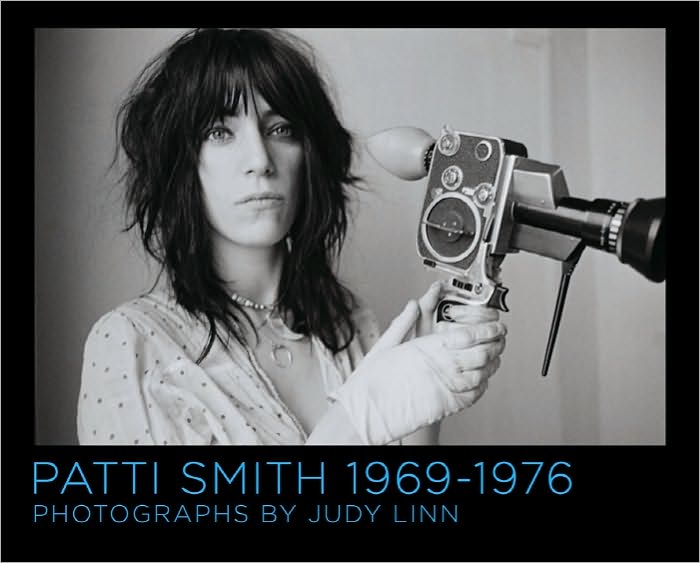
Circumventing the Male Gaze The New Yorker‘s Hilton Als on photographer Judy Linn and a new book collecting her photographs of Patti Smith:

I wonder what Patti and Judy saw in one another—I mean, beyond the description Judy provides in her little essay at the back of the book. What is the energy that one being picks up on, and how does it complement the other’s? Judy and Patti went to Detroit one summer and worked for a local paper and Crawdaddy, respectively; Patti wrote rock criticism and Judy took pictures. Lester Bangs was their friend. The world got bigger. Collaboration can be vexing, but there’s not a note of complaint in their work together. The pictures are documents of girls doing things together, sometimes in their summer dresses. And when there’s a third person present—Mapplethorpe, some other boy—they make a little room for him, but he’s rarely center frame; the pictures are rare in that they circumvent the male gaze and thus approval; instead, they document how each woman’s vision is equal to the other’s.

And finally…

Designer Data — The New York Times on data visualization:

Visual analytics play off the idea that the brain is more attracted to and able to process dynamic images than long lists of numbers. But the goal of information visualization is not simply to represent millions of bits of data as illustrations. It is to prompt visceral comprehension, moments of insight that make viewers want to learn more.

And on a related note: The Infographic Inforgraphic by Ivan Cash.

Comments closed

Something for the Weekend

A Swiss Typeface + 2 Italian Designers = New York City — Michael Bierut reviews Helvetica and the New York City Subway System by Paul Shaw for the WSJ:

Mr. Shaw is irritated with the widespread belief that the modern New York subway system has always been associated with the Swiss typeface Helvetica. This misperception was fueled by the attention the typeface received in 2007 on the 50th anniversary of its introduction, especially in Gary Hustwit’s “Helvetica,” a documentary survey of the astonishing ubiquity of a lettering style that appears over the entrances of American Apparel and Staples, on Lufthansa airplanes and New York City garbage trucks, on Comme des Garçons bags, and, yes, on New York subway signs. But the last, as Mr. Shaw shows, was not always so.

The Habit of Reading — Harvard professor Marjorie Garber talks about her new book, The Use and Abuse of Literature, with The Atlantic:

I don’t believe there’s a necessary divide between highbrow and lowbrow or whatever. I think that the habit of reading is intensely pleasurable and it’s also hard. The pleasure of it is partly the pleasure of detection, the pleasure of recognition, the pleasure of response… I’m very optimistic actually about the future of literature and literary reading—I’m far from despairing and I don’t actually feel that there’s a crisis. What we need is to continue to show the power of reading, the pleasure of reading—and, again, more people experience that than we are sometimes aware of.

Jessa Crispin, editor-in-chief of Bookslut,  reviews the book for NPR:

In fact, it’s proof of literature’s strength and lasting value that a 19th century writer like Jane Austen can still speak to the contemporary love lives of her readers, and that a book like the Diary of Anne Frank can still cause a ruckus among protective parents. That fight over comic books? The same arguments were made about Shakespeare, because, it was suggested, Elizabethan drama wasn’t real literature. (Early debates also routinely happened over novels, ballads and books written by women.) People have been trying to ban books for ages, from the 18th century’s Fanny Hill and the court cases against Lady Chatterley’s Lover and Ulysses, all the way to Harry Potter. “[Literature’s] greatness… is enhanced rather than undercut” by these challenges, Garber argues. There will always be stubborn, scandalized readers trying to define what literature is, but the greats will endure.

From Head to Hand — A lovely essay by ceramic artist Edmund de Waal, author of The Hare With Amber Eyes, on Primo Levi’s The Wrench and being a maker, in Slate:

Here, at last, was a book structured round structure. It was a conversation about how you took one part of learning and took it to another job. This made sense of how deeply connected the hand and the head really are. It articulated for me the way that I would throw a dozen porcelain pots and look at them, affectionately perhaps but also with a dispassionate eye, and plan the next dozen. It understood how I knew when dipping a pot into a bucket of glaze or listening to the sound of the flames when firing my kiln that there is something out of balance.

And, above all, there was a feeling that Levi was not speaking for people who make things. He doesn’t explicate or translate technical terms. In The Wrench, Faussone’s voice is clear and unhurried, paced in response to the real complexities and real pleasures that he encounters. Alongside him is Levi with his “specific challenge: I have a double experience—a chemist in the world’s eyes, and feeling, on the contrary a writer’s blood in my veins.”

People Like Us — A profile of Coudal Partners on Signal vs. Noise, the 37 Signals blog:

Despite the varied efforts, one consistent theme for the firm is a sense of curiosity and playfulness… That attitude attracts kindred spirits. “In our experimental films, in our contests, in our blog postings, and the products we make, we are trying to satiate our own curiosity and interest,” he says. “And we just take it on faith that there are a lot of people who share those curiosities and those interests with us. And if so, they will buy our products and they’ll watch our movies. Maybe you don’t have to sell to everybody. Maybe there’s enough people like us.”

And finally…

Bass is Best — Steven Heller on the movie posters of Saul Bass, for The Atlantic:

Bass’s work is appealing for its nuance, and his keen ability for making subtle, abstract symbols speak louder than literal photographs. What makes the new Hollywood versions so unappealing is the inability to allow the viewer to fill in the blanks. When Bass worked for Hollywood studios he created a consistent identity for films, from main and credit titles to posters and ads.

Comments closed

Midweek Miscellany

L’Exception Française —  The Guardian on an exhibition in Paris celebrating the centenary of French publisher Gallimard:

Gaston [Gallimard] himself always protested that he had never had any ambition or even vocation to be a publisher. And when in 1910 he was invited to join the “adventure” of the Nouvelle revue française (Nrf), it was an example of what became a rule, letting his friends “guide his life”. Modest, somewhat detached, well turned-out and above all, perhaps, “without side”, he was to prove a magnet for writers of violently contrasting aesthetic and political allegiances. He had charm, and he had luck. He drew towards him, and elected to that most exalted of circles, the comité de lecture, such arbiters of literary taste and intellectual vigour as Jacques Rivière, Jean Paulhan, André Malraux, Albert Camus and Raymond Queneau.

Gallimard, 1911-2011: Un siècle d’édition is at the Bibliothèque nationale de France until 3 July, 2011.

Dry Eyed — David L. Ulin revisits James M. Cain’s Mildred Pierce for the LA Times:

“Mildred Pierce” is less a work of noir than it is a straightforward realist novel: dry-eyed, unsentimental, in which a woman finds grace, of a kind, first by surpassing her limitations and then by recognizing them. That’s a metaphor for what it means to be a grown-up, for what it means to have to take care of a family, to sacrifice in the name of a greater good. It’s also an acute portrait of a society in transition — that of Los Angeles between the wars.

A Map of Wrong Turns — Robert Darnton breaks down why the Google Books settlement failed for the NYRB:

The cumulative effect of these objections, elaborated in 500 memoranda filed with the court and endorsed in large part by Judge Chin’s decision, could give the impression that the settlement, even in its amended version, is so flawed that it deserves to be pronounced dead and buried. Yet it has many positive features. Above all, it could provide millions of people with access to millions of books. If the price were moderate, the benefit would be extraordinary, and the result would give new life to old books, which rarely get consulted from their present locations on the remote shelves or distant storage facilities of research libraries… How can these advantages be preserved without the accompanying drawbacks?

See also: John Naughton on the settlement in The Observer.

Geographic Ingredients — An interesting article by Alison Arieff on communities of local manufacturers for The New York Times:

“For decades we have developed a culture of disposability — from consumer goods to medical instruments and machine tools. To fuel economic growth, marketers replaced longevity with planned obsolescence — and our mastery of technology has given birth to ever-accelerating unplanned obsolescence. I think there is increasing awareness that this is no longer sustainable on the scale we have developed.”

Interestingly, one of the companies Arieff mentions is DODOcase who use traditional bookbinding techniques to make beautiful cases for iPads and e-readers.

And finally…

A quick reminder that tomorrow, Thursday March 31st 2011, is the deadline for AIGA’s 50 Books/50 Covers competition. You can enter online here.

Comments closed