Skip to content

Category: Miscellany

Mad Men: The Shock of the Pretty

mad-men-season-7

Another overdue link from my ‘longreads’ bookmarks, The Hollywood Reporter talks to the cast and crew of Mad Men about the early days of the show now that it is about to come an end:

Christina Wayne (former senior vp scripted programming, AMC) Years earlier, I’d wanted to option Revolutionary Road [Richard Yates’ novel about suburbia in the 1960s]. But I was a nobody screenwriter, and [Yates’ estate] held out for bigger fish, which they got with Sam Mendes. So when I read [the Mad Men script], it resonated with me. This was a way to do Revolutionary Road, week in, week out. When we had lunch with Matt for the first time, I gave him the book. He called me after and said, “Thank God I’d never read this because I never would have written Mad Men.”

Perhaps more interesting, however, is James Meek’s lengthy article for the London Review of Books on the show’s superficiality, and its curious relationship with advertising:

Sterling Cooper, the fictional advertising agency around which Mad Men is built, is a caricature of the commercial TV system that produced the series: a pool of creative people in bitter thrall to the accountants and deal-makers they rely on for money. Although we learn in parenthesis that the agency gets most of its income from commission on the ads it places, for dramatic purposes the agency is divided into two departments: Creative, which comes up with campaign slogans, artwork and copy for ads, and Accounts, which persuades, charms, fawns, bribes and pimps its way to getting and keeping corporate clients. Mad Men is a show about writers dependent on advertising, written by writers dependent on advertising, the difference being that the fictional writers of Creative write the ads on which they depend.

Comments closed

Eve Babitz: Muse and Writer

Lili Anolik on the stranger-than-fiction life of Eve Babitz, “an irresistible hybrid of boho intellectual and L.A. party girl”, for Vanity Fair:

Eve Babitz’s claims to fame rest, in large measure, on her claims on the famous. She’s the goddaughter, of course, of one of the most influential composers of the 20th century. Then there’s that photograph of the chess match with Marcel Duchamp, Eve contemplating her next move without so much as a fig leaf for cover. And what about the series of Adams, better known than the original, some of them, to whom she offered her forbidden fruit? Jim Morrison, Steve Martin, Ed Ruscha, J. D. Souther, Stephen Stills, Glenn Frey, Harrison Ford, Warren Zevon, Ahmet Ertegun all took a bite at one time or another.

If that were her whole story, however, Eve wouldn’t be a whole story. She’d be a footnote. A minor figure of glamour in America’s cultural history. A groupie with a provocative pedigree. She’d be Edie Sedgwick, basically: so relentless a companion to celebrity that she became a bit of one herself, the spotlight just naturally spilling over onto her, making her luminous, too. But she’s not. Eve is Edie cut with Gertrude Stein and a little Louise Brooks thrown in.

Why?… Eve could write.

(pictured above: Eve Babitz, chessboard, and Marcel Duchamp, photograph by Julian Wasser, 1963)

Comments closed

James Wood On Not Going Home

Norfolk

In an essay for the London Review of Books, critic James Wood considers what is to be an immigrant and the desire to return home even though one can’t:

When I left this country 18 years ago, I didn’t know how strangely departure would obliterate return: how could I have done? It’s one of time’s lessons, and can only be learned temporally. What is peculiar, even a little bitter, about living for so many years away from the country of my birth, is the slow revelation that I made a large choice a long time ago that did not resemble a large choice at the time; that it has taken years for me to see this; and that this process of retrospective comprehension in fact constitutes a life – is indeed how life is lived. Freud has a wonderful word, ‘afterwardness’, which I need to borrow, even at the cost of kidnapping it from its very different context. To think about home and the departure from home, about not going home and no longer feeling able to go home, is to be filled with a remarkable sense of ‘afterwardness’: it is too late to do anything about it now, and too late to know what should have been done. And that may be all right.

I’ve lived in Canada for over 10 years now and I don’t have a ‘home’ to return to either. My parents no longer live where I grew up. My friends are scattered across the UK. Yet I still get pangs of homesickness at surprising moments — walking in a Toronto park on a rare foggy morning, or the smell of urban wood smoke — and it is a strange experience to feel nostalgic about a place that no longer exists and never really quite did. I know the England (and Scotland) that I miss is a fictional place — one that exists at least in part in books, film, and music as well as my memories — even as I miss it.  It doesn’t mean my feelings aren’t real, it just means that I know I can’t go home again. And it’s all right.

Comments closed

The Photo Man


Mark Kologi collects  found photos. In this weirdly fascinating short film he discusses buying and selling the personal pictures of complete strangers:

(Does he remind anyone of Steve Buscemi? Is that just me?)

Comments closed

Found: Photographs from the National Geographic Archive

If you’re not following the National Geographic‘s Tumblr Found, you really should be — it’s terrific. More than a few of the photographs, especially those of 1950’s and 60’s America, have a quietly Ballardian, drinking at the edge-of-darkness, Cold War chill:


Sightseers park to watch a Stratocruiser taxi across an underpass in Queens, New York, March 1951.
PHOTOGRAPH BY B. ANTHONY STEWART, NATIONAL GEOGRAPHIC


The glow of an atomic bomb test draws Las Vegas casino workers, March 1953.
PHOTOGRAPH BY VOLKMAR K. WENZTEL, NATIONAL GEOGRAPHIC


People on steep slope overlook western headland of Martha’s Vineyard, August 1950.
PHOTOGRAPH BY ROBERT SISSON, NATIONAL GEOGRAPHIC


A couple inspects a beach house destroyed after a storm in March 1962.
PHOTOGRAPH BY B. ANTHONY STEWART, NATIONAL GEOGRAPHIC


Fifty-two stories high, city noises fade and vistas expand. Chicago, June 1967.
PHOTOGRAPH BY JAMES L. STANFIELD, NATIONAL GEOGRAPHIC

1 Comment

Art Shay: The Sporting Life and Times

A short film about writer and photographer Art Shay, who shot pictures regularly for Sports Illustrated, Time, Life, Fortune, the Saturday Evening Post, Forbes, Business Week, Parade and the New York Times Magazine:

An exhibition of Shay’s photographs, ‘Art Shay: The Sporting Life & Times,’ will run from June 20 through September 30 at the HDC studios in Milwaukee.

(pictured above: Art Shay with Nelson Algren, author of The Man With the Golden Arm)

Comments closed

Boards of Canada: Electronica By Hand

The New York Times interviews Mike Sandison and Marcus Eoin of the Boards of Canada:

I think the digital world suffers from being just so literal, so deliberate and sober. As with digital photography, people have gotten used to applying simulated filters onto their pictures just to inject a bit of romance into the thing, because the raw pictures are so flat. But in the analog realm these beautiful things just happen by themselves without your conscious effort. You could say the wobbles and flutters in our music are equivalent to something like weeds overgrowing an old building. Nobody puts the weeds there, but nature comes along and makes the scene very tragic and beautiful.

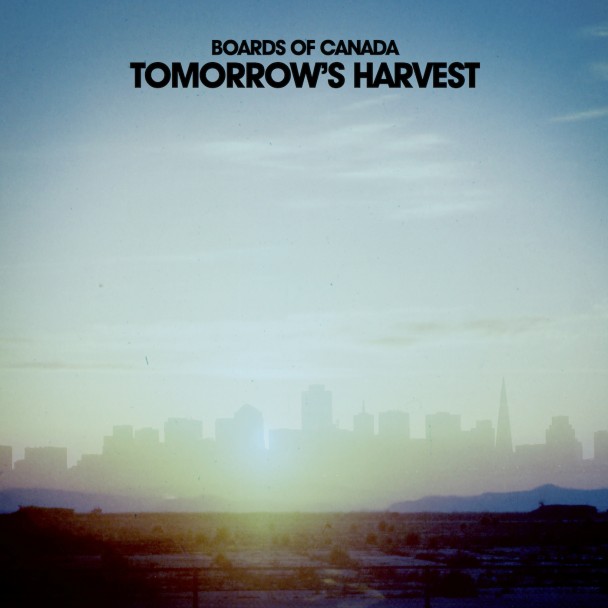
Dorian Lynskey (who wrote 33 Revolutions Per Minute: A History of Protest Songs from Billie Holiday to Green Day) reviews the new Boards of Canada album, Tomorrow’s Harvest, for The Guardian:

Tomorrow’s Harvest is their most cinematic and vast-sounding album yet, suggestive of barren plains and burning skies, wonder and dread, watching and being watched… It’s the kind of music that gives rise to strange notions. Boards of Canada sow a few clues as to their own intentions while leaving space for each listener’s pet theories. The title of the loping, suspenseful Jacquard Causeway seemingly indicates French geneticist Albert Jacquard, a proponent of “degrowth”: the idea of increasing happiness by working and consuming less. Alongside such titles as Sick Times and Collapse, it implies a concern with dwindling resources which infects the album title with apocalyptic menace akin to John Christopher’s 1956 eco-horror novel The Death of Grass.

Certainly this track, ‘Reach for the Dead’, sounds like music from a lost dystopian science fiction movie:

Comments closed

Something for the Weekend

Arresting Charm — Writer and artist Howard Chaykin on the late Carmine Infantino who died April 4th:

My best friend Michael Abramowitz was a huge fan of Carmine’s, and I held and hold his tenure on The Flash from 1956 to 1965 in great affection. Infantino’s Flash was infused with a sleek modernism absent from other work of the period, a look and sensibility utterly different from that of his peers. His work was profoundly two dimensional, apparently uninterested in deep space. He frequently used the lower panel border as his horizon, with figures standing on that line, creating an effect somewhat like a stage apron, with flat shapes serving to represent middle and deep distance. It sounds odd, and it was, but it had an arresting charm. Infantino’s work, viewed today, is far more sophisticated, but also more emotionally detached, than that of his colleagues.

You can see more Carmine Infantino covers at The Golden Age blog.

Accidental Publishing — A feature on Seattle’ comics publisher Fantagraphics in Publishers Weekly:

The Fantagraphics publishing program began “almost by accident” in 1981, according to Groth, and over the last three decades has grown to feature some of the most critically acclaimed comics artists in the U.S. and from around the world. The Fantagraphics list includes the work of the Hernandez brothers (Love and Rockets), Daniel Clowes (EightballGhost World), Chris Ware (The ACME Novelty Library), and Jim Woodring (Frank, Weathercraft) and has grown to include multi-volume archival reprint projects such as R. Crumb’s The Complete Crumb Comics and Charles Schulz’s Peanuts. By championing the comics medium and the creators it has published, Fantagraphics has been instrumental in raising the profile of graphic fiction as an art form that transcends the superheroes and monsters that established the medium so many decades ago.

The Only Kind of Geography — Writer Alan Moore on psychogeography and, in particular, his work with Eddie Campbell on From Hell (via LinkMachineGo):

My approach, in keeping with Theophile Gautier’s elegant definition of Decadent literature as being capable of plundering from the most ancient past or the most recent ‘technical vocabularies’ (which is also a good working definition of postmodernism), would be to see the current model of psychogeography as evolving from and thus essentially containing earlier versions of the practice, making these original techniques available to modern artists as important tools within their repertoire. For example, one need not subscribe to any nebulous New Age conceptions with regard to ‘ley lines’ to appreciate that Brecon visionary Alfred Watkins’s idea of linking geographic points into a web of sightlines could have modern application if regarded as a linkage of ideas, as in both Iain Sinclair’s work and in my own From Hell.

Psychic Garburator — Margaret Atwood on dreams at the NYRB Blog:

Most dreams of writers aren’t about dead people or writing, and—like everyone else’s dreams—they aren’t very memorable. They just seem to be the products of a psychic garburator chewing through the potato peels and coffee grounds of the day and burping them up to you as mush. If you keep a dream journal, your mind will obligingly supply you with more dreams and shapelier ones, but you don’t always want that, nor can you necessarily make any sense of what you may have so vividly dreamt. Why, for instance, did I dream I had surged up through the lawn of Toronto’s Victoria College and clomped into the library, decomposing and covered with mud? The librarian didn’t notice a thing, which, in the dream, I found surprising. Was this an anxiety dream? If so, which anxiety?

See also: Leon Neyfakh on Margaret Atwood at Technology at The New Republic.

And finally…

An interview with Patti Smith at LA Weekly:

I’m much too self-centeredly ambitious to simply be content with the transfer of success from one realm to another. I would rather write or record something great and have it overlooked than do mediocre work and have it be popular. My goals are really work-oriented. I don’t stay in one discipline because it’s more lucrative than another. In fact, the most successful thing I ever did was Just Kids, for which I had absolutely no expectations. I just wanted to do a beautiful little book that would give Robert [Mapplethorpe] to the people. And then it became a global success. It’s so funny, because Robert always cared about me becoming successful, while I never did. It’s almost like he was suddenly saying, “Dammit, Patti, you’re gonna be successful, even if I have to make it happen!” I always laugh when I think that my greatest success came through Robert.

Comments closed

Something for the Weekend

Excitingly Wrong — An interview with Peter Mendelsund at Porter Square Books:

I am always interested by anything graphical that strikes me as (this is difficult to put into words) excitingly wrong. There is a cool-factor to certain images that lie just on this side of disagreeable…pictorial effects that make me think “this will bother a lot of unimaginative people.” Whenever I see something like that, a piece of art or graphic design that has that special kind of wrongness about it, I think “I need to do something like this myself.” Attendant to this is always the feeling of “in the future, this will be done a lot.” In other words, today’s ugly is tomorrow’s beautiful.

Lurking Menace — Ostensibly reviewing David Bowie Is, the catalogue for the current V & A exhibition, and Bowie’s new album, The Next Day, Ian Buruma looks back at the performer’s career at the NYRB:

[Bowie] drew his inspiration from anything that happened to catch his fancy: Christopher Isherwood’s Berlin of the 1930s, Hollywood divas of the 1940s, Kabuki theater, William Burroughs, English mummers, Jean Cocteau, Andy Warhol, French chansons, Buñuel’s surrealism, and Stanley Kubrick’s movies, especially A Clockwork Orange, whose mixture of high culture, science fiction, and lurking menace suited Bowie to the ground. Artists and filmmakers have often created interesting results by refining popular culture into high art. Bowie did the opposite: he would, as he once explained in an interview, plunder high art and take it down to the street; that was his brand of rock-and-roll theater.

This Movie is About Hope — Film Comment has a transcript of Steven Soderbergh’s San Francisco International Film Festival ‘State of Cinema Address’:

 The simplest way that I can describe it is that a movie is something you see, and cinema is something that’s made. It has nothing to do with the captured medium, it doesn’t have anything to do with where the screen is, if it’s in your bedroom, your iPad, it doesn’t even really have to be a movie. It could be a commercial, it could be something on YouTube. Cinema is a specificity of vision. It’s an approach in which everything matters. It’s the polar opposite of generic or arbitrary and the result is as unique as a signature or a fingerprint. It isn’t made by a committee, and it isn’t made by a company, and it isn’t made by the audience. It means that if this filmmaker didn’t do it, it either wouldn’t exist at all, or it wouldn’t exist in anything like this form.

Read the whole thing. It reminded me of William Goldman’s famous comment about Hollywood in Adventures in the Screen Trade: “nobody knows anything.”

See also: At the New York Times film critic A. O. Scott looks at Soderbergh’s ‘Twitter narrativeGlue.

And finally…

Just to the Right of Karl Marx — At the Financial Times, Julia Hobsbawn remembers her father, the historian Eric Hobsbawn:

The cemetery plot, situated as my husband Alaric wryly pointed out later “just to the right of Karl Marx”, had been freshly dug…  My mum Marlene had bought the plot in an expensive and expansive act of love several years earlier. She is 81 and was my father’s unsung muse for 50 years, dealing constantly with demands on his time from students, publishers, editors and broadcasters while acting as his general reader…

My dad was pleased knowing that he would end up there. Highgate Cemetery’s east wing is full of iconoclasts from the intelligentsia. I can picture him, glasses pushed up over his high forehead, peering longsightedly at the guide produced by the Friends of Highgate Cemetery Trust about its history, hoovering up the text and filleting it for us in an exact and pithy way. “Ah yes,” he might say, energised like a freshly charged battery by what he had just read, “you see what is really interesting about this is…”

Comments closed

Midweek Miscellany

I was locked a conference room last week looking at books coming out in the fall, so tI have a lot of catching up to do…

At the Financial Times, Andrew O’Hagan on the influence of other art forms on writers:

Writing novels is quiet work: it can reveal astonishments but it doesn’t usually proceed from them. Maybe that is why novelists are so often attached to second art forms that wear their physicality or their beauty outwardly. Ernest Hemingway considered bullfighting an art form and, indeed, he thought writers should be more like toreadors, brave and defiant in the face of death. For Japanese novelist Yukio Mishima it was the art of the samurai – he loved the poise, the nobility, the control, tradition, all things you would say of good prose – and he died in a ritual self-killing. But most novelists take their influence seriously without letting it take over. They are emboldened by a love of opera, as were Willa Cather and the French novelist George Sand, or by modernist painters, as Gertrude Stein was, each of these brilliant women finding in the spaciousness and drama of the other art form an enlarged sense of what they themselves were setting out to deal with on the little blank page.

And at The Guardian, O’Hagan talks to six novelists, including Kazuo Ishiguro and Sarah Hall, about their passion for a second art forms.

And on a somewhat related subject… Charlotte Higgins profiles painter Leon Kossoff for The Guardian:

His father, a first-generation immigrant from Ukraine, owned a bakery round the corner in Calvert Road; he was one of seven siblings. It was “absolutely not”, he says, an artistic household. “Painting didn’t exist in my family.” What drew him to art as a boy was finding himself, almost without knowing how he had got there, in the National Gallery. “At first the pictures were frightening for me – the first rooms were hung with religious paintings whose subjects were unfamiliar to me.” Later they became old friends: Kossoff spent a long period visiting the National Gallery before opening hours, working from the old masters, making not copies but what you might call translations.

An exhibition of Kossoff’s drawings and paintings of London opens at the Annely Juda Gallery May 8th.

Shuffle — At the Center for Fiction, Dawn Raffell interviews Renata Adler:

I always shuffle. And there, the computer is just a disaster because the only thing I’ve ever been compulsively neat about is typing. I type with two fingers, and so I would always make a mistake near the end of the page, and since White Out is no use, I would throw the thing out and start again at the beginning. Then along came the computer and I thought it was going to help because you can move everything around all the time and you can change every sentence 50 different ways in seconds. But that’s exactly what I don’t want, because then what was I doing? If the computer can shift everything in a split-second, then what am I doing here? That’s what I used to do so carefully. One of the things that’s almost comically a problem is AutoCorrect, and what AutoCorrect thinks I’m saying.

The Amanda Palmer Problem‘ — Nitsuh Abebe at Vulture:

The web offers an opportunity to fall into the open arms of fans, in ways that weren’t available before. Here’s the catch: The web also makes it near-impossible to fall into the arms of just one’s fans. Each time you dive into the crowd, some portion of the audience before you consists of observers with no interest in catching you. And you are still asking them to, because another thing the web has done is erode the ability to put something into the world that is directed only at interested parties… Telling the world all about your life can look generous to fans and like a barrage of narcissism to everyone else.

Also from New York Magazine, the faintly ridiculous ‘At Home with With Claire Messud and James Wood‘:

“There’s been a great deal of closely spaced difficulty to sort through,” she says. “You know that Katherine Mansfield story, ‘The Fly’?” It’s about a fly being slowly drowned in ink. “Well, I am the fly. Every time I hope that things will get better, somebody drops another inkblot on me. So it seems to me if there were a divine lesson it would be to stop hoping that the blots will cease, and instead to come to terms with it … At some point you have to think, All right, it’s not as if someone is promising you something easier or better. You have to be grateful to get it done at all.”

Wood talks about his recent collection of essays, The Fun Stuff, at The Spectator, and Messud’s new novel The Woman Upstairs, was published by Knopf this week

Comments closed

Midweek Miscellany

Keeping it Simple — Gilbert Hernandez who has two new books out, Julio’s Day and Marble Season, talks about his work at the LA Times Hero Complex blog:

“What I’m really trying to do is streamline my work, to make it an easier read,” he said. “I’ve always admired newspaper comic strips that are very simple and direct, don’t have a lot of dialogue, don’t have a lot of exposition. When I look back at a lot of the comics that are overwritten, like the beloved old Marvel comics, I edit them in my head, to see how modern readers might become more interested in following them. When I look at my old stuff, like ‘Poison River’ and the early ‘Palomar’ stuff, I sometimes think it’s too dense to enjoy. For me, anyway.”

Mechanics — Tom Whipple on algorithms for Intelligent Life:

What has changed is what algorithms are doing. The first algorithm was created in the ninth century by the Arabic scholar Al Khwarizami—from whose name the word is a corruption. Ever since, they have been mechanistic, rational procedures that interact with mechanistic, rational systems. Today, though, they are beginning to interact with humans. The advantage is obvious. Drawing in more data than any human ever could, they spot correlations that no human would… Their strength is that they can take in that information in ways we cannot quickly understand. But the fact that we cannot understand it is also a weakness.

Cardboard Boxes — At The New York Times, Dwight Garner on packing up his family’s favourite picture books:

In the past, when I’ve had to pack my personal library, what I’ve boxed are talismans of intense yet essentially private experience. Picture books aren’t like this. When you’re putting away these square, dog-eared, popcorn-butter-stained things, you’re confronting an entire cosmos of collective memory… They occupy places in our family’s shared consciousness as indelibly as do summer vacations, trips to the hospital or injured birds cared for in cardboard boxes.

And finally (but most importantly)…

A profile of Kim Gordon at Elle Magazine:

Sonic Youth is not just revered within the indie rock world; it’s an indelible part of American pop-cultural history, a sort of byword for tasteful and progressive art that’s also popular. “She was a forerunner, musically,” says Kathleen Hanna, of the riot grrrl band Bikini Kill and later the dance-rock group Le Tigre. “Just knowing a woman was in a band trading lead vocals, playing bass, and being a visual artist at the same time made me feel less alone.” Hanna met Gordon when she came to a Bikini Kill show in the early ’90s. “She invited my band to stay at her and Thurston’s apartment,” Hanna says. “As a radical feminist singer, I wasn’t particularly 
well liked. I was in a punk underground scene dominated by hardcore dudes who yelled mean shit at me every night, and journalists routinely called my voice shrill, unlistenable. Kim made me feel accepted in a way I hadn’t before. Fucking Kim Gordon thought I was on the right track, haters be damned. It made the bullshit easier to take, knowing she was in my corner.”

(Tasteful is not a word I would necessarily use in association with Sonic Youth, but hey… )

3 Comments

Last Shop Standing

Saturday is Record Store Day and the 2012 documentary Last Shop Standing, the official film of the year’s celebration, will finally be available on DVD in the US and Canada.

Inspired by the book of the same name by Graham Jones, the film looks at the rise, fall and rebirth of independent record shops in the UK and features interviews with record shop owners, industry folks, and musicians including  Johnny Marr, Paul Weller, Billy Bragg, Nerina Pallot, Richard Hawley and Clint Boon:

1 Comment