Skip to content

Category: Miscellany

Something for the Weekend

Potential for Infection — A lovely essay by Alan Bennett on books, libraries, and bookcases, in the LRB:

‘Books Do Furnish a Room’, wrote Anthony Powell, but my mother never thought so and she’d always put them out of the way in the sideboard when you weren’t looking. Books untidy, books upset, more her view. Though once a keen reader herself, particularly when she was younger, she always thought of library books as grubby and with a potential for infection – not intellectual infection either. Lurking among the municipally owned pages might be the germs of TB or scarlet fever, so one must never be seen to peer at a library book too closely or lick your finger before turning over still less read such a book in bed.

Not A Sexy Trend Story — Dennis Johnson’s scathing must-read post on the Borders bankruptcy (and the way it is being reported) at MobyLives:

[T]his is a story that has become about some desired and sometimes advertiser-driven trend, and not the more complex reality — which is that what’s happened is not good for either print or digital books.

If there’s anything to take away from the Borders story, it’s this: It doesn’t at all represent that fewer people want to buy print books. It represents that fewer big corporations want to sell them.

19th Nervous Breakdown — Jonathan Ross reviews Supergods: Our World in the Age of the Superhero by Grant Morrison for The Guardian:

Shaving your head before dragging up in full fetish gear and wolfing down a magic mushroom omelette may well open the door to another realm, or give you access to demons and guardian angels. I have never tried it so I can’t say with absolute certainty. But I am pretty sure that what Morrison was experiencing and is describing is a cross between a nervous breakdown and a common-or-garden trip.

See also: David Itzkoff reviews the book (less sympathetically) for The New York Times.

And on a related note… Joe Carducci reviews Absolute Dark Knight by Frank Miller for the LA Review of Books.

And finally…

Typographical reference guide FontBook is now available on the  iPad:

Comments closed

Midweek Miscellany


Furious — Writer and herstorian Trina Robbins talks to Imprint about her new book on pioneering female cartoonist Tarpé Mills and her newspaper strip Miss Fury:

I’ve always been a lover of noir and of good adventure strips in the noir mode, as typified by Milton Caniff’s Terry and the Pirates. They are adventures that are good, fun escapist reading. As you know, there were a number of cartoonists during the 1940s who worked in that genre, but only Tarpé Mills was a woman. That alone would have been enough to attract her to me. But add to that: good art, solid storytelling, memorable characters… including three of the strongest female characters in comics…

Mills’s characters also wore great fashions… at a time when many of the male cartoonists dressed their female characters in featureless red strapless evening gowns or equally featureless short red V-necked dresses. Of course there are exceptions – Caniff was very up on women’s styles. But I think in general one sign that a comic is by a woman is that attention is paid to the clothing – Miss Fury, Brenda Starr, Mopsy, I could go on and on – and that men tend not to show much awareness of what real women are wearing, even today… especially today!

And on the subject of comics…

Word as Pictures — Designer Rob Harrigan has launched a new series of interviews about design and comics. First off is designer Rian Hughes:

Comics, in a broader sense, are simply words and pictures – and words AS pictures, which as a designer, and especially as a font designer, is what fascinates me the most. The formal aspects of communication – this is the very language designers manipulate for their own ends, the medium culture uses to spread memes.

Still Great, Still in Production — Alexander Lange reviews Dieter Rams: As Little Design as Possible by Sophie Lovell for The Architect’s Newspaper:

Open Dieter Rams: As Little Design as Possible. Turn to page 64. There you will find the Braun product line circa 1963. I would buy any one of those products today, save the cameras, were they sold in stores. Which is to say, you will get no argument from me about Rams’ greatness as an industrial designer and the superiority of his achievement as head of Braun’s product design department from 1961 to 1995, where he designed or co-designed 500 products, lighters, door handles, coffee grinders, hi-fis and televisions, hair dryers, and cameras. Plus those Vitsoe 606 shelves, still great, still in production.

And finally…

Steven Heller on designer, art director and inventor of the album cover Alex Steinweiss, who died on Sunday aged 94, for The New York Times:

Mr. Steinweiss preferred metaphor to literalism, and his covers often used collages of musical and cultural symbols. For a Bartok piano concerto, he rejected a portrait of Bartok, using instead the hammers, keys and strings of a piano placed against a stylized backdrop. For a recording of Gershwin’s “Rhapsody in Blue,” he used an illustration of a piano on a dark blue field illuminated only by an abstract street lamp, with a stylized silhouetted skyline in the background…

Mr. Steinweiss said he was destined to be a commercial artist. In high school he marveled at his classmates who “could take a brush, dip it in some paint and make letters,” he recalled. “So I said to myself, if some day I could become a good sign painter, that would be terrific!”

Comments closed

Something From the Weekend

Paint It Black — Alan Moore talks to Pádraig Ó Méalóid about the latest instalment of League of Extraordinary Gentlemen, Century: 1969 (available next month) for the Forbidden Planet blog:

What we’ve got in 1969, in keeping with the League’s usual practice, is that we’ve got a world entirely composed of references to the culture of that period, or around that period. So we’re taking bits from various films, television series, books, comics, any culture of that time we’re working into the fabric of our story… I hope that people will have as much fun digging out the various references as we had putting them in there…

See also: Pádraig Ó Méalóid’s recent interview with Alan Moore for 3AM Magazine.

Gonzo Graphic Novels — Six leading cartoonists discuss their own favourite cartoonists for The Guardian. Here’s political cartoonist Martin Rowson on Joe Sacco:

Although Art Spiegelman’s Maus is a work of incredible importance, I think it gave the entire genre a bum steer. It then got into this terrible kind of introspective, personal, adolescent angstiness. All this “you have to be serious about this because it’s a serious art form”: well, it is and it isn’t. Therefore, discovering Joe Sacco was a liberation. Here is somebody who is using the medium as journalism and reportage. It’s taking the best bits of the underground comics of the 60s – the radicalism – with the personal immersion you got with Spiegelman. It’s an extraordinarily powerful way of telling a story – a true one in this case. The fact that he places himself in the heart of it makes it gonzo journalism turned into a graphic novel, although it’s not really a graphic novel, it’s a sort of visual journalism.

Also in The Guardian… Lee Rourke, author of The Canal, on The Book Barge, a bookstore in a travelling canal barge:

It is the brainchild of Sarah Henshaw. “By setting up on a canal boat,” she explained, “we hope to promote a less hurried and harried lifestyle of idle pleasures, cups of tea, conversation, culture and, of course, curling up with an incomparably good Book Barge purchase.” I was immediately sold. But why a canal boat? “I hoped that by creating a unique retail space, customers would realise how independent bookshops can offer a far more pleasurable shopping experience than they’re likely to find online or on the discount shelves at supermarkets.”

Wonderful.

And finally…

Recording the Disjunction — Errol Morris talks to the A.V. Club about truth, self-deception, and his new documentary Tabloid:

People sort of imagine that they go to a documentary—and this is also true [when] you read an article, a work of journalism—that they’re [experiencing] a work of non-fiction. We know that what we’re reading is not the absolute truth. If we’re reading a first-person account, we know that each and every one of us, myself included, have a great desire to be seen in a certain way, or to be perceived in a certain way. It’s unavoidable. What a movie can do—and this is what really does interest me, it’s at the heart of documentary—is not so much delivering the so-called truth. Yes, pursuing the truth, trying to investigate what really happened, trying to uncover some underlying reality, but recording that disjunction, that distance between how people see the world and the way the world might really be—that’s at the heart of the enterprise.

Comments closed

Midweek Miscellany

Comic Unease — Cartoonist Emily Carroll talks about comics, fairy tales, dreams, and her story His Face All Red with The Comics Journal:

I think a lot of fairy tales have that sort of unease built into them, just because they introduce so many elements that they never explain, and use fairy tale logic—the kind that isn’t really logic at all, but has that matter-of-fact feel to it anyway—and the reader just has to roll with it.

Dark Matter — Author Lev Grossman on fan fiction for Time Magazine:

Fan fiction is what literature might look like if it were reinvented from scratch after a nuclear apocalypse by a band of brilliant pop-culture junkies trapped in a sealed bunker. They don’t do it for money. That’s not what it’s about. The writers write it and put it up online just for the satisfaction. They’re fans, but they’re not silent, couchbound consumers of media. The culture talks to them, and they talk back to the culture in its own language. Right now fan fiction is still the cultural equivalent of dark matter: it’s largely invisible to the mainstream, but at the same time, it’s unbelievably massive.

Grossman’s new novel The Magician King (the sequel to his 2009 novel The Magicians) is published next month.

Dysfunctional Spies — Author John Le Carré reflects on his time in MI6:

The creation of George Smiley, the retired spy recalled to hunt for… a high-ranking mole in Tinker, Tailor, was extremely personal. I borrowed elements of people I admired and invested them in this mythical character. I’m such a fluent, specious person now, but I was an extremely awkward fellow in those days. I also gave Smiley my social ineptitude, my lack of self-respect and my fumblings in love.

Because I came from a dysfunctional background, I made home the most dangerous place for Smiley. Home is where he lets himself in cautiously. Home is where he sees the shadow of his adulterous wife in the window and wonders who she’s with.

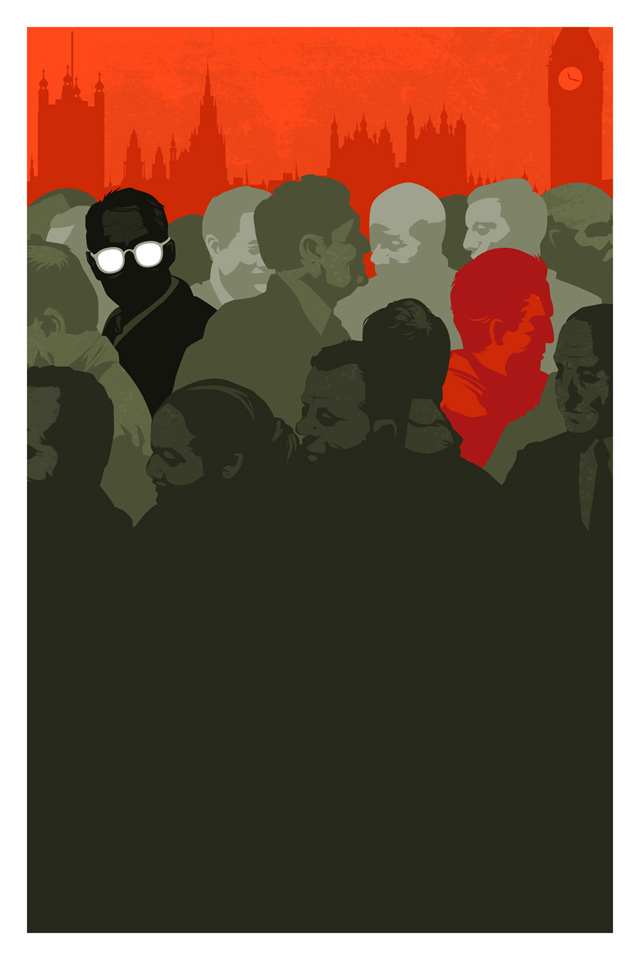
Pictured above is Matt Taylor’s incredible illustration for a new Penguin US edition of Le Carré’s novel Tinker, Tailor, Soldier, Spy — more of that wonderful stuff to come — and a new film adaptation of the book, starring Gary Oldman as Smiley, is being released later this year:

Comments closed

Something for the Weekend

Sweet Nuttin’ — A primer on George Herriman’s classic and wonderfully idiosyncratic comic strip Krazy Kat at Robot 6:

Krazy Kat is far from a chore… Indeed, it is rarely anything less than a delight to read, although it can be a bit challenging for newcomers. The early strips are dense with wordplay, while the later strips take on the quality of near-abstract paintings at times. Then there’s Krazy’s off-kilter dialogue (“If only I could be star or a moom or a komi or ivin a solo eeklip. But me, I’m nuttin”). Thus, whichever book you decide to dive into first, I’d recommend taking your time. Read (and reread) the strips slowly and don’t feel the need to rush through.

Unhappy Endings — Jason Zinoman, author of Shock Value: How a Few Eccentric Outsiders Gave Us Nightmares, Conquered Hollywood and Invented Modern Horror, talks to Terry Gross for NPR’s Fresh Air:

I think that as you look at this period from ’68 to the end of the ’70s, generally, first of all, you see a lot more unhappy endings. There isn’t this kind of catharsis at the end that you see in a lot of movies before that.

The central kind of monsters are no longer werewolves and vampires and the supernatural. The central monsters are – or I guess I would say the central monsters become serial killers and zombies… And I think the other thing that marks it is there’s a certain kind of moral ambiguity about these movies and just generally a sort sense of confusion and disorientation that marks most of these films.

Meanwhile, over on KCRW filmmaker and author John Sayles talks about his hefty new book A Moment in the Sun with Michael Silverblatt for Bookworm.

And finally…

Rick Poynor on the dictionary as art concept for Designer Observer:

With book design, we should value appropriateness to subject, vivid animation of content, and the dexterity and panache with which the designers interpret every purposeful, cherishable convention of the book. The notion of continual reinvention as a worthwhile or attainable goal is particularly misplaced here…

Comments closed

Midweek Miscellany

60 Years of Innovation — The estimable John Self on publisher Peter Owen for The Guardian:

It cannot simply be good luck that leads one man to publish such an embarrassingly long list of riches. Owen is clear that both “literary acumen and a business mind” are essential. He has survived where other publishing houses forging a similar path, such as those of Marion Boyars and John Calder, have been closed or sold, and had their lists filleted by larger houses; if you are just “an editor buying books you like, with no idea how to run a business,” Owen says, “you don’t stand a chance.” For him, a distinctive look helped: bold (and presumably inexpensive) two-colour covers by Keith Cunningham may have lacked the cool of Jan Tschichold’s Penguin templates, but gave the list a uniform feel. The odd commercial success helped more, with titles which caught the public mood such as Siddhartha and The Man Who Planted Trees. Owen may not always have liked his authors (Salvador Dali was “a creep [but] not as mad as you’d think. When you mentioned money, he suddenly became very sane”), but it’s hard to question his commitment to new and avant-garde writing.

Goodbye To All That — The Economist glumly ponders the fate of Borders and independent bookstores:

The problem, however, is that no one seems willing to buy full-price books anymore. Campaigns to get people to buy books from their local bookstores—such as “Save Bookstores Day” on June 25th—miss the point. While there is demand for real bricks-and-mortar places to gather, drink coffee and read new books, such places can’t exist if the market can’t accommodate them… [T]he market is squeezing out a meaningful public space. It will be interesting to see what fills the void these bookstores leave behind.

“Interesting” is probably not the adjective I would have used personally…

Dead Cool — Comics critic Paul Gravett talks about his new book 1001 Comics You Must Read Before You Die with Bleeding Cool:

Initially, the American publishers tried to insist that every one of 1001 Comics must be available in English. But I had to insist that this would exclude loads of absolute masterpieces, and it wouldn’t make the book work in the other languages it is going to appear in, such as French or German. So somewhere around 12 per cent or so of the 1001 are not available in English, at least not yet. I seriously hope that exposure in 1001 will alert publishers and motivate them to translate them.

And finally…

Naomi Yang, designer, visual artist, publisher and founding member of the band Galaxie 500, talks with Print Magazine:

A book has always been an object! That is what can be so wonderful about them and so different than a digital book—or even a print-on-demand book. A book is an entire world: you see the cover, you pick it up, you feel the material of the cover, you turn it over, you read the back—and then you open it! You get the progression of the half-title, the title page, the table of contents and then that first page of text, that first line. And there are so many small things, the page numbers, the running heads, the proportions of the margins—the same elements in each book—but how will you do it this time?


1 Comment

Something for the Weekend

Simplicity with Sophistication — Typographer Gerard Unger talks about his work and the influence of Wim Crouwel with MyFonts:

What seemed amazing when I joined [Crouwel’s] company Total Design in 1967 was how simple it all seemed. When Wim explained how to design and do typography, you got the impression it had always been done like that and that it couldn’t be done any other way — maximum clarity. Later, I realized that this approach also had its limitations. When graphic designers had to select a typeface, they automatically specified Helvetica and stopped thinking. Wim’s own work was different: it seemed clear and simple, but was full of refinement, which comes naturally to him. That is probably why it is so attractive to younger generations: simplicity with sophistication. Yet I personally wouldn’t welcome a revival of Swiss typography — it was too formulaic. Also, I think design should be more of a social thing than that. For too long, graphic design has been about individualism and about fulfilling personal ambitions.

The Doctrine of Immaculate Rejection— A wonderful with E. B. White from the Paris Review 1969. It’s a great read, but it’s hard not to get the feeling it comes from a more genteel era that has long since disappeared (via Longform):

I revise a great deal. I know when something is right because bells begin ringing and lights flash. I’m not at all sure what the “necessary equipment” is for a writer—it seems to vary greatly with the individual. Some writers are equipped with extrasensory perception. Some have a good ear, like O’Hara. Some are equipped with humor—although not nearly as many as think they are. Some are equipped with a massive intellect, like Wilson. Some are prodigious. I do think the ability to evaluate one’s own stuff with reasonable accuracy is a helpful piece of equipment. I’ve known good writers who’ve had it, and I’ve known good writers who’ve not. I’ve known writers who were utterly convinced that anything at all, if it came from their pen, was the work of genius and as close to being right as anything can be.

And finally…

Type and Still Imagery — Writer-director Mike Mills, who began his career as a graphic designer, talks about his semi-autobiographical movie Beginners with AIGA:

Before I was a filmmaker I loved Godard as a graphic designer. He does the best design, to me. And a lot of my graphics being very, almost sort of didactic or presentational, or sort of centered and clean, to me really comes from how Godard uses type and still imagery in his films, in Tout va bien or One Plus One or Pierrot le Fou, so Godard’s been influencing me for a very long time. And the graffiti in the film is much more sort of May 1968, sort of Situationist graffiti rather than being like hip-hop graffiti.

There is also a book, Drawings From the Film Beginners, that accompanies the movie (thx @Henry)

Comments closed

Something for the Weekend

An interview with Toronto based lettering designer Ian Brignell at The Case and Point:

I’m influenced by just about everything, but I especially like the work that was done on packages from the 19th and early 20th century. I also enjoy amateur hand-lettered signs, since they often contain very quirky and original details that I would never think of. I have to mention that during college I saw a book with some examples of Herb Lubalin’s lettering work, and this was one of the moments that really made me want to pursue lettering for a living.

All Things Considered — An interview with Nate Burgos about his Rare Book Feast video project:

I enjoy writing about anyone and anything which interest me on my design-related blog, an all-people-and-things-considered destination. Then there’s tweeting, lots of it. Twitter is newsprint. Designer Lorraine Wild said, “You have to be interested in culture to design for it.”

Dull But DurableThe Guardian‘s Justin McGuirk on Soviet design and a new book on the subject called Made in Russia by Michael Idov:

There were some genuinely classic designs… The Lomo camera, with its super-saturated film, is still hugely popular in an otherwise digital world. The avos shopping bag, essentially a string vest with handles, was ubiquitous and remains far preferable to plastic bags, just as the collapsible portable cup is preferable to millions of plastic and polystyrene ones. The ribbed drinking glass, meanwhile, and the Saturna and Raketa vacuum cleaners, simply lasted for ever. We may mock Soviet design, but there are lessons to heed from it. Durability, for one. In our disposable culture, rapid replacement cycles have almost inured us to the idea that nothing lasts. Such is the price, apparently, of free enterprise and consumer choice.

Secretly Young — John le Carré’s keynote speech at the Think German Conference earlier this month (via Bookslut):

I was young when I started writing about George Smiley — twenty-eight — and Smiley was already old, a proxy father. But Smiley’s journey through the novel, despite his age, is the journey of a young man’s self-discovery. Underneath his inconspicuous exterior, he is a sensitive man still growing up, still looking for answers, and for the experience that delivers them.

In short: he is secretly young.

And Smiley’s private journey — from this first novel, right through to his last — for me at least, with the advantage of hindsight and no longer the responsibility of writing about him — is a single Bildungsroman that leads him through disappointments, mistaken loves, failures and occasional successes, to some kind of ultimate maturity: that is to say, to the point when he discovers that the object of his life’s search is neither the absolute enemy of his imagination, nor the absolute answer to his quest.

See also: Tom McCarthy, talks about his novels Remainder and C, and his life in Prague and Berlin before becoming a published writer, at The Days of Yore:

Your book is being held up as, you know, avant-garde, or as an anti-novel, or as anti-realist… None of these seem quite right. My understanding of the avant-garde is as a historical thing, it had a moment and it has an implication for now, but it’s almost like saying, “Are you leading the French revolution?” “No!” [Laughs.] If you pay too much attention, then when you sit down to write you’ve been primed to think: “Okay, so I’m being avant-garde; how do I be avant-garde?”

I don’t know exactly where I’m going next, but I don’t think it’ll be anything that blatantly looks either avant-garde or not avant-garde or realist or not realist.

And finally, seeing as it’s Friday…

A Pixaresque animated homage to the late Dave Stevens to mark the 20th anniversary of the film adaptation of his comic The Rocketeer:

(via Robot 6)

Comments closed

Midweek Miscellany

There’s been much speculation online about who designed the wonderful hand-drawn cover for Big Machine by Victor LaValle (pictured above). Thanks to the nice folks at UK publisher No Exit, I can finally identify the designer as Lynn Buckley, who originally designed the cover for the US publisher Spiegel & Grau.

Collected — Gary Groth, co-founder of alternative comics publisher Fantagraphics, talks about the state of the industry with the Comic Book Reporter (via Robot 6):

By and large, nobody publishes alternative comic books anymore. The reason is fairly obvious; since the reader knows it’s going to be collected in a graphic novel, there’s very little reason for them to buy a twenty-four page comic of something he’s going to get a year or two down the line as a graphic novel, and in the way it probably ought to be published anyway, collected in a single work. I think it’s just an inevitability of the rise of the graphic novel as the dominant form of alternative comics. I don’t know how accelerated that’s going to be for mainstream comics. It feels like it’s headed that way.

Lingua Franca — Tim Parks on translation and international literature for the NYRB:

[N]either readers nor writers are happy any longer with the idea that a literary text’s nation or language of origin should in any way define or limit the area in which it moves, or indeed that a national audience be the first and perhaps only arbiter of a book’s destiny. We feel far too linked, and linked in the immediate present, not to want to see immediately what books are changing or at least entertaining the whole world. And if we are writers, of course, we want our own books to travel as widely as possible.

And finally…

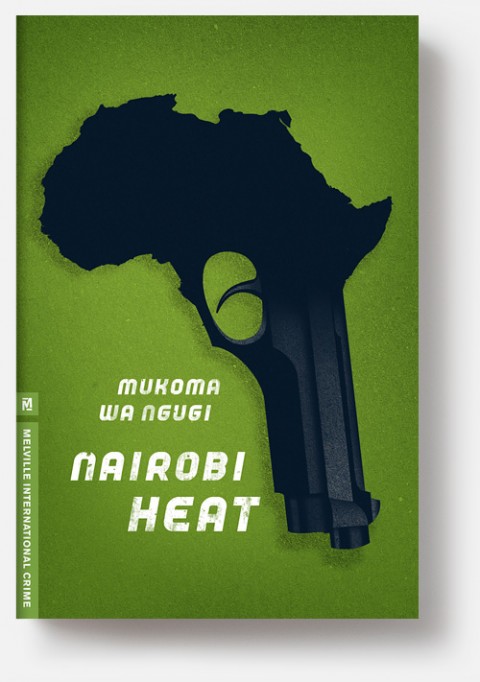
Chisel Away — An interview with designer Christopher Brian King, art director at Melville House, at Slated Magazine:

On a conceptual level, [designing for book covers] actually isn’t much different from designing a logo, for example. After all, a logo has to give you a glimpse into the whole story of a company, so it comes down to the same challenge: how do I chisel away at this big, complicated story until it becomes a single elegant image which explains what the whole thing is about? Where book covers differ is that you have a much larger toolkit to work with—typography, color, illustration photography, production tricks, or anything else. Since it’s so open-ended, the real challenge starts to become figuring out which tool is best to use on any given project.

3 Comments

Something for the Weekend

Simplicity and Economy — Mike Dempsey profiles Keith Cunningham, who designed book covers for Peter Owen, for the Foyles bookshop blog:

A tight discipline can galvanise a creative designer’s mind and Cunningham rose to the occasion with his very first cover for Peter Owen.

This sparse graphic approach was to become the visual hallmark of Peter Owen covers in the 60s and 70s. Over a relatively short period Cunningham quickly created a highly individual ‘brand’ (before the term was used) via the houses jackets distinguished by their utter simplicity and economy.

There is a much longer profile of Cunningham on Dempsey’s own (and excellent) blog Graphic Journey.

Movement and Sound — Marjane Satrapi, author of Persepolis, offers advice on how to film comics:

Animation and comics are false siblings. They resemble one another but they’re two completely different things. The relationship a reader has with a comic is nothing like the one a viewer has with a film. When you read a comic, you’re always active, because you have to imagine all the movements that happen between the frames. In a film, you are passive: all the information is there. And when you make a comic it never happens that you have 500 or 1,000 people reading it in the same place at the same time, all reacting. The language of cinema and comics is different, even though they both use images. In comics, you write with images; they’re like pictograms. And in a movie you think about movement and sound and music, all those things that are not considerations when making comics.

Cutting to the Chase — Alan Moore discusses his new novel Jerusalem with Helen Lewis Hasteley of The New Statesman:

[W]hile his first prose novel, Voice of the Fire (published in the mid-1990s), took 300 pages to cover the county of Northamptonshire, Jerusalem uses 750,000 words to explore an area of Northampton about half a square mile across. “So the next one will be several million words and it’ll just be about this end of the living room.”

Moore says he hopes never to write anything as long as Jerusalem again but he won’t countenance scaling it back. “Any editor worth their salt would tell me to cut two-thirds of this book but that’s not going to happen. I doubt that Herman Melville had an editor — if he had, that editor would have told him to get rid of all that boring stuff about whaling: ‘Cut to the chase, Herman.'”

And finally…

Manual Labour — Peter Foge profiles philosopher Simone Weil, who work for a time in a steel plant and died of self-induced starvation in wartime London, for Lapham’s Quarterly:

Part philosopher, part activist, part mystic, Weil is almost impossible to classify. A youthful Marxist who abandoned the faith in favor of liberal pluralism. A lover of all things ancient Greek who equated the Roman Empire with Nazi Germany and Hitler with Caesa, she was a mass of contradictions. Yet her reputation has grown over time as one of the most original and uncomfortable thinkers of the twentieth century. T.S. Eliot, a great admirer, considered her “a woman of genius, a kind of genius akin to that of the saints.” “A genius,” added one of her many anthologists, “of immense revolutionary range.”

Comments closed

Midweek Miscellany

An interview with the talented Allison Colpoys, book designer at Penguin Books Australia, at The Design Files.

Particular Beasts — A brief interview with art director John Gall about teaching book design:

Each book is its own particular beast that has to be designed from the ground up. Every designer has their own way of looking at the problem and coming up with a solution. It can’t help but be personal on some level.

A Twist, Flourish or Quirk — Louise Fili and Steven Heller, authors of Scripts: Elegant Lettering from Design’s Golden Age, on script typefaces at Design Observer:

During the letterpress era [script typefaces] were in such great demand that many people “invented” them, and many others copied them. In some commercial printing shops, composing cases filled with scripts were stacked floor to ceiling to the exclusion of other type. Printers routinely amassed multiple styles of the heavy metal type fonts, each possessing a distinct twist, flourish or quirk, used to inject the hint of personality or dash of character to quotidian printed pieces… Scripts signaled propriety, suggested authority yet also exuded status and a bourgeois aesthetic. The wealthy classes couldn’t get enough fashionable scripts in their diet.

The Pilot Fish and The Whale — David Carr, media columnist at the New York Times, talks about the documentary Page One: Inside The New York Times with screenwriter Aaron Sorkin  for Interview Magazine:

I think one of the things that Page One does an amazing job of demonstrating is the importance of editors. You can see our editor, Bruce Headlam, shaping, arguing, pushing back. Of course, that’s what you don’t have a lot of in the blogosphere. There is nobody pushing people to support what they’re saying, nobody arguing against the assumptions that are brought to the table…

Slow Journalism — An interview with cartoonist and journalist Joe Sacco (Footnotes in Gaza) for the A.V. Club:

[I]t’s one of the slowest art forms or media there is. You know, there’s fast food and there’s the slow food movement; I guess this is slow journalism. It just forces you into it. It’s difficult for me because I love being in the field, so to speak. I love that day-to-day thrill of being in places, and the great privilege of meeting people and going into their homes and seeing what their lives are like. I love that. But when you compare how much time is spent reporting to how much time is spent at a desk just writing and drawing, the reporting is a fraction. That’s just the way it is.

And finally…

Sing Out — Dorian Lynskey, author of 33 Revolutions per Minute, recommends five books about protest songs. The cover of 33 Revolutions per Minute was designed by Jacob Covey.

http://www.bookdepository.com/Footnotes-Gaza-Joe-Sacco/9780805092776/?a_aid=optimist
Comments closed

Something for the Weekend

A lovely new cover design by Dan Mogford for All Over the Map by Michael Sorkin (Verso Books).

In an epic two part interview for Bomb Magazine, George Saunders, author of Pastoralia, talks about writing with Patrick Dacey.

From part one:

[O]ne of the challenges of the writing life is to find new things to say and/or new ways to say them. And this is a paradox, because when you write your first book, you actually carve out a great deal of what you’ll end up working with for the rest of your life… [T]hat’s genuinely exciting. But then there’s the next 60 years to get through (!).

From part two:

Sometimes when I read new fiction, I feel that the writers of it, myself included, have a somewhat dysfunctional relationship with our own culture. I don’t mean we disapprove of it. I mean that we have absorbed so much habitual disapproval of it that we are no longer able to see it, and therefore are unable to disapprove of it properly. How can you disapprove (or approve) of something you no longer see? If your palette of possible modes of representation has been habitually narrowed and restricted (to the edgy, the snarky, the hip, etc., etc.), if that palette has been shorn of, say, the spiritual, the ineffable, the earnest, the mysterious—of awe, wonder, humility, the truly unanswerable questions—then there isn’t much hope of any real newness there.

Just as an aside, I love this cover for Pastoralia (I’m not sure who the designer is though. Anyone?):

Mom — A short interview with Gene Hackman in GQ. I’ve always been a fan of Hackman’s acting, what I didn’t realise is that he is also a novelist:

Yeah, they tell you not to write about your mom in books, but I don’t know how you keep from doing that.

Fantastic. Hackman’s most recent novel is Payback at Morning Creek.

And finally…

A gallery of vintage Irish book covers from the 1920’s to 1970’s curated by Niall McCormack, a graphic designer based in Dublin. Pictured above: Cuir Síos Air, Fallons. Cover design by Cor Klaasen. (Via The Donut Project).

Comments closed