Skip to content

Category: Miscellany

Something for the Weekend

The Technological Sublime — Rick Poyner on the science fiction artist Chris Foss and Hardwarea new book collecting his work, at Design Observer:

These visionary images have a stillness, a control of atmosphere and a mood of mystery and wonder, even when something huge, alien, imponderable and beyond our terrestrial grasp is taking place. Foss loves the paintings of J.M.W. Turner and his finest pictures, often from the 1970s, seem as much concerned with ambience and painterly effect — they are cosmic cousins of Turner’s Rain, Steam and Speed, at least in spirit — as with the engineering of the vast structures they depict. They are also early visual encapsulations of what came to be known in the 1990s as the technological sublime. The vertiginous sense of awe, wonder, poetry and terror that people experienced in nature, when opening their senses to the sky, mountains, forests, rivers or oceans, could now be felt when contemplating the frightening immensity of a machine’s harnessed power, the magical effectiveness of electricity, or the boundless matrix of digital connection.

(Pictured above: Chris Foss, The Bloodstar Conspiracy by Stephen Goldin and E. E. “Doc” Smith, Panther, 1978)

Those Who Can… — Eric Olsen, journalist, editor and co-author of We Wanted To Be Writers, discusses writing and picks 5 books on the subject:

There are always ways that you can help a writer along. You’re not going to take a mediocre writer and turn him or her into a great writer, and there are also some things that can’t be taught, like the basic desire to be a writer. That seems to be a given. You’re not going to make someone want to be a writer. Sometimes what goes on in a writing workshop is that you convince the writer that he doesn’t want to be a writer. That is a kind of teaching too…

 The Source Code of Our Being — Tom McCarthy, author of Remainder and C, on the influence of Freud:

As a writer, I’m in love with Freud. I can’t imagine any serious writer not being. Freud, ultimately, concerned himself not with the mind, nor with the individual, but with the question of meaning’s emergence in the world, and of the mechanisms through which this emergence takes place. What, according to him, are these mechanisms? Why, they’re substitution and elision, condensation and displacement, metaphor, metonymy — in short, the very mechanisms at work in a poem or a novel. For Freud, if you want to understand mental and social life you don’t take a biopsy of a murderer’s brain or observe groups of people in a room: you study Antigone and Hamlet. That’s why his case-histories read like Gothic novels. It’s why his best patients are fictional characters like Jensen’s Norbert and Goethe’s Werther. And it’s why his preferred model for memory is a mystic writing pad.

And finally…

A short film homage to author Jorge Luis Borges by Ian Ruschel:

Comments closed

Midweek Miscellany

Book designer and all-round good chap David Pearson on phillumeny at We Made This:

It’s no coincidence that a book designer should be drawn to matchbox labels. Their shape is intrinsically book-like, their method of communication instantaneous and spare, and they provide a dizzying range of illustrative styles. Their uncluttered compositions ensure communication across language barriers, and designs appear cohesive as a result of type and image being rendered by the same hand. But perhaps most alluring of all is their uncompromised clarity of purpose, an attribute that most modern designers can only dream about.

You can see more of David’s ephemera collection on Flickr, there’s another amazing collection of match-box covers here.

An Invisible Rightness — Six graphic designers, including Derek Birdsall and Peter Saville, discuss designers they admire in The Guardian.

A Repurposeful Life — Author William Gibson on cities and fiction in The Scientific American:

Necessity being one of invention’s many mothers, I have a certain faith in our ability to repurpose almost anything, provided it becomes sufficiently necessary. Then again, I suspect we’ve abandoned cities in the past because they were too thoroughly built to do some specific something that’s no longer required.

Let Us Tweet! — An epic-length rant by Jared Lanier, author of You Are Not a Gadget, at Edge:

I’m astonished at how readily a great many people I know, young people, have accepted a reduced economic prospect and limited freedoms in any substantial sense, and basically traded them for being able to screw around online… What that leads to is the world that Wells and Kurt Vonnegut and many others wrote about, where there just is enough virtual bread and circuses, just barely enough to keep the poor in check, and perhaps somehow not breeding, and they just kind of either wither away through attrition or something.

The A.V. Club offer a nice primer on newspaper comics.

Meanwhile… Robot 6 lists six great superhero comics from unlikely sources.

And finally…

An Act of Vengeance Against Former PleasuresThe Comics Journal reviews The League of Extraordinary Gentlemen: Century 1969, neatly summing up my own reservations about the direction of the series:

What’s disconcerting about 1969 is how joyless the exercise has become, and how wan and stretched the story feels. Like its predecessor, 1969 comes off as glum and a bit rancid. It feels like the story of characters who have outlived their time, which may indeed be the point… I don’t need to itemize the various bits of cleverness in 1969, or to point out the screamingly obvious, that 1969 is more intelligent and insinuating than most comic books. It is, after all, a book by Alan Moore and Kevin O’Neill. But the taste of it sits like battery acid on the tongue, and, like 1910 before it, it reads like an act of vengeance against former pleasures.

Comments closed

Something for the Weekend

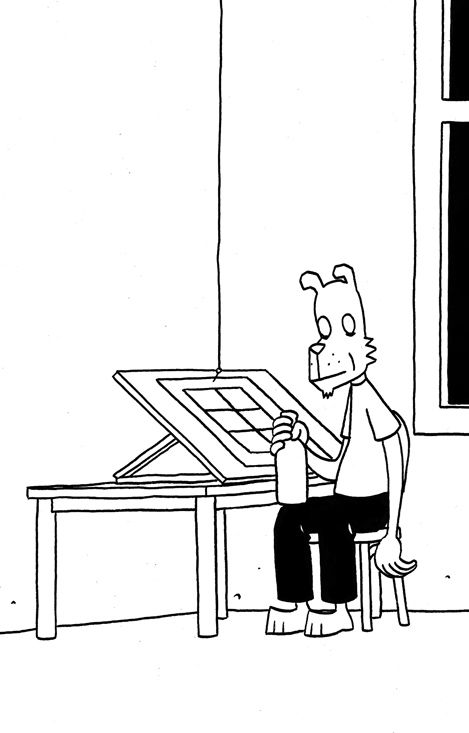
Jason’s cover drawing for his new book Athos in America (above).

Nordic Provenance — A lovely essay by Matthew Battles on writer and cartoonist Tove Jansson, creator of the Moomintrolls and author of brilliant novels such as The True Deceiver and The Summer Book:

The trolls, singers, and creeps in the Moomin books have about them all of the absurd rigor of Roald Dahl’s characters — only the hatred goes missing. In place of dread, Jansson’s characters struggle with vague longings, forever discovering that their worst enemies are not tempests or monsters or maiden aunts, but themselves. While they’re quite capable of getting up to mischief and putting themselves into dire circumstances, they see their way through troubles not by means of sentimentality but with a kind of philosophically playful savoir-faire.

The Death of a Plaything — Brian Dillon reviews Paraphernalia: The Curious Lives of Magical Things  by Steven Connor for The Guardian:

Though we know, even if vaguely, how an AA battery works, that it has a functional interior, it nonetheless seems a thing solid and uniform to the core, stonelike in its simplicity and selfsameness. We appear to learn from things not just about the practicalities of our local material world, but about the expanding world of metaphor: “A teacup asks to be picked up by the handle; a brandy glass invites us to cradle it, tender as a dove, from underneath.” Nor are the desires we bring to things entirely devotional or affectionate; in an echo of Baudelaire’s essay on toys – the poet’s immediate desire as a boy was to smash a toy and find its soul – Connor conjectures: “Perhaps all play has at its horizon the death of the plaything.”

And let’s finish how we started with the back cover for Athos in America by Jason:

I feel like that some days…

Comments closed

Midweek Miscellany

Lumps of Language — John Sutherland reviews The Words of Others: From Quotations to Culture by Gary Saul Morson for Literary Review:

We think of our use of language as ‘fluency’. There are, however, congealed lumps floating in it and, if we look beneath the surface, often more lumps than liquidity. Put another way, most language is pre-owned. The previous owners are, as Gary Morson instructs us, often worth knowing about.

Hard — Cartoonist James Sturm finds out just how hard it is to get a cartoon in The New Yorker:

I don’t normally draw gag cartoons; I’m what’s now called a “graphic novelist.” I’m not really considering a career change, but I was dealing with the mid-career blahs and wanted to try something new. It takes me several years to write and draw a book. The book’s subject determines and limits what I can and can’t draw. I enjoy the process, but it’s a slog. I wanted more spontaneity in my creative life. So in March I decided to fill a sketchbook, 90 pages, with New Yorker-style cartoons—one cartoon a day for three months. No excuses.

Much linked to elsewhere: A sad (and slightly bonkers) interview with Grant Morrison about his book Supergods in Rolling Stone.

Dan Nadel at The Comics Journal responds.

And finally… While were on the subject of comics…

Here’s an neat primer on comics journalism, in the form of comics journalism, by Dan Archer (via The Ephemerist).

Comments closed

Something for the Weekend

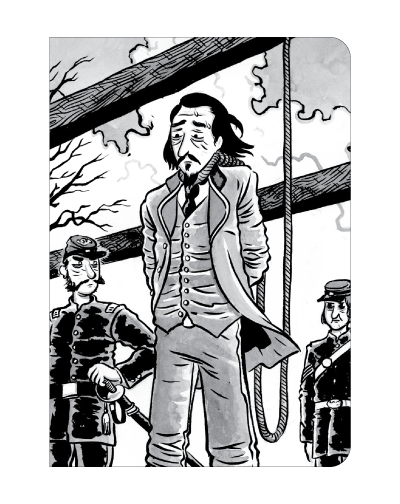
Good Ink, a new imprint of Portland’s Scout Books, have announced a new collection called American Shorts. Each pocket-sized volume in the series pairs a contemporary illustrator with a classic American short story. The first releases are An Occurrence at Owl Creek Bridge by Ambrose Bierce, illustrated by François Vigneault; Rip Van Winkle by Washington Irving, illustrated by Bwana Spoons; and The Jelly Bean by F. Scott Fitzgerald, illustrated by Vanessa Davis. (Pictured below, an illustration by François Vigneault for An Occurrence at Owl Creek Bridge).

Misery Loves Company — Edward St Aubyn, whose most recent novel At Last was released in May, interviewed in The Guardian:

The curious thing about St Aubyn’s novels is the way they counterpoint personal suffering and social comedy: it is misery lit recast by Evelyn Waugh. The upper class into which he was born and which failed to protect him is mercilessly skewered, including Princess Margaret, who does a brilliant comic turn in Some Hope, the third volume in the trilogy. “For some reason I can’t really analyse, I alternate between those two things,” St Aubyn says, “and I feel that to stay with just one of them would somehow be false. But the rhythm is completely instinctive. I’ve just had enough of the anguish, so I move on.”

Also in The Guardian: Anthony Clavane, author of Promised Land: A Northern Love Story, selects 10 novels about football (or soccer if you must).

And because it’s Friday (and an otherwise light news day), here’s Yowie and the Magpie, a great piece of animated storytelling made for Film London / UKFC Pulse Digital Shorts:

Comments closed

Midweek Miscellany

Superhybridity — Tom Payne reviews Retromania by Simon Reynolds for The New York Times:

It’s not so much the selling-­out that saddens Reynolds. Rather, it’s our ready acceptance that the past is our only future: that after postmodernism, with its weary, overinformed view that there is nothing new to say, comes something called “superhybridity.” Superhybridity, a concept borrowed from an art magazine, exists because the Internet can bring whatever we want into our hard drives, so that we can sample it or mash it up: no culture, from any time or place, can be remote from us.

Anger — In light of the recent riots in Britain, Chris Arnot looks at the legacy of Alan Sillitoe (Saturday Night and Sunday Morning) with the author’s son David:

Something about the sudden switch from menace to charm, coupled with that jack-the-lad swagger, briefly brings to mind Arthur Seaton, the antihero of Saturday Night and Sunday Morning… Arthur had already shrugged off the collectivist values of the postwar years. He was “trying to screw the world … because it’s trying to screw me.”

“Currently my head is empty. I am on holiday.” — Wim Crouwel at Designers & Books.

The Weird Outsider — A long profile of Jared Lanier, author of You Are Not A Gadget, in the New Yorker:

Like an innovative painter who alternately courts and scorns the establishment, Lanier often seems torn between embracing and repudiating his newly influential status. As we drove, he mentioned, with some pride, that he had been “banned” from the TED conferences last year, after publishing an essay about the narcissistic nature of the event in a London magazine. (A spokesperson for TED said that Lanier is welcome at the conferences.) He purported to be similarly unimpressed by Davos, the economic conference, which he has attended “a billion times.” “At one point, I was in an elevator with Newt Gingrich and Hamid Karzai,” he said. “There are really only so many times you want to be in that situation.”

And finally…

Writer Chuck Klosterman interviews Bill James, inventor of sabermetrics — the “ideological engine” behind MoneyballMichael Lewis’ book on baseball — and author of a new book Popular Crime: Reflections on the Celebration of Violence, for Grantland:

This line is fascinating if you’re interested in crime fiction:

The whole idea of Sherlock Holmes is dangerous because it encourages people to think that — if they’re intelligent enough — they could put all the pieces together in absolute terms. But the human mind is not sophisticated enough to do that. People are not that smart. It’s not that Sherlock Holmes would need to be twice as smart as the average person; he’d have to be a billion times as smart as the average person.

But this is just great:

There were so many terrible things done by kings and emperors and everyday normal people that are just incomprehensible today. The historian Suetonius writes about how Nero — beyond the many thousands of people he killed in his official duties— liked to sneak out of the palace at night and murder people in the streets, purely for entertainment. Now, whatever you may think of our recent presidents, it’s pretty safe to say they didn’t do that.

Comments closed

Something for the Weekend

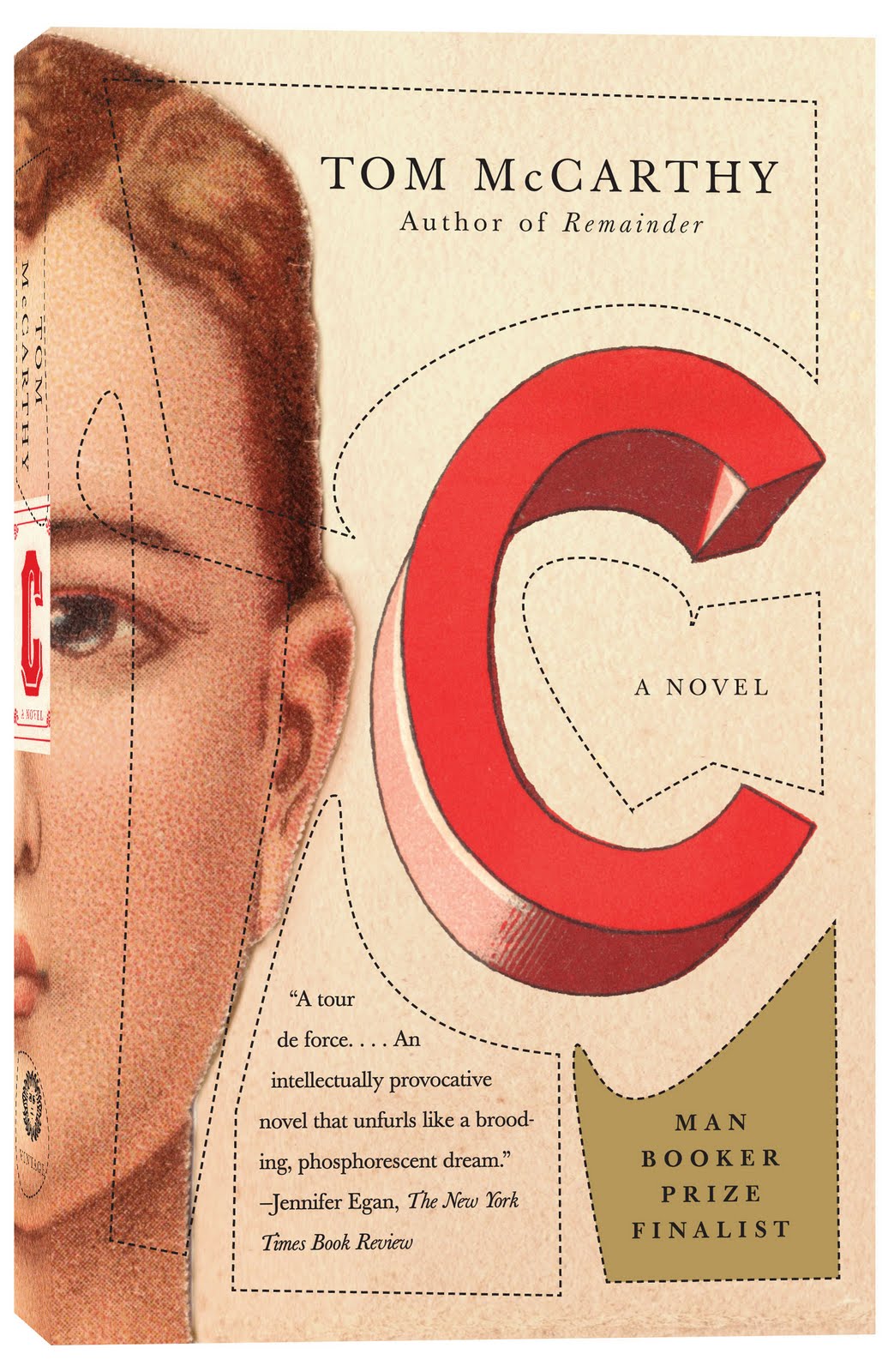
John Gall’s new cover for the paperback edition of C by Tom McCarthy. It can’t have been easy following this monster of cover.

NPR listeners pick their 100 favourite science fiction and fantasy books. On first glance, it looks like a diverse and wide-ranging selection.

Downloadable issues of De Stijl from 1917 to 1920. They’re in Dutch of course, but still! (via Coudal).

And finally…

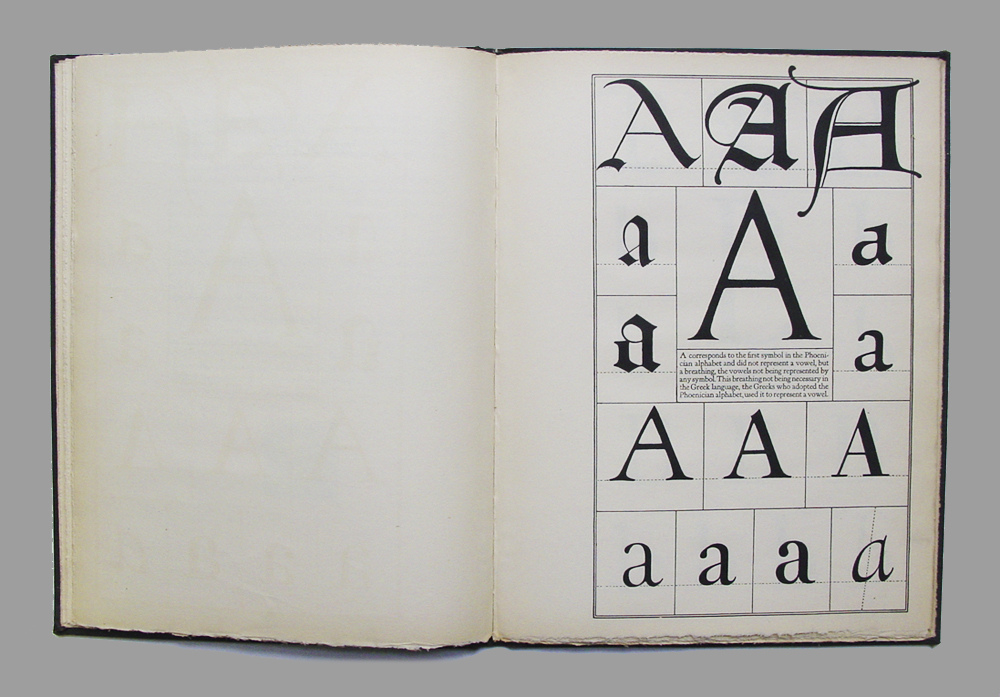
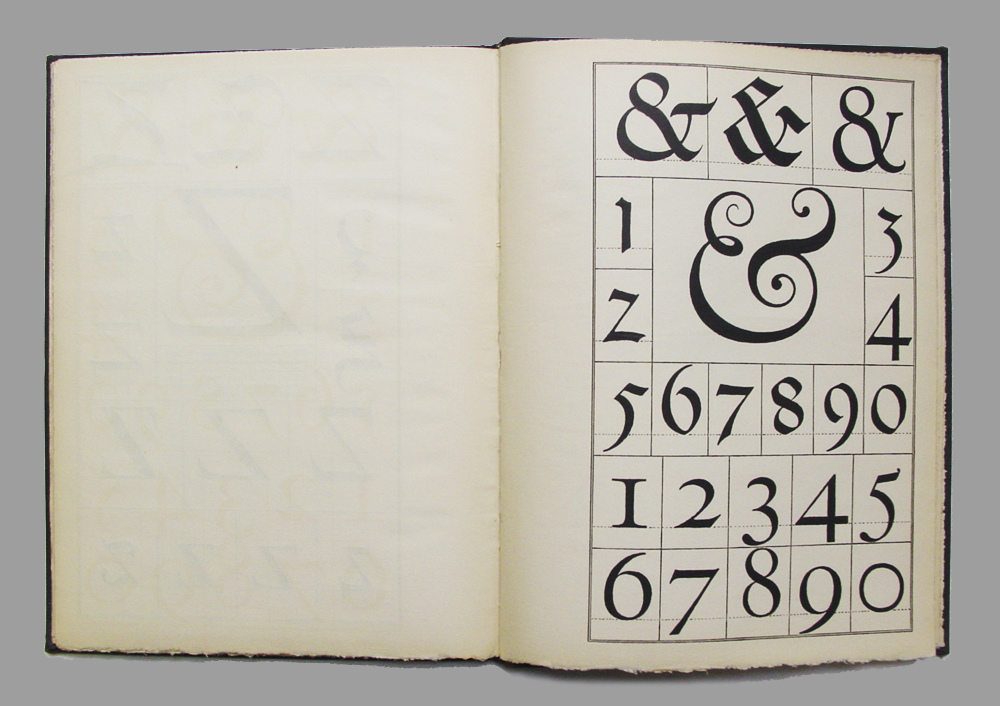
Eye Magazine has a nice feature on Frederic W. Goudy’s 1918 book The Alphabet: Fifteen Interpretative Designs.

Comments closed

Midweek Miscellany

A profile of calligrapher DeAnn Singh at The LA Times:

When the producers of “Mad Men” needed a note in cursive and a signature from Don Draper, they turned to Singh. “Something masculine and from the 1950s” was the request, though they eventually decided that the missive be typed…

Ask her about computers, and she’ll tell the story of Steve Jobs.

Before the founding of Apple and the development of the Macintosh, Jobs dropped out of Reed College and studied calligraphy with artist Lloyd Reynolds. If he hadn’t taken that class, he has said, personal computers might not have come with a variety of fonts.

Fantasy Modernism — Lev Grossman talks to the A.V. Club about The Magician King, the sequel to his 2009 novel The Magicians:

I have this theory about modernism and fantasy, which I’ll do in 30 seconds.

They came into being at the same time, which is very interesting. They were both reactions to the disasters of World War I and the electrification of cities, and urbanization, and the rise of the automobile, the end of that twilight world of the Victorians. They both are reactions to that in different ways. Modernism went very inside and delved into the interior lives of people. Fantasy externalized all that in these fantastical, magical, metaphorical landscapes. I thought, “Well, what if you did both the inside and the outside at once?” I tried to combine those foci of fantasy and modernism into one kind of writing. It sounds like I’m writing a dissertation on my own work, but, you know, you end up thinking about what you’re doing. That’s the kind of thing I thought.

See also: Alexander Chee reviews the book for NPR.

Prussian Pedantry — Susie Harries’ new biography of scholar Nikolaus Pevsner, best known for his 46-volume series The Buildings of England, reviewed by George Walden for The Observer:

For us at least the conflict of national intellectual styles he represented was hugely beneficial. The irony of a “Prussian pedant” lecturing the English on Englishness, for which he was mocked, resolves itself in the fact that, together with Gombrich in art history and Weidenfeld in publishing, Pevsner was one of a golden generation of German/Austrian Jewish refugees who did much to give their adopted country the bottom it prided itself on already possessing.

And for those of you not interested in a county-by-county guide to the wonders of English architecture (what’s wrong with you?), Pevsner also wrote the seminal Pioneers of Modern Design: From William Morris to Walter Gropius. First published in 1936, a revised and expanded edition will be available (in the UK at least) in September.

And finally…

Everyone is an AuteurGuardian correspondent Fiachra Gibbons meets Jean-Luc Godard:

“I am not an auteur, well, not now anyway,” he says as casually, as if it was like giving up smoking. “We once believed we were auteurs but we weren’t. We had no idea, really. Film is over. It’s sad nobody is really exploring it. But what to do? And anyway, with mobile phones and everything, everyone is now an auteur.”

Oh Jean-Luc…

Comments closed

Something for the Weekend

Nicholas Carr, author of The Shallows, reviews Retromania by Simon Reynolds for The New Republic:

Who wants yesterday’s papers?” sang Mick Jagger in 1967. “Who wants yesterday’s girl?” The answer, in the Swinging 60s, was obvious: “Nobody in the world.” That was then. Now we seem to want nothing more than to read yesterday’s papers and carry on with yesterday’s girl. Popular culture has become obsessed with the past—with recycling it, rehashing it, replaying it. Though we live in a fast-forward age, we cannot take our finger off the rewind button.

And Mr. Reynolds has been a busy man. Not only is his book also reviewed at the A.V. Club, he is interviewed about it at Pitchfork, The Quietus and The Second Pass.

Shiny and New — Designer Matt Roeser talks about his New Cover project with Ian Shimkoviak at Covered Up:

I love physical books. I have more books than I have space for in my house, but there’s just something about a physical book that is so appealing to me that an e-book will never be able to replicate. Now, whether the rest of the world feels that same way is yet to be seen. I definitely think there is a large population that doesn’t care how they’re experiencing the book; they just want to be able to read it.

And finally…

Drinking, Gambling and Grandma — Lorrie Moore, author of A Gate at the Stairs, on the TV show Friday Night Lights for the NYRB:

The series wants Dillon [Texas] to function as a microcosm of larger working- and middle-class America: it takes its fifty or so hours and opens a window on American family, education, community race relations, athletics, social class and its various brokennesses. But lest you go away, it keeps you involved with the drama of high school—its romantic student soap operas, its tense and dire administrative politics, plus the multigenerational home life that has dads in prison, dads in Iraq, dads gambling and drinking and roaming around the country while Grandma sits in the front room.


Comments closed

Midweek Miscellany

FPO: For Print Only features the fun cover for John Durak’s collection of poetry Condiments and Entrails designed by Bunch

The Oracle of Redirection — James Gleick, author of The Information, reviews four books about Google for the NYRB:

Google defines its mission as “to organize the world’s information,” not to possess it or accumulate it. Then again, a substantial portion of the world’s printed books have now been copied onto the company’s servers, where they share space with millions of hours of video and detailed multilevel imagery of the entire globe, from satellites and from its squadrons of roving street-level cameras. Not to mention the great and growing trove of information Google possesses regarding the interests and behavior of, approximately, everyone.

Glittering Delights  — Simon Schama talks to The Guardian about his recent book of essays Scribble, Scribble, Scribble:

I have this magpie instinct for the next glittering object. There are one or two things I know I can’t write about though: DIY, cricket, automobile repair. I could study it for a lifetime and not produce a word on the carburettor.

And finally…

Power, Corruption and Lies New Yorker critic Alex Ross, author of  The Rest is Noise and Listen To This, on Oscar Wilde, homosexuality, and a new “uncensored” edition of The Picture of Dorian Gray published by Harvard University Press:

[N]o work of mainstream English-language fiction had come so close to spelling out homosexual desire. The opening pages leave little doubt that Basil Hallward, the painter of Dorian’s portrait, is in love with his subject. Once Dorian discovers his godlike powers, he carries out various heinous acts, including murder; but to the Victorian sensibility his most unspeakable deed would have been his corruption of a series of young men… At the Wilde trials of 1895, the opposing attorneys read aloud from “Dorian Gray,” calling it a “sodomitical book.” Wilde went to prison not because he loved young men but because he flaunted that love, and “Dorian Gray” became the chief exhibit of his shamelessness.

Comments closed

Something for the Weekend

A Period of Digestion — Music journalist and author Simon Reyolds talks about his new book Retromania: Pop Culture’s Addiction To Its Own Past with the A.V. Club:

[S]o much happened in the 20th century and things moved so fast, and you had this enormous capitalist engine generating all these toys and gadgets and things that became rapidly obsolescent. It’s all piled up, hasn’t it? And you think of the sheer amount of recording that went on. It always blows my mind whenever I go record shopping how many records I’ve never seen before. I’ve been in record stores forever, decades I’ve been looking through them, and I still see things I’ve never seen, artists I’ve never heard of. The sheer amount of recording that was done, it is almost like this universe of music. Daniel Lopatin in the book actually says it’s a period of digestion, we’re digesting and processing all this stuff that happened musically and in other senses in this really runaway, fast period of time of production. And perhaps that’s fine. Perhaps that’s what we need.

And on a not unrelated note…

A wide-ranging interview with Alan Moore about his new book, Extraordinary Gentlemen: Century 1969, comics and popular culture, for Wired:

[T]he overall legacy of the first decade of the 21st century has been one wherein culture mirrors what was going on in our politics during those years. We had a form of politics that was concerned with spin and surface at the expense of any kind of moral or even rational content. In keeping with our well-spun political landscape, I think a lot of contemporary art, if it has a concept it is a concept in the advertising sense. It’s a little mental pun, something that you can use to sell cars or burgers. But in terms of art, once you’ve got the idea of joke, if you like, there is absolutely no need to ever look at those works again.

And sticking with comics…

From Superheroes to Superbrands — Paul Gravett on Grant Morrison’s new book Supergods: Our World in the Age of the Superhero and the poor treatment of the original creators of the comic book superheroes (thx Ed):

How easy is it for fans and pros today, so hypnotised since childhood by these ubiquitous, constantly repromoted properties, to ignore their tarnished histories? I’ve talked recently to some fan readers who are troubled when I mention this horrific, disfigured portrait lurking beneath the polished profiles, masks and capes, hidden in the attic, but who can’t seem to help themselves from still wanting to follow these perfect-looking, super-powered Dorian Grays, no matter what. Morrison prefers to elevate the superhero as an indestructible concept, almost an independent, self-actualising entity, acknowledging only slightly its murkier commercial side, but glossing over the exploitation rife in this business, then and now. Unlike earlier ‘public domain’ gods and goddesses from antiquity and religious faiths, Superheroes are as much Superbrands, properties that must make profits for DC, part of Time-Warner-AOL, and Marvel, bought by Disney. While Morrison and his ilk earn tidy sums from endless, spiralling makeovers of these franchises, both publishers are aggressively fighting lawsuits over ownership against the estates of Siegel and of Jack Kirby, joint architect of the Marvel Universe.

And finally…

A fascinating article by Adrian Hon on ‘cargo cults’ and Unbound, a crowdfunding site for books, in The Telegraph (via Waxy):

Unbound isn’t some fly-by-night operation; it was heavily promoted at the Hay Festival, it’s received gushing praise across the media – yet it may end up with a one in six success rate.

So, why was Unbound set up in the first place? It’s because they constructed a cargo cult, believing that if they mimicked the superficial elements of successful crowdfunding, they could enjoy the same success as others – but perhaps even more, thanks to their relationships with publishers, agents, authors, and the media.

It is perhaps a little unfair to single out Unbound. Traditional publishers who jump on the latest genre bandwagon without truly understanding what made the original popular are just as guilty.

Comments closed

Midweek Miscellany

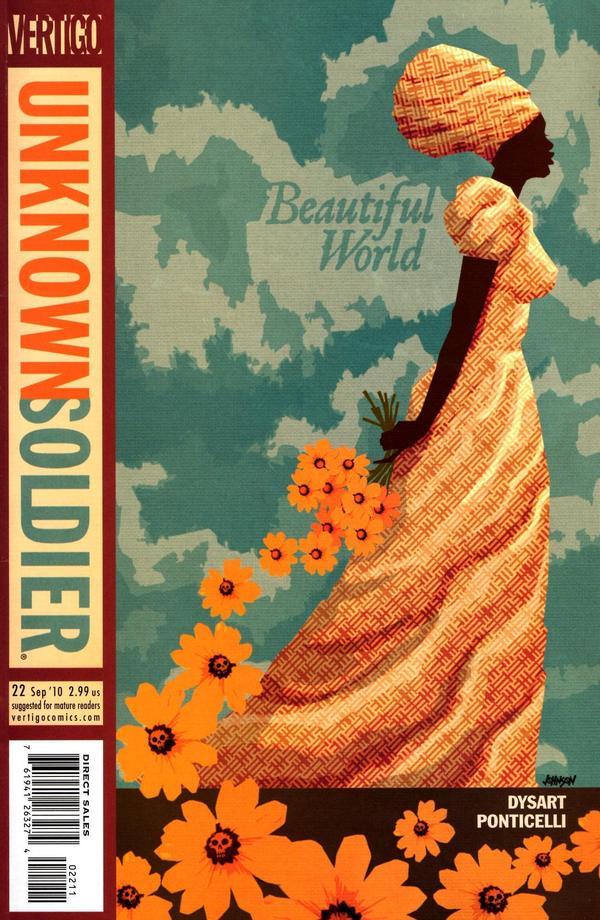
Kelly Thompson chooses her favourite 52 comic book covers from the past year on her blog 1979 Semifinalist. The cover above is by Dave Johnson for Unknown Soldier #22. Other personal favourites of mine on the list include the very retro Deadpool Pulp #4 by Jae Lee, and Hellboy: The Fury # 1 by Mike Mignola (you just can’t go wrong with a big axe really…)

And if you don’t read Kelly’s regular three sentence or less drunken demolitions of Marvel and DC covers you really are missing out. “Motherfucking gangbusters.”

Comics Dwindling Gene Pool — Alan Moore talks about the latest instalment of The League of Extraordinary Gentlemen, Century: 1969, and more with The Guardian:

These days, the majority of the comic book audience is 40-somethings who are not necessarily interested in comic books as a medium or panel progression or sequential narrative. They are probably interested in Wolverine. There is a large nostalgic component in there and there’s nothing wrong with it. But if those people then begin to influence the books themselves or increasingly the movies or the television series then they will want their story to refer to stories that they remember. It becomes very incestuous and over a few decades you get a very limited dwindling gene pool. And you get stories that have become weak through inbreeding.

And sticking with comics for a moment… Eric Reynolds talks about comics and Fantagraphics’ Mome Anthology in a four-part interview The Daily Cross Hatch:

Putting comics online is definitely of interest to myself and all of us at Fantagraphics, for sure. We know that that’s only going to continue to grow. It has certain advantages and disadvantages. But I don’t know if I necessarily want to edit an online anthology, per se. I don’t know why… I know if it’s just that I enjoy the tactile pleasures of print, or what, but—and this is my own personal preference—it doesn’t seem to quite exist when it’s on the Internet, which is quite paradoxical. The Internet has the potential to reach a lot more people that print, in this day and age, and yet, you don’t have that physical object to hold as proof that you did what you did.

Meanwhile, if you are looking for some ‘serious’ books for your vacation, the indefatigable Largehearted Boy is doggedly aggregating online summer reading lists for the year.

While at Slate Robert Pinsky explains  how not to write a book review (whether you’ve read the book in question or not).

And finally (in the likely instance you haven’t seen these yet)…

Cardon Webb’s clever designs for a new series of Oliver Sacks paperbacks from Vintage (via John Gall).


Comments closed