Skip to content

Category: Miscellany

Midweek Miscellany

An Expressionist Newsreel of a Bad Dream — Guardian film critic Peter Bradshaw on the classic Martin Scorsese movie Raging Bull:

The effect is to combine stunning scenes of brutality and self-destruction with a lethal, even outrageous sentimentalism and self-pity. It’s all captured in dreamlike, pin-sharp monochrome cinematography, stark images reproduced like a Weegee crime scene. The result is operatic and mad and compelling.

The fight sequences themselves, with the camera swirling and swooping around the ring, and the soundtrack sometimes gulping out into silence and sometimes moaning with weird half-heard animal noises, are unforgettable: an inspired reportage recreation in the manner of a Life magazine shoot, which also looks like expressionist newsreel footage of a bad dream.

Also at The Guardian, Justin McGuirk reviews Gary Hustwit’s new documentary Urbanized:

Urbanized is a brave and timely movie that manages to strike almost exactly the right tone. For a sense of the scale of the urban problem, simply look at Mumbai, a city of 12 million people that is set to be the world’s biggest by 2050. Already, 60% of its population lives in slums with such poor sanitation that there is only one toilet seat for every 600 people. The municipality is reluctant to build toilets for fear that it will encourage more migrants to come. “As if people come to shit,” retorts the activist Sheela Patel in the movie. Quite.

The 10% — CNN looks at the business of women in comics and Womanthology, a comics anthology funded by Kickstarter:

“Think about it from the publisher’s point of view,” [former DC associate editor] Asselin said. “Say you sell 90% of your comics to men between 18 and 35, and 10% of your comics to women in the same age group.  Are you going to a) try to grow that 90% of your audience because you feel you already have the hook they want and you just need to get word out about it, or b) are you going to try to figure out what women want in their comics and do that to grow your line?”

(My advice: go with “b”)

And on the subject of comics… Art Spiegelman talks about MetaMaus (what else?) with The Observer:

In his ramshackle SoHo studio – a sort of comics library with a membership of just one, it consists of a dingy bathroom, a kitchenette, a drawing board, the odd dusty plant and about eight million quietly groaning books – Spiegelman lights yet another cigarette… He then gives himself over to crowing delightedly. “I’ve met a number of editors over the years,” he says, eyes rolling. “And all of them claim to have discovered Maus, when all they really have the right to claim is that they rejected it.”

And finally… While Toronto is busy drawing Tintin, Simon Kuper looks back at the life and work of Hergé for the Financial Times:

The war seems to have forced Hergé inward into his own imagination, and Haddock is one of the best things he found there. The captain’s alcoholism and swearing would be staple jokes of all subsequent Tintin books. Pretty much all writers on Tintin note that the main character is a cipher, a humourless two-dimensional boy scout. “A blank domino,” Hergé’s friend, the philosopher Michel Serres, called him. Tintin therefore requires company. Prewar, he only had his dog, Snowy. Haddock… was much more interesting. Even Hergé seems to have come to prefer him to Tintin.

Comments closed

Something for the Weekend

Words and Pictures — An interview with cartoonist Tom Gauld at The Rumpus:

Format, words and pictures all work together to make a good comic. I started at college doing pure illustration and only gradually got into making stories and using words. I’m still more comfortable with pictures than words: I’m happy doodling away on drawings for hours, but putting words together is always more of a struggle. I  usually like to keep things as simple as I can so it’s interesting seeing what I can remove and still keep the story: you don’t want to say something in words which is better said in the pictures (and vice versa).

There is also a preview of Tom’s new book, Goliath, on the D+Q blog and you can read my interview with Tom here.*

A General Contempt for Small Talk — Edward Docx, author most recently of The Devil’s Garden, on Tolstoy, Russia, and literary prizes. So much good stuff here:

[I]f there’s one thing that novelists love to talk about, it’s how to make things real when, obviously, they are not. This in turn leads naturally into something novelists like to talk about even more: the terrible struggle of writing itself. (My favourite line about writers: “Writers are people who find writing more difficult than other people.”)… Metaphors rise from the table like disturbed lepidoptera. Writing a novel is like attempting to solve an extremely complicated maths equation, which seeks to represent reality, and through which you are trying to lead the public without them ever getting wind that said equation is, in fact, impossible to solve or that, actually, it might not represent reality at all. We are getting carried away. Deciding to write a novel is like visiting an obscure, half-forgotten and slowly-evaporating planet entirely comprised of swimming pools and deciding that what is needed is… yes, another swimming pool! But, for obscure reasons, a swimming pool that must be built single-handedly from scratch and then filled using only a syringe.

And finally…

Critical Authority — New York Times film critics A. O. Scott and Manohla Dargis discuss Brian Kellow’s new book Pauline Kael: A Life in the Dark and the ongoing legacy of the (in)famous New Yorker film critic. Here’s A.O. Scott:

[T]he idea of critical authority has always struck me as slippery, even chimerical. Authority over whom? Power to do what? The importance of particular critics can’t be quantified in lumens of fame, circulation numbers or box office returns, though by all of these measures Kael, in her heyday, certainly enjoyed unusual prominence. But like every other critic, she was above all a writer, and a writer only really ever has — or cares about — one kind of power, which is the power to engage readers.

I think Kael is remembered not for her particular judgments or ideas, but rather for her voice, for an outsized literary personality that could be enthralling and infuriating, often both. A lot of people read her for the pleasure of disagreement, and the resentment she was able to provoke — in critical targets and rival critics — is surely evidence of power. An awful lot of our colleagues are still, in both senses, mad about her. To reread her is to understand why.

*Just so you know: D+Q are distributed in Canada by my employer Raincoast Books.

Comments closed

Midweek Miscellany

Buzzwords of the Incurious — Evgeny Morozov, author of The Net Delusion: The Dark Side of Internet Freedom, delivers a searing review of Public Parts: How Sharing in the Digital Age Improves the Way We Work and Live by Jeff Jarvis.  A must-read:

The ubiquitous references to Gutenberg are designed to lend some historical gravitas to wildly ahistorical notions. The failure of Internet intellectuals actually to grapple with the intervening centuries of momentous technological, social, and cultural development is glaring. For all their grandiosity about technology as the key to all of life’s riddles, they cannot see further than their iPads. And even their iPad is of interest to them only as a “platform”—another buzzword of the incurious—and not as an artifact that is assembled in dubious conditions somewhere in East Asian workshops so as to produce cultic devotion in its more fortunate owners. This lack of elementary intellectual curiosity is the defining feature of the Internet intellectual. History, after all, is about details, but no Internet intellectual wants to be accused of thinking small. And so they think big—sloppily, ignorantly, pretentiously, and without the slightest appreciation of the difference between critical thought and market propaganda.

Swimming Out of Guilt — David Ulin talks to Art Spiegelman about MetaMaus at the LA Times:

“I didn’t predict this for myself,” Spiegelman admits, firing up another cigarette. “I thought ‘Maus’ was going to take two years and I’d move on with my life. But it’s an ongoing wrestling match. Basically ‘Breakdowns’ ” — the 2008 collection that recontextualized his early work, including the first three-page “Maus” strip, from 1972 — “and ‘MetaMaus’ are the great retrospections, the period of my life I’m still swimming out of. Then I get to find out if there’s any other stuff in my pockets to make bets with.”

The World We Live In — Author William Gibson interviewed at the A.V. Club:

I don’t actually think of science fiction as primarily a predictive form. That’s its cultural reputation and that’s what lots of people believe it is, but my approach has always been that it’s invariably about the day it was written in. Regardless of what the author tells us, it can’t really be anything else. There’s no way it can be about the future, except it pretends to be the future. It’s like reading 1984. What it’s actually about is 1948, the year it was written. You see Orwell responding to various aspects of the world he lived in, which was changing, since the world always is.

See also: Margaret Atwood talks about speculative fiction and her new collection of essays Other Worlds with CBC Radio (audio) and The Globe and Mail.

And finally…

Trash — Nathan Heller on film critic Pauline Kael, a new collection of her work, The Age of Movies: Selected Writings of Pauline Kael, and Brian Kellow’s new biography Pauline Kael: A Life in the Dark:

Kael realized that the pictures had a chance to succeed where classic books, painting, and art music had been shunted from the mainstream; she thought a tolerance for “trash” was key to maintaining this openness and innovation. Still, she was no fugitive from the old arts. Kael once said that she’d rather live in a world without movies than in a world without books, and she resented the decline of public literary dialogue. She saw the movies as American art’s second chance.

Also at The New Yorker, Richard Brody looks back Kael’s book 5001 Nights at the Movies.


Comments closed

Something for the Weekend

The Dark Room — Filmmaker Grant Gee talks to BookForum about his new film Patience, which explores the work of author W.G. Sebald and his book Rings of Saturn:

There is one reference in an essay he wrote about Kings of the Road by Wim Wenders. He opens the essay with an interesting recollection of watching the film. He’s that generation; he’s absolutely of Wenders’ generation. Once you know that, you can feel the similarities between Wenders and Sebald, but Sebald willfully took himself away from that culture. I think of Sebald more as a photographer. There’s a quote I read somewhere where says he wasn’t very interested in school and he spent most of his time in the darkroom of the school’s photography lab. And there is something—I’m not sure if I’ve made this up or imagined it—about the way images work in his book: it feels to me like a black-and-white print developed under a red light, like it comes up out of whiteness, and if you leave it there it will black out in the tray.

Baggage — David Cronenberg talks to FilmComment  about A Dangerous Method, his film on Freud, Jung and Sabina Spielrein:

I don’t care what baggage people think I will bring to the movie. I don’t have that baggage. Once I decide on a project, I am honorable about how I treat it. I am not trying to put some false Cronenbergian imprint on it. Let’s just do the movie. Part of the project was the resurrection of the people and the era. That means it has to be as accurate as possible. I want the people to be as alive as they can be. I want to be able to smell them and hear them in a way that we can’t. It’s a matter of affection. I would like to have known them. That’s the only agenda I have—to honor the accuracy of these people and what they said.

And on the subject of Freud… Comic book creators discuss how mainstream comics portray women and how things can be improved at Comics Alliance. An interesting read.

And finally…

SUPERTYPE! — A collection of vintage comic book mastheads from the man who brought you 4CP and Comic Book Cartography (via Subtraction).

Comments closed

Midweek Miscellany

Art or Death — Art Spiegelman on books, comics and technology at Publishers Weekly:

I would say that, in the future, the book will be reserved for things that function best as a book. So, if I need a textbook that’s going to be out of date because of new technological inventions, you’re better off having it where you can download the supplements or the update. If you’re going to read a quick mystery novel to keep you amused while you’re traveling, it’s fine.
None of this is about the business model. It has to do with the boutique nature of a book, the idea that, as McLuhan put it, when a technology is replaced by another technology, the previous technology either becomes art or it dies.

See also: Jeet Heer reviews MetaMaus for the Globe and Mail:

One way to explain the achievement of MetaMaus is to imagine a great architect like Frank Gehry offering a guided tour to one of his classic buildings, opening up the original plans, explaining the solutions he came up with for each problem. Such an act of self-exegesis is immensely rewarding, even if the creator’s genius is as enigmatic as ever.

And, on the subject of comics… A short interview with Alan Moore in Metro:

At the moment I feel an awful lot of my comic career is behind me, particularly all of the superhero stuff – the stuff that’s owned by American corporations. I want to distance myself from that, so the stuff I’m proudest of is what I own: From Hell, Lost Girls, The League Of Extraordinary Gentlemen. I don’t read my earlier work because there are too many unpleasant associations with it. I don’t have a copy of Watchmen in the house. I’m glad the work is out there in the world, having an effect, but it’s like I’ve gone through a messy divorce.

Immersion — Author Neal Stephenson talks about writing and his new novel REAMDE at Full Stop:

I would say that people who like to engage with the details of the historical era or the technical concepts might find [my] books especially rewarding to read. For me it’s a pretty straightforward thing—you know, what readers are paying for, what they’re buying and what I’m selling is a particular kind of experience: essentially one of getting immersed in another world. And it could be a very different world (as in a science fiction book), it could be the history of our world, or it could just be a story that takes place today, like Reamde. And a way to do that — a way to create that feeling of immersion and get the reader feeling like they’re really there — is to supply a lot of details that convey a feeling of immediacy.

See also: REAMDE reviewed by Laura Miller for The Guardian.

And finally…

Filmmaker Gary Hustwit talks about his latest design documentary, Urbanized, with Print Magazine:

I love all the interviews in all the films, that’s why they are in the film. But there are definitely some that people respond to when they watch the film. Most of all Enrique Peñalosa, who is the former mayor of Bogota. He’s got some great lines in the film, like “There’s no constitutional right to parking.” He’s really charismatic and has some really common sense ideas about using the city as a tool to create equality, democracy and social equity. I also got to interview Oscar Niemeyer, the legendary Brazilian modernist architect. He’s about to turn 104 and is the oldest living architect in the world. He’s got his grandchildren working in his office. That was a big honor for sure.

Comments closed

Something for the Weekend

Innovation Starvation— SF author Neal Stephenson at World Policy Journal on why the big stuff doesn’t get done:

SF has changed… from the 1950s (the era of the development of nuclear power, jet airplanes, the space race, and the computer) to now. Speaking broadly, the techno-optimism of the Golden Age of SF has given way to fiction written in a generally darker, more skeptical and ambiguous tone. I myself have tended to write a lot about hackers—trickster archetypes who exploit the arcane capabilities of complex systems devised by faceless others.

Believing we have all the technology we’ll ever need, we seek to draw attention to its destructive side effects. This seems foolish now that we find ourselves saddled with technologies like Japan’s ramshackle 1960’s-vintage reactors at Fukushima when we have the possibility of clean nuclear fusion on the horizon. The imperative to develop new technologies and implement them on a heroic scale no longer seems like the childish preoccupation of a few nerds with slide rules. It’s the only way for the human race to escape from its current predicaments. Too bad we’ve forgotten how to do it.

See also:  Stephenson’s new book REAMDE reviewed by The A.V. Club and the NY Times.

Stealing from Dr. Strange — Lev Grossman, author of The Magicians and The Magician King, talks to Graphic Novel Reporter about comics:

Watchmen (and, just as much, Miracleman) changed everything for me. [Alan] Moore attacked and undermined everything that was sacred about the superhero story, and in the process he wrote the greatest superhero story that had ever been written. I never forgot that. A lot of those lessons show up in The Magicians: When you question the basic assumptions of a genre, you make that genre stronger, not weaker.

Also, I steal a lot from Dr. Strange.

And on the subject of comics… Ruth Franklin reviews MetaMaus by Art Spiegelman for The New Republic:

This writer is not Elie Wiesel or Primo Levi, though his work, like theirs, is based in testimony. He is not Piotr Rawicz or H.G. Adler, though he shares their interest in viewing real events through a filter of surrealism. He is not Thomas Keneally, though his work has a quality of the “nonfiction novel” about it; nor is he W.G. Sebald, though his books, like Sebald’s, have been described as a mix of fiction, documentary, and memoir. He is Art Spiegelman, and he has done more than any other writer of the last few decades to change our understanding of the way stories about the Holocaust can be written.

Edges — Nicholas Carr, author of The Shallows, on what remains of books:

One of the essential characteristics of the printed book, as of the scribal codex that preceded it, is its edges. Those edges, as John Updike pointed out not long before he died, manifest themselves in the physical form of bound books – “some are rough-cut, some are smooth-cut, and a few, at least at my extravagant publishing house, are even top-stained” — but they are also there aesthetically and even metaphysically, giving each book integrity as a work in itself. That doesn’t mean that a book exists in isolation — its words, as written and as read, form rich connections with other books as well as with the worlds of nature and of men — but rather that a book offers a self-contained experience. The sense of self-containment is what makes a good book so satisfying to its readers, and the requirement of self-containment is what spurs the writer to the highest levels of literary achievement. The book must feel complete between its edges.

And finally…

In The Wall Street JournalLee Marshall looks for Fellini’s Rome:

Sometimes Fellini’s Rome and Felliniesque Rome live in close proximity. The apartment that Federico and Giulietta shared (Via Margutta, 110) is on a small, charming street where Truman Capote once lived and Puccini composed. There’s not much to see except a plaque on the building with caricatures of the pair and a commemorative poem in Roman dialect. But notice the number on the door of the palazzo: above the 110, it says “Già 113″—formerly 113—a very Felliniesque address.

Comments closed

Midweek Miscellany

Comic Book Commodities — Cartoonist and illustrator Dave Gibbons, best known for his work on Watchmen with Alan Moore, interviewed at The Huffington Post:

[E]conomically comics are in a really difficult place because the monthly American comic books which are maybe 22 pages of story, now can cost $4, which is £3, and that is a lot of money for really such a small amount of entertainment when you think what you can get on the app store or you know the several hours of entertainment you can get at the movies or whatever for not dissimilar sums of money.

So, I think what happens nowadays is actually people ‘as they say,’ wait for the trade collection. But the way I can see it polarising even more is that you’ll then want is something that is more than just the reading experience, you’ll want something that is a beautiful object in it’s own right that has extras, that has maybe artist notes or writers’ notes, backup material, is really nicely bound, is beautifully printed, so you know I can see those two kind of commodities diverging even further in the future.

Gibbons discusses his contribution to Watchmen in the nicely bound, beautifully printed book Watching the Watchmen.

Let the Medium Do the Work — Screenwriter Charlie Kaufman (Being John Malkovich) on storytelling:

[I]t’s very important that what you do is specific to the medium in which you’re doing it, and that you utilise what is specific about that medium to do the work. And if you can’t think about why it should be done this way, then it doesn’t need to be done.

CRAZY – A wonderful interview with Maurice Sendak, author of Where the Wild Things Are and In the Night Kitchen, in The Guardian:

“I’m totally crazy, I know that. I don’t say that to be a smartass, but I know that that’s the very essence of what makes my work good. And I know my work is good. Not everybody likes it, that’s fine. I don’t do it for everybody. Or anybody. I do it because I can’t not do it.” You can’t be that crazy, I say: you managed to stay in one relationship for half a century. “Yes! And he was – well. He was a man who loved music and reading. He never smoked and he died of lung cancer, utterly ridiculous. I had that friendship for a long, long time.”

And finally…

One Step Ahead of the Scrap DealersThe Globe and Mail obituary for typographer and book designer Glenn Goluska who died of lung cancer on Aug. 13 in Montreal at the age of 64:

In the mid-1970s, Glenn Goluska was usually one step ahead of the scrap dealers.

The typographer and his buddies would be on the prowl in Toronto for cast-aside printing equipment. Specifically, they were picking up letterpress, its type made from carved wood or cast metal that left unique marks when smashed on to paper. The technique had stopped being economical for large printing outfits and had been on a 20-year decline, replaced by offset printing, which used a photographic process. This left all kinds of wood and metal cuts, linotype and letterpress machines available for a song.

For Goluska and his friends, here were historic pieces of art-making tools and all they needed to do was gather a few guys and find a truck with reliable suspension.

R. I. P.

Comments closed

Midweek Miscellany

Peter Mendelsund chats with Chip Kidd about his office for the redesigned From The Desk Of:

I’ve always been a ‘nester’, I think most designers are. The difference now between my office and my bedroom as a child is the dearth of KISS posters (I mean NOW, not then).

(Frankly I’m surprised the universe didn’t collapse from all that awesomeness contained in a single room)

And on a related note, Mendelsund is one of many designers who work is included in AIGA’s recently announced 50 Books / 50 Covers list (although several covers appear to be attributed to their art directors rather than the designers themselves, no?).

Math-Lit — Helen DeWitt, author of The Last Samurai and the forthcoming Lightning Rods, interviewed at BookForum:

Chance often plays a big part in fiction, but it is generally not chance as this is mathematically understood, which tends to be counter-intuitive. A while back I discovered Edward Tufte’s brilliant books on information design, The Visual Presentation of Quantitative Information, Envisioning Information, and so on. I read Gerd Gigerenzer’s Reckoning with Risk, about why we have trouble calculating probabilities using percentages, even when it’s a matter of life and death (a doctor working out the likelihood that someone is genuinely HIV-positive, based on a positive test result); I read Peter Bernstein’s Against the Gods on the history of risk; I read Michael Lewis’s Moneyball, on the way sabermetrics had transformed professional baseball. It seemed to me that one could use Tufte’s methods to incorporate this tremendously interesting subject into fiction.

The cover design for Lightning Rods is by Steven Attardo for Rodrigo Corral Design.

And finally…

The legendary George Lois talks about his covers for Esquire  with Gym Class Magazine. There’s no shortage ego, but I love this anecdote about playing a soft ball game against The New Yorker:

So I go over there with my glove and my sneakers, and I could not believe it. I looked at the team. The third baseman was Gay Talese. The second baseman was Gore Vidal. It was not a team of athletes. I said: ‘Oh my god, they’re all literary geeks.’ He said: ‘No, no, we’re going to have fun.’

Now I’m serious about playing softball or basketball. I don’t screw around, I play with great ballplayers, I’m a good athlete. I said: ‘Harold, this side is terrible.’ He said: ‘No no!’

We went over and played THE NEW YORKER, and I think we lost 18–3, and the only reason we got three runs is because I hit three homers. I don’t remember being there for any other reason.

Comments closed

Something for the Weekend

Peirene Press is small independent publisher in the UK specializing in previously untranslated contemporary European novellas. Their most recent series of books, designed by Sacha Davison Lunt, has been short-listed for the 2011 British Book Design and Production Awards in the Brand/Series Identity category.

Txt — Thomas Jones looks back at the work of author William Gibson at The Guardian:

The most striking feature of cyberspace in Neuromancer, however, the most radical way in which it differs from the modern internet, is its textlessness. Case is, or may as well be, illiterate: his skills as a cyberspace “cowboy” don’t depend on being able to read. He wouldn’t get very far as a hacker these days. The internet, as we now know it, even in the era of YouTube and podcasts, is still heavily text-based and text-dependent. Tweeting not only looks about as low-tech as you can get, it’s also all about language.

One Way or Another — Marjane Satrapi and Vincent Paronnaud talk about the film adaptation of Chicken with Plums with New York Magazine:

When you draw, you don’t have any limits; it kind of transforms our brain. Also, we had not [gone to] any cinema school, so we don’t have these techniques. Like when we started the project they were telling us things like, “Voice-over? Nobody does that any more” and “Cross-dissolve is out.” This notion of “out” and “in,” it depends on what you are saying. You don’t have one way of doing things.

Also at New York Magazine, Scott Snyder talks about the Batman #1 relaunch and rewriting Batman:

Gotham is almost a nightmare generator, filled with villains that seem to represent an extension of Batman’s greatest fears. A lot of his greatest villains feel like mirrors: the Joker is who Batman would be if he broke his rule and fell into madness; Two Face is a mockery of the duality of his life. But what I love about Bruce in particular, and the reason I’m so excited to be doing Batman, is he’s a superhero that has no powers. He takes it upon himself to go out every night, punish himself, and be the best out there. To me, that is both incredibly heroic and exciting, but also really pathological and obsessive.

Related: Scott Snyder interviewed about the same (but at greater nerdiness) at The Huffington Post.

And finally…

Here’s a short documentary about the making of the Vitsœ shelving system, originally designed by Dieter Rams in 1960 and still going strong:

Comments closed

Midweek Miscellany

A short interview with Tom McCarthy, author of Remainder and C, in The Guardian.

Heart of Darkness — William Deresiewicz on Harold Bloom and his new book The Anatomy of Influence: Literature as a Way of Life:

I started to develop the Heart of Darkness theory of the Yale English department. Conrad’s novel is about colonialism and racism and the shadowed reaches of the human heart, but it is also a dissection of bureaucracy. My first clue came when I realized that my chairman was a perfect double for the manager of the Central Station, that creepy functionary who has “no genius for organizing, for initiative, or for order even,” who “could keep the routine going—that’s all.” But what clinched it was the recognition of the role that Bloom played in the paradigm. Bloom was Mr. Kurtz… Bloom, like Kurtz, ignored the rules and was strong enough to impose his own. Bloom, like Kurtz, was the shadowy genius who had sequestered himself in his private domain and was managing to produce, by methods however “unsound,” more material than all his colleagues put together… Bloom, like Kurtz, was a legend, a rumor, a vaguely malevolent presence (or absence) to be spoken of in awed and envious tones. What was not to like?

Paying For It — Nicholas Carr, author of The Shallows, on paywalls and the transformation of the newspaper business:

The newspapers that will survive, and perhaps even thrive, in the years to come will be those that are able to offer the most distinctive products and to tailor those products to a variety of consumption modes, spanning payment methods and devices, in a way that maximizes revenues and optimizes readership. And because an online news site is not a perfect substitute for a printed paper for either readers or advertisers – I cancelled my paper subscription a couple of years ago but ended up resubscribing after realizing that I was missing something – print editions will likely remain a crucial element in the mix indefinitely.

Browsing or Browsers? — The Economist neatly summarizes the effects of digitization on publishing:

Perhaps the biggest problem, though, is the gradual disappearance of the shop window. Brian Murray, chief executive of HarperCollins, points out that a film may be released with more than $100m of marketing behind it. Music singles often receive radio promotion. Publishers, on the other hand, rely heavily on bookstores to bring new releases to customers’ attention and to steer them to books that they might not have considered buying. As stores close, the industry loses much more than a retail outlet. Publishers are increasingly trying to push books through online social networks. But Mr Murray says he hasn’t seen anything that replicates the experience of browsing a bookstore.

And on a related note, The Toronto Review of Books,  edited by former bookselling colleague Jessica Duffin Wolfe, launched this week.

Comments closed

Something for the Weekend

Not My Type — Paul Shaw really doesn’t like Just My Type by Simon Garfield:

This is the second time I have tried to write a review of Just My Type. It is a frustrating book—warm and friendly on the surface but obnoxious underneath. The first time, I methodically tore it to pieces in my blue-pencil style, pointing out its deficiencies in niggling detail. When I was done, I felt satisfied but also uncomfortable. Did Simon Garfield really deserve such a bashing? After all, the book is full of fascinating stories and odd trivia about type, and the author has a charming, breezy style that makes each bit of typographic arcana easy to swallow. Is it really that bad? Yes, it is.

Ouch.

“I just call them books” — Robert Birnbaum interviews author John Banville for The Morning News:

I don’t like this ghettoization of books. When I started publishing fiction it is was good, not so good, bad, you know. Now there is a ghetto for crime fiction. I would like to have books listed alphabetically—no distinction.

And finally…

Control+A / Control+ C / Control+V  — A provocative excerpt from Uncreative Writing: Managing Language in the Digital Age by Kenneth Goldsmith in the Chronicle of Higher Education:

There’s been an explosion of writers employing strategies of copying and appropriation over the past few years, with the computer encouraging writers to mimic its workings. When cutting and pasting are integral to the writing process, it would be mad to imagine that writers wouldn’t exploit these functions in extreme ways that weren’t intended by their creators… The previous forms of borrowing in literature, collage, and pastiche—taking a word from here, a sentence from there—were developed based on the amount of labor involved. Having to manually retype or hand-copy an entire book on a typewriter is one thing; cutting and pasting an entire book with three keystrokes—select all / copy / paste—is another.

Comments closed

Midweek Miscellany

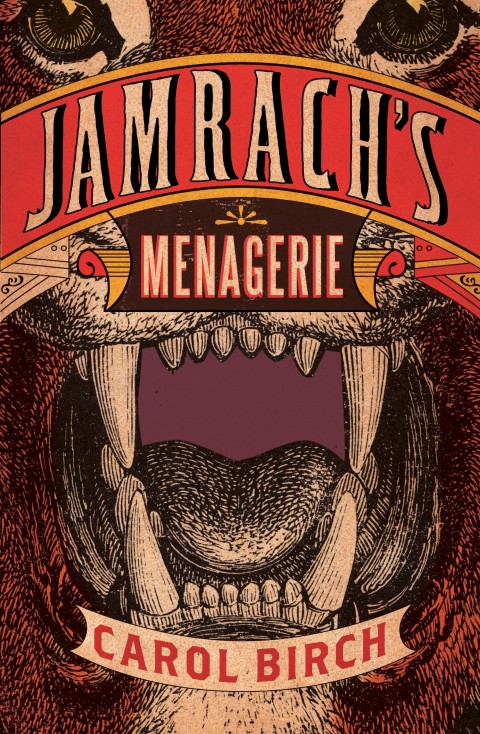
Creative Review takes  a look at the cover designs for the books shortlisted for the Booker Prize, including this beauty by the mighty Jon Gray for Jamrach’s Menagerie by Carol Birch.

Let’s Get Critical — Long-form cultural criticism, essays and reviews, curated by architecture and design critic Alexandra Lange.

Never Fashionable, Always in Style — Costume designer Jacqueline Durran on tailored suits worn by the spies in the film adaptation of Tinker, Tailor, Soldier, Spy, for The Guardian:

“I thought that lots of these middle-aged men had bought suits 10 or 15 years ago and stuck with them,” she says. “I would look at a character and try to work out where they had bought their suit.”

She decided that everything in the film could have been bought from shops within half a mile of Piccadilly in London: “Things from Savile Row, Jermyn Street, Fortnum & Mason, Burlington Arcade – one of those upper-middle-class shops that are never fashionable but always do a certain kind of clothing.”

(Related: The real-life spies of Tinker Tailor Soldier Spy)

Also in The Guardian… Michael Prodger reviews Nikolaus Pevsner: The Life by Susie Harries:

Whereas art history in Germany was a creditable discipline of long standing, in England it was a new subject – class-ridden, based on connoisseurship and, he thought, “at its worst, an activity a bit like stamp collecting”. It was this fustian world that Pevsner and other émigrés such as Ernst Gombrich, Rudolf Wittkower and Edgar Wind were to transform.

Pevsner had a hard time fitting in, not least because he was a modernist, something the British found temperamentally uncongenial. For Pevsner, though, it represented an antidote to art for art’s sake and he saw it as an appropriate expression of the spirit of the age. Art, he believed, should be functional and of service, and architecture was the most important of the arts because it was the most closely connected with human life.

And finally…

Pathos and Pantomime — Peter Ackroyd choose five books about London:

London has always had the reputation of being a city of contrast, where pathos and pantomime meet. That is true in the work of Charles Dickens and Charlie Chaplin, for example. And it is certainly true in the work of [William] Blake. So you can see patterns of the London imagination at work. It is a world of theatre. The grand theatre of the human spirit which London most readily represents, and there is scenic detail and movement and passion and the action of crowds. It is quite different from other cities.

Comments closed