Skip to content

The Casual Optimist Posts

Robert Macfarlane: Glimpsing Gormenghast

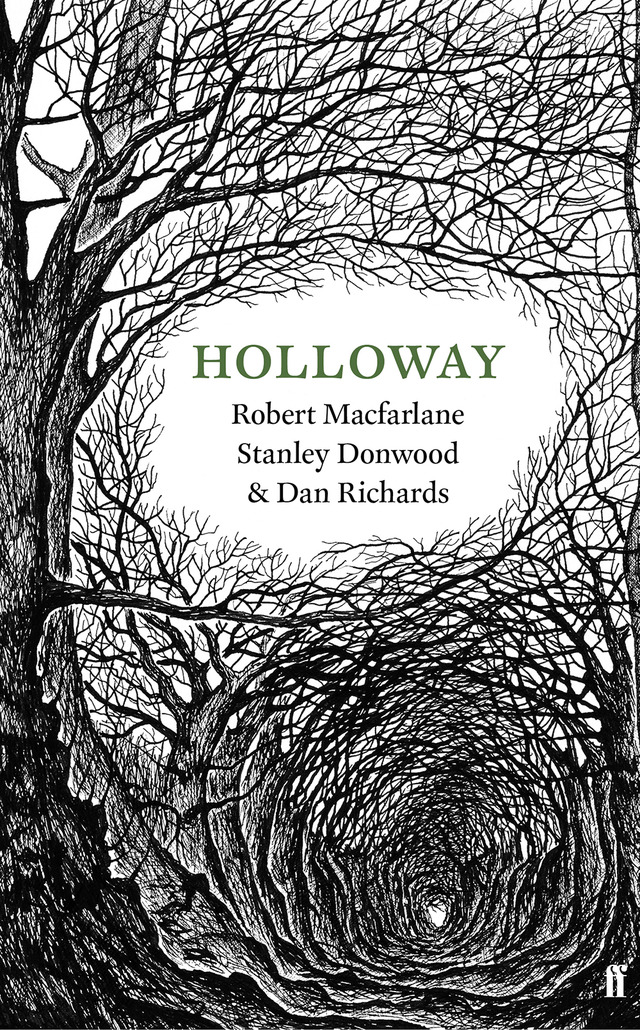
In the latest issue of Intelligent LifeRobert Macfarlane, author of The Old Ways: A Journey on Foot and co-author of Holloway, considers Mervyn Peake’s Gormenghast:

Gormenghast is a vast “labyrinth of stone”, in Peake’s phrase—except that it has no centre, for there is always another chamber to reach or further annex to access. In this respect it is less a castle, more a city—and an infinite city at that. I grew up at the end of a country lane in the English Midlands, and it was in Peake’s writing that I first sensed (fearfully, fascinatedly) what a city might feel like to inhabit.

Cities are, like Gormenghast, excessive and connective. They spawn, proliferate, self-generate: and they are sites of encounter and overlap. For every story you overhear in a city, every conversation you catch, myriad more are in the making at that moment. This is the affront that cities offer to reason, and the excitement they provoke in the mind: that they surpass all possible record. They are places of—to borrow again from Peake—intense “circumfusion”.

Comments closed

The Great Discontent: Paula Scher

The Great Discontent interview designer Paula Scher:

I think graphic design is an important profession because it’s part of what we put out into the world, and it’s what people see and perceive. It’s not just about doing design for the “public good.” The design community currently thinks that if you design something to help the victims of Hurricane Sandy, then that’s good, but if you design something for a bank, then that’s bad. I disagree. I think all design matters and all design deserves to be intelligent.

Obviously, we don’t want to advertise products that are horrible for people because that’s immoral. But if we can raise the expectation of what something can be, then we’ve done a huge service for our community. For example, consider the way most strip malls and shopping centers think they have to appear and behave: it’s horrible. Why can’t there be a different kind of experience? Why can’t we see them as something potentially terrific? There’s an architect named James Wines, whose Structure In the Environment architecture firm designed facades for a chain of BEST stores in the 1970s. He took big box stores and turned them into fantastic outdoor sculptures. He raised the expectation of what those experiences could be.

To me, that’s the most responsible design there is: taking something “bad” and making it terrific by raising the expectation. That’s what we do.

Comments closed

Steve Kroeter: Design Books Within Reach

In a video for Design Within Reach, Steve Kroeter, the president of Archetype Associates and founder and editor in chief of Designers and Books, talks about the books that inspired him:

1 Comment

Art Spiegelman: The Antibodies of Satire

Art Spiegelman talks to Tablet Magazine’s literary editor David Samuels about the retrospective currently at the Jewish Museum in New York, Mad magazine, and, inevitably, Maus.

While not exactly critical of Spiegelman, it’s one of the feistier interviews I’ve read with him recently:

Now, if you’re talking about nationalism, then you have to get to Duck Soup within a couple of seconds. And that impulse predates WWII, and it’s an outsider’s perspective on a culture, and there are still plenty of outsiders to this culture, and things will come from that still, I believe. That’s one point.

The other point, which is more to the point perhaps, is the impulse—I see it through Mad, because it’s the one that’s imprinted on me. Mad made the resistance to the Vietnam War even possible. And that seems really, deeply true, not just some kind of wise-crack true. Because the ’50s felt incredibly monolithic. The early ’50s was an incredibly oppressive place in America, very iconically represented by a decent-enough liberal chap named Norman Rockwell. It’s when we got this ‘In God We Trust’ on our money, it’s when we had our crazy McCarthy moments, we had all of these things happening, and yet there was room for a very effective antibody, which was this kind of self-reflexive, self-deprecating, angry response to the homogeneity from people who weren’t thoroughly homogenized in our culture, i.e., Jews. It led to something very fruitful, and we still have the aftermath of it, both positively and negatively.

Comments closed

Everybody Street

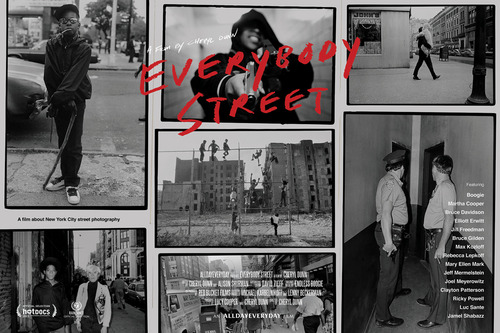
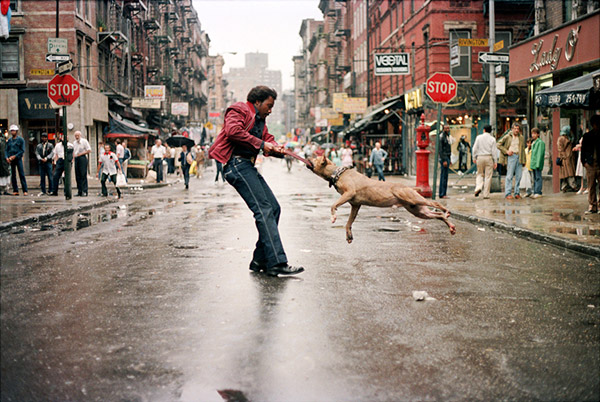
Everybody Street is a new documentary about the lives and work of New York’s street photographers and the city that inspires them. The film features photographer Bruce Davidson, Elliott Erwitt, Jill Freedman, Bruce Gilden, Joel Meyerowitz, Rebecca Lepkoff, Mary Ellen Mark, Jeff Mermelstein, Clayton Patterson, Ricky Powell, Jamel Shabazz, Martha Cooper, and Boogie, as well as historians Max Kozloff and Luc Sante. It looks amazing:

Everybody Street can be watched on demand at Vimeo, and you can read an interview with director Cheryl Dunn here.

Comments closed

Jonathan Meades: ‘I find everything fascinating and that is a gift’

English author, broadcaster and architecture critic Jonathan Meades, who apparently (and somewhat enviably!) lives in Le Corbusier’s Cité Radieuse in Marseille, interviewed by Rachel Cooke for The Observer:

“I love looking at buildings. I’ve never been able to get from A to B without diverting because I am extremely interested in architecture. But that came first of all from the need to alleviate boredom when I was out with my father as a boy [Meades’s father was a travelling biscuit salesman who used to leave his son to occupy himself in the towns in his “area”, while he went off to meet his grocer customers].  So much that I do is to alleviate boredom… Buildings are part of a much greater thing, that’s what fascinates me: the totality of things. I find everything fascinating and that is a gift. It’s that Flaubertian thing: everything looks fantastic if you look at it long enough. That chimes with me entirely.”

And if you haven’t read it previously, Owen Hatherley’s review in the London Review of Books of Museum Without Walls, Jonathan Meades most recent book, is well worth a visit:

Above all, Meades is a scourge of all forms of belief, faith and ideology, of everything that he regards as childish and credulous – yet the architecture that shakes him most is created by people crazed with dogmatism and righteous fervour. Whether or not he is aware of the contradiction, it charges his prose as he grapples with his own horror and fascination: at Victoriana, at the Arts and Crafts movement, at modernism, at Stalinist architecture – most of which he loves, and most of which are based on values, theories and opinions he finds either silly or repugnant.

Comments closed

Gene Luen Yang: The In-Between World of the Graphic Novelist

The New Yorker‘s book blog Page-Turner have posted a wonderful interview with cartoonist Gene Yang:

I grew up reading comics, and I just have this deep attachment to the medium. I think a lot of the things in my life that I become most passionate about, and most excited about, are all from comics…  In traditional Asian arts, the word and the picture always sit next to each other. I have an aunt, a Chinese brush painter, who told me that when you do a Chinese brush painting, you have to pair the image up with some poetry. A complete work is not masterful unless both of those elements are masterful. So maybe there’s some sort of attachment there—the idea of words and pictures working together is part of my family history.

You can read my interview with Gene, posted yesterday, here.

1 Comment

Q & A with Gene Luen Yang

I wouldn’t be surprised if you were feeling a little disillusioned with comics right now — frictionless superhero movies that deliver ever-diminishing emotional returns; ham-fisted editorial decisions; disputes over rights, compensation and artwork; violence; stupidity; institutional misogyny and racism; and generic blandness will do that.

Beyond the multiplexes and controversies, however, it is actually a quite an exciting time to be reading comics.

There are signs — Brian K. Vaughan and Fiona Staples‘ space opera Saga, Hawkeye by Matt Fraction, David Aja and Javier Pulido, and Scott Snyder and Greg Capullo‘s horror-driven Batman spring to mind — that genre comics may still have some life in them.

Classic series and newspaper strips are being properly curated and are more available than before. Under-appreciated artists are being rediscovered.

Alternative cartoonists such as Peter Bagge, Alison Bechdel, Chester Brown, Jaime and Gilbert Hernandez, Rutu Modan, and Chris Ware are producing some of the best work of their careers. The art of Daniel Clowes and Art Spiegelman is being recognised with gallery exhibitions.

And sitting somewhere between in the alt. auteurs and the superheroes, cartoonists like Emily Carroll, Becky Cloonan, Tom Gauld, Faith Erin Hicks, Hope Larson, Bryan Lee O’Malley, Luke Pearson, Noelle Stevenson — artists who have absorbed a diverse range of influences — are carving out niches for themselves, often combining and subverting genres and styles to produce uniquely personal visions.

It’s in this last, loose group of cartoonists1 — the one between the experimental and the mainstream — that I’d put artist and writer Gene Luen Yang.

Best known for his work on the Avatar: The Last Airbender graphic novels, and the critically acclaimed American Born Chinese, Gene’s most recent work is Boxers & Saints, an ambitious two-volume historical graphical novel telling parallel stories of two young on the opposite sides of the Boxer Rebellion. Already shortlisted for the National Book Award for Young People’s Literature and listed amongst Publishers Weekly‘s best books of the year — it is a remarkably mature, compassionate, and accomplished work that is at times funny, at times tragic, but always very human.

I recently met Gene while he was in Toronto to promote Boxers & Saints. I was impressed by his thoughts on being a cartoonist and on the medium itself, and we spent a good couple of hours talking books, comics, and movies. We have since corresponded by email for this Q & A.

American Born Chinese and Boxers & Saints are distributed in Canada by my employer Raincoast Books, and parts of this interview have appeared previously on the Raincoast blog.

  1. These are, admittedly, all very arbitrary, untidy and personal lists and categorizations — nobody who’s interesting fits exactly.
2 Comments

Nabokov’s 1964 Playboy Interview


Longform has posted a Playboy interview with Vladimir Nabokov from January 1964:

When I remember afterwards the force that made me jot down the correct names of things, or the inches and tints of things, even before I actually needed the information, I am inclined to assume that what I call, for want of a better term, inspiration, had been already at work, mutely pointing at this or that, having me accumulate the known materials for an unknown structure. After the first shock of recognition—a sudden sense of “this is what I’m going to write”—the novel starts to breed by itself; the process goes on solely in the mind, not on paper; and to be aware of the stage it has reached at any given moment, I do not have to be conscious of every exact phrase. I feel a kind of gentle development, an uncurling inside, and I know that the details are there already, that in fact I would see them plainly if I looked closer, if I stopped the machine and opened its inner compartment; but I prefer to wait until what is loosely called inspiration has completed the task for me.

(read the full interview)

Comments closed

An Alphabet of Books by Tom Gauld

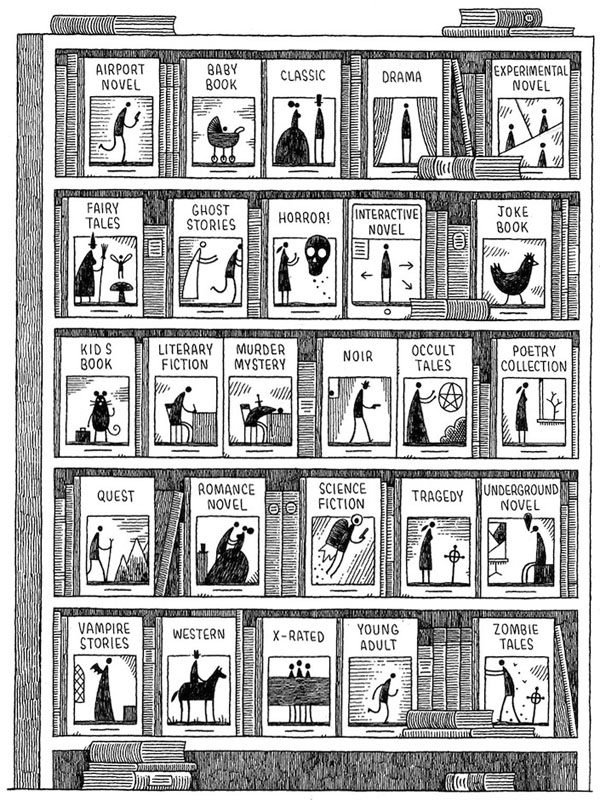
Tom currently also has a new ‘A Noisy Alphabet‘ print for sale.

Comments closed

Jeet Heer: In Love With Art and The Superhero Reader


At the Comics Reporter, Jeet Heer discusses his two recent books on comics, The Superhero Reader edited with Charles Hatfield and Kent Worcester, and In Love With Art: Françoise Mouly’s Adventures in Comics with Art Spiegelman, with Tom Spurgeon: 

Strange to say, when I work on a biographical essay, I’m also often writing a type of disguised autobiography. The introduction to the first volume of the Walt and Skeezix books deals with father/son relationships. I wrote it not long after my father died. The introduction of first volume of the Orphan Annie series touches on the fact that Harold Gray never had kids and examines the theme of infertility in the strip. It was written while my partner and I were struggling with our own fertility problems. In the case of Mouly, yes, it’s true that she, like me, learned English as a second language, aided by comics. And in general, Mouly’s experiences as an immigrant speak to my own history (and perhaps even more, the lives of my parents). Mouly’s cultural interests are another commonality. One of the nicest compliments I’ve received is from Mouly herself, who told my publisher that she was happy that I wrote this book because I was someone who not only knew about comics but had a wider cultural frame of reference. One of the attractive things about Mouly is that she understands comics but has a horizon that is wider than comics culture. It might be a form of pernicious self-flattery, but I like to think the same is true of me.

The fact that Mouly is such an anomalous figure in comics makes her story interesting to me since I also feel like I’m an odd duck in the comics world. Even when I was a kid first reading comics, I paid attention to the credits to see if there were other outsiders in the field. I got a secret thrill whenever I saw Ben Oda (hey, he doesn’t sound like he’s white!) listed as letterer. And I took note of the few women in comics as well, not just Mouly but also Marie Severin, or Glynis Wein. Even as a kid, I noticed that the few women in comics were almost invariably colorists. I often wondered why. I wasn’t a particularly politically astute kid but I did notice a few things.

3 Comments

Out of Skin by Emily Carroll


Just in time for Halloween and clocks going back, Canadian artist Emily Carroll has posted a chilling new webcomic called Out of Skin. Although it can be read a standalone story,  Carroll says on her blog that she considers it “part of a trilogy in terms of setting & theme” with her earlier comics His Face All Red and Margot’s Room, both of which are well worth reading if you haven’t doesn’t already.

Happy Halloween!

Comments closed