Skip to content

The Casual Optimist Posts

Luc Sante on Lou Reed (1942 – 2013)

I wasn’t going to say anything about the death of Lou Reed — what is there to say? Like so many people, I discovered his music in my teens and was just as thrilled and confused by The Velvet Underground as anyone else — but I did want to post a link to a short New Yorker essay by Low Life author Luc Sante that seems to capture something of the man’s complexity, and the dark, ambiguous appeal of the VU:

The least you could say about Reed is that he was complicated. He was lyrical and crass, empathetic and narcissistic, feminine and masculine, a gawky adolescent and an old soak, a regular guy and a willful deviant, an artisan and a vandal. As a teen-ager he was administered electroshock, intended to cure him of either homosexuality or generalized waywardness, depending on which interviews you read. He studied poetry with Delmore Schwartz and songcraft in the teen-pop-counterfeiting ateliers of Pickwick Records, then absorbed the avant-garde trance state from La Monte Young via John Cale and Angus MacLise—but since he was already tuning his guitar strings all to one note when he met them maybe he’d absorbed it on his own.

The Velvet Underground, fruit of all those disparate lessons, encompassed so many contradictions it initially weirded out nearly everybody. Reed employed the marble-voiced Nico—foisted on the band by Svengali pro tem Andy Warhol—as a Brechtian device to spike his tender ballads, while pushing a wall of noise and lyrics about dope and queer sex directly in your face. That first record (“The Velvet Underground & Nico”) travelled by word of mouth for years, going from zero to classic entirely behind the industry’s back. It was among other things an aggressive declaration of New York gutter realism in a time of rising California pie-eyed bliss. It may well have launched fifty thousand bands, and it may also have launched a hundred thousand chippy dope habits. And at length it spoke to a million teen-agers, one by one, in the existential darkness of their bedrooms.

The first VU song I ever heard was I’m Waiting for the Man. It was a staple on Annie Nightingale‘s Sunday evening request show on BBC Radio 1 in the late 1980s and it sounded, if not exactly dangerous, then certainly wayward, grubby and glamorous in a way that only New York rock ‘n’ roll can. It sparked an unhealthy interest in the band that’s never quite gone away. The VU track that captures all their brilliant contradictions is probably the epic Sister Ray. But I couldn’t find the full 17:27 version (15 minutes might be enough anyway), and I’m not sure I want to end on that note, so here is Some Kinda Love from the VU’s eponymous 1969 album instead:


Comments closed

Horror Story by Grant Snider

Grant Snider’s new Halloween horror story will chill the hearts of writers everywhere: 


Comments closed

Chaos and Order: A Clockwork Orange and THX-1138

The latest installment of ‘The Laser Age’, Keith Phipps series for The Dissolve on science fiction films of the 1960s, 70s and 80s, considers A Clockwork Orange and THX-1138:

Though released in 1971, THX 1138 plays at times like the last science-fiction film of the 1960s, while the downbeat A Clockwork Orange feels like the first of the 1970s. While superficially, they have little in common, in many respects, both films puzzle over the same obsessions. THX 1138 offers a dour, laconic vision that ends on an up note—THX escapes and stands against one of the biggest, boldest sunrises ever filmed—in contrast to A Clockwork Orange, which keeps a perversely peppy pace, up to an ending that’s happy for its hero, and chilling in its implications for everyone else. And even if, of the two, only Lucas seems fully invested in the argument, and even if both come up short, both make the effort. Both feel driven by a sense that, in the years to come, humanity would need a defense against the dehumanizing forces at work, whatever form they might take.

Last month, in the previous essay in the series, Phipps discussed Soylent Green, Z.P.G., No Blade Of Grass, and Silent Running.

Comments closed

Design Matters with Chip Kidd

Kicking off a new season Design Matters, designer and art director Chip Kidd in conversation with Debbie Millman:

1 Comment

The Sprawling, Obsessive Career of Fritz Lang

As part of the The Dissolve’s ‘Career View‘ series,  Noel Murray surveys the work of German-American film director Fritz Lang:

Over his first two decades as a movie director, Lang was responsible for some of the most memorable images in cinema’s early history, but he’d never filmed anything as shocking as one shot at the start of his 1941 thriller Man Hunt. As renowned hunter Alan Thorndike (Walter Pidgeon) settles into a shooting position on a brushy hill, he looks through his telescopic sight at his target: Adolf Hitler. Given that the United States wasn’t yet involved in World War II when Man Hunt was made (or even when it was released), even the implication that a movie hero might assassinate Hitler was a major provocation, which put Lang in a bit of hot water with the U.S. government and the gatekeepers of the industry’s production code. But Lang held firm, and Man Hunt set the tone for all the war movies he’d make in the 1940s. Even after America entered the war—and even after the war was over—Lang made action movies where the enemy wasn’t some vague antagonist in a different-colored uniform. In Lang’s war films, the villains frequently looked and talked a lot like the heroes, and posed a real, specific threat to ordinary citizens, not just soldiers.

It’s a long post — it spans a 40-year career! — but a really great read if you are interested in film history. I really hope The Dissolve publish more of these.

Comments closed

Chip Kidd: Obsessed with Batman


In this interview from the AGI Open in London earlier this year, Chip Kidd talks about his work designing books covers, his involvement with comics and, of course, his obsession with Batman:


You can read recent interviews with Chip discussing his new book Go: A Kidd’s Guide to Graphic Design at Publishers Weekly and The New York Times.

Comments closed

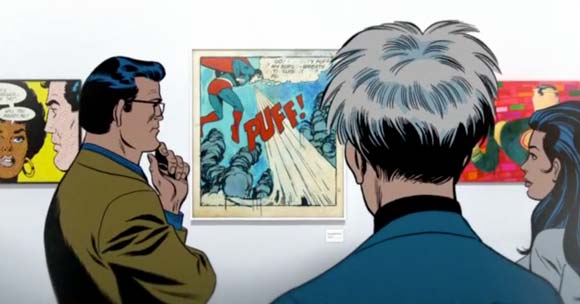
Superman 75th Anniversary Animated Short


Superman through the years in two minutes:

There’s a list of annotations on the DC Comics blog.

Comments closed

The Melancholy Beauty of Chungking Express


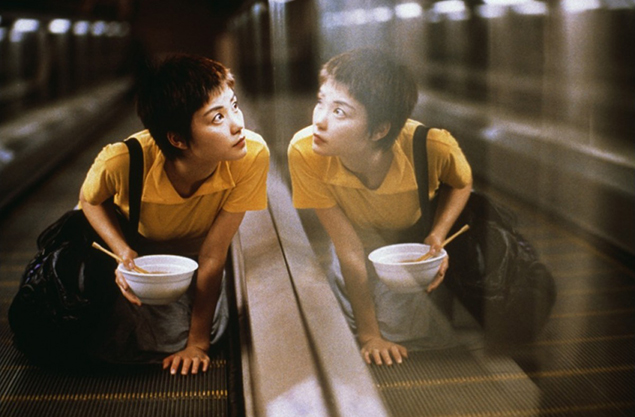
Kevin Phipps on Wong Kar-wai’s hypnotic 1994 film Chungking Express at The Dissolve:

Much of the melancholy beauty of Chungking Express—and later Wong films, for that matter—comes from missed connections, mad love, and soured romances, pairings with little chance of working out, however much heat they might generate in the moment. In many of his later films, the bitterness started to overwhelm the sweetness. (There are few movies more romantic than In The Mood For Love, but also few as inescapably sad.) Shot quickly and loosely in the middle of a place staring down enormous change, Chungking Express ultimately feels more sweet than bitter, defined by a tone of long-shot hopefulness and a sense that maybe it might all work out for those heartbroken young people—the ones whose beautiful faces and sad eyes Wong casts in the neon glow of a terrible, wonderful, forever-changing city, as they watch the first acts of their youth draw to a close.

I loved Chungking Express the first time I watched it. I had never seen anything like it, and was probably the perfect age too. It’s hard to believe  it was nearly 20 years ago.

And now you too can have California Dreamin’ stuck in your head for the rest of the day:

Comments closed

Graphic Horrors

I missed this during Banned Books Week, but with Halloween and Bonfire Night around the corner, it still seems somewhat timely…

At Print magazine Michael Dooley looks back at the comic books featured in Fredric Wertham’s infamous 1954 book The Seduction of the Innocent: The Influence of Comic Books on Today’s Youth.

Part one deals with “subliminal nudity, women’s ‘headlights,’ and the fascism and homosexuality of DC superheroes.” Part two, as Dooley gleefully notes, delivers “pages of eye injuries, Nazi vampires and teenage dope fiends.”

Dooley makes it clear he wants to “bury Dr. Fredric Wertham,” so don’t expect a lot of context (if you want more to read more about it, pick up The Ten Cent Plague by David Hadju), but hell, it’s fun anyway.

‘An Uncensored Look at Banned Comics’, a full-length story on banned comics, will appear in Print‘s February 2014 issue.

Comments closed

The Joy of Reading by Grant Snider

After illustrating the special sex issue of the New York Times Book Review last week, cartoonist Grant Snider has turned his cover illustration and two unused sketches into a series of posters titled The Joy of Reading. The posters are available from Grant’s shop.

Comments closed

Design Is One: Lella & Massimo Vignelli


Design is One, the new documentary film by Kathy Brew and Roberto Guerra about designers Lella and Massimo Vignelli, opened at the IFC in New York yesterday:

Comments closed

Dear Mr. Watterson


Dear Mr. Watterson is a documentary film about the impact of  Bill Watterson’s beloved comic strip Calvin & Hobbes:

The film was funded by Kickstarter, and will be in theatres and available ‘on demand’ on November 15th, 2013.

(via Coudal)

Comments closed