Skip to content

Tag: Penguin

Carolie Bickford-Smith—A Series Woman

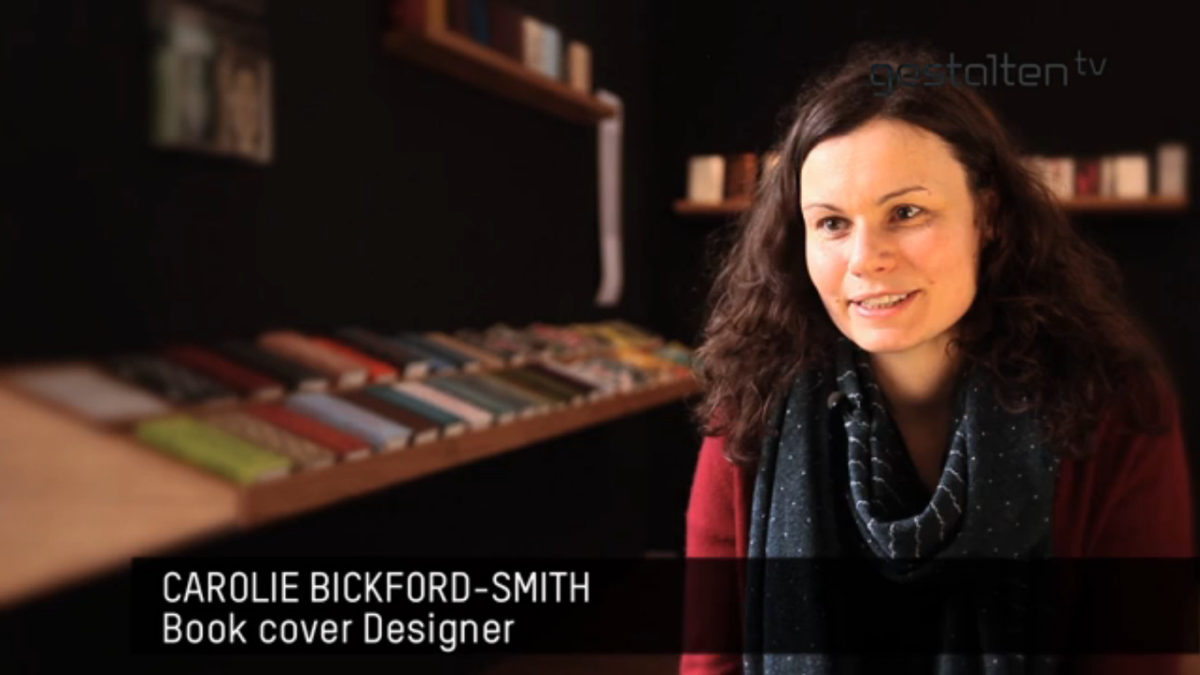
In this new interview with Gestalten.tv, Penguin Press designer Coralie Bickford-Smith talks about her love of books, her design process and the importance of research:

[vimeo 65388307 w=500]

Coralie’s work is featured in Fully Booked: Ink on Paper, published earlier this year by Gestalten.


You can read my 2009 interview with Coralie here.

1 Comment

Something (Late) for the Weekend

Enjoy Your Cigarette — Tom Cox reviews Penguin’s Underground Lines boxed set for The Guardian:

Underground Lines often matches its writers to its tracks very well, in terms of temperament as well as personal history. The Jubilee line, so often associated with capitalism and the Docklands development, is a good match for John O’Farrell, a writer whose wit was marinated in the political 1980s. The nervy prose of William Leith could not be more apt for the rather fraught Northern line, and his manic, anxious account of being evacuated from a train that was filling with smoke is probably the most addictively readable thing here. “People never tell you to have a pleasant journey on the underground, just as people will say, ‘Enjoy your meal,’ but never ‘Enjoy your cigarette,'” he writes.

Dirty Lit — Edward Jay Epstein at the NYRB Blog on being taught literature by Nabokov:

He made it clear from the first lecture that he had little interest in fraternizing with students, who would be known not by their name but by their seat number. Mine was 121. He said his only rule was that we could not leave his lecture, even to use the bathroom, without a doctor’s note.

He then described his requisites for reading the assigned books. He said we did not need to know anything about their historical context, and that we should under no circumstance identify with any of the characters in them, since novels are works of pure invention. The authors, he continued, had one and only one purpose: to enchant the reader. So all we needed to appreciate them, aside from a pocket dictionary and a good memory, was our own spines. He assured us that the authors he had selected—Leo Tolstoy, Nikolai Gogol, Marcel Proust, James Joyce, Jane Austen, Franz Kafka, Gustave Flaubert, and Robert Louis Stevenson—would produce tingling we could detect in our spines.

Exploded Hearts — Melville House’s Christopher King on his cover design for How to Keep Your Volkswagen Alive by Christopher Boucher, at Talking Covers:

In the end, I did what I usually do, which is to steal an idea for the cover directly from the manuscript. In this case, the narrator’s son—who, again, is a car—has a heart in place of an engine, so I printed off an image I found online and showed it to our publishers:

“It’ll be like this exploded diagram of a car, but with a heart in place of the engine.”

“OK!”

And finally…

The Wall Street Journal looks at ‘The Improbable Rise of NPR Music‘ which, for all of the WSJ’s obvious churlishness, manages to be fascinating despite itself:

NPR Music’s breadth, depth and ability to break new material are its main strengths. The site offers music that appeals to rock, jazz and classical lovers—all under one roof. Still another advantage is NPR Music’s ties to “All Things Considered” and “Morning Edition,” which, even if Washington-centric, have music woven into their fabric and provide news for the site as well as a familiar storytelling style.

NPR Music in its present form just turned five. “It’s the closest thing we have to a pure startup inside what is now a 40-plus-year-old institution,” says Kinsey Wilson, NPR’s executive vice president and chief content officer. “This group of now roughly 20 people has had an opportunity to invent something from scratch.”

(via Largehearted Boy)

Comments closed

Something for the Weekend

Typgraphica’s favourite typefaces of 2012. There’s a lot to love about Balkan Sans by Nikola Djurek and Marija Juza. But check out the ligatures on Levato by Felix Bonge:


Chasing the White Rabbit — Francine Prose on dreams and literature, at the New York Review of Books blog:

Literature is full of dreams that we remember more clearly than our own. Jacob’s ladder of angels. Joseph saving Egypt and himself by interpreting the Pharoah’s vision of the seven fat and lean cows. The dreams in Shakespeare’s plays range as widely as our own, and the evil are often punished in their sleep before they pay for their crimes in life. Kafka never tells us what Gregor Samsa was dreaming when he awakens as a giant insect, except that the dreams were “uneasy.” Likely they were not as uneasy as the morning he wakes into. By the end of the first paragraph of “The Metamorphosis,” Gregor has noticed his arched, dome-like brown belly, his numerous waving legs. “What has happened to me? he thought. It was no dream.”

Krautrock on the Underground — An excerpt from Earthbound by Paul Morley, part of the Penguin Lines series for the 50th anniversary of the London Underground, at The New Statesman:

“Krautrock” was the convenient collective name given in a slightly jokey, slightly wary and affectionately patronising way to an eclectic collection of radicalised German groups from very different parts of the country that contained musicians who were born in the few years before, during or just after the Second World War. Another collective name for these groups, still frivolous but more descriptive of their mission to create sound never heard before on our planet and invent music that could make you feel you were leaving the earth behind, was “kosmische”. As well as Can, these groups included Kraftwerk, Tangerine Dream, Amon Düül II, Cluster, Popol Vuh, Harmonia, Neu! and Faust, and they were looking for ways to repair their traumatic recent history, remove the crippling infection of fascism, break free of totalitarian artistic repression, negotiate turbulent social and emotional currents, and radically, romantically reinstate the positive, progressive elements of their mortified national psyche.

See also: Jonathan Gibbs looks at the design of the Penguin Lines series at The Independent.

And finally…

Fact-Checking at the New Yorker, an excerpt from a new book called The Art of Making Magazines:

When the new, remade The New Yorker of the last decade was gearing up and we started getting all these late-breaking stories, issues such as logic and fairness and balance—which previously had been the responsibility of the editors—began to fall on the checkers. This wasn’t by anybody’s design. It was because the editors were really busy putting these stories together and they wanted us to look at things from the outside and see how they were framed, and look at them from the inside and look at the logic and the way they were reported and the way quotes were used and many other such things.

That responsibility came to us not in the way of anybody saying suddenly, “You’re doing that.” It just became that when a problem arose, they would come to us and say, “Why didn’t you warn us?” And so it just became clear that there was this gap between editing and checking that had opened up under the pressure of later-breaking stories, and it just seemed logical that we should fill it. It made our job more challenging, and more fun.

(via Kottke)

1 Comment

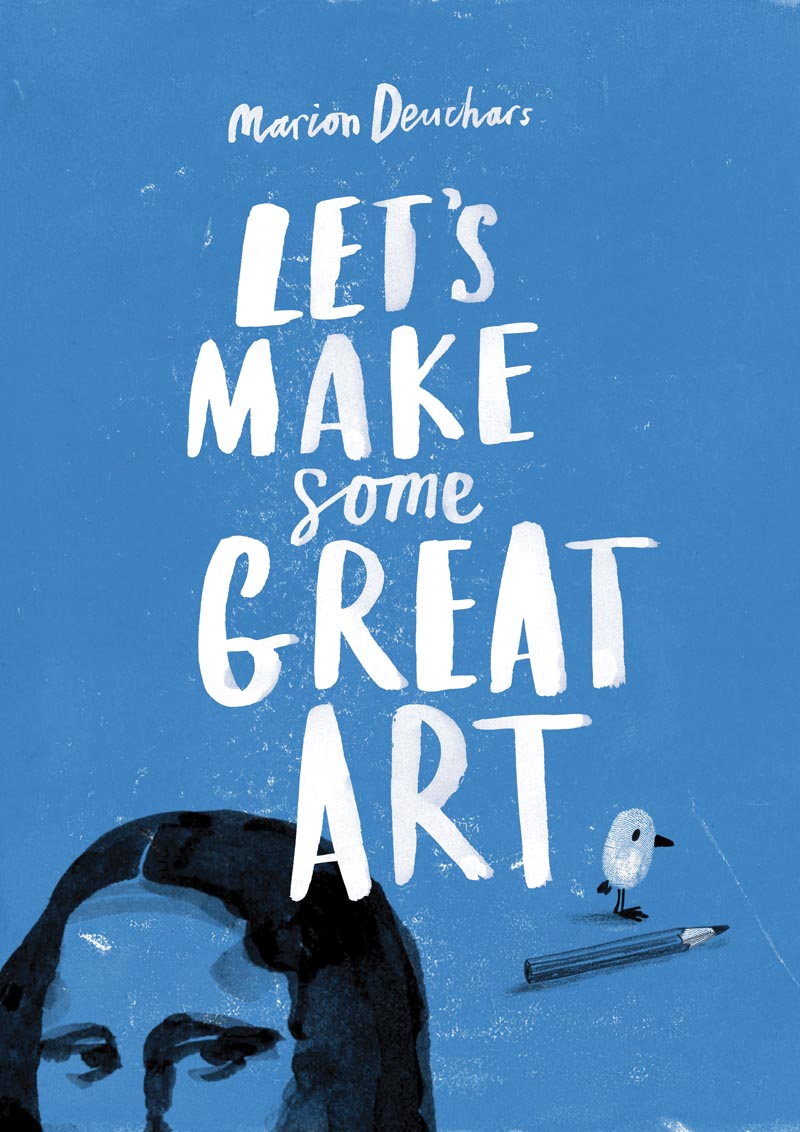
Marion Deuchars, who has created books for Laurence King as well as book covers for the likes of Canongate, Orion and Penguin, talks about working in illustration in this short film by Chris Thomas:

Comments closed

David Pearson’s 1984

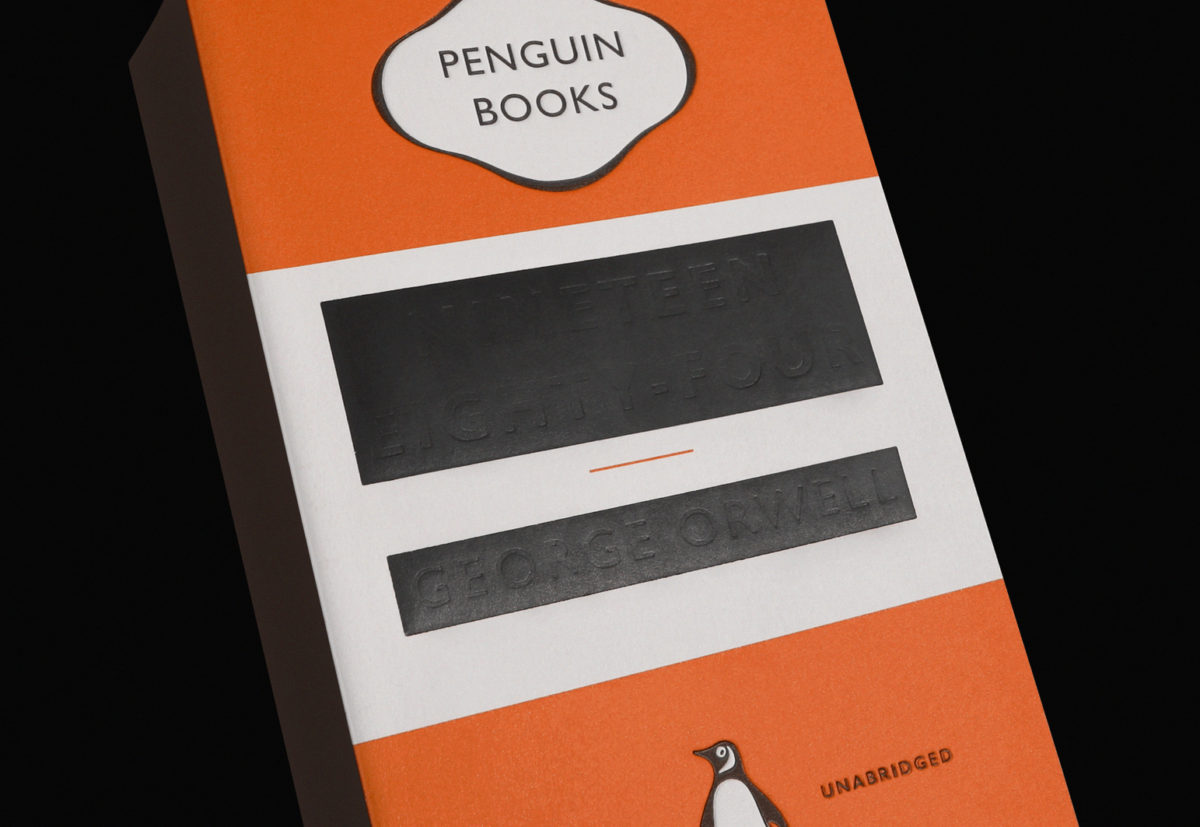
Although I’ve only just posted my favourite book covers of 2012, here’s an early contender for the 2013 list: George Orwell’s 1984 designed by David Pearson for Penguin UK.

According to David, his initial proposal was a die-cut version of the cover, but the final design (more effective in my opinion) uses matt black foil to obscure the lettering instead.

This new edition will be available on January 3rd.

14 Comments

Penguin English Library: Dr Jekyll and Mr Hyde

Director Woof Wan-Bau’s latest animated short for Penguin English Library is an avian retelling of Robert Louis Stevenson’s ‘shilling shocker’:

(via The Creative Review)

Comments closed

Fully Booked – Interview with David Pearson and Jim Stoddart

GestaltenTV have been reposting some of their past videos, and I just came across this interview with designer David Pearson and Penguin art director Jim Stoddart from 2008 for the Gestalten title Fully Booked: Cover Art and Design for Books (currently unavailable sadly):

Comments closed

More Matt Taylor le Carré

Under Paul Buckley’s art direction at Penguin US, UK-based illustrator Matt Taylor has produced two more stunning John le Carré covers. The type and design is by Gregg Kulick.

You can see the previous covers in the series here, and, according to Matt, there are a couple more on the way. Happy day.

Comments closed

The Penguin English Library

Award-winning director Woof Wan-Bau has created a wonderfully weird animated short for the launch of the  Penguin English Library:

(via Ace Jet 170)

1 Comment

Something for the Weekend

A stunning new cover for James Joyce’s The Dubliners by German designer Apfel Zet (which reminds me — in a good way — of Tony Meeuwissen’Woodbine-inspired cover for Billy Liar published by Penguin in the 1970’s).

Consistent Forms of Hostility — With an exhibition opening in May at the Barbican in London, Rowan Moore looks at the enduring influence the Bauhaus school at The Guardian:

Not much united Walter Ulbricht, the Stalinist dictator of East Germany for two decades, and Tom Wolfe, celebrant of the splendours and follies of American capitalist excess. Not much, except a loathing of the Bauhaus and the style of design it inspired. Ulbricht called it “an expression of cosmopolitan building” that was “hostile to the people” and to “the national architectural heritage”. Wolfe called it “an architecture whose tenets prohibit every manifestation of exuberance, power, empire, grandeur or even high spirits and playfulness”.

For Ulbricht it was alien to Germany, for Wolfe it was alien to America. Both agreed that it was placeless, soulless and indifferent to ordinary people’s needs. And if the Bauhaus attracted such consistent forms of hostility, that is due to the power and coherence of the image it presented to the world, of disciplined and monochrome modernist simplicity, usually involving steel and glass.

Translators Jay Rubin and J. Philip Gabriel talk about translating Haruki Murakami into English at the SF Bay Guardian.

And finally…

A Very American Critic — Elaine Showalter on film critic Pauline Kael at the TLS:

Cosmopolitan in her reading, sophisticated about international cinema, and au courant with theories of the auteur, Kael was nonetheless a very American critic. She was forty-seven before she ever travelled to Europe, and from the very beginning, she used her reviews and essays to explore what it meant to write film criticism in the United States, where the movies were always a compromise between art and commerce. “The film critic in the United States”, she wrote in “Movies, the Desperate Art” (1959), “is in a curious position; the greater his interest in the film medium, the more enraged and negative he can sound”. American film critics risked the temptations of selling out to Hollywood, or expressing contempt for mass market films. Kael prided herself on both her knowledge of the film medium and her deep love for the movies, trashy and avant-garde alike. Movies, she wrote in “The Function of a Critic” (1966), “are one of the few arts (along with jazz and popular music) Americans can respond to without cultural anxieties”. She did not intend to condescend to her readers or tell them that their tastes were wrong.


1 Comment

David Pearson, Insights 2012 Design Lecture

Designer David Pearson recently gave a lecture at the Walker Arts Center as part of the Insights 2012 Design Lecture Series:

My interview with David is here.

(via Ace Jet 170)

Comments closed

Midweek Miscellany

Comics critic Paul Gravett profiles cartoonist and illustrator Luke Pearson. Coincidently, Pearson has created an amazing cover for a new Penguin edition of Lucky Jim by Kingsley Amis (pictured above).

Desirable Comparisons — Part three of Mark Medley’s series on House of Anansi for The National Post:

“We want it to appear as a very serious, big, ambitious book,” Bland says. “Which is hard to do in a way that doesn’t look like other big books.”

He shows [Pasha] Malla some text-heavy covers that bring to mind the likes of David Foster Wallace, Jonathan Franzen and Jonathan Lethem.

“For Pasha, for various reasons that aren’t mine to say, these are not desirable comparisons,” Bland says. “For us, they’re very desirable comparisons.”

Thousands of folk songs and interviews recorded by Alan Lomax are now available for free online.

See also: NPR ‘Alan Lomax’s Massive Archive Goes Online

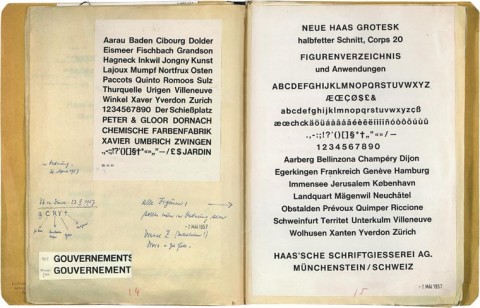
Neue Haas Grotesk — Christian Schwartz has restored the classic Swiss sans serif typeface for the digital era. There’s a history of Neue Haas Grotesk / Helvetica here.

The Books in My Head — The Quill and Quire profile Canadian independent comics publisher Drawn & Quarterly:

Part of what sets D&Q apart is its focus on high-quality design, incorporating elements like glossy embossing on covers. “We want to treat the comic as the nicest object possible,” says [creative director Tom] Devlin.

While Devlin says he collaborates with authors on design, D&Q’s willingness to cede creative control has given the company a reputation as something of an artist’s haven. Seth says he prefers to work independently, providing the publisher with camera-ready artwork for computer production. “They almost never interfere with my design plans,” he says. “I would not be the designer I am today without D&Q allowing me to make the books I see in my head.”

(Full disclosure: As mentioned in the story, D+Q are distributed in Canada by my employer Raincoast Books)

And finally…

With a retrospective at the Oakland Museum of California and the publication of The Art of Daniel Clowes: Modern Cartoonist, Carol Kino profiles Daniel Clowes for The New York Times:

“I never thought of myself as a museum artist who’s doing work for the wall,” he said. “For me the book is the final result.” He assumes that most people who see his work at the museum won’t know who he is. “But if they have some connection to something they see,” he added, “and then they read the book, the more I’ll feel like the show was a success.”

1 Comment