Skip to content

The Casual Optimist Posts

Somthing for the Weekend, May 8th, 2009

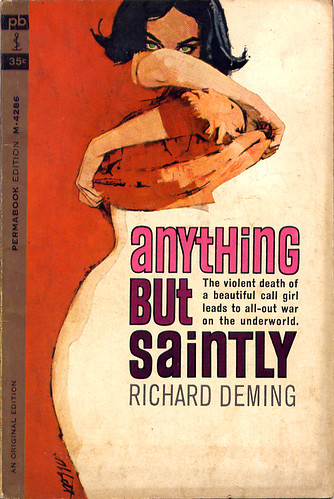
Anything But Saintly — More pulp goodness seen at The Old-Timey Paperback Book Covers Flickr pool.

The Decline and Fall of Books — Nicholas Clee, editor of Book Brunch, dons “The End is Nigh” sandwich-board in The Times:

A Gutenberg-style revolution is not… expected in the next few months. But if you are a lover of well-stocked bookshops, then you should enjoy them while you can.

Poets Ranked by Beard Weight — Or why I <3 the internet (via eightface).

Penguin Automaton made by artist-maker Wanda Sowry to celebrate Penguin’s 70th anniversary and available from Art Meets Matter . Apparently winding the handle “causes the Penguin to drink from a mug, its flippers to waggle and a piece of 70th Birthday cake to rise magically from the table” (via the lovely tweeps at New Directions ).

Good Typography is Invisible, Bad Typography is Everywhere — Stephanie Orma talks to five acclaimed designers about the art of type in the SF Examiner. Interesting to see some conflicting/contrasting opinions in the mix…

7 Habits of Highly Effective People I Know — A nice list from Noisy Decent Graphics Ben Terrett.

Comments closed

Bigger May Be Better, But Old Problems Persist

Amazon launched the new large-screen Kindle DX in the US on Wednesday. The device, apparently aimed at newspaper readers and the textbook market was met with much fanfare in the New York Times (who had leaked the announcement earlier in the week), the Financial TimesPublishers Weekly and elsewhere.

Despite the immediate gadget-lust, the hype was also met with  skepticism (and more than certain amount of unlinkable ambivalence). The DX’s $489 price tag, ‘blah’ design, lack of colour and Amazon’s decision to release the new device so soon after launching the Kindle 2 have been common complaints.

But for all these (fixable) flaws, what really nags at me about the Kindle is that whilst I can see what’s in it for Amazon, I just can’t see what’s in it for me the reader. With each launch it seems that readers continue to be secondary to  Amazon’s business strategy.

I’m unlikely to buy a Kindle because, all things being equal, I’m always going to choose a paper book over an electronic one. If  convenience is the primary concern, then I’m going to read an e-book on the phone I carry in my jacket pocket.

The Kindle DX won’t change my habits either. I already read newspapers on my laptop and I don’t want to carry 2 large devices. If I was a student, I’d want to my textbooks on my laptop too — if only because of the 2 magic words: “copy” and “paste”.

Comments closed

Midweek Miscellany, May 6th, 2009

Vintage awesomeness — Hella Haase cover seen at the Vintage Paperbacks (Non-Penguin) Flickr Pool.

Make it Good — Jacket copy matters according to a Publishing Trends survey:

Flap copy is especially important for fiction. And title and cover impact are closely related to the impact of jacket copy. If the flap copy defies the expectation created by the cover and title—if, for instance, the cover of the book leads the reader to expect a thriller but the flap copy identifies it as horror—readers are less likely to buy it.

The Common Addiction to MediocrityGuy Kawasaki talks to Hartmut Esslinger, founder of frog design and professor at the University for Applied Arts in Vienna (lessons here for the book industry for sure):

Excellent products require more then just a good designer or a good design agency—they require humanistic and cultural vision, courage and discipline in execution.

Which leads quite nicely to Nora Young‘s podcast great conversation with filmmaker Gary Hustwit, director of Objectified and Helvetica, on CBC Radio’s Spark.

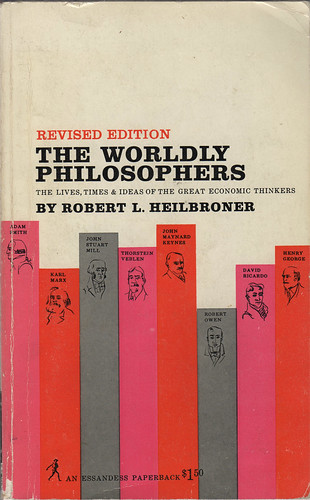
Thrift-Store Philosophy — some nice vintage book cover design finds at the always excellent Ward-O-Matic.

Instant Gratification — An interesting Q&A with Patrick Brown of Vroman’s bookstore in Pasadena (PW‘s Bookseller of the Year in 2008) on The Big Bad Book Blog:

People greatly underestimate how important browsing is for physical purchases, largely, I think, because it’s lacking in the online world. People come to an ecommerce site already knowing what they want to buy (for the most part). This isn’t so in our store, where people frequently come in for one book and end up leaving with a book that caught their eye on the way to the section or waiting in line at the register. The other thing we provide that I think is invaluable is a physical place for literary culture to happen.

Well-Aimed Typewriter Keys — After 70 years, Little, Brown and Co. have unveiled a new logo  designed by  Lance Hidy.

The Book Depository — who have a great range of books and offer free shipping world wide (and have this great live map), has launched an affiliate program. Can I humbly request someone develop a wordpress widget for it please?

And lastly, The New Yorker‘s The Book Bench blog has a sneak preview of the new Dan Clowes book.

Comments closed

Why Not? Or How We Live-Tweeted Fall 09

Why Not?

One the things that really stuck with me from Michael Tamblyn’s 6 Projects That Could Change Publishing For Ever presentation at the BookNet Tech Forum in March was the idea that publishers have to “place lots of little bets quickly.”

It tied into another idea that’s been kicking around recently about reframing ‘Why?’ questions into ‘Why Not?’ questions. That is to say, whenever we — publishers, book distributors et al — ask “why would we do this?” we should flip the question on it head and ask “why wouldn’t we?”.

This doesn’t mean we should pursue every idea that someone puts forward. Sometimes there will be good reasons not to try something — “it costs too much” and “it’s illegal and/or evil” are perfectly valid reasons that spring to mind to nix something (and no doubt there are  plenty more). But, in my experience, reframing the ‘why?’ question encourages people (me included) to think creatively and be more positive about ideas/projects we might otherwise dismiss out of hand.

#rainfall09

This is all a roundabout way of explaining how I ended up twittering from the  Raincoast Books Fall 09 Sales Conference last week.

Before we got under way on the first morning, a few of the early birds were laughing about using Raincoast’s Twitter account to micro-blog the presentations as they happened. Although it started as a joke, the near-inevitable “why would we?” and “who cares?” questions came up, and that raised the stakes. I turned the questions around and couldn’t actually think of any good reasons why we shouldn’t ‘live tweet’ the conference. I had my laptop, wireless access and a power source, so it seemed easy enough to do. And I figured people would tell me pretty quickly if they were bored and I should stop.

Decision made.

We quickly adopted #rainfall09 (an identifying reference tag for twitter posts or ‘tweets’ which was accidentally shortened to #rainfall on more than one occasion) and,  with some help from my colleague Siobhan, I covered all 3 days of the conference in a series of posts of 140 characters or less.

To people who live their lives online and are accustomed to social media rather than the slightly conservative book publishing world, the response to all this is probably a very sarcastic “big whup”. But sales conferences are not usually open and inclusive, and, needless to say, there was a degree of skepticism and resistance to overcome. Certainly it was experiment for us, if not, admittedly, a very large one. And  we were, as far as I’m aware (and someone please correct me if I am wrong), the first publisher/book distributor to Twitter their entire conference.

20/20

With the benefit of hindsight, the drawbacks were predictable. It was very intensive and time-consuming and I found it was difficult — at least initially —  to interact with the people actually in the room and tweet. I’m sure I missed a lot of nuance and I passed on more than few book samples with the barest of glances. We probably over-tweeted and lost a few followers as a consequence.

That all said, the positive outcomes vastly outweighed the problems. The feedback was overwhelmingly positive. We learnt as we went along — becoming better organized and tweeting less — and we gained far, far more followers than we lost over the 3-day period. Our posts were re-tweeted. Followers asked questions and made requests. We raised awareness of Raincoast, the publishers we work with, and the books we distribute. And we were able to connect with reviewers and bloggers we weren’t previously aware of.

I would do some things differently next time for sure. But, ultimately, it was definitely worth doing.

If you are thinking about live-tweeting your conference, here are my 5 Tips:

  1. Be Prepared — Whilst Twitter is great for spontaneity,  making sure you can set-up  your laptop with internet access, and a power source is essential (our conference days were 10 hours straight). And knowing the books (at least a little) in advance, definitely helps — I was often scrambling to find additional information on particular titles and bookmarking a few pages in my browser in advance would have been a plus.
  2. Be selective — Raincoast Books is primarily a distributor. We have something like a thousand titles a season from a variety of publishers. It is impossible to tweet about all of them, and it became quickly apparent it isn’t desirable to try. Our followers just wanted the highlights.
  3. Link — Readers also wanted links to more details if a title caught their eye. I had publisher websites and google open in separate tabs at all times. Even so, linking wasn’t always possible. Put your marketing materials online early and encourage your authors to update their sites (and join Twitter!).
  4. Be creative — If you can’t get your marketing material for your key titles online before conference, or something comes out of left-field, use the resources you do have to find an interesting work-around. When we had some very immediate reader interest in a book called The Quotable Douchebag and there was no information available online, the publisher Quirk Books quickly threw up a blog post with details.
  5. Tool-Up — Twitter management tools like TweetDeck and HootSuite are always useful for professional Twittering, but being able to quickly monitor replies, retweets, and references, not to mention conveniently shorten URLs was essential during conference.

Did you follow @RaincoastBooks or #rainfall09 last week? If so, how did you think it went? What could we do better next time? Leave a comment below or email me.

Note: This is my personal blog, and this post is my personal opinion. Neither reflect the opinion or official policy of Raincoast Books.

Illustrations from the Inspired Magazine Social Bird Icon Set (From the top: Chimero’s Birdie by Frank Chimero, Burdy by Tad Carpenter, and Jacque by Jessica Gonacha).

2 Comments

Monday Miscellany, April 27th, 2009

Every battle is won before it is even fought — Amazon acquires Stanza. Like just about everyone else, I was completely blindsided by this. But should we have seen it coming?

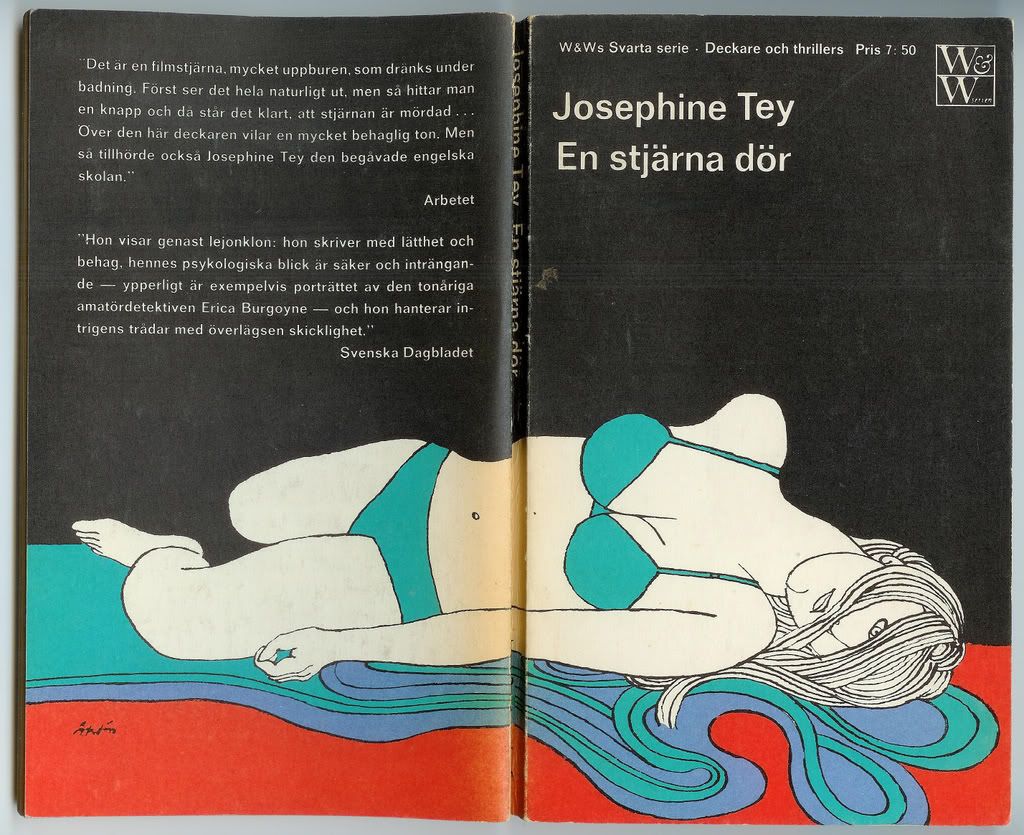
The Black Series — Paperback covers from 1960’s Swedish crime series “Svarta serien”  illustrated by Per Åhlin seen at Martin Klasch’s blog.

100 Books on Typography — Compiled by Charles Nix president of the Type Directors Club (via Design Observer).

Writing Without Words — Stefanie Posavec’s gorgeous visualizations of text and the writing styles of various authors (via @Ashbury&Ashbury).

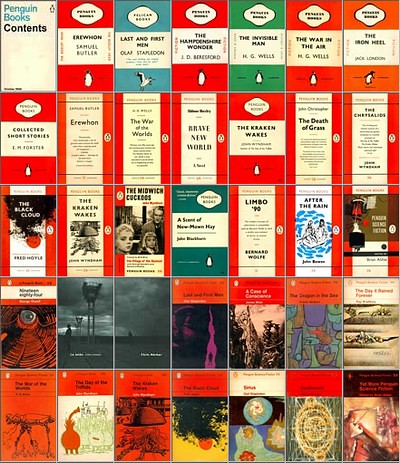
The Art of Penguin Science Fiction—  James Pardey is creating an archive of Penguin science fiction cover designs. If I have one complaint it’s that you can’t see larger versions of the covers, but otherwise it is brilliant (via Ace Jet 170).

Comments closed

Something For The Weekend, April 25th,2009

Comic Shelves by Oscar Nunez for Fusca Design (via The Ephemerist)

Goodnight Mechanical Dinosaur — Neil Gaiman on Batman in Wired (via LinkMachineGo):

[T]he great thing about Batman and Superman, in truth, is that they are literally transcendent. They are better than most of the stories they are in. That’s just Sturgeon’s Law: “90 percent of everything is crap.” Can you imagine how many thousands, or millions, of words have been written on Batman? Try to read them and you’re looking at 100,000 pages, perhaps a million, and you can assume that 90 percent of it is crap. Yet the 10 percent, and even better the 1 percent of that 10 perfect, is absolutely glorious. That pays for everything.

Tea and Cake — Louise Tucker chats to colleague Scott Pack about The Friday Project on HarperCollins’ 5th Estate blog:

It is still the only imprint to specialise in taking great web content and making books from it. That gives us a much wider brief than most people think…

Our future plans are very exciting. Our author deals will now all be profit-share arrangements with us splitting the profits of the books 50/50 with the authors. We are soon to announce some bold eBook initiatives and there is more to come.

Figuring it Out — Type legend Erik Spiekermann, co-author of Stop Stealing Sheep, on the basics of typography.  Not new, but still a great primer/reminder.


Will it sell in Moosejaw? — Book designers Bill Douglas (The Bang), Ingrid Paulson, (Ingrid Paulson Design), Angel Guerra (Archetype Design), Terri Nimmo, (Random House), and Kelly Hill, (Random House), discuss their craft in The National Post (Ingrid Paulson’s cover design for Kate Ausptiz’s The War Memoir of HRH Wallis Duchess of Windsor pictured above).

Wrapper’s Delight — A librarian at the Bodleian Library has found the earliest-known book dust jacket in an archive of book-trade ephemera:

Unlike today’s dust jackets, wrappers of the early 19th century were used to enfold the book completely, like a parcel. Traces of sealing wax where the paper was secured can still be seen on the Bodleian’s discovery, along with pointed creases at the edges where the paper had been folded, showing the shape of the book it had enclosed.

Comments closed

Midweek Miscellany, April 22nd, 2009

Blue Prints for a World Revolution — seen at the Antiquarian Bookshop 108 Buddhas, which has an amazing collection of avant-garde journals and books from Japan and Eastern Europe  in their gallery section (via Michelle McCormick’s Inspiration Resource ).

12 Steps to Better Book Publishing — Good stuff from Jonathan Karp, publisher and editor-in-chief of Twelve Books in Publishers Weekly:

It seems likely that the influence and cultural centrality of major publishers, as well as other producers of information and entertainment, will diminish as digital technology enables more and more people to create and share their work. This is exactly why publishers must distinguish themselves by doing better what they’ve always done best: champion books that offer carefully conceived context, style and authority.

The State of the IndustryNeil Nyren, senior VP, publisher and editor in chief of G.P. Putnam’s Sons talks to author  J.T. Ellison at Murderati (via @sarahw).

Poetic Interiors — Some lovely typography for Arrays of Conscious by Chanson Duvall at Beyond the Covers.

Embracing Change — Victoria Barnsley, chief executive and publisher at HarperCollins UK,  profiled in The Guardian:

There are still concerns about the digital future, such as how to continue making money. “There are some very big questions that we still have to answer – the biggest one being value,” says Barnsley. “How to make sure that consumers are going to be prepared to pay for digital content, because a lot of them are getting quite used to getting it for free?”

And yet…

Why newspapers can’t charge for online content — Dan Kennedy elsewhere in The Guardian:

I have no philosophical objection to the idea that news organizations ought to be able to charge for their online content. The problem is that it’s highly unlikely to work – mainly because there are too many sources of free, high-quality news with which they’re competing.

Font of Ill Will — Vincent Connare, designer of Comic Sans, profiled at the WSJ:

The font, a casual script designed to look like comic-book lettering, is the bane of graphic designers, other aesthetes and Internet geeks. It is a punch line: “Comic Sans walks into a bar, bartender says, ‘We don’t serve your type.'”

And finally…

Soldiers of Lead — An introduction to layout and typography for use in the Labour Party  (via Design Observer).

Comments closed

Naïve: Modernism and Folklore in Contemporary Graphic Design

Published this month by Gestalten (thanks Siobhan!):

A minimalist design vocabulary is currently being reinvented by a troop of young graphic designers who are rediscovering the stylistic elements reminiscent of classic graphic design such as silkscreen printing, classical typography, hand lettering, woodcutting and folk art and integrating them into their work. Naïve documents this extraordinary renaissance of Classic Modernism, from the 1940s to 1960s, in contemporary graphic design.

1 Comment

Something for the Weekend, April 17th, 2009


Isotype — Gerd Arntz’s amazing pictograms and visual signs for the visual language Isotype at the beautifully designed The Gerd Arntz Web Archive (pictured above).

Jacket(s) — Much as I admire Chip Kidd’s book covers, most of them are just too familiar to re-post here. But I hadn’t seen this ingeniously layered design for Kenzo Kitakata’s Ashes before even though it was published by Vertical in 2003 (pictured above). Seeing it all laid out, it’s really hard to begrudge Mr. Kidd’s reputation for awesomeness.

We like to be part of something — Nick Harkaway on connections:

A paper book has a history. Somewhere, at some time, an author wrote it all down, printed it out, gave it to an editor, who also worked over it. The book was typeset – yes, on a computer, these days, but still — and finally pressed and packaged and distributed. There is a chain of physical events which leads from me to you. With old editions, it’s even more direct. With signed ones, it’s a handshake. We like to connect. And digital books feel as if they’re trapped behind glass. The book is in the machine, and we can’t open the cover and touch the pages.

Black, white and read all overCreative Review looks at Faber & Faber‘s new editions of 20th Century poetry. The books feature specially commissioned woodcut and linocut cover illustrations.  The new editions are part of the Faber’s 80th anniversary celebrations. You can see more of the cover images at designer Miriam Rosenbloom’s design:related page.

The Disappointment Brokers — I going to go out on a limb and say this is another must-read for book-industry types from Poets & Writers — Literary agents Anna Stein, Jim Rutman, Maria Massie, and Peter Steinberg have a fascinating conversation about their profession and the state of the industry:

here’s the silver lining: [The industry’s] unhealthy enough that it’s an exciting time. It’s broken enough that publishers and agents and everyone has to change. Everyone has to rethink what they’re doing. So we have a group responsibility, and an opportunity, in a way that the industry has probably never seen before.

The Legacy of ModernismSpiegel Online celebrates 90 years of Bauhaus (via @PD_Smith).

Comments closed

Midweek Miscellany, April 15th, 2009

The #amazonfail shitstorm — from Amazon’s awful “ham-fisted”  glitch (a phrase so dirty it’s probably de-listed from their own searches) to the seething self-righteous indignation on Twitter — has been enough to make me want turn off the internet and go back to bed. But if you need  an overview of the whole sorry story, business reporter Andrea James has done a very thorough job following it for Amazon’s local newspaper the Seattle Post-Intelligencer, and summaries, shivering with schadenfreude, can be found in the New York Times, The Guardian, Wall Street Journal, and the National Post.  No doubt the other major dailies were all over it too…

Former PW editor Sara Nelson at The Daily Beast , Evgeny Morozov at Foreign Policy, and the Vromans Bookstore Blog offer some alternative perspectives.

But I’ve got to say I agree with Jessa Crispin at BookSlut: “I’m bored with this.”

(UPDATE: Clay Shirky has written perhaps the most thoughtful post on #amazonfail I’ve read to date: The Failure of #amazonfail)

Lets. Move. On…

Straight Up — Knopf designer Peter Mendelsund who moonlights as art director of Vertical Press and blogs at Jacket Mechanical,  interviewed at the always ace FaceOut Books (Smell Man by Munenori Harada, designed by Peter Mendelsund pictured above).


Contact — Filmmaker and writer Adam Harrison Levy on William Klein’s recent appearance in New York and the importance book-signings (William Klein: Buicks, 2 tiered, New York, 1955, Howard Greenberg Gallery, pictured above):

A book signing is a manifestation of an urge to recover something that we, as a culture, fear losing — namely the hand of the artist in the age of mechanical (and digital) reproduction. Now more than ever it seems that we want to get close to creativity: to hear the voice and see the skin and experience the physical presence of the person who made something that we deem to be meaningful. Is this because so much of our lives now is mediated through a screen?

What Went Wrong? — An interesting article (and something of a mea culpa) in the Boston Globe about the mistakes and missed opportunities made by newspapers underestimating the impact of the web.

In Perpetua — MyFonts strike up a ‘dialogue’ with Eric Gill (1882 – 1940), stonecarver, graphic artist, type designer and writer:

If we insist on the ornamental we are not making the best of our system of manufacture, we are not getting the things that system makes best. The process by which a railway locomotive has become the beautiful thing it now is, this process must be welcomed in all other departments of manufacture. … And ornamental typography is to be avoided no less than ornamental architecture in an industrial civilization.

We Love Typography —  “FFFFound for all things type, typography, lettering, & signage” created by I Love Typography in collaboration with Kari Pätilä.

And finally, I would like to pass on my condolences to the friends and family of Derek Weiler, editor of the Quill & Quire, who died at the weekend, aged 40.

Comments closed

Something for the Weekend

The Alcuin Society announced the 2008 Awards for Excellence in Book Design in Canada this week. Utopia/Dystopia by Geoffrey James, designed by George Vaitkunas, published by Douglas & McIntyre, (pictured above) won first prize in the pictorial category. A full list of the winners is available here (PDF).

The Hidden RevolutionInside Higher Ed discusses an article (sadly not available online) by Sandy Thatcher, director of the Penn State University Press, about digital publishing at university presses:

Thatcher’s argument, in brief, is that the peculiar challenges faced by university presses have given them an incentive to use digital resources in ways that put them somewhat ahead of their peers in the world of trade or mass-market publishing. Given the small market for most scholarly titles, academic publishers were in a unique position to benefit from short-run digital publishing (SRDP) and print-on-demand (POD) technologies.

Ten Grids That Changed the WorldSwiss Legacy reviews Hannah B Higgins’ The Grid Book:

Charting the evolution of each grid, from the Paleolithic brick of ancient Mesopotamia through the virtual connections of the Internet, Higgins demonstrates that once a grid is invented, it may bend, crumble, or shatter, but its organizing principle never disappears.

Also: The Grid Book reviewed in The Guardian.

The Need for Balance — Novelist Victoria Strauss at Writer Beware on fatuous articles about self-publishing:

For most writers… the path of self-publishing offers substantial downsides and pitfalls… and successes… remain few and far between. These hard facts are way less sexy than the vision of a brave new technological world that makes it possible for (a few) authors to bypass the traditional route to success–but they are no less real. In my opinion, journalists who write about this issue have a responsibility to cover both sides.

Taking the Internet and Printing it Out — Ben Terrett (Noisy Decent Graphics and Really Interesting Group) talks about publishing Things Our Friends Have Written on the Internet — a newspaper collecting some of the best blog posts of 2008 — with Nora Young on CBC Radio’s Spark.

This week’s Spark also has a neat interview with YouTube remix genius Kutiman. If you haven’t seen/heard Kutiman’s Thru You music project, check  out The Mother of All Funk Chords.

“God Damn That’s A Good Looking Blue” — Winston Eggleston talks about his father, the photographer William Eggleston (whose work was recently used for the cover NYTBR):

Comments closed

Monday Miscellany, April 6th, 2009

Gregg Kulick‘s design for Being and Time (pictured above) seen at The BDR (of course). You can see more of Gregg’s work on his website.

Try before you buy — Matthew Baldacci, VP of of marketing and publishing operations at St Martin’s Press, talks to Book Business about ‘Read-it-First’, a free email service that allows subscribers to sample books before they decide to buy them (via Joe Wikert).

Can ‘Curation’ Save Media? — Steve Rosenbaum at The Business Insider:

Curation is the new role of media professionals.

Separating the wheat from the chaff, assigning editorial weight, and — most importantly — giving folks who don’t want to spend their lives looking for an editorial needle in a haystack a high-quality collection of content that is contextual and coherent. It’s what we always expected from our media, and now they’ve got the tools to do it better.

City of Juxtapostions — a short Q & A with Portuguese designer and illustrator Cristiana Couceiro (mentioned previously here for her New York Times Book Review cover illustration) at Untrendy Graphics:

Lisbon is deliciously decadent, ripped in time, full of vintage elements. And I let myself get lost in those little details. In shops that closed down, but which still hold, intact, beautiful examples of typography and logotypes on the shop windows. On neighbourhood hair-dressers and groceries. Lisbon seems to fluctuate between the old and the new.

The Fox — A beautiful cover design  seen at Sci-Fi-O-Rama. Apparently the illustration was originally used for 1967 movie adaption of D.H. Lawrence’s novella (via The Ministry of Type).

Comments closed