Skip to content

The Casual Optimist Posts

Something For The Weekend, April 3rd, 2009

On a very wet and miserable day in Toronto, it only seems appropriate to start with a couple of books about the rain and then move on to some steaming hot coffee before all the usual book miscellany…

Stickers and Stuff lauds Helen Borten’s lovely illustrations for Franklyn M. Branley’s book Rain and Hail (pictured above). And  Andy Smith shares some of his illustrations for his silkscreen book The Rainy Season on his blog (pictured below).

And, while were on the subject of Andy Smith, he’s posted some of his book jacket work  on Flickr (via Beyond the Covers).

The Daily Grind — Benjamin Obler, author of Javascotia, on his 5 Favourite Cups of Coffee in a Day at the Penguin blog:

It’s so obvious, I know, but the morning cup — the first — morning cup — is like the pioneer. The self-sacrificer. Without it, there would be no others… Even on a regular day, it’s a workhorse.

Head On — Indie heartthrob Richard Nash talks to Interview Magazine (via Booksquare):

It is very complicated for an unknown writer to reach an audience of readers given the vast numbers of unknown writers out there. How do people find out about it? So I believe in the role of intermediaries. People always look to trusted friends who might be more expert or knowledgeable in a given area for advice about things… The question is, who are going to be those people. The model is going to shift from kind of a gatekeeper model to an advisor/service model.

Mr. Nash was also interviewed by BookSlut back in March.

I watch you read — Julie Wilson,  AKA Seen Reading and publicist for Canadian publisher Anansi,  is now blogging for Walrus magazine.

Atomized — Mark Coker, CEO of e-publishing service Smashwords, talks about e-books and iPhones with Maria Schneider at  Editor Unleashed.

Bite-Size Edits — The Book Oven launches “a tool that makes proofreading easy and might just be the most fun you’ve ever had spotting typos with your clothes on.” The Book Oven blog has more. (NB Bite-Size Edits is still in private alpha, but  I have a couple of invitations so email/DM me or leave a comment below if you would like to be involved).

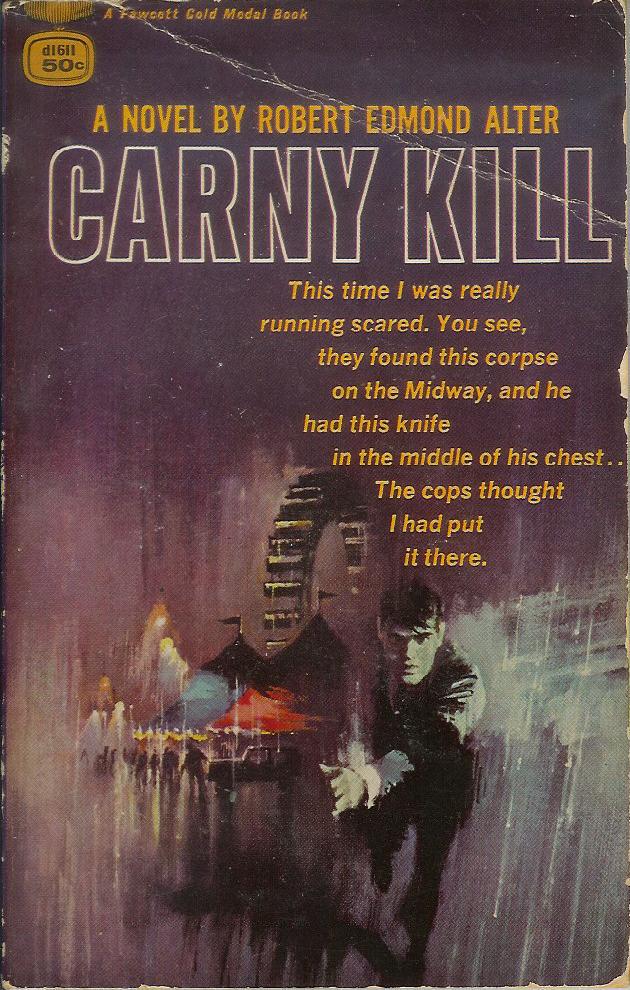
And finally, Carny Kill as seen at Pop Sensation (words fail):

Comments closed

Q & A with Ellen Lupton

“Ellen Lupton makes this industry smarter. If graphic design has a sense of its own history, an understanding of the theory that drives it and a voice for its continuing discourse, it’s largely because Lupton wrote it, thought it or spoke it.” — Katherine Feo, AIGA

Dedicated to raising design awareness, Ellen Lupton is the Director of the Graphic Design MFA program at Maryland Institute College of Art (MICA) and curator of contemporary design at the Cooper-Hewitt National Design Museum.

A regular columnist  for ReadyMade Magazine, she has contributed to Print, Eye, I.D., and Metropolis, and writes regularly about design at both Design-Your-Life and her own website Design Writing Research.

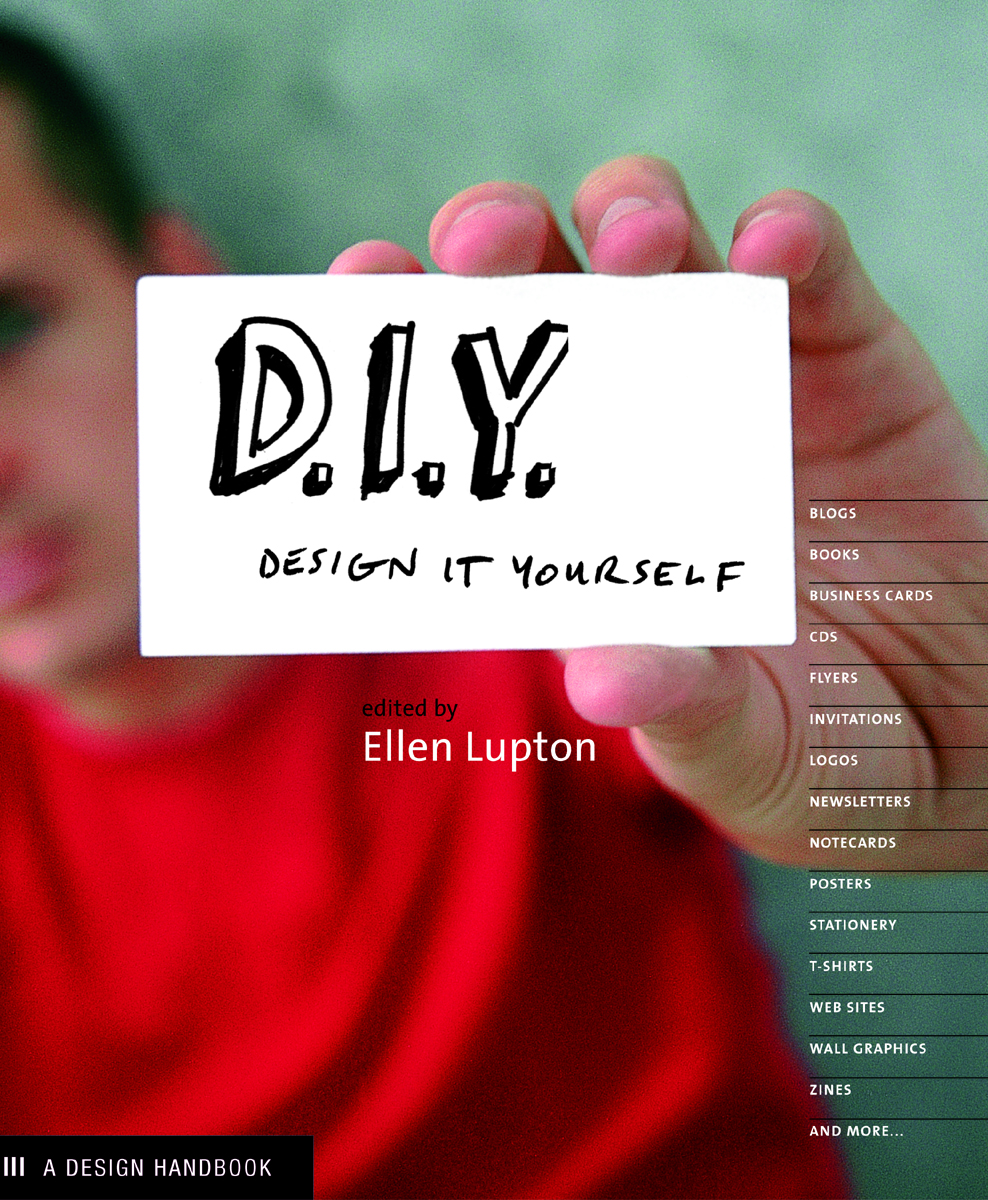
Her books include the indispensable introduction to typography Thinking with Type, DIY: Design It Yourself, D.I.Y. Kids,  co-authored with her identical twin sister Julia Lupton, and Graphic Design: The New Basics, co-authored with Jennifer Cole Phillips.

Design Your Life: The Pleasures and Perils of Everyday Things , another collaboration with her sister Julia, will be published by St. Martin’s Press later this year.

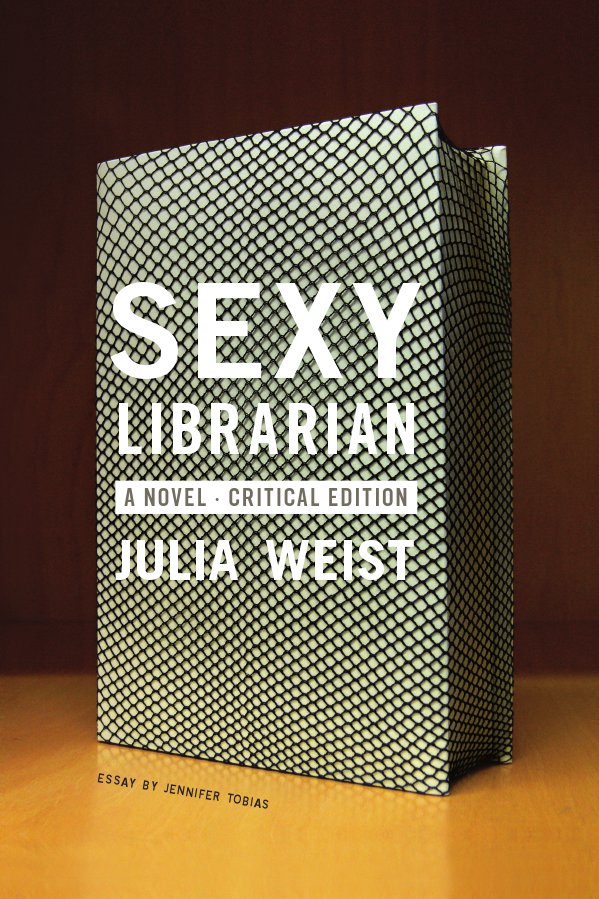
But, not content with being an  author, curator, designer, and educator, Ellen recently became a publisher, founding  Slush Editions to independently publish the novel Sexy Librarian by artist Julia Weist.

Sexy Librarian also features as a case study in Ellen’s latest book  Indie Publishing— a guide for independent authors written, researched, and designed in collaboration with graduate students at MICA — published in December 2008 by Princeton Architectural Press.

Ellen kindly replied to my questions about design and indie publishing by email.

And for the sake of full disclosure, I should make absolutely clear that several of Ellen’s books are published by New York’s Princeton Architectural Press who are distributed by Raincoast Books in Canada. But, for the record, that only explains why I have her email in my address book, not why I chose to interview her.

I have also interviewed Ellen previously for the Pages bookstore in Toronto.

How would you define ‘indie publishing’?
Indie publishing is author-driven. The traditional publishing industry is controlled by publishing professionals — editors, marketing people, promotional staff, and the publishers in charge. These are all skilled people. In our book, we use the term broadly, to encompass everything from handmade zines to print-on-demand books to offset publications distributed by the authors to small imprints created by design firms who wanted to get into the content business.

How is it different from the traditional publishing industry?
Because it’s author-initiated, indie publishing side-steps the traditional barriers of the publishing industry. It gets beyond the gatekeepers. Now, those gatekeepers act as guardians of quality to some degree, but they also contribute to a homogeneous and profit-driven publishing industry that many authors find hostile and hard to penetrate. Indie publishing often serves niche or local markets that can’t be addressed by mainstream publishing.

What are the benefits of publishing yourself?
If you have had difficulty breaking into the mainstream publishing world, going independent is liberating. If you end up producing a successful book, the profits can be substantial, but this shouldn’t be the main motive to get into publishing. Few authors make substantial bucks on their books — regardless of who publishes them. For most of us, writing and producing books is a labor of love.

What are the risks?
Most forms of indie publishing cost money, and that’s a risk. When you work with a commercial publisher, they foot the printing bill. Publishers also provide essential services like editing, proofreading, design, distribution, and marketing. The indie publisher has to take on all these tasks alone (or find friends to help out). It’s not easy, especially the distribution part. Self-published books are still viewed as less legitimate than commercially published books, although this is starting to change.

Do you see indie publishing as part of a wider D.I.Y. movement?
We are seeing more independent production in all creative fields — music, art, theater, design, etc. Younger creative people are interested in creating new institutions and networks outside the official art world or music/literature establishments. They are comfortable using technology to disseminate their ideas.

How has the internet affected the development of indie publishing?
The internet allows indie publishers to reach potential readers outside the bookstore system. Today, anyone can set up an Amazon Marketplace account or sell publications directly from their web sites. Print-on-demand publishers like Lulu and Blurb produce books when someone buys them, sending the finished book directly to the customer. These technologies are creating new possibilities for authors, especially those whose work is directed at narrower, smaller audiences.

What advice would you give someone publishing their first book?
Love your book. Get advice from lots of people in order to have the best possible content. Consider the different avenues that exist for publishing your work, including mainstream publishing as well as independent ventures.

Think about your audience and the best way to reach them. And think about your own primary goals for publishing a book. For example, an artist having a gallery exhibition might use a print-on-demand book as a tool for building his or her career via grant applications, networking with galleries and curators, securing lecturing and teaching opportunities, and more. A well-designed, carefully authored book has many functions. Selling copies to lots of people is just one of them. You might use a book as professional portfolio for landing a job or attracting clients — maybe all you need is a few copies.

What are some of the common mistakes people make designing books?
It’s important to use good software. The industry standard today is Adobe InDesign, which is available for both Mac and PC and can be easily learned via software manuals or technical workshops. Programs like Microsoft Word or Publisher are extremely cumbersome and will ultimately be frustrating to a person trying to design a refined and elegant book. Choosing a good typeface is also important. Avoid Times Roman, which was originally designed for newspapers and is so widely used as to be banal. Beautiful, high-quality typefaces such as  Garamond often come bundled with layout software and computer operating systems. Keeping your design simple and consistent from page to page is a rule of thumb for any book design. You also need to “unlearn” some habits from high school, such as leaving two spaces between sentences — this is not done in formal typesetting, and it will make your book look amateurish.

What do you look for in good book design?
Beautiful type, elegant margins, consistent pages.

Have you ever bought a book just for its cover?
Of course! Cover design is extremely important. A cover is not only a billboard advertising your book on a shelf, it’s also an online logo for your book that needs to look great at 100 pixels high. Getting help from a good graphic designer on your book cover is a worthwhile investment.

What will be the impact of e-books on publishing?
I believe that e-books are going to be very, very good for authors. By lowering the cost of publishing, e-books will make it easier for more authors to get their work published and to reach specific audiences who want their content. What I’m less sure about is how e-books will affect graphic designers!

Are we finally seeing the ‘End of Print’?
I do believe there is a sea change going on. After decades of unsuccessful attempts at creating electronic book readers, suddenly the time seems right. I don’t think print will disappear, but I think we will see less of it. It remains a tactile, permanent, stable medium that users can feel a personal attachment to.

What role do you think print-on-demand will play in the future?
Print-on-demand is where digital media and print meet. I think we will see a lot more of this as prices go down in the future. Ultimately, it is a more sustainable way to publish and involves less financial risk, but right now, it is too expensive for large-scale endeavors.

How will e-books and print co-exist?
E-books are great for disposable reading — magazines, casual fiction, newspapers. Perhaps every physical book in the future will come with an e-book supplement. I often want to quickly reference a book I read, and e-books would be great for that. Personally, I collect books, but I don’t need to keep the latest Richard Price book on my shelf forever.

As a designer, do you feel an attachment to print?
I am very attached to print. I don’t want to see it disappear in my own lifetime, that’s for sure. I love the tactility, permanence, and scale. But I do find myself reading more and more online.

Thanks very much Ellen!

4 Comments

Monday Miscellany, March 30th, 2009

Oh. My. GoshJon Klassen’s lovely illustrations and designs for the movie adaptation of Coraline.

Schadenfreude — Literary agent Nathan Bransford on the “death” of the publishing business:

There are definitely problems with the business… But the industry is not stupid. Like any massive industry that is comprised of tens of thousands of individuals, it is a human institution with some institutional problems and weaknesses. But despite a reading public whose appetite for books is not growing at a particularly fast rate, despite tremendous competition from other media, we’re still here, and we’re doing way better than a lot of industries, including ones comprised of supposed geniuses and masters of the universe.

Japan’s 21st Century Cultural AmbassadorRoland Kelts, author of Japanamerica, profiles Haruki Murakami for 3:AM Magazine.

Isolating the CommonplaceThe New York Times Book Review‘s photography editor Jeffery Scales discusses the William Eggleston photograph used illustrate Edmund White’s review of  Everything Ravaged, Everything Burned by (the improbably — yet charmingly — named) Wells Tower.

Give me Twitter or give me deathThe Globe and Mail‘s Ian Brown possibly overthinks things…

1 Comment

Something for the Weekend, March 27th 2009

Alternative MangaEric Skillman on designing a template for Top Shelf’s AX: Alternative Manga series at his blog Cozy Lummox.

FiledBy — a social network for authors and their readers, co-founded by Peter Clifton and Mike Shatzkin.

Extended Grey Skies — Henry Sene Yee on designing the cover of David Cullen’s  Columbine:

In the end, I didn’t want to say anything or felt the need to frame the book in any Point-of-View. What really needs to be said? The Publisher had already set the tone for me. As far as the cover copy, there was no author’s name, no descriptive subtitle, no high school, just the word COLUMBINE on the front cover. That said it all.

Router — Jeremy Mickel on the year-and-a-half process of designing his first typeface at I Love Typography:

Several designers have told me how important it is to have a specific use and point size in mind. The idea is that if you try and design a font that’s good for everything, it might not be REALLY good at anything. But if the font works really well for one specific use, then it can probably work well for lots of others.

In search of Chandler — Editorial Assistant Anna Kelly recounts her search for the original jackets of Raymond Chandler’s The Big Sleep, Farewell, My Lovely, The Little Sister, The Lady in the Lake, and The Long Good-bye for Hamish Hamilton’s new reissued editions. Chandler died 50 years ago this week.

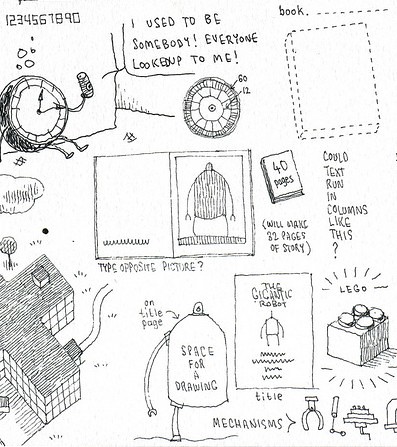
And finally, I’ve mentioned Tom Gauld’s Flickr page previously but,  honestly, it’s so good who cares? Tom’s just uploaded some of his sketchbooks and needless to say they’re genius. You can see Tom’s books at Cabanon Press.

2 Comments

1/3 Alligator: The Book Cover Archive Q & A

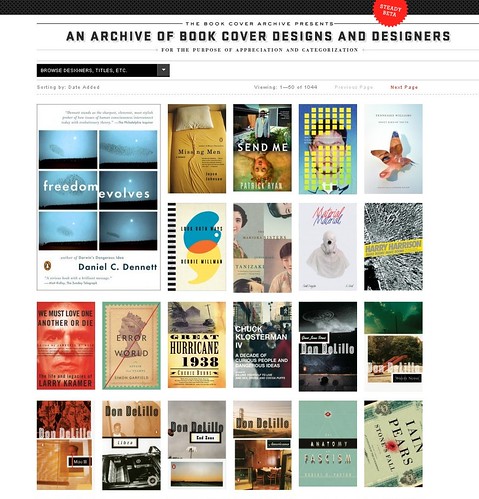
Lauded and linked to by everyone from The Guardian newspaper to the New Yorker blog (not to mention the really important folks like Drawn!Kottke, We Made This,  and Veer)  the dazzling The Book Cover Archive is — as the name suggests — a hand-picked archive of book cover designs and designers, collected “for the purpose of appreciation and categorization.”

Edited and maintained by frequent collaborators Ben Pieratt of General Projects and Eric Jacobsen of Whisky Van Gogh Go, it’s an indexed database of credited book covers sortable and searchable by title, author, designer, art director, photographer, illustrator, genre, publication date, publisher, and even typeface.

Earlier this month, I emailed Ben and Eric with a series of questions about the project.

What was the impetus behind BCA?

Ben: In all honesty, the Book Cover Archive is meant to serve as a passive teaching tool for people like me who suck at book cover design but want to get better.

Do you see BCA as expansion on Covers, the book cover design project you created for Fwis?

Ben: The two sites provide different services. The Fwis Covers blog serves as a platform from which to comment and critique. You can’t post a cover on Covers without commenting on it. Whereas the Archive is passive in its function and editorial voice. The only curatorial decision is the binary It’s In Or It’s Not.

R. Mutt ReadyMech

You’re getting quite well known—notorious even—for online not-for-profit ventures like Covers, ReadyMech, Schtock, and now BCA. How do you get started on these projects?

Ben: For every launched project there’s 10 failed ones that never got off the ground. It’s really just a matter of having ideas for projects that you know no one is ever going to pay you for and then running with it anyway because its fun as hell.

How did you become interested in book cover design?

Ben: Senior year of college I was struggling with my thesis project. I think I had been doing a study of “bad taste” and was just having a hell of a time with it. At around the same time my former business partner, Chris, told me to read Ender’s Game, a Sci Fi classic. I hadn’t read any sci-fi growing up because my dad kept feeding me non-fiction stuff. I loved the book but was embarrassed to carry it around because the cover was so incredibly bad. So I changed my thesis project to redesigning the book covers of science fiction classics. I’ve been mildly obsessed with both sci-fi and book covers ever since.

How do you select which covers to include in the archive?

Ben: I’m picky as hell.

Are there particular designers you look out for?

Ben: I’d like to think that I judge each cover on its merits alone, but there’s no question that I’m super biased. If its American and it’s coming out of New York then I’m probably going to love it.

Eternal Light by Paul J. McAuley, designed by Sanda Zahirovic

Do you have any recent favourites?

Eric: I’m very excited about the new promotional work that Gollancz/Orion has been putting out, the Future Classics and Totally Space Opera series. Besides being surprisingly conceptual and classy takes on genre fiction, I think they point at a trend toward collectible and fetishable books as a revenue stream for authors and publishers. I hope we’ll be seeing more of these kinds of editions soon. More on this in a below.

You’re actually designer yourself. How do you go about designing a new book cover?

Ben: I don’t think I’ve designed anything decent enough to merit being asked this question, honestly. I have no tricks beyond embracing the power of utter panic.

What do think makes a good cover design?

Ben: one-half concept, one-quarter contextual appropriateness, one-half design, one-half je nais se quois, one-third alligator.

And, I have to ask, what makes for a bad one?

Ben: I’m starting to come to realize that the biggest difference between a good design and a mediocre one is the typography. Most covers have a decent, if not passable, concept. Everyone has concepts. It’s really the typography that sets the best apart from the rest. That’s my current thought anyway, subject to change.

Which book would you like to redesign?

Ben: I really dislike the covers of Malcolm Gladwell’s books. They’re completely decent, but they rub me the wrong way. They take a visual from his books and find a piece of related stock art and slap it together. I think he’s earned better. I’d also love to standardize Stephen Hawking’s catalog into some kind of glorious uber-nerd package with a lo-fi sci-fi aesthetic.

Have you ever seen a cover and thought “I wish I’d thought of that”?

Ben: Jamie Keenan’s design for Faster makes me want to give up on life. Jon Gray’s cover for Steinbeck’s Murder makes me feel inadequate in any number of ways. Rodrigo Corral’s design for Invisible Monsters makes me question my sense of self. Most recently Helen Yentus’ cover for The Way Through Doors leaves me questioning if I should pack it all up and become a plumber.

Have you ever bought a book just for the cover design?

Eric: Lots, particularly from McSweeneys. I also re-buy a lot of books I already own when newer, nicer editions come out.

The Americanization of Benjamin Franklin by Gordon Wood, designed by Evan Gaffney

Ben: I was looking for a good book on Ben Franklin recently and bought the Evan Gaffney-designed The Americanization of Benjamin Franklin specifically because I hated all the other covers. Great book, by the way.

With the growing popularity of e-books, are you concerned that book cover design may soon be a lost art (hence the need to archive it)?

Eric: Nope. See next question.

Ben: The only thing I’m worried about is animated covers. You know that shit is coming.

Are we finally seeing “The End of Print”? What’s next for books?

Ben: I have no idea. I don’t think I’m qualified to have an opinion on the issue. I certainly don’t think so. The tactility of the technology is going to have to improve significantly before people are willing and ready to abandoned their hard[cover]ware for hardware (sorry, I had to). As far as books are concerned, I assume the industry will go through the same pains as the music industry. The number of independent publishers and self-publishers will increase dramatically as technology allows them to bypass the major booksellers altogether.

Eric: I think that due to the nature of reading and readers, adoption of e-books will be much slower than that of digital music (a similar paradigm shift), so even if e-books herald an ‘End of Print,’ it’s at least a decade off.

Will it even happen at all? I think so. I hope so. When I read about objections to e-books, it’s usually a lot of hemming and hawing about tactility and comfort and even the smell of pages; these complaints rarely touch on such trivialities as book availability and overall readership, which e-books would certainly expand.

E-book detractors have of a strange idea of what most books are. Those beautiful dusty old encyclopedias, that rare first-edition of Ulysses, even your fancy new Vintage paperback? That is not most books. The Grisham and Grafton paperbacks at the airport, Chicken Soup for the Spirit, college textbooks — that’s most books. Does anyone really care if the next Janet Evanovich thriller has no corporeal form? Wouldn’t that be an improvement?

Those who fear e-books should have a discussion with audiophiles. While CD sales have been steadily declining all decade, vinyl — the choice of music lovers everywhere — has gone up. iTunes downloads didn’t destroy the serious album market; it got more people listening to more artists, at the expense of bulk CDs (which “real” music fans sneered at to begin with) by one-hit-wonders. Listen to audiophiles talk about the “warmth of sound,” fidelity and tactility of vinyl, and compare their words to those of bibliophiles talking about the scent of pages; these are kindred spirits.

Here’s a possible future scenario: e-books become wildly successful, at the expense of  “airport paperbacks” and the bestseller list. Big Box bookstores go the way of Virgin Records. Readership and literacy grows (this is already happening), leading to more bibliophiles and Serious Book Lovers. As the market of crappy, badly designed books diminishes, the demand for beautifully crafted, fetishable books grows (sparking an unexpected return of the Independent Bookstore). There will ultimately be fewer books “in print,” but more awesome, well-designed books than ever.

Thanks Ben and Eric!

Link.
5 Comments

Monday Miscellany, March 23rd, 2009

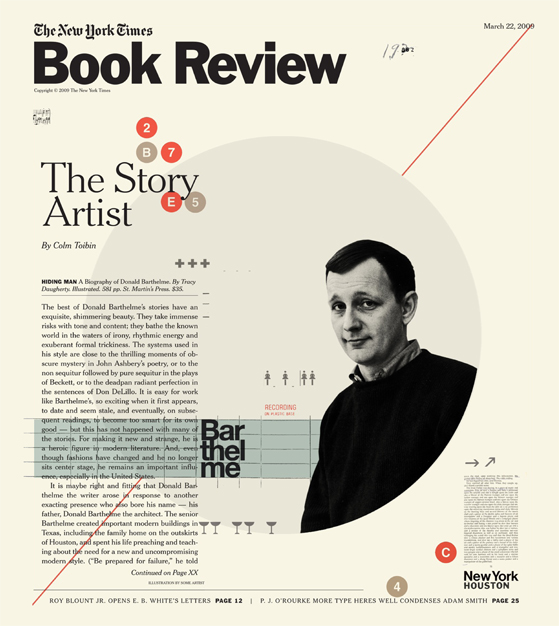
The Story Artist — Stand back and admire Cristiana Couceira’s cover for the New York Times Book Review (pictured above) illustrating Colm Toibin’s review of Hiding Man: A Biography of Donald Barthelme by Tracy Daugherty (St. Martin’s Press).  You can see more of Cristiana’s fabulous work at her blog Sete Dias.

ma collection de boîtes de conserves — Cartoonist Guy Delisle, author of Shenzhen, Pyongyang, and Burma Chronicles, displays his charming recycled pen-holders. Guy also has some great sketches of Jerusalem on his blog (an experience that is probably even better if your French is not rubbish like mine). (Via the D+Q blog and full disclosure etc: Raincoast Books distribute D+Q in Canada).

And speaking of D+Q,  John Wray’s much-praised novel Lowboy features a cover  by the very talented Adrian Tomine (pictured above). And über-critic James Wood reviews Lowboy in the latest New Yorker.

Paper Egg — Tobias Carroll has posted an interesting interview with Jonathan Messinger, co-publisher at  Featherproof Books:

[T]he line we’ve been delivering for a while now is that printed books will, eventually, go the way of vinyl. At some point, digital distribution will be the predominant method, but there will still be those who value and collect print, as people do records now (a fact that, it seems, has created a strong niche market for cool vinyl releases). But I’m not so sure that I completely buy that analogy, as fun as it is to repeat. Really, the debate seems pointless to me. What it always devolves to is one person clinging to what they’ve grown up with and accustomed to—the printed book, this classic, vaunted, untouchable commodity—and self-appointed visionaries who see digital distro as the obvious wave of the future, plowing down the fogies and fuddy-duddies.

If we de-politicize it, it becomes a much more open, interesting discussion. My feeling is that both media offer something that the other doesn’t. So why should one replace the other? … I’d rather just think about how best to use print creatively—what can it do that nothing else can, what are its limits and how do we test them?

Information revolution, c. 1455 — Murray Whyte looks at the “Gutenberg moment” in the Toronto Star:

as we appear finally to face the end, or partial end, of the Gutenberg era … it’s worth noting that sometimes, those things we view in hindsight as revolution are, in their own time, little more than a pebble in the pond, the resulting ripples needing generations, if not centuries, to be fully felt.

Comments closed

Something for the Weekend, March 20th, 2009

Book City Jackets— Printed at a small press in downtown New York, these lovely “updated versions of the classic paperbag bookcover” are made from recycled paper and sized to fit almost any book (pictured above). And they have a blog!  (via swissmiss & Design*Sponge).

Near Heretical — The inimitable Mike Shatkin on the story of DRM.

Don’t kill me, Robert BringhurstNic Boshart, BookNet Canada intern and coordinating editor at Invisible Publishing, offers another nice round-up of lessons for small presses from the BookNet Tech Forum.

Wish you were hereSeen Reading‘s collaborative Google map of independent bookstores.

That elusive viral componentWired on Random House, Simon & Schuster, Workman Publishing Co., Berrett-Koehler, Thomas Nelson, and Manning Publications making e-books and excerpts available on Scribd:

For book publishers, Scribd is not the only platform they are utilizing with the rising e-book hype, but the viral components are limited elsewhere… Along with navigation features like search and zoom, the books can be download (as a .pdf) and viewed on compatible e-book readers or shared across numerous social networks including Digg, Facebook and Twitter.

“The YouTube for print”PW has more on Scribd.

Sony e-book reader gets 500,000 books from Google, but Sara Nelson doesn’t think it will be enough in the LA Times:

Sony seems, instead, to be hitting hard on the theme that it’s giving options to publishers, who have not been shy about their complicated feelings toward Amazon and the power it wields.

Making public domain books more available is all to the good. But at the moment, Sony’s move appears to be too little, too late.

2 Comments

6 Projects Video

6 Projects That Could Change Publishing For the Better — Video of Michael Tamblyn’s talk at BNC Technology Forum 2009:

1 Comment

Midweek Miscellany, March 18th, 2009

The BombAlison Forner‘s cover design for Stephen M. Younger’s history of nuclear weapons (Ecco June 2009), seen at Book Covers Anonymous.


Has the computer democratised design? — Designer Peter Saville (perhaps best known for his iconic designs for Factory Records) at D&AD President’s Lecture earlier this month (above). More interesting snippets from the talk are available here (via The Strange Attractor).

Reminder — Writer Charlie Stross on why there isn’t a tipjar on his blog (via Times Emit):

If I put a Paypal tipjar on this blog to take conscience money from folks who’ve downloaded a (cough) unauthorized ebook or two, the money would come to me, not to the publisher. And without the publisher those books wouldn’t exist: wouldn’t have been commissioned, wouldn’t have been edited, wouldn’t have been corrected and marketed and sold in whatever form filtered onto the unauthorized ebook market. (Yes, they commission books, and pay authors for them up-front — a vital part of the process, because most of us can’t afford to take a year to write a book on spec and then hope somebody liked it enough to buy it…)

“We publish books and give them away – free” — Concord Free Press (via Scott Pack):

All 1,500 copies of our first free book, Give and Take, are circulating through the world—from New England to New Zealand, Soho to Slovakia. Our readers are making voluntary donations to charities or people in need. We ask them (nicely, of course) to give, then pass the book on, so that every time it changes hands, it generates more contributions.

Comments closed

Monday Miscellany, March 16th, 2009

Beyond Miffy —  Caustic Cover Critic on Dutch illustrator and graphic designer Dick Bruna, best known for Miffy, but who also designed some very cool book covers for crime novels (picture above).

Cautiously Hopeful — Literary agent Nathan Bransford, who has been talking about remaining positive in the face of negativity on his own blog recently,  interviewed by Alan Rinzler on The Book Deal blog:

The role of publishers especially is going to change dramatically as there will be tremendous downward pressure on prices and publishers increasingly retrench behind “known” commodities and bestsellers.

Publishers will live and die by their big bets if they aren’t cultivating any small bets that have the potential of panning out in a big way.

6 Projects That Could Change Publishing for the Better — Michael Tamblyn’s  presentation from the BNC Tech Forum is available online.

Open Baskerville — An open source project to create a digital version of Fry’s Baskerville,  originally created by  Isaac Moore a punchcutter at the typefoundry of Joseph Fry in the 18th Century (via Eightface):

With the written word an absolute fundamental component of daily communication, typography and fonts have are vital to providing aesthetic harmony and legibility to our textual works. There are thousands of fonts available, of which only a small number are useful or any good for setting vast quantities of text, and of which an even smaller number are available to be freely distributed and shared. This project aims to help close that hole, beginning with a Baskerville revival.

Optic Nerve — the fabulous Adrian Tomine interviewed at the Creative Review (illustration above).

Why Kindle On The iPhone Matters — Michael Gaudet on the iPhone Kindle app at E-Reads:

What Amazon is finally acknowledging is that E-Books are a multi-device service and that Kindle is not just a device but an E-Book platform. E-Books may be commodities, but reading is a user habit that has always required a distribution service that anticipates the creative ways readers are looking to acquire new content.

Books and Stuff — Illustrator and designer Amy Cartwright, who blogs about vintage kids books and modern design at Stickers and Stuff, shares some wonderful pictures of her favorite books and “the stories behind some of her finds” at the always awesome Grain Edit (including the Cosy Tomato Post Card Book pictured above).

Comments closed

Experiments

One of the recurring themes of the Book Net Tech Forum was that publishers need to learn through frequent experimentation, or as BNC CEO Michael Tamblyn put it: “place lots of little bets quickly.”

Mark Bertils has just posted this great interview with  O’Reilly Media’s Andrew Savikas recorded at the BNC Tech Forum last week on exactly this topic (and Andrew — sorry about making fun of your PowerPoint slides on Twitter):

And, all this ties in quite nicely with Clay Shirky’s recent — must read — essay on Newspapers and Thinking the Unthinkable :

“You’re gonna miss us when we’re gone!” has never been much of a business model. So who covers all that news if some significant fraction of the currently employed newspaper people lose their jobs?

I don’t know. Nobody knows… it’s easier to see what’s broken than what will replace it… We just got here. Even the revolutionaries can’t predict what will happen…

“If the old model is broken, what will work in its place?” The answer is: Nothing will work, but everything might. Now is the time for experiments, lots and lots of experiments…

Comments closed

Things Are Not Working Very Well. In Fact, They Never Did.

Trawling my RSS feeds looking for Monday’s links, I came across an interesting review of Systemantics, John Gall’s essay on ‘How Systems Work & Especially How They Fail’ (originally published in 1977 and available online here) .

I’m still processing everything from the Book Net Tech Forum, but in the context of revolutionizing the book industry, this line caught my eye:

“Reformers blame it all on “the system”, and propose new systems that would, they assert, guarantee a brave new world… Everyone, it seems, has his own idea of what the problem is and how it can be corrected. But all agree on one point — that their own system would work very well if only it were universally adopted.”

And now having just read the book’s introduction, which — somewhat remarkably — doesn’t seem to have dated much,  I think I’m going have to read the whole book…

Link (via LinkMachineGo)

Comments closed