Skip to content

The Casual Optimist Posts

Monday Miscellany, June 29th, 2009

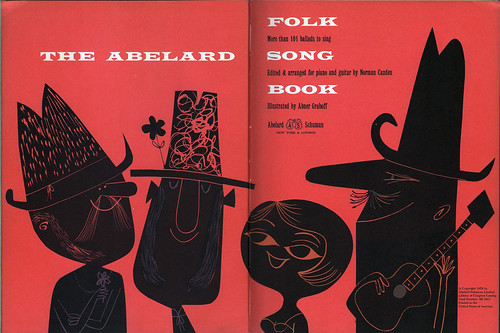
Gestalten’s Naïve: Modernism and Folklore in Contemporary Graphic Design, edited by Robert Klanten and Hendrik Hellige,  reviewed at The Designer’s Review of Books.

Served — Jeremy Ettinghausen, Penguin UK’s Digital Publisher, explains the rationale for their new (v. cool sounding) project for kids We Make Stories:

[A]s the debate about the value and price of digital content rages on, I’m testing out a new mantra on my suspicious colleagues; services not content. The idea, ill-formed as it is in my head, is that while we might continue find it a challenge to get consumers to pay for digital content, we might be able to use our skills, expertise and experience to create services that people will pay for. Services are what we do for writers, so perhaps there might be services we can create for readers.

Proof I think — were it still needed — that not all the most interesting book stuff is being generated in Seattle.

Friction — Laura J. Murray’s excellent critique of Brett Gaylor’s documentary RiP: A Remix Manifesto for Culture Machine (PDF). Murray’s comments about a copyright  ‘war’ and choosing ‘sides’ certainly resonated with me:

I’m not on any side, because I’m not in a war. Such language is a) a kneejerk echo of the Hollywood/recording industry message, b) offensive to anyone who has ever experienced a blood and guts war, and c) a joke to those who are not already convinced of the importance of remix. But most importantly, it is, d), an unproductive way of framing our current copyright challenges, because it suggests that the debate won’t end until one side has achieved total victory.

Amen.

The State of the Union — A big sprawling spaghetti post from the the chaps at Three Guys and One Book (loosely) about the state of publishing from the perspective of readers (mostly). I don’t agree with all of it by any means, but some of it sticks…

Less, But Better — A profile and brief interview of design hero Dieter Rams at BBH Labs. Just FYI — If I ever write a publishing manifesto (ha!), it will be called Less, But Better: A Publishing Manifesto. And just for the hell of it, here are Dieter Rams 10 principles of good design:

  1. Good design is innovative
  2. Good design makes a product useful
  3. Good design is aesthetic
  4. Good design helps us to understand a product
  5. Good design is unobtrusive
  6. Good design is honest
  7. Good design is durable
  8. Good design is thorough to the last detail
  9. Good design is concerned with the environment
  10. Good design is as little design as possible

Most, if not all, of these principles could be applied to publishing. Who (or where?) is publishing’s Dietar Rams?

And finally…

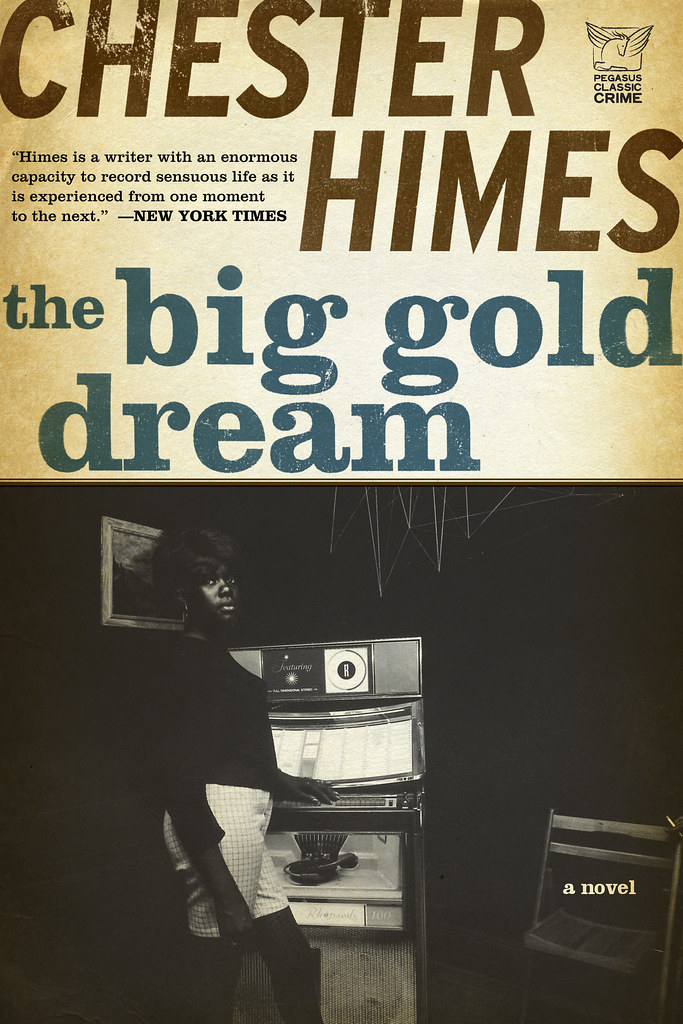
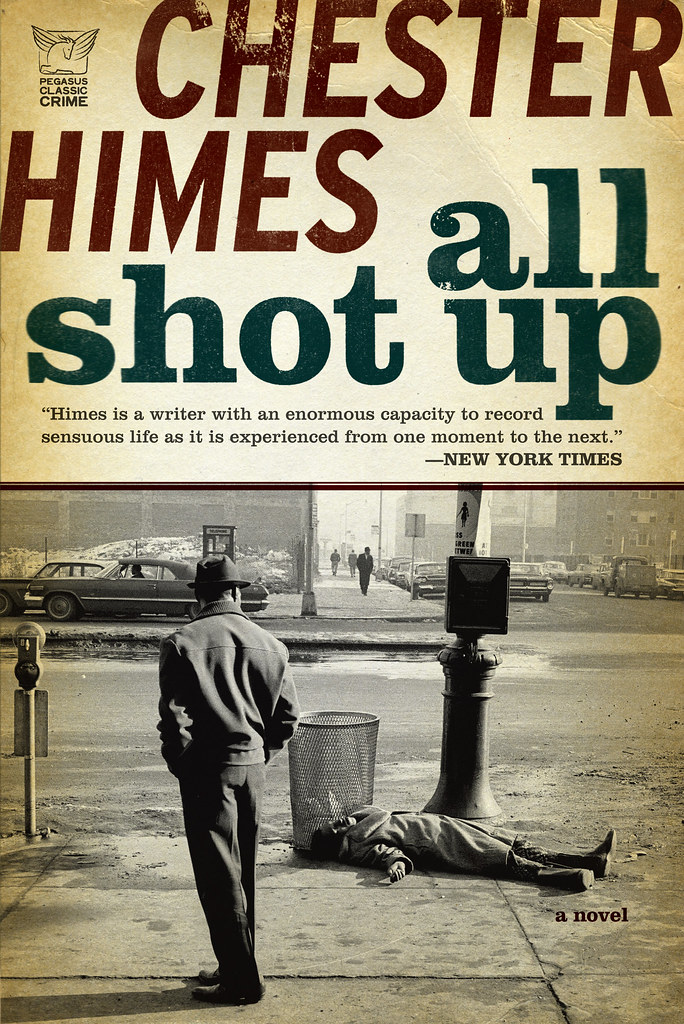
Big Gold Dream — Michael Fusco’s great redesigns for the Pegasus Classic Crime reissues of Chester Himes seen (of course) at FaceOut Books. Michael Fusco has some more great cover designs on his website.

(And a quick side note to publishers and designers — it was impossible to find decent hi-res image of these covers. If you want people share your brilliant work, you need to work on this. Ideally I want images that are at least 400px x 600px)

1 Comment

Something for the Weekend, June 26th, 2009

2009 Penguin Design Award — Peter Adlington’s abstract design for The Secret History by Donna Tart (pictured above) took 1st place. More on the Penguin Blog.

The Good Design Book — Christopher Simmons, graphic designer and principle at the San Francisco-based design firm MINE, records the progress and process of writing and designing his new book on design (via Unbeige). The whole concept reminded me that I should also mention the crowdsourced Smashing Magazine Book.

OK, Go — Kassia Krozser, Kirk Biglione, and Kat Meyer (and an unnamed “veteran of the book industry”), put their money where their collective mouth is, and launch digital publisher Quartet Press (and they’re accepting submissions).

The Debrief — Organizer Hugh McGuire pens his personal thoughts on BookCamp Toronto for Book Oven.

One of the most powerful things about BookCamp, compared with other events I’ve been to, is that this was not just a grassroots group. There was high-level engagement from the publishing industry, with publishers, editors, senior VPs, production managers, marketers, and interns, and everything in between. It was great to see the honest debate and conversation being lead by these insiders, who are truly grappling with the future of their business and their passion.

And VANTAP‘s Sean “Crazy Horse” Cranbury  adds his 2 cents on #bcto09 at the Books on The Radio blog, and teases BookCamp Vancouver.

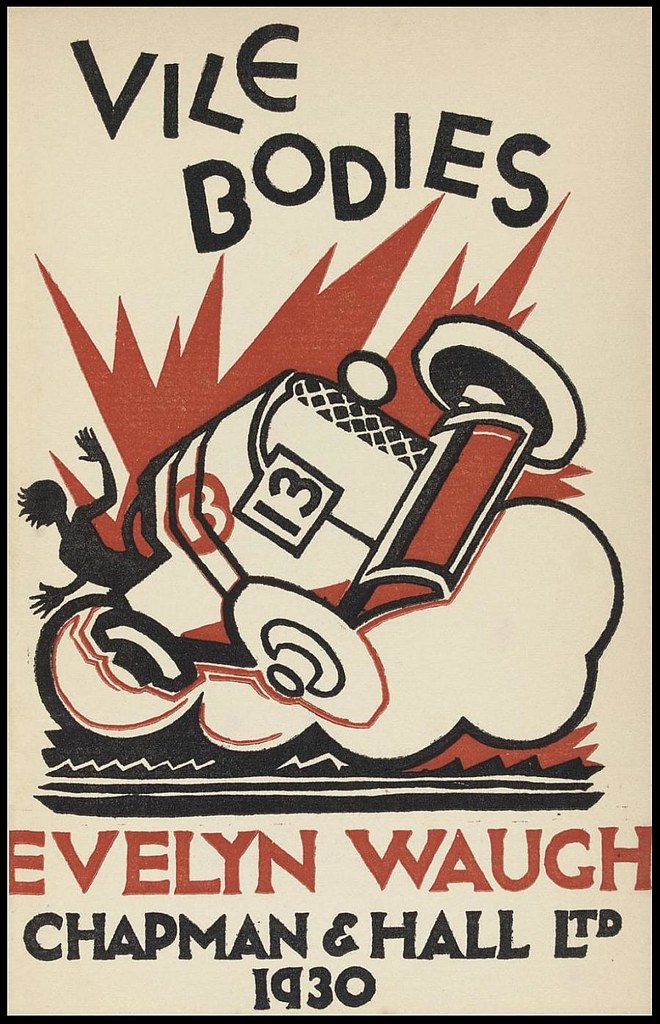
Vile Bodies — The 1930 first edition cover of Evelyn Waugh’s second novel seen at BibliOdyssey.

And last, but not least…

Apples and Oranges — The article about the evolution of Amazon by Adam L. Penenberg, author of the forthcoming Viral Loop: How Social Networks Unleash Revolutionary Business Growth, that launched a great Twitter chat with @FastCompany and yesterday’s ’26 Things…’ list (which could have easily been twice as long). 

Comments closed

26 Things Not Related To Amazon

Oh dear. I’m really not an Amazon-hater. But this morning I inadvisedly took Fast Company magazine to task on Twitter for only writing book industry stories about Amazon and the Kindle.

In their response, Fast Company rightly pointed out that the Fast Talk section of the April edition of the magazine  featured technology — aside from the Kindle —  that is changing book publishing. It included  (short) interviews with Josh Hug, CEO and co-founder of Shelfari (which is in fact owned by Amazon), Julia Cheiffetz, Senior Editor at HarperStudio, the team behind Scholastic’s 39 Clues, Steve Haber developer of the Sony e-reader, and Eileen Gittins, CEO of Blurb.

Funnily enough, I had actually bought April issue of Fast Company and completely forgotten about this (admittedly somewhat forgettable) feature. Suitably chastened, I apologised for my sweeping generalization.

I am grateful (and slightly amazed) that Fast Company took the time to reply to my glib missive and put me straight. However, I do think there is a tendency — not just isolated to Fast Company — to use Amazon as the only frame of reference in stories about the book trade.

With this in mind,  I challenged myself to pull together a quick list of current book-related things that I think are exciting that don’t (as far as know) have anything to do with Amazon (yet).

So here is a completely personal, off-the-cuff list of 26 book companies, ideas, projects, blogs, websites and trends that I think are inspiring, interesting, exciting, or worth watching (and are unconnected to Amazon):

(And yes, I realise there is a certain irony in writing a list that’s not about Amazon just to prove not everything has to do with Amazon)

  1. The Afterword
  2. Authonomy
  3. BookArmy
  4. BookCamp
  5. The Book Cover Archive
  6. The Book Depository
  7. Bookkake
  8. BookNet Canada
  9. Cell phone novels
  10. Drawn & Quarterly*
  11. Faber Finds
  12. FaceOut Books
  13. Gollancz’s collaboration with the D&AD Global Student Awards
  14. Google Books
  15. Gutenberg Rally beta
  16. Harlequin
  17. iPhones
  18. McNally Robinson
  19. Shortcovers
  20. Unbooks
  21. Twelve
  22. Twitter
  23. VANTAP
  24. Vromans
  25. We Tell Stories
  26. WW Norton’s Book Design Archive

Who or what would be on your list?

*Full disclosure: D+Q are distributed in Canada by Raincoast Books.

3 Comments

Midweek Miscellany, June 24th, 2009

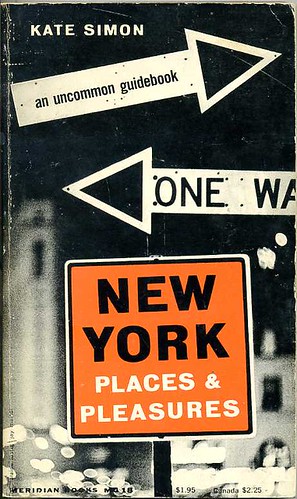
New York Places and Pleasures — Cover design by Elaine Lustig and Jay Maisel from Kyle Katz’s amazing Flickr photostream (via Design Observer).

A Very Bad Man — Douglas Wolk, author of Reading Comics: How Graphic Novels Work and What They Mean, reviews the forthcoming Darwyn Cooke comic book adaptation of The Hunter by Richard Stark (AKA Donald Westlake) — which I can’t wait to get my hands on — for the Washington Post:

Cooke has a particular gift for the space-age designs and stripped-down chiaroscuro that were in vogue a half-century ago — he previously explored them in his “DC: The New Frontier” comics — and his loose, ragged slashes of black and cobalt blue evoke the ascendancy of Hugh Hefner so powerfully you can almost hear a walking jazz bass. At times, he seems to be demonstrating how few brushstrokes it can take to communicate a precise degree of amoral machismo. Parker’s a very bad man, but it’s hard to take your eyes off him.

More stuff about  Darwyn Cooke and his Parker adaptation can be found at Almost Darwyn Cooke’s Blog (but not quite).

Buy Your Own ChainsThe New Yorker’s Willing Davidson painfully accurate observation that low industry pay and unpaid internships skew what is published (via GalleyCat):

Tiny salaries in the low ranks of publishing are miserable for the young workers, but they’re probably worse for literature… It’s a truism of the industry that most of these jobs are held by people who can afford them—people with some parental support and no student loans. Often they’ve had unpaid internships, that most pernicious example of class privilege. Their superiors are the same people, ten years later. They—we!—are smart, cultured people with good intentions, but it’s easy to see how this narrow range could lead to a blinkered view of literature.

Which leads rather nicely to…

The Intern —  Dark (and darkly funny) secrets from the lowest rung of this business we call publishing. See also Editorial Ass.

Gotham — I started with New York (and linked to The New Yorker somewhere in the middle), so I thought I’d wrap up with New York too. I came across The Mythic City: Photographs of New York by Samuel H. Gottscho, 1925-1940 a couple of weeks ago while looking for something completely different. It’s not new (it was published in 2005 to coincide with an exhibition at Museum of the City of New York), but the cover has stuck with me (something to do with the chunky cinematic type I think) and, by a happy coincidence, a copy of the book landed on my desk this week. It is beautiful. (Full disclosure: The Mythic City is published by Princeton Architectural Press who are distributed in Canada by the people who pay me).

Comments closed

Q & A with Nick Asbury, Corpoetics

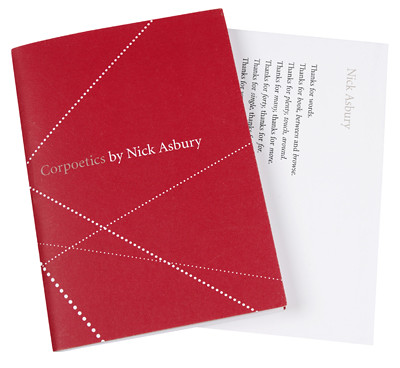
I was quite taken with the lovely design and gentle subversion of  Corpoetics — a chapbook collection of ‘found’ poetry taken from the ‘Corporate Overviews’ of well-known brands and corporations — when I first saw it at Ace Jet 170 in February.

Author Nick Asbury was kind enough to get in touch after I mentioned the project here, so when Corpoetics recently won a Yellow Pencil for Writing for Design at the 2009 D&AD Awards, it seemed like a perfect excuse to talk to Nick a bit more about the project, the corporate use of language, and interesting not-for-profit work…

What inspired Corpoetics?

My day job is as a writer for businesses and brands, so I’ve long been immersed in the corporate world. I’ve often sought refuge in reading and occasionally writing poetry, so I guess it was inevitable that the two would cross over at some point.

How would you describe ‘found’ poetry?

I came across a good quote by Annie Dillard, talking about the ‘doubling effect’ you get in found poems. ‘The original meaning remains intact, but now it swings between two poles.’ I think that’s about right. You get an interplay between the original meaning and where you’ve taken it — and there’s a lot of potential for humour and subversion, particularly when the source material is from the corporate world.

The language of several of the poems is almost Orwellian. Do you have a sense that corporations (deliberately or otherwise) dehumanise language?

Yes, dehumanise is exactly the word. A lot of corporate language is designed to erase any sense of individual responsibility. It’s much safer to talk about how ‘a decision was taken’ rather than saying ‘I took a decision’. So you get this very passive, depersonalised way of talking. Then there’s the widespread tendency to hide behind jargon and non-committal abstractions. In some cases, it’s deliberately intended to conceal or exclude. But a lot of businesses drift into it without realising — it just becomes the norm for writing in a business context.

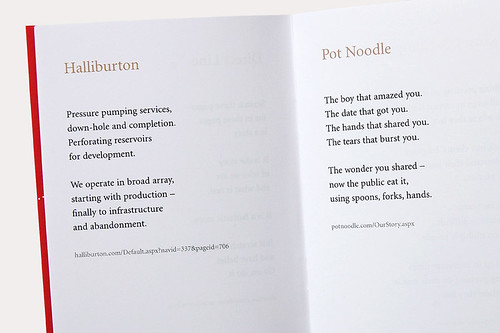
The poem I wrote about Halliburton is probably the most Orwellian in tone. It takes their words and lets their emptiness ring out in this very eerie way. But it didn’t take a lot of rearranging — it’s more like a condensed version of the original.
As a copywriter and consultant, do you feel a certain irony in the subversion of corporate language in Corpoetics?

Definitely. When I first had the idea, I was very aware of biting the hand that feeds me. But then the aim is not just to subvert corporate language and hold it up to ridicule (although some poems do). I also wanted to pick brands that I liked. People like Greggs The Baker — a fixture on British high streets — or Pot Noodle, a famously throwaway junk food here in the UK. It was interesting taking their words and seeing where they went. Pot Noodle became a story of a relationship that begins in furtive excitement and ends in squalor, much like the experience of the product itself.

Is it possible for business writing to have warmth and wit, or is it inherently evil?

That depends whether you think all businesses are inherently evil. I don’t. We all need to earn money and make a living — and work is a noble and necessary thing. Whether it’s the local bakery or a multinational giant, plenty of businesses make an honest living and do good things. Those businesses have a good story to tell — and there’s room for warmth and wit in the telling. Of course, the unfortunate truth is that a lot of ‘good’ business writing is a matter of spin — making companies seem better than they are. But the very best writing will always be for good companies with something truthful to say.

Have you had any response from the companies featured in Corpoetics?

Yes, KPMG got in touch. I took a deep breath when the email arrived, expecting a stern ultimatum from the legal team. But it was very positive. They said they wanted to feature it in their internal company newsletter and run a competition to get people to send in their own poems. I’d like to have seen the results, but still haven’t managed to track them down.

Why did you decide to publish Corpoetics as a book rather than make it a web-based project?

It seemed a very natural thing to do. Poetry just feels more satisfying when it’s in print. I work as one of a partnership (Asbury & Asbury) alongside my wife Sue, who is a graphic designer. So we thought about turning it into a design project as well as a writing project — taking graphic elements from the companies featured and rearranging them in some way. But we decided it was overkill. It’s ultimately a project about language and we wanted to let the words do the work.

Is the visual presentation of written language important to your work?

Yes — ever since I started out in business writing (about 12 years ago), I’ve worked closely alongside graphic designers. In fact, most of my work is commissioned by design and branding companies, so it’s a natural fact of life. I’d find it hard to write anything without having some sense of the way it will be presented visually. It’s never just about the words or the design, but the overall act of communication.
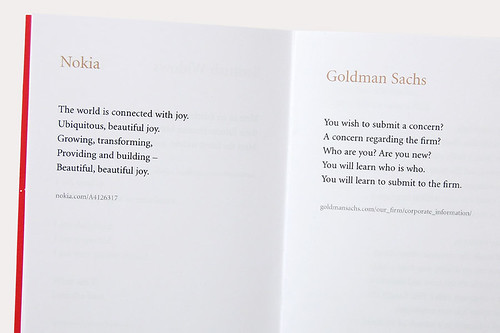
So good writing and good design go hand-in-hand?

Yes, ideally. I find a lot of the best designers are pretty good with words. Both professions have the same base skills. You need to analyse a brief, empathise with an audience, spot lateral connections, tell a story, make an imaginative leap. The disciplines only separate out right at the end, when the designer goes off to do the pictures and the writer gets typing.

What other projects are you currently working on?

I usually have three or four paying projects at any one time. At the moment, I’m writing an annual review for a British charity, some marketing literature for a hotel operator, and an advertising campaign for an Austrian law firm. Alongside all that, as Asbury & Asbury, we continue to work on our own projects. The latest is a collection of children’s poetry called ‘Songs For Animals‘, but it may not see the light of day for a while yet.

Can you tell me about 26?

It’s a not-for-profit collective of writers, editors, journalists, designers, publishers — anyone with an interest in language, both in a business context and more generally. As you might have guessed, the name comes from the letters of the alphabet, the DNA of language — and naturally, it costs £26 a year to be a member. I got involved shortly after it started up in 2002 and am now one of the directors responsible for running the whole thing — or trying to. It’s operated entirely on voluntary time and can be quite chaotic, but they have produced some really interesting collaborations, resulting in books, exhibitions and a whole series of public talks and events. It’s principally UK-based, but there are chapters springing up in South Africa, Sweden and elsewhere. I’d urge anyone with an interest in the subject to join. You’ve got nothing to lose. Except maybe £26.

Thanks Nick. Corpoetics is available for £5 plus p&p from  Asbury & Asbury , with proceeds going to the National Literacy Trust, a UK charity dedicated to changing lives through literacy.

1 Comment

Something for the Weekend, June 19th, 2009

50/50 — AIGA announce their 50 Books/50 Covers of 2008. Included in the fifty is the cover of Kenneth Hayes’ Milk and Melancholy designed by Toronto’s Underline Studio (pictured above).

Gxuu! — Linguist Arika Okrent, author of In the Land of Invented Languages, chooses her 10 favourite words from invented languages for The University of Chicago Magazine. Having been kind of fascinated with Volapük after reading William Gibson‘s  Spook Country, I was happy to see the inclusion of ‘pük’ (via the incomparable Kottke of course):

In Volapük, pük means “language.” It comes from the English word “speak” but it’s hard to tell (vol, means “world”, so Volapük is “world language.”) Unfortunately, it looks a lot like a different English word. And even more unfortunately, it shows up in various other words related to the concept of language: püked – “sentence” and pükön – “to speak.”

Nice Work — Mark Thwaite interviews novelist, critic and Emeritus Professor of English Literature, David Lodge about his new book Deaf Sentence for The Book Depository blog:

One’s ideal reader is intelligent, alert, open-minded but demanding, and equipped with what Hemingway called “a built-in shit-detector.” He/she does not actually exist. In a way you try to be that reader when you read and re-read your own work in progress, and not to kid yourself if something isn’t quite right. That’s a rather different matter from one’s “readership” which in my case, I’m aware, is probably well-educated, well-read, maybe Catholic, and getting more and more senior in years, like myself.

A Special Specimen — A lovely post by James Phillips Williams at amassblog about Paul Rand, Jan Tschichold and a very special type specimen book.

And speaking of Paul Rand, be sure to visit Daniel Lewandowski’s tribute site to the great man (via grain edit).

Comments closed

Midweek Miscellany, June 17th, 2009

Claustrophobic and Irrational — I love these elegantly understated designs by Rodrigo Corral and Christopher Brand Jason Ramirez for Patricia Highsmith’s Ripley books published by W.W. Norton.

A Strategy For Authenticity — Don Linn, prolific Twitterer and publisher at The Taunton Press, on O’Reilly’s Twitter Boot Camp and Twitter as a marketing channel:

I’m relatively new to twitter, but what I’ve loved about it since discovering it is its immediacy and its spontaneity. That’s where the joy is and, in my opinion, that’s where the power is (witness #iranelection and related topics). My fear is that the suits will “Clear Channel” (yes, that’s a new verb) this simple little application into nothing but a giant vanilla message board filled with thinly-disguised spam, planned spontaneity.

Cars and Books Sean Rogers discusses Dutch cartoonist (and cover artist) Joost Swarte at The Walrus:

Swarte has some mild fun, on the Walrus cover, with the nutty rush out of the city that clogs our highways every summer. But the assignment also offers Swarte the opportunity to clear-line the hell out of some cars and books, a couple preoccupations that crop up all over his work.

Why Ulysses? — To coincide with Bloomsday , Gary Dexter explains how Joyce’s masterpiece got its title:

The paradox of Ulysses is that one needs to read it to understand twentieth-century literature, but one needs to read twentieth-century literature to build up the stamina to read Ulysses.

The problem starts with the title. Early readers of Ulysses, exhilarated and appalled after 800 pages, were often still left thinking ‘Why Ulysses?’ Ulysses is barely mentioned.

And lastly… I can’t thank the chaps at the BCA enough for the link love . You are gentlemen and scholars.

And thanks to the scarily talented Nate for creating the Paradox of Awesome album cover yesterday afternoon and sharing on Twitter. Hilarious. Or maybe you just had to be there… It made my day anyway…

5 Comments

Something for the Weekend, June 12th, 2009

Jamie Conkleton‘s book cover designs for Gollancz’s Space Opera series, as featured in the D&AD Student Annual 2008. Great stuff. (via designworklife).

Are any other publishers pursuing similar initiatives with student designers to repackage their backlist?

Wordnik — More curious word information than dictionary, Wordnik provides definitions, examples, related words, pronunciation, related images, statistics, and tweets for the word searched.  Neat.

The Curse of Maus — cartoonist Art Spiegelman profiled in The Guardian:

Will he ever escape the shadow of Maus? “It’s even worse than that,” he says, lighting a cigarette. “Most other cartoonists are afraid of the same thing.” He means that every graphic novel is compared to Maus. “As a result, it’s sort of a curse on me and all other cartoonists I know.”

Toothy Uncoated Stock — The chaps at The Book Cover Archive pointed me to the design:related portfolio of Alex Camlin, Creative Director at Da Capo Press. His design’s for the Harvard Review are beautiful.

2 Comments

Midweek Miscellany, June 10th, 2009

#BCTO09BookCamp Toronto organiser Mark Bertils’ stream of links about the event at his blog Index//mb. There is also a  list of related press at the BookCamp wiki. I will try and organise my jumble of thoughts about BookCamp sometime… soon… (ish).

The Book Seer — A nice little web project from James Bridle and the chaps at Apt Studio. Tell it what you’ve read and it will suggest what to read next based (currently) on LibraryThing and Amazon recommendations. James has more about the project at Times Emit.

Cultural Life — An interview with Granta magazine’s newly appointed acting editor John Freeman:

We need to expand how we define what it means to publish great writing. This means reaching readers in the way that they want to hear from us. Such as having a print edition for people who treasure the beauty of text and the photo essays on the page; having a dynamic website for those who want to read us online; having a Kindle or iPhone-compatible edition for people who want to read stories in the palm of their hand; sending out links by twitter to readers who want to know the moment new stories appear; hosting events and conversations and parties for people who want to interact with the magazine in person. The challenge is to make sure that none of these respective endeavors cheapens or reduces the complexity and integrity of the work we publish.

Passion and Daring — Ben Myers at The Guardian is heartened by  Canongate winning  publisher of the year.

Frightening But Cute — Illustrator Axel Scheffler,  talks about drawing the much-loved Gruffalo in a video interview also for The Guardian. Which reminds me — I’ve been meaning to link to Terrible Yellow Eyes for a while. It’s a collection of artwork inspired by Where the Wild Things Are (Robert van Raffe‘s contribution to the project pictured below).


Plastic Banality — Author Warren Ellis’ unique take on the “dubious virtues” of  e-books in Wired. Not for the sensitive or the faint of heart:

[W]hen print was king, we would speak of “reaching an audience”. We would talk of doing these things via advertising, or appearances – which were when you’d show up somewhere in the real world, deface books with ink and communicate using small mouth noises… This has changed in fairly savage ways. The complex net of processes designed to take your money and give it to me is kind of ragged, what with newspapers collapsing and the concept of authority being passed… to, in 2009, a Twitter post from the sainted Stephen Fry. It was great to get a review in a music paper (remember those?) and it was amusing to see Oprah recommending Cormac McCarthy’s The Road to housewives, but here’s the new audience mediation: Stephen Fry popping up on your bloody iPhone to tell you he’s enjoying reading The Watchmen graphic novel.

And finally…

I’m rather charmed by The Mandate Press’ customizable letterpress calling cards. I have always wanted a business card set in blackletter… But what literary theme should they add to their list I wonder?

You can see more of The Mandate Press’ lovely work on Flickr (via The Strange Attractor)

Comments closed

Something for the Weekend, June 5th, 2009

Sweetly Diabolic — A new Jim Flora compendium from Fantagraphics.

I really, truly, wasn’t going to link to any BEA autopsies — and there are plenty out there — but on the eve of BookCamp Toronto I thought Brian O’Leary’s post seem pertinent:

It would be more than nice, more than fun, more than illuminating, if we as an industry could use events like BEA as less an opportunity to predict the future and more a forum in which to examine the options. Okay, piracy is bad, but.. what if it helped sell books? Okay, we love long-form fiction and we think it should survive, but what if the people who read it now just stopped? Okay, a trade publisher provides value in choosing and curating content, but what if the world turned upside down and everyone were a writer, a publisher, a reader… Wouldn’t that be really cool?

Fingers crossed for tomorrow… Follow along on Twitter. The event account is @BookCampTO. The hash-tag is #bcto09.

Access of Evil — More on Google’s big e-book adventure at Business Week. The ‘news’ is that Google will be offering online access to e-books rather than downloads. Which, if I understand it correctly, is what Shortcovers does already. Not that anyone is giving them credit for it.

The ALPHABET chest of drawers by Kent and London, inspired by vintage printing blocks: “The perfect place to file everything from A-Z!” (via source of all good things swissmiss).

The George Orwell Archive at the BBC (via The Book Depository blog):

For two years, between 1941 and 1943, George Orwell – real name Eric Blair – was BBC staff member 9889, hired as a Talks Producer for the Eastern Service to write what was essentially propaganda for broadcast to India.

From recruitment to resignation, this collection of documents reveals the high regard in which Orwell was held by his colleagues and superiors and his own uncompromising integrity and honesty.

The Wickedest Man in the World — Jake Arnott, author of The Long Firm, on how the very real Aleister Crowley became the archetypal fictional 20th century villain. Sadly Arnott doesn’t mention that Oliver Haddo, W. Somerset Maugham’s literary Crowley, appears in the latest League of Extraordinary Gentlemen adventure.

The Future of Mainstream Media — a fascinating article about the success of National Public Radio (NPR) by Josh Catone for Mashable:

NPR’s amazing growth over the past 10 years prompted FastCompany magazine in March to call NPR the “most successful hybrid of old and new media,” and wonder if NPR could be the savior of the news industry. [T]hey owe that success to the culture of open access and audience participation that they’ve cultivated over the past decade.

And… OK I just can’t not link to Design Assembly‘s post about design-hero Wim Crouwel’s ISTD lecture.

Note: if you want me to link to your site, you just need to include a brilliant photograph of Wim Crouwel looking cool as f*ck and then use a genius soccer analogy:

“(For me) a grid is like a football pitch. You see a beautiful game of football, and then you see a not so beautiful one, but it all takes place on the same pitch”.

Yes. I am a cheap date.

4 Comments

Midweek Miscellany, June 3rd, 2009

I’m a little fatigued by all the inevitable post-Book Expo harping, hand-wringing and hubris, so please  forgive me if today’s links are a little light on book-book stuff…

Community Organizer — The New York Observer profiles John Freeman, the new editor of literary journal Granta:

Mr. Freeman believes in the inevitability of books—even if, as he will lay out in his forthcoming manifesto for Scribner, The Tyranny of E-Mail, the Internet is engendering in the people who use it habits that distract them from reading. This is the salve he has to offer a chapped and chafing industry. As people cry doom, he’s there to hold hands and assure them that it’s not that bad.

Cover Versions — Starting with Olly MossVideo Game Classics, Design Week looks at the trend of remixing just about everything to look like vintage 1960’s paperbacks.  What Consumes Me has a nice round-up of recent mash-ups (thx James!). And, if that wasn’t enough, Drawn! points to the another recent example: classic records reworked as classic Pelican paperbacks.

Which leads rather nicely to Emmanuel Polanco‘s Saul Bass inspired design for Moby Dick:

Throwing Down the Gauntlet — As widely reported elsewhere, Google are preparing to sell e-books according to the New York Times.

Making Mistakes — A fascinating interview with designer Paula Scher talking about creative failure at Psychology Today:

If you find yourself defending yourself and protecting yourself and being outraged about what’s around you, you’re in trouble. That doesn’t mean some things aren’t genuinely outrageous. But you have to ask yourself: Why are you outraged by something? What are you hiding from? What are you defending?

And, on a not dissimilar note…

Use It or Lose It — Indispensable creative advice from ad exec Dave Trott (via Mark McGuinness on Twitter):

If we wait for the right opportunity it won’t happen. It’ll stay in our drawer until the world has passed it by. Times will change and newer, more exciting things will be happening. Now it looks old and tired. Now it’s too late.

If we don’t find a way to make it happen, if we don’t take a chance and overcome lethargy and embarrassment to do it, it will disappear.

Students always ask me what I think they should do.

I tell them, “The answer is always the same two words: ‘everything’ and ‘now’.”

Everything and Now… Everything and Now…

Comments closed

Monday Miscellany, June 1st, 2009

Don’t Forget the Rules of Typography — Nice work by graphic designer Evan Stremke (above). Also available as a handy PDF (via ffffinds). (Update: Evan appears to have redesigned his Rules of Typography. The image above shows the original version which personally I prefer. The new version is here)

The UnconferenceThe National Post reports on BookCamp TO, which takes place Saturday June 6th at the University of Toronto:

“I really think I’m going to get in trouble for saying this, but book publishing needs to stop being so insular. We need to stop just looking at our own industry for inspiration,” says Deanna McFadden, marketing manager, online content and strategy for HarperCollins. “The people who are doing BookCamp in Toronto are all smart people who understand where the industry is and where we need to go, and are really looking at innovative ways for us to keep book publishing alive and healthy.”

I’m going to be at BookCamp on Saturday, so please say hello if you’re there. And I’m still looking for feedback on the role of publishers in the digital age (see my post here). Please leave a comment if you have thoughts.

The London Review of Books now has a blog.

But Thank God I Ain’t Old — In a teaser for forthcoming  Heavy Rotation: Twenty Writers on the Albums That Changed Their Lives edited by Peter Terzian, literary critic James Wood waxes lyrical about The Who album Quadrophenia in The Guardian:

Quadrophenia is itself a nostalgic album – it wants to be there, back on those beaches and in those Soho clubs of the early 60s. So when I listen to the album now, nostalgia is doubled, since I am looking back at my own youth, and also back at the Who’s youth, at an era when I was not even born. I become nostalgic for a rebellion I never experienced and for an England I never knew.

Txt Island — A short film made with a few hundred spare pegboard letters by Chris Gavin at TANDEM Films (via I Like):

Comments closed