Skip to content

The Casual Optimist Posts

Zeitoun

My colleague Jennifer from Publishers Group Canada just handed me a copy of the new Dave Eggers book Zeitoun and, as with all new McSweeney’s first edition hardcovers, it is a thing of beauty.

Unfortunately the image above does not really do the (jacketless) cover justice (and I’m so low-tech that I don’t have a camera here in the office to take a snap for you).

On the finished book, the buildings, paddle, and skin (and the reflections) in Rachell Sumpter‘s lovely (front and back) cover illustrations are accentuated in a bold yellow ochre (which I think you can just make out in the image above).

The front cover is embellished with silver lettering and highlights, and — to finish it all off — the illustrations are offset by a lovely dark red spine that wraps about ¾ of an inch onto the front and back of the book.

No doubt a designer would be able to tell you all the wonderful specs and technical terms for all of this, but I hope — if nothing else — I’ve persuaded you to seek out Zeitoun in your local bookstore and look for yourself.

(Full disclosure: PGC are part of Raincoast Books — the folks I work for — just not the part I work for, if that makes sense).

UPDATE:

A recent Wall Street Journal feature on Zeitoun included this picture of the finished book:

1 Comment

Something for the Weekend, July 24th, 2009

Group Thinkery — Book-designing, tuba-playing Christopher Tobias has launched a new blog to discuss books, design, and publishing. Group Thinkery is also on Twitter.

I came across the stellar portfolio of High Design’s David High — which includes this rather brilliant cover for The Management Myth for W.W. Norton — earlier this week thanks to a tweet from the chaps at FaceOut Books. Go take a look.

Luck — In another one of those long, fascinating Agents and Editors Q&As from Poets and Writers that are always well worth your time, Jonathan Galassi, president and publisher of Farrar, Straus and Giroux, looks back at his career and comments on the current state of the industry:

One of the really hard lessons was realizing how much of a crapshoot publishing is—how you can love something and do everything you can for it, and yet fail at connecting it to an audience. Maybe you misjudged it. Maybe it didn’t get the right breaks. One of the hardest things to come to grips with is how important the breaks are. There’s luck in publishing, just like in any human activity… That was one of the hardest lessons: how difficult it is to actually be effective… Writing is its own reward. It has to be. I really believe that. This is a part of publishing that’s really hard to come to grips with. But publishers can’t make culture happen the way they want it to happen… We can huff and puff and pay money and advertise and everything else, but in the end, if the readers don’t come, we can’t do anything about it.

The lovely-looking limited edition, hand-made Done Walking With My Regular Shoes by recent graduate Stina Johansson. The cover design is screen-printed onto canvas (via DesignWorkLife).

Andy designing — The New Directions blog looks at the book designs of Andy Warhol:

Andy Warhol worked for New Directions as a book designer off and on for almost 10 years. Our editor-in-chief recalls James Laughlin telling her an Andy Warhol anecdote:

“He was a very strange looking man. But all the secretaries loved him because he would sneak little origami creatures on their desks when they weren’t looking. One time as he was walking out of the office he looked bashfully over at a secretary goggling at him and said ‘I like you. You’re so hirsute.’ Her reply? A very soft and giggly ‘thank you.’”

Personalization — Steven Heller talks to Rick Smolan about The Obama Time Capsule, a book that can be customized by the reader before it is printed:

I wondered if there was a way to create a book that wove together all these amazing images with each individual book buyer’s own story, photos and even their children’s artwork, so that every single copy was unique. I intentionally didn’t want to do a trade book edition because part of the goal was to have no books in warehouses, no print run, no books printed that might have to be later pulped and destroyed, no books shipped over by container ship from China or Korea (where all the big coffee table books are printed). The idea was to do the book of the future 10 years ahead of its time.

In this particular instance the customization of the book sounds a little gimicky to me, but possibilities it opens up seem pretty endless…

And lastly… Not being very quick on the uptake (what, you noticed?) I just came across the winners of The Strand bookstore’s Eye on The Strand photography contest. The Grand Prize was awarded to Josh Robinson for ‘Strand Shadows’ (above) and the contest exhibition, which opened on July 15th, will run through August 26, 2009 at the Pratt Institute CCPS Gallery, located at 144 West 14th Street, New York. I’m also rather fond of Cary Conover’s ‘Upside Down’ which took second place:

1 Comment

Q & A with Nate Salciccioli

Thanks to blogging and Twitter I’ve been lucky enough to connect with a group of people in the book trade that I probably wouldn’t have met otherwise. Their enthusiasm and willingness to share their experiences is in stark contrast to the traditional reluctance of people in the industry to talk meaningfully (or positively) about what they do (without being three sheets to the wind).

Book designers in particular have an amazing online dialogue about their work and so over the next couple of months I’m planning a series of interviews with some of the designers whose projects have recently caught my eye.

First up on the docket is Nate Salciccioli. Nate is a graphic designer at The DesignWorks Group — purveyors of fine book covers since 1996 — and the chap behind the excellent Paradox of Awesome (it’s a long story and you probably had to be there…).

Even though he is only 23 (according to his website), Nate’s work has already been recognized by Print, Graphis, CMYK Magazine and elsewhere.

What attracted you to a career in book design?

Like many things, my career in book design was accidental. I’ll admit that, while in design school, I had neither considered nor seen many book covers. It certainly hadn’t entered my school-addled brain that I would (or could) pursue it exclusively. That all changed when I landed an internship with The DesignWorks Group, which I deem one of the most providential events of my life thus far. Everyone here is such a blast to work with, and I think falling in love with what they do here led to my love of book cover design.

Briefly, could you tell me a little about The DesignWorks Group?

Surely. Our little studio has been in the industry going on 14 years. We work almost exclusively in book cover design, with a few identities, websites, and movie posters thrown in for good measure. All told, there are 6 designers who call DWG home, and some amazing production and management people. From what I’ve gathered in talking with friends, the atmosphere at DWG is pretty unique; we love to collaborate, love to have fun, and LOVE the Shat (for those of you who are uninitiated, that’s William Shatner).

Something interesting is that none of our clientele is local. We work with publishers in NYC, Chicago, Nashville, San Francisco, Colorado Springs, Boston, and lots of other equally spaced out locations. This creates an interesting disconnect, which I think actually has helped our studio reach out through the internet with platforms like FaceOut Books, design:related, and Twitter.

How long have you worked there?

I’ve been working here since July 1, 2007. Has it really been over two years? I’m still waiting for two 30 inch monitors, if anyone is reading this…

Is there a ‘house’ style?

Thankfully, no. Our range of clients is so diverse that I think we’d be doing ourselves a disservice to aim towards anything as unified as a ‘house style.’ All the designers working here are deathly afraid of repeating themselves (in a good way). I do have to make a concerted effort to expose myself to lots of different kinds of design aesthetics to avoid getting a NATE look. Which reminds me, I need to stop using Futura…

Is there much collaboration between designers at DWG?

We’re always talking to each other. Many times a day I’m showing different people what I’m working on, and in turn taking a look at their screen. I can’t tell you how valuable this is in keeping my brain from fizzling. As a team, we’ll have brainstorming sessions when someone wants help in coming up with concepts. These concept generation sessions (CGSs??) always enrich the thinking on any given project.

Could you describe your design process?

Ah. You had to ask. Can I plead the fifth? Does ‘Plead the Fifth’ even make sense in Canada?

To be honest, my process varies from project to project. Sometimes I’ll read the book, do some sketches, find something I like, find a great image, create some brilliant typography, and get an ecstatic response from the client. SOMETIMES. More often, I’ll read and reread the given material from the client, roll some ideas around in my head for a while, and struggle for about an hour in Photoshop until I gain some momentum. If that doesn’t work, I run to the local convenience store for an ice cold Coca-Cola. I can’t stress enough the role of caffeine in graphic design.

What are your favourite projects to work on?

I love digging my teeth into a good fiction title. To me, fiction affords the most open-ended challenge: design something unique that gives an insight into the story. It’s more than problem solving. The art director I’m working with at the publisher plays a huge role in setting the tone for the project: Are we going for something brilliant, or for something palatable by Danielle Steele fanatics?

Some of my favorite projects lately have been a book about zombies, a reference series for Barnes and Noble, and several university press projects. I can’t get enough projects for university presses, by the way. Always a fun challenge.

What are the most challenging?

The biggest challenge is trying to continue innovating after several rounds with a project. When your ideas keep getting shut down, you have to find the place in your head that refuses to give up. On the flipside, it can be very rewarding to emerge from a bout like this with a cover that makes everyone happy (including me); it happens like that, sometimes.

What do you think makes a good cover design?

I’ve discovered that a good cover is more than just “oh wow, look at that neato type” or “shee whiz, no title on the cover!” It’s about communication in the end. I’ve admittedly produced designs that I thought looked great, but didn’t speak to the audience at all. If a cover can effectively introduce the book to its intended audience while still looking like a million bucks, it’s a good cover.

Where do you look for inspiration?

I have a morning routine that runs me through the gamut of book cover design sites (of which, happily, there are PLENTY), design inspiration sites, and blogs. I also have a running folder of lovely bits of design I find in different places. FFFFound is a great resource for visual stimuli, as are sites like NOTCOT.org and The Book Cover Archive. Just walking into a Barnes and Noble is a wonderful way to build enthusiasm for book design, as you can actually TOUCH them.

Who else is doing interesting work right now?

Some of my favorites to watch right now are Brian Chojnowski, Jason Heuer, Megan Wilson, Ben Wiseman, Christopher Brand, Jacob Covey, Helen Yentus, and Adam Johnson. There are so many talented designers working in book design, it boggles my mind.

As a young designer, what do you think the future holds for book cover design?

Some older and MUCH smarter people have told me there will always be a market for book cover design. I guess I’ll have to take their word for it. For me, the skills I develop working in books could translate easily to many other graphic design facets, which brings some comfort. I don’t expect to be holding a cardboard sign that says “Have Mouse, will Kern for Food” any time soon.

Thanks Nate!

You can find more of Nate’s work at his website and design:related portfolio.

6 Comments

Monday Miscellany, July 20th, 2009

Shelf LifeEMPRNT‘s Bookshelves Flickr Pool. I could look at other people’s bookshelves all day…

You Don’t Belong — Lee Bermejo and John Arcudi’s Superman story for DC’s Wednesday Comics is also running in US Today. Two episodes in and it looks great (even if the Flash interface is not not ideal) — there are some nice moments, especially in episode 2 (Batman as psychiatrist anyone?) and Bermejo’s art kills it (via The Ephemerist).

PW Comics Week also ran an interesting interview with DC Comics editor Mark Chiarello about Wednesday Comics a couple of weeks of back.

And thinking of comics, LA Times’ Geoff Boucher reports on the forthcoming Darwyn Cooke adaptation of Richard Stark’s The Hunter.

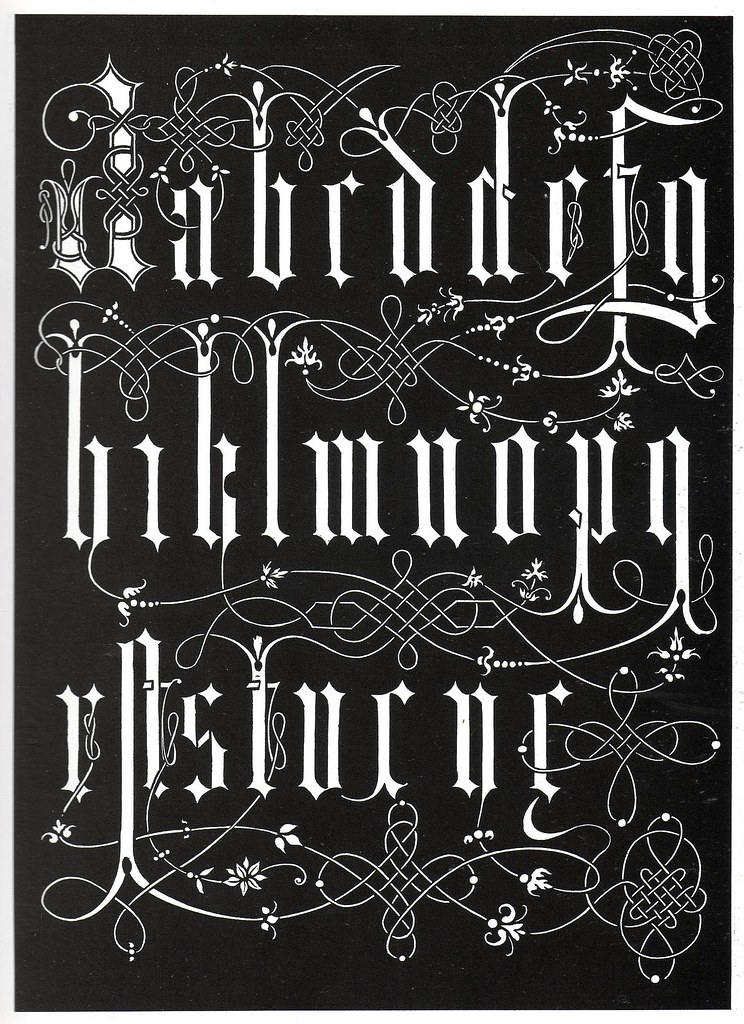
Fancy — BibliOydssey has posted some lovely samples of ornamental type.

Comments closed

More Knots

As has been widely, widely reported, Amazon remotely deleted copies of books by George Orwell from their customers’ Kindles last week after a rights issue with the publisher MobileReference.

Even if it was not actually a huge surprise that Amazon had the ability to claw back e-books it had sold (or — to be honest — that someone might publish something that didn’t belong to them on the Kindle), there has been a predictably hysterical reaction, fuelled — at least in part — by antipathy towards DRM and Amazon, and the delicious irony of the particular books involved.

Even Michael Bhaskar, who reignited the online DRM debate last week on The Digitalist by having the audacity to suggest that DRM might not be all bad (twice), is having second thoughts:

When I wrote the piece I was perhaps slightly self consciously swimming against the tide. However all that is made a mockery of when something like this happens – faith in the system is, well, annihilated and the issues of trust that came up are starkly thrown into relief.

Apparently the problem was a rights one and somewhere down the line the wrong books got into the system in the wrong way. Everyone was re-imbursed and the books are widely available. Does this make any difference to the body blow of seeing 1984 automatically deleted from people’s devices?

…Lets just say if this had come out last Monday, I don’t think the blog posts on DRM would have got written.

But — and perhaps I am alone on this —  I don’t think this debacle is really about DRM. I actually think it is about a publisher not knowing (or not caring) that Orwell isn’t in the public domain in the Kindle’s primary market, and a vendor — who is unable (or unwilling) to thoroughly vet submissions — making an awful customer service decision and overreacting to rectify an awkward situation (which perhaps they felt they were partially responsible for).

Of course, as Cory Doctorow rightly points out, DRM is a the ‘loaded gun’ that allowed Amazon to kill the books. In the traditional book world this would not have been possible, and it really does bring home some the scariness of ‘remote deletion’. And yet this really came about not because of DRM (the issue could have been resolved without deleting the books) but because of poor judgement (by a publisher and the vendor) and, perhaps, as Paul Biba at Teleread suggests, because Amazon still does not fully understand what they’ve got themselves into.

Comments closed

Something for the Weekend, July 17th, 2009

BookCamp Vancouver — Registration is now open and places are going fast so sign up while you still can.

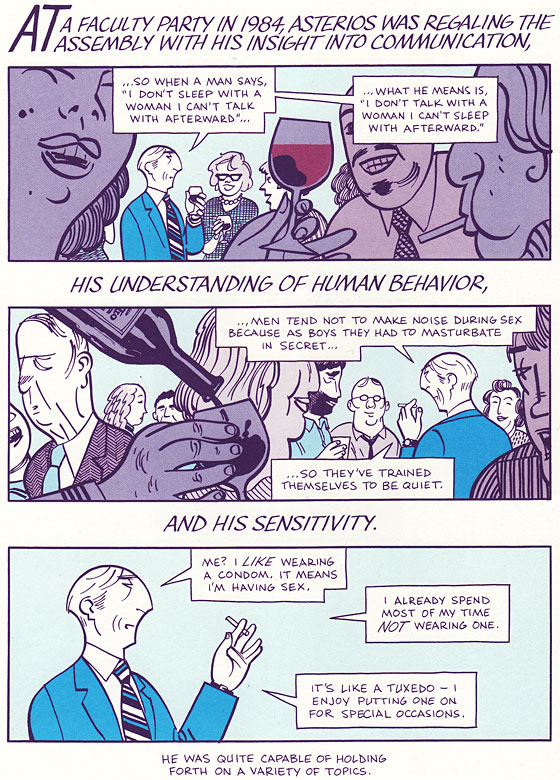
Holding Forth New York Magazine has an 8-page preview  Asterios Polyp the  new graphic novel by David Mazzucchelli, who also illustrated the graphic novel adaptation of  Paul Auster’s City of Glass, and Pantheon editorial director Dan Frank and Knopf/Pantheon designer/senior editor Chip Kidd talk about the book at Publishers Weekly.

Paul Eats Chocolate — Drawn +Quarterly’s 211 bookstore in Montreal is selling chocolate bars designed Michel Rabagliati, creator of the semi-autobiographical ‘Paul’ comics (full disclosure: D+Q’s books are distributed by Raincoast in Canada).

Comments closed

Knots

I usually avoid discussions of digital rights management (DRM) as much as possible. It’s a Gordian Knot. We can spend a lot of time and energy painstakingly untangling it, never to find a form of DRM that keeps everyone happy. Or we can  end DRM altogether with one bold stroke (“mission accomplished!”) only to discover that cutting the knot takes longer than we expected and is more complicated than we first thought. Either way, my sense is that we will continue to have some kind of hybrid situation — with some e-books ‘protected’ by DRM and some not — as we both cut and untangle all the issues…

And for all that I’m often left wandering if DRM really matters as much as we tend to think it does. Do people outside of our strange intersection of media and technology really care about it as much as we do? Are there other pressing issues that we should direct energy towards?  I have this nagging sense that as we agonise over the do-we-don’t-we of DRM, most people just want to read good books.

Nevertheless, the great DRM debate has come to the fore again as a result of Michael Bhaskar’s seemingly mild assertion that DRM Is Not Evil on Pan Macmillan’s The Digitalist blog, which resulted in the (predictable) slew of comments.  Michael has now posted a response which has garnered another slew of comments.  It’s all worth reading if you can summon the energy and want some insight into the issue (although I don’t think anyone mentions foreign rights, but perhaps some one will get to that yet…)

3 Comments

Midweek Miscellany, July 15th, 2009

Vintage Camus — Seen at Bente Miltenburg‘s Flickr photostream (via A Journey Around My Skull).

An Intricate Dance — Author Sonya Chung describes her experience of the cover design process (and the weird — slightly tortured — anxieties that accompany it) for her debut novel Long For This World at The Millions blog (via Duke University Press on Twitter):

I am still a little nervous – having no control over the final printing process, color-correcting, etc. – about what this cover will look like. But I also realized that as each response piled on one after the other in my inbox, I was beginning to delight in the wackiness of the whole thing.

And on a related note, writer Neelanjana Banerjee looks at stereotypical images of Asian Americans on book covers in Hyphen Magazine (issuu document). Henry Sene Yee, creative director of Picador, makes an interesting general point — which I think is often forgotten — about ‘recognizable codes’:

“Russian constructivist font for Russian books; torn paper and beige for Westerns; italics, diamond rings and legs for women’s fiction… The writer is tapping into this culture; so is the designer, and so is the reader.”

GroupThink — After a bit of a hiatus, designer Christopher Tobias is back blogging with a series of discussions on book design:

Beginning today, I plan to post an ongoing series of questions aimed at book designers as a way of opening discussion about various topics related to our industry… Others outside of book design are certainly free to field the questions or give input. I hope that together we can compile a nice collection of discussions for the benefit of those in the profession now and in the future.

Swiss — A bilingual, expandable book designed for the UK art and design gallery Blanka by Dylan Mulvaney: “It honors Josef Müller-Brockmann as well as conveys the principles of Swiss Graphic Design as exemplified by the leader of the revolutionary Swiss Style.” (via SwissMiss and Swiss Legacy).

Good — Christopher Simmons has a quick chat about The Good Design Book project with Grain Edit:

I frequently come back to the definition of design proffered by Charles Eames: “Design is a plan for arranging elements to achieve a particular purpose.” If you break that down, it contains 5 equal parts: the plan (strategy), the arrangement (layout or formalism), the elements (content), the achievement (result) and the purpose (the goal). Good design can therefore be thought of as design based on a good strategy and which features a good arrangement of good content for a good purpose. And of course it needs to yield good results.

And lastly… Following the survey of Mick Wiggins work (mentioned previously here),  Caustic Cover Critic discusses those rather lovely Steinbeck covers with the illustrator:

The Steinbeck gig was about as dreamy a gig as an illustrator can hope to land: 24 covers to date, I think. It was not difficult in the sense of inspiration—he’s so good at evoking mood, and his settings are described so beautifully—but the flop-sweat for me was intense. Steinbeck’s such a classic figure in the literary landscape and bookshelves, delivering art that disappointed was not an option.

4 Comments

Something for the Weekend, July 10th, 2009

Shute — JRSM, the Caustic Cover Critic, has a great post on the work of book designer and illustrator Mick Wiggins, whose evocative illustrations (which look a bit like dark interpretations of vintage Tube posters) adorn the Penguin Classics US editions of John Steinbeck and the new Vintage Classics editions of Nevil Shute.  JRSM will have an interview with Mick Wiggins soon. Can’t wait…

The Revenge of PrintEric Obenauf, publisher at Two-Dollar Radio on the state of print and publishing for The Brooklyn Rail:

The goal for book publishers, most simply put, should not be to undertake a virtual arms race of developing technology with both the Internet and media, or to try to compete on a bloated scale with music and film, or even to translate a work to conform to an undetermined potential future model. The mission for book publishers and print media at large should be to create a product that is irreplaceable and indispensable.

And I will just add for the umpteenth time that it’s not about e-books, DRM, pricing, or devices — it’s about making better books.

Big BluePhilip Hoare, author of Leviathan or, The Whale winner of this year’s Samuel Johnson Prize (and one the books I’m currently reading), chooses his Top 10 Whale Tales in The Guardian. You can also hear Claire Armitstead’s interview with Philip for The Guardian here and read PD Smith‘s TLS review here. And, for the record, Philip is a Southampton boy like myself…

Top 10 Comic Book Cities as chosen by Architects Journal. Gotham is only number 6 (via Book Oven on Twitter).

And lastly…

Up We Go! Up We Go! — The wonderful BibliOdyssey has posted a number of E. H. Shepard’s lovely illustrations for The Wind in the Willows.

Have a great weekend.

1 Comment

Midweek Miscellany, July 8th, 2009

A-TypeThe Independent has a nice look at book design and Faber & Faber’s Eighty Years of Book Cover Design by Joseph Connolly:

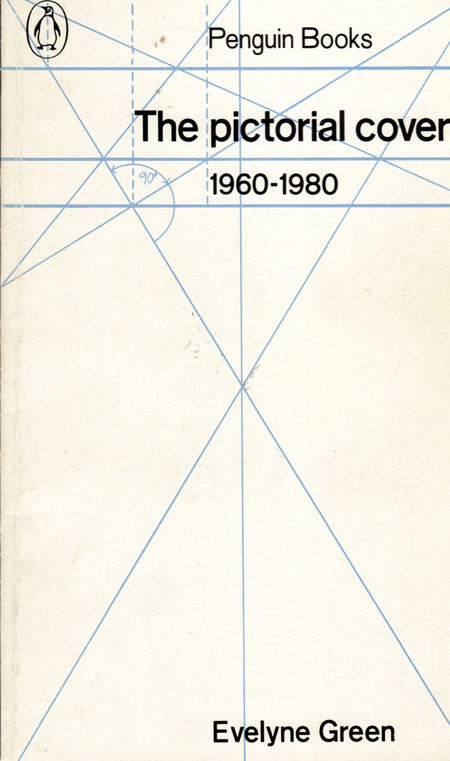
You could argue that the current renaissance in book design came about thanks to Penguin, always the most design-savvy of publishers. In 2004 they produced their first series of Great Ideas – small paperback editions of classic, mostly philosophical texts. They had highly tactile covers and used bold period typography to give a sense of when and where each book was coming from. The following year we got Penguin by Design, an illustrated history of 70 years of Penguin covers, and then, in 2007, Seven Hundred Penguins, a two-inch-thick collection of the best covers, shown life-size, one to a page. For seasoned haunters of second-hand bookshops, this particular item was as thrilling as a similar-sized brick of Class A drugs.

JRSM has more on the Faber book at Caustic Cover Critic.

5 Easy Pieces — Dave Daley discusses his site  Five Chapters,  which publishes a short story in 5 parts over the course of a week, with Ron Charles at the Washington Post‘s Short Stack blog:

“I write passionate notes to writers I admire. And I tell them about the site and why I think it’s a good place for them to be. Here’s an audience of story-lovers and book buyers… The short story is just ideal for our attention spans these days.”

Rogue Agent — Scott Esposito talks to Denise Oswald, the new Editorial Director Soft Skull, for The Quarterly Conversation:

Soft Skull is like a rogue agent—who wouldn’t want to work there? It’s exciting. I’ve always loved their shoot from the hip / take no prisoners attitude and the house’s commitment to embracing the outspoken and the contrarian, the marginal and the disenfranchised. Their books are thoughtful and deeply engaged on a ground level with the world we live in. Yet there’s always room for something elegant and literary or naughty and fun, which is a very satisfying balance at the end of the day because it helps one from becoming too self-serious.

Coffee and Memory — On topic close to my heart, research from the University of Florida has shown that caffeine both prevents and reverses symptoms of Alzheimers in mice, which, according to Donald Clark, just goes to show coffee is cognitively good for you:

Coffee has… long fuelled learning, whether it be through the direct stimulation of the brain, increasing attention, improving memory, preventing dementia or providing a social context for debate and work. It’s something we coffee drinkers have always instinctively known!

Comments closed

Something for the Weekend, July 3rd, 2009

Who Was Abner Graboff? —  Frustrated with the lack information available online about artist, designer and illustrator Abner Graboff, Ward “Ward-O-Matic” Jenkins decided to do some digging himself. His research — now available in a three part series —  includes a host of great images of Graboff’s children’s books and book cover designs, as well as a nice interview with Graboff’s son Jon:

Throughout my father’s career, he did hundreds of book jacket designs and I once asked him, in a slightly condescending way, if he enjoyed that kind of work? He said he loved it because he had to nail the vibe of the book in a single illustration and when he got it right, that it was very satisfying. There was a long period of time when I could walk into a bookstore, look around, pick up a book and look at the jacket design credit… and more often than not, find his name. Later on, I started to get fooled. Other designers were either copying or being heavily influenced by his style.

Calling Bullshit on Social Media — Scott Berkun, O’Reilly author of The Myths of Innovation and Making Things Happen (via — irony alert — Mark Bertils on Twitter):

TV forced radio to change and in some ways improve. The web forced TV, newspapers and magazines to change, and they will likely survive forever in some form, focusing on things the web can not do well.  Its unusual for new thing to completely replace the old ones and when they do it takes years. Anyone who claims social media will eliminate standard PR or mass media is engaging in hype, as odds are better those things will change and learn, but never die. It’s wise to ask what each kind of media / marketing is good and bad for and work from there.

Berkun’s definitely onto something here and it probably deserves a whole post (maybe later!)… Certainly, he’s right to point out (earlier in the essay) that there have always been social networks. But he doesn’t note that for many city dwellers traditional social and familial networks have been breaking down in the post-war period, which I suspect is part of the seductive appeal of connecting online for us slightly older urban types whose use Twitter and Facebook a lot… Anyway, it’s interesting that some of Berkun’s points about technology probably also apply to e-books.

Berkun’s essay also reminded me of an article I read in Fast Company earlier in the week, Our Kids Aren’t Web-Addicted… Are We?:

It’s only we adults that are at PC workstations all day, looking for ways to avoid doing work or trolling the boundaries of our IT-installed browser filters. And we’re the only ones who have social networks big enough to require a tool like Twitter. Imagine how absurd Twitter seems when you only have 10 or 12 friends, not a network of 300+ coworkers, college buddies and colleagues?

And finally…

Krazy — Bill Watterson, creator of Calvin & Hobbes, on George Herriman’s seminal comic strip Krazy Kat, reproduced at This Recording (via Bookslut):

Krazy Kat gains its momentum less from the personalities of its characters than from their obsessions. Ignatz Mouse demonstrates his contempt for Krazy by throwing bricks at her; Krazy reinterprets the bricks as signs of love; and Offissa Pupp is obliged by duty (and regard for Krazy) to thwart and punish Ignatz’s “sin,” thereby interefering with a process that’s satisfying to everyone for all the wrong reasons. Some 30 years of strips were wrung out of that amalgam of cross-purposes. The action can be read as a metaphor for love or politics, or just enjoyed for its lunatic inner logic and physical comedy.

Comments closed

High-Rez Himes

After my slightly snarky comment yesterday about publishers and designers making hi-res cover images readily available, Michael Fusco emailed me with said images for his fantastic Chester Himes covers for Pegasus.

Here they are in their full typographic glory:

Worth the wait I think…

You can see more of Michael’s work at his website and design:related portfolio.

3 Comments