Skip to content

The Casual Optimist Posts

Midweek Miscellany

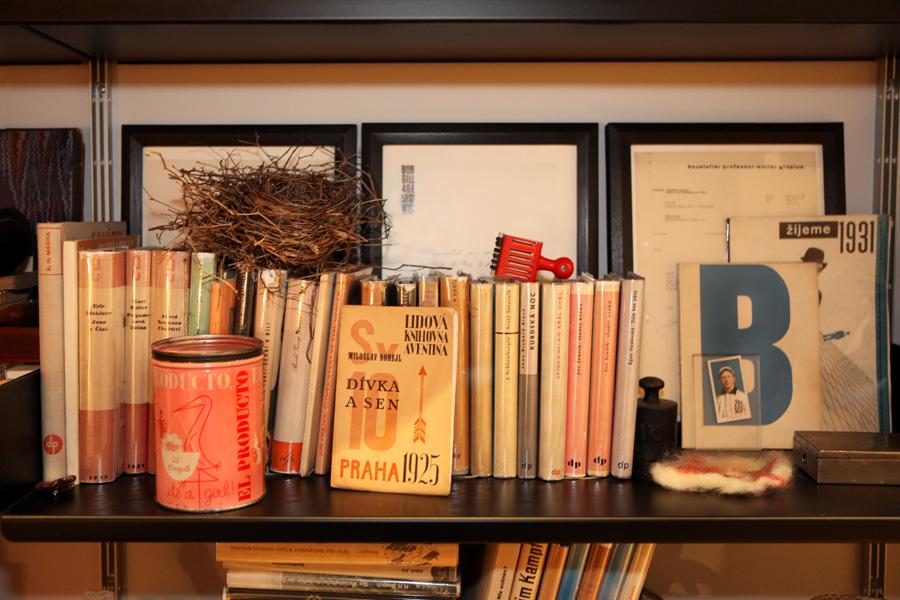
The “Consummate Amateur” — Graphic designer, collector and archivist JP Williams (who blogs at the wonderful amassblog) profiled at Sight Unseen.

Overcoming Creative Block — 25 Artists, designers, and creators share their strategies at ISO50. I rather like Erik Spiekermann’s pithy list:

  1. Avoid
  2. Think
  3. Research
  4. Collect
  5. Sketch
  6. Deconstruct

    Schriftguss AG — A lovely Flickr set of  type specimens  (via The Ministry of Type).

    And Finally…

    American Psycho in six panels by Claire Murray seen at The Creative Review. Genius.

    Comments closed

    The Silver Lining Top 5

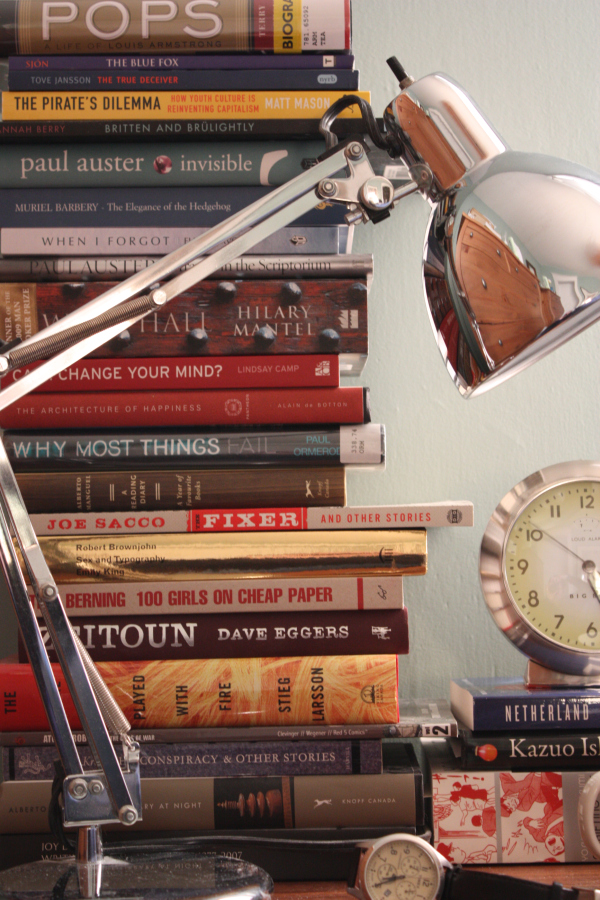
    The nice folks at The Silver Lining blog — consistently one of my favourite blogs for vintage design goodness — were kind enough to ask me for a contribution to their ‘Top 5’ feature last month, and so, as of today, the top 5 books beside my bed are online for everyone to see.

    The Top 5 are:

    1. Pops: A Life of Louis Armstrong by Terry Teachout
    2. The True Deceiver by Tove Jansson
    3. The Blue Fox by Sjón
    4. Britten and Brülightly by Hannah Berry
    5. The Pirate’s Dilemma: How Youth Culture Reinvented Capitalism by Matt Mason

    I actually just finished reading Pops at the weekend, but there is no guarantee that I will read the rest in that order — the list really is just a happy accident of stacking. You you can read more about each of the selections in the post at The Silver Lining.

    Comments closed

    Monday Miscellany

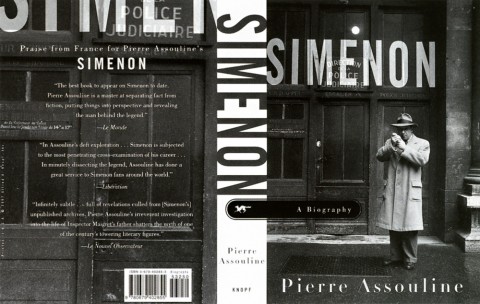
    Simenon designed by Archie Ferguson

    Pub Psychology — Archie Ferguson, formerly of Knopf and now art director at HarperCollins, interviewed at the CoveredUp blog:

    Publishing has always seemed a lot more glamorous than it is. And if it ever was glamorous, those days are long, long gone. These days I spend a lot of time answering emails – not phone calls – from far and wide, running up and down the stairs… doing damage-control, and feeling more like I’m a psychologist as much as anything else.

    Virtual CityJonathan Lethem, author of Chronic City, interviewed in The New Statesman:

    Manhattan, the great secular-commercial metropolis, the world’s first and greatest city founded on concepts other than religious or national identity – and therefore a kind of science-fiction city, a conceptual project, a place unnaturally subject to the distorting forces of capital, ideology, projection, wish-fulfilment and so on – has become…a place both persistently real and unreal. Or, an unreal place where real people are living out their existence… What’s gone wrong and right in this place has a special amount to tell us.

    The difference between Time Roman and Times New Roman — Because I know you’re curious.

    The Form of a Book — Another lovely, insightful post from A Working Library:

    On the page, the rhythm of the text emerges from both the macro design—the pleasing shape of the page, the proper amount of thumb space—and the micro—the right amount of leading, the evenness of the word spacing, the correct break of a line. On the screen, the rhythm of a text encompasses all of these things and more—the placement of a link, the shift from text to video and back again, the movement from one text to another. The rhythm becomes more complex as the orchestra gets larger, but the desire for rhythm does not subside.

    In order to create this rhythm, the book must be designed and composed for the screen. A beautiful digital text can no more be arrived at by “converting” from a print design than a beautiful print book can be created by converting a Word file. The digital book will never come into its own so long as it is treated as a byproduct, unworthy of attention.

    2 Comments

    Midweek Miscellany

    Vintage Dostoevsky, design by Michael Salu

    Precisely and Concisely — The Caustic Cover Critic interviews designer and Artistic Director of Granta magazine Michael Salu:

    Bizarrely, designers looking for employment are often judged by what software they’re able to use. Intellect, cultural awareness and often creativity don’t seem to be values worthy of a resume. There is no substitute for good ideas, the rest are just supportive tools. I have always been quite a craft-led designer, but I am of the generation that studied with a mac in front of them and I think its good to understand the importance of both.

    The Honest Bookseller — Erin Balser of Books in 140 profiles Toronto independent bookstore Ben McNally Books for The Torontoist:

    “I’d rather have a book that sells one copy that no one else will sell than to stock several best sellers you can get anywhere,” McNally says. “That’s what makes this store. That’s why people come… My first responsibility is my customer. When I think a book should be cut by a third or if there’s a subplot that goes nowhere, I have to tell you that… I’m often a very critical reader. When people come and ask me ‘Is this any good?’ I have to be honest.”

    William Kentridge: Five Themes — Beautiful book design from Abbott Miller and Kristen Spilman at Pentagram.

    Speaking of Pentagram… Pentagram partner Paula Scher has some blunt stuff to say about design in a interview with Pr*tty Sh*tty.

    The Rules — Inspired by Elmore Leonard’s 10 Rules of Writing, The Guardian asked authors — including Diana Athill, Margaret Atwood, Richard Ford, Jonathan Franzen, Neil Gaiman, and PD James, Hilary Mantel, Michael Moorcock, Philip Pullman, Ian Rankin, Will Self, Sarah Waters, and Jeannette Winterson — for their personal dos and don’ts. (Part two is here).

    On the subject of writing, the wonderful BBC radio series The History of the World in a 100 Objects has recently touched on the history of writing, literature, and mathematics in episodes about the Early Writing Tablet, the Flood Tablet and the Rhind Mathematical Papyrus. The series is a collaboration with The British Museum. Great stuff.

    Diana Athill, Margaret Atwood, Roddy Doyle, Helen Dunmore, Geoff Dyer, Anne Enright, Richard Ford, Jonathan Franzen, Esther Freud, Neil Gaiman, David Hare, PD James, AL Kennedy
    1 Comment

    John Downer Glass Gilding Video

    Following up from last week’s Midweek Miscellany post, here is glass gilder John Downer talking about creating that amazing lettering for Reserve‘s window in Los Angeles:

    Reserve Glass Gilding by John Downer from Reserve LA on Vimeo.

    2 Comments

    10+ Flickr Groups for Book Design and Inspiration

    10 Websites for Vintage Books, Covers and Inspiration” is one of the most popular posts on The Casual Optimist, and here, at long last, is the promised follow-up: “10 Flickr Groups for Book Design and Inspiration.”

    There are a lot of amazing photostreams with book sets — Covers etc, insect54, Kyle Katz, mjkghk, Montague, Paula Wirth, and Scott Lindberg to name just a few that I’ve come across — but I’ve decided to focus this post on my favourite group pools because they collate the best of these individual streams together.

    I’ve also decided to highlight groups that are about specific subjects, genres, publishers, or designers, because I think these are more useful than the more general (but still interesting) book pools such as A+ Book Covers, Book Cover Club, and My Books

    ABC Verlag Graphic Design books

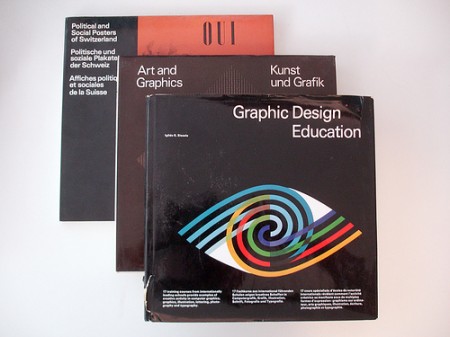
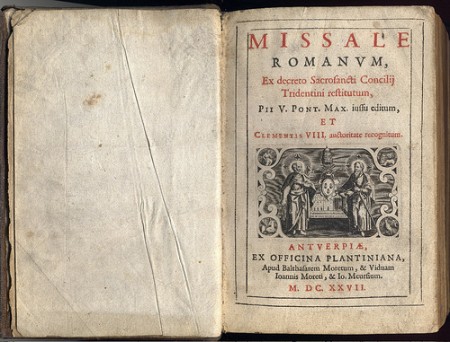
    1. ABC Verlag, Zurich — A collection of scans and images from Zurich-based ABC Verlag who specialized in graphic design and fine art books between 1962 to 1989.
    1627

    2. Antique Books — images of books, covers and illustrations that are a hundred years old or more.
    Design and Paper: Number 13: Spread

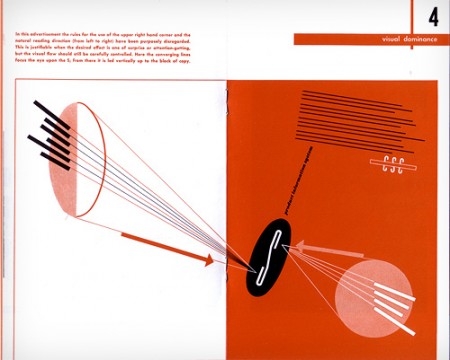
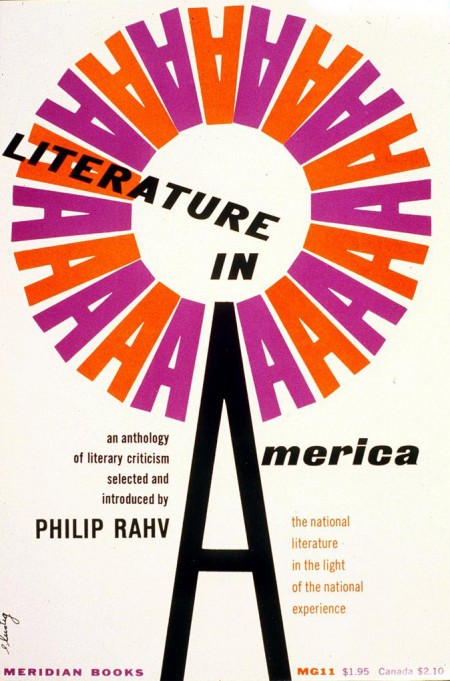
    3. Designers’ Books — “what’s on the shelves of designers and other smart creatives.” Not to be confused with the also excellent designers-books.com pool or Book Design pool.
    Literature in America

    4. Alvin & Elaine Lustig Design — celebrates the work of Alvin and Elaine Lustig, both renowned for their incredible book cover designs.

    They Shoot Horses Don't They

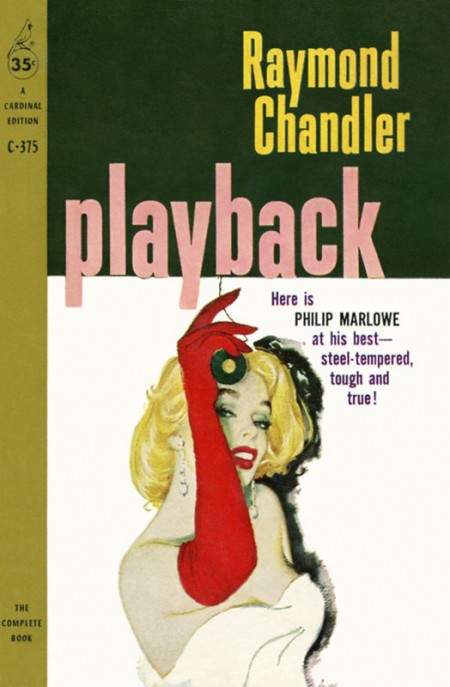
    5. The Penguin Paperback Spotters’ Guild — An astonishing collection of vintage Penguins, Pelicans, Peregrines, and Puffins. Also of interest: The Great Pan! Illustrated Pan Book Covers and Vintage Fontana Books.
    Playback by Raymond Chandler Cover art by William Rose

    6. Pulp Fiction — As you would expect: detective novels, crime fiction, adventure comics, trashy romance, weird science, blaxploitation and more. See also: The Old-Timey Paperback Book Covers and The Crime & Mystery Book Covers.
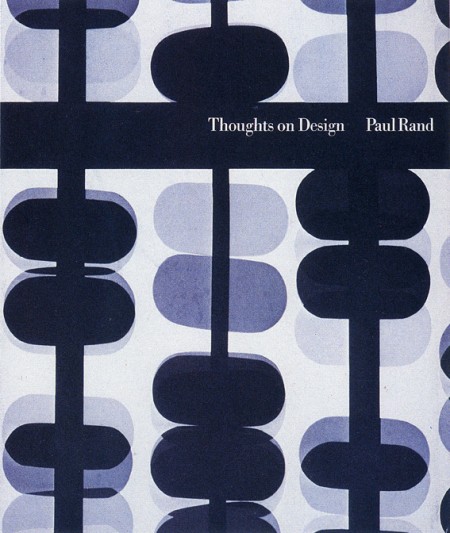
    Thoughts on Design by Paul Rand

    7. The Paul Rand Modern Graphic Design Fan Club — Like the Lustig Design group, this is not just a book pool, but it does, however, include many of Paul Rand’s iconic book designs, making it essential to this list in my opinion.
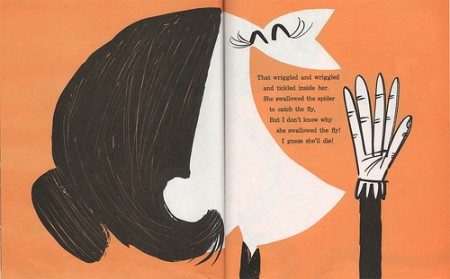
    I Know an Old Lady, by Rose Bonne. Pictures by Abner Graboff.
    8. The Retro Kid A collection of cool illustrated children’s books from the mid-1940’s through the mid-1960’s, curated by The Ward-O-Matic illustrator Ward Jenkins.

    metropolis thea v marbou

    9. The SciFi Books Pool Vintage science fiction covers from the 1940s, 50s, 60s and 70s.
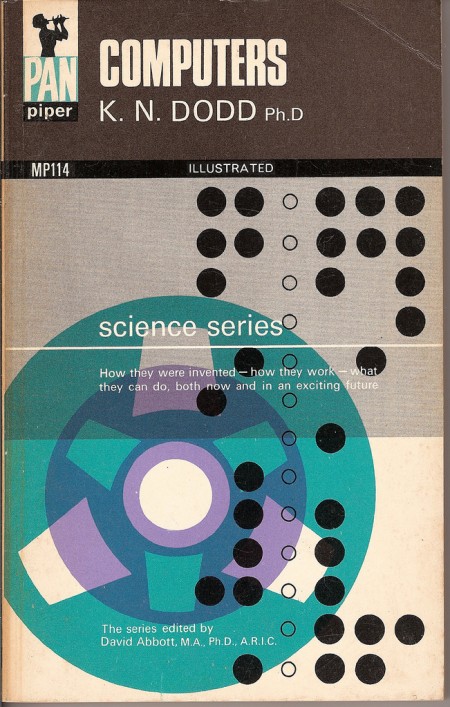
    computers

    10. Vintage Paperbacks — The place for amazing paperbacks that aren’t Penguins. Curated by graphic designer and art director Gregory Boerum, the focus is on quality stuff with design interest from the 1960’s and 70’s.

    So there we have it: 10 of my favourites. What are yours?

    10 Comments

    Midweek Miscellany

    EndGrain — A “directory and aggregator for wood type and letterpress works and information on the web.” Lovely.

    Crash — Iain Sinclair (author, most recently, of Hackney, That Rose-Red Empire — just out in paperback by the way) on JG Ballard’s artistic legacy:

    A late moralist, he practised undeceived reportage, not prophecy: closer to Orwell than HG Wells. Closer to Orson Welles than to either. Closer to Hitchcock. Take out the moving ­figures on staircases that go nowhere and stick with hollow architecture that co-authors subversive drama

    Picture Book Report — 15 artists create illustrations inspired by their favourite books. Pictured below: Kali Ciesemier‘s take on Sabriel by Garth Nix. I’m also looking forward to Robot Johnny‘s take on The Hitchhiker’s Guide to the Galaxy (via The Art Department).

    Indigo 2.0Canadian Business magazine on Indigo and their digital book division Kobo:

    “Kobo has been across the smartphone space from the beginning,” says Lisa Charters, senior vice-president and director of digital for Random House Canada. “And that unique offering is really important to us as publishers, because we want consumers to have all options to read e-books, and not necessarily have to purchase a $300 device.”

    What’s more, says New York publishing consultant Mike Shatzkin, “they beat Google into the cloud.” Kobo’s library system is based in cloud computing. When you buy a Kobo book, it resides on Kobo’s servers and you access it via your device of choice. So when you squeeze in 20 pages of The Lost Symbol on your laptop in the morning, and later that day open the Kobo application on your BlackBerry, Kobo automatically plops you down on page 21.

    Interesting stuff, although I do wish journalists could stay away from the Gutenberg clichés (and Dan Brown. Barf).

    And finally…

    Reserve Window Design — “We hired our good friend John Downer, who is a professional sign painter & typographer, to fly to LA to do gold leaf lettering on our store window & transom. Glass gilding is becoming a lost art that only a few dozen people in the United States still know how perform” (via We Love Typography):

    4 Comments

    The Peanut Gallery

    Having written a couple of things this week about what publishers should be doing, Don Linn has a timely post at his blog Bait ‘n’ Beer on exactly why such thoughts are usually wide of the mark:

    [N]ot all publishers are the same. While there are some commonalities among the hundreds of publishers, there are major differences between trade, academic, educational, reference and other types of publishers and even within those broad categories, there are major differences (even within the same house) between fiction and nonfiction, text and illustrated, genre and general fiction, children’s, YA and adult titles. And I’ve only named a few… The point is it’s dangerous to take individual examples and generalize them to an entire, very diverse industry.

    He goes on remind readers that talk is always cheap:

    [P]ublishers don’t do everything critics think they should [because] not many publishers are rolling in cash at the moment. I can’t name a single publisher who wouldn’t want to spend more on investments in marketing, quality, workflow improvement and editorial, but the money’s just not there. So we need to temper our expectations with a dose of financial reality.

    It’s a great post. And worth reading every time you think a publisher should be doing something they aren’t.

    (link)

    Comments closed

    Something for the Weekend

    [A quick note about the poll: thanks to everyone who voted, left a comment or sent me note this week — I really appreciate it. The feedback has been great. I’m going to shut the poll down at midnight tonight, but please let me know if you have any further thoughts about the direction of The Casual Optimist.]

    Lauren Kaiser’s Little Red Riding Hood seen at Type Theory (pictured above).

    liza-pro-underwareThe Oscars of Type — Ellen Lupton’s list of the year’s top typefaces at Print magazine. “Best Actress” was awarded to Underware’s Liza Pro (pictured above). My interview with Ellen Lupton is here.

    Happiness as By-product — Jessa Crispin founder of Bookslut interviewed by Jeff VanderMeer, author of Booklife (which Crispin was critical of interestingly):

    I was having a conversation with a writer the other day, and he stated that the best things are always by-products. Happiness is a by-product, and I loved that he said that. You can plot your journey to success or happiness or wealth or whatever it is you’re looking for, but if you’re too focused on the end result, you’re going to miss anything good going on around you… Not that we should all sing songs around the campfire and braid each other’s hair, but there has to be a combination of the two, forward motion and goal planning, but while taking a look at the people around you.

    Comics Studies Reader — Jeet Heer on comics and comic scholarship at Books@Torontoist:

    I think there’s a wide variety of things that can be done with comics, and I think we’ve only scratched the surface… One of the interesting things about manga is that kids are reading translated manga that reads right to left. Part of the reason that’s possible is because comics are both words and pictures – half of the translation work is already done. So you can look at a comic book in a language you don’t know and you won’t get everything but you can still get a fair bit of what it’s about. And so they have this sort of function as cultural ambassadors. You can actually learn a lot about a culture just by looking at the comics.

    The New Yorker 85th anniversary covers by Chris Ware, Adrian Tomine, Dan Clowes, and Ivan Brunetti seen at the Creative Review blog (Adaptation by Tomine pictured below).

    Art Spiegelman and Francoise Mouly (art editor at the aforementioned New Yorker) discuss The Toon Treasury of Classic Children’s Comics with (a particularly gushy) Michael Silverblatt for KCRW’s BookWorm :

    Comments closed

    Workflow Part 2

    One of the ‘joys’ of not getting quite enough sleep at night is that you don’t always say things with the kind of nuance that you might intend. Sometimes the coffee speaks for you.

    Unfortunately that happened yesterday with my post about production, which was taken in some quarters as a damning indictment of publishers, rather than a post about some of the problems we face creating decent e-books. Coffee 1, Optimist 0.

    Anyway, after I published the post, I was chatting with a friend and colleague at one of the big publishers about their production process. She told me that although they have been converting PDF files into e-books, they are moving towards changing their workflow. This can’t happen overnight though, she said. Changing something that complicated takes time, especially when people have to learn new skills.

    She also reminded me that we have to put things into context. Publishers are not the hold-outs they are often portrayed as (or at least not all of them are) — e-books are still only a small part of the overall business, and even though we’ve seen a rapid growth in the market, it is not the same for every genre, category, or publisher. New devices (with different standards) are also appearing on the market with alarming regularity.

    None of which means that publishers should sit on their hands of course. But — as my friend rightly pointed out — this a process not “a flip a switch situation.”

    10 Comments

    Workflow in the House

    As I’ve mentioned in the past, many publishers have tended to treat e-books as shovelware, and (unsurprisingly) the hasty conversion of files intended for print into e-book editions — with little or no consideration for the medium — has meant the quality of e-books has suffered.

    Needless to say, poor quality e-books are becoming something of an embarrassment for publishers trying to convince readers to pay a premium for downloads (as Kassia Kroszer recently pointed out in Publishing Perspectives: it is hard to justify higher e-book prices when the product simply isn’t up to scratch), and clearly it’s an issue publishers need to address sooner rather than later if they want win this argument.

    The problem of substandard e-books partially stems from the fact that many publishers currently lack the means and expertise (and, to some extent, the will) to produce high quality e-book editions themselves. Their workflow and production process are set up for print, so the quickest way to create e-book files has been to outsource the job to third parties, inevitably with very little quality control.

    This was the subject of an interesting (if somewhat snarky) post this week by Pablo Defendini, producer and blogger at Tor.com, at The New Sleekness:

    [B]ig publishers outsource a large part of these services… They’ve found that cutting out expensive production departments and hiring out the services of middlepeople, who also handle distribution and sometimes even retail fulfillment, saves on people power (read: health insurance and pensions), hassle, and extra load on their IT departments. Well, guess what one of the cardinal rules of the digital revolution is: digital production eliminates the need for most middlepeople. Bring this all back in-house, make it a lean operation. Settle on nothing less than a standards-compliant workflow, but please, build it from the ground up, as opposed to tacking it onto your existing production setup as an afterthought.

    Pablo is picking a crowd-pleasing soft target in the “big publishers” — many (most even?) small and medium size publishers (the notable exception being O’Reilly of course) are also outsourcing their e-book production — but he does make some really important points about the need to learn new skills, rethink workflow and (ideally) bring e-book production in-house.

    The comments are also worth reading but, — if like me — you are just beginning to get your head around this stuff, definitely work your way through the Digital Book World presentation by Liza Daly, of Threepress Consulting, referenced in the article:

    25 Comments

    Delivered in Beta

    Delivered in Beta is a short documentary about design, products, social media, and creativity (amongst other things) created during the Open Design Workshop at the Betahaus as part of Social Media Week Berlin 2010:

    Any thoughts how this applies to books?

    (via SwissMiss)

    1 Comment