Skip to content

The Casual Optimist Posts

Midweek Miscellany


Flaunt it — Designer Armin Vit discusses the UnderConsideration book Flaunt: Designing Effective, Compelling and Memorable Portfolios of Creative Work at For Print Only.

How Art Became the Media — Lewis Lapham, editor of Lapham’s Quarterly (formerly editor of Harper’s Magazine), at Guernica magazine (via Bookslut on Twitter):

It isn’t that the country now lacks for painters painting pictures or poets writing poems, nor is it to say that stores of human energy and hope aren’t to be found in the novels of Elmore Leonard or the songs of Bruce Springsteen. It is to say that with the dawn of Reagan’s bright new morning in America, the notion of art as the way into a redemptive future had withered on the vine. Once again, as had been customary throughout most of the country’s history, art was seen as an embodiment of the good, the true, and the beautiful only to the extent that it could be exchanged for money.

George Lois on the iPad in the New York Observer (no, I’m not entirely sure how I missed this last week either):

“magazines will never die because there is a visceral feeling of having that thing in your hands and turning the pages. It’s so different on the screen. It’s the difference between looking at a woman and having sex with her.”

Flying the Coop — Another interesting installment of the National Post‘s ‘Ecology of Books’ series, this time on authors moving from small presses to big publishing. And there’s an interesting follow up from Daniel Wells, the publisher of Biblioasis one of the aforementioned Canadian small/independent presses (via Steven Beattie).

Microdistribution — This is fascinating… The Boulder Bookstore (Colorado) is experimenting with charging self-published authors for shelf-space and promotion (via Sarah Weinman on Twitter):

“Most people will come in at one of the higher fee amounts,” Arsen Kashkashian, the store’s head buyer and the architect of the program, told me. “That surprised us.” In fact, when the store first began charging its consignment authors back in 2007 (the fee-structure idea emerged when the store’s employees found themselves “inundated with self-published books, and there was a lot of work involved and not much reward”), its staff “thought people would grumble and complain” about the charges. But authors, Kashkashian says, have been generally grateful for the opportunity to sell and promote work that might otherwise be seen and appreciated only by their friends/spouses/moms: “‘I want the marketing, I want the exposure. I worked so hard on this project, and you guys are the only ones who could help me with it.’”

And finally…

Four Ways to Combines Fonts by H&FJ, built around a beautifully simple principle: “keep one thing consistent, and let one thing vary.”

2 Comments
Interview at Books@Torontoist

I was recently interviewed by James Grainger, book columnist and author of The Long Slide, as part of the Books@Torontoist Litblog Spotlight series. Assuming that you don’t have anything better to do, you can read it here.

Comments closed

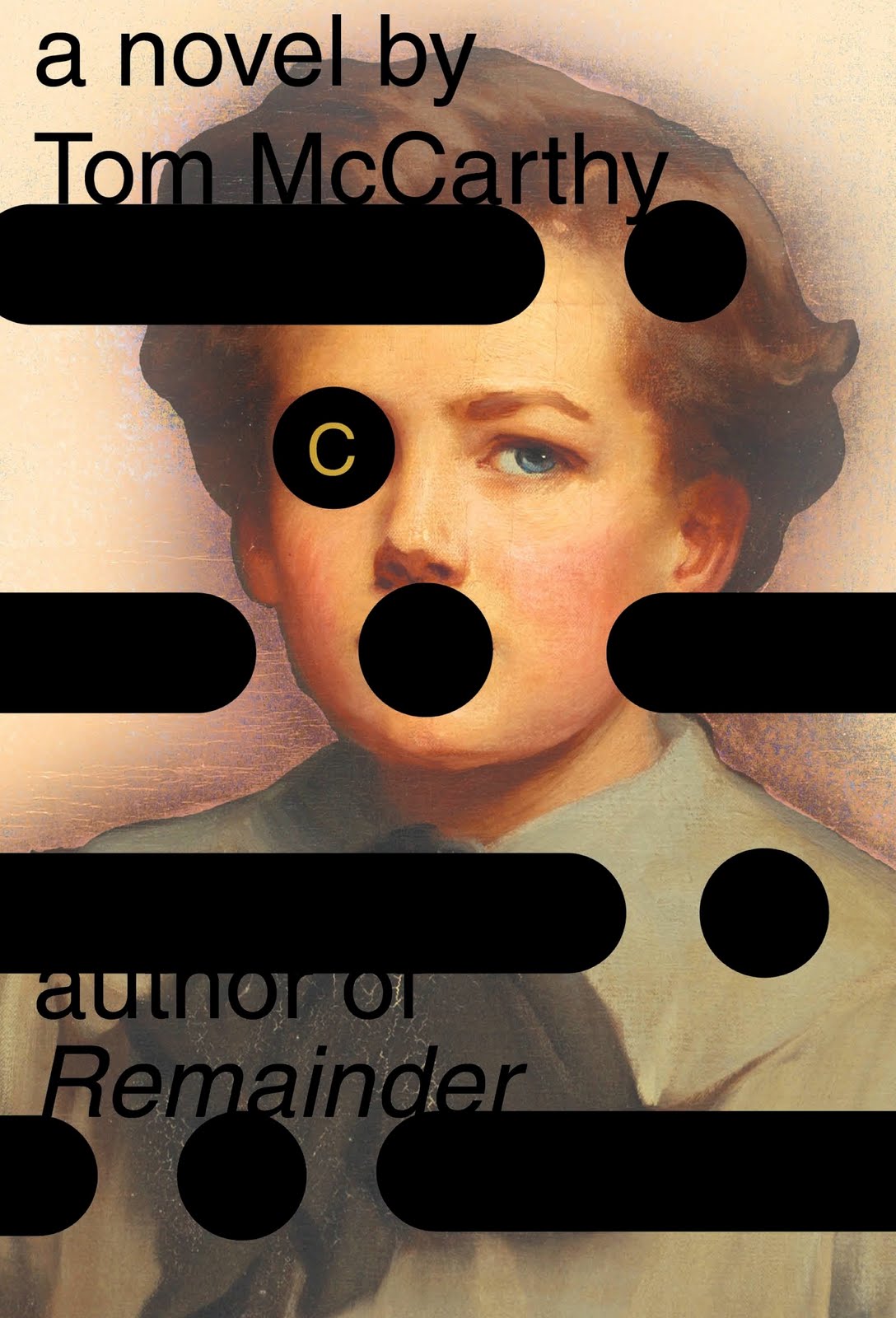
C

Tom McCarthy and Peter Mendelsund, together at last…

6 Comments

Personal Projects

I’ve been thinking a lot about personal projects recently and so I found this presentation for 99% by Ji Lee, Creative Director for Google Creative Lab, really inspiring:

(via The Donut Project/SwissMiss)

1 Comment

Something for the Weekend

Big Shit-Eating Grin — George Lois chooses 12 of his favourite Esquire covers at New York magazine. There are more iconic Esquire covers at George Lois’ website and there is, of course, a new book, George Lois: The Esquire Covers @ MOMA, published by Assouline. (NB the image above is not one of Lois’ 12, but it is great).

Objects of Desire — An interesting University College London podcast about the history of books and publishing featuring Professor Henry Woudhuysen, co-editor of the The Oxford Companion to the Book, and Professor Iain Stevenson,  author of Book Makers: British Publishing in the Twentieth Century (available in the US from University of Chicago Press) (via Ernesto Priego on Twitter).

The Dark SideThe Economist on Scandinavian crime fiction:

The cold, dark climate, where doors are bolted and curtains drawn, provides a perfect setting for crime writing. The nights are long, the liquor hard, the people… “brought up to hide their feelings” and hold on to their secrets.

Somebody’s Sins, But Not Mine — A two part interview with Patti Smith about her new memoir Just Kids at KCRW’s Bookworm. Part two is here.

1 Comment

Tales of the Unread

Nova 1965-1975

To commemorate the first year of The Second Pass website, editor John Williams asked a few readers to recommend their favorite out-of-print book and he very kindly (some might say charitably) asked me to contribute.

I chose to write about Nova 1965-1975 by David Hillman and Harri Peccinotti, which I discovered in Jason Godfrey’s Bibliographic: 100 Classic Graphic Design Books (one of my favourite books of last year).

Nova Spread 1

Don’t worry, lots of actual smart people also contributed.

(images courtesy of Jason Godfrey, author of Bibliographic. Full disclosure: Bibliographic is distributed in Canada by my employer Raincoast Books).

1 Comment

Midweek Miscellany

A true miscellany here: letterpress to Gil Scott-Heron with a lot of meat sandwiched in between… This is quite possibly why I blog…

Ditoria — An amazing video about showing the letterpress printing process by Roberto Bolado.

The Cost of Creating — Harvard Law Professor Lawrence Lessig, author of Free Culture (and others), discussing the Google Book Settlement on NPR’s On The Media last month (via INDEX//mb):

[W]e need to once again think about what the balance should be between free access to culture and metered access to culture, because both extremes are mistakes, either the extreme that says everything is free because then lots of people won’t create because they can’t cover their cost of creating, or the regime that says everything needs to be licensed, because in that world there’s a whole range of creativity… that can’t begin to happen because the cost of negotiating and clearing those rights is just so extreme.

Stopping Saying “Innovation”Scott Berkun, author of The Myths of Innovation, in The Economist (via Frank Chimero):

Worry more about being good because you probably aren’t. If your organization struggles to make half-decent products, has the morale of a prison, and nothing ever changes much less improves, why are you obsessing about innovation? You need to learn the basics of how to make something good, that solves real problems, works reliably, is affordable, and is built by a happy, passionate well rewarded staff that believes good ideas have a chance. If you can make the changes necessary for these basic but all too rare attributes to be true, then innovation, in all its forms, will be much easier to achieve, and it might just happen all on its own.

New Type York — A (beautifully designed) photoblog by graphic designer James Patrick Gibson recording the typographic artifacts of New York City.

And thinking of New York… The NY Times is planning to spin off its Book Review as a separate e-reader product.

The Vulture Gil Scott-Heron

A Wry Return — Sean O’Hagan profiles musician Gil Scott-Heron in The Observer, revealing an somewhat unexpected connection to Jamie Byng, director of Canongate Books. I say “somewhat” unexpected because having lived in Edinburgh just before Byng wrapped up his funk and soul club Chocolate City, it seems entirely reasonable to me now I stop and think about it:

The story of how Gil Scott-Heron’s new album came to be made is a long and convoluted one. It is, among other things, a testament to the abiding power of great music outside the mainstream to spread like a virus across cultures, across decades. It begins back in 1987 in a rented house in Edinburgh when a young student is mesmerised by his friend’s collection of soul and funk music from the halcyon days of the early 70s… “I was just taken aback by the voice, the words, the poetry,” remembers Jamie Byng who, 22 years on, is the director of Canongate Books and still a fervent soul fan… “Discovering those songs was an epiphanic moment for me…” So taken was Byng by those songs that, having bought and rebranded Canongate, he tracked down his hero and, in 1996, republished his two long-out-of-print novels, The Vulture and The Nigger Factory.

And here’s Gil Scott-Heron’s painfully appropriate cover version of Robert Johnson’s Me and the Devil:

Gil Scott-Heron’s books The Vulture and The Nigger Factory were recently reissued by Canongate.

3 Comments

How To Design A Cover in 1:55 Seconds

Lauren Panepinto, Creative Director at Orbit Books, recently posted this entertaining “Making of the Cover Video” for Gail Carriger‘s Blameless (released in the fall) to the Orbit blog:

Over 6 hours of my onscreen compositing, retouching, color correction, type obsessing, all condensed down to a slim sexy one minute 55 seconds of cover design. Trust me, no one wants to watch it in real-time…and even then I left out the not-as-riveting-onscreen stages of my cover design process, such as reading the manuscript, sifting through… photoshoot outtakes, background photo research, etc. And since this is a series look that has already been established… there weren’t the usual batches and rounds of versions of different designs that happen with standalone or first-in-a-new-series covers. That would be a weeklong video!

And if your interested in steampunk but don’t know where to start, you might want to check out Library Journal‘s list of 20 core steampunk titles (which includes Gail Carriger’s Soulless).

UPDATE:

There is more on Lauren Panepinto’s work on this series at FaceOut Books.

2 Comments

Nobody Knows Anything

Book Qupte by Brandon Schaefer

Anyone who has spent 5 minutes discussing publishing with me knows that William Goldman’s line “nobody knows anything” from Adventures in the Screen Trade is one on my mantras, so I was thrilled that designer Brandon Schaefer (whose awesome The Dark Knight illustration buzzed around the internet last summer) decided to use it for as part of his Book Quotes poster series.

You can see the rest of the series (and more of Brandon’s lovely design) on Flickr.

Comments closed

Something for the Weekend

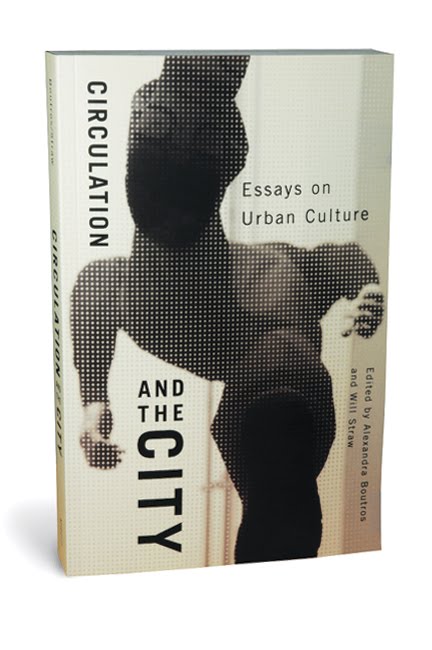
Circulation and the City design by David Drummond

New from David Drummond

The Original Spirit — Toronto indie institution This Ain’t The Rosedale Library (one of the 10 best bookshops in the world according to The Guardian) featured at Books@Torontoist, with some nice quotes from owner Charlie Huisken:

“creative knowledge [is] accumulative and comes from many sources… Being an autodidact has served me well”

Books in the Age of the iPad — Craig Mod’s article on printed books and digital publishing caused much of a flutter on Twitter yesterday. I’m not sure that I entirely agree with his thesis — which seems to imply that some kinds of content can be completely divorced from their media — but his website is beautifully designed, and more importantly he makes some interesting points. I especially like his conclusion:

I propose the following to be considered whenever we think of printing a book:

  • The Books We Make embrace their physicality — working in concert with the content to illuminate the narrative.
  • The Books We Make are confident in form and usage of material.
  • The Books We Make exploit the advantages of print.
  • The Books We Make are built to last

In that vein, more on David Pearson‘s beautiful book cover designs for Cormac McCarthy at We Made This. I love that he used rubber stamps…

And finally… Jaron Lanier, author of You Are Not A Gadget, talks about the failure of Web2.0 with Aleks Krotoski of The Guardian:

3 Comments

Educate or “Educate”?

I had an interesting discussion with author Jim Hanas (@jimhanas) on Twitter today about customers and education. It started with Jim’s comment (re-tweeted by Director of Digital Initiatives for Chelsea Green Publishing, Kate Rados / @KateRados):

“When you start trying to ‘educate’ your customers, it’s the beginning of the end for any industry.”

I disagreed, and said so. I believe education informs and liberates. Rarely is it a negative thing in life or business.

But as it turned out, in this context ‘educate’ meant something different to Jim than it did to me. For Jim, it was a sinister euphemism for scold, blame, bully, and punish. ‘Education’ was “code for ‘litigation.'”

If I understood him correctly, Jim was saying that to ‘educate’ our customers would be to repeat the mistakes of the music industry.

Needless to say, I don’t want to see publishers suing school children. For me, though, ‘educate’ means to inform, communicate, and engage — all things  publishers should do and not just with their books. To educate means, for example, an editor talking about a new acquisition, a production manager explaining why they used FSC approved paper, or a designer explaining how to use their tools.

Until now, we have assumed that nobody cared about this stuff. But the web has showed us that it can be endlessly fascinating, and, perhaps more pertinently, that an unwillingness to explain what we do ourselves creates a vacuum that will be filled by others who either have something to gain or who find our lack of transparency and engagement frustrating (looking at you Hugh McGuire!).

Ultimately, then, I don’t think Jim and I were in true disagreement. We just understood a word differently. Perhaps the lesson is that publishers need to educate, not “educate”?

4 Comments

The Discussion That Will Not Die!

Tales from the Crypt Bronte

Now the dust has almost settled on the Amazon-Macmillan dispute, John Sargent, CEO of Macmillan, laid out their new position on availability, pricing and the (much discussed) agency model yesterday:

We will price our e-books at a wide variety of prices. In the ink-on-paper world we publish new books in different formats (hardcover, trade paperback, and mass market paperback) at prices that generally range from $35.00 to $5.99. In the digital world we will price each book individually as we do today… For physical books, the majority of new release hardcovers are published in cheaper paperback versions over time. We will mirror this price reduction in the digital world.

This follows hot on the heels Motoko Rich’s second stab at explaining the issues around pricing for The New York Times (her previous — fairly woeful — attempt is here):

Publishers argue that it would be difficult to sustain a vibrant business on much lower prices. Margins would be squeezed, and it would become more difficult to nurture new authors…“You’re less apt to take a chance on an important first novel if you don’t have the profit margin on the volume of the big books,” said Lindy Hess, director of the Columbia Publishing Course, a program that trains young aspirants for jobs in the publishing industry. “The truth about this business is that, with rare exceptions, nobody makes a great deal of money.”

This echoes similar points made by Lydia Dishman’s in an earlier article, “The Case Against Dirt-Cheap E-Books”, at BNET:

If massive sales are the only aim, content is devalued to the point of creating digital pulp. Maybe no one old enough to remember real pulp fiction (not the Tarantino film) is reading this, but the only thing that lives on from that era are histories of the pulp fiction genre, not the actual books, which by definition were cheaply produced and contained even “cheaper” content. Pulp’s inherently ephemeral — not exactly a stable foundation for a new business model.

Pricing seems to be the issue that just will not go away right now, and none of the points raised here are new. But I guess the upside is that there is now some more informed discussion going on and publishers are beginning to take it seriously. That, and John Sargent giving other CEO’s a free lesson in communications and transparency.

(Image from R. Sikoryak‘s Masterpiece Comics published by Drawn & Quarterly)

2 Comments