Skip to content

The Casual Optimist Posts

Moving Pictures

Continuing today’s theme of being late to everything, I just finished reading Moving Pictures by Kathryn and Stuart Immonen.

Published in 2010 by Top Shelf, the book was heralded on a lot of best of the year lists and it’s been sitting in my ‘to read’ pile for months.

I’m sorry I waited so long. It is wonderful…

Dave Howard interviewed Kathryn and Stuart Immonen about the book for The Torontoist last year.

1 Comment

Midweek Miscellany

A little late on this, but 50 Watts has posted the winners of  Polish Book Cover contest. Will Schofield’s co-judges were Aleksandra and Daniel Mizieliński, editors of 1000 Polish Book Covers, and Peter Mendelsund. All the amazing entries are here. Pictured above: A Clockwork Orange by Chris Taylor.

Fragments of Experience The Guardian reviews Modernist America by Richard Pells:

Film editing, he tells us, owes debts to cubism, futurism and surrealism. Cutting from one shot to another enables the cinema to “create a feeling of movement as well as a sometimes fractured sense of time and reality. The fragments of experience, captured in a single shot and then juxtaposed with other shots to produce a multiplicity of perspectives, are the cornerstones of the cinema, and they are also central to the modernist view of the world.”

Music from Nowhere — Rob Young, author of Electric Eden, interviewed in the LA Times:

[P]art of my argument is that the British folk revival did actually begin much earlier than… the 1950s — you have to look back at the late 19th century and the Victorian folk collectors… [William] Morris is important because what you find in the 1880s and ’90s is a surge of conservation and preservation projects starting up, mainly by people who were horrified at the destructive effects of industrial progress on the landscape, the environment and the labor conditions of the working class. Morris was at the forefront of this, and his time-travel novel “News from Nowhere” sets out the utopian conditions of a better world in which the future is actually like a medieval golden age.

Gestalt-Ingenieur — Dieter Rams on design, Jonathan Ives and Apple for The Daily Telegraph:

I am troubled by the devaluing of the word ‘design’. I find myself now being somewhat embarrassed to be called a designer. In fact I prefer the German term, Gestalt-Ingenieur. Apple and Vitsoe are relatively lone voices treating the discipline of design seriously in all corners of their businesses. They understand that design is not simply an adjective to place in front of a product’s name to somehow artificially enhance its value. Ever fewer people appear to understand that design is a serious profession; and for our future welfare we need more companies to take that profession seriously.

And finally…

Music for Dieter Rams — a mini-album by Jon Brooks (via The Donut Project):

“Every sound on this record, from the melodic sounds to the percussion, the atmospheric effects to the bass lines originates from the Braun AB-30 alarm clock.”

Awesome.

Comments closed

Something for the Weekend

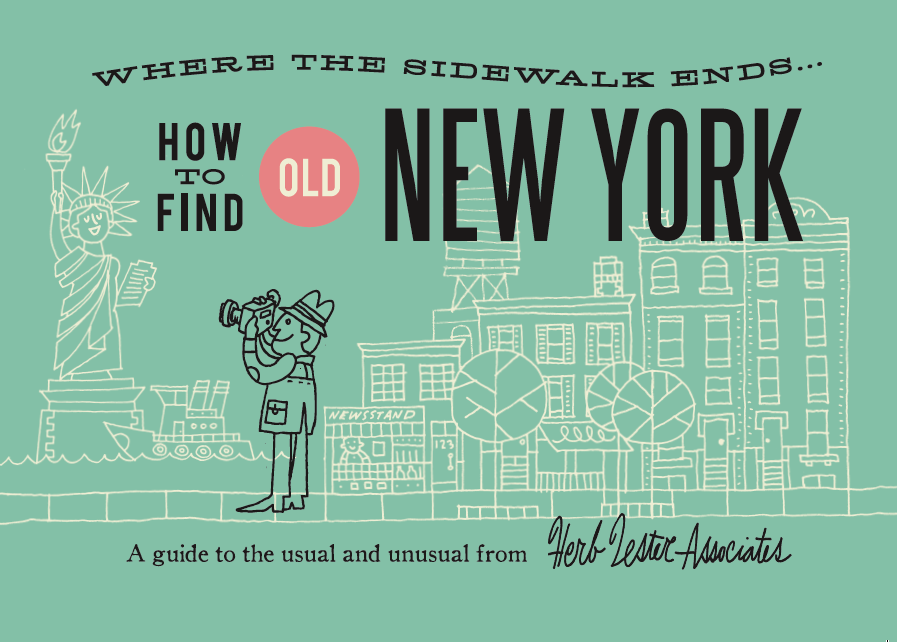
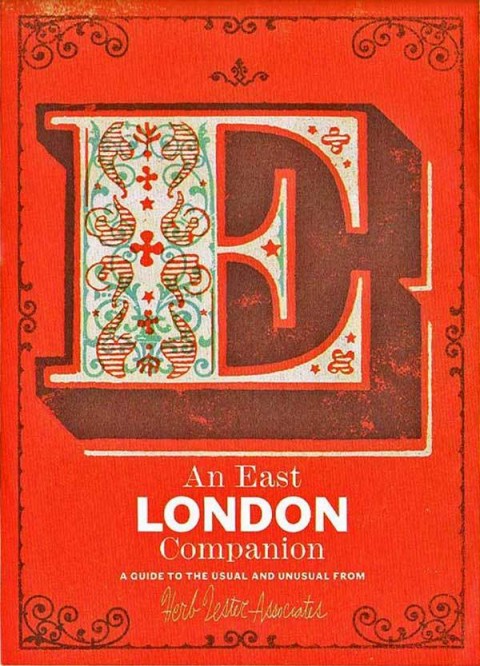
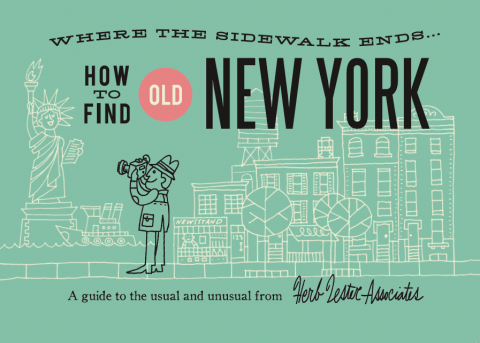
Old Fashioned, Foldy, Inky Things — Daniel Gray (fellow member of the fictional League of Daniels) interviews Ben Olins and Jane Smillie about creating the wonderful Herb Lester city maps:

Old fashioned, foldy, inky things have personality, something which Google maps and web guides lack. But the limitations of the format also force you to be selective, to only recommend things you genuinely believe to be good. It’s a fallacy that comprehensive listings are useful, when really they’re just confusing – it’s so much easier when someone makes a decision for you.

Collecting / Organizing / Cataloging — Steven Heller interviews Greg D’Onofrio and Patricia Belen of Kind Company about DISPLAY, their wonderful a collection of mid-century modern graphic design books and journals:

For us, one of the primary responsibilities of owning a collection is conducting research about the objects we acquire and finding out how they can far exceed their role as inspirational “eye candy”. The combination of collecting / organizing / cataloging has helped us see new, unique perspectives and discover a greater understanding of many of the principles, ideas and theories we so often admire.

See also: Steven Heller (who is apparently waging a one man occupation of the internet) on graphic designers and hoarding:

Design stuff finds refuge in drawers, on shelves, in boxes; we store it in offices, apartments, dens, living rooms, garages and attics (basements are too easily flooded). Along with lint balls, design stuff is often hiding under the bed. Design stuff is mostly paper, but can also be packaging or points-of-purchase displays—it may be small, medium or large. We hang it on walls and pay considerable amounts to have it framed. Uncontrollably, we hunger and devour it in stores, markets, shows and eBay (damn you, eBay!!). Ravenously, we hunger for and devour bargains, but when they don’t materialize, we pay sizable sums to own the more rare and costly stuff (sometimes realizing we owned it when we were children). In fact, knowing that years ago Mom might have thrown out some potential treasure, we are even more conditioned to hoard anything that could be construed as potentially valuable in the future.

Dead End — Cartoonist Joe Sacco on his most recent book, Footnotes in Gaza, in The Believer:

I think, for me, the book ends up being—this is going to sound strange—a dead end. Because I don’t know where to go from here, except to delve into human psychology. I think I understand how history works. I understand why one people are battling another people. I understand that they both want land. But ultimately there’s a level that I haven’t really got to yet. I’m touching on motive in places, like what makes someone pull a trigger? What makes one person beat another one to death? I know we can dehumanize people. Obviously, that’s the main thing. And I know we can fear them enough that we’d kill them before we think they’re going to kill us. There’s all that going on. But I think I need to go in another direction after this book. What am I going to do after this? Keep detailing massacres? For me, personally, I think I’m not going to get anything out of it anymore. I’ve come to the end of that.

And finally…

Simon Reynolds on his new book Retromania: Pop Culture’s Addiction to its Own Past in The Guardian:

The deeper you venture into the underground, the more music involves pilfering from the past. This is one of the central mysteries that propelled me through the writing of Retromania: how come the very kind of people who would have once been in the vanguard of creating new music (bohemian early adopter types) have switched roles to become antiquarians and curators? In the underground, creativity has become recreativity. The techniques involved are salvage and citation; the sensibility mixes hyper-referential irony with reverent nostalgia.

2 Comments

Incognito

I love this cover for the Canongate edition of Incognito by David Eagleman. It looks like something from the brilliant Fontana Modern Masters series by way of Bridget Riley and Wallpaper* magazine. Stunning.

Can anyone tell me who the designer is?

Thanks

(via This Isn’t Happiness)

Comments closed

Making Faces: Metal Type in the 21st Century

On the New York Times website Steven Heller reviews Making Faces: Metal Type in the 21st Century, a documentary film by Richard Kegler, founder of the P22 Foundry. The film features the work of the late Jim Rimmer, a prolific Canadian typeface designer, who died last year:

Rimmer had a fruitful career, producing a huge number of fonts, but for Kegler, the most exciting part of making this film was discovering Rimmer’s “unabashed joy in doing what he was meant to do,” he says. “He was multitalented, and he was able to do what he loved most in ‘retirement,’ which may have been the most prolific period of his life. He was generous with his time in way that I could never be.”

Rimmer was made a fellow of the Society of Graphic Designers of Canada in 2007.


Comments closed

Evgeny Morozov: The Internet in Society

In this RSA Animate video, Evgeny Morozov, author of The Net Delusion, takes a critical look at the role of the internet in global politics:

(via Kirstin Butler)

Comments closed

Radiolab: Talking To Machines

Inspired by Brian Christian’s new book The Most Human Human, the chaps from Radiolab examine what talking to machines can tell us about being human. The show includes an interview with Jon Ronson, author of The Pyschopath Test, about an article he wrote for GQ on talking to robots.

RADIOLAB: Talking to Machines

Brian Christian was also interviewed about The Most Human Human recently by CBC Radio’s technology and culture show Spark.

Comments closed

Midweek Miscellany

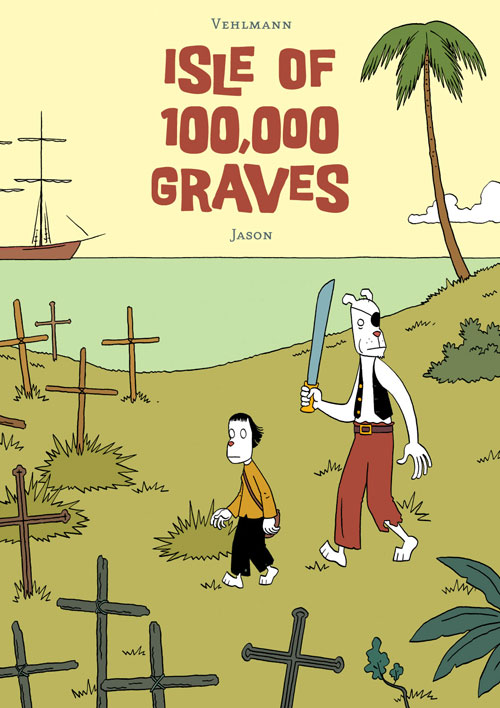
An introductory reading guide to the work of Norwegian cartoonist Jason from Robot 6:

Since his U.S. debut in 2001, Jason has produced 15 books, with nary a drop in quality. More to the point, he’s been able to use and play with a lot of familiar genre cliches — movie monsters, the big heist, the man accused of a crime he didn’t commit — and make them seem fresh and inviting.

That’s largely because his characters are usually grounded in a strong emotional reality. What often drives them are not simplistic ideals about right and wrong but love, longing, guilt and anxiety, the same stuff that drives most of us. What’s especially fascinating about his work, though, is how he’s able to convey all these roiling emotions with such a… minimalist style… Anyone interested in learning about timing and tempo… should be studying Jason’s comics.

Jason’s latest book Isle of 100,000 Graves is released this month.

Let’s Put It This Way — Cartoonist Ivan Brunetti profiled in The Chicago Tribune:

When people talk about Brunetti, they often couch it with a “Let’s put it this way.” Francoise Mouly, the longtime art director of the New Yorker, said, “Let’s put it this way — Ivan will never be comforted in life.” She said it in her native French lilt, with the breeziness of tone and the bluntness of meaning we associate with the French. But without malice or sarcasm, only lament and concern. There is no comforting Ivan Brunetti.

(I am still slightly traumatized by Brunetti’s Misery Loves Comedy)

The Poverty of Abundance — Sukhdev Sandhu, author of London Calling: How Black and Asian Writers Imagined a City, reviews Retromania: Pop Culture’s Addiction to its Own Past by Simon Reynolds for The Observer:

Retromania is a book about the poverty of abundance. At malls, on mobile-phone ads, in the background as we work at our computers: pop, usually in the form of anorexically thin MP3 sound, is everywhere these days. Perhaps that ubiquity puts a brake on its ability to astound or shape-shift. Perhaps the process of circulating and accessing music has become more exciting than the practice of listening to it.

Future Classics — Agent Andrew Wylie in The WSJ:

[T]he business we’re in is to identify and capture and anticipate the value of books that are inherently classics, future classics… Sure, writers these days can go directly to readers, without publishers or agents. But there needs to be a chain of people who have authority and can help convey what is essential. We spend most of our time strongly supporting work that we believe is significant.

And finally…

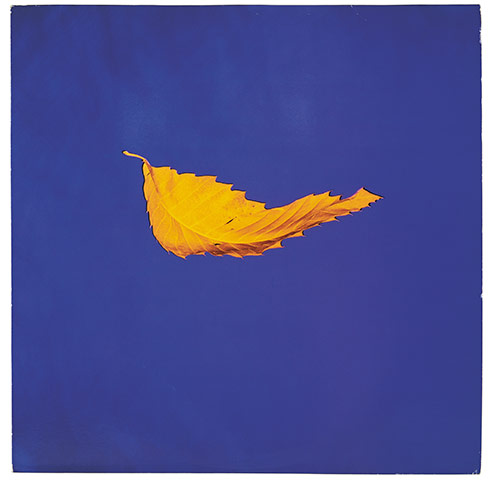
Peter Saville discusses his favourite designs for Joy Division and New Order with The Guardian.

Comments closed

Midweek Miscellany

An incredible Flickr set of 20th Century avant-garde book covers (via Quipsologies).

The Lottery — Ruth Franklin, author of A Thousand Darknesses, on the history of the American bestseller for Book Forum:

Trends come and go, but the best seller remains essentially serendipitous. An editor can be no more certain of finding the next one than a writer can be assured of writing it. “As a rule of thumb,” writes John Sutherland, an English scholar who has studied the phenomenon, “what defines the bestseller is bestselling. Nothing else.”

Dystopia — Malcolm McDowell, Jan Harlan and Christiane Kubrick discuss the remastered 40th anniversary edition of Stanley Kubrick’s adaptation of A Clockwork Orange with Guardian film critic Xan Brooks (video).

Multitasking — Wyndham Wallace on the demands currently placed on musicians for The Quietus (via BookTwo):

“When you’re in Hollywood and you’re a comedian,” another tragically deceased stand-up, Mitch Hedberg, joked, perhaps bitterly, “everybody wants you to do things besides comedy. They say, ‘OK, you’re a stand-up comedian. Can you act? Can you write? Write us a script?’ It’s as though if I were a cook and I worked my ass off to become a good cook, they said, ‘All right, you’re a cook. Can you farm?’” This is the position in which our musicians now find themselves. They’re expected to multitask in order to succeed. Their time is now demanded in so many different realms that music is no longer their business.

And lastly…

Old ‘Boofy’ Halberstam — P. G. Wodehouse’s American Pyscho at McSweeney’s Internet Tendency:

“What, old ‘Boofy’ Halberstam on some kind of psychotic killing spree? That’s hardly the sort of thing that would stand up in court—I mean to say, there was that business with the policeman’s helmet back at Harvard, true enough, but even so—”

“Not to worry, Patrick. You see, yesterday evening I took the further liberty of murdering Mr. Halberstam.”

I stood agog.

AGOG.

Comments closed

Withnail & I | A. O. Scott

The New York Times movie critic A. O. Scott on the aesthetics of failure in Bruce Robinson’s 1987 film Withnail & I:

Not only is the film largely autobiographical, it is apparently an adaptation of an unpublished novel Robinson wrote in 1969.

Comments closed

Illustrating Influence

As part of a series of interviews on WNYC about Brooke Gladstone’s new book The Influencing Machine, illustrator Josh Neufeld talks about working on the project with Brian Lehrer:

Also in this segment, Gladstone discusses science fiction and political bias in the media.

Comments closed

Midweek Miscellany

Line o’ Type — John Hendel celebrates 125 years of Linotype at The Atlantic:

A German immigrant named Ottmar Mergenthaler invented [Linotype] in the 1880s and continued to promote and expand its use until dying in Baltimore in 1899. The Linotype’s power involved transferring a line of text (typed with meticulous care by a Linotypist onto a special 90-key keyboard) to a sheet, creating a “line o’ type” that could be rapidly printed onto many subsequent pages, thanks to the genius of matrices and hot metal.

A Good English ButlerDwell Magazine spends 30 minutes with designer Dieter Rams:

Never forget that a good product should be like a good English butler. They’re there for you when you need them, but in the background at all other times. Besides a few millionaires in London, most of us don’t have butlers.

The butlers of today are our products and our furniture.

And on a related note… Erik Spiekermann talks about typography and crowd-sourcing a logo for human rights with Deutsche Welle:

Typography is the famous crystal goblet – you drink the wine, you don’t think about the glass. I can make things a little bit warmer or colder, or squarer or rounder, but I am a servant to the words… I like to say, typography is like air – you only talk about it when it’s bad. It’s taken for granted, but we would certainly miss it if it wasn’t there.

Lying LiarsIan Leslie, author of Born Liars: Why We Can’t Live Without Deceit, on the connection between lying and storytelling:

[T]here is a gushing river of verbal creativity in the normal human mind, from which both artistic invention and lying are drawn. We are born storytellers, spinning narrative out of our experience and imagination, straining against the leash that keeps us tethered to reality. This is a wonderful thing; it is what gives us our ability to conceive of alternative futures and different worlds. And it helps us to understand our own lives through the entertaining stories of others. But it can lead us into trouble, particularly when we try to persuade others that our inventions are real. Most of the time, as our stories bubble up to consciousness, we exercise our cerebral censors, controlling which stories we tell, and to whom. Yet people lie for all sorts of reasons, including the fact that confabulating can be dangerously fun.

See also: Cynthia Crossen on the allure of unreliable narrators for the WSJ:

Today, unreliable narration does seem to be in vogue. Could that be because so many people are chronicling their lives online now, and we can see how unreliable most personal narratives are? As David Fromkin wrote in his history of civilization, “The Way of the World,” “Life is a story that each of us tells to his or her self; and it therefore is a tale told by an unreliable narrator.”

And finally…

Author Umberto Eco on the books we haven’t read for The Guardian:

There are more books in the world than hours in which to read them. We are thus deeply influenced by books we haven’t read, that we haven’t had the time to read… And yet I’ve a fairly accurate notion of what I haven’t read. I have to admit that I only read War and Peace when I was 40. But I knew the basics before then. The Mahabharata – I’ve never read that, despite owning three editions in different languages. Who has actually read the Kama Sutra? And yet everyone talks about it, and some practise it too. So we can see that the world is full of books that we haven’t read, but that we know pretty well.

Comments closed