Skip to content

Tag: Writing

George Saunders: On Story

Storytelling, at least from my experience of it… I think it’s a stand-in for day to day life. So, when you come to a story with this attitude we’ve been talking about, which is kind of hopeful, generous, not to pushy. It’s like ‘well, what are you? I don’t know.’ You know, when you try to leave your ideas about the story at the door… those things are so much like what you do with the person in your life that you love. You come back to them again and again and try to intuit their real expansiveness, and you try to keep them close to you, you try to give them the benefit of the doubt. So in that sense you could see revision as a form of active love. It’s actually love in progress, I guess.

Author George Saunders on story:

These unadorned outtakes of Saunders just talking direct to camera about his writing process are even better:


Comments closed
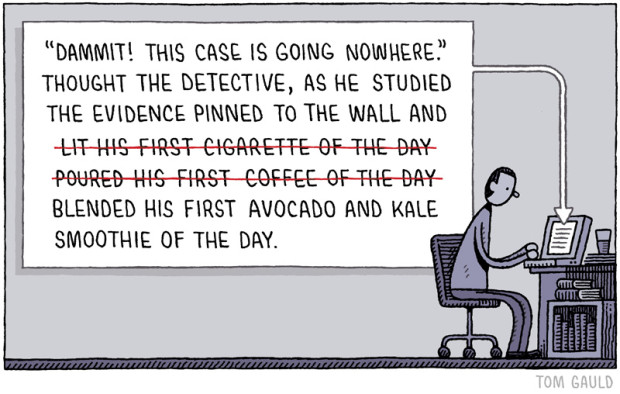
Dammit!

Dammit

Tom Gauld.

Comments closed

George Saunders Writing Education

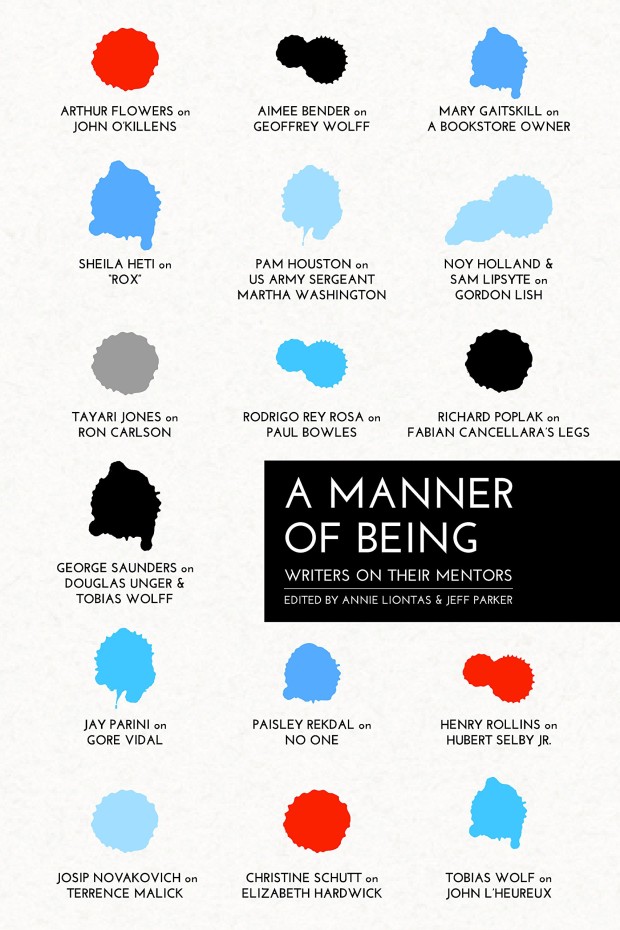
Manner of Being

The New Yorker has a lovely essay by George Saunders, excerpted from a new book called A Manner of Being: Writers on Their Mentors, on his education as a writer:

For me, a light goes on: we are supposed to be—are required to be—interesting. We’re not only allowed to think about audience, we’d better. What we’re doing in writing is not all that different from what we’ve been doing all our lives, i.e., using our personalities as a way of coping with life. Writing is about charm, about finding and accessing and honing ones’ particular charms. To say that “a light goes on” is not quite right—it’s more like: a fixture gets installed. Only many years later… will the light go on.

Comments closed

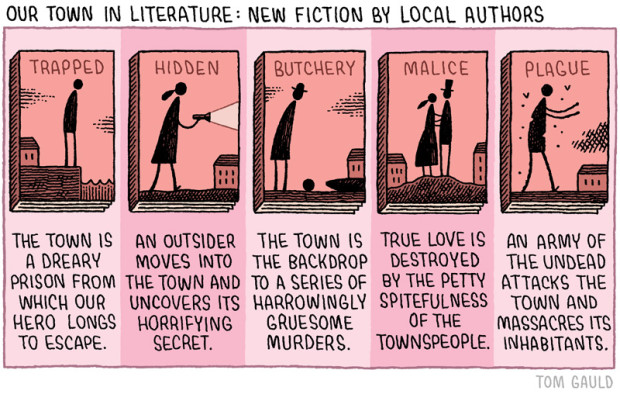
Our Town in Literature: New Fiction by Local Authors

our town in literature tom gauld

Tom Gauld.

Comments closed

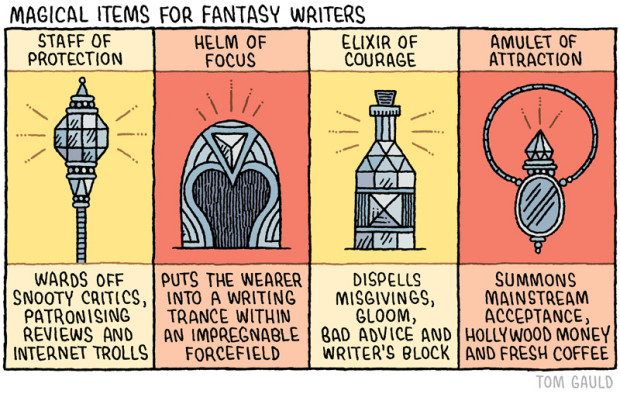
Magical Items for Fantasy Writers

magical items for fantasy writers by tom gauld

Tom Gauld.

Comments closed

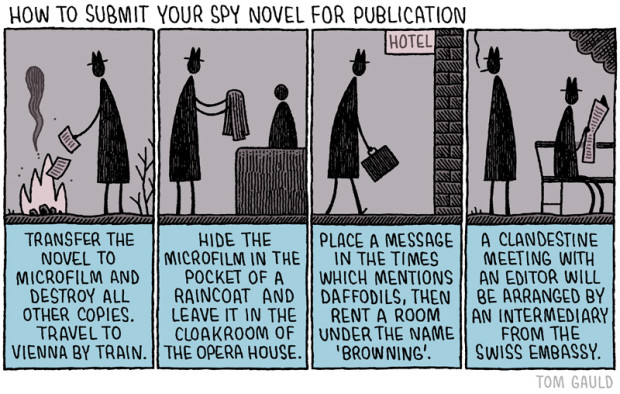
How to Submit Your Spy Novel for Publication

spy novel tom gauld

Tom Gauld.

Comments closed

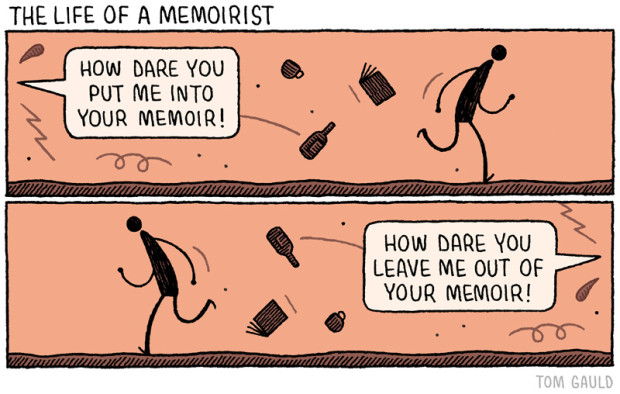
The Life of a Memoirist

Life of a Memoirist by Tom Gauld

Tom Gauld.

Comments closed

Kelli Anderson: The Price of Advice

Adobe’s Inspire magazine has a remarkably forthright post by designer Kelli Anderson on ‘advice culture’:

Will the creative community ever get its fill of advice?…

…Since advice is a nurturing impulse (a way to pass wisdom on to the future…or just next year’s graduating class), is there really any harm in this oversaturation? Does the monotone nature of our conversation on success, work, and failure actually hurt us?

I would argue yes—there is a dark side to the peppy culture of pretty advice. While other shades of goodwill, such as compassion, generosity, and friendship, only improve with quantity, advice has a cumulative effect—pooling emphasis and importance around the notion of individual initiative. More than slogans, working hard, being nice, and doing what you love have gradually become canonized as the actual reasons that success or failure occurs. When the logic of advice is allowed to co-opt reality, we begin to believe that individual initiative is why things happen.

The result may feel good and empowering, but it also creates the distorted impression that an individual’s good work, alone, will translate to a proportional reward. Conversely, failures stemming from other factors—like ingrained structural prejudice or simply bad timing—may too easily be misattributed to an individual’s lack of commitment, failure to work hard enough, or insufficient love-doing. A culture of self-help advice fosters a belief that we exist in a pure meritocracy, where everything is fair, and that our shared work of shaping an equitable community is done.

This is not the world we live in.

via Brandon Schaefer on Twitter.

Comments closed

Comma Queen: Mad Dash

The New Yorker‘s Mary Norris, author Between You & Me: Confessions of a Comma Queen, clarifies the difference between the hyphen (-), the en dash (–), and the em dash (—):

Comments closed

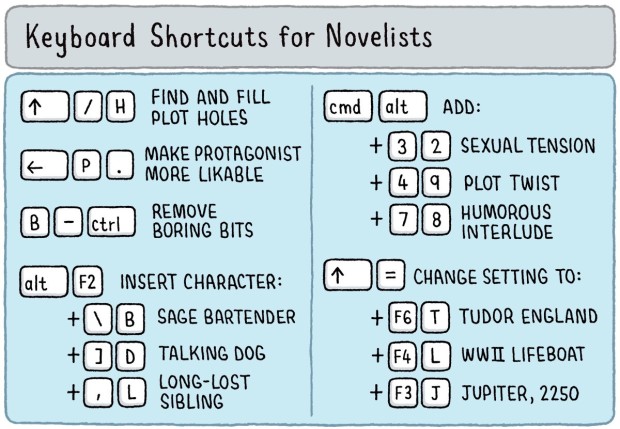
Keyboard Shortcuts for Novelists

keyboard shortcuts for novelists Tom Gauld

Tom Gauld for The New Yorker.

Comments closed

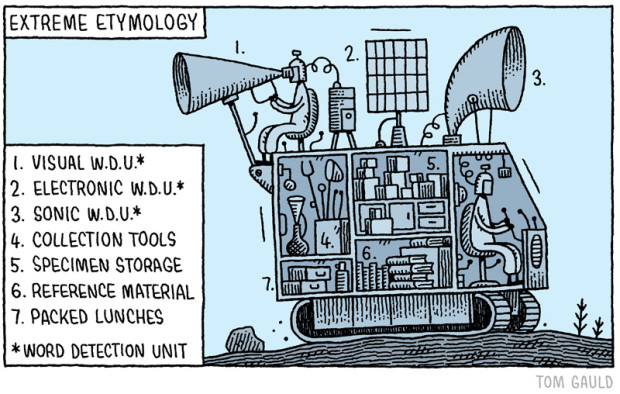
Extreme Etymology with Tom Gauld

extreme etymology

Tom Gauld.

Comments closed

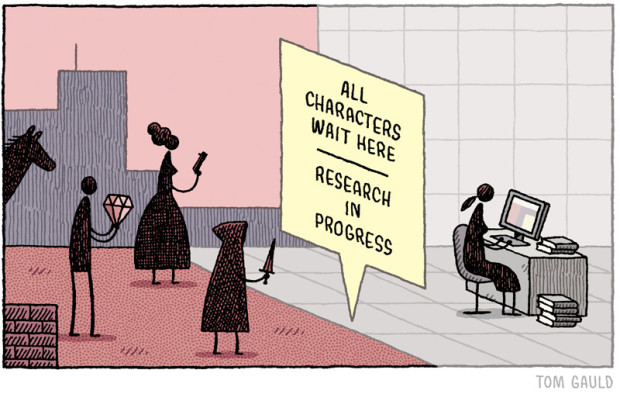
All Characters Wait Here

characters wait here tom gauld

Mr. Tom Gauld

Comments closed