Remember Those Great Volkswagen Ads? is a short documentary about the classic, highly influential ad campaigns created by Manhattan advertising agency Doyle Dane Bernbach (DDB) for Volkwagen in the 1950s and 60s:
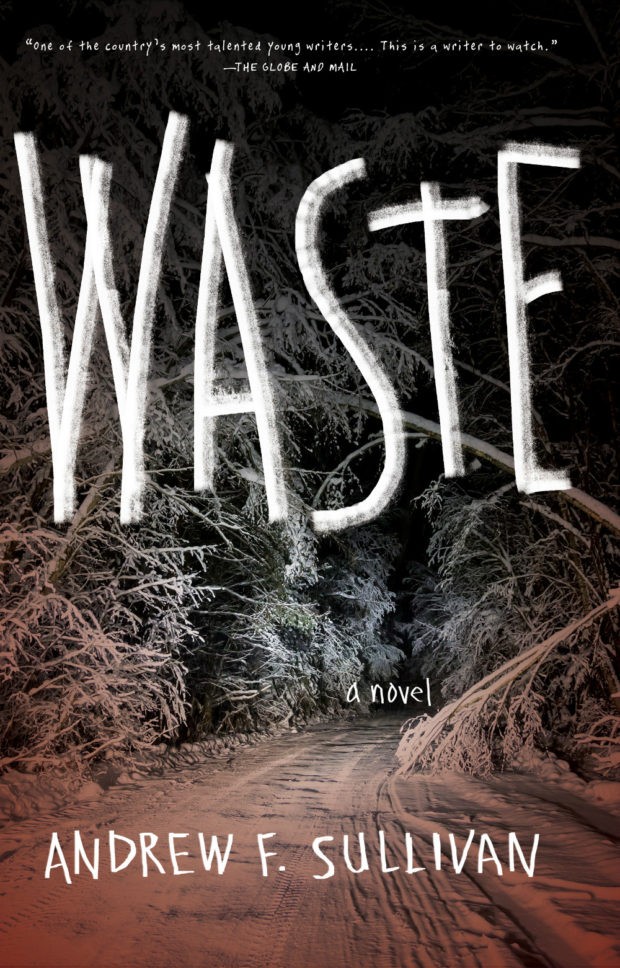
I mentioned Andrew F. Sullivan’s piece on High-Riselast week, and I recently spoke to the author about his own novel WASTE, and about influence of David Lynch on his writing in a Q & A for Publishers Group Canada:
Initially, I think I was very resistant to Lynch. I think I thought a lot of it was just nonsense for the sake of nonsense. It was Blue Velvet that won me over, that showed me you could implicate and confront your audience, you could tell a sad, vicious truth and people would want to hear it/see it. Lynch opened up so many opportunities to leave the explanation out, to make the work immersive and unsettling while still dancing around the established conventions for storytelling. What he was doing seemed very singular, but also invested in the everyday, in waking up, going to work, putting in the hours. He created a world, especially in Twin Peaks, that began as just slightly askew, plausible even. He lured you into the nightmare and then told you it was real. And everyone questions the theories their friends have, there is no code to break. His work exposes the peculiarities of each audience member in their own response—their passions, fears and obsessions. How can they make this story make sense? What demons does it awaken?
Lynch is still doing that. He is always doing that.
Every literary generation has its naming conventions, and it’s as hard to imagine the sixty-five-word original title for Robinson Crusoe passing muster today as it is to imagine a nineteenth-century novel called Never Let Me Go. It’s easy to spot the fashions of our publishing moment: short-story collections are named after the collection’s centerpiece practically by default. Titles for longer literary works are often staked to a central relationship—The Time Traveler’s Wife, The Abortionist’s Daughter, The Orphan Master’s Son—or a group in a setting: The Swans of Fifth Avenue, The Mystics of Mile End, The Dogs of Littlefield. Publishing favors the memorable, the concrete, and the vivid; it also has grammatical preferences, like solitary adjectives (Mislaid, Thrown, Wild, Lit), rousing imperatives (See Me, Find Me, Find Her, Lean In), and quirky pleonasms like Everything Here Is the Best Thing Ever or What’s Important Is Feeling… And for whatever reason—maybe a surge of interest in young women’s lives, maybe Lena Dunham—we may soon hit Peak Girl, with The Girl on the Train, A Girl is a Half-formed Thing, Girl Through Glass, Girls on Fire, Girl at War, Gone Girl, The Girls …