Skip to content

Tag: Typography

Something for the Weekend

Salu, Bonjour! — The Caustic Cover Critic features the awesome work of designer Michael Salu. The typography is great.

And speaking of typography…

KnockoutThe New York Times profile type jedis Hoefler & Frere-Jones:

Sitting in their New York studio in the charmingly ramshackle Cable Building, designed in 1892 by the flamboyant Beaux-Arts architect Stanford White, Mr. Hoefler and Mr. Frere-Jones are engaging advocates for their craft. They met in 1989, when they were working independently and found themselves hunting for the same antique typography books. “We’ve given up now because the prices have gone crazy,” said Mr. Frere-Jones. “Between us we own so many that if there’s something we don’t have, it’s either an uninteresting variation or there’s only one in the world and it costs $20,000.”

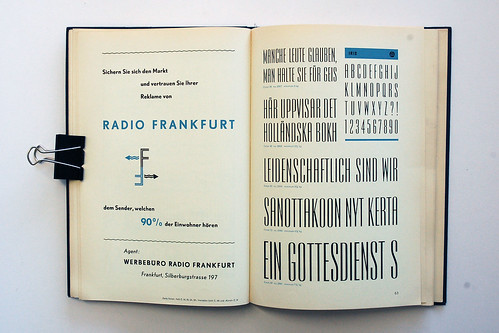
Schriftenkatalog — Beautiful pages from a 1960’s Dutch type catalogue on Flickr (via Inspire Me)

And… The history of the ampersand at the Webdesigner Depot (thanks Nic).

A Guide to Online Publicity (For Dummies) — Freelance writer, editor and blogger Lindsay Robertson’s common sense — but on the money — “do’s and don’ts” for flacks like me approaching bloggers like er… me (via Kottke).

And finally…

Two lovely posts at The Silver Lining featuring the work of Elaine Lustig Cohen: Part 1 and Part 2. There are more Elaine Lustig Cohen book covers at ephemera assemblyman and there is an amazing Flickr pool devoted to the design work of Alvin and Elaine Lustig here.

1 Comment

Something for the Weekend

Megan Wilson‘s new cover design for An Education by Lynn Barber.

Of a Certain Blockheadedness — Scott McLemee on the internet’s “gigantic plot” to get him to write for free:

The idea that new media has somehow abolished the old hierarchical structuring of the field (making everything level and equal and rhizomatic and whatnot) is only half right, at best. The hierarchies aren’t as well-marked as they used to be but they aren’t gone. Talk of an “army of amateurs” is at this point persuasive only to people who enlist without paying any attention to the fine print.

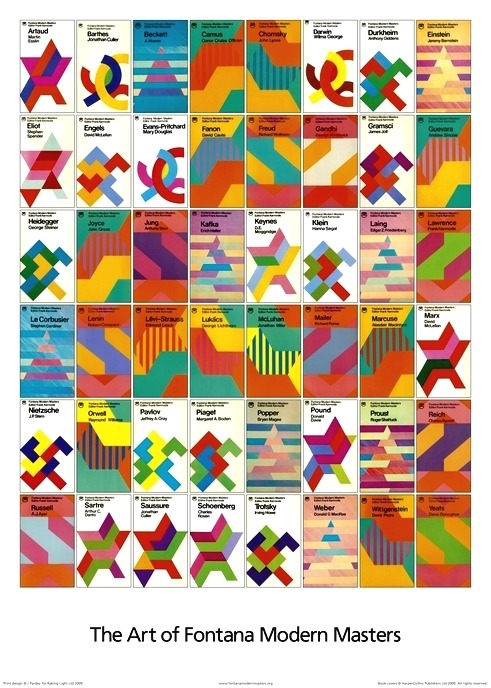
The Art of Fontana Modern Masters — Much linked to elsewhere, James Pardey (of the The Art of Penguin Science-Fiction site mentioned here) has new project on the Op-Art inspired Fontana Modern Masters book cover designs. He’s also written about the series for Eye (via Ace Jet 170 and Daily Discoveries on Design).

The New SleeknessAmi Greko and Pablo Defendini (and other “bookish types”) try to fill a hole in publishing punditry. Having tried that myself and failed horribly, I can only wish them good luck.

Around The World with the Bodoni Family — A beautiful new 60-page book by graphic designer Teresa Monachino seen at The Creative Review. Each letter of the alphabet is printed in Bodoni to illustrate a place beginning with that letter.

Wave of Mutilation — Tom McCarthy, author of Remainder, on the films of David Lynch in the New Statesman. Yes, it is as weird and unlikely as it sounds (via 3:AM):

Try to count the instances of deformity in Lynch’s work, or of people being deformed on camera, and you’ll lose count pretty quickly…  Deformity, for Lynch, is not simply thematic: it is instrumental. In his films, what the continual, almost systematic replacement of body parts and faculties by instruments – crutches, wheelchairs, hearing aids and ever weirder apparatuses sometimes as large as rooms – produces is a whole prosthetic order, a world of which prosthesis is not just a feature, but a fundamental term, an ontological condition.

Information Wants to be Valued — Ian Grant, Managing Director of Encyclopaedia Britannica, at BookBrunch:

The new online world has given book publishers good reason to review everything that they do, from what to publish to how to run their businesses. It is a noisy call to new action and fresh efforts, but publishers are well-placed to respond. The core skills we have had for generations – imagining our users, creating shapely products that meet their needs, and identifying the transfer of value that results in a sale, are precisely the skills that make good publishing online successful and satisfying. Information does not “want to be free”; customers want to be inspired and satisfied.

And finally: It seems I’m not the only one who doesn’t take predictions about the book industry entirely serious… Laurence Hughes over at the Huffington Post:

Some time in the next decade, someone will download both The Bible and The Satanic Bible to their e-reader, triggering the Final Conflict and ushering in Armageddon and the End of Days. Expect a slight dip in book sales during the thousand-year reign of the Antichrist.

2 Comments

Midweek Miscellany

Reading a Book is Reading a Book — Peter Ginna has another thoughtful post on about the Random House e-book rights controversy (which better articulates some of what I was trying to get at here).

A Decade of Fear — David Ulin, book editor of The LA Times, looks back at the last 10 years (and forward to the next).

Book Lovers Never Go To Bed Alone — a Tumblr collection of  bookshelves (via index//mb)

Hello, I’m Robot! — A somewhat surreal — but definitely awesome — Soviet kids’ book at A Journey Round My Skull

And…

Russian Artists and The Children’s Book 1890-1992 — 512 pages, full color with over 1100 images. Written and privately published by Albert Lemmens and Serge Stommels in The Netherlands. Yours for only $195 plus shipping (seen at The Daily Heller).

And…

Three Designers from Moscow — MyFonts interviews Russian type designers Vera Evstafieva, Alexandra Korolkova and Elena Novoselova.

And… Thinking of MyFonts…

…They’ve just released the rather lovely exljbris slab serif Museo Slab. Regular Museo Slab and Museo Slab Italic are free downloads.

The Book Design Review‘s Favourite Covers of 2009 — All good choices. Go vote. Now.

And… Have I mentioned just how incredible Peter Mendelsund’s new Foucault covers are…? I did? OK. Just want to make sure…

RUSSIAN ARTISTS AND THE CHILDREN’S BOOK 1890-1992.
1 Comment

Something for the Weekend

It’s been a slightly shite week in the book trade this week.

Amidst the plethora of end of year/decade “Best of…” lists and gift guides, it was announced that Kirkus and Editor & Publisher Magazine are going to close (are we surprised? No); B&N’s Nook e-reader turned out to be not be quite as good as it was cracked up to be (are we surprised? No); and Simon & Schuster, Hachette, and HarperCollins upset the usual suspects (for all the usual reasons — only Moby Lives seemed to get that it might be about something else) by announcing their decision to hold back the release of a few e-book editions (are we surprised? No)… Is any of this particularly interesting? No. (Although — for the record — I am grateful to the WSJ‘s Jeffrey A. Trachtenberg  for reporting on the e-book developments, and to indefatigable Largehearted Boy for compiling a comprehensive list of Best of… lists)…

So needless to say, there isn’t much about the book industy in today’s links. Ah well…

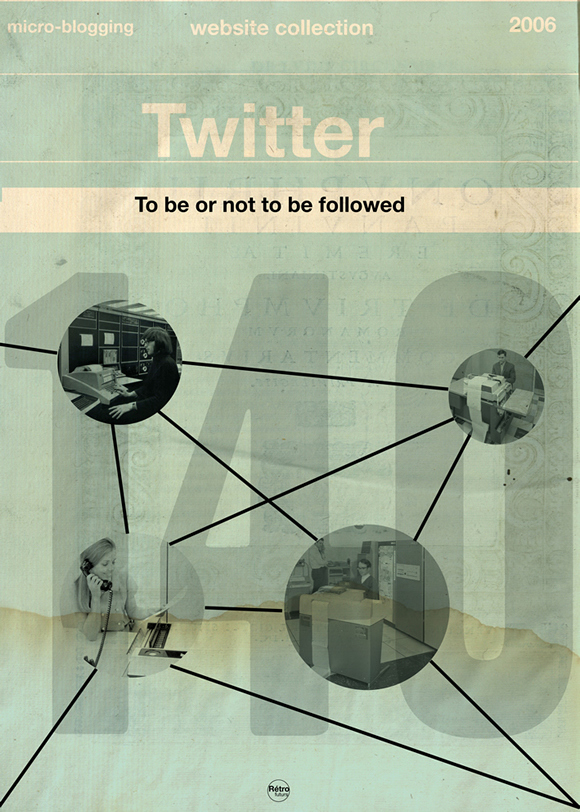
Another addition to the weirdly brilliant (or brilliantly weird?) vintage book/pop culture mash-up phenomenon:  Web Services Book Covers by French illustrator Stéphane Massa-Bidal AKA Hulk4598, or Rétrofuturs. They’re sort of like Olly Moss meets Cristiana Couceiro. (First seen at Design You Trust and then just about everywhere else this morning).

The Sixties — Another fantastic new cover by Henry Sene Yee for Picador’s BIG IDEAS // small books series.

Type for the Tube — an interesting history of Edward Johnston’s typeface for the London Underground from its design to current usage.

And finally…

F is For Fail — A really charming “alphabetical odysessy through the creative process” by Brent Barson (via the lovely Aqua-Velvet):

Can I go home yet?

(Have a great weekend!)

3 Comments

Q & A with David Pearson, Type As Image

Penguin Great Ideas

Does British designer David Pearson really need an introduction?

Even if you don’t recognise the name immediately — and perhaps it is less familiar on this side of the Atlantic — then you will almost certainly recognise David’s type-driven design work: Penguin by Design by Phil Baines, Pocket Penguins, Penguin Great Loves, Penguin Great Journeys, Penguin Reference, and, of course, the astonishing Penguin Great Ideas series.

When the first set of Great Ideas titles arrived they looked like nothing else in the bookstore. Each cover was unique and yet they all fitted perfectly within the series. Their thick paper covers, limited colour palette and bold typography were clearly a wink to the design history of Penguin books (and perhaps the Arts & Craft movement) but also imaginative, playful, and starkly modern.

Since then, there have been three more sets in the Great Ideas series with a fifth on the way. David still works with Penguin, but has set up his own firm. He has designed covers for Éditions Zulma, and somehow found the time to help launch White’s Books.

David and I chatted over email…
Illustration by Michael Kirkham; design by David Pearson

How did you get into book design?

Whilst at college I was lucky enough to be offered a work placement by my Typography tutor, Phil Baines. The job was to design a large-scale art monograph for Phaidon Press and Phil walked me through every stage of the book’s production, from styling the edited manuscript through to the final layouts. I even got to run my designs past Alan Fletcher, who at the time was responsible for overseeing Phaidon’s visual output. This seemed like an absurdly privileged position for a student to be in. The first time I went to Phil’s studio he told me off for not aligning the letters on his hot and cold taps so you can imagine how fastidiously constructed my pages became under his tutelage. Before long I began to laugh at Phil’s funny ways and he in turn mocked my special design slippers. A friendship was born, nicknames were awarded and my first experience with books turned out to be an entirely lovely one. Moving into my third year, I knew that book design was for me and began to check Penguin’s website every week for job vacancies. For all sorts of obvious reasons I knew that I wanted to work for the company and made sure that I checked throughout my final year at college, desperate as I was to remain in London afterwards. I got lucky and landed a job as text designer (setting the insides of books) the day after I graduated.

This is a terrible question, but I’m curious: Which came first, your interest in Penguin’s design history, or designing books about Penguin’s design history?

Oh, absolutely the former. I was already an avid collector and the idea for a design retrospective was one that I’d run past my Art Director before it was eventually tagged onto the company’s 70-year anniversary celebrations. I’d always wanted to get into the archives and have a really good poke around and fortunately for me, this gave me the perfect excuse. If I was unaware of the magnitude of the company’s past achievements they very quickly became apparent as I worked my way through the vast isles of books.

The Penguin archive
Experimental layout from the Penguin archive

What was it like working with designer and typographer Phil Baines on Penguin By Design?

Having been given an enormous amount of freedom by the company (to personally manage the project) I found myself in a position where I could enlist an author. Phil seemed like the perfect choice because of his analytical and objective writing style. The last thing I wanted was a blinkered, frothing account of the company’s history because even a cursory glance round the archive revealed some decidedly dark periods. Phil and I keep very similar hours so the book took shape very naturally and it felt strangely normal to work through the night before heading to a pub together the following morning. Indeed, because there was no framework in place for our department to produce books of this kind, I had to rely on the goodwill of my Art Director, Jim Stoddart as I would design covers during the day and then the design book at night. The lines often became blurred and I was once asked to be escorted from the building as it was judged that I had not left for over two days. Phil is currently working on Puffin by Design, a partnering edition to Penguin by Design and as much as I would’ve liked to have been asked to work on it I suspect that we’re both better off that I wasn’t!
Artwork by Phil Baines; design by David Pearson

Your work on Penguin’s Great Ideas series won you a D&AD Yellow Pencil. What was the design brief for books?

Like all the good ones it was a happy blend of strict parameters (most notably in terms of budget) and creative freedom (there being no existing blueprint to adhere to or living authors to appease). The series’ success should be attributed to many different factors: Editor Simon Winder’s original idea was a great one, implying that world-changing thought and writing equates to Penguin, while the finished books seemed to fit a model of what people wanted from the company, a reaffirmation of Allen Lane’s original philosophy; but above all the publisher displayed an unfaltering level of confidence in the project and allowed us to break some fairly established rules in the process.
Artwork and design by David Pearson

The fourth series of Great Ideas has just been released. Was it difficult to create interesting new designs that were consistent with the previous two series?

Speaking from my own perspective I’d say that I’ve loosened up as a designer. Looking at my earlier efforts I think I was rather inhibited and it wasn’t until I brought in Phil that I could see the true size of the project’s potential. Phil added pace and variety through his very bold, expressive cover designs and this made me realise that I too could let my hair down a little.
Artwork by Joe McLaren; design David Pearson
Artwork and design by David Pearson

How is running your own studio different from working at Penguin?

There are certainly negative sides to being ‘out of house’. For example, I am no longer in a position to affect the approval of my work. Instead it has to very much stand up for itself, without the highly-sensitive designer attached. That said, I feel much calmer as a result. I may well still be in a honeymoon period but I’m enjoying managing every facet of my business – from doing the accounts to cleaning the windows. The rewards seem so much more tangible as a result.

Could you describe your design process for book covers?

Since the vast majority of what I do is type-driven, a fair amount of time is given over to researching letterforms. I am lucky enough to work just down the road from one of the world’s best typographic resources and thankfully they don’t mind me popping over to waste their time. Typophiles – in particular – can be a particularly unforgiving bunch and so time spent researching is never wasted.

Design by David Pearson

Design by David Pearson
What are your favourite books to work on?

Working within tight constraints is a blessing. There’s nothing quite so daunting as a completely open brief as you never get the feeling that you’re solving a problem, rather just satisfying your own whims. I always feel much more creative when my palette has been limited, either by the client or by myself.
Illustration and design by David Pearson

What are the most challenging?

Very simply, the ones that attempt to house more than one idea or repeat a sentiment. I think that book covers communicate quicker if they are boiled down to their most essential elements or rather, they have the best chance to communicate if they do one thing and do one thing purposefully. Confidence and a clarity of purpose are not found in abundance in trade publishing.
Illustration by Victoria Sawdon; design by David Pearson

Massimo Vignelli says that designers just need 6 typefaces. Should designers limit the number of typefaces they use?

Not at all. I am completely opposed to this view. While I appreciate that it takes time to fully understand and competently utilise a typeface I suspect that they all have a use for something. And doesn’t the use of such a limited palette suggest an unwillingness to shift from a preconceived agenda? This is all well and good if the client is buying into your look and trading from it but I would question whether this is a healthy starting point for someone working in the communications industry. Or, perhaps I’m just not enough of a Modernist to understand such an approach.

What are your favourite typefaces to work with?

I absolutely love Vendôme by François Ganeau and Roger Excoffon. Its over-emphasised, angular serifs brilliantly support its sensuous, bulking forms. I wasn’t in Paris in the Fifties, but Vendôme feels to me very much like Paris in the Fifties. Anything by the peerless Matthew Carter is a joy to use and I recently saved up to buy Martin Majoor’s Nexus family which I seem to be consistently delighted with.
From David Pearson's ephemera collection

Where do look for inspiration and who are some of your design heroes?

Like most book designers I have a healthy collection of ephemera; matchbox and travel labels being my favourite, and a huge chunk of my salary is redirected towards book buying. My design heroes are rather predictable, but for good reason I think. Jamie Keenan’s covers always seem so fresh and live long in the memory because they require a level of decoding. Jamie is also one of those rare designers whose work is just as effective on either side of the Atlantic. Hans Schmoller’s meticulous and elegant typography reassures me on a great many levels and I can’t quite manufacture enough situations where I am working with the immensely talented Joe McLaren. Then there’s the Penguin roll call: Curtis, Miles, Gentleman, Games, Marber, Birdsall, Robertson, Aldridge, Pelham and of course, Tschichold.
Design by David Pearson (not yet published/work in progress)

What does the future hold for book cover design?

It feels like this has been pretty well covered by people who are much more future literate than myself. All I can do, as a simple print designer, is live from day-to-day.
Design by David Pearson (not yet published/work in progress)

Thanks David!

You can see more of David’s work at his Flickr page and the David Pearson Design site.

27 Comments

Something for the Weekend, November 6th, 2009

Wild WoodbinesThe Creative Review profiles illustrator Tony Meeuwissen who designed the brilliant cover — based on a pack of cigarettes — for Keith Waterhouse’s Billy Liar pictured above (NB: David the Designer has more on this wonderful cover if you’re interested).

There is an exhibition, Tony Meeuwissen: 50 Years in Illustration and Graphic Art at the Subscriptions Rooms, George Street, Stroud (UK) from December 5th – 19th if you’re in the neighbourhood.

The Wonderful Wizards of Lodz — Vintage Polish kid’s books at A Journey Round My Skull.

In Praise of Chapbooks — Bryce Milligan, publisher/editor of Wings Press, at Publishing Perspectives:

I do not think that the average reader—no matter how happy he or she is with their voluminous digital libraries on their diminutive screens—will be satisfied to never have access to a true literary artifact, something tangible that connects them to a favorite author. It makes perfect sense that larger printed works violate both our economic and our evolving green sensibilities, but small artifacts of the author may remain a necessity, if only a psychological one.

He’s Just Like Me But >choke< EVIL! — Comics Alliance list their favorite comic book clichés.

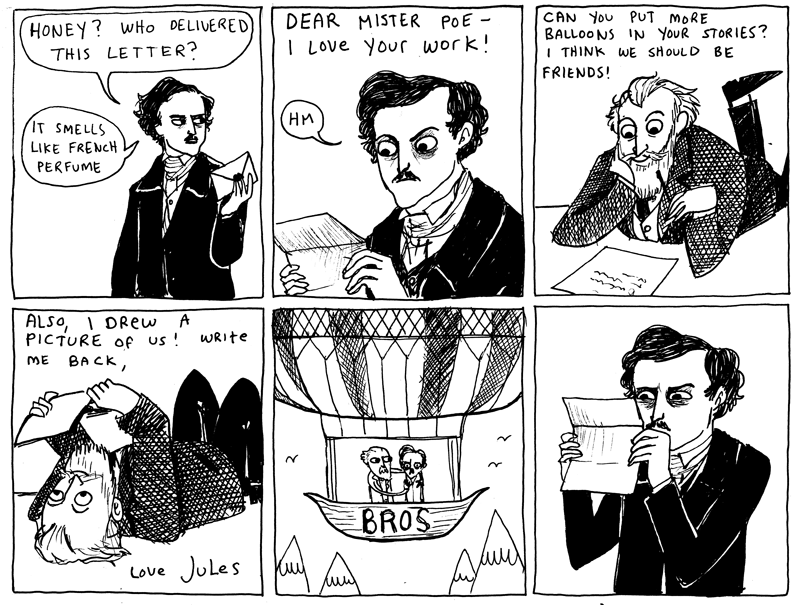
Can you put more balloons in your stories?Hark! A Vagrant: comics by K. Beaton (thx Sio):

And also in comics news… 70 Things You Didn’t Know About Marvel in The Times (via largehearted boy‘s Twitter).

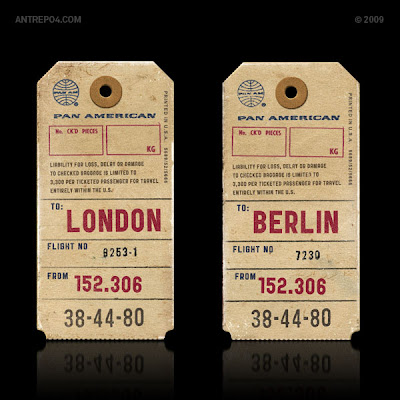
Public Gothic — Having already ‘fessed up to slab-serif obsession earlier this week, I might as well tell you that I’m also slightly obsessed with vintage ephemera — especially luggage tags — so I’m very intrigued by this new typeface from Antrepo even though I’ve no idea how I’d use it or been able to download it!

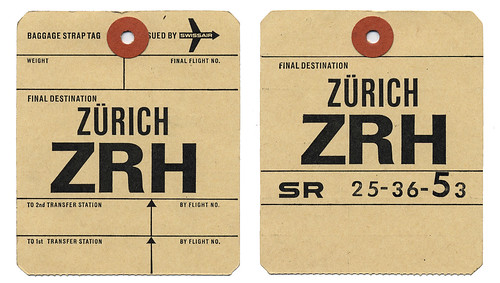
And speaking of typography, ephemera, and luggage tags, take a look at Alistair Hall’s (We Made This) Flickr Set while you’re at it:

And finally…

Barack Obama Names Alan Moore Official White House Biographer:

“As evidenced by his epic run on Swamp Thing #21–64, Moore’s deft hand with both sociopolitical commentary and metaphysical violence makes him an ideal choice to chronicle my time in office”

Oh come on…. It would be awesome.

2 Comments

Midweek Miscellany, November 4th, 2009

Fluid — John Gall discusses his brilliant cover design for the Vintage edition of Tom McCarthy’s Remainder, which is still one of my favourite novels of the last few years.

Hamilton Wood Type Catalog No.14 (1899-1900) at Unicorn Graphics’ Wood Type Museum. I quietly obsessed with slab-serifs right now so this is like crack (via Draplin Design Co.).

And The Beat Goes On — Sarah Weinman (much missed at GalleyCat) is writing about publishing for AOL’s money and finance news blog DailyFinance.

Gigantic Robot — Awesome cartoonist and illustrator Tom Gauld has a new website (to accompany his excellent Flickr photostream).

BOOM! — PW talks to Mark Waid, Editor-In-Chief of independent comics publisher BOOM! Studios:

We’re great at getting a focused message out. Because we don’t publish eighty comics a month, our inestimable marketing department does a great job of making every title important in the marketplace and every launch an event. We’re also better than the big guys at taking risks because we don’t have stockholders to answer to, or lenders who would call us crazy… We’re very much a writer-driven, idea-driven company. We start with the story first (with a talented writer) and focus on getting that right.

30 Conversations on Design — Designers, including luminaries such as Massimo Vignelli, Erik Spiekermann, Ellen Lupton and Paula Scher, answer two questions: “What single example of design inspires you most?” and “What problem should design solve next?”

Unheimlich — Sam Leith argues for scary kids books in The Guardian (confession: I’m mostly linking to this story so I could type “unheimlich” which — rather disappointingly — means “unhomely” rather than “the act of undoing the heimlich manoeuver”).

And finally…

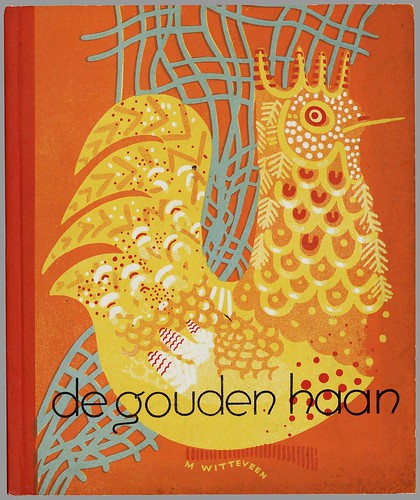
Dutch Picture Books 1810 – 1950 at BibliOdyssey (above: ‘De Gouden Haan’ by Marietje Witteveen, 1940).

‘De Gouden Haan’ by Marietje Witteveen, 1940
Comments closed

Monday Miscellany, November 2nd, 2009

Unpublished concept jacket designs by London-based print designer Allan Sommerville for the Penguin’s Bill Bryson books (via Cosas Visuales).

Fonts — This is AWESOME: Wisconsin Public Radio’s To The Best of Our Knowledge talk fonts with Jonathan Hoefler and Tobias Frere-Jones, designers of Gotham, Matthew Carter, designer of Verdana, author Nicholson Baker, Tracy Honn, director of the Silver Buckle Press, and Kitty Burns Florey, author of Script and Scribble: The Rise and Fall of Handwriting. Listen NOW.

Many Happy Returns — Author, academic and newspaper columnist John Sutherland (The Boy Who Loved Books) on 30 years of The London Review of Books for The Financial Times:

The LRB front cover logo was “THE LONDON REVIEW of Books” – the last two words being smaller. As the typography signalled, it was the review that mattered as much as the book under review. Articles in the LRB were, and are, long: anything between 2,000 and 5,000 words. On special occasions they can run into the tens of thousands. Rates of pay seemed to me startlingly high: three or four times, in the early years at least, what the TLS paid. Miller personally appeared austerely indifferent to money. I suspect he worked for little or nothing. Nor did rises or falls in circulation appear to trouble him overmuch. Quality was all.

(There’s also a rather lovely addendum about the LRB’s personal columns, so read to the end!).

Somewhere Towards The End — A wonderful essay on editor and author Diana Athill by Ian Jack,former editor of Granta, in The Guardian:

[W]hat held me about the writing was its candour. The quality has since become an Athill trademark, though in itself candour is no guarantee of literary pleasure or interest: frank books aren’t always good books and can often be tedious by boasting of their frankness. Athill’s way of being candid is more subtle and its effect more persuasive… Part of this comes from her considerable gift as a maker of sentences, which are so lucid and direct; some of it is owed to the breaking of taboos that then surrounded female sexual behaviour; most of it, though, stems from her triumphant struggle to “get it right”, a lesson she learned from two of the writers she edited. Rhys told her that the trick of good writing was “to get it as it was, as it really was”. Naipaul said that “provided you really get it right, the reader will understand”.

The Internationalist — An all too short interview with Penguin Canada’s David Davidar, who was recently appointed CEO of Penguin’s new division Penguin International, in the Globe and Mail.

And finally… I do love Tom Gauld:

eric gills busy day

(More on Eric Gill)

Comments closed

Missed Things: Monday

I was talking about Romek Marber right before I left the building, so it seems appropriate to get things started with him too…

In an extract from a new book called Penguin by Illustrators, the Creative Review reprints the full text of the presentation made by Marber to the Penguin Collectors Society in 2007:

Much has been made of the grid; it has even been labelled ‘the Marber grid’. I believe that the pictures for the initial twenty covers, played an important part in forging the identity of the Crime series. The grid was important as the rational element of control. The consistency of the pictures contributed, as much as the grid, to the unity of the covers, and the dark shadowy photography gave the covers a feel of crime.

And on a related note, idsgn profiles Gill Sans, the ‘Helvetica of England’ which was used by Edward Young on the early Penguin paperbacks (Marber switched to Akzidenz Grotesk if memory serves…).

Coaxing — Ron Charles, Deputy Editor of the Washington Post’s Book World, interviewed in Bookslut:

The number of books keeps rising, as far as I can tell. The number of readers is stable or stagnant or even declining. When you look at the amount of space we spend covering television… I’m not criticizing my own paper, I’m criticizing my own industry. Who needs help watching TV? Reviews of television shows, I shake my head; I can figure out if I want to watch The Office or Curb Your Enthusiasm all by myself. But help me find a good novel, in this enormous stack of books at the book store. That’s a real service.

You can also follow (the surprisingly candid) Ron Charles on Twitter.

Meanwhile, Publishing Trends looks at Book Reviews, Revamped.

Correspondence — Eric Hanson, author of A Book of Ages, commemorates the 60th anniversary of the letter that inspired the lovely 84, Charing Cross Road (via The Second Pass).

If any of you haven’t read 84 Charing Cross Road, please go do so now…

The Billy bookcase turns 30 — Lucy Mangan celebrates in The Guardian.

And lastly…

I’ve linked here before on several occasions, but I just wanted to mention the all around awesomeness that is A Journey Round My Skull. Recent posts include BLICKFANG — The Eye-Catching Covers of Weimar Berlin and Thirty More Book Covers From Poland.

1 Comment

Something for the Weekend, September 25th, 2009

Great Ideas — Art director and designer David Pearson discusses his publishing venture White’s Books with Peter Terzian in Print Magazine (above: cover for Emma, published by White’s Books; illustrated by Amy Gibson):

Due to the arrival of eBooks, many prophesied the death of the printed word, but we see it as an opportunity to turn the spotlight back on the traditional methods of book production and to luxuriate in the craft and tactility of the physical book and the printed page. It’s lovely to be designing with longevity in mind as we aim to create objects that will be retained and cherished by their readers.

David Pearson also discusses his work for Éditions Zulma and Penguin. I’m hoping to post a Q & A with David on The Casual Optimist later this fall.

Questions Should Be Answered — Dutch type designer Jos Buivenga, whose quality free typefaces (including personal favourite Fontin Sans) are available from his one-man font foundry exljbris, interviewed in the MyFonts newsletter. Jos’ new typeface Calluna (shown above) looks rather lovely.

The Future of Publishing? — Patrick at the Vroman’s Bookstore blog looks at what publishers do and how they might do it (or something different) in the future. While there is nothing especially new here, it’s an interesting post in part because it’s written from the perspective of a bookstore. The comments are worth reading too, if only for Ann Kingman‘s contributions and hilarity of a certain self-styled “agent of change” having the audacity to accuse someone else of oversimplifying (pot introducing kettle). All of which is a good, solid reminder that I have a related post in my drafts folder than needs dusting off… *Sigh*

And on a related note…

Reimagining the Book — Mark of index//mb is looking for people to help organise a conference on authorship in Toronto.

And just FYI: There is a good chance that this will be the last post for a couple of weeks. Work stuff + Life Stuff + Internet Fatigue means that I need a break from even the gentle rigours of irregularly posting here. Hopefully normal service will resume in October (for what it’s worth…).

Out.

2 Comments

Something for the Weekend, September 18th, 2009


Bring the Noise — Toronto illustrator Michael Cho (known locally for his much-loved signage for the now defunct Pages Books & Magazines on Queen Street) discusses his jacket art for the Penguin Graphic Classics edition of Don Delillo’s White Noise.

I ‘m very happy to hear that D+Q are publishing a ‘petit livre’, Backalley Drawings, by Michael next year.

And watch this space for an awesome Q & A with Paul Buckley, the art director of the Penguin Graphic Classics series (coming soon!)…

But Is It Type? — Design educator Ellen Lupton on the difference between lettering and typography for Print Magazine:

I subscribe to the rather rigid theory that typography is about readymade, reproducible families of letterforms. Vernacular hot-dog signs, handwritten wedding invitations, and space-age logos aren’t typography…

Perhaps my quibble is an old one: you just can’t view real typography online. Beautifully printed books and magazines are still the best resource for designers who want to know what’s happening in their field. Yet the design discourse is unfolding in real time on the web, and this is where students and young designers go to participate and be inspired.

And while were on the subject of typography, I thought — as a bungling amateur — that Brian Hoff’s post 10 Common Typography Mistakes was useful. Although I like to think I was surprising good at Cheese or Font (for what it’s worth).

Publish Local — An interesting list from The Task Newsletter (via REFERENCE LIBRARY). Would this work for book publishing?:

  1. Find what’s missing
  2. Work in the gaps
  3. Figure it out together
  4. Make it visible
  5. Make it viable
  6. Research and plan
  7. Expand existing systems
  8. Plan transparently
  9. Start small
  10. Commit to it
  11. Learn about your local flora
  12. Don’t get permission
  13. Print what you’ve got
  14. Make positive spaces.
  15. Find funding

And lastly, I just had to post this…

London Shopping Guide — Revised second edition from 1977, cover design by John Carrod, seen at Covers etc on Flickr.

Two design classics in one: Penguin paperbacks and Harry Beck’s tube map. What more could you ask for?

Comments closed

Midweek Miscellany September 16th, 2009

Rejected Covers by Klas Ernflo — Typography to make you weep (with either joy or envy). (via ISO50)

Poet of Desolate Landscapes — Author Jonathan Lethem on J.G. Ballard in the New York Times:

[V]ery few writers I’ve encountered, even those I’ve devoted myself to, have burrowed so deeply in my outlook, and in my work, where I find myself recapitulating Ballardian patterns not for their beauty (though they are beautiful) but for their tremendous aptness in attempting to confront the dying world before me, and inside me.

Ira Glass on the Internet and Public Radio — The host of NPR’s This American Life talks to Jesse Brown for a TVO Search Engine podcast (is it just me, or is there something gently life affirming about the fact Ira Glass doesn’t know who Chris Anderson is?)

“Well, it’s still more fun than a lot of other jobs” — Over at The Barnes & Noble Review, Daniel Menaker, author and former Executive Editor-in-Chief of Random House and fiction editor of The New Yorker, discusses — with bracing candour I might add — publishing and the role of book editors (don’t read if you are even slightly depressed):

[T]he tectonically opposing demands on publishing — that it simultaneously make money and serve the tradition of literature — and its highly unpredictable outcomes and its prominence in the attention of the media have made it a kind of poster adult for capitalism and the arts in crisis.

All awfully close to bone, and yet somehow Menaker also misses something vital about publishing and the opportunities that are arising…

Slovakian Book Covers — More amazing stuff from the genius A Journey Round My Skull (above: Binding illustration for Moji přátelé milionáři by Bernt Engelmann, 1968)

No-Man’s Land — A little late to the party, but over at  The Atlantic, technology journalist Kevin Maney looks at why the future might not be so bright for the Kindle (and he doesn’t even mention the iPhone):

Life, it turns out, is a series of tradeoffs between great experience and high convenience... Most successful products and services aim for one or the other, but not both. Products and services that offer neither tend to fail.

That’s why, despite all the great press it’s gotten, Amazon.com’s Kindle may be in trouble: in aiming to provide both a great experience and supreme convenience, it has achieved neither.

And lastly…

Words on Film — Designer Ed Cornish discusses his fantastic, but unused, cover designs for the 2009 D&AD student award brief for typography (sponsored by Faber and Faber) at FaceOut Books (because I haven’t linked to FaceOut for about 5 minutes right?).

1968, binding illustration for Moji přátelé milionáři by Bernt Engelmann
Comments closed