Skip to content

Tag: Typography

Q & A with Alex Camlin, Da Capo Press

Even though I first noticed the chunky Eisner-esque cover design for Douglas Wolk’s Reading Comics at The Book Design Review, it wasn’t until much, much later — when Ben Pieratt posted about the elegant redesign of The Harvard Review at  The Book Cover Archive blog back in June — that I registered that it was the work of designer Alex Camlin.

Both Reading Comics and The Harvard Review demonstrate Alex’s incredible attention to typography, his range of his influences, and the amazing diversity of his portfolio. Currently Creative Director for Da Capo Press, I caught with Alex via email earlier this month.
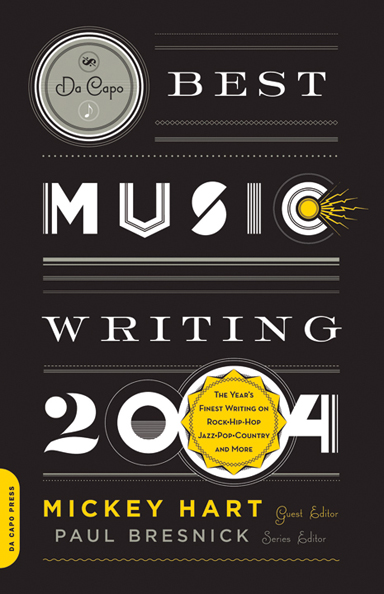
Briefly, could you tell me about Da Capo Press?

By most accounts, Da Capo started as a New York based trade paperback reprint house in 1975. At the time, many mid-to-large-sized publishers licensed paperback rights to reprint operations, rather than publishing their own paperbacks. In the beginning, Da Capo focused on licensing nonfiction, concentrating on music (jazz and blues/roots mostly), military history, and biographies. This continued through the late 90s, until Da Capo was purchased by the Perseus Books Group, who added the imprint to a growing portfolio that included Basic Books, Public Affairs and Running Press, among others. Da Capo was relocated to Cambridge, Massachusetts in 1999 to set up shop alongside another member of the Perseus group, the former trade division of Addison Wesley, renamed Perseus Publishing. Since then, Da Capo has evolved to publish its front list in hardcover and paperback originals, in many more categories. In the process, we managed to spin off a sister imprint—Lifelong Books—with a list focused on self help, childbirth, parenting, cooking, nutrition, and relationships. My first day on the job was also Da Capo’s first day in Cambridge, and we’ve been hacking away ever since on a shadowy fringe of the MIT campus. It will be 10 years in September!

How would you describe the role of Creative Director?

I’m basically just a glorified art director. My ‘staff’ has taken different forms over the years. Currently, it’s myself and one in-house art director who handle the entire list by either collaborating with freelance designers/photographers/illustrators, or engaging in some good old-fashioned DIY.

Approximately how many titles do you work on a season?

50-60 titles per season has been the norm for a while now. We publish two lists per year, Spring and Fall. Due to the changing market and current economic climate (stop me if you’ve heard this one before) our list is down-sizing a bit, and we will be closer to 90 titles per year by next Fall.

What are your favourites to work on?

I really enjoy working on books that are a bit off-beat or quirky. Recently, I’ve worked covers for a Karaoke memoir, a history of jetpacks, and a fake autobiography of Steve Jobs. I find that the books with moderate-to-low sales expectations (usually due to their niche subject matter) are the best to work on. Very few people bother to deconstruct what I’ve done, and the off-beat content usually leads to some interesting visuals.

What are the most challenging?

Believe it or not, it’s the parenting, pregnancy, and self-help books. Visually, these categories are so narrowly defined that it’s a real struggle to develop a unique look for a cover. Plus, the editors and authors who are publishing in these categories tend to favour literal interpretations, which can be quite limiting. So you will rarely ever see any of these in my portfolio, because the goal is usually to make them look the same as—but different than—all of the other books on the same subject. One up-side is that I’m intimately familiar with the range of pregnant-lady stock art that’s currently available, so if anyone out there needs some, just let me know!

How are final covers decided upon at Da Capo?

Initial comps are shown to and discussed by a ‘committee’ comprised of the publisher, marketing director, the book’s editor, and myself. We meet as needed, with greater frequency as the catalogue deadline approaches. I try to address all major concerns and present as many revisions as possible before the catalogue is printed. Covers are finalized somewhere between their appearance in the catalogue and their press date, after we field the reactions of the authors, our sales force and—in some cases—booksellers. Our overall process is probably a bit less formalized compared to other publishers.

Could you describe the design process for the Winnie and Wolf cover for Picador?

A.N. Wilson’s Winnie and Wolf is a historical fiction based on a relationship between Adolf Hitler and Winifred Wagner, the heiress of composer Richard Wagner. Their real-life friendship is well-documented, but the book builds on this to imagine a complicated love affair with Hitler’s rise to power and eventual demise as a backdrop. The themes of Wagner’s operas—primarily Parsifal—are referenced, and echo throughout the book. Picador wanted a new cover for their paperback edition, and I was hired by (the eminent and talented) Henry Yee to work on it. I knew immediately that the novel’s quirky-but-dark premise plus historical setting would offer a good range of possible imagery. I submitted four comps:

COMP 1: The first was my take on an interwar-era German poster, using a photograph of Winifred Wagner as the basis for the illustration. My only reasoning for this direction was that it sort of placed “Winnie” on a pedestal, which the narrator seems to do throughout the entire book. Mostly, it was just fun to create.

A series of propaganda photographs, by Adolf Hitler’s personal photographer, of the German dictator meeting ordinary Germans in 1932 and 1933 – around the time he came to power. (Photo by Heinrich Hoffmann/Hulton Archive/Getty Images)

COMP 2: I was ambivalent about this direction, mostly because I really wanted to avoid using Hitler’s image on the cover. The beautiful ornamental border comes from the cover to a playbill for a performance of Wagner’s Parsifal. The photograph is a piece of Nazi propaganda which is somewhere between symbolic and metaphoric representation of the love affair (the normally fierce and confident Winnie is observed as being girlish and entranced in the presence of Hitler). It also doubles as a literal representation of a scene near the end of the book. Ultimately, this direction was chosen for the final cover. I made a few adjustments and re-drew the title type for the final version. The photo was a black-and-white image which I tinted using some hand-tinted photos from an old Nazi book as a color guide.

COMP 3: I loved this one, mostly because of the way the illustration (a detail from an interwar-era festival poster) worked with the title. Also, in the book, Hitler is known to the Wagner children as “Uncle Wolf”, and spends a lot of time telling fairy tales and staging puppet shows for them. With the design, I was shooting for the look of a German children’s book from the 30s. Both direction and comp #1 were influenced by posters and other design featured in a great exhibition I saw several years ago at the RISD museum: Graphic Design In Germany 1890-1945, curated by Jeremy Aynsley.

COMP 4: The art depicts a scene in Wagner’s The Twilight of the Gods from a group of fantastic children’s book illustrations by Arthur Rackham. I thought that several themes from the book could be interpreted in this.

In the end, I was happy with comp #2 being selected. I guess it has the best of both worlds: fanciful Wagnerian themes—that are true to the story, coupled with Nazis—that sell books.

How did you become involved in the redesign of the Harvard Review?

The Review’s editor, Christina Thompson, asked me to speak to a class she was teaching at Harvard back in 2000 or 2001. She had recently been appointed editor of the Review and was planning on repackaging it, and agreed to let me submit some ideas for the cover. I started designing the covers at that time, and we finally had the opportunity to reconsider the entire package (cover and text) last year, for issue #35. It was great timing, because #35 featured the work of Kara Walker and Chuck Close (in addition to the usual selection of great writers)—not bad company.

Do you see any recent trends in book design?

Blogs by book cover designers like David Drummond, Kimberly Glyder, Henry Yee and The Design Works Group offer insight into the thought processes and mechanics involved in cover design, and I think this sort of journal-keeping is really validating for the profession. As for visual trends, I’m really enjoying the resurgence of hand-lettering on covers that has been happening for a while now. There’s something very pure, expressive and organic in handmade letterforms that can somehow be infused with style and attitude, but also timeless.

Who else do you think is doing interesting work right now?

Peter Mendelsund, Julia Hasting, Paul Buckley. Gray318 always does great work. Charlotte Strick’s design for FSG’s paperback edition of 2666 raises a bar (if not the bar)—other publishers should take note. One of the most inspiring covers I have seen lately is Carol Carson’s design for My Father’s Tears by John Updike. Peter Mendelsund discusses it here. It is deceptively simple, beautiful and timeless. Carson seems to have made a point of designing all-type jackets recently, which I totally admire. There is a purist inside of me that believes ALL covers should be all-type.

Where do look for inspiration and who are some of your design heroes?

I read eye and baseline magazines regularly. The Book Cover Archive is also a great resource, it’s been fun watching it grow as a sort of visual database. As for design heroes: W. A. Dwiggins, Jan Tschichold, Alvin Lustig, Massin, Sister Corita Kent, Alexey Brodovitch, Virginia Lee Burton, Wim Crouwel, Buckminster Fuller, Karl Gerstner, Josef Albers, my mom…the list goes on, but that’s a good cross-section.

What does the future hold for book cover design?

I don’t know. For the most part, people have stopped asking me to “make sure the title can be read in that thumbnail image on Amazon”—probably because someone told them that a 3-D, 3G full-color latte-brewing Kindle is going to be the next big thing. Sadly, too many trade publishers—under pressure from mega-store retailers—are focused on ‘packaging’, and are largely concerned with making covers that fit a certain category, rather than those that offer true insight or interpretation of what’s between the covers. On the other hand, the industry is saturated with brilliant designers who flocked to publishing because of people like Chip Kidd, Louise Fili, John Gall, Paul Bacon, etc. This keeps the practice of cover design highly competitive, and we are all better because of the current standard. When you look at some of the amazing stuff that actually makes it to press in spite of the modern publishing process, it’s encouraging and quite inspirational and hints at a future full of possibilities.

Thanks Alex!

Next week: Coralie Bickford-Smith, Penguin Press

9 Comments

Midweek Miscellany, August 26th, 2009

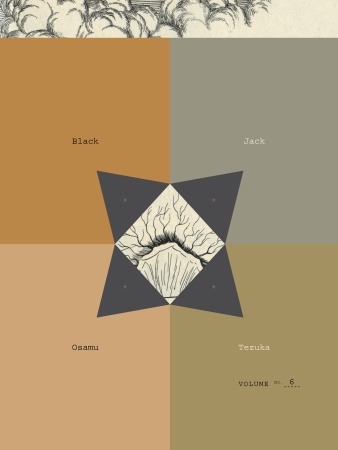
Black Jackets — The mighty Peter Mendelsund is giving away all of Osamu Tezuka’s Black Jack manga series in return for some assistance designing the next cover.

Take That! And That! And That! — Sony, having recently announced a pocket-sized reader and their switch to the ePub format, have now unveiled a new wireless electronic book reader with a 7-inch touch screen.

And on a related note, E-Reads tries to unpack some of the complex issues around Sony, ePub, and DRM.

Typedia — much linked to elsewhere (causing a severe strain on their servers earlier this week), Typedia is “a community website to classify typefaces and educate people about them.” I have no idea what I might use it for, but it looks pretty neat. You can also follow them on Twitter.

On the subject of typography, check out The Alphabetography Project, a photography blog cataloging found letters of the alphabet.

And hell, why not take a look June Corley’s charming typographic sculptures while you’re at it (via The Daily Heller and pictured below)…

Board — Also much linked to elsewhere, the New York Observer‘s Leon Neyfakh looks at three new hardcover books designed without dust jackets. It’s not exactly “the new thing” — more a case of the mainstream catching up with indies perhaps (and a light news day) — but there are still some interesting comments about book design:

Most of the publishers experimenting with jacketless hardcovers, including Viking, FSG, and Graywolf, are consciously taking their cues from the folks at McSweeney’s, who have been putting out beautiful books designed in this style for years. For Eli Horowitz, the managing editor at McSweeney’s, the method is a means of restoring some of the permanence and singularity to the book as object.

From the Design Desk — Designer Suzanne LaGasa talks about the cover design process at Chronicle Books.  (Full disclosure: Chronicle are distributed in Canada by Raincoast Books, my employer).

Big Comics — reviewsnthings asks notable comic artists, writers, publishers, editors and the like “what’s your opinion of the term ‘Graphic Novel’?” stirring up some interesting reactions. Here’s Leigh Walton, comics editor, and Top Shelf’s marketing coordinator, for example:

I find it intensely frustrating, in the sense that I can’t fully support it and I can’t fully dismiss it. Great minds have worked for ages to invent a better term, and they’ve failed. Its shortcomings are obvious — it’s based on a term, ‘novel,’ which has specific requirements of length and content, and it can never replace ‘comics’ as a general term for the medium… Yet ‘comic book’ was reserved ages ago for a format that isn’t really very booklike at all.

Mixtape — Robin McConnell is compiling cartoonists’ playlists for Inkstuds (the radio show about comic books), including Love and Rockets legend Jaime Hernandez.

And lastly, something for the fanboys to argue over: The Top 70 Most Iconic Marvel Comic Panels. (via LinkMachineGo)

1 Comment

Midweek Miscellany, August 12th, 2009

Typographic book covers by Ed Cornish for the 2009 D&AD student award brief for typography (via We Made This).

Tools of the TradeThe Montreal Gazette talks to Hugh McGuire about Book Oven and the new self-publishing landscape:

Call it Self-publishing 2.0. And it’s one of the fastest-growing sectors of the book world, which is itself enjoying a nice growth period despite the recession and the glut of competing media choices.

“Like in any other media, when you the make tools of publishing easy, people will take advantage of it,” said Hugh McGuire, founder of Montreal self-publishing start-up Book Oven. “It’s just now coming into public consciousness.”

It is troubling however that the photograph accompanying the article suggests that Hugh only rents the top-half of his office space!

Richard Green’s redesigns for ten of Penguin’s classic romance thrillers seen at Noisy Decent Graphics.

Dirty Stories — Eric Reynolds, Marketing Director for the Seattle-based art comics publisher Fantagraphics, interviewed in PW:

The book industry has been in a state of flux for at least a year or two years. I think that’s going to continue as everyone adapts to the larger challenges that print media is facing, and that’s going to affect anybody that publishes in print. It comes down to electronic delivery and the shrinking book market in general and just how you navigate these sorts of things… Without making it sounds like we’re totally awesome, we face the same problems that any understaffed, under-funded company does, but we’re streamlined, and there’s not a lot of fat to be cut.

Ornament — Doug Clouse and Angela Voulangas, authors of The Handy Book of Artistic Printing (published by Princeton Architectural Press), have created a nice website and blog for their book about letterpress type.

(I do love this book, but for the sake of full disclosure I should stress that PAPress are distributed in Canada by my employer Raincoast Books).

1 Comment

Midweek Miscellany, August 5th, 2009

Foucault — A nice new cover design from David Drummond (approval pending).

(And apparently I like photos of the backs of people’s heads)

Kill Your DarlingsPrint asks book designers Carol Devine Carson, John Gall, Paul Buckley, Rodrigo Corral, John Gray, Gabriele Wilson, Paul Sahre, and Peter Mendelsund about the covers that didn’t quite make it:

every book jacket designer has at least one that got away—a fresh, inventive cover that was shot down en route to the bookstore shelf. These “lost” covers form a parallel universe in which the books we read and love exist in entirely different skins.

Re-typing History — The Financial Times reports on typographer Mike Parker’s challenge to the accepted history of the ubiquitous Times New Roman:

The… evidence for his version of history is a brass pattern plate bearing a large capital letter B. He holds the plate up to show the familiar form of the letter, its characteristic curves and serifs. The point, he says, is that such pattern plates represent a technology that was not used after 1915. The creation of Times New Roman was announced in 1932.

Bite-Size Edits — Baking books with the Book Oven chefs.

Forgotten Bookmarks — the “personal, funny, heartbreaking and weird things” found in books at a rare and used bookstore.

The Book Depository launches in the US. There are details at The Book Depository blog.

And finally…

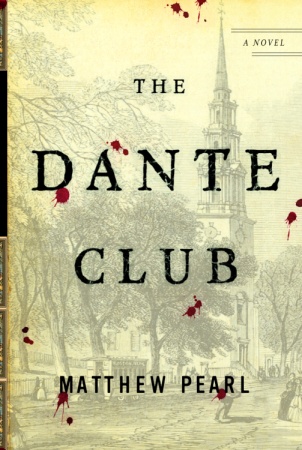
Trial and Error — Author Matthew Pearl discusses the evolution of the cover for his novel The Dante Club. It’s nice to read about an author not having a hideous experience with a publisher for a change, and I actually think that the cover design for The Dante Club, while not flashy, gives a lot of great visual cues to readers about the nature of the book (which is really what it is about isn’t it?).

1 Comment

Monday Miscellany, July 20th, 2009

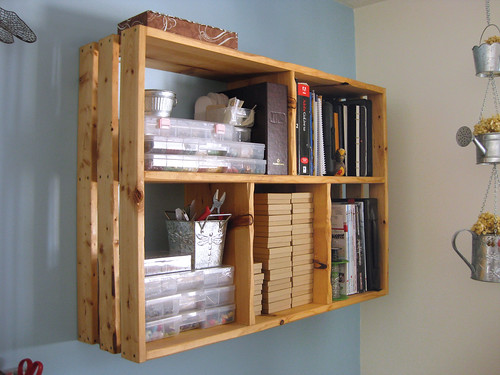
Shelf LifeEMPRNT‘s Bookshelves Flickr Pool. I could look at other people’s bookshelves all day…

You Don’t Belong — Lee Bermejo and John Arcudi’s Superman story for DC’s Wednesday Comics is also running in US Today. Two episodes in and it looks great (even if the Flash interface is not not ideal) — there are some nice moments, especially in episode 2 (Batman as psychiatrist anyone?) and Bermejo’s art kills it (via The Ephemerist).

PW Comics Week also ran an interesting interview with DC Comics editor Mark Chiarello about Wednesday Comics a couple of weeks of back.

And thinking of comics, LA Times’ Geoff Boucher reports on the forthcoming Darwyn Cooke adaptation of Richard Stark’s The Hunter.

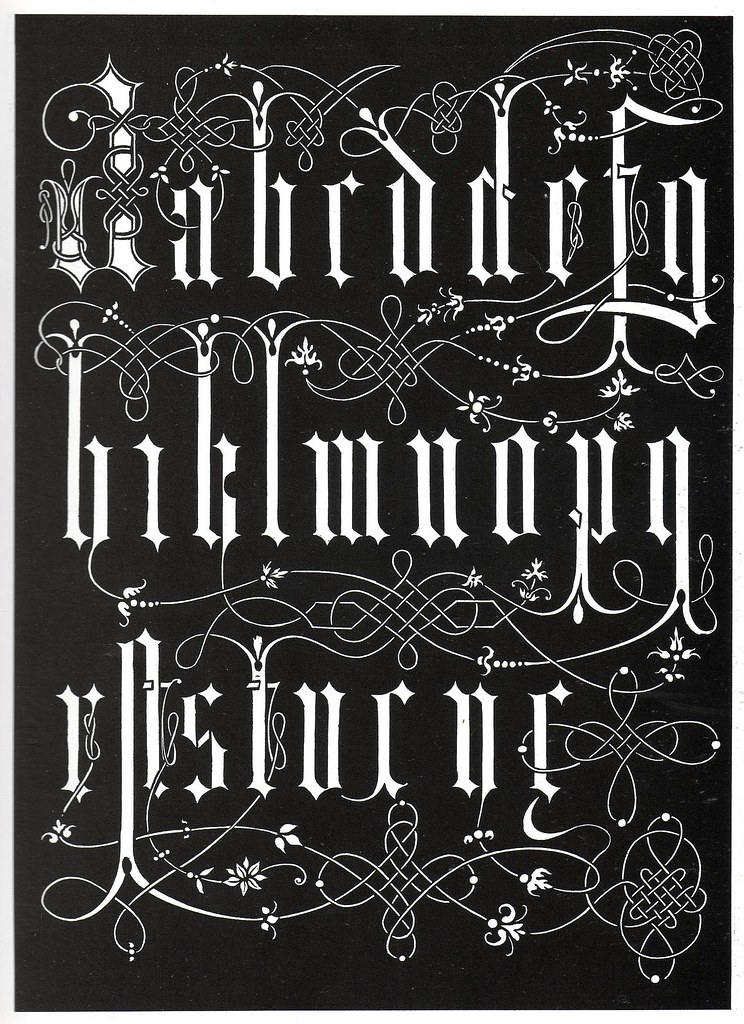
Fancy — BibliOydssey has posted some lovely samples of ornamental type.

Comments closed

Monday Miscellany, June 1st, 2009

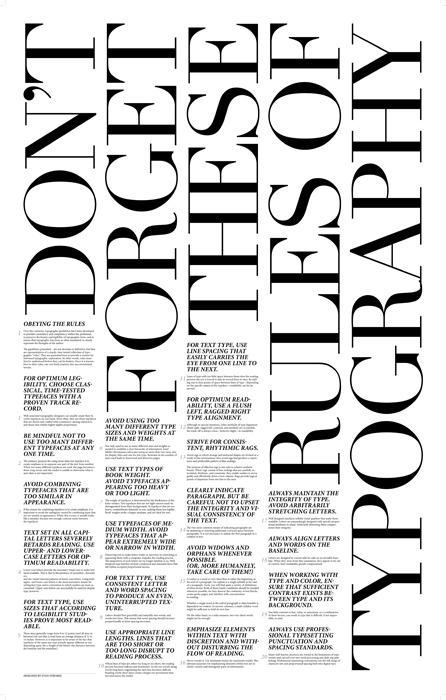
Don’t Forget the Rules of Typography — Nice work by graphic designer Evan Stremke (above). Also available as a handy PDF (via ffffinds). (Update: Evan appears to have redesigned his Rules of Typography. The image above shows the original version which personally I prefer. The new version is here)

The UnconferenceThe National Post reports on BookCamp TO, which takes place Saturday June 6th at the University of Toronto:

“I really think I’m going to get in trouble for saying this, but book publishing needs to stop being so insular. We need to stop just looking at our own industry for inspiration,” says Deanna McFadden, marketing manager, online content and strategy for HarperCollins. “The people who are doing BookCamp in Toronto are all smart people who understand where the industry is and where we need to go, and are really looking at innovative ways for us to keep book publishing alive and healthy.”

I’m going to be at BookCamp on Saturday, so please say hello if you’re there. And I’m still looking for feedback on the role of publishers in the digital age (see my post here). Please leave a comment if you have thoughts.

The London Review of Books now has a blog.

But Thank God I Ain’t Old — In a teaser for forthcoming  Heavy Rotation: Twenty Writers on the Albums That Changed Their Lives edited by Peter Terzian, literary critic James Wood waxes lyrical about The Who album Quadrophenia in The Guardian:

Quadrophenia is itself a nostalgic album – it wants to be there, back on those beaches and in those Soho clubs of the early 60s. So when I listen to the album now, nostalgia is doubled, since I am looking back at my own youth, and also back at the Who’s youth, at an era when I was not even born. I become nostalgic for a rebellion I never experienced and for an England I never knew.

Txt Island — A short film made with a few hundred spare pegboard letters by Chris Gavin at TANDEM Films (via I Like):

Comments closed

Midweek Miscellany, May 20th, 2009

Cut It Out — Dioramas made from the covers of pulp novels by Thomas Allen, seen at We Made This (via Ingrid Paulson on Twitter).

You Can’t Be SeriousThe Guardian takes a gloomy look at fate of  non-fiction and bookselling in the UK, managing to summon up  some half-hearted optimism towards the end:

Despite decades of predictions to the contrary, the appetite for demanding non-fiction has survived the advent of newspapers, radio and television – and, in Britain, a popular culture with a particular ability to absorb talent and themes that in other countries would be channelled into grand state-of-the-nation volumes. In fact, many publishers think the noise and immediacy of the web will make slow, quiet immersion in a book seem more, not less, appealing. And books, unlike most digital media, are not directly dependent on recession-affected advertising revenues.

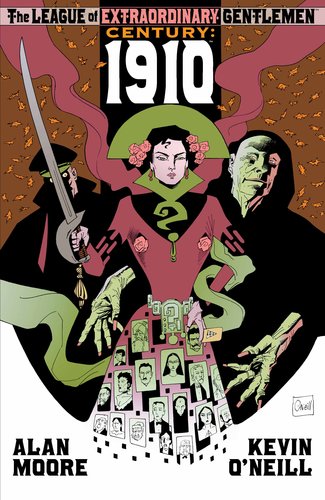
Boy’s Own Misadventure3:AM Magazine’s Mat Colgate gets to the heart of why volume 3 of The League of Extraordinary Gentleman Century: 1910 (published by Top Shelf)  is mildly disappointing (by Alan Moore standards). Could it really be that Moore writes better when subverting restrictions of form and genre than when he has free reign?

It’s Not Just Your Type — Priya Ganapati talks to designers, including Henry Sene Yee, about the problems of  e-book design at Gadget Lab.  (And Joshua Tallent’s commentary at TeleRead about the problems of formatting for ePub is also worth reading).

Restraint — I mentioned Marian Bantjes’ gorgeous new typeface at the weekend, and now you can download a rather lovely Restraint desktop from the folks at Typenuts (via I Love Typography on Twitter).

1 Comment

Somthing for the Weekend, May 8th, 2009

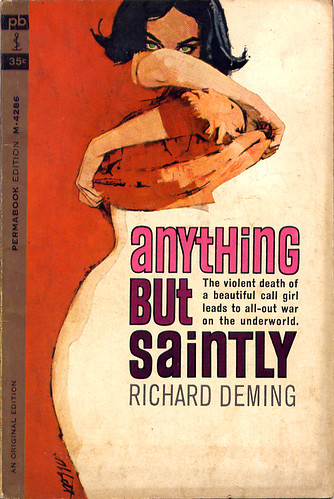
Anything But Saintly — More pulp goodness seen at The Old-Timey Paperback Book Covers Flickr pool.

The Decline and Fall of Books — Nicholas Clee, editor of Book Brunch, dons “The End is Nigh” sandwich-board in The Times:

A Gutenberg-style revolution is not… expected in the next few months. But if you are a lover of well-stocked bookshops, then you should enjoy them while you can.

Poets Ranked by Beard Weight — Or why I <3 the internet (via eightface).

Penguin Automaton made by artist-maker Wanda Sowry to celebrate Penguin’s 70th anniversary and available from Art Meets Matter . Apparently winding the handle “causes the Penguin to drink from a mug, its flippers to waggle and a piece of 70th Birthday cake to rise magically from the table” (via the lovely tweeps at New Directions ).

Good Typography is Invisible, Bad Typography is Everywhere — Stephanie Orma talks to five acclaimed designers about the art of type in the SF Examiner. Interesting to see some conflicting/contrasting opinions in the mix…

7 Habits of Highly Effective People I Know — A nice list from Noisy Decent Graphics Ben Terrett.

Comments closed

Monday Miscellany, April 27th, 2009

Every battle is won before it is even fought — Amazon acquires Stanza. Like just about everyone else, I was completely blindsided by this. But should we have seen it coming?

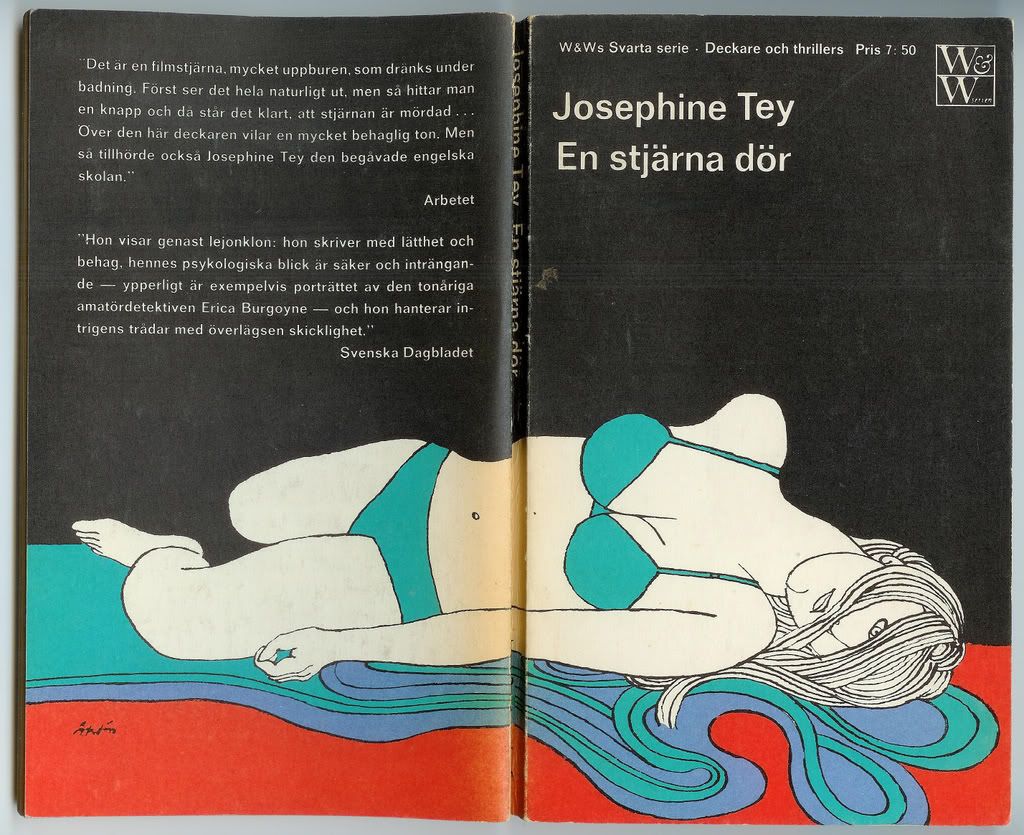
The Black Series — Paperback covers from 1960’s Swedish crime series “Svarta serien”  illustrated by Per Åhlin seen at Martin Klasch’s blog.

100 Books on Typography — Compiled by Charles Nix president of the Type Directors Club (via Design Observer).

Writing Without Words — Stefanie Posavec’s gorgeous visualizations of text and the writing styles of various authors (via @Ashbury&Ashbury).

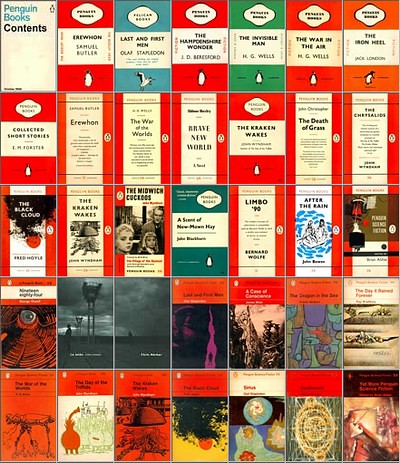
The Art of Penguin Science Fiction—  James Pardey is creating an archive of Penguin science fiction cover designs. If I have one complaint it’s that you can’t see larger versions of the covers, but otherwise it is brilliant (via Ace Jet 170).

Comments closed

Something For The Weekend, April 25th,2009

Comic Shelves by Oscar Nunez for Fusca Design (via The Ephemerist)

Goodnight Mechanical Dinosaur — Neil Gaiman on Batman in Wired (via LinkMachineGo):

[T]he great thing about Batman and Superman, in truth, is that they are literally transcendent. They are better than most of the stories they are in. That’s just Sturgeon’s Law: “90 percent of everything is crap.” Can you imagine how many thousands, or millions, of words have been written on Batman? Try to read them and you’re looking at 100,000 pages, perhaps a million, and you can assume that 90 percent of it is crap. Yet the 10 percent, and even better the 1 percent of that 10 perfect, is absolutely glorious. That pays for everything.

Tea and Cake — Louise Tucker chats to colleague Scott Pack about The Friday Project on HarperCollins’ 5th Estate blog:

It is still the only imprint to specialise in taking great web content and making books from it. That gives us a much wider brief than most people think…

Our future plans are very exciting. Our author deals will now all be profit-share arrangements with us splitting the profits of the books 50/50 with the authors. We are soon to announce some bold eBook initiatives and there is more to come.

Figuring it Out — Type legend Erik Spiekermann, co-author of Stop Stealing Sheep, on the basics of typography.  Not new, but still a great primer/reminder.


Will it sell in Moosejaw? — Book designers Bill Douglas (The Bang), Ingrid Paulson, (Ingrid Paulson Design), Angel Guerra (Archetype Design), Terri Nimmo, (Random House), and Kelly Hill, (Random House), discuss their craft in The National Post (Ingrid Paulson’s cover design for Kate Ausptiz’s The War Memoir of HRH Wallis Duchess of Windsor pictured above).

Wrapper’s Delight — A librarian at the Bodleian Library has found the earliest-known book dust jacket in an archive of book-trade ephemera:

Unlike today’s dust jackets, wrappers of the early 19th century were used to enfold the book completely, like a parcel. Traces of sealing wax where the paper was secured can still be seen on the Bodleian’s discovery, along with pointed creases at the edges where the paper had been folded, showing the shape of the book it had enclosed.

Comments closed

Midweek Miscellany, April 22nd, 2009

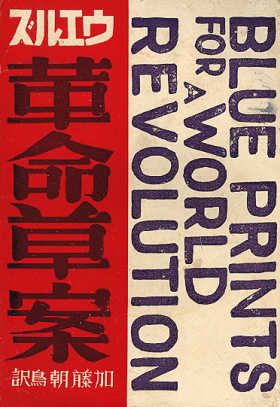
Blue Prints for a World Revolution — seen at the Antiquarian Bookshop 108 Buddhas, which has an amazing collection of avant-garde journals and books from Japan and Eastern Europe  in their gallery section (via Michelle McCormick’s Inspiration Resource ).

12 Steps to Better Book Publishing — Good stuff from Jonathan Karp, publisher and editor-in-chief of Twelve Books in Publishers Weekly:

It seems likely that the influence and cultural centrality of major publishers, as well as other producers of information and entertainment, will diminish as digital technology enables more and more people to create and share their work. This is exactly why publishers must distinguish themselves by doing better what they’ve always done best: champion books that offer carefully conceived context, style and authority.

The State of the IndustryNeil Nyren, senior VP, publisher and editor in chief of G.P. Putnam’s Sons talks to author  J.T. Ellison at Murderati (via @sarahw).

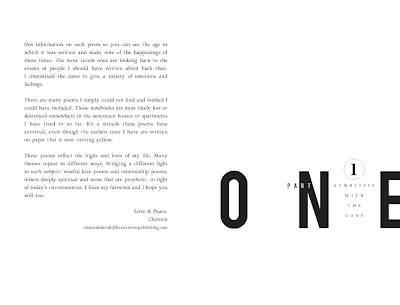
Poetic Interiors — Some lovely typography for Arrays of Conscious by Chanson Duvall at Beyond the Covers.

Embracing Change — Victoria Barnsley, chief executive and publisher at HarperCollins UK,  profiled in The Guardian:

There are still concerns about the digital future, such as how to continue making money. “There are some very big questions that we still have to answer – the biggest one being value,” says Barnsley. “How to make sure that consumers are going to be prepared to pay for digital content, because a lot of them are getting quite used to getting it for free?”

And yet…

Why newspapers can’t charge for online content — Dan Kennedy elsewhere in The Guardian:

I have no philosophical objection to the idea that news organizations ought to be able to charge for their online content. The problem is that it’s highly unlikely to work – mainly because there are too many sources of free, high-quality news with which they’re competing.

Font of Ill Will — Vincent Connare, designer of Comic Sans, profiled at the WSJ:

The font, a casual script designed to look like comic-book lettering, is the bane of graphic designers, other aesthetes and Internet geeks. It is a punch line: “Comic Sans walks into a bar, bartender says, ‘We don’t serve your type.'”

And finally…

Soldiers of Lead — An introduction to layout and typography for use in the Labour Party  (via Design Observer).

Comments closed

Something for the Weekend, April 17th, 2009


Isotype — Gerd Arntz’s amazing pictograms and visual signs for the visual language Isotype at the beautifully designed The Gerd Arntz Web Archive (pictured above).

Jacket(s) — Much as I admire Chip Kidd’s book covers, most of them are just too familiar to re-post here. But I hadn’t seen this ingeniously layered design for Kenzo Kitakata’s Ashes before even though it was published by Vertical in 2003 (pictured above). Seeing it all laid out, it’s really hard to begrudge Mr. Kidd’s reputation for awesomeness.

We like to be part of something — Nick Harkaway on connections:

A paper book has a history. Somewhere, at some time, an author wrote it all down, printed it out, gave it to an editor, who also worked over it. The book was typeset – yes, on a computer, these days, but still — and finally pressed and packaged and distributed. There is a chain of physical events which leads from me to you. With old editions, it’s even more direct. With signed ones, it’s a handshake. We like to connect. And digital books feel as if they’re trapped behind glass. The book is in the machine, and we can’t open the cover and touch the pages.

Black, white and read all overCreative Review looks at Faber & Faber‘s new editions of 20th Century poetry. The books feature specially commissioned woodcut and linocut cover illustrations.  The new editions are part of the Faber’s 80th anniversary celebrations. You can see more of the cover images at designer Miriam Rosenbloom’s design:related page.

The Disappointment Brokers — I going to go out on a limb and say this is another must-read for book-industry types from Poets & Writers — Literary agents Anna Stein, Jim Rutman, Maria Massie, and Peter Steinberg have a fascinating conversation about their profession and the state of the industry:

here’s the silver lining: [The industry’s] unhealthy enough that it’s an exciting time. It’s broken enough that publishers and agents and everyone has to change. Everyone has to rethink what they’re doing. So we have a group responsibility, and an opportunity, in a way that the industry has probably never seen before.

The Legacy of ModernismSpiegel Online celebrates 90 years of Bauhaus (via @PD_Smith).

Comments closed