Skip to content

Tag: Typography

Midweek Miscellany

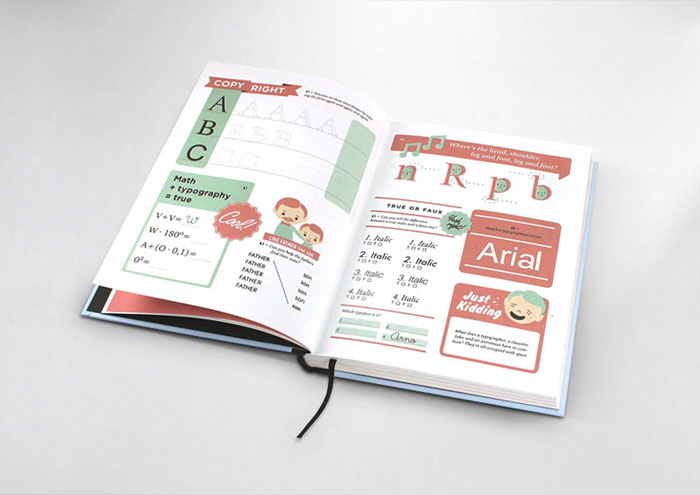
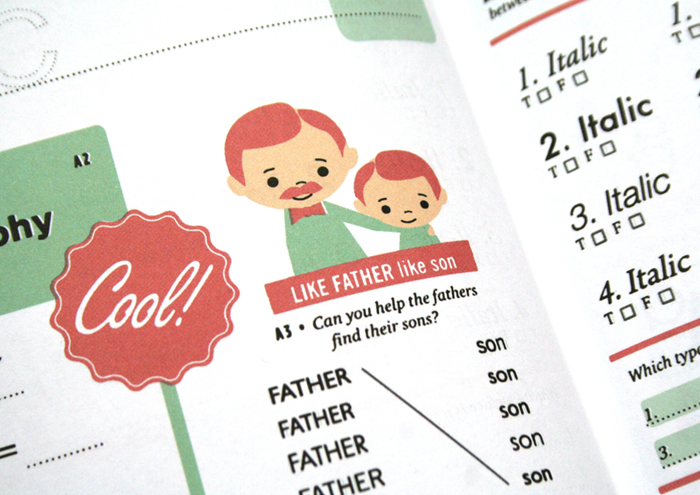
In the Land of Punctuation published by Tara Books (seen at DesignWorkLife):

Written in 1905 by the German poet Christian Morgenstern, In the Land of Punctuation is a darkly comic linguistic caprice that holds a resonant mirror to our times. Situated at the crossroads of language, design, and politics, this illustrated edition is a unique picture book for adults. Translated faithfully by Sirish Rao, with typographic illustrations by Rathna Ramanathan, this is a brilliantly inventive dance of text and image.

More on the illustrations at Rathna Ramanathan’s blog.

Quality. Interest. Significance — Robert McCrum profiles literary agent Andrew ‘The Jackal’ Wylie in The Observer:

The more he talks, the more Wylie’s innate puritan zeal comes to life within the clerical black of his undertaker’s suit and tie. “I’m a books person. Yes, I have a Kindle. I used it for an hour and a half and put it in the closet. I’m not interested in mass culture. When I started out I saw nine out of 10 people heading for the door marked Money, Commerce, Trash. So I chose the door marked Quality. Interest. Significance…”

Battle Royale — In a much linked to article, Ken Auletta, author of Googled: The End of the World as We Know It, discusses the iPad, the Kindle, and, yes, Google, in The New Yorker:

Publishing exists in a continual state of forecasting its own demise; at one major house, there is a running joke that the second book published on the Gutenberg press was about the death of the publishing business.

There’s not much (if anything) new in the article and more than a few of the usual suspects (and clichés) appear, but it does cover a lot of ground and provides a decent summary of where things currently stand in the publisher-Apple-Amazon-Google pissing match.

Revolution Betrayed — Christopher Hitchens on George Orwell’s Animal Farm for The Guardian:

It is affecting to imagine battle-hardened ex-soldiers and prisoners of war, having survived all the privations of the eastern front, becoming stirred by the image of British farm animals singing their own version of the discarded “Internationale”, but this was an early instance of the hold the book was to take on its readership. The emotions of the American military authorities in Europe were not so easily touched: they rounded up all the copies of Animal Farm that they could find and turned them over to the Red Army to be burnt. The alliance between the farmers and the pigs, so hauntingly described in the final pages of the novel, was still in force.

And finally…

[space]

Massimo Vignelli says we use too many fonts.  I Love Typography has a smart response. The full 36-minute interview with Vignelli is available from Big Think.

2 Comments

Something for the Weekend

A couple of quick links…

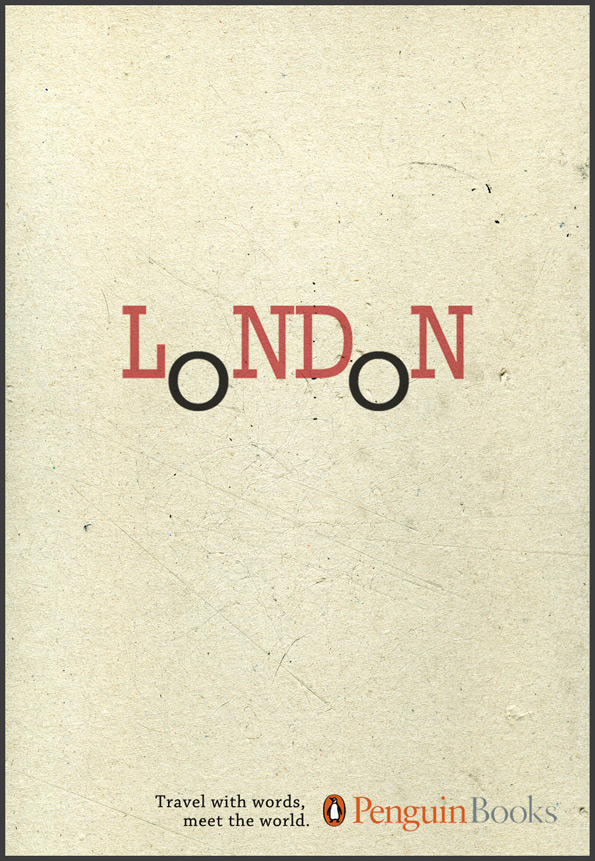
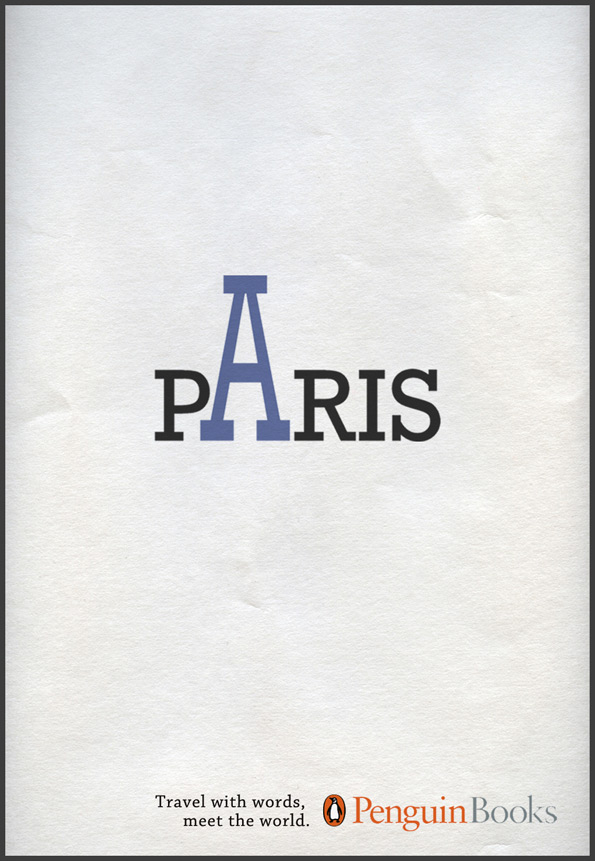
‘Travel with words, meet the world’ — A nice typographic ad campaign from Penguin Books seen at Ads of the World (via This Isn’t Happiness).

No-Fi — Cartoonist James Sturm, founder of the Center for Cartoon Studies, is giving up the internet and documenting for Slate:

Over the last several years, the Internet has evolved from being a distraction to something that feels more sinister. Even when I am away from the computer I am aware that I AM AWAY FROM MY COMPUTER and am scheming about how to GET BACK ON THE COMPUTER. I’ve tried various strategies to limit my time online: leaving my laptop at my studio when I go home, leaving it at home when I go to my studio, a Saturday moratorium on usage. But nothing has worked for long. More and more hours of my life evaporate in front of YouTube. Supposedly addiction isn’t a moral failing, but it feels as if it is.

(For the sake of full disclosure, James Sturm’s new book Market Day is published by D+Q who are distributed in Canada by my employer Raincoast)

Jonathan Turner (AKA Insect54) has posted a few photos of Herbert Spencer’s book Pioneers of Modern Typography on his (amazing) Flickr photostream (via Inspire Me).

2 Comments

Midweek Miscellany


Flaunt it — Designer Armin Vit discusses the UnderConsideration book Flaunt: Designing Effective, Compelling and Memorable Portfolios of Creative Work at For Print Only.

How Art Became the Media — Lewis Lapham, editor of Lapham’s Quarterly (formerly editor of Harper’s Magazine), at Guernica magazine (via Bookslut on Twitter):

It isn’t that the country now lacks for painters painting pictures or poets writing poems, nor is it to say that stores of human energy and hope aren’t to be found in the novels of Elmore Leonard or the songs of Bruce Springsteen. It is to say that with the dawn of Reagan’s bright new morning in America, the notion of art as the way into a redemptive future had withered on the vine. Once again, as had been customary throughout most of the country’s history, art was seen as an embodiment of the good, the true, and the beautiful only to the extent that it could be exchanged for money.

George Lois on the iPad in the New York Observer (no, I’m not entirely sure how I missed this last week either):

“magazines will never die because there is a visceral feeling of having that thing in your hands and turning the pages. It’s so different on the screen. It’s the difference between looking at a woman and having sex with her.”

Flying the Coop — Another interesting installment of the National Post‘s ‘Ecology of Books’ series, this time on authors moving from small presses to big publishing. And there’s an interesting follow up from Daniel Wells, the publisher of Biblioasis one of the aforementioned Canadian small/independent presses (via Steven Beattie).

Microdistribution — This is fascinating… The Boulder Bookstore (Colorado) is experimenting with charging self-published authors for shelf-space and promotion (via Sarah Weinman on Twitter):

“Most people will come in at one of the higher fee amounts,” Arsen Kashkashian, the store’s head buyer and the architect of the program, told me. “That surprised us.” In fact, when the store first began charging its consignment authors back in 2007 (the fee-structure idea emerged when the store’s employees found themselves “inundated with self-published books, and there was a lot of work involved and not much reward”), its staff “thought people would grumble and complain” about the charges. But authors, Kashkashian says, have been generally grateful for the opportunity to sell and promote work that might otherwise be seen and appreciated only by their friends/spouses/moms: “‘I want the marketing, I want the exposure. I worked so hard on this project, and you guys are the only ones who could help me with it.’”

And finally…

Four Ways to Combines Fonts by H&FJ, built around a beautifully simple principle: “keep one thing consistent, and let one thing vary.”

2 Comments

Midweek Miscellany

A true miscellany here: letterpress to Gil Scott-Heron with a lot of meat sandwiched in between… This is quite possibly why I blog…

Ditoria — An amazing video about showing the letterpress printing process by Roberto Bolado.

The Cost of Creating — Harvard Law Professor Lawrence Lessig, author of Free Culture (and others), discussing the Google Book Settlement on NPR’s On The Media last month (via INDEX//mb):

[W]e need to once again think about what the balance should be between free access to culture and metered access to culture, because both extremes are mistakes, either the extreme that says everything is free because then lots of people won’t create because they can’t cover their cost of creating, or the regime that says everything needs to be licensed, because in that world there’s a whole range of creativity… that can’t begin to happen because the cost of negotiating and clearing those rights is just so extreme.

Stopping Saying “Innovation”Scott Berkun, author of The Myths of Innovation, in The Economist (via Frank Chimero):

Worry more about being good because you probably aren’t. If your organization struggles to make half-decent products, has the morale of a prison, and nothing ever changes much less improves, why are you obsessing about innovation? You need to learn the basics of how to make something good, that solves real problems, works reliably, is affordable, and is built by a happy, passionate well rewarded staff that believes good ideas have a chance. If you can make the changes necessary for these basic but all too rare attributes to be true, then innovation, in all its forms, will be much easier to achieve, and it might just happen all on its own.

New Type York — A (beautifully designed) photoblog by graphic designer James Patrick Gibson recording the typographic artifacts of New York City.

And thinking of New York… The NY Times is planning to spin off its Book Review as a separate e-reader product.

The Vulture Gil Scott-Heron

A Wry Return — Sean O’Hagan profiles musician Gil Scott-Heron in The Observer, revealing an somewhat unexpected connection to Jamie Byng, director of Canongate Books. I say “somewhat” unexpected because having lived in Edinburgh just before Byng wrapped up his funk and soul club Chocolate City, it seems entirely reasonable to me now I stop and think about it:

The story of how Gil Scott-Heron’s new album came to be made is a long and convoluted one. It is, among other things, a testament to the abiding power of great music outside the mainstream to spread like a virus across cultures, across decades. It begins back in 1987 in a rented house in Edinburgh when a young student is mesmerised by his friend’s collection of soul and funk music from the halcyon days of the early 70s… “I was just taken aback by the voice, the words, the poetry,” remembers Jamie Byng who, 22 years on, is the director of Canongate Books and still a fervent soul fan… “Discovering those songs was an epiphanic moment for me…” So taken was Byng by those songs that, having bought and rebranded Canongate, he tracked down his hero and, in 1996, republished his two long-out-of-print novels, The Vulture and The Nigger Factory.

And here’s Gil Scott-Heron’s painfully appropriate cover version of Robert Johnson’s Me and the Devil:

Gil Scott-Heron’s books The Vulture and The Nigger Factory were recently reissued by Canongate.

3 Comments

Nobody Knows Anything

Book Qupte by Brandon Schaefer

Anyone who has spent 5 minutes discussing publishing with me knows that William Goldman’s line “nobody knows anything” from Adventures in the Screen Trade is one on my mantras, so I was thrilled that designer Brandon Schaefer (whose awesome The Dark Knight illustration buzzed around the internet last summer) decided to use it for as part of his Book Quotes poster series.

You can see the rest of the series (and more of Brandon’s lovely design) on Flickr.

Comments closed

Midweek Miscellany

The “Consummate Amateur” — Graphic designer, collector and archivist JP Williams (who blogs at the wonderful amassblog) profiled at Sight Unseen.

Overcoming Creative Block — 25 Artists, designers, and creators share their strategies at ISO50. I rather like Erik Spiekermann’s pithy list:

  1. Avoid
  2. Think
  3. Research
  4. Collect
  5. Sketch
  6. Deconstruct

    Schriftguss AG — A lovely Flickr set of  type specimens  (via The Ministry of Type).

    And Finally…

    American Psycho in six panels by Claire Murray seen at The Creative Review. Genius.

    Comments closed

    Monday Miscellany

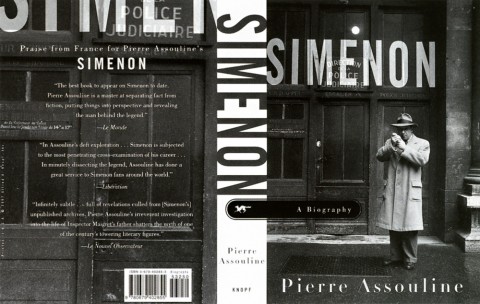
    Simenon designed by Archie Ferguson

    Pub Psychology — Archie Ferguson, formerly of Knopf and now art director at HarperCollins, interviewed at the CoveredUp blog:

    Publishing has always seemed a lot more glamorous than it is. And if it ever was glamorous, those days are long, long gone. These days I spend a lot of time answering emails – not phone calls – from far and wide, running up and down the stairs… doing damage-control, and feeling more like I’m a psychologist as much as anything else.

    Virtual CityJonathan Lethem, author of Chronic City, interviewed in The New Statesman:

    Manhattan, the great secular-commercial metropolis, the world’s first and greatest city founded on concepts other than religious or national identity – and therefore a kind of science-fiction city, a conceptual project, a place unnaturally subject to the distorting forces of capital, ideology, projection, wish-fulfilment and so on – has become…a place both persistently real and unreal. Or, an unreal place where real people are living out their existence… What’s gone wrong and right in this place has a special amount to tell us.

    The difference between Time Roman and Times New Roman — Because I know you’re curious.

    The Form of a Book — Another lovely, insightful post from A Working Library:

    On the page, the rhythm of the text emerges from both the macro design—the pleasing shape of the page, the proper amount of thumb space—and the micro—the right amount of leading, the evenness of the word spacing, the correct break of a line. On the screen, the rhythm of a text encompasses all of these things and more—the placement of a link, the shift from text to video and back again, the movement from one text to another. The rhythm becomes more complex as the orchestra gets larger, but the desire for rhythm does not subside.

    In order to create this rhythm, the book must be designed and composed for the screen. A beautiful digital text can no more be arrived at by “converting” from a print design than a beautiful print book can be created by converting a Word file. The digital book will never come into its own so long as it is treated as a byproduct, unworthy of attention.

    2 Comments

    Midweek Miscellany

    EndGrain — A “directory and aggregator for wood type and letterpress works and information on the web.” Lovely.

    Crash — Iain Sinclair (author, most recently, of Hackney, That Rose-Red Empire — just out in paperback by the way) on JG Ballard’s artistic legacy:

    A late moralist, he practised undeceived reportage, not prophecy: closer to Orwell than HG Wells. Closer to Orson Welles than to either. Closer to Hitchcock. Take out the moving ­figures on staircases that go nowhere and stick with hollow architecture that co-authors subversive drama

    Picture Book Report — 15 artists create illustrations inspired by their favourite books. Pictured below: Kali Ciesemier‘s take on Sabriel by Garth Nix. I’m also looking forward to Robot Johnny‘s take on The Hitchhiker’s Guide to the Galaxy (via The Art Department).

    Indigo 2.0Canadian Business magazine on Indigo and their digital book division Kobo:

    “Kobo has been across the smartphone space from the beginning,” says Lisa Charters, senior vice-president and director of digital for Random House Canada. “And that unique offering is really important to us as publishers, because we want consumers to have all options to read e-books, and not necessarily have to purchase a $300 device.”

    What’s more, says New York publishing consultant Mike Shatzkin, “they beat Google into the cloud.” Kobo’s library system is based in cloud computing. When you buy a Kobo book, it resides on Kobo’s servers and you access it via your device of choice. So when you squeeze in 20 pages of The Lost Symbol on your laptop in the morning, and later that day open the Kobo application on your BlackBerry, Kobo automatically plops you down on page 21.

    Interesting stuff, although I do wish journalists could stay away from the Gutenberg clichés (and Dan Brown. Barf).

    And finally…

    Reserve Window Design — “We hired our good friend John Downer, who is a professional sign painter & typographer, to fly to LA to do gold leaf lettering on our store window & transom. Glass gilding is becoming a lost art that only a few dozen people in the United States still know how perform” (via We Love Typography):

    4 Comments

    Something for the Weekend

    [A quick note about the poll: thanks to everyone who voted, left a comment or sent me note this week — I really appreciate it. The feedback has been great. I’m going to shut the poll down at midnight tonight, but please let me know if you have any further thoughts about the direction of The Casual Optimist.]

    Lauren Kaiser’s Little Red Riding Hood seen at Type Theory (pictured above).

    liza-pro-underwareThe Oscars of Type — Ellen Lupton’s list of the year’s top typefaces at Print magazine. “Best Actress” was awarded to Underware’s Liza Pro (pictured above). My interview with Ellen Lupton is here.

    Happiness as By-product — Jessa Crispin founder of Bookslut interviewed by Jeff VanderMeer, author of Booklife (which Crispin was critical of interestingly):

    I was having a conversation with a writer the other day, and he stated that the best things are always by-products. Happiness is a by-product, and I loved that he said that. You can plot your journey to success or happiness or wealth or whatever it is you’re looking for, but if you’re too focused on the end result, you’re going to miss anything good going on around you… Not that we should all sing songs around the campfire and braid each other’s hair, but there has to be a combination of the two, forward motion and goal planning, but while taking a look at the people around you.

    Comics Studies Reader — Jeet Heer on comics and comic scholarship at Books@Torontoist:

    I think there’s a wide variety of things that can be done with comics, and I think we’ve only scratched the surface… One of the interesting things about manga is that kids are reading translated manga that reads right to left. Part of the reason that’s possible is because comics are both words and pictures – half of the translation work is already done. So you can look at a comic book in a language you don’t know and you won’t get everything but you can still get a fair bit of what it’s about. And so they have this sort of function as cultural ambassadors. You can actually learn a lot about a culture just by looking at the comics.

    The New Yorker 85th anniversary covers by Chris Ware, Adrian Tomine, Dan Clowes, and Ivan Brunetti seen at the Creative Review blog (Adaptation by Tomine pictured below).

    Art Spiegelman and Francoise Mouly (art editor at the aforementioned New Yorker) discuss The Toon Treasury of Classic Children’s Comics with (a particularly gushy) Michael Silverblatt for KCRW’s BookWorm :

    Comments closed

    Typekit

    Over the next few days (likely weeks/months) I’m going to be experimenting with Typekit to use a slab serif typeface for headlines on The Casual Optimist.

    At the time of writing, you should be seeing the ‘logo’ and ‘tagline’ at the top of the page displayed in the beautiful Adelle by TypeTogether.

    I would love some feedback on Typekit (is it intrusive?) and the typeface (is it an improvement?), so let me know what you think in the comments. Cheers.

    5 Comments

    Dan Mogford’s de Bonos

    Earlier this week, London-based graphic designer Dan Mogford kindly alerted me to a series of fresh Edward de Bono covers he designed for the Penguin UK:

    At the BPPA book cover panel last night, David Gee was lamenting publishers’ current predilection for blandly neutral Malcolm Gladwell-esque covers for certain kinds of popular nonfiction, and so I’m really glad that Dan (and Penguin) decided to go in the completely opposite direction.  I really like the slab serif (the rather lovely Stag by Christian Schwartz, Dan tells me), bold colours, and light-bulb motif they went with here.

    Is it just me or do they have a certain Milton Glaser-like quality?

    4 Comments

    Something for the Weekend

    Slim pickings in a week in which book nerds obsessed about the implications of the rumoured Apple tablet (and PS – if anyone else describes it as the fucking ‘unicorn’ it’s clobberin’ time…), while in a completely unrelated move (snarf!), Amazon announced it was going to allow iPhone style apps to be uploaded and sold on the Kindle (begging the question when does the Kindle become the Pontiac Aztek?) and — faster than you can say bait and switch — they offered self-published authors improved royalties.

    But, anyway, here’s more fun stuff for your weekend pleasure…

    What To Leave Out? — I Love Typography‘s favourite fonts of 2009, including the lovely Phaeton and Biographer (pictured above), as well as Jos ‘exljbris’ Buivenga’s  Calluna.

    The big graphic novels of 2010 according to Publishers Weekly.

    And finally… I’ve been meaning to link to this for ages, at least in part so I could post Erik Mohr‘s cover for Monstrous Affections by David Nickle

    Horror Stories — Waaaaay back in November The National Post chatted with the publishers and authors from dark fiction specialists ChiZine Publications :

    [W]e wanted to produce beautiful, well-written books. Books you wanted to pick up — and when you did, you wouldn’t be disappointed by what was inside. Essentially, books we ourselves wanted to read…

    Genre fiction is notorious for having cheesy, sloppily executed covers with no sense of design or what is attractive to potential book buyers. We’ve been incredibly lucky that Erik has made our books look so good. And by “good” I sometimes mean “disturbing.”

    Maybe what we’ve managed to do with CZP is to find a niche that wasn’t being filled…or maybe we created our own niche.

    Comments closed