The good folks at Kind Company have posted some beautiful images of Yves Zimmerman’s vintage black and white, text-only covers for the typographic periodical TM at their wonderful website Display:
(link)
Books, Design and Culture
The good folks at Kind Company have posted some beautiful images of Yves Zimmerman’s vintage black and white, text-only covers for the typographic periodical TM at their wonderful website Display:
(link)
The elegant new cover design for The Secret of Contentment by William B. Barclay, designed by Christopher Tobias.
Melancholy Technology — Tom McCarthy, whose novel C is on the long-list for the Man Booker Prize, on technology and the novel:
Technology and melancholia: an odd coupling, you might think. Yet it’s one that has deep conceptual roots. For Freud, all technology is a prosthesis: the telephone (originally conceived as a hearing aid) an artificial ear, the camera an artificial eye, and so on. Strapping his prosthetic organs on, as Freud writes in Civilisation and its Discontents, man becomes magnificent, “a kind of god with artificial limbs” – “but” (he continues) “those organs have not grown on to him and they still give him much trouble at times”. To put it another way: each technological appendage, to a large degree, embodies an absence, a loss.
There Might Be Typos On The Internet — Lori Fradkin on life as a copy editor for The Awl :
Once you train yourself to spot errors, you can’t not spot them. You can’t simply shut off the careful reading when you leave the office. You notice typos in novels, missing words in other magazines, incorrect punctuation on billboards… Another downside of the job is that only your mistakes are apparent. The catches are basically invisible. No one will look at an edited article and think, I am certain that, once upon a time, there was a double quote where there should have been a single, and a wise person fixed the issue for my benefit. But if you let a “their” slip through in the place of a “there,” you are a complete moron. And if you are working online, commenters will let you know so.
For Sur — The folks at We Made This on their contribution to the Penguin Great Ideas V series:
We did a bit of research into Borges’ writings, and learnt that he’d been one of the founding contributors to the Argentine literary journal Sur, which was published regularly from 1931 until around 1966… he magazine has a very distinctive (and typographically bonkers) masthead, and fortunately the name ‘Sur’ isn’t a million miles from the name ‘Borges’, so basing our design on it felt like a rather tasty solution.
Design Space — Design consultant Theo Rosendorf, author of The Typographic Desk Reference, talks about his work and his office space with Herman Miller:
Typography plays a major role in the practice beyond simply picking a font or knowing a particular brand’s guidelines. Every typeface has unique requirements in that it has to be set just so. It’s up to the graphic designer to understand what a particular typeface wants. We work within those bounds to let type communicate as it was intended. Everything else follows.
And speaking of typography…
Brockmann in Motion — Vít Zemčík animates a print design masterpiece. Zemčík made this beautiful 12 second short during the International Typography Workshop in Czieszyn.
Comments closedA student project for a class at New York’s School of Visual Arts, Jackie Lay’s neat typographic video is set to Tom Waits’ Eggs and Sausage:
In a recent interview with Jeffrey Hyatt at DesignCrave, Lay said:
“I didn’t want to be too literal with the imagery… but I did follow the loose narrative arc in the song of a man going to a late-night diner, ordering his meal off the menu and then lamenting over his unrequited love on napkins, finished off with the waitress bringing the check.”
The video was awarded a Certificate of Typographic Excellence by the Type Directors Club.
Comments closedA motion graphics tribute to Robert Bringhurst’s book The Elements of Typographic Style by Toronto-based Chris Kim, who is currently studying Radio & Television Arts at Ryerson University:
TypoElements 2010 won an Applied Arts 2010 Student Award.
4 Comments
David Pearson is posting the covers for the new Penguin Great Ideas series to Flickr. As you can see, they are stunning.
You can read my interview with David Pearson here.
1 CommentA design:related interview Rich Roat, co-founder of House Industries, about starting a foundry, type trends, and the future of type design on the web:
Comments closedDieter Rams book by graphic design graduate Daniel Bartha:
This project was a book I created around the ten most important principles for what Dieter Rams considered was good design. Taking on board these elements myself, I took away as much as I could from his unique designs but to still leave them instantly recognisable.
And since I seem to be on a German theme this week…
Nabokov in Berlin — An essay by Lesley Chamberlain in Standpoint magazine:
As consumerism and Hitler rose together so Nabokov treated totalitarian politics principally as aesthetically repugnant. It was “another beastliness starting to megaphone” in Germany which in 1937 drove him and his half-Jewish wife Vera to leave Berlin for France and the US. It was almost too late. Berlin suited him. The anti-totalitarian novels Bend Sinister (1947) and Invitation to a Beheading (1938) which followed were remarkable, particularly the latter, for not insisting that totalitarianism’s victims were moral heroes, only men of taste. Nabokov, who saw in art the possibility of redemption, was tempted to think taste ruled out evil.
And from Germany, to France (via Norway)…
Master of Understatement — Douglas Wolk, author of Reading Comics, on Jason’s Werewolves of Montpellier:
[I]t’s possible to describe [Werewolves of Montpellier] by saying it’s a low-key domestic drama, with a Harold Pinter play’s worth of portentous silences, about a bored, disenchanted young man who’s in hopelessly in love with his lesbian best friend. Or you can say it’s about a jewel thief who discovers a secret cabal of werewolves. It’s true that you have to pay attention to catch the details: the fact that Jason draws everyone with animal heads makes it a little bit harder to read some of the characters’ interactions. But maybe Jason’s central joke is that you have to take extreme measures to create certain kinds of drama when a lot of the time people aren’t feeling anything in particular.
Techland also have an exclusive preview of the book.
See also: The Beat’s review of Werewolves of Montpellier…
Werewolves of Montpellier is about an art student/thief who dresses up as a werewolf before he goes out to break into people’s homes at night, which a society of actual werewolves is not amused about.
What that boils down to on the page, though, are scenes of people sitting next to each other at the laundromat, looking at each other in silence or talking about French actresses while playing chess—and each time, it’s utterly fascinating, and the scene draws you in almost immediately and you don’t want to stop.
Jason tells stories with comics in ways that never occur to a lot of people who make comics.
From Europe to Asia…
An Obsolete Practice — idsgn considers the end of movable type in China. Fascinating stuff:
The invention of movable type in China developed with Gutenberg’s mechanical press and hot type-metal, proved to have widespread and lasting success in Europe. But in practice, it was not suitable for Chinese—a language with over 45,000 unique characters. Typesetting in Chinese took “minding p’s and q’s” to a whole new level, and accuracy was challenging when characters were essentially compounds of many radicals and ideograms. Running a Chinese letterpress shop required an enormous storage space and basic literacy of at least 4,000 commonly used characters.
And on a strangely similar note…
Rudy Lehman’s Incredible Linotype Letterpress (via Coudal).
Have a great weekend!
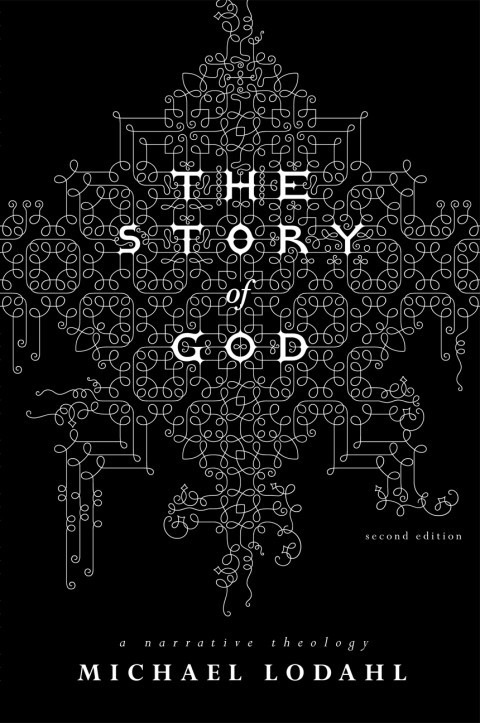
Graphic artist Marian Bantjes (whose typeface Restraint was used to great effect by Arthur Cherry for the cover of The Story of God by Michael Lodahlr) on individuality in design at TED:
(Via Nate Williams)
UPDATE: There is more about Arthur Cherry’s design for The Story of God at FaceOut Books.
1 CommentDrawing inspiration from the iconic Blue Note LP covers from the 1950’s and 60’s designed by American modernist designer Reid Miles, Hi-Fi is an amazing music video directed by Bante for last year’s concert season at the Bellavista Social Pub, in Sienna, Italy (how great does that sound?).
It’s beautifully done. In fact, the whole video just made me smile…
(Discovered via the excellent The Font Feed who also point to this great article The Jazzy Blue Notes of Reid Miles)
3 CommentsDavid Drummond’s Parker Series for University of Chicago Press.
“a little bit Warhol, a little bit Factory Records” — Christian Schwartz explains why he started type foundry Commercial Type at I Love Typography:
It’s much easier to be an “armchair quarterback,” second-guessing everyone else’s seemingly questionable decisions regarding everything… than it is to deal with the actual reality of budgets, technology, and timelines. Theorizing about how and why things work is all well and good, but putting our ideas into practice is of course the real test…
Typography and Judaica — Steven Heller interviews book designer and typographer Scott-Martin Kosofsky. Fascinating stuff:
It’s the best of times and the worst of times, but I have a feeling that people have always said that… In regard to print, I think we’re at a great moment, with access to mature technology and aesthetics… There’s no excuse for anything looking less than great. But books (and print in general) have lost their pride of place. Book publishers, a group nearly always behind the curve, have failed to grasp that their online counterparts spend a lot of time and money concentrating on User Experience, while they remain unfamiliar with the concept. It wasn’t always that way, but when the professionalism and discipline that was demanded by metal type fell away, things got worse and worse, especially typographically.
Punk — An interview with Jaime Hernandez about Love and Rockets and the recently published The Art of Jaime Hernandez at NYC Graphic:
“That’s how Love and Rockets started: we were just cocky and didn’t know we could fail. We went ahead and published the first one ourselves and didn’t care what the outcome would be, we just wanted to be printed. Hopefully we could sell it and make money, but there was no one to tell us not to. That was the punk part of it. The more we got good response, the more we kept doing it.”
And finally…
The Pollak Coffee Table Book seen at UnderConsideration’s FPO. Breathtakingly beautiful.
Comments closedHyperactivitypography from A to Z — An activity book for typographers (in a lovely retro style) by Norwegian design agency Studio 3. You can flip through the book here.
Life As Lived — Author Sarah Bakewell (How To Live) kicks off a 7-part series on Montaigne in The Guardian:
What is it to be a human being, he wondered? Why do other people behave as they do? Why do I behave as I do? He watched his neighbours, his colleagues, even his cat and dog, and looked deeply into himself as well. He tried to record what it felt like to be angry, or exhilarated, or vain, or bad-tempered, or embarrassed, or lustful. Or to drift in and out of consciousness, in a half-dream. Or to feel bored with your responsibilities. Or to love someone. Or to have a brilliant idea… but forget it before you can get back to write it down…
And also in The Guardian…
Alternatives — Tom Lamont asks designers why book covers look different from territory to territory:
Why don’t publishers, then, replicate covers that have been a success abroad? “It does happen but it’s quite rare,” says [Julian] Humphries [art director, Fourth Estate]. Megan Wilson, an art director at Knopf Doubleday in New York, says that American designers are sometimes asked to look at British jackets, “as an example of something that works or doesn’t, but we are rarely asked to use them directly”. [Nathan] Burton tries to avoid looking at alternative covers if he’s working on a book that’s already been published. “It can take you off on odd tangents. It’s always best to work from fresh.”
Great. But, please, can we declare a journalistic moratorium on “judge a book by its cover” headlines?
“We are your platform” — Richard Nash, formerly of Soft Skull, talks about his new start-up Cursor at The Literary Platform. There’s something about this that reminds me of Factory Records in good ways and bad…
A Question of Audience — With Julie Bosman taking over the publishing beat at the NY Times from Motoko Rich, Sarah Weinman breaks down what kinds of book and publishing stories appear in North American newspapers:
I’ve become increasingly aware the longer I’ve written about publishing for a business news site that some stories that are big news within the industry carry little relevance outside of publishing circles. That means certain news items I pay attention to and analyze to death via Twitter… won’t merit larger stories. It also means that certain topics that are discussed endlessly in the publishing bubble (especially the digerati-populated one), while relevant to the outside world, have to be written about in a way that might come off as eye-rolling rehash.
I think Sarah’s being charitable here. Many of the topics discussed endlessly in the publishing bubble and the Twittercosm have absolutely no relevance to, or perceivable impact on, the outside world…
Undercover Icon — A New York Times profile of Irving Harper, the man behind many of George Nelson Associates‘ iconic designs (via The Scout):
“I don’t have a complex mind,” Harper said, and if this assertion seems disarming coming from a designer of his sophistication, the thought is sincere… “With a computer there are too many choices, and I always liked working within limits,” he said. “You know, if you look at Mozart, who had this strict classical framework — an allegro, an andante, a scherzo and a finale — you see that within that formula, he got results he might never have gotten if he had all the options in the world.”
There is more on Harper in a Metropolis Magazine profile from 2001, and a monograph of his paper sculptures by Michael Maharam is apparently on the way (if anyone has details please let me know).
Comments closed