
Toronto-based designer Ingrid Paulson has designed these four covers for a new paperback reprint series called ‘Backlit’ to be published by ECW Press this fall.


Lovely stuff.
4 CommentsBooks, Design and Culture
Toronto-based designer Ingrid Paulson has designed these four covers for a new paperback reprint series called ‘Backlit’ to be published by ECW Press this fall.
Lovely stuff.
4 Comments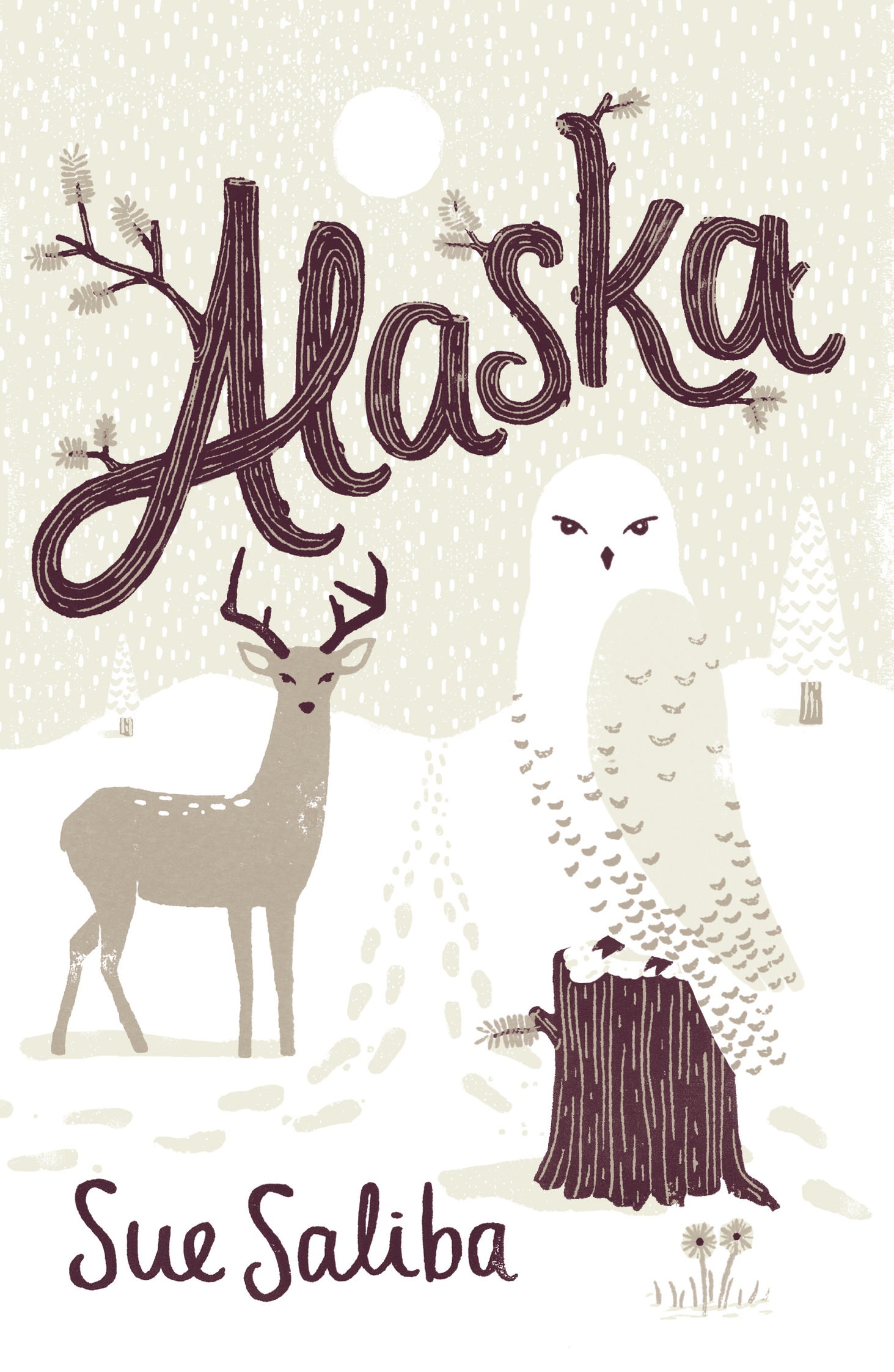 An interview with the talented Allison Colpoys, book designer at Penguin Books Australia, at The Design Files.
Particular Beasts — A brief interview with art director John Gall about teaching book design:
Each book is its own particular beast that has to be designed from the ground up. Every designer has their own way of looking at the problem and coming up with a solution. It can’t help but be personal on some level.

A Twist, Flourish or Quirk — Louise Fili and Steven Heller, authors of Scripts: Elegant Lettering from Design’s Golden Age, on script typefaces at Design Observer:
During the letterpress era [script typefaces] were in such great demand that many people “invented” them, and many others copied them. In some commercial printing shops, composing cases filled with scripts were stacked floor to ceiling to the exclusion of other type. Printers routinely amassed multiple styles of the heavy metal type fonts, each possessing a distinct twist, flourish or quirk, used to inject the hint of personality or dash of character to quotidian printed pieces… Scripts signaled propriety, suggested authority yet also exuded status and a bourgeois aesthetic. The wealthy classes couldn’t get enough fashionable scripts in their diet.
The Pilot Fish and The Whale — David Carr, media columnist at the New York Times, talks about the documentary Page One: Inside The New York Times with screenwriter Aaron Sorkin for Interview Magazine:
I think one of the things that Page One does an amazing job of demonstrating is the importance of editors. You can see our editor, Bruce Headlam, shaping, arguing, pushing back. Of course, that’s what you don’t have a lot of in the blogosphere. There is nobody pushing people to support what they’re saying, nobody arguing against the assumptions that are brought to the table…
Slow Journalism — An interview with cartoonist and journalist Joe Sacco (Footnotes in Gaza) for the A.V. Club:
[I]t’s one of the slowest art forms or media there is. You know, there’s fast food and there’s the slow food movement; I guess this is slow journalism. It just forces you into it. It’s difficult for me because I love being in the field, so to speak. I love that day-to-day thrill of being in places, and the great privilege of meeting people and going into their homes and seeing what their lives are like. I love that. But when you compare how much time is spent reporting to how much time is spent at a desk just writing and drawing, the reporting is a fraction. That’s just the way it is.
And finally…

Sing Out — Dorian Lynskey, author of 33 Revolutions per Minute, recommends five books about protest songs. The cover of 33 Revolutions per Minute was designed by Jacob Covey.
Le droit de suite is a short typographic film by Paris-based designer Pierre-Emmanuel Lyet for the French collective rights management society ADAGP that explains an artist’s resale right:
The French version can be found here.
Comments closed An incredible Flickr set of 20th Century avant-garde book covers (via Quipsologies).
The Lottery — Ruth Franklin, author of A Thousand Darknesses, on the history of the American bestseller for Book Forum:
Trends come and go, but the best seller remains essentially serendipitous. An editor can be no more certain of finding the next one than a writer can be assured of writing it. “As a rule of thumb,” writes John Sutherland, an English scholar who has studied the phenomenon, “what defines the bestseller is bestselling. Nothing else.”
Dystopia — Malcolm McDowell, Jan Harlan and Christiane Kubrick discuss the remastered 40th anniversary edition of Stanley Kubrick’s adaptation of A Clockwork Orange with Guardian film critic Xan Brooks (video).
Multitasking — Wyndham Wallace on the demands currently placed on musicians for The Quietus (via BookTwo):
“When you’re in Hollywood and you’re a comedian,” another tragically deceased stand-up, Mitch Hedberg, joked, perhaps bitterly, “everybody wants you to do things besides comedy. They say, ‘OK, you’re a stand-up comedian. Can you act? Can you write? Write us a script?’ It’s as though if I were a cook and I worked my ass off to become a good cook, they said, ‘All right, you’re a cook. Can you farm?’” This is the position in which our musicians now find themselves. They’re expected to multitask in order to succeed. Their time is now demanded in so many different realms that music is no longer their business.
And lastly…
Old ‘Boofy’ Halberstam — P. G. Wodehouse’s American Pyscho at McSweeney’s Internet Tendency:
“What, old ‘Boofy’ Halberstam on some kind of psychotic killing spree? That’s hardly the sort of thing that would stand up in court—I mean to say, there was that business with the policeman’s helmet back at Harvard, true enough, but even so—”
“Not to worry, Patrick. You see, yesterday evening I took the further liberty of murdering Mr. Halberstam.”
I stood agog.
AGOG.
Comments closed
Line o’ Type — John Hendel celebrates 125 years of Linotype at The Atlantic:
A German immigrant named Ottmar Mergenthaler invented [Linotype] in the 1880s and continued to promote and expand its use until dying in Baltimore in 1899. The Linotype’s power involved transferring a line of text (typed with meticulous care by a Linotypist onto a special 90-key keyboard) to a sheet, creating a “line o’ type” that could be rapidly printed onto many subsequent pages, thanks to the genius of matrices and hot metal.
A Good English Butler — Dwell Magazine spends 30 minutes with designer Dieter Rams:
Never forget that a good product should be like a good English butler. They’re there for you when you need them, but in the background at all other times. Besides a few millionaires in London, most of us don’t have butlers.
The butlers of today are our products and our furniture.
And on a related note… Erik Spiekermann talks about typography and crowd-sourcing a logo for human rights with Deutsche Welle:
Typography is the famous crystal goblet – you drink the wine, you don’t think about the glass. I can make things a little bit warmer or colder, or squarer or rounder, but I am a servant to the words… I like to say, typography is like air – you only talk about it when it’s bad. It’s taken for granted, but we would certainly miss it if it wasn’t there.
Lying Liars — Ian Leslie, author of Born Liars: Why We Can’t Live Without Deceit, on the connection between lying and storytelling:
[T]here is a gushing river of verbal creativity in the normal human mind, from which both artistic invention and lying are drawn. We are born storytellers, spinning narrative out of our experience and imagination, straining against the leash that keeps us tethered to reality. This is a wonderful thing; it is what gives us our ability to conceive of alternative futures and different worlds. And it helps us to understand our own lives through the entertaining stories of others. But it can lead us into trouble, particularly when we try to persuade others that our inventions are real. Most of the time, as our stories bubble up to consciousness, we exercise our cerebral censors, controlling which stories we tell, and to whom. Yet people lie for all sorts of reasons, including the fact that confabulating can be dangerously fun.
See also: Cynthia Crossen on the allure of unreliable narrators for the WSJ:
Today, unreliable narration does seem to be in vogue. Could that be because so many people are chronicling their lives online now, and we can see how unreliable most personal narratives are? As David Fromkin wrote in his history of civilization, “The Way of the World,” “Life is a story that each of us tells to his or her self; and it therefore is a tale told by an unreliable narrator.”
And finally…
Author Umberto Eco on the books we haven’t read for The Guardian:
Comments closedThere are more books in the world than hours in which to read them. We are thus deeply influenced by books we haven’t read, that we haven’t had the time to read… And yet I’ve a fairly accurate notion of what I haven’t read. I have to admit that I only read War and Peace when I was 40. But I knew the basics before then. The Mahabharata – I’ve never read that, despite owning three editions in different languages. Who has actually read the Kama Sutra? And yet everyone talks about it, and some practise it too. So we can see that the world is full of books that we haven’t read, but that we know pretty well.
I posted this on my other site, The Accidental Optimist, yesterday and it got a nice response so I thought I would post it here as well seeing as it’s a long weekend in Canada.
The video is a short animated filmography of Stanley Kubrick by French graphic designer Martin Woutisseth:
If you don’t know about it already, The Accidental Optimist is where I post things I find on the web — usually related to design, architecture, photography, and film — that don’t have a natural place here. You can follow a combined feed of both The Casual Optimist and The Accidental Optimist on Tumblr and Facebook.
Comments closedHere’s a nice short instructional video about printing with letterpress by New York-based designer Naomie Ross:
(via Nice Type)
Comments closed
Moving chronologically from the oldest person to the youngest, 100 x 100 features one hundred people presenting the achievements of IBM recorded in the year they were born. The film gives a brief history of the company and features — as you might expect for the company that worked so closely with Paul Rand — some lovely typography:
FF Spinoza — A nice looking new type family designed by New York-based art director Max Phillips:
With the goal of readability in mind, Phillips named the typeface after 17th century rationalist and lens-grinder Baruch Spinoza, a man whose job it was to help people see clearly.
The family is meant as an elegant workhorse, a classic text family with just enough individual character to hold its own in display sizes. It was inspired by mid-century German book faces like Trump Mediæval and Aldus, and by the types of Nicolas Kis. The forms are narrow and economical, with open counters. The line is firm and distinct. It has strong thick strokes and serifs to help it grip the page. Its intended virtues are firmness, clarity and modesty.
Interestingly, Phillips is also author of the Shamus Award-winning mystery Fade to Blonde, and co-founder of the pulp-infused Hard Case Crime imprint.
Sign Manual — The New Yorker takes a look at Helvetica and the New York City Subway System by Paul Shaw:
Though Helvetica was always the choice font for typographic synchronization, it was simply too expensive to ship over from Amsterdam, where it was made (back in the days of metal type, lead font plates had to be imported, a costly endeavor, since the plates had to be custom manufactured to fit American printing presses). In the early sixties (much like today) New York City Transit just didn’t have the money. Instead, the MTA used a similar font called Standard, or Akzidenz-Grotesk, which took nineteen years to fully phase out. It wasn’t until 1989 that the MTA officially ratified the decision to replace it with Helvetica in its “Sign Manual.”
The review is accompanied by a slideshow of images from the book.

Something Irretrievably Lost — Rob Young, former editor of The Wire magazine, talks about his latest book Electric Eden: Unearthing Britain’s Visionary Music with Mark Thwaite at ReadySteadyBlog:
[T]here will always be a tradition, running underneath the more visible forms of pop and rock music. At certain times it comes into focus and is a fairly hip reference point for various artists; at other times – much of the 80s and early 90s, for example – it’s practically invisible and/or unredeemable.
Right now we’re on an upswing, possible as an inevitable reaction to the huge leaps forward in digital and electronic music in the 90s; also because, when making or locating all sorts of music has become so easy and accessible, there’s a certain nostalgia for an indefinable organic quality to the production and a sense that music can be about more than purely formal concerns. This, I’m sure, is connected at some instinctive level with the destabilising effects of recent political developments here. It’s very noticeable that folk revivals tend to occur when people are afraid of something being irretrievably lost.
The Computational Process — Ted Striphas, author of The Late Age of Print, on the distinction between ‘“algorithmic culture” and “culturomics”:
I must confess to being intrigued by culturomics… Having said that, I still want to hold onto the idea of algorithmic culture. I prefer the term because it places the algorithm center-stage rather than allowing it to recede into the background, as does culturomics. Algorithmic culture encourages us to see computational process not as a window onto the world but as an instrument of order and authoritative decision making. The point of algorithmic culture, both terminologically and methodologically, is to help us understand the politics of algorithms and thus to approach them and the work they do more circumspectly, even critically.
And finally…
 Just a reminder that the late and final deadline for AIGA’s reinstated 50 Books/50 Covers is April 21, 2011.

A Swiss Typeface + 2 Italian Designers = New York City — Michael Bierut reviews Helvetica and the New York City Subway System by Paul Shaw for the WSJ:
Mr. Shaw is irritated with the widespread belief that the modern New York subway system has always been associated with the Swiss typeface Helvetica. This misperception was fueled by the attention the typeface received in 2007 on the 50th anniversary of its introduction, especially in Gary Hustwit’s “Helvetica,” a documentary survey of the astonishing ubiquity of a lettering style that appears over the entrances of American Apparel and Staples, on Lufthansa airplanes and New York City garbage trucks, on Comme des Garçons bags, and, yes, on New York subway signs. But the last, as Mr. Shaw shows, was not always so.
The Habit of Reading — Harvard professor Marjorie Garber talks about her new book, The Use and Abuse of Literature, with The Atlantic:
I don’t believe there’s a necessary divide between highbrow and lowbrow or whatever. I think that the habit of reading is intensely pleasurable and it’s also hard. The pleasure of it is partly the pleasure of detection, the pleasure of recognition, the pleasure of response… I’m very optimistic actually about the future of literature and literary reading—I’m far from despairing and I don’t actually feel that there’s a crisis. What we need is to continue to show the power of reading, the pleasure of reading—and, again, more people experience that than we are sometimes aware of.
Jessa Crispin, editor-in-chief of Bookslut, reviews the book for NPR:
In fact, it’s proof of literature’s strength and lasting value that a 19th century writer like Jane Austen can still speak to the contemporary love lives of her readers, and that a book like the Diary of Anne Frank can still cause a ruckus among protective parents. That fight over comic books? The same arguments were made about Shakespeare, because, it was suggested, Elizabethan drama wasn’t real literature. (Early debates also routinely happened over novels, ballads and books written by women.) People have been trying to ban books for ages, from the 18th century’s Fanny Hill and the court cases against Lady Chatterley’s Lover and Ulysses, all the way to Harry Potter. “[Literature’s] greatness… is enhanced rather than undercut” by these challenges, Garber argues. There will always be stubborn, scandalized readers trying to define what literature is, but the greats will endure.
From Head to Hand — A lovely essay by ceramic artist Edmund de Waal, author of The Hare With Amber Eyes, on Primo Levi’s The Wrench and being a maker, in Slate:
Here, at last, was a book structured round structure. It was a conversation about how you took one part of learning and took it to another job. This made sense of how deeply connected the hand and the head really are. It articulated for me the way that I would throw a dozen porcelain pots and look at them, affectionately perhaps but also with a dispassionate eye, and plan the next dozen. It understood how I knew when dipping a pot into a bucket of glaze or listening to the sound of the flames when firing my kiln that there is something out of balance.
And, above all, there was a feeling that Levi was not speaking for people who make things. He doesn’t explicate or translate technical terms. In The Wrench, Faussone’s voice is clear and unhurried, paced in response to the real complexities and real pleasures that he encounters. Alongside him is Levi with his “specific challenge: I have a double experience—a chemist in the world’s eyes, and feeling, on the contrary a writer’s blood in my veins.”
People Like Us — A profile of Coudal Partners on Signal vs. Noise, the 37 Signals blog:
Despite the varied efforts, one consistent theme for the firm is a sense of curiosity and playfulness… That attitude attracts kindred spirits. “In our experimental films, in our contests, in our blog postings, and the products we make, we are trying to satiate our own curiosity and interest,” he says. “And we just take it on faith that there are a lot of people who share those curiosities and those interests with us. And if so, they will buy our products and they’ll watch our movies. Maybe you don’t have to sell to everybody. Maybe there’s enough people like us.”
And finally…

Bass is Best — Steven Heller on the movie posters of Saul Bass, for The Atlantic:
Comments closedBass’s work is appealing for its nuance, and his keen ability for making subtle, abstract symbols speak louder than literal photographs. What makes the new Hollywood versions so unappealing is the inability to allow the viewer to fill in the blanks. When Bass worked for Hollywood studios he created a consistent identity for films, from main and credit titles to posters and ads.

Phaidon Books has posted a short profile of the original “Gridnik”, graphic designer Wim Crouwel:
Crouwel, who appeared in Gary Hustwit’s documentary Helvetica, is famous for his innovative approach to typography and his 1967 ‘New Alphabet’. The New Alphabet font was adapted by designer Peter Saville for the cover of Joy Division’s album Substance, released by Factory Records in 1988.

An exhibition of celebrating Crouwel’s work, Wim Crouwel: A Graphic Odyssey, is at The Design Museum in London from March 30th – July 3rd.
UPDATE: Wim Crouwel: A Graphic Odyssey – Catalogue is published by Unit Editions with three different cover photographs to choose from.

