Skip to content

Tag: Typography

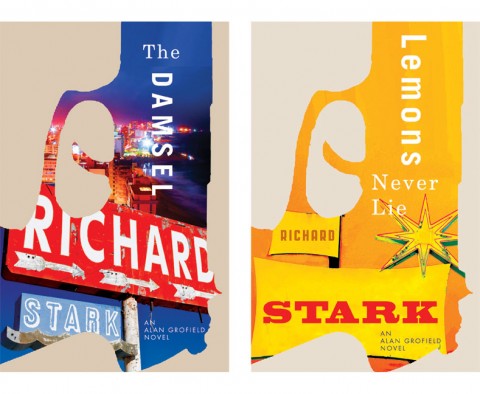
Stark’s Grofield Novels Designed by David Drummond

David Drummond designed the covers for the University of Chicago Press recent reissues of Richard Stark’s ‘Parker’ novels. Now David has designed great new covers for the reissues of Stark’s ‘Alan Grofield’ novels as well – The Dame, The Damsel, Blackbird and Lemons Never Lie.

I actually really like these earlier, slightly looser, alternatives as well:

David has written more about the design process on his blog, and you can read my interview with him here.

Comments closed

The Innovator’s Cookbook

I had seen the book trailer for The Innovator’s Cookbook by Steven Johnson posted elsewhere and hadn’t paid too much attention to it (elsewhere being wildly more popular than here!) until designer Helen Yentus dropped me a line to say that it showed her process for making the cover’s title letters using a MakerBot 3D printer:

“We really wanted to produce the cover in some way that would fit into the content. The MakerBot guys were nice enough to print the letters for us and they’re a really innovative company. They make the only affordable 3D desktop printer and they run a site where people upload their designs. It’s all pretty cool.”

In the video you can see Helen sketch out and design the letters before they are printed and set up for the cover shoot. It really is pretty cool:

The video and cover shoot were done by YDESIGN.

2 Comments

Midweek Miscellany

Comic Book Commodities — Cartoonist and illustrator Dave Gibbons, best known for his work on Watchmen with Alan Moore, interviewed at The Huffington Post:

[E]conomically comics are in a really difficult place because the monthly American comic books which are maybe 22 pages of story, now can cost $4, which is £3, and that is a lot of money for really such a small amount of entertainment when you think what you can get on the app store or you know the several hours of entertainment you can get at the movies or whatever for not dissimilar sums of money.

So, I think what happens nowadays is actually people ‘as they say,’ wait for the trade collection. But the way I can see it polarising even more is that you’ll then want is something that is more than just the reading experience, you’ll want something that is a beautiful object in it’s own right that has extras, that has maybe artist notes or writers’ notes, backup material, is really nicely bound, is beautifully printed, so you know I can see those two kind of commodities diverging even further in the future.

Gibbons discusses his contribution to Watchmen in the nicely bound, beautifully printed book Watching the Watchmen.

Let the Medium Do the Work — Screenwriter Charlie Kaufman (Being John Malkovich) on storytelling:

[I]t’s very important that what you do is specific to the medium in which you’re doing it, and that you utilise what is specific about that medium to do the work. And if you can’t think about why it should be done this way, then it doesn’t need to be done.

CRAZY – A wonderful interview with Maurice Sendak, author of Where the Wild Things Are and In the Night Kitchen, in The Guardian:

“I’m totally crazy, I know that. I don’t say that to be a smartass, but I know that that’s the very essence of what makes my work good. And I know my work is good. Not everybody likes it, that’s fine. I don’t do it for everybody. Or anybody. I do it because I can’t not do it.” You can’t be that crazy, I say: you managed to stay in one relationship for half a century. “Yes! And he was – well. He was a man who loved music and reading. He never smoked and he died of lung cancer, utterly ridiculous. I had that friendship for a long, long time.”

And finally…

One Step Ahead of the Scrap DealersThe Globe and Mail obituary for typographer and book designer Glenn Goluska who died of lung cancer on Aug. 13 in Montreal at the age of 64:

In the mid-1970s, Glenn Goluska was usually one step ahead of the scrap dealers.

The typographer and his buddies would be on the prowl in Toronto for cast-aside printing equipment. Specifically, they were picking up letterpress, its type made from carved wood or cast metal that left unique marks when smashed on to paper. The technique had stopped being economical for large printing outfits and had been on a 20-year decline, replaced by offset printing, which used a photographic process. This left all kinds of wood and metal cuts, linotype and letterpress machines available for a song.

For Goluska and his friends, here were historic pieces of art-making tools and all they needed to do was gather a few guys and find a truck with reliable suspension.

R. I. P.

Comments closed

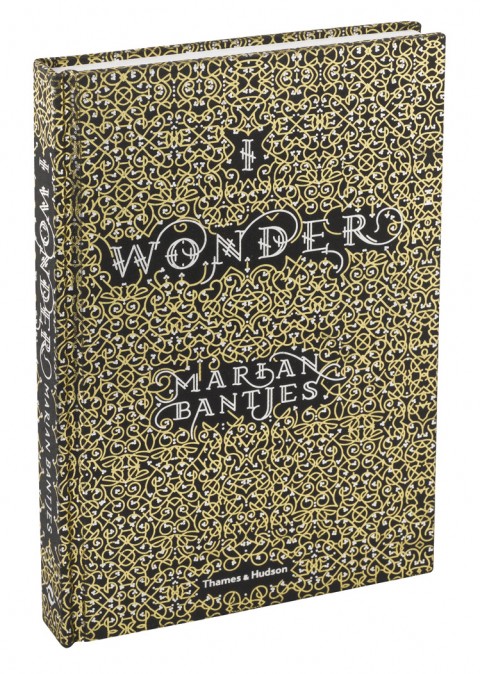
Marian Bantjes | Creative Inspirations

Lynda.com have made a full-length documentary about graphic artist Marian Bantjes. Currently it’s only available to members, but here is a short trailer for the film:

2 Comments

Something for the Weekend

Not My Type — Paul Shaw really doesn’t like Just My Type by Simon Garfield:

This is the second time I have tried to write a review of Just My Type. It is a frustrating book—warm and friendly on the surface but obnoxious underneath. The first time, I methodically tore it to pieces in my blue-pencil style, pointing out its deficiencies in niggling detail. When I was done, I felt satisfied but also uncomfortable. Did Simon Garfield really deserve such a bashing? After all, the book is full of fascinating stories and odd trivia about type, and the author has a charming, breezy style that makes each bit of typographic arcana easy to swallow. Is it really that bad? Yes, it is.

Ouch.

“I just call them books” — Robert Birnbaum interviews author John Banville for The Morning News:

I don’t like this ghettoization of books. When I started publishing fiction it is was good, not so good, bad, you know. Now there is a ghetto for crime fiction. I would like to have books listed alphabetically—no distinction.

And finally…

Control+A / Control+ C / Control+V  — A provocative excerpt from Uncreative Writing: Managing Language in the Digital Age by Kenneth Goldsmith in the Chronicle of Higher Education:

There’s been an explosion of writers employing strategies of copying and appropriation over the past few years, with the computer encouraging writers to mimic its workings. When cutting and pasting are integral to the writing process, it would be mad to imagine that writers wouldn’t exploit these functions in extreme ways that weren’t intended by their creators… The previous forms of borrowing in literature, collage, and pastiche—taking a word from here, a sentence from there—were developed based on the amount of labor involved. Having to manually retype or hand-copy an entire book on a typewriter is one thing; cutting and pasting an entire book with three keystrokes—select all / copy / paste—is another.

Comments closed

Something for the Weekend

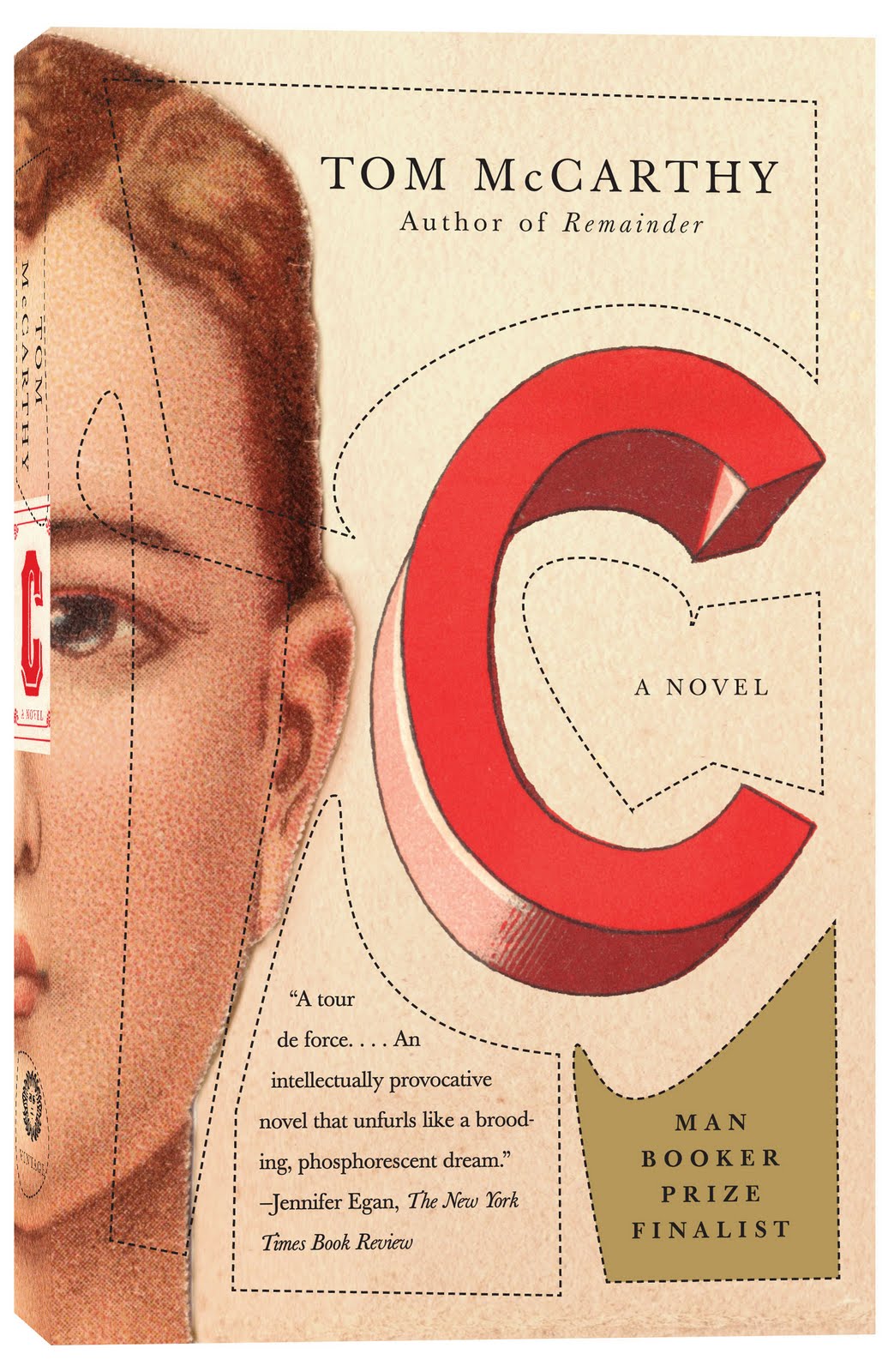
John Gall’s new cover for the paperback edition of C by Tom McCarthy. It can’t have been easy following this monster of cover.

NPR listeners pick their 100 favourite science fiction and fantasy books. On first glance, it looks like a diverse and wide-ranging selection.

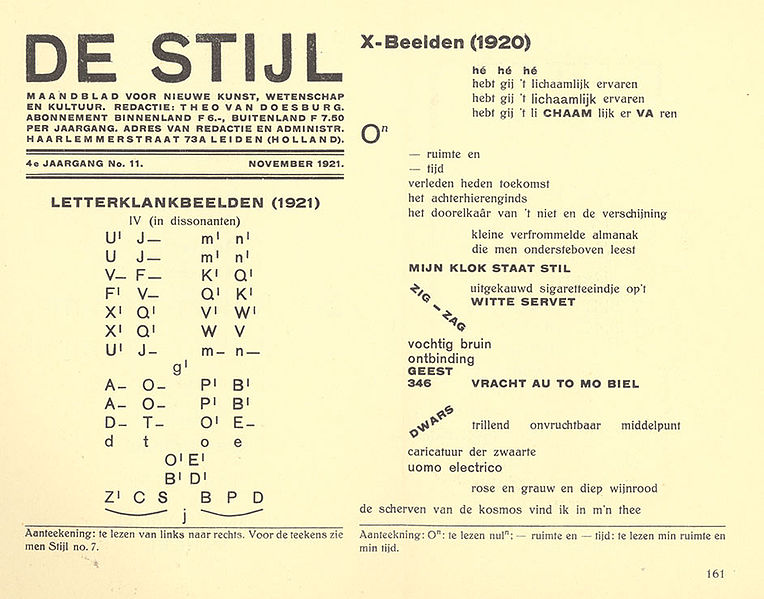
Downloadable issues of De Stijl from 1917 to 1920. They’re in Dutch of course, but still! (via Coudal).

And finally…

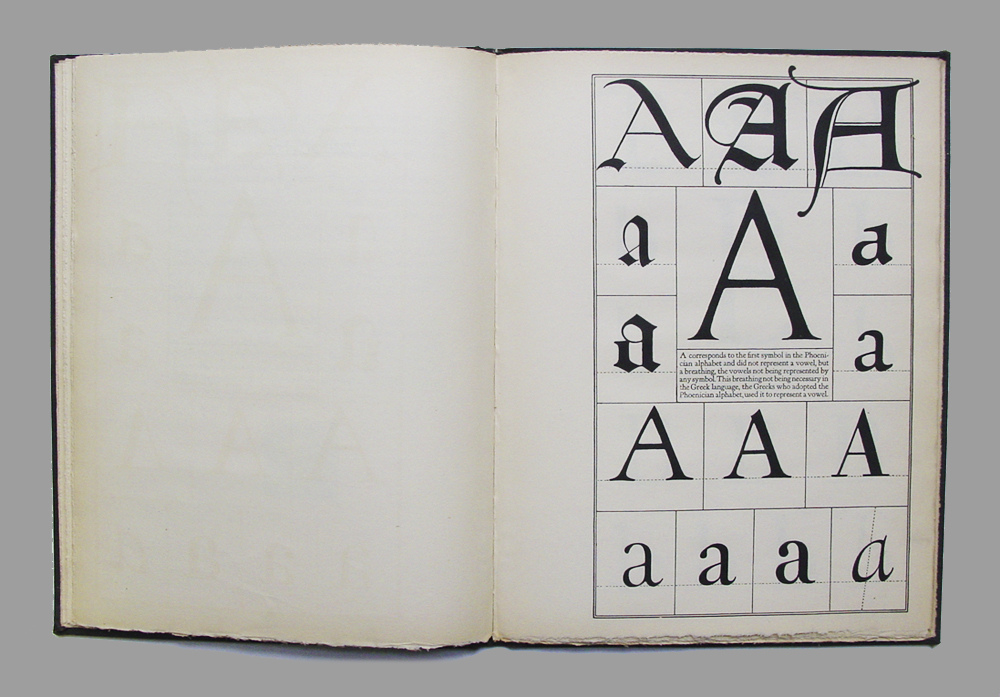
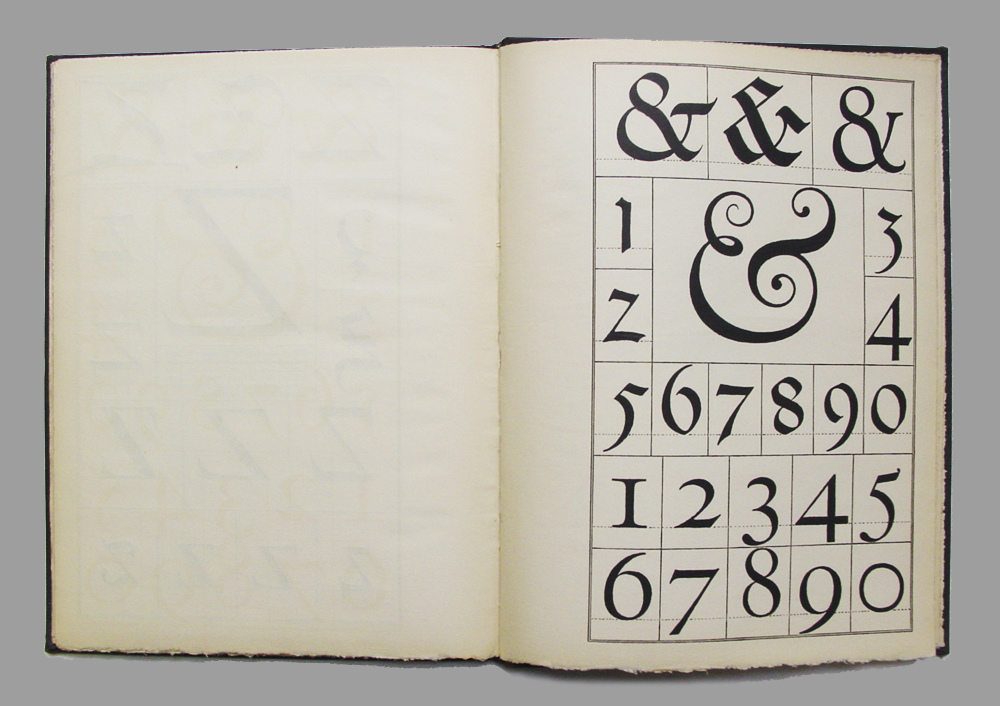
Eye Magazine has a nice feature on Frederic W. Goudy’s 1918 book The Alphabet: Fifteen Interpretative Designs.

Comments closed

A History of the Title Sequence

A History of the Title Sequence is a short film by Jurjen Versteeg. It charts the development of film title sequences by displaying the names of influential title designers in the style of their own work. In other words, it is a film about title sequences that looks like a title sequence. How great is that?

The film references the following designers and their titles:

Georges Méliès, Un Voyage Dans La Lune; Saul Bass, Psycho; Maurice Binder, Dr. No; Stephen Frankfurt, To Kill A Mockingbird; Pablo Ferro, Dr. Strangelove; Richard Greenberg, Alien; Kyle Cooper, Seven; Danny Yount, Kiss Kiss Bang Bang and Sherlock Holmes.

Comments closed

Something for the Weekend

Potential for Infection — A lovely essay by Alan Bennett on books, libraries, and bookcases, in the LRB:

‘Books Do Furnish a Room’, wrote Anthony Powell, but my mother never thought so and she’d always put them out of the way in the sideboard when you weren’t looking. Books untidy, books upset, more her view. Though once a keen reader herself, particularly when she was younger, she always thought of library books as grubby and with a potential for infection – not intellectual infection either. Lurking among the municipally owned pages might be the germs of TB or scarlet fever, so one must never be seen to peer at a library book too closely or lick your finger before turning over still less read such a book in bed.

Not A Sexy Trend Story — Dennis Johnson’s scathing must-read post on the Borders bankruptcy (and the way it is being reported) at MobyLives:

[T]his is a story that has become about some desired and sometimes advertiser-driven trend, and not the more complex reality — which is that what’s happened is not good for either print or digital books.

If there’s anything to take away from the Borders story, it’s this: It doesn’t at all represent that fewer people want to buy print books. It represents that fewer big corporations want to sell them.

19th Nervous Breakdown — Jonathan Ross reviews Supergods: Our World in the Age of the Superhero by Grant Morrison for The Guardian:

Shaving your head before dragging up in full fetish gear and wolfing down a magic mushroom omelette may well open the door to another realm, or give you access to demons and guardian angels. I have never tried it so I can’t say with absolute certainty. But I am pretty sure that what Morrison was experiencing and is describing is a cross between a nervous breakdown and a common-or-garden trip.

See also: David Itzkoff reviews the book (less sympathetically) for The New York Times.

And on a related note… Joe Carducci reviews Absolute Dark Knight by Frank Miller for the LA Review of Books.

And finally…

Typographical reference guide FontBook is now available on the  iPad:

Comments closed

Richard Price Paperbacks | Henry Sene Yee

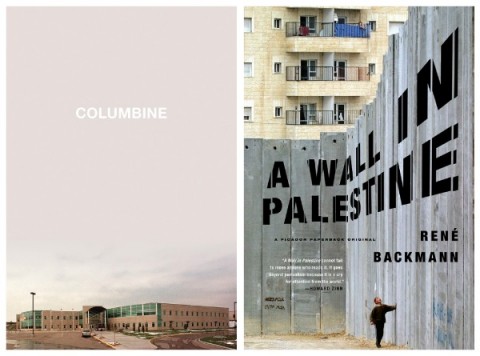
Columbine and A Wall in Palestine: cover designs by Henry Sene Yee

Henry Sene Yee is a designer and art director at Picador USA. The very of his best work (and all of it is good) — his cover designs for Columbine by Dave Cullen and A Wall in Palestine by René Backmann to pick two recent examples — combine judiciously selected and smartly cropped photographs with bold typographic choices.

Given the poignancy of the images he chooses and the respect he gives to them within his compositions — the room he gives them to breath —  it isn’t surprising that Henry is a photographer himself, regularly capturing scenes of daily life in his beloved New York through a lens.

Photo by Henry Sene Yee

The author Richard Price, who has also written for the HBO series The Wire, was born in and raised in the Bronx. Several of his novels, including Clockers and Freedomland (both adapted to movies), are set in the in fictional town of Dempsy, New Jersey.

Photo by Henry Sene Yee

Over the last couple of years Henry, who also happened to grow up in New Jersey, has designed covers for Picador’s recent reissues of Price’s novels.

Bringing his understanding of photography and type to the designs Henry has, like Price himself, avoided the expected crime fiction clichés.

As fan of Price’s work as well as Henry’s, I thought I would take to the opportunity to ask the designer how he approached the covers.

Here is his reply:

Lush Life: cover design by Aaron Artessa

It started when Picador published the paperback edition of Richard Price’s bestseller Lush Life. Because of its success, the FSG cover was reproduced in ads and displayed prominently in bookstores. Repackaging the cover for paperback would not take advantage of the public familiarity with it so it was decided to keep the original jacket design [by Aaron Artessa].

Clockers final cover by Henry Sene Yee

Clockers: unused designs by Henry Sene Yee

Clockers, probably Price’s most well known backlist was also acquired by us and was reprinted to coincide. It was designed as a stand alone. I couldn’t see how I would or need to relate it to Lush Life.

Bloodbrothers final cover by Henry Sene Yee

It was followed by his next backlist title Bloodbrothers, which was also designed as a stand alone. That book’s themes reminded me of photographer Bruce Davidson’s beautiful 1970s NYC Subway photos. I found this great Davidson photograph from his gang series and kept the colors simple.

The Breaks final cover by Henry Sene Yee

We later acquired The Breaks and Ladies’ Man and I had no intention to follow any previous Price’s look since there was none. Photo research found some great images similar in look to the Davidsons. My two favorite photos happen to both be horizontal and the initial layouts looked similar to Bloodbrothers. I tried to distinguish them by using different colors in the background, type. But in the end, it was just distracting from the great photos. So I decided to have them match Bloodbrothers, keeping the type and same palette of black, warm gray duotones, cream and warm red.

Ladies man final cover by Henry Sene Yee

The Breaks and Ladies Man: unused designs by Henry Sene Yee

Thanks Henry!

Disclosure: As of Fall 2011, book published by Picador will be distributed to independent bookstores and libraries in Canada by my employer Raincoast Books as part of a new distribution arrangement with Macmillan US. For the record, Henry and I discussed featuring his work on The Casual Optimist several times well before details of this deal was known to either of us.

1 Comment

Le Carré | Matt Taylor

Not long ago, I posted Stuart Bache’s wonderfully cinematic John le Carré covers for Sceptre in the UK. Now (as mentioned earlier today) John le Carré’s American publisher Penguin have reissued new editions of his books with amazing illustrations by Brighton-based illustrator Matt Taylor and design by Gregg Kulick and Paul Buckley. Mr Buckley art directed series.

Special thanks to Paul Buckley and Andrew Lau at Penguin US for providing the cover images, and to James at Caustic Cover Critic for bringing them to my attention.

7 Comments

Something for the Weekend

Simplicity with Sophistication — Typographer Gerard Unger talks about his work and the influence of Wim Crouwel with MyFonts:

What seemed amazing when I joined [Crouwel’s] company Total Design in 1967 was how simple it all seemed. When Wim explained how to design and do typography, you got the impression it had always been done like that and that it couldn’t be done any other way — maximum clarity. Later, I realized that this approach also had its limitations. When graphic designers had to select a typeface, they automatically specified Helvetica and stopped thinking. Wim’s own work was different: it seemed clear and simple, but was full of refinement, which comes naturally to him. That is probably why it is so attractive to younger generations: simplicity with sophistication. Yet I personally wouldn’t welcome a revival of Swiss typography — it was too formulaic. Also, I think design should be more of a social thing than that. For too long, graphic design has been about individualism and about fulfilling personal ambitions.

The Doctrine of Immaculate Rejection— A wonderful with E. B. White from the Paris Review 1969. It’s a great read, but it’s hard not to get the feeling it comes from a more genteel era that has long since disappeared (via Longform):

I revise a great deal. I know when something is right because bells begin ringing and lights flash. I’m not at all sure what the “necessary equipment” is for a writer—it seems to vary greatly with the individual. Some writers are equipped with extrasensory perception. Some have a good ear, like O’Hara. Some are equipped with humor—although not nearly as many as think they are. Some are equipped with a massive intellect, like Wilson. Some are prodigious. I do think the ability to evaluate one’s own stuff with reasonable accuracy is a helpful piece of equipment. I’ve known good writers who’ve had it, and I’ve known good writers who’ve not. I’ve known writers who were utterly convinced that anything at all, if it came from their pen, was the work of genius and as close to being right as anything can be.

And finally…

Type and Still Imagery — Writer-director Mike Mills, who began his career as a graphic designer, talks about his semi-autobiographical movie Beginners with AIGA:

Before I was a filmmaker I loved Godard as a graphic designer. He does the best design, to me. And a lot of my graphics being very, almost sort of didactic or presentational, or sort of centered and clean, to me really comes from how Godard uses type and still imagery in his films, in Tout va bien or One Plus One or Pierrot le Fou, so Godard’s been influencing me for a very long time. And the graffiti in the film is much more sort of May 1968, sort of Situationist graffiti rather than being like hip-hop graffiti.

There is also a book, Drawings From the Film Beginners, that accompanies the movie (thx @Henry)

Comments closed

Backlit | Ingrid Paulson


Toronto-based designer Ingrid Paulson has designed these four covers for a new paperback reprint series called ‘Backlit’ to be published by ECW Press this fall.

Lovely stuff.

4 Comments