Skip to content

Tag: Typography

Midweek Miscellany

An interview with award-winning Toronto-based illustrator Gary Taxali at GrainEdit.

How Disappointing — Book designer Peter Mendelsund on what we picture in our minds when we read literary works:

“Call me Ishmael.” What happens when you read this line? You are being addressed, but by whom? Chances are you hear the line (in your mind’s ear) before you picture the speaker. I can hear Ishmael’s words more clearly than I can see his face. (Audition requires different neurological processes than vision, or smell. And I would submit that we hear more when we read than we see). Picturing Ishmael requires a strong resolve.

But if you indeed took the trouble to summon an image of Ishmael what did you come up with? A sea-faring man of some sort? Is this a picture or a category? Do you picture Richard Basehart, the actor in the John Huston adaptation? How disappointing.

(All I can say is that the follow-up essay had better be about comic books, Peter!)

The Secret Detectives — An interview with Patti Smith in The Telegraph:

“When I was young I knew William Burroughs really well. And William’s secret desire, which he never quite did, was to write a straightforward detective novel. How good would that have been! And I used to say, ‘you have to do it William!’ And he’d say” – Smith gives a passable impersonation of the Burroughsian growl – “‘Oh, I don’t know, one of these days.’ William was like the embodiment of a detective, I just loved him so much.”

Our Greatest Creation — Jonathan Glancey, The Guardian‘s former architecture and design correspondent, reviews City: A Guidebook for the Urban Age by P.D. Smith:

The stuff of lofty intentions and grubby backstreet life, the city represents much of our restless and contradictory natures. “In this dynamic, cosmopolitan space,” Smith writes, “lies the wellspring of our creativity as a species. The greatest cities nurture and stimulate ideas in science and the arts that are the very heart of human civilisation. For this reason, sustainable, humane and well-governed cities are our best hope for the future.”

Amen.

Hiding in Plain Sight — Type designer Ramiro Espinoza on ‘Amsterdamse Krulletter’, the curly lettering painted on the windows of traditional pubs in Amsterdam, and his only typographic revival Krul:

The fact that such gorgeous and original letters have largely been ignored in a country with such a rich type- and letter-making tradition reminds me of the plot of Edgar Allan Poe’s famous story “The Purloined Letter”. In the story, an important document cannot be found because it is lying in plain sight. Sometimes things can become invisible to us because of their very familiarity.

Avant Garde — Adrian Shaughnessy on life and work of designer Herb Lubalin at Imprint:

I have a pet theory about why Lubalin is currently popular: In the eyes of many designers, he offers a way of designing—and of communicating—that doesn’t require expensive art direction, over-manicured photography, or grandiose presentation. Lubalin proved that to be effective, all you need is a typeface and a good idea. In other words, he is a designer for the age of austerity.

Unit Editions’ forthcoming limited edition monograph, Herb Lubalin: American Graphic Designer, 1918–81, will be available in August.

And finally (and also at Imprint)…

An interview with designer and collage artist Graham Moore, who incorporates mid-century modern ephemera and fragments from billboard posters into his work.

Comments closed
Something for the Weekend

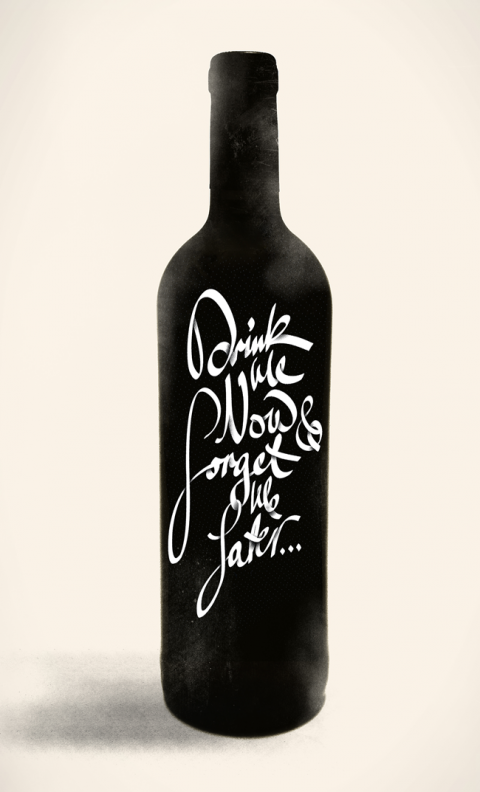
Letter Cult’s epic selection of the best custom lettering of 2011 (don’t click on the link if you have things to do today — and this is only part one!). Pictured above ‘Drink Me Now, Forget Me Later…’ by Michael Spitz.

Rank Amateurs — Design critic Justin McGuirk reviews Home-Made Europe: Contemporary Folk Artifacts for The Guardian:

The makers’ motives are not always need or thrift; sometimes it’s pleasure or obstinacy, or serendipity – a road sign that happens to make a perfect tabletop. This kind of uncelebrated creativity brings to mind artist Jeremy Deller’s Folk Archive, which catalogues everything from protest banners to pizza kiosks. Deller has written a short foreword here, in which he makes a distinction between these objects and DIY, “a hobby that seems so pleased with itself”. The difference is that the DIYer seeks to emulate the professional, whereas these objects all share the nonchalance of the amateur.

Also in The Guardian, Anthony Quinn on cricket and the novel:

Sport in novels is seldom just sport. It’s a way of talking about something else – fellowship, ambition, jealousy, honour. With cricket it’s clearly a way of writing about failure. Lately we’ve been hearing a lot about players who, at the end of their careers, succumb to insecurity and depression; some cannot handle the post-career blues and choose to end it all. As David Frith’s excellent book Silence of the Heart (2001) made clear, cricket has the highest proportion of suicides in any sport. Why? It might be because it is, of all sports, the loneliest.

Repressed Energy — An interview with Daniel Clowes about The Art of Daniel Clowes: Modern Cartoonist at the A.V. Club:

I can look at my early work and see what a pained struggle it was to draw what I was drawing. I was trying so hard to get this specific look that was in my head, and always falling short. I could see the frustration in the lines, and I remember my hand being tensed and redrawing things a thousand times until I finally inked it, and just having this general tense anxiety about every drawing. I think that comes through in the artwork, and gives it this certain kind of manic energy, this kind of repressed energy, so you feel like it’s sort of bursting at the seams or something.

And finally…

Sara Goldsmith on the history of the paper clip at Slate magazine:

The paper clip we think of most readily is an elegant loop within a loop of springy steel wire. In 1899, a patent was issued to William Middlebrook for the design, not of the clip, but of the machinery that made it. He sold the patent to the American office-supply manufacturer Cushman & Denison, who trademarked it as the Gem clip, in 1904. Middlebrook’s rather beautiful patent drawing shows the clip not as an invention but as the outcome of an invention: the best solution to an old problem, using a new material and new manufacturing processes. Coiled in this form, the steel wire was pliant enough to open, allowing papers to nestle between its loops, but springy enough to press those papers back together. When the loops part too far from each other and the steel reaches its elastic limit, the clip breaks.


Comments closed

Something for the Weekend

Imprint talks to John Bertram about his Recovering Lolita project:

For obvious reasons, of course, [Lolita] remains as controversial a novel as it was a half century ago, if not more so. And, probably helped along by Kubrick’s breezy film, and many very terrible covers, the term “Lolita” has come to popularly mean something quite the opposite of the novel’s namesake, so a designer has that to contend with as well. On the one hand, then, designers face the very real challenge of communicating some of that complexity in a cover, which can easily become overwhelming… On the other hand, I think there are also important ethical considerations that require careful negotiation since, whatever people may think, we are talking about a novel which has child rape at its core.

There is more about  the project here (pictured above: Lolita designed by Rachel Berger).

The Bare Specificities — A really lovely profile of Portland-based book-scout Wayne Pernu at The New Yorker:

On the job, Pernu keeps a few principles in mind—first and foremost, the importance of condition. For example, with its original dust jacket, the value of a first-edition “The Great Gatsby” can multiply from two thousand five hundred dollars to more than two hundred thousand. “That little piece of paper on the book is often worth thousands and thousands of dollars, much more than the book itself,” Pernu says. “Specificity is really crucial as well. A book called ‘World History’ isn’t going to do well, but a book called ‘Peruvian Shovel Makers in the Seventeenth Century,’ that’s going to be worth a lot of money to someone. You always get excited when you see something that specific, no matter what it is.”

Also really nice: An interview with English letter carver Fergus Wessel for I Love Typography:

Eric Gill is my hero! His lettering, in my opinion, remains unsurpassed, partly because of its honesty. We are all striving for perfection, but there really is no such thing of course. If we try to control it and attempt to be too artistic, we are in danger of losing that honesty. One has to let the letters flow a little.

There are certainly strict rules of good layout and lettering, but rules are there to be broken. But in order to bend the rules, one has to know them in the first place, and attain that initial discipline. This requires years of experience and practice; it is something that evolves and it is during this evolution that you develop your own individual style and form.

And finally…

Alexandra Harris, author of Romantic Moderns, on Modernism at The Browser:

To an extent, yes. But take [Nikolaus] Pevsner for example, who was one of the great exponents of the Bauhaus version of modernism in England. Because there’s such a strong German tradition of minimal, pared down, internationalist architecture, for him it was a kind of nostalgia. It wasn’t our English tradition but a German tradition, so it seemed to us very brutal and modernist. But to him it was laden with associations and emotions, as it was for the other émigré artists like [Laszlo] Maholy-Nagy and Naum Gabo.

Again, what seems very new is actually attached to a tradition, and is so much more interesting that an absolute break with the past. A lot of these buildings that seem very modern are deeply entangled with a tradition of classical architecture using the same classical symmetries and the sense of elegance and refinement that comes straight down from Greece and Rome, and it doesn’t get more traditional than that. So there’s always a traditionalism in the modern.

Comments closed

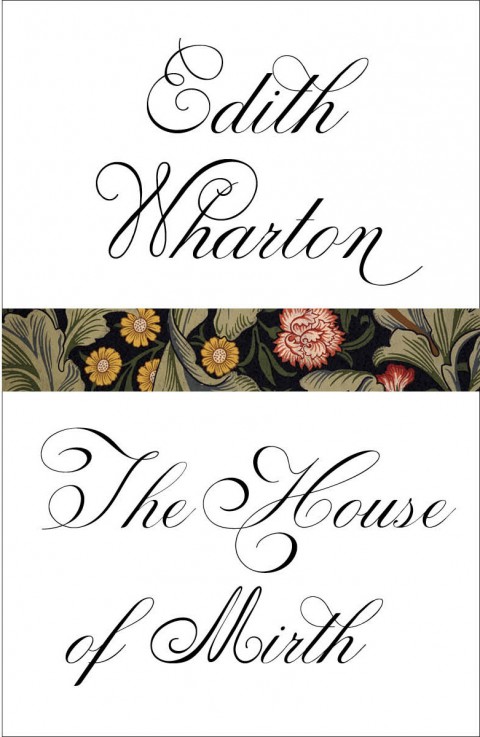
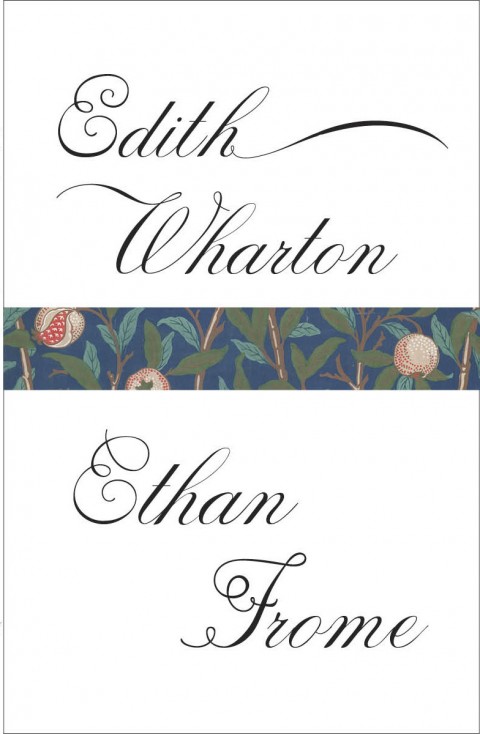
Edith Wharton Designs by Megan Wilson

Two more beautiful cover designs for Vintage by Megan Wilson: The House of Mirth and Ethan Frome by Edith Wharton.

The William Morris wallpaper is a lovely touch.

Comments closed

Design Matters with Erik Spiekermann

Debbie Millman talks with designer and self-confessed typomaniac Erik Spiekermann on the latest episode of Design Matters:

Design Matters with Debbie Millman: Erik Spiekermann mp3

Comments closed

Something for the Weekend

Typographica’s favourite typefaces of 2011 (pictured above: A2 Beckett designed by Henrik Kubel for A2-TYPE).

The Coroner`s Report — John Banville reviews The Complete Poems by Philip Larkin for The Guardian:

A “Complete Poems” is a death certificate and memorial combined. After the Selected and the Collected, the Complete marks the poet’s official demise and at the same time erects a carven monument designed to outlast the ages. In the case of this mighty volume of the all of Larkin, there is something too of the coroner’s report.

A twopart interview with William Gibson, author of Distrust That Particular Flavor, in the Wall Street Journal.

And finally…

Go Outside — Ian Leslie responds to criticism of his essay on serendipity:

The inherent limits of older formats like newspapers or bookstores are a feature as well as a bug. They make things a bit difficult for us, and because of that they often push us towards unsought-for discoveries.The modern internet makes each of us like a rich man in his mansion who has the finest food flown in from every corner of the world and whose favourite singers and artists come and perform for him in his bedroom at a moment’s notice. He has a nagging feeling that he ought to go outside and experience the city and its manifold surprises first-hand. Nothing is stopping him from doing so. But it feels like such an effort.


Comments closed

Something for the Weekend

Adrift in the World — Tim Parks on fiction and place for the NYRB Blog:

If there is a problem with the novel, and I’m agreed with [David] Shields that there is, it is not because it doesn’t participate in modern technology, can’t talk about it or isn’t involved with it; I can download in seconds on my Kindle a novel made up entirely of emails or text messages. Perhaps the problem is rather a slow weakening of our sense of being inside a society with related and competing visions of the world to which we make our own urgent narrative contributions; this being replaced by the author who takes courses to learn how to create a product with universal appeal, something that can float in the world mix, rather than feed into the immediate experience of people in his own culture.

The Degree-Zero of Typeage — The “un-Google-able” Jenny Hendrix on Tintin for LA Review of Books:

Hergé himself described Tintin as the “degree-zero of typeage — a typographic vanishing point.” The formulation suggests Samuel Beckett, and there is indeed something Beckettian about Tintin. In French, appropriately, the phrase “faire tintin” means something approximating “to go without” or “to be frustrated.” Tintin may be a reporter, motivated, like any good journalist, by the hint of a good story, but only in his very first of his 24 adventures does he actually file copy. He was born 15, and supposedly stays that way, though it is hard to imagine he’s any age at all. He has no last name, no parentage and no past, no desires and no sexual identity. Even his appearance has little to say about him: his face is just a circle, with two black dots for eyes and a black, semi-circular wedge of mouth. He could be anyone, and frequently is…

Super-Punch — The New York Times reviews ‘Printing for Kingdom, Empire & Republic: Treasures From the Archives of the Imprimerie Nationale’, an exhibition of historical steel punches, copper matrices, and typefonts at the Grolier Club in New York:

[T]hese exquisite artifacts… offer a reminder, in the ethereal era of bitmapping, that type was once the tangible province of engravers and metal casters who labored in unforgiving but enduring media. To make a C with a cedilla, for example, involved a lot more effort and thought than holding down the Option key on your Mac. A comma-shaped steel appendage had to be lashed with string to the bottom of the C punch to produce a new matrix.

“People are practically printing books with their smartphones,” Mr. Fletcher said, in a tone suggesting that he did not think this was such a good idea. “It’s much more gratifying to be able to touch something and find out it’s real, rather than a matter of bits and bytes.”

Comments closed

Something for the Weekend

Fabulous Fury — Evie Nagy reviews Tarpé Mills & Miss Fury: Sensational Sundays 1944–1949 for The LA Review of Books:

Though Mills ostensibly hid her gender and wrote a high-adventure comic rife with guy stuff like smuggling, espionage, mad science, and gruesome murders, Miss Fury has much in it that seems designed to appeal to women as well. For one thing, the outfits are fabulous. As Robbins suggests, Mills clearly took great pleasure in dressing Marla, scheming villainess Erica Von Kampf, and other characters in elaborate gowns, lingerie, and smart but finely detailed sportswear. Modern superhero comics tend to focus on the intricacies of high-tech costumes at the expense of civilian clothes; Miss Fury, by contrast, is midcentury clothes porn.

Fucking Great — British film director Beeban Kidron remembers Magnum photographer Eve Arnold who died recently aged 99:

She was an early adopter of colour – favouring a thick negative with rich hues and simple compositions – and she ruthlessly edited her own work with a wicked sense of humour. “It’s not that we’re so great, it’s that the others are so fucking mediocre.”

See also:

A slide show of Eve Arnold’s work at The Guardian.

Eve Arnold remembered in The Guardian, The Telegraph, The Financial Times, The New York Times and The Economist.

The best Typefaces of 2011 from FontShop and the most popular fonts of the year from MyFonts.

Forward! — Stephen Page, chief executive of Faber & Faber, writing for The Guardian on the way ahead in publishing:

[T]he men and women engaged in publishing need to be bold and exuberant. This is an extraordinary age for writing and reading, and it seems to me that this endeavour will go better if it’s done with a sense of purpose and pleasure, rather than defensively. It won’t turn out well for everyone currently in the business, but so what? If publishing is useful and creates value then it will be of value, whoever is doing it.

And finally…

A lovely profile of  Peter Hardwicke, one of the last traditional signwriters in London’s East End, in Spitalfields Life:

I am an old school signwriter that likes to talk directly to the client to select the fonts and the colours. I’ve found it a rewarding way to work, dealing with independent shopkeepers. I like to look at the built environment and choose fonts that are sympathetic to the architecture and the surrounding cityscape. I look at the other shops and I do research…I think people are bored with computer generated artwork…even my younger clients, they’d rather have it  done professionally than use stick on letters – it shows they’ve got taste.

You can find an earlier profile of Peter here and see an archive of his work on Flickr. (Thx Monique)


Comments closed

Erik Spiekermann: Typography in the Digital Domain

In this 10-minute film by Johnny Daukes for Microsoft UK,  typographer Erik Spiekermann talks type with Elliot Jay Stocks, founder of 8 Faces magazine:

(via I Love Typography)

Comments closed

Something for the Weekend

Terror! — Amis on Don DeLillo and his new book The Angel Esmeralda: Nine Stories in The New Yorker:

DeLillo is the laureate of terror, of modern or postmodern terror, and the way it hovers and shimmers in our subliminal minds. As Eric Hobsbawm has said, terrorism is a new kind of urban pollution, and the pollutant is an insidious and chronic disquiet. Such is the air DeLillo breathes.

It’s Only One Book — A great interview with Art Spiegelman about his new book MetaMaus at The Comics Journal:

[Maus] took me thirteen years to do without any map of how to do it. No matter what somebody says now about graphic novels, this was made without any instruction manual. I didn’t know how to make a comic that was built to be reread, and that held up as it got reread, and be built over such a large span of time. There wasn’t something for me to look at. I guess there were long mangas out there, but I wasn’t that into them. They weren’t translated back when Maus was made. So I didn’t have any way to structure this, and structure is so basic to how I perceive. So I’m stuck with something that took a lot of me to make. So what can one do after it without either betraying it or capitulating to it? It’s an ongoing struggle.

Optimistic — An interview with Toronto’s indie comics heroine Annie Koyama at Comic Books Resources:

I was never under the impression that anyone was getting rich publishing the kinds of books and comics I chose to do but hopefully by staying a certain size, you can at least sustain the business and continue to break out new artists. I’m still figuring out what works and what doesn’t, but it’s nice to see others out there taking risks on new talent too.

Because I wasn’t saddled with preconceived notions of how things worked, I of course made some mistakes but I was also freer to carve my own road. In Toronto, where I’m located, most of the art bookstores have closed but we have one of the best and most supportive comic stores anyway, The Beguiling. I would still personally rather read a book that I hold in my hands, but you cannot ignore the digital content that’s available to anyone now. So, for now, I remain optimistic.

And while we’re on the subject of comics:

An obituary of comics historian Les Daniels, author of Comix: History of Comic Books In America, in the New York Times:

 Mark Evanier, a comic-book writer and historian, said that before Mr. Daniels, “nobody thought to write the history of the industry,” adding that “back then, it was a sloppily run, disposable business that no one thought would exist for long.”

“He was a guy that publishers hired to come in and figure out the histories of their own companies,” Mr. Evanier continued, “and he produced major works upon which all future histories will be built.”

See also: Tom Spurgeon’s more expansive obituary at The Comics Reporter.

And finally…

The Creative Review previews Polish Cold War Neon, a new book by photographer Ilona Karwinska. Putting it on the Christmas list…


Comments closed

The Title Design of Saul Bass (A Brief Visual History)

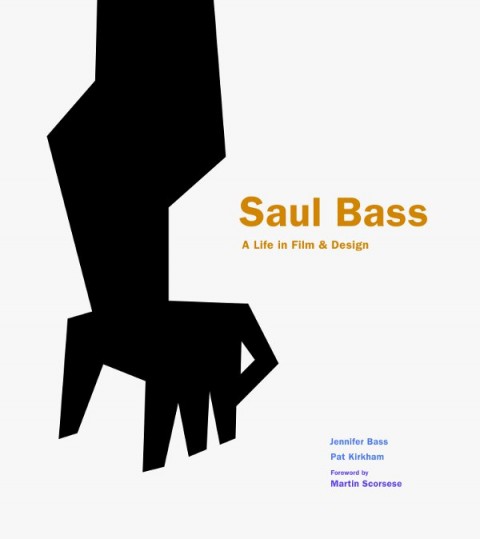
I’ve been waiting for a book about Saul Bass since I was bookseller. Now Saul Bass: A Life In Film & Design is finally in bookstores, Ian Albinson of the brilliant Art of the Title has put together a brief visual history of some of Bass’s most celebrated work:

(For the record: Saul Bass: A Life in Film & Design is published by Laurence King and distributed in Canada by my employer Raincoast Books)

Comments closed

Something for the Weekend


Read This — Alex Ross, author of The Rest is Noise and Listen To This, on books about music at FiveBooks:

There’s a long list of bad examples of vague and gushy writing about music in literature, but there’s also a string of distinguished examples. I wrote a piece for The New Yorker a couple of years ago where I talked about my favourite composers in literature. It makes me very happy when I see a novelist going to the trouble of getting the musical details right, because this is part of the conversation on classical music that we very much need. To have plausible and vivid representations of composers and classical musicians in literature and in film is very important.

(Disclosure: the paperback editions of The Rest is Noise and Listen To This are published by Picador in the US and are distributed in Canada by my employer Raincoast Books)

Building from the Bones of a Superstore —  Businessweek on the decline of Borders and the opportunities for independent bookstores in the US:

Despite rising online book sales and digital downloads and the Great Recession, bookstores in the area were profitable—right up until they closed. Even Davis-Kidd, locally owned until the Joseph-Beth Booksellers chain purchased it in 1997, had been solvent, undone not by the collapse of the local market but by the bankruptcy of the parent company… Nashville lost its bookstores not because people there had abandoned physical books and retailers. For the most part, it lost them remotely, at the corporate level.

It’s Just a Device — Errol Morris talks to Stephen King about the Kennedy assassination and his new novel 11/22/63:

When you write about the past, the more you write, the clearer the past becomes. It’s like being regressed under hypnosis. My view of the past is that attitudes change, but they change very slowly. Underneath, they stay pretty much the same. “The fundamental things apply as time goes by.”

The Artist and The Scientist — Paola Antonelli, critic and curator at MoMA, on type design for Domus magazine:

Font designers who are able to marry critical and commercial success are a unique mixture of two basic clichés: the artist and the scientist. They are eclectic, curious, obsessive and absorbed, as well as rigorous, punctilious, enamoured of rules and limitations, and loyal to a higher code of design behaviour. They are an even more different breed among the many different breeds of designers working today. Contending now with the dynamic methods of communication provided by tablet computers, smartphones and other supports for text and brand, they deal with each family of fonts as if it were truly made of individuals, live characters that need to be able to fend for themselves once released into the wider world. In this vein, font design might just be the most advanced form of design existing today.

And finally…

Failure and Disappointment — Comedian Ricky Gervais on the difference between American and British humour:

Americans say, “have a nice day” whether they mean it or not. Brits are terrified to say this. We tell ourselves it’s because we don’t want to sound insincere but I think it might be for the opposite reason. We don’t want to celebrate anything too soon. Failure and disappointment lurk around every corner. This is due to our upbringing. Americans are brought up to believe they can be the next president of the United States. Brits are told, “it won’t happen for you.”

Have. A. Nice. Day.

Comments closed