Ian Albinson of the excellent The Art of the Title Sequence put together this short collection of film titles for the SXSW “Excellence in Title Design” competition screening:
(via Coudal)
Comments closedBooks, Design and Culture
Ian Albinson of the excellent The Art of the Title Sequence put together this short collection of film titles for the SXSW “Excellence in Title Design” competition screening:
(via Coudal)
Comments closed“Please do not be cynical. I hate cynicism. For the record, it’s my least favorite quality, it doesn’t lead anywhere. Nobody in life gets exactly what they thought they were going to get. But if you work really hard and you’re kind, amazing things will happen. I’m telling you, amazing things will happen. I’m telling you, it’s just true!”
Jacob Gilbreath, a graphic design student at Oklahoma State University, created this great kinetic typography project — inspired by Lou Dorfsman’s Gastrotypographicalassemblage — from the dialogue of Conan O’Brien’s farewell on The Tonight Show on NBC:
1 CommentTo explain what graphic design is, the UK’s Design Council talked to well known British graphic designers, including Neville Brody, about their work for a series of short videos:
The other films in the series can be found here.
(via FormFiftyFive)
Comments closedIn this fantastic video from Gestalten, graphic designer and typographer Erik Spiekermann, founder of MetaDesign and FontShop, and author of Stop Stealing Sheep, talks about designing type:
Spiekermann also discusses his love typography in this profile on Deutsche Welle TV:
(via I Love Typography)
1 Comment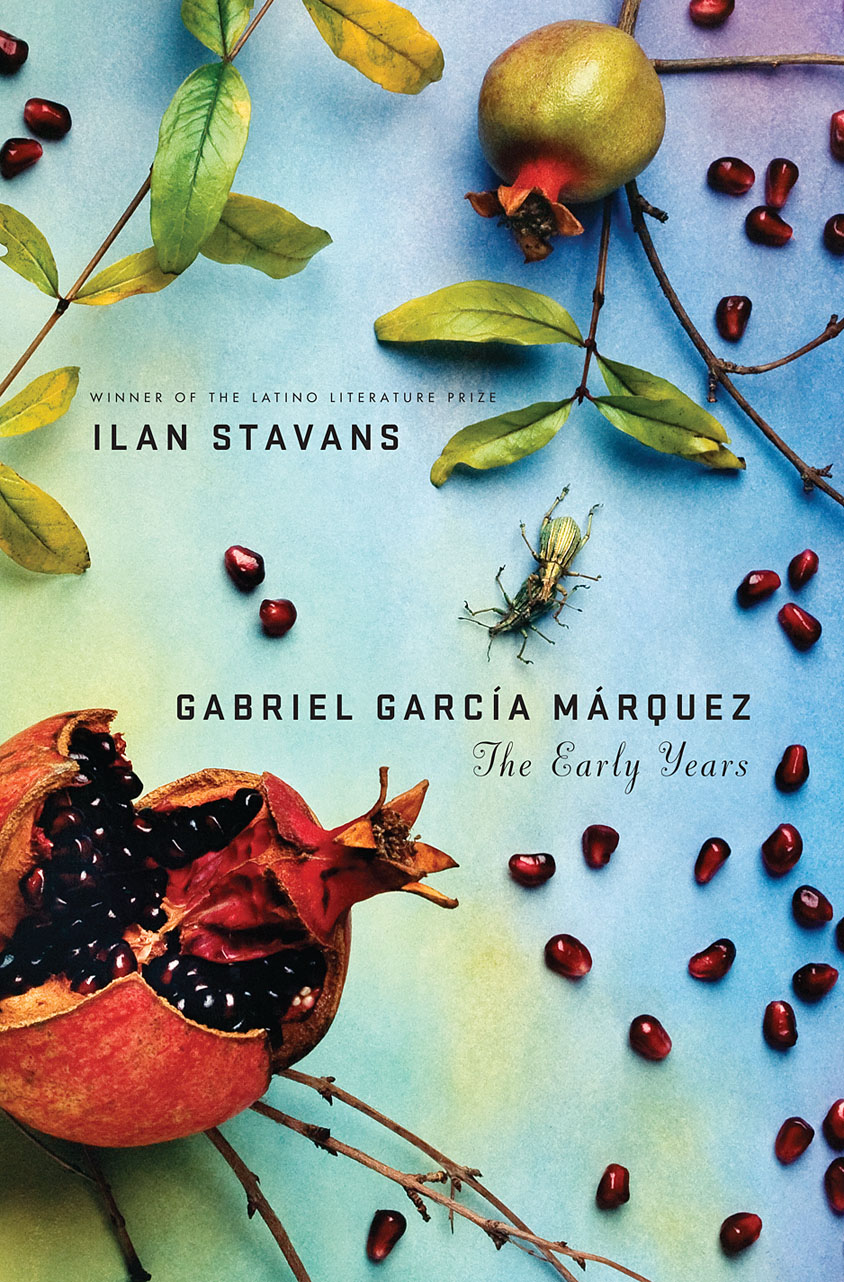
I recently mentioned to a friend that I was going to interview book cover designer Jason Ramirez. “Jason’s the best,” he said. “Any time I’m stuck on type, I try to imagine what Jason would do and work from there.”
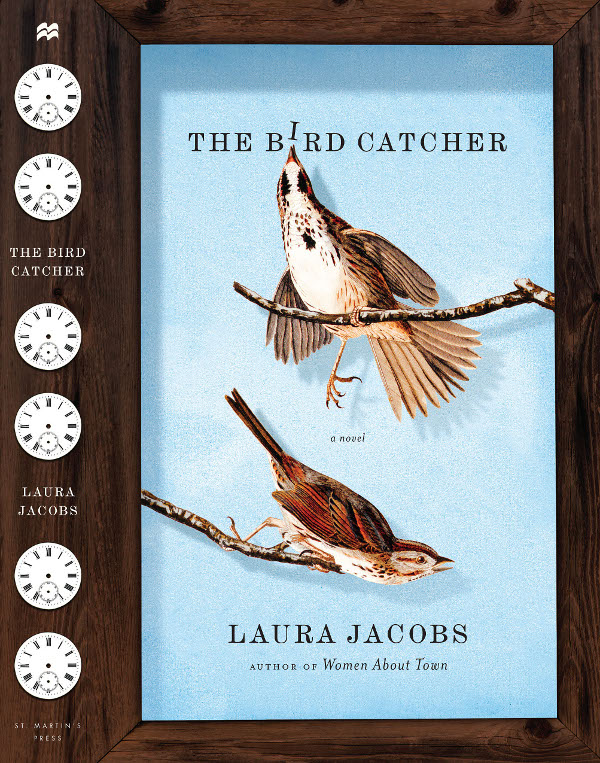
And when you look at Jason’s book covers you know what he means. A designer at New York’s St. Martin’s Press his typography is always beautiful. Each elegant letter is given room breath and perfectly compliments the design as a whole.
There is, in fact, an irresistible incisiveness and precision to Jason’s work that lend all his book covers an airy beauty. They feel spacious and uncluttered; direct without ever being blunt. I’m sure it won’t be too long before more designers ask, “what would Jason do?”
Jason and I corresponded by Twitter and email, and you can see more his portfolio on the Behance Network.

How did you get into book design?
I pretty much took a roundabout way into book design. I first went to college in upstate New York with the intention to eventually study medicine. Four years later, after a near-fatal rendezvous with organic chemistry, I graduated with a degree in comparative religious studies. I spent the next few years in San Francisco working for a real estate investment company, first in human resources and then in marketing and branding. It was during my stint in marketing and branding, which introduced me to the design world of San Francisco, that I began to daydream about a move to the city of New York to study design. Eventually I worked up the courage to make the move and was accepted to Parsons School of Design. During my last year at Parsons I had the good fortune of taking a book cover design course instructed by Gabriele Wilson. Pretty much from the onset of the class I was hooked. Shortly after graduating again, I began working with Rodrigo Corral and continued for a bit over a year before landing at St. Martin’s Press.
How long have you been at St Martin’s?
I’ve been with St. Martin’s Press since November 2007.
Approximately how many titles do you work on a season at St Martin’s?
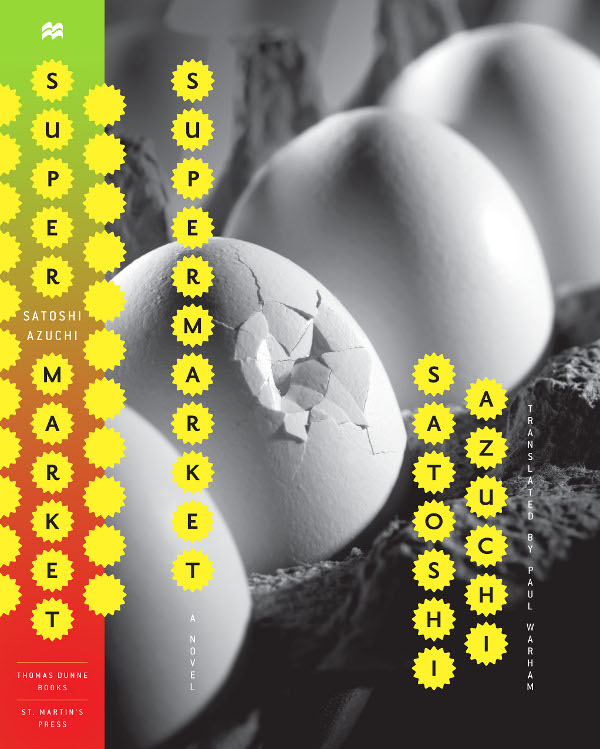
I work on anywhere from ten to fifteen new titles each season, across four different imprints: St. Martin’s Press (trade hardcover), St. Martin’s Griffin (trade paperback), Minotaur (mystery) and Palgrave-Macmillan (which is actually an academic and trade publishing company; a close cousin to St. Martin’s).
Is there a house style?
No. One of the terrific things about working at St. Martin’s is the variety of titles published each season. Working across genres provides an opportunity to bring a fresh perspective to each project.
Do you also work freelance?
I’ve had the opportunity to work with a few publishers including, Atlas & Co., HarperCollins, Oxford University Press, The Countryman Press, W.W. Norton, and Vintage. I’ve also dabbled in a bit of interior book design with the talented design and publishing duo of Scott & Nix (Charles Nix and George Scott).
Could you describe your design process?
My process may vary depending on the project, but I always begin by reading. I try to read as much as possible of whatever materials are available, be it a manuscript, proposal, or synopsis. Depending on the subject matter, additional research might be needed. Not to mention that a bit of scouting for related imagery and typography can often inform and inspire. I tend to rely heavily on a sketchbook to record notes relating to the content and meaning of a book; ideas about imagery, typefaces and colors; and thumbnail sketches. And from this hopefully a clear, clever and attractive idea will prevail.

What are your favourite books to work on?
I appreciate the opportunity and challenge to work on various genres. Though I often tend to be drawn to non-fiction titles such as academic and business-oriented subjects. The conceptual challenge to visually simplify complex and comprehensive subject matter that might not be immediately accessible to a reader resonates with me.
What are the most challenging?
Any project has the potential to be challenging. Sometimes a project that I expect to be relatively easy to nail will prove to be the most time-consuming, requiring multiple rounds of revision. The challenge in this situation can be sustaining a fresh approach throughout multiple iterations, as well as mitigating your ideas with the opinions of others involved.
Do you have any recent favourites?
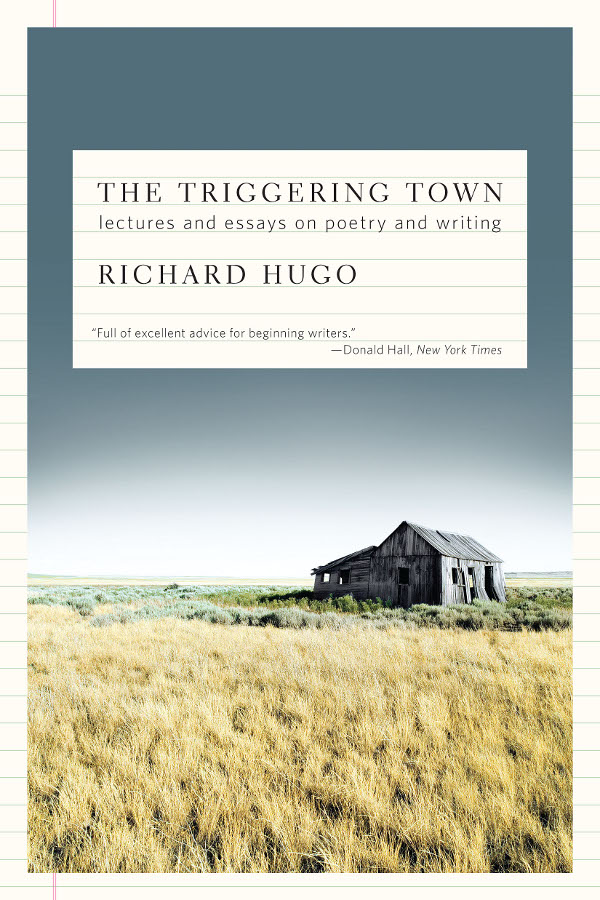
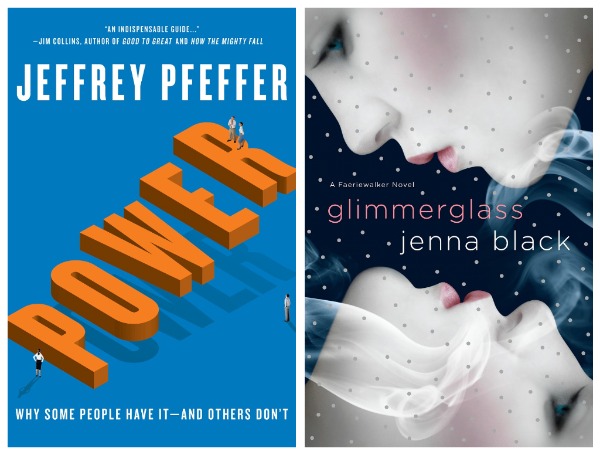
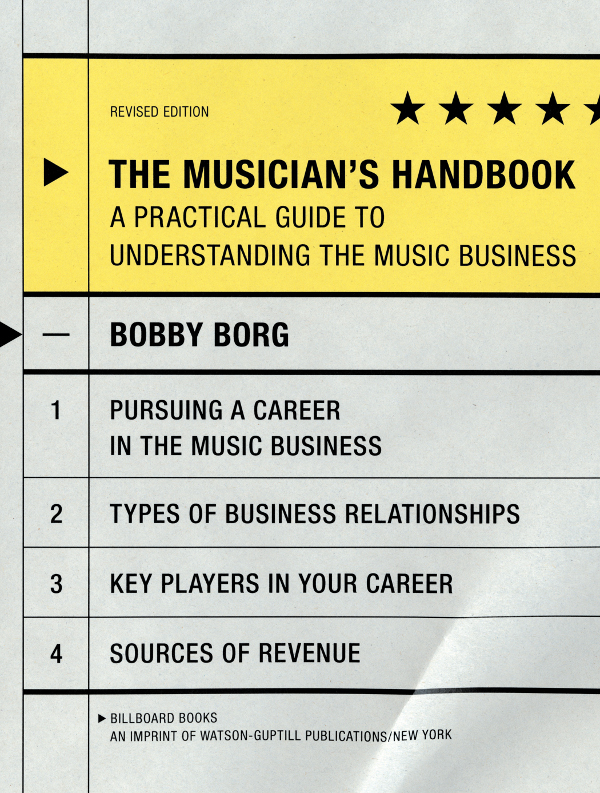
Two recent favorites include, Gabriel García Márquez: The Early Years, a biography that charts Márquez’s life leading up to the publication of his classic, One Hundred Years of Solitude; and Glimmerglass, my foray into the burgeoning young adult paranormal genre. I’m also quite fond of two relatively recent freelance projects: Power, a business management book about leadership and management success; and The Triggering Town, a collection of witty and inspirational essays on writing and poetry.
Where do you look for inspiration, and who are some of your design heroes?
I will take cues from popular culture, be it the daily headlines, magazines, music, television, movies, and the internet. On any given day, I might find inspiration in a post in my Twitter feed, from a thought-provoking illustration within the New York Times, by thumbing through a design or art book, or simply from a conversation had with a friend or colleague. And I’m almost always inspired when inside a book store.
I admire the work of Paul Rand, Alvin Lustig, Vaughan Oliver, Stefan Sagmeister, and Michael Bierut, to name a few. But the reality is that there so many visually creative people, both inside and outside of publishing, whose work I admire and find inspirational.
Who else do you think is doing interesting work right now?
There are many smart and talented designers working in publishing today who are consistently creating great jacket design such as Rodrigo Corral, Evan Gaffney, John Gall, Jamie Keenan, Peter Mendelsund, and Gabriele Wilson.
What are you reading currently?
Admittedly, at times I can be a bit lazy. So aside from finishing the lingering manuscript, scrolling through my Twitter feed, or browsing my Netflix queue, it’s not surprising that I’m reading an outdated issue of New York Magazine, inching closer to finishing The Glass Castle which I began last summer, and randomly reading excerpts from the Autobiography of Mark Twain.
What does the future hold for book cover design?
This is the great unknown. I prefer to believe that the physical book will survive alongside the electronic book. That said, as technology evolves, additional possibilities may be created for book cover design in a digital form. In the long-term perhaps the digital book, both the content and the artwork used to package and identify it, will become multi-dimensional and interactive so that a reader might have the ability to navigate through multiple layers of storytelling. Or maybe I’ve seen one too many Harry Potter movies … I guess we’ll have to wait and see.
Thanks Jason!
1 Comment
Simon Garfield, author of Just My Type: A Book About Fonts, talks to Ramona Koval for The Book Show on ABC Radio National:
RN Book Show — Simon Garfield: Just My Type Mp3
Comments closed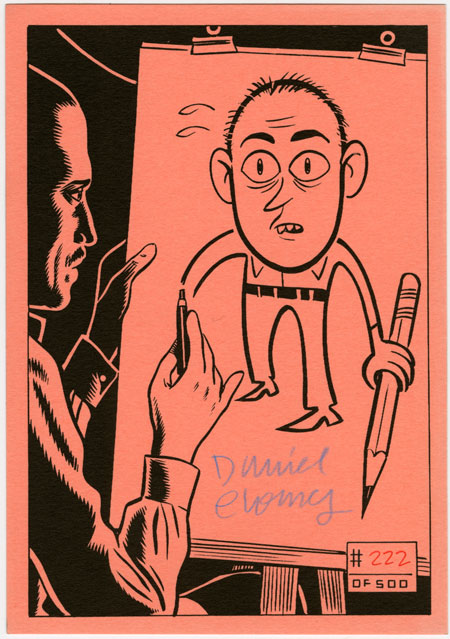
Fantagraphics find a cache of signed, limited-edition bookplates by artists including Dan Clowes, Jaime Hernandez and Gilbert Hernandez.
The Case & Point — A new website showcasing the best in custom type design and lettering curated by Vancouver-based design studio Working Format.
Designer, educator and author Ellen Lupton interviewed at From the Desks Of… (My Q & A with Ellen from 2009 is here).
And finally…
The New Thing — William Gibson, author most recently of Zero History, interviewed at Jack Move Magazine (via the man himself @GreatDismal):
2 CommentsThe genuinely new things are really hard to imagine. When you do imagine them, they’re very hard to relay in anything like a sense in which the people who are totally used to them would use them. There’s always this factor in future-tech science fiction where somebody, be it the characters or the narrative voice, is really kind of wowed by future tech. It’s a powerful impulse. You want the reader to get a wowie. But there’s a way in which it’s not naturalistic; it’s not a genuinely naturalistic vision of the future, because that would be one in which people take it utterly for granted.
 Canadian illustrator and typographer Darren Booth at From The Desks Of…
There’s on more on Darren’s cover for An Object of Beauty on his blog.
Misery — Editor and author Diana Athill profiled at The Telegraph (via PD Smith):
‘I have always been a watcher,’ she says. ‘Of myself in particular. Even at times of acute unhappiness I’ve watched myself being unhappy. I also think I’m one of those people who has never been wholly involved in an emotion, but then I think a lot of writers are like that.’
Is Modernism Boring? — Rhys Tranter at The Spectator Book Blog:
If modernism means anything in Woolf or Joyce, it is the struggle for what it means to be modern. Both present us with an array of fascinatingly complex characters, seeking to question their identity and their place in the modern age. Language becomes a character, too, an all-pervading texture that sets the mood of each story, and playfully subverts the ABC plots of yesteryear. Amid a proliferation of new technologies, of political upheaval and social change, Joyce, Woolf and the literary modernists actively interrogate the way we perceive the world around us, in ways still relevant today. In this way, modernism is not something we leave on our shelves and neglect to pick up. Modernism is that which speaks to modern life.
What’s the Worst that can Happen? — Gary Shteyngart, author of the dystopian Super Sad True Love Story, interviewed at the new and great looking book blog Full Stop:
Most people don’t care anymore because they’re beyond caring. The endless cult of self-expression that makes people stream or write about themselves day in and day out without any kind of filter. If you write a novel, you’re often writing about yourself as well, but you’re clearly filtering it through a bunch of things, not least of which is technique. So it’s not an entirely plausible future, but in some ways it could be. What if all the worst things happen politically, socially, and in terms of our literacy?
Top 10 fonts of 2010 lists from You Work For Them and Fontwerk (Google Translate version here).
And finally…
 The 50 best comic book covers of 2010 as chosen by Robot 6
A Sense of What’s Possible — Ramona Koval talks to Edith Grossman about her book Why Translation Matters and her translation of Don Quixote for The Book Show on ABC Radio National. From the transcript:
What I mean by ‘deep reading’…and it comes after a couple or three readings…what I mean is capturing the subtleties of what the original author is doing. Because artful language has both the stated and the unstated in it, and the stated is fairly obvious, the unstated is really what differentiates one writer’s style from another. And those unstated, unspoken elements are what I try to bring over in analogous fashion into English. That kind of reading, analysing the way parts of the sentence relate to one another and how the sentences in a paragraph relate to one another and so forth, how the paragraphs connect within the chapter, this is more intensive than an ordinary reading of a book. But to my mind it’s what I have to do in order to create something in English that feels to the English-speaking reader the way the original feels, in my case, to the Spanish speaker.
MyFonts’ Top Fonts of 2010, which includes the charming Lady René by Argentinian foundry Sudtipos:
 See Also: DesignWorkLife’s favourite typefaces of 2010.
Legendary design consultancy Pentagram have launched a new website to showcase their work, including some great book design (via FormFiftyFive).
And finally…

The New York Times looks at the work of Thatcher Wine and other designers who assemble and create custom book collections for clients (one can only hope the above was for The White Stripes).
Comments closed Nothing is Forgotten — A dark and beautiful wordless webcomic by Ryan Andrews (via Drawn).
And on the subject of comics, Kelly Thompson of the brilliantly named 1979 Semi-Finalist blog picks her top 20 favourite female comics creators of 2010, including Kate Beaton and Emily Carroll, for Comics Should Be Good: Part One and Part Two.
Most Anticipated… — The Millions list of interesting new books coming out in 2011 (not that I’ve caught up with 2010 yet).
The Best Fonts of 2010 as chosen by FontShop.
Wordmark — A handy online tool that allows you to preview and compare all the fonts installed on your computer (via Fontblog).
And lastly…
Critical Life — Ramona Koval interviews Gabriel Josipovici, author of What Ever Happened to Modernism?, for The Book Show on ABC Radio National. From the transcript:
[F]or all my writing life I felt one shouldn’t comment critically about one’s contemporaries, because in a way that is self-defeating. What one should do is praise the works one likes and gradually people will see their value. I suppose I was being unduly idealistic and I felt that I was only talking to the converted, as it were, and I wanted just for once to actually make people sit up a little more and to let out in print what I have said and talked about with friends, this feeling that English culture had become this thing that was rather mean and dispiriting, aided and abetted not just by…it wasn’t just something in the writers but it was something in the whole culture…
(via ReadySteadyBlog)
HAPPY NEW YEAR!
Comments closed
Just to continue the Gatsby theme this week, Penguin UK have been adding more recent and vintage book designs to their Flickr, including this Fitzgerald cover from 1998 (Thanks Alan! Can we get design credits please?).
Running Out of Room — Will Schofield, the chap behind the awesome A Journey Round My Skull, at From The Desk Of…
I love records and books equally, and have collected both with abandon since my teenage years. Luckily I never had a strong vinyl fetish so last year sold a bunch of records and now mainly listen to mp3s. I say luckily because I ran out of room for my books and records around 2003.
“The boxes have now changed, but they are still boxes” — Marshall Poe, author of A History of Communications, on how the internet changes nothing (via Rough Type):
We knew the revolution wouldn’t be televised, but many of us really hoped it might be on the Internet. Now we know these hopes were false. There was no Internet Revolution and there will be no Internet Revolution. We will stumble on in more or less exactly the way we did before massive computer networks infiltrated our daily lives. Just look around and you will see that the Singularity is not near. For some reason we don’t want to admit this fact. Media experts still talk as if the Internet is new, as if it is still evolving, as if it will shortly “change everything.”
And finally…

Fonts in Use — A catalogue of type in use. Like the Book Cover Archive for fonts. Brilliant.
5 Comments
I’ve not been entirely convinced by all of the artists’ books covers I’ve seen coming out the Never Judge…? show at StolenSpace in London (to be fair, I’ve not been to the exhibition in person), but Gary Taxali’s design for The Confederacy of Dunces is just great. I believe this edition will be available from Penguin UK in April 2011. There’s more on the exhibition at Creative Review.
What Font Should I Use? — Smashing Magazine’s 5 principles for choosing and using typefaces.
The Collectors — NPR on e-readers, data collection and personal privacy (via MobyLives):
Most e-readers, like Amazon’s Kindle, have an antenna that lets users instantly download new books. But the technology also makes it possible for the device to transmit information back to the manufacturer.
“They know how fast you read because you have to click to turn the page,” says Cindy Cohn, legal director at the nonprofit Electronic Frontier Foundation. “It knows if you skip to the end to read how it turns out…”And it’s not just what pages you read; it may also monitor where you read them. Kindles, iPads and other e-readers have geo-location abilities; using GPS or data from Wi-Fi and cell phone towers, it wouldn’t be difficult for the devices to track their own locations in the physical world.
(It’s also worth noting, as Steven W. Beattie does, that this all applies equally (if not more so) to Kobo’s new Reading Life app.)
Not Just a Stereotype — Michael Bhaskar, Digital Publishing Manager at Profile Books, offers some final thoughts on 2010 at Book Brunch, dispelling a few myths along the way:
Like many groups, publishers are easily stereotyped, and like such groups too, they find that the media usually plays along with the stereotype rather than discovering the nuances behind it. So we hear about a slightly staid world of boring pedants, blinking helplessly at the on-rushing lights of the digital juggernaut and eagerly burrowing their way back to the 1950s… But this isn’t the industry I know. Far from being terrified of digital, publishing has actually already become well adapted to the digital world.
In his recent study of publishing, Cambridge academic John Thompson makes the point that, from the industry’s point of view, much of the digital transition has already taken place. In the workflows of most publishers the only time we see printed material is at the very end of the process… The day to day reality of a publishing house is one of dealing with digital products…
Wave of Information — Gary Shteyngart, author of Super Sad True Love Story, in conversation with Robert Birnbaum for The Morning News:
Sure the novel has survived. Television, radio, telegraph, film—just about anything that has been thrown at it. It’s a very durable form. And the novels are getting better and better. I am shocked at the quality of literature. What I worry about more than anything is—maybe this anecdotal “living in New York”—is the exhaustion of people… The difficulty people have of opening up a book after a day of being bombarded with bits of information, most of it useless. And much, if redundant, certainly information that is ceaseless. Ceaseless waves of it. You come home, the quest for narrative is still there—you want narrative. What’s the water-cooler discussion going to be about? It’ll be about Mad Men, which you can sit there and passively take in—it’s a wonderful show—as opposed to something that requires a mass of concentration and effort. That’s my fear. Who knows, maybe it’s completely unfounded.
And finally…

Carolyn Kellogg chooses her 13 favourite bookplates from Etsy for the LA Times ‘Jacket Copy’ blog (pictured above: Skull and Crossbones bookplates by rxletterpress).
1 Comment