Skip to content

Tag: Raincoast

Richard Price Paperbacks | Henry Sene Yee

Columbine and A Wall in Palestine: cover designs by Henry Sene Yee

Henry Sene Yee is a designer and art director at Picador USA. The very of his best work (and all of it is good) — his cover designs for Columbine by Dave Cullen and A Wall in Palestine by René Backmann to pick two recent examples — combine judiciously selected and smartly cropped photographs with bold typographic choices.

Given the poignancy of the images he chooses and the respect he gives to them within his compositions — the room he gives them to breath —  it isn’t surprising that Henry is a photographer himself, regularly capturing scenes of daily life in his beloved New York through a lens.

Photo by Henry Sene Yee

The author Richard Price, who has also written for the HBO series The Wire, was born in and raised in the Bronx. Several of his novels, including Clockers and Freedomland (both adapted to movies), are set in the in fictional town of Dempsy, New Jersey.

Photo by Henry Sene Yee

Over the last couple of years Henry, who also happened to grow up in New Jersey, has designed covers for Picador’s recent reissues of Price’s novels.

Bringing his understanding of photography and type to the designs Henry has, like Price himself, avoided the expected crime fiction clichés.

As fan of Price’s work as well as Henry’s, I thought I would take to the opportunity to ask the designer how he approached the covers.

Here is his reply:

Lush Life: cover design by Aaron Artessa

It started when Picador published the paperback edition of Richard Price’s bestseller Lush Life. Because of its success, the FSG cover was reproduced in ads and displayed prominently in bookstores. Repackaging the cover for paperback would not take advantage of the public familiarity with it so it was decided to keep the original jacket design [by Aaron Artessa].

Clockers final cover by Henry Sene Yee

Clockers: unused designs by Henry Sene Yee

Clockers, probably Price’s most well known backlist was also acquired by us and was reprinted to coincide. It was designed as a stand alone. I couldn’t see how I would or need to relate it to Lush Life.

Bloodbrothers final cover by Henry Sene Yee

It was followed by his next backlist title Bloodbrothers, which was also designed as a stand alone. That book’s themes reminded me of photographer Bruce Davidson’s beautiful 1970s NYC Subway photos. I found this great Davidson photograph from his gang series and kept the colors simple.

The Breaks final cover by Henry Sene Yee

We later acquired The Breaks and Ladies’ Man and I had no intention to follow any previous Price’s look since there was none. Photo research found some great images similar in look to the Davidsons. My two favorite photos happen to both be horizontal and the initial layouts looked similar to Bloodbrothers. I tried to distinguish them by using different colors in the background, type. But in the end, it was just distracting from the great photos. So I decided to have them match Bloodbrothers, keeping the type and same palette of black, warm gray duotones, cream and warm red.

Ladies man final cover by Henry Sene Yee

The Breaks and Ladies Man: unused designs by Henry Sene Yee

Thanks Henry!

Disclosure: As of Fall 2011, book published by Picador will be distributed to independent bookstores and libraries in Canada by my employer Raincoast Books as part of a new distribution arrangement with Macmillan US. For the record, Henry and I discussed featuring his work on The Casual Optimist several times well before details of this deal was known to either of us.

1 Comment

In the Wilds | Nigel Peake

With the winter winds and driving rain, things naturally fall apart — twisted, gnarled, and eventually incapable of function. When something goes wrong, the solution is often improvised with whatever is available. This haphazard collage of old materials can make it feel as if the country is in a constant state of disrepair. The fences and gates, in particular, embody this with their bespoke supports. When one part collapses or a hole appears, the ubiquitous blue twine come out to bind everything together. Sometimes the original structure disappears altogether, and all that remains is the collection of parts propping it up. With this unspoken artistry, the unexpected is made.

From the introduction to In the Wilds by Nigel Peake

One of the joys of working at Raincoast Books is receiving books from New York-based publisher Princeton Architectural Press in the mail. This week, a beautiful  6″ by 8″ hardcover called In the Wilds by artist Nigel Peake arrived.

Peake who has worked with the likes of Ninja Tune, The Believer, Blueprint, and Dwell Magazine, lives and works in the Irish countryside (the self-described “middle of nowhere”). In The Wilds collects together his obsessively detailed drawings and watercolors of this rural life — the trees, fields, lakes, and rolling hills, but also farm houses, tractors, fences, and telegraph poles.

It is simply lovely.

Comments closed

Vancouver

I was in Vancouver last week discussing the new titles from Raincoast Books this fall. It was a great week and there are lots of amazing new books coming down the pipe — not least of which is the MASSIVE Saul Bass: A Life in Film and Design by Pat Kirkham and Jennifer Bass published by Laurence King (it looks incredible!) — but I am now really behind on just about everything else and life really caught up with me today. Suffice to say that posting around here might be even more erratic than usual for the next little while. Normal service (whatever that might be) will be back at some point. In meantime, here a few grainy (and rainy!) shots I took of Vancouver…

2 Comments

Midweek Miscellany

Risky Business — Cartoonist Adrian Tomine talks about his new book Scenes From An Impending Marriage, which originally started life as a mini-comic for his wedding guests, with More Intelligent Life:

I probably first started thinking about publishing it when a copy appeared on eBay. I assumed that since it was only given to close friends and family, that would never happen, but I was wrong. And like I said, since I was slowly adding pages to the book, I eventually found myself with 50 or 60 pages worth of material, and I just proposed the idea to my publisher. If he had declined, I would’ve happily filed it away…

AND Adrian and his wife Sarah Brennan talk about the new book with NPR’s All Things Considered.

(For the record, Scenes From An Impending Marriage is distributed in Canada by my employer Raincoast Books).

Sunny-Side — Jonathan Lethem talks to Carolyn Kellogg at The LA Times about decamping from Brooklyn to Southern California. There is more of their conversation at TimesJacket Copy blog:

I’ve only probably reviewed seven or eight novels. It’s really problematic. I’m gregarious with writers; I like novelists. I don’t want my sympathies to cause me to write a review that’s in any kind of bad faith, nor do I want to destroy some pleasant, even if it’s slight, collegial feeling. I try to review the dead guy — Bolaño — or the biography of the dead guy, because I like being in the conversation. Sometimes I look at what Updike did at the New Yorker. I don’t know if many people have the temperament, let alone the incredible set of skills he brought to that, the versatility, the endless curiosity, to identify with so many different kinds of novelists who were not doing what he does.

The Price of Zero — David Carr on media companies and unpaid contributors for The New York Times:

For those of us who make a living typing, it’s all very scary, of course. It’s less about the diminution of authority and expertise, although there is that, and more about the growing perception that content is a commodity, and one that can be had for the price of zero… For the media, this is a Tom Sawyer moment. “Does a boy get a chance to whitewash a fence every day?” he says to his friends, and sure enough, they are soon lined up for the privilege of doing his chores. That’s a bit like how social networks get built. (Just imagine if Tom had also schooled them in the networking opportunities of the user-generated endeavor: “You’re not just painting a fence. You’re building an audience around your personal brand.”)

And finally…

In the Age of Screens — A serialized essay about contemporary book discovery and reading by Chad W. Post, publisher of Open Letter Books, editor of  the Three Percent blog:

[W]e’ve stripped away all the institutions that supported the ways in which most outsiders found their literature, leaving texts to float untethered in the ether, there to be found… There is no serendipity… And yet, for the long-term benefit of society, we need people to have—and be exposed to— ideas from the out-of-­nowhere.

The complete essay is available as a PDF.

we’ve
stripped
away
all
the
institutions
that
supported
the
ways
in
which
most
outsiders
found
their
literature,
leaving
texts
to
float
untethered
in
the
ether,
there
to
be
found
.
.
.
Comments closed

Back from Vancouver

I was in Vancouver last week for the Raincoast Books Spring 2011 sales conference. It snowed (see above) and I heard about a lot of new titles I’m looking forward to seeing next year (I can’t wait to get my hands on a finished copy of Into the Wilds by illustrator Nigel Peake for example). I also caught up with some old friends, stayed up too late, and managed to get sick. Needless to say, I’m a bit behind with this internet thing. I will be trying to catch up this week, but things are likely to be a bit wonky around here for the next few days (and I apologise if I owe you an email). Thanks for your patience…

Comments closed

In Vancouver…

…normal service will resume shortly.

Comments closed

Midweek Miscellany

The Sentimentalists by Johanna Skibsrud has won the Giller Prize. Earlier this week The Globe and Mail profiled printer and publisher Gaspereau Press:

The house paper is Rolland’s Zephyr Antique Laid, which the Gaspereau website describes as “a creamy, sensual book paper.” The Quebec paper manufacturer Cascades makes it by special order for a handful of literary presses. Covers, meanwhile, are printed on Neenah Classic Laid from the U.S. papermaker Neenah. For the jacket of The Sentimentalists, Steeves selected a camel-hair colour to show off the cover illustration, a pencil sketch of a Vietnam soldier by Ontario engraver Wesley Bates who is a regular contributor at Gaspereau. Not coincidentally, The Sentimentalists has already won the Alcuin Society’s award for Excellence in Book Design in Canada.

(Well played Gaspereau, well played…)

Punk-As-Fuck — A fascinating history of Soft Skull Press, whose offices in New York closed last week:

“It will never be anything but a chronic uphill battle to run an indie publishing company,” says Johnny Temple, owner of Brooklyn-based indie publisher Akashic Books (and former Girls Against Boys bassist). “I think the efforts that Sander Hicks made when he started Soft Skull, and then Richard Nash after he took over, were pretty heroic in terms of trying to keep an independent publishing company with a radical vision afloat. Soft Skull was a company of righteous outsiders and has traditionally been a great home for people who don’t fit into mainstream society. What was particularly great was that Soft Skull has developed over time an international reputation. It wasn’t the only place for someone with a devoutly outsider sensibility, but it was one of the very best.”

MobyLives has a typically searing post on the closure of Soft Skull’s office in NYC. And while we’re on the subject, Publishing Perspectives has a Q & A with Richard Nash about his new venture Cursor.

Text for Nothing? — Ben Ehrenreich on Tom McCarthy and his novel C for The Nation:

In C, Nabokovian wordplay abounds. The characters not only have names, but each name is a web of echoes and allusions. So let Carrefax lead you to “carapace”—insects are important here—or to “caracole,” with its spiraling, cryptlike depths, even to deathly “catafalque.” Dig in deeper and you’ll find “fax,” of course, short for “facsimile” and denoting not only technology and transmission but replication—key concerns in C‘s cosmography. And in that prefix you might hear kara, Turkish for “black,” or perhaps even kar, Syldavian for “king” (Syldavian being the language spoken in the fictional Balkan nation of Syldavia, where, you may recall, brave Tintin foiled a Bordurian plot to steal King Ottokar’s scepter). Jam these associations together if you like—”black king of technological transmission” is not a bad descriptor for young Serge—or let the allusions drift and frolic, as McCarthy suggests in his Tintin study, as a “dynamic set of overlayings and cross-encodings…that resonate at levels far beyond that of any individual, re-encrypting themselves as they speak.”

And finally…

Raincoast Books has entered a team for this year’s Movember in support of Prostate Cancer Canada. If you would like to support Raincoast and/or “The Wagstache” (AKA my personal attempt to look like Daniel Plainview), you can follow our progress here. Any donations — big or small — are greatly appreciated.

Comments closed

From My Desk…

I’ve mention Kate Donnelly’s blog a couple of times here previously, but now you can take a look at my office space on From The Desks Of should you be so inclined.

Other (more interesting) recent contributors to From The Desk Of… include book designers Peter Mendelsund and Coralie Bickford-Smith, and New Yorker critic Alex Ross. I’m honoured to be in their esteemed company.

6 Comments

Bread and Surfing

I posted this documentary short about baker Chad Robertson, co-founder of Tartine Bakery & Café in San Francisco and author of Tartine Bread, on the Raincoast Books blog yesterday. I wanted to share it here as well because there is definitely something inspiring about Chad’s process, enthusiasm, and dedication to his craft. And he’s a surfer…

(Disclosure: Tartine Bread is published by Chronicle Books, who are distributed in Canada by my employer Raincoast Books)

4 Comments

Proust

Open Book Toronto recently asked me to complete their version of the Proust Questionnaire. They have posted my answers — which include recommendations for Memories of the Future by Sigizmund Krzhizhanovsky and Colony by Hugo Wilcken (more of which at a later date I think) — today.  Thank you OBTO!

Comments closed

Q & A with Jason Godfrey, Bibliographic

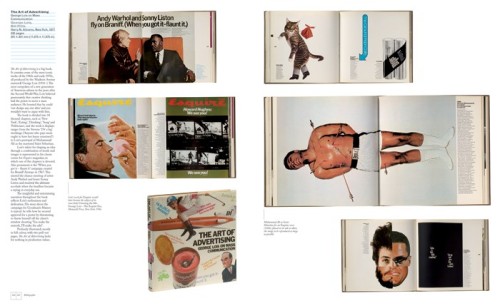
Jason Godfrey’s Bibliographic: 100 Classic Graphic Design Books was one of my favourite books last year.

Published by Laurence King in the UK, the book is distributed by Raincoast in Canada (Chronicle Books in the US) and so I was fortunate enough to have the opportunity to ask Jason a few questions about the book and get some lovely spreads from the publisher.

My original plan was to run the interview on the (recently redesigned) Raincoast website, but ultimately the interview was a little too long for our blog there, so I’ve decided to republish the whole unexpurgated monster here.

As I mentioned on in my original Raincoast blog post, Bibliographic is not history of graphic design or even a definitive list of 100 books on the subject — it’s more of an essential design book shopping list — and basically I really wanted to know why Jason decided to make the book, how he decided on the  final selections, and what exactly was informing his decisions.

We corresponded by email…

What was the inspiration for Bibliographic?

There was a need for a illustrated resource of graphic design publishing. Many books and articles contained very good reading lists but I had always found them rather detached without the visual reference. The best graphic design books are important artefacts in the history of graphic design and many of the books are becoming difficult to find and access.
004-103_1

What criteria did you use to select the books?

The only rule that was applied throughout was that the books had to be visually interesting, there seemed little point in photographing books that would not look appealing on the page. That the books were designed by some of the cream of graphic design this turned out not to be a big problem but it did mean that some important critical analyses had to be put to one side.

Did you ask other designers for their recommendations?

Whilst mentioning to other designers that I was working on Biblographic I found that they were very keen to promote their own favourite titles and it did help extend the list and also confirm the importance of books that had already been chosen. As part of the book I asked about 20 designers to give me a list of 10 books from their own library, this was an idea borrowed from the designer Tony Brook at Spin who had earlier published a newspaper Spin 2 with reading lists from 50 designers.
Was it difficult to decide which recent books to include?

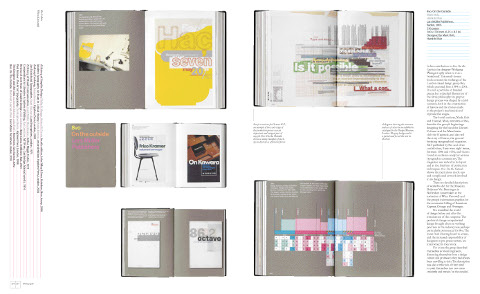
To gauge which newly published titles will come to be seen part of the canon of graphic design books is not the easiest of tasks. Looking back from a distance helps to establish the relevant trends and lends more perspective to any choices. Regardless the best books all seem to be those that can tell a good story. One recent book, Mark Holt and Hamish Muir’s 8vo: On the Outside (Lars Müller Publishers, 2005) did just this, exploring the process of the studio’s work and the effect of technological on this process and output in a thoroughly engaging book.

There are photographs of every book included in Bibliographic. Were any of the books difficult to locate?

A number of the books are from my own collection others I borrowed from friends and colleagues. Some were so precious I had to send the photographer Nick Turner over to where the their owner could keep them in sight at all times. A handful of books I could only locate at the St Bride Printing Library who were kind enough to facilitate their shooting.

Were there any books you wanted to include but couldn’t access?

Early in the process of compiling my list of 100 books I decided that many of the early examples of early 20th Century graphic design books particularly those of the typographic revolutions of the 1920s and 1930s would be too difficult to access as they are now the preserve of museums. It would all have taken me too far from my premise that Bibliographic could be representative of a working studio library.

Which books came close to being in the 100, but didn’t quite make the final cut?

Tough choices had to made particularly where an author or series of books were successful. Alan Fletcher is very well represented in the book and I couldn’t justify putting in the excellent Identity Kits: A Pictorial Survey of Visual Signals (Studio Vista, 1971) a book he co-authored with Germano Facetti the then art director at Penguin Books. Another book that came very close was Robert Bringhurst’s The Elements of Typographical Style (Hartley & Marks, 1992) which I felt lacked the visual punch necessary for Bibliographic.

Of the books you don’t own in Bibliographic, is there one that you particularly covet?

The 1926 Deberny & Peignot, Specimen Général would be a welcome addition to my library. There was copy in a studio I worked for and I was forever using it as a point of reference or just to admire the elegant section dividers designed by Maximilien Vox.

When did you start collecting design books?

There are a few books that I have from when I was a student but I didn’t seriously start collecting until I had been working professionally for a few years and made a decision to stop buying records in favour of what I found to be the more fulfilling occupation of acquiring books.

What is on your ‘to buy’ list?

New Graphic Design in Revolutionary Russia (Lund Humphries, 1972) by Szymon Bojko is a book I am trying to locate. I have yet to see a copy but it was designed by Herbert Spencer the author and designer of Pioneers of Modern Typography (Lund Humphries, 1969) and so I am expecting an interesting book.

In the introduction to Bibliographic, Steven Heller says he has a separate apartment for his books! How extensive is your library?

Mine is not as nearly extensive as Steven’s although it does take up a large part of my studio and I am in need of extra shelving at the moment. It also needs saying that in common with most designers my collection also contains many books on the arts, photography and others of general interest.

What is your own design background?

I graduated from the Royal College of Art in London and worked for a number of years at Pentagram Design, then moved to New York and Austin, Texas before returning to London and setting up my own studio.

What were the challenges of designing a book about design books?

After the efforts of writing Bibliographic the actual design was very enjoyable. Because each spread contains only one book the challenge was in arranging the images to create an enjoyable flow throughout the book. The spreads from the photographed books are so rich with graphic imagery that I was worried that the pages would look like graphic wallpaper if all the images were kept in pro, but changing the scale of the spreads helped to create changing areas of white space and focus the readers attention on one spread at a time.

Could you describe your process for designing books?

Knowing the amount of copy and image count for an average page is the start for any book design project. From this point I can begin to form a grid (invariably using the guides in Derek Birdsall’s excellent Notes on Book Design (Yale University Press, 2004), chose the typefaces, text and headline styles, treatment of imagery and other pagination. This will go to form sample spreads that are approved by the publisher before advancing on the book proper.

What does the future hold for book design?

The evolution of book design seems to move at a glacial pace, its foundations are based on a template centuries old with some 20th Century tweaks by the likes of Lászlo Moholy-Nagy and Gyorgy Kepes. Advances in printing technology have and will allow for more flexibility in how pages are laid out and inevitably there will be new fashions and styles to accommodate but little wholesale change.

Thanks Jason!

6 Comments

Books of the Decade

Back in November, the chaps at The National Post asked me and a selection of eminently more qualified Canadian book types what we thought the most important publishing story of the past 10 years was. They ran the results at the weekend and the smart answers ranged from decline of literary magazines to the rise of Google.

I have to admit, I was at a bit of loss as to how answer the question. Decades are such arbitrary periods of time. I read somewhere that the 19th Century didn’t really end until 1914, and in a way I feel like the 21st Century didn’t really start until the day after 9/11 2001. And who is to say that epoch is over? So many things still look the same…

Of course I really have no idea what any of the last 10 years meant for books. I don’t have enough perspective. All I knew is that I wanted to say something positive (nobody likes a whiner) and avoid saying anything too obvious, boring or bullshitty (i.e. definitely no talk about either the “death of publishing” or “teh internetz”).

In the end I equivocated and then gushed about something close to my heart — comics:

“J.K. Rowling’s Harry Potter and online retailer Amazon dominated the decade, but they have their roots in the previous century (Amazon was founded in 1994, Harry Potter and the Philosopher’s Stone was published in 1997). George W. Bush surely has a claim — his crimes and misdemeanours created an industry within an industry and produced many fine books including The Dark Side by Jane Mayer and The Forever War by Dexter Filkins — but the very thought of the 43rd President of U.S. being the publishing story of the decade is simply too horrifying to contemplate seriously. Many people will no doubt say e-books, but I think they will be the story of the next decade. So I’m going to go with the popular success and the critical acceptance of long-form comics (the “graphic novel” if you must) as the big story. With the likes of Asterios Polyp, Black Hole, Bone, Epileptic, Fun Home, George Sprott, The Hunter, Jimmy Corrigan, Louis Riel, Paul Moves Out, Persepolis, Safe Area Gorazde, Scott Pilgrim, Skim and Shortcomings (not to mention the beautiful reprints of Peanuts and translations of Tezuka and Tatsumi) to name just a few, we really have had a wonderful decade.”

Perhaps, not the wisest thing I’ve ever written, but hey…

The Post also asked us to nominate our best books of the decade.

As I’ve said before, I’m really not terribly qualified (at least compared to some) to make a call on “best” (especially when it comes to Canadian literature), but I did strive to be more objective than I was with my personal list of the books of 2009, which meant leaving out eclectic favourites ranging from Stet and How To Be Alone at one end of the spectrum to Hellboy: Conqueror Worm and Hard Revolution at the other, with the likes of I’ll Go To Bed At Noon, Lush Life, Mother’s Milk and The Dark Room stuck somewhere in the middle. And that’s not to mention all the art and design books I chose to leave out: 79 Short Essays on Design, Penguin By Design, The Curiously Sinister Art of Jim Flora, Charley Harper, to name just a few of the top of my head…

But with all those caveats firmly in place, here is my annotated and abridged list of the best books of the decade compiled for The Post:

Remainder by Tom McCarthy (Metronome 2005, subsequently published by Alma and Vintage)

Tom McCarthy’s Remainder was the first book I worked on at Raincoast Books — We briefly distributed the Alma Books hardcover before Vintage published their own paperback edition (pictured above, cover design by John Gall of course,with the most unlikely of blurbs from Jonathan Lethem) in the US and Canada — so it has a special place on my shelf. Oh and it’s really good.

Here’s what I wrote for The National Post:

“If only for a fleeting moment Remainder, a dark and spare novel about personal authenticity and murderous re-enactment, seemed to offer a creative alternative to the cul-de-sac of overwrought and twee novels emanating from Brooklyn (and creative writing classes everywhere). Sadly the bloated and banal seem to have made a decided comeback (if they ever went away), but even so, the unashamedly intellectual Remainder stands out, perfectly capturing the fears and anxieties of the decade.”

The Amazing Adventures of Kavalier and Clay by Michael Chabon (Random House 2000)

Possibly the polar opposite of Remainder, Chabon’s literary Boy’s Own adventure hit a lot of my buttons: Golden Age Comics, Eisner, Steranko, European folklore, New York, and WWII. Really, what’s not to like? But my affection for this book ebbs with every new effort — including Chabon’s own — to repeat the formula and turn pulp into something politely literary. (And NB the Picador paperback cover design above is by Henry Sene Yee — you can see his sketches here).

Jimmy Corrigan: The Smartest Kid on Earth by Chris Ware (Pantheon 2000)

Perhaps not my favourite graphic novel favourite of the decade (that slightly dubious honour would probably go to Tekkon Kinkreet — and although the English edition I own was published in 2007, the series itself is actually from the mid-90’s, so I didn’t think it qualified for this list), but Ware’s breakthrough graphic novel began the decade and went on to creatively define it for graphic novels. No Jimmy Corrigan, no McSweeney’s Issue 13.

Never Let Me Go by Kazuo Ishiguro (Knopf 2005)

Like Kavalier and Clay, Ishiguro’s quietly evocative SF novel justifiably appeared on a lot of other Best of the Decade lists. It’s just beautifully, beautifully written and has a silver sliver of ice at its heart.

The Dark Side by Jane Mayer (Doubleday 2008)

It’s almost impossible to think about books that are representative of the decade without including at least one on the Bush Presidency, 9/11 and the awful ‘war on terror’. The Dark Side could easily have been the aforementioned Forever War by Dexter Filkins, or Ghost Wars by Steve Coll, or Imperial Life in the Emerald City by Rajiv Chandrasekaran, or one of the many other excellent books on these topics. But Mayer’s exposé of state-sanctioned torture chillingly underlines the bureaucratic banality of evil and the horror lived long in the mind after I finished reading it.

And, you know what? The Dark Side reminded me that books are important. They can and should be more than vehicles of self-promotion. Research — real research — requires more than Wikipedia. And — fuck it — we need to keep paying writers to write.

Louis Riel: A Comic Strip Biography by Chester Brown (D+Q 2003)

I suspect Louis Riel is now a creative and stylistic albatross for poor ol’ Chester Brown, but it was my joint first choice for the Canadian book the decade. This is what I wrote for The National Post:

“Not only is Louis Riel a uniquely Canadian story, it was published by Drawn + Quarterly (surely the most interesting Canadian publisher of the decade) and it epitomizes their success at unearthing and supporting creative talent. It isn’t a coincidence that Daniel Clowes—author of Ghost World and one the cartoonists of his generation—has decided to publish his new book with them.”

Pattern Recognition by William Gibson (GP Putnam And Sons 2003)

Although Pattern Recognition did not receive good reviews when it was first published and I bought the hardcover out of a reminder bin, it was my other pick for Canadian book of the decade. The book’s obsession with the fringes of pop culture and the dislocation and horror of the globalized world seemed to me (in some small way) to make it the first novel genuinely about the 21st Century. Even if it dates horribly (which many critics seemed to think it would), I think it’s a something of a cult classic. This is what I said to The National Post:

“A prescient post-September 11th novel about viral media, [Pattern Recognition is] the antithesis of the clunking, insular, parochial Canadian novel so beloved of literary prizes. The book is not without its flaws – it was not well received by the critics when it was published in 2003 – but it just fizzes with ideas, oddness, and energy. I can’t think of another Canadian novel that I refer to quite as often in everyday conversation. Give me flawed and brilliant over dull and worthy any decade of the century.”

OK — I love Pattern Recognition and I do talk about it a lot — but I was being a bit of a shit disturber here (which is probably why The Post ignored it). That said, Pattern Recognition is better than several other books (that shall remain nameless) that did make the cut that’s for sure.

So, that’s my list. You can read the Post’s selections here. What did we miss out?

5 Comments