Skip to content

Tag: Raincoast

100 Classic Graphic Design Journals

9781780673363
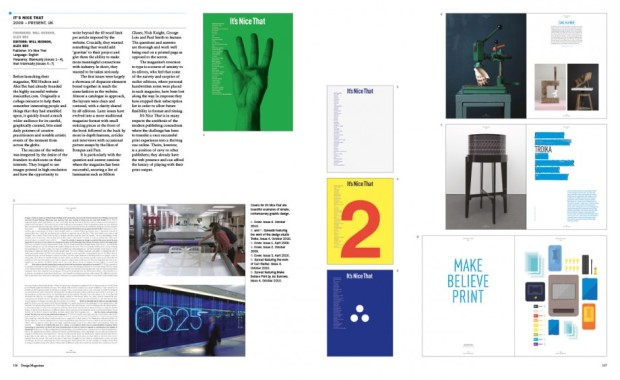
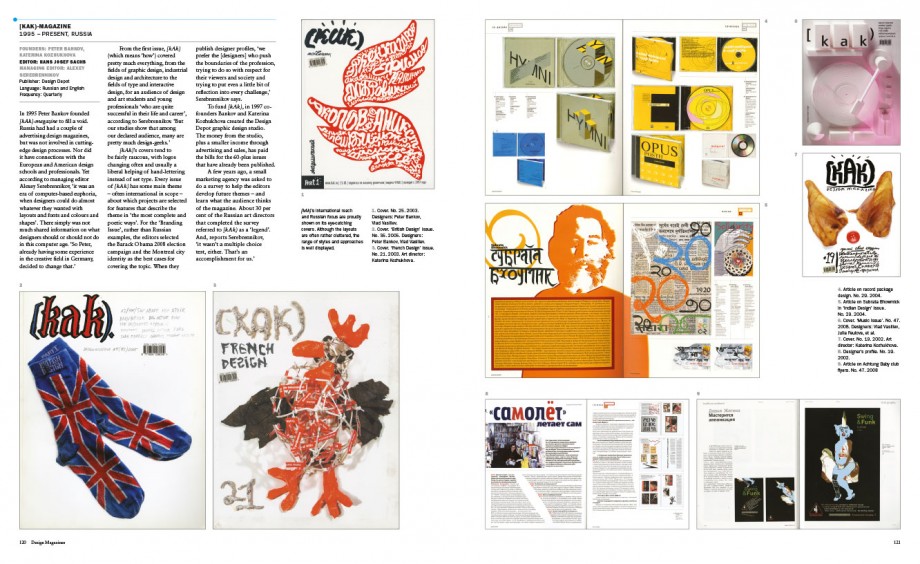
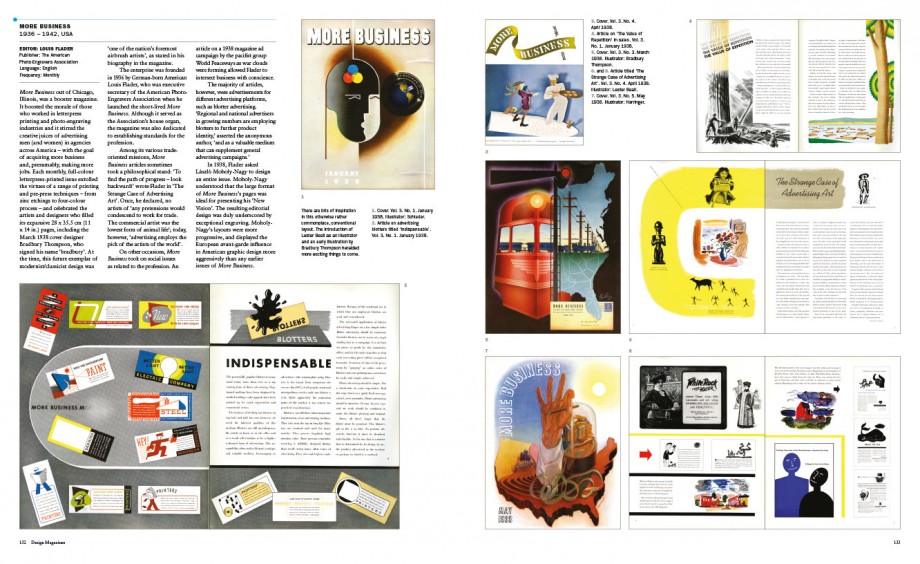
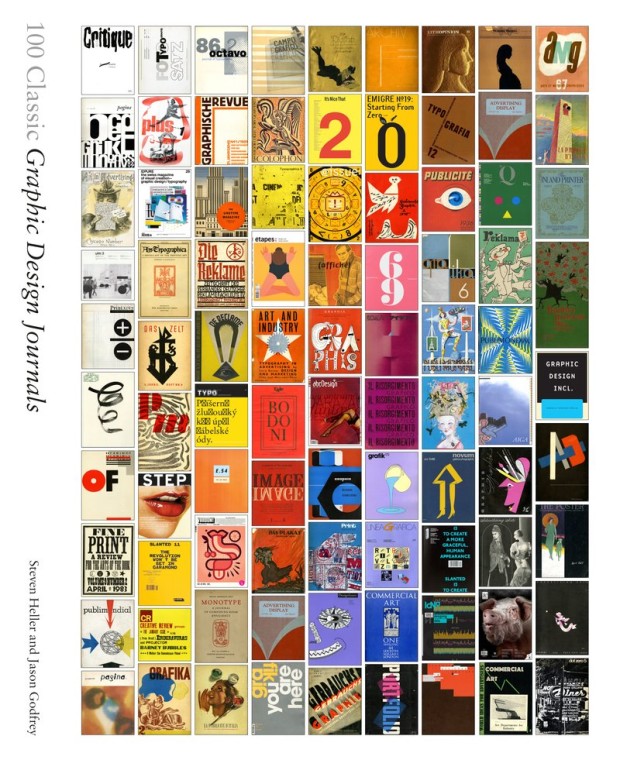
A copy of 100 Classic Graphic Design Journals by Steven Heller and Jason Godfrey just landed on my desk. The book will be in stores in the US and Canada later this month, and it looks fantastic:

9781780673363.in07

9781780673363.in08

9781780673363.in010

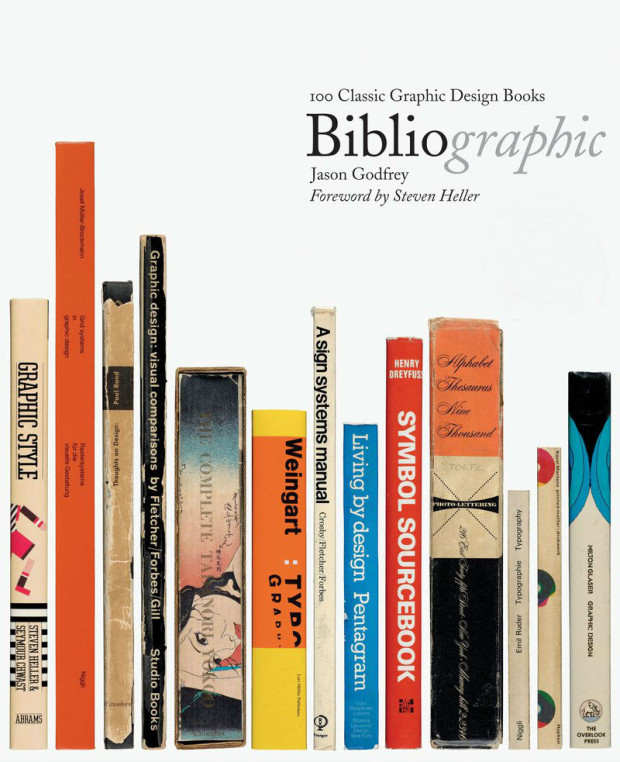
It doesn’t seem that long since I talked to Jason Godfrey about his previous book Bibliographic: 100 Classic Graphic Design Books, but apparently it was four years ago!

9781856697651

(100 Classic Graphic Design Journals and Bibliographic are published by Laurence King whose books are distributed in Canada by my employer Raincoast Books)

Comments closed

Writing and the Cost of Living

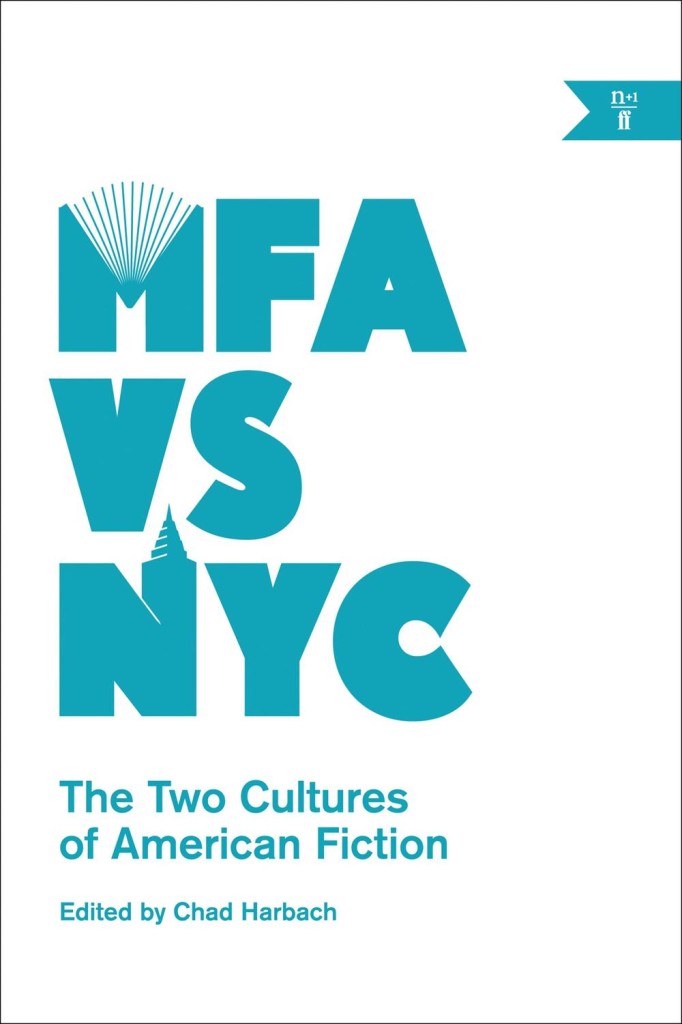
mfc_vs-nyc

I finally just got around to reading Emily Gould‘s spiralling essay on writing and debt ‘How much my novel cost me‘ over the weekend. It’s an excerpt from the new n+1 book MFA vs NYC edited by Chad Harbach (author of The Art of Fielding), which seems like it could be essential reading for idealistic folks wishing to pursue writing as a career:

IT’S HARD TO WRITE ABOUT BEING BROKE because brokeness is so relative; “broke” people run the gamut from the trust-funded jerk whose drinks you buy because she’s “so broke right now” to the people who sleep outside the bar where she’s whining. But by summer 2012 I was broke, and in debt, and it was no one’s fault but mine. Besides a couple of freelance writing assignments, my only source of income for more than a year had come from teaching yoga, for which I got paid $40 a class. In 2011 I made $7,000.

During that $7,000 year I also routinely read from my work in front of crowds of people, spoke on panels and at colleges, and got hit up for advice by young people who were interested in emulating my career path, whose coffee I usually ended up buying after they made a halfhearted feint toward their tote bag–purses. I felt some weird obligation to them and to anyone else who might be paying attention to pretend that I wasn’t poor. Keeping up appearances, of course, only made me poorer. I’m not sure what the point of admitting all this might be, because I know that anyone who experiences a career peak in his mid-twenties will likely make the same mistakes I did, and it’s not even clear to me that they were all mistakes, unless writing a book is always a mistake, which in some sense it must be.

Interestingly, Robert McCrum touches on the financial difficulties of older authors in an article for this weekend’s The Observer

To writers of my generation, who grew up in the age of Penguin books, vinyl records and the BBC, it’s as if a cultural ecology has been wiped out. For as long as most of us can remember, every would-be writer knew the landscape of the printed word. This Georgian square was home to publishing grandees (now retired). On that high street were the booksellers (now out of business). In those twisting back streets, you could expect to find literary agents working the margins with the injured innocence of pickpockets at a synod. It was a mutually dependent ecosystem.

Publishers were toffs, booksellers trade and printers the artisan champions of liberty. Like the class system, we thought, nothing would change. The most urgent deadline was lunch. How wrong we were. The years 2007-2010 are pivotal: first… came the credit crunch. And it occurred at the very moment that the IT revolution was wrecking the livelihoods of those creative classes – film-makers, musicians and writers of all sorts – who had previously lived on their copyrights.

Gould is self-recriminating. McCrum — a former editor-in-chief at Faber and Faber — is nostalgic for a time I don’t remember (things were always better in the ‘old days’ in publishing circles). For Gould the internet is a double-edged sword — a platform and a distraction — for McCrum it has brought nothing but woe. Both seem to agree, however, that nobody is making any money, “marketing types” are awful (aren’t they though?), and being a writer is not all it’s cracked up to be…

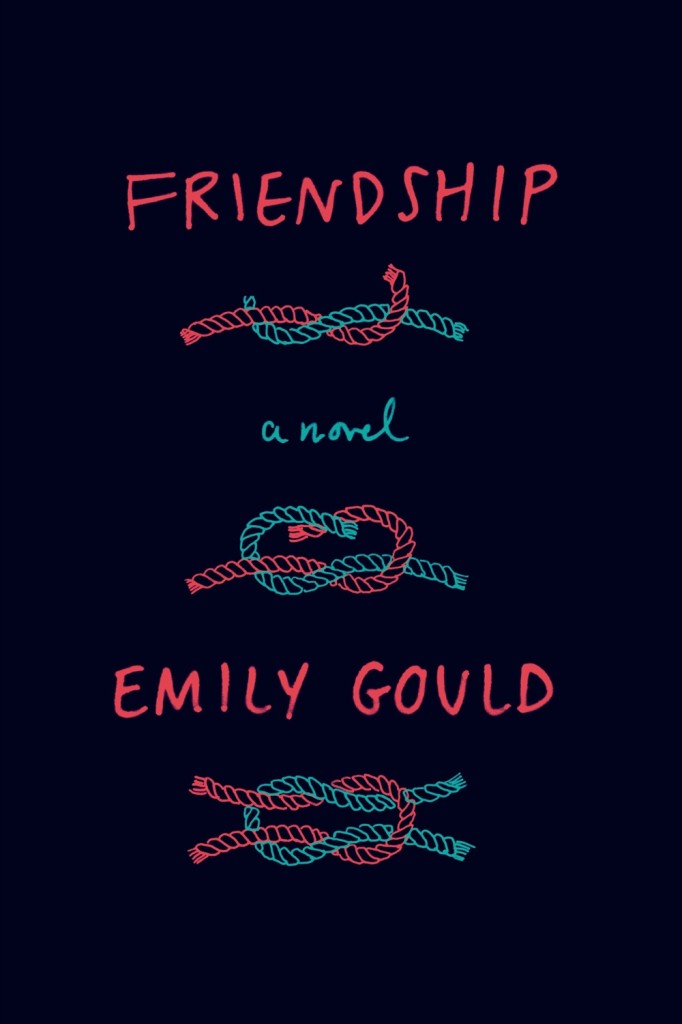
friendship_gould

Coincidently, Emily Gould’s new novel Friendship will be published in the US and Canada by Farrar, Straus & Giroux on July 1 (and a couple of days later in the UK by Virago). I’m not sure who designed the cover, but it is rather nice.

(NB: FSG, and n+1 / Faber & Faber are distributed in Canada by my employer Raincoast Books)

UPDATE: Leslie Jamison, author of the forthcoming essay collection The Empathy Exams (published by Graywolf Press, also distributed in Canada by Raincoast — sorry), reviews MFA vs NYC  for The New Republic:

Writers throughout these essays face the shame of privilege and the specter of poverty: They join magazine mastheads to keep from going broke, or they teach to keep from going broke, or else they actually do go broke—they’re broke in Brooklyn and broke in Los Angeles. Eli Evans evokes his years living in a “warehouse on Pico and Fourth” in one perfect image, one of the most remarkable moments in the entire collection: “I once found a baby rattlesnake strangled with electrical wire and tied to a signpost.” This baby rattlesnake, apparently, is what dreams become…

1 Comment

Q & A with Gene Luen Yang

I wouldn’t be surprised if you were feeling a little disillusioned with comics right now — frictionless superhero movies that deliver ever-diminishing emotional returns; ham-fisted editorial decisions; disputes over rights, compensation and artwork; violence; stupidity; institutional misogyny and racism; and generic blandness will do that.

Beyond the multiplexes and controversies, however, it is actually a quite an exciting time to be reading comics.

There are signs — Brian K. Vaughan and Fiona Staples‘ space opera Saga, Hawkeye by Matt Fraction, David Aja and Javier Pulido, and Scott Snyder and Greg Capullo‘s horror-driven Batman spring to mind — that genre comics may still have some life in them.

Classic series and newspaper strips are being properly curated and are more available than before. Under-appreciated artists are being rediscovered.

Alternative cartoonists such as Peter Bagge, Alison Bechdel, Chester Brown, Jaime and Gilbert Hernandez, Rutu Modan, and Chris Ware are producing some of the best work of their careers. The art of Daniel Clowes and Art Spiegelman is being recognised with gallery exhibitions.

And sitting somewhere between in the alt. auteurs and the superheroes, cartoonists like Emily Carroll, Becky Cloonan, Tom Gauld, Faith Erin Hicks, Hope Larson, Bryan Lee O’Malley, Luke Pearson, Noelle Stevenson — artists who have absorbed a diverse range of influences — are carving out niches for themselves, often combining and subverting genres and styles to produce uniquely personal visions.

It’s in this last, loose group of cartoonists1 — the one between the experimental and the mainstream — that I’d put artist and writer Gene Luen Yang.

Best known for his work on the Avatar: The Last Airbender graphic novels, and the critically acclaimed American Born Chinese, Gene’s most recent work is Boxers & Saints, an ambitious two-volume historical graphical novel telling parallel stories of two young on the opposite sides of the Boxer Rebellion. Already shortlisted for the National Book Award for Young People’s Literature and listed amongst Publishers Weekly‘s best books of the year — it is a remarkably mature, compassionate, and accomplished work that is at times funny, at times tragic, but always very human.

I recently met Gene while he was in Toronto to promote Boxers & Saints. I was impressed by his thoughts on being a cartoonist and on the medium itself, and we spent a good couple of hours talking books, comics, and movies. We have since corresponded by email for this Q & A.

American Born Chinese and Boxers & Saints are distributed in Canada by my employer Raincoast Books, and parts of this interview have appeared previously on the Raincoast blog.

  1. These are, admittedly, all very arbitrary, untidy and personal lists and categorizations — nobody who’s interesting fits exactly.
2 Comments

Q & A with Luke Pearson

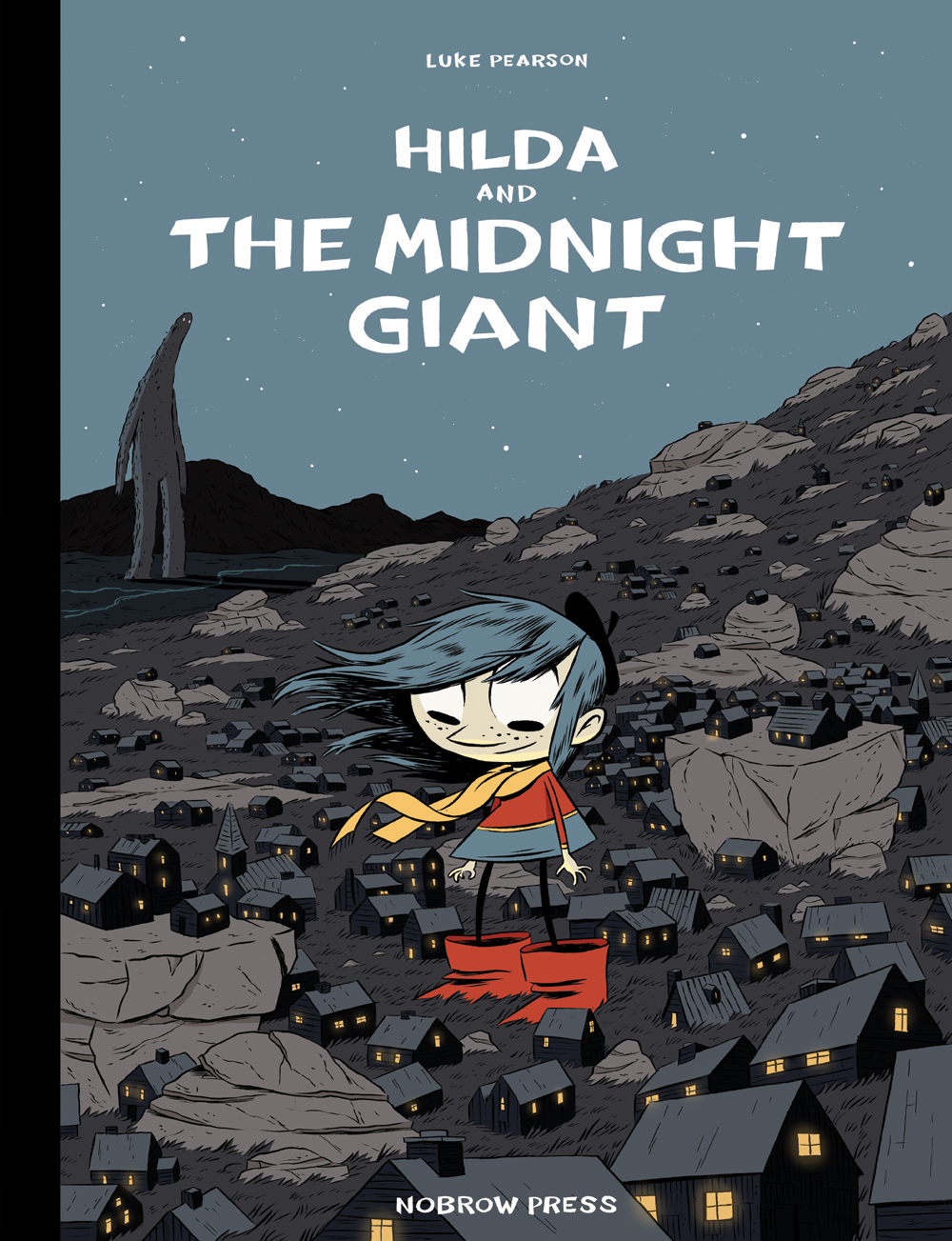
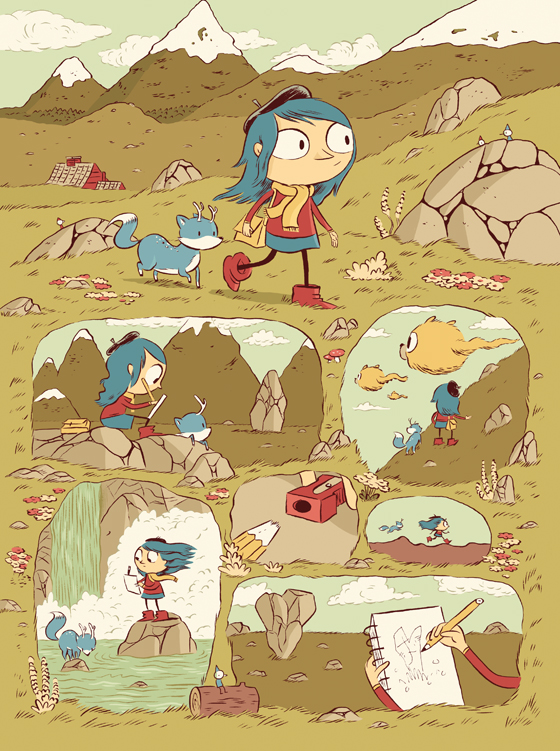
I’ve been a fan of Luke Pearson‘s work since picking up a copy of Hilda and the Midnight Giant from Nobrow Press a year or so ago. The beautiful illustrations, quality printing and oversize format gave it the exotic feel of the comics albums British school kids used to sneak back from vacations in France (and maybe still do?). Despite my immediate sense of nostalgia, the comic itself was fresh, different and delightfully free of cynicism. I read it over and over with my kids, and then savoured it on my own after they were asleep.

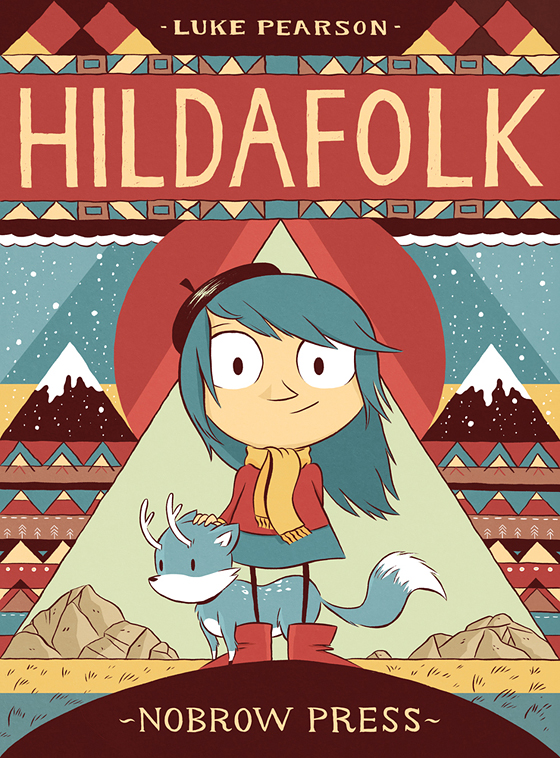
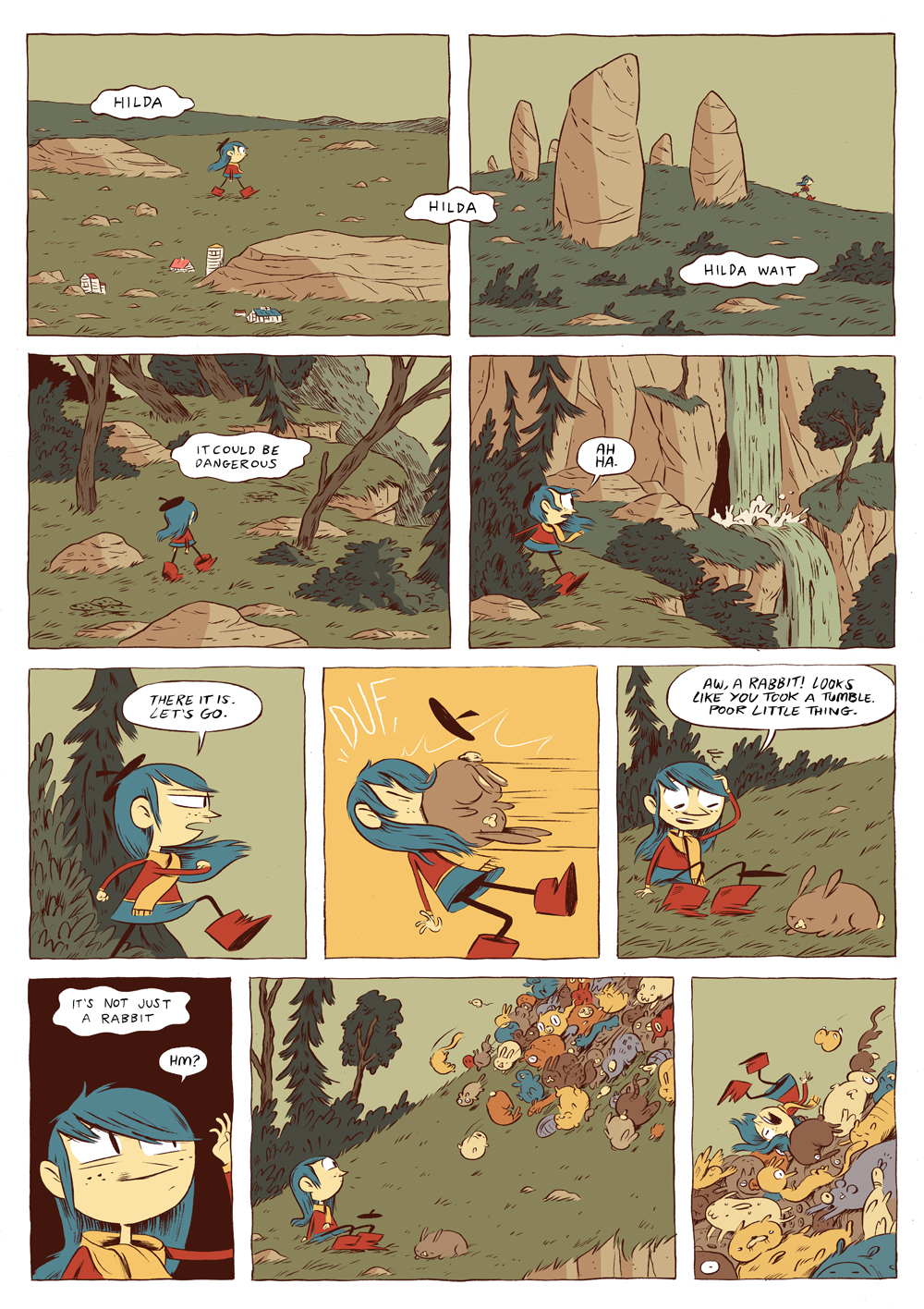
Happy to find a kids comic that adults could also love, I quickly went back and found a copy of Hildafolk (recently reissued in hardcover as Hilda and the Troll) and bought Hilda and the Bird Parade as soon as it was published. While seemingly drawing inspiration from Northern European stories and Tove Jansson’s magical Moomin books, Hilda’s world has it’s own, unique mythology — a strange wood man, truculent elves, troll rocks, sea spirits, salt lions, flying furballs, and lonely, ancient giants. The wide-eyed and blue-haired child and her mother are a curious and reassuring modern presence in this old and magical world. The fantastical is everyday to them — something to be fitted around work and school. Their problems are the problems of the real world — where to live, how to make friends with the neighbours, how to do the right thing…
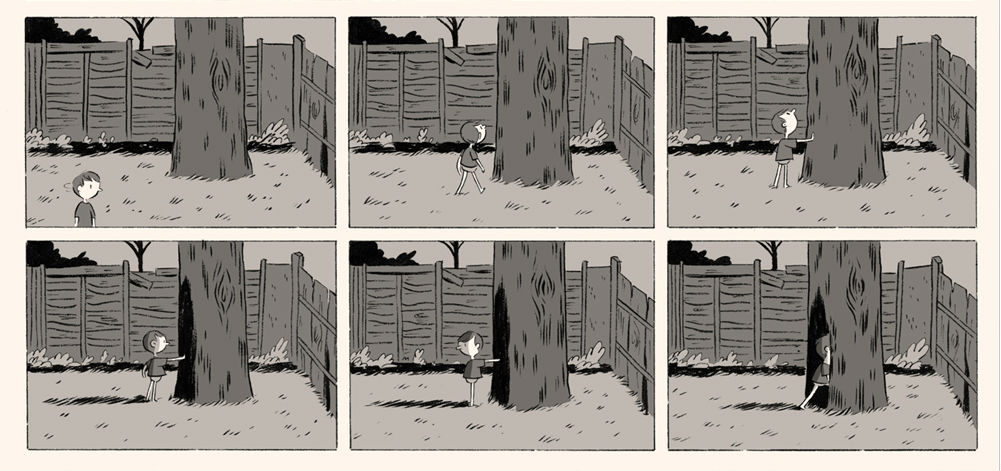
This juxtaposition of the modern and the magical is also evident in Luke’s comics for adults. But where the Hilda comics are unabashedly bright and joyful, the adult comics are filled with melancholy and sadness. Like Kevin Huizenga‘s Glenn Ganges comics, the fantastical in Luke’s adult comics is shadowy, nightmarish, and all the more unsettling for its appearance in mundane, familiar settings. The monsters and ghosts in stories like like You Mustn’t Be Afraid (included in the anthology Nobrow 7: Brave New Worlds), and the full-length graphic novel Everything We Missare the personal demons (sometimes scary, sometimes familiar) of the world weary, not the new friends of a child in unexplored territory. But for all their apparent differences, at their heart the Hilda stories and Luke’s adult comics are fundamentally about the same things: people, relationships, and about understanding one’s place in the world.

I recently spoke to Luke for the Raincoast Blog about ‘The Boy Who Drew Cats,’ his wonderful contribution to the newly published kids anthology Fairy Tale Comics. Here, we talk about his influences, his comics and his book cover illustrations. We corresponded by email.
When did you first start drawing comics?

When I was very young. I think I probably started drawing speech bubbles as soon as I figured out how to draw people. I used to draw comics about a character called Super Rabbit and show it to my grandparents.

Did you always want to be a professional cartoonist?

I probably did at some point when I was a child. It was obviously something I always thought about, but I was only really familiar with the smallest selection of comics and was entirely ignorant to how the industry worked, so it seemed like a crazy, unachievable dream to ever expect to get to that point. I eventually wound up going to university to study illustration and going into that I was prepared to basically just try and be an illustrator and it was only through the process of that that I remembered that comics were something that I still liked doing and that it was actually weird that I wouldn’t be doing them.
What was the inspiration for the Hilda books?

I draw really heavily on Scandinavian folklore (particularly Icelandic and Norwegian) for the Hilda comics. I got hooked on that initially from researching Icelandic folktales for a map project we were set at university. I really liked how strange and low-key they were. Not much happens and then the weirdest thing will happen, but it’s described really plainly and matter-of-factly and then it will end really abruptly. I tried to fuse some of the stuff I’d read for that with memories from an earlier family holiday to Norway which had a big effect on me and set a bunch of ideas in motion that for a long time I had nothing to do with.
The series has drawn comparisons to Tove Jansson beloved Moomin stories. Has Jansson been an influence on your work?

The 1990 tv series was my first exposure and I always felt like it was key in the shaping of my psyche somehow. I came relatively late to discovering the full breadth of what she did. If I had to choose to have an idol, I guess she would be it, maybe. So obviously she is a big influence on me, as a cartoonist, illustrator and a writer. I always feel a bit weird about any comparison though, because I can’t tell if it’s meant kindly or if it’s more like ‘I can see where you steal your ideas’. Hilda was designed very self consciously, at least initially, to resemble a kinder Little My.
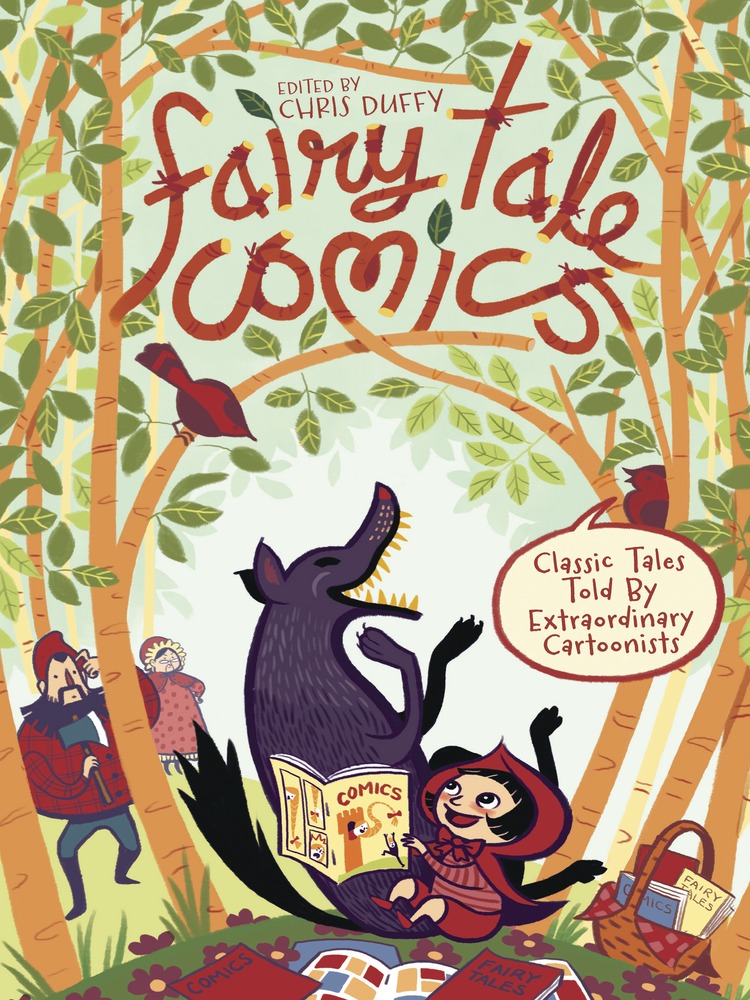
Your contribution to Fairy Tale Comics, ‘The Boy Who Drew Cats’, has a similar magical quality to Hilda. What attracted you to the story?

It was actually one of a couple of stories suggested to me by Chris Duffy, who edited the book. I liked how far removed it felt from the kind of Brothers Grimm stories that I generally think of when I think ‘fairytales’. It’s more like a horror story with a lot of weird details that seemed fun to me. I liked the Japanese setting. I was also completely unfamiliar with it so I didn’t have to feel the weight of past interpretations on me as I adapted it.
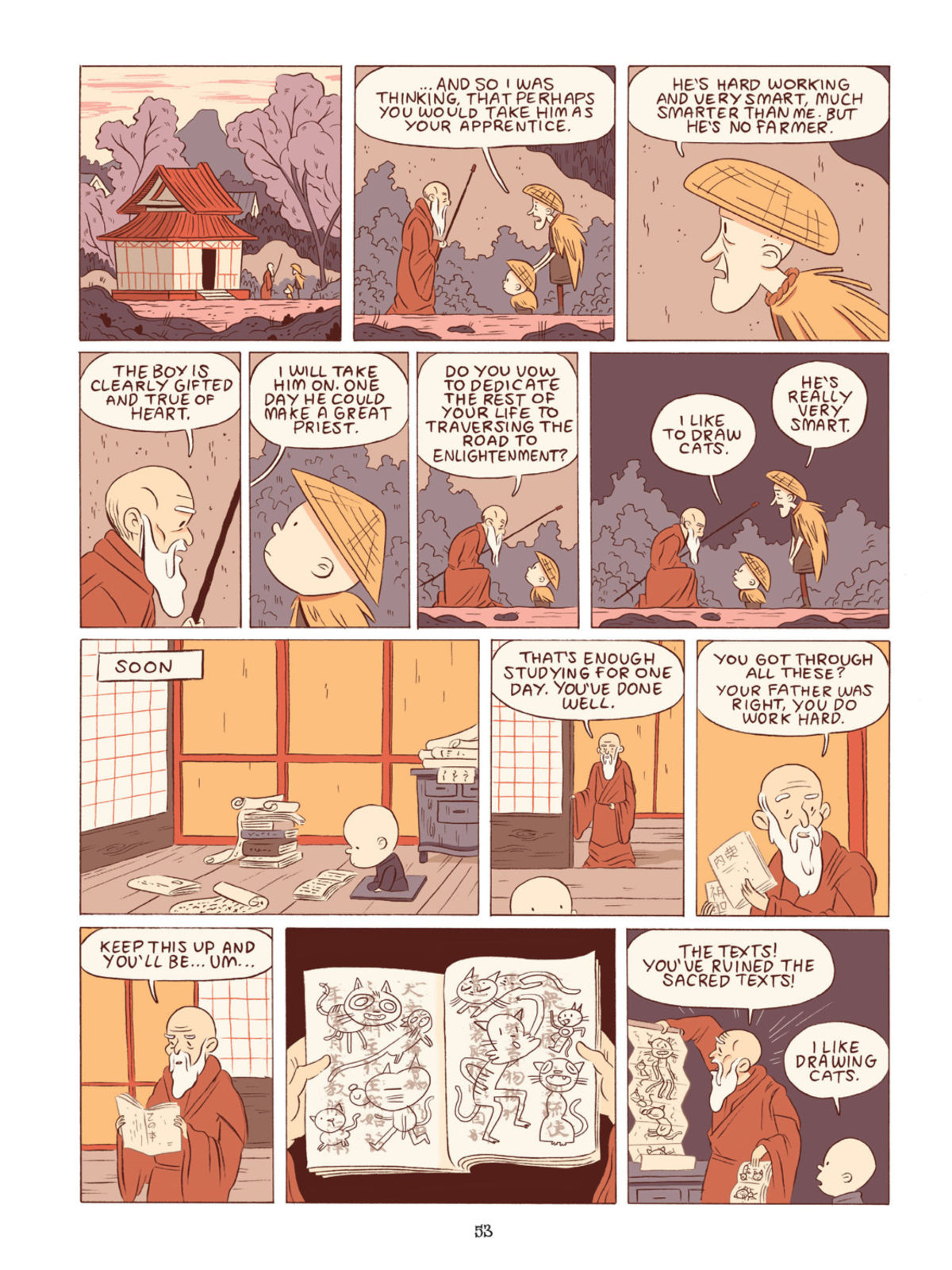
I love that the child at the centre of ‘The Boy Who Drew Cats’ looks a lot like Harold from ‘Harold and the Purple’ Crayon. Has Crockett Johnson been an influence on your work?

Actually no! I’m not super familiar with Crockett Johnson’s work at all. He actually started off as Charlie Brown and then I pulled his features around a bit.
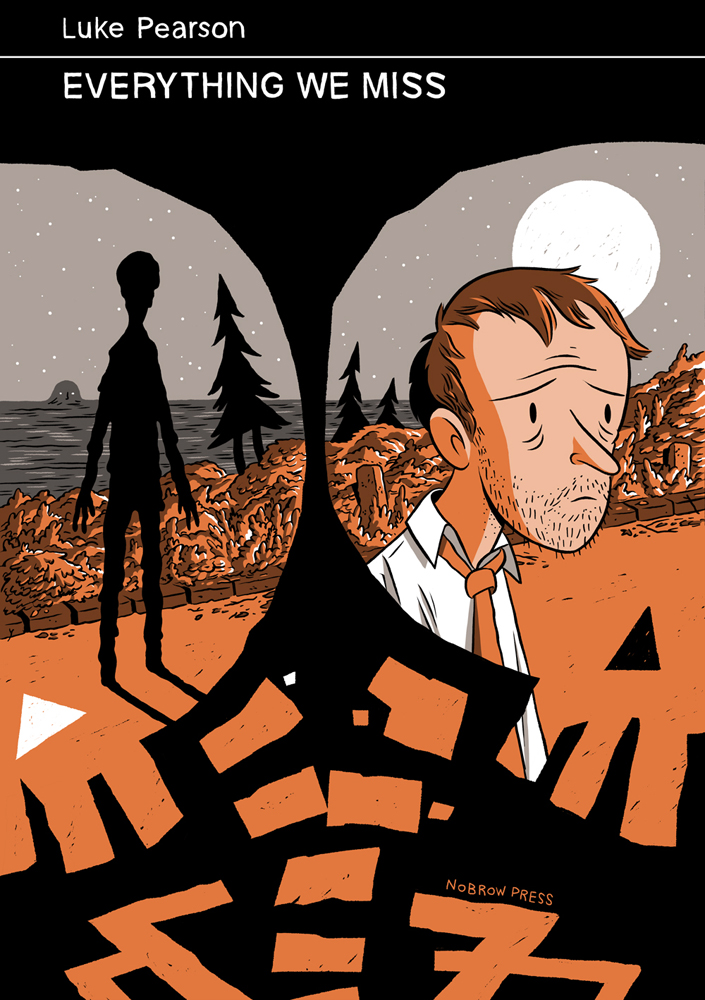
Do you approach your comics for kids differently from your adult comics?

I think this is the only kids comic I’ve done that isn’t a Hilda comic. Usually I’d point out that I draw my kids comics (Hilda) in a different style to how I tend to draw my adult stuff. I guess really I’m just talking eyes here. Hilda is full colour with big eyes and my other comics tend to be limited colour with dot eyes. This is full colour with dot eyes so I guess it sits in the middle. Less superficially, I’d say I try to be really clear in regards to storytelling and try and wrap things up neatly with my children’s work.

Briefly, could you describe your working process?

I generally draw and ink on paper, scan, colour in photoshop. I switch between brush pens, brushes, fineliners and dip pens. I don’t have any particular paper that I always use. I’m starting to enjoy occasionally inking in photoshop now, which I’m just using a wacom tablet for.
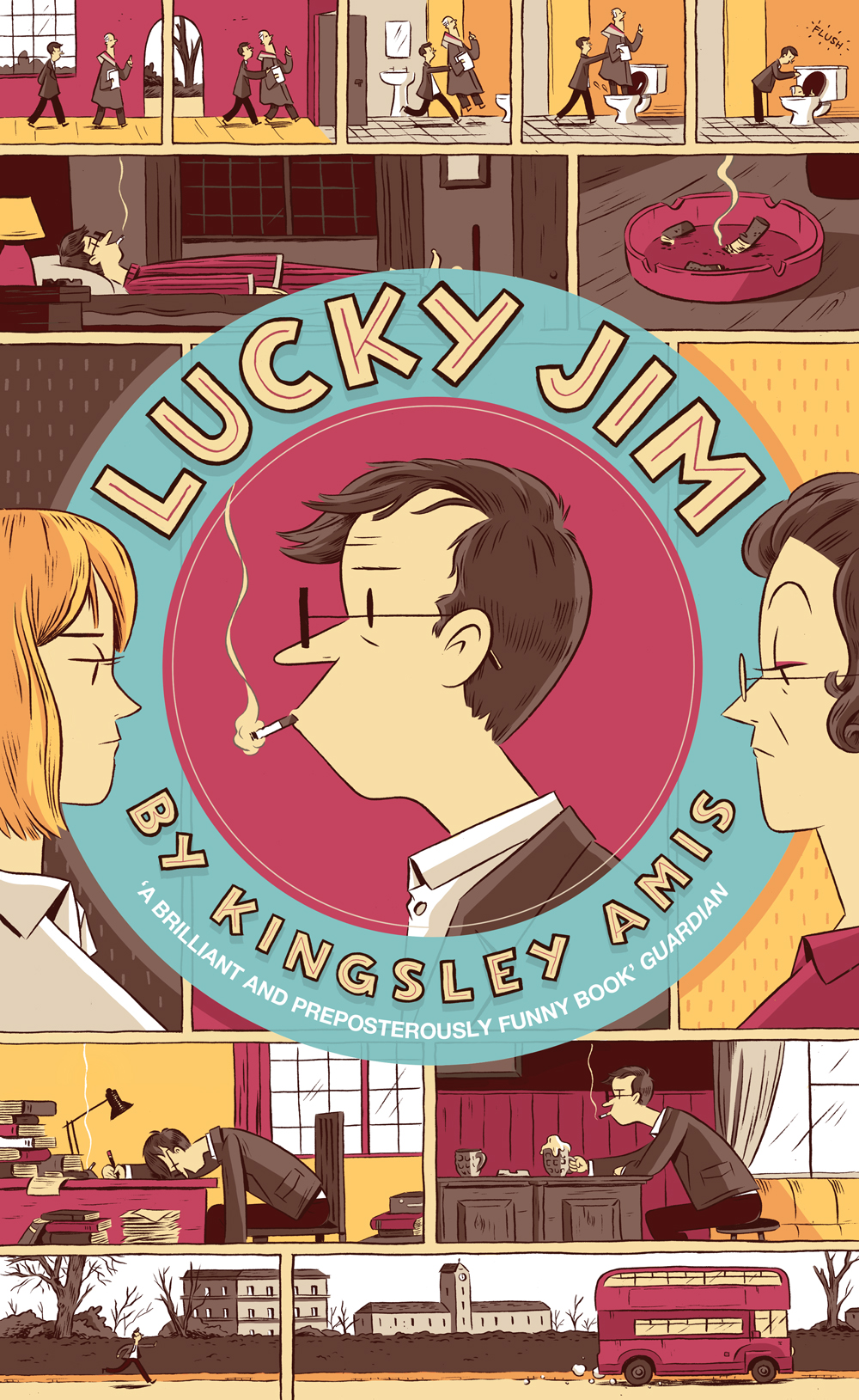
How is illustrating a book cover different from drawing comics?

Other than involving the same technical skills, it’s different in every way. I guess you are kind of trying to ‘tell a story’ with a cover, but really you just want to create an image that’s striking, intriguing, aesthetically pleasing and somehow captures the tone of the book. I’d say it feels a lot easier than a comics page, because you can just spend all your time fine tuning and perfecting this one thing until it’s ready, rather than having to worry about fifteen different images and making sure they all look good and all fit on the page and make sense when read one after the other. That said, it’s a totally different thing and requires different skills.

Are there any books you would love to illustrate?

Watership Down or something by Franz Kafka. I wouldn’t want to do them in the style I draw my comics though. My taste in book covers is not quite in sync with the ones I’ve actually drawn.

What have you read recently?

I just finished reading Tenth of December by George Saunders. I just bought a couple of collections of Michael Dougan comics which I really like.

How did you get involved with Adventure Time?

I got an email asking if I wanted to take a storyboard test, which I took and I guess they liked it. There’s no interesting story there really. I’ve boarded on two episodes so far, ‘Candy Streets’ and ‘Frost & Fire’ and should be doing some more some time soon.
Where do you look for inspiration, and who are some of your cartooning heroes?

I try to just pay attention to things and take everything in as inspiration in some way or another. But you know, I also just look at tumblr and stuff like every one else does. Some of my heroes are Tove Jansson, Chris Ware, Osamu Tezuka, Gene Deitch and Philippa Rice.

Who else do you think is doing interesting work right now?

Loads of people, but the more I list the more I feel like I’m missing out. My favourite cartoonist right now is Anatola Howard.

Have you thought about creating web-comics?

Yes, but I can’t see myself ever having a dedicated site for a specific regularly updated comic. I usually put my shorter comics online if I can and I wish I could do that more often. I can definitely see myself doing a regularly updated thing for a limited period of time at some point.

Do you worry about the future of books and print?

I can’t say it’s ever kept me up at night.

Thanks Luke!
2 Comments

Art Spiegelman: Mixing Words and Pictures

Cartoonist Art Spiegelman interviewed at NEA Arts Magazine:

It never occurred to me that comics were anything other than worthy. They were in fact among the most worthy endeavors I could imagine. They were how culture got introduced to me, more than through other media…. I always assumed they were a container big enough to hold whatever I could hold.   

Spiegelman’s somewhat delayed book Co-Mix: A Retrospective of Comics, Graphics, and Scraps will finally be widely available in September. (Full disclosure: Co-Mix is published by Drawn + Quarterly and distributed in Canada by my employers Raincoast Books)

Comments closed

Airline: Style at 30,000 Feet


In this short film, designer Keith Lovegrove discusses his book Airline: Style at 30,000 Feet and how the culture of air travel has developed from the 1920s:


(disclosure: Airline: Style at 30,000 Feet is published by Laurence King and distributed in Canada by my employer Raincoast Books)

Comments closed

Paul Pope: In Your Space


In an interview for BookExpo, cartoonist and artist Paul Pope talks about his work, influences, and, yes, his studio space:


Pope’s new book Battling Boy is out in the fall from First Second (and, for the sake of disclosure, distributed in Canada by my employer Raincoast Books). He will be at BookExpo signing galleys on May 30th.

Comments closed

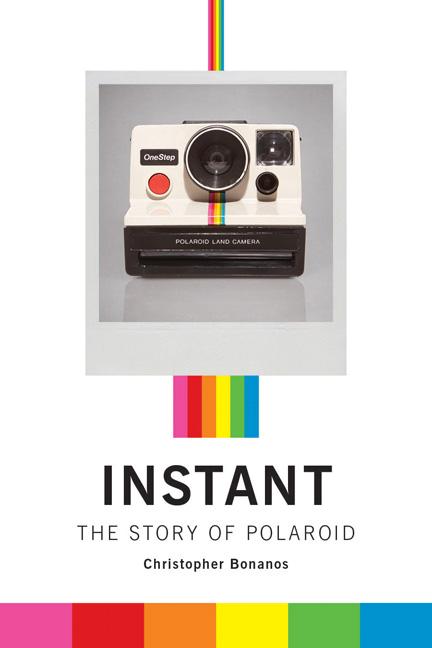
Instant: The Story of Polaroid

Led by the visionary Edwin Land, Polaroid grew from a 1937 garage start-up into a billion-dollar pop-culture phenomenon. Instant by New York magazine editor Christopher Bonanos tells the story of Land’s unique invention, Polaroid’s first instant camera, its meteoric rise in popularity and adoption by artists such as Andy Warhol, and the company’s eventual decline into bankruptcy and its unlikely resurrection in the digital age:

(I should, of course, make clear that as much as I am fascinated by Polaroid cameras, Instant is published by Princeton Architectural Press, who are also distributed in Canada by my employer Raincoast Books. But while I am on the shill, I might as well mention Balthazar Korab: Architect of Photography another P A Press titlewhich was published this earlier month. Korab was Eero Saarinen’s on-staff photographer. Fast Company has a slideshow of some of the stunning images from the book. You should take a look).

Comments closed

Midweek Miscellany

Comics critic Paul Gravett profiles cartoonist and illustrator Luke Pearson. Coincidently, Pearson has created an amazing cover for a new Penguin edition of Lucky Jim by Kingsley Amis (pictured above).

Desirable Comparisons — Part three of Mark Medley’s series on House of Anansi for The National Post:

“We want it to appear as a very serious, big, ambitious book,” Bland says. “Which is hard to do in a way that doesn’t look like other big books.”

He shows [Pasha] Malla some text-heavy covers that bring to mind the likes of David Foster Wallace, Jonathan Franzen and Jonathan Lethem.

“For Pasha, for various reasons that aren’t mine to say, these are not desirable comparisons,” Bland says. “For us, they’re very desirable comparisons.”

Thousands of folk songs and interviews recorded by Alan Lomax are now available for free online.

See also: NPR ‘Alan Lomax’s Massive Archive Goes Online

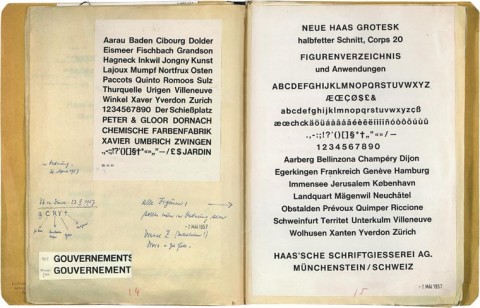
Neue Haas Grotesk — Christian Schwartz has restored the classic Swiss sans serif typeface for the digital era. There’s a history of Neue Haas Grotesk / Helvetica here.

The Books in My Head — The Quill and Quire profile Canadian independent comics publisher Drawn & Quarterly:

Part of what sets D&Q apart is its focus on high-quality design, incorporating elements like glossy embossing on covers. “We want to treat the comic as the nicest object possible,” says [creative director Tom] Devlin.

While Devlin says he collaborates with authors on design, D&Q’s willingness to cede creative control has given the company a reputation as something of an artist’s haven. Seth says he prefers to work independently, providing the publisher with camera-ready artwork for computer production. “They almost never interfere with my design plans,” he says. “I would not be the designer I am today without D&Q allowing me to make the books I see in my head.”

(Full disclosure: As mentioned in the story, D+Q are distributed in Canada by my employer Raincoast Books)

And finally…

With a retrospective at the Oakland Museum of California and the publication of The Art of Daniel Clowes: Modern Cartoonist, Carol Kino profiles Daniel Clowes for The New York Times:

“I never thought of myself as a museum artist who’s doing work for the wall,” he said. “For me the book is the final result.” He assumes that most people who see his work at the museum won’t know who he is. “But if they have some connection to something they see,” he added, “and then they read the book, the more I’ll feel like the show was a success.”

1 Comment

Raincoast Spring Books

I was out west for the Raincoast Books spring 2012 sales conference last week. Sadly I didn’t get to see much of Vancouver or catch up with half the people I meant to, but I did get to hear about a lot of great new books including one about building (and losing) an android Philip K. Dick. It’s non-fiction. Thanks Henry Holt!

Henry Holt also have a new novel by Herta Mueller, winner of the Nobel Prize in 2009, called The Hunger Angel, and the latest from John Banville’s alter-ego Benjamin Black, Vengeance.

Picador are publishing a collected edition of Edward St. Aubyn’s Patrick Melrose trilogy in January — the first time they’ve all been properly available in the US I believe — to coincide with the US edition of his new book At Last (Farrar, Strauss & Giroux). They also have a collection of essays by Siri Hustvedt, Living, Thinking, Looking.

While there was nothing on the list quite of the magnitude of this season’s long-awaited Saul Bass: A Life in Film and Design, there are a few art and design titles that caught my eye. Princeton Architectural Press are publishing Woodcut, a book of beautiful prints by artist Bryan Nash Gill (you have surely have seen his work even if you don’t recognise the name immediately) and Up on the Roof, a collection of photographs by Alex MacLean of New York’s hidden rooftop spaces. They are also publishing a long overdue paperback edition of Michael Bierut’s Seventy-Nine Short Essays on Design, and a paperback edition of the beautiful, if overlooked, Typography Sketchbooks by Steven Heller and Lita Talarico. Lawrence King are publishing a new book on the history of picture books, Children’s Picturebooks: The Art of Visual Storytelling by Martin Salisbury and Morag Styles,  and a new edition of The End of Print by David Carson.

On the comics side, Drawn & Quarterly are publishing Jerusalem: Chronicle from the Holy City, the latest travelogue from Guy Delisle who previous books include The Burma Chronicles, Pyongyang and Shenzhen. D+Q are also publishing a new edition of Chester Brown’s controversial, scatological and long out-of-print comic Ed The Happy Clown.

I’m also looking forward to finally seeing more of Baby’s in Black: Astrid Kirchherr, Stuart Sutcliffe, and The Beatles in Hamburg by Arne Bellstorf which is being published by First Second in April (I just wish they’d gone in a different direction with the typography on the cover — the German and UK edition’s  have lovely swooping hand-drawn lettering).

And lastly — because I am big nerd and recently finished his earlier book Batman Unmasked — I’m excited about Will Brooker’s Hunting the Dark Knight: Twenty-First Century Batmanwhich is being published by I. B. Tauris in July.

Now, back to the Toronto grindstone…

Comments closed

Address Change

If you’re in the habit of sending me catalogues or review copies, it is time to update your address books — please drop me a line  and I will send you the details.

And, yes, sadly I am losing the view.

Comments closed

Laurence King on the Future of Design Publishing

In a great interview for Design Observer, UK publisher Laurence King discusses the future of design publishing with Mark Lamster:

Illustrated book publishers, and in particular art publishers, need bookshops to survive, especially the increasingly rare specialist ones where there are discerning buyers who understand art, architecture and design. I think that these need to be treated with a great deal of care by publishers because all too often they serve as shop windows for Amazon. They are more important to us than sales through them indicate. It would be great if they could use their reputations and expert knowledge to become competitive with Amazon on-line. But I dread the day when art publishers have to set up loss-making showrooms to exhibit our books, just because we went on being tough with the specialist booksellers. At the same time, booksellers need to reinvent themselves quite fast, which is obviously difficult.

Laurence King published Bibliographic: 100 Classic Graphic Design Books — one of my favourite visual books from the last couple of years — in 2009, and later this fall, they’re publishing a huge, long-awaited, monograph on designer Saul Bass. Can’t wait.

Full disclosure: Laurence King is distributed in Canada by my employer Raincoast Books. 

Comments closed