15% of Immortality — Literary agent Andrew Wylie profiled in Harvard Magazine:
“The music industry did itself in by taking its profitability and allocating it to device holders. Manufacturing and distribution accounted for roughly 30 percent of the music industry’s profit. These were conveyed to Apple in the deal for iTunes. But why should someone who makes a machine—the iPod, which is the contemporary equivalent of a jukebox—take all the profit?… [Apple] couldn’t have sold the device without the music that was on it. Instead, why didn’t the music industry say to Apple, ‘We want 30 percent of your iPod sales?’ Or ‘How about paying us 100 percent of your music revenues—you keep your device profits, and give us our music profits?’ That’s not the deal that was made. And that is why the music industry hit the wall.”
“You just can’t kill us” — Publisher’s Weekly looks at the future of sales reps, “the roaches of the business”:
[T]he key to the rep business may no longer be synonymous with the key to the car. Independent reps continue to call on as many stores in their territory as possible, but they also tweet, blog, e-mail, Constant Contact, and GoToMeeting, as well as phone, to stay in touch with their accounts. “If there’s a rep who can call on an account in person, it usually benefits the account,” says Kurtis Lowe, head of group for Book Travelers West, who until last year was the only rep traveling to Alaska. Now he uses what he calls “a hybridization of personalization and electronic contact”… Reps now provide stores with a mix of sales, marketing, customer service, and pretty much whatever else is needed.
“We all have our fates” — Berlin-based Bookslut Jessa Crispin talks to Ulrich Ditzen about his late father, the author Hans Fallada, and the posthumous success of his novel Every Man Dies Alone:
It was the fashion designer Diane von Furstenberg who first approached Dennis Loy Johnson at the publisher Melville House, saying it was a shame the book had never been translated into English. “She talked to the American publisher, why didn’t he publish this book, it was a fantastic book,” Ulrich said. “She was very surprised that it had never been translated. Dennis Johnson then read it and shared her opinion and proceeded to get it translated. And it was a runaway success, to my great surprise.”
And speaking of Berlin…
Because who doesn’t want a remote-controlled mountaineer’s harness to peruse their bookshelf?Dwell features the Berlin home of typographer Erik Spiekermann and his wife, designer Susanna Dulkinys:
Inside, the house has a strikingly modern look… Which is not to say that there are no luxurious touches… [E]xtras include an ingenious, if terrifying, remote-controlled mountaineer’s harness that lifts browsers to the books on the two-story-high bookshelf (though they have to be careful not to run into the Ingo Maurer Zettel’z light). To avoid clutter, almost everything is built in, with cleverly designed zippered fabric panels on the walls working to hide plugs and cords. “It’s like creating white space,” says Dulkinys, “so you can free your mind and be creative.”
[T]he critic James Wood wrote: “José Saramago was both an avant-gardist and a traditionalist. His long blocks of unbroken prose, lacking conventional markers like paragraph breaks and quotation marks, could look forbidding and modernist; but his frequent habit of handing over the narration in his novels to a kind of ‘village chorus’ and what seem like peasant simplicities allowed Saramago great flexibility.”
On the one hand, Mr. Wood wrote, it allowed the writer to “revel in sheer storytelling,” and on the other to “undermine, ironically, the very ‘truths’ and simplicities his apparently unsophisticated narrators traded in.”
On the Record — Jamie Byng has signed a deal to create a “living archive” of Canongate Book’s records at Dundee University:
For Byng, the attraction of the project is that it will be rooted in the present as much as the past. While Canongate promises to respect the privacy of those with whom it is in contact, the overall dream is to create an archive “that will show the company as a living, organic thing. I hope it won’t just give people insights into one publishing house but publishing in general. Or even how – because I want to give access to all the financial stuff – how an independent business can grow. This business is constantly evolving, never sitting still: every day there’s a huge amount going on not just within Canongate but with all the writers we’re dealing with.”
I could go on, about how I left Publishing House X for Publishing House Y because I was still scared of Editor F, and how at Publishing House Y I managed to get three books written there working with Editor G—who assured me that he would never leave, and this was almost true, except for a brief period when he did, in fact, leave, but then he came back—and then the head of Publisher Y got fired, and eventually I left and then Editor F left, and then I was working with Publisher Z, and then the head of Publisher Z left, and then I left Publisher Z to go back to Publisher W, because the person now running it was an old friend from the magazine world, who I knew would never leave, but you might think I was exaggerating. But I’m not.
I just think it takes a couple decades to kind of clear your brain now. So it makes more sense to me that I could find my footing when I was 30 instead of when I was 19. It seems a little more clear. You know, novelists are older now. Things are happening later in people’s lives. They’re kind of living lives and then creating things about the lives they’ve lived. Rather than being an artiste at an early age and coming out with a ball of fire. That energy has been co-opted because you haven’t immunized yourself yet against media. It’s easier to get swept up things then take a couple of years to get over your, like, indie rock hangover.
Thriller writer Jason Pinter recently rattled some publishing china by suggesting that a stubborn belief that Men Don’t Read is alienating male readers:
I’m tired of people saying Men Don’t Read. Men LOVE to read… But the more publishing repeats the empty mantra that Men Don’t Read the less they’re going to try to appeal to men, which is where this vicious cycle begins.
Publish more books for men and boys. Trust editors who try to buy these books, and work on the marketing campaigns to hit those audiences. The readers are there, waiting, eager just under the surface… They’ve been alienated for a long time and might need to be roused from their slumber. But as I’ve always said the biggest problems facing the publishing industry are not ebooks, or returns, but the number of people reading. This is a way to bring back a lot of readers who have essentially been forgotten about.
Pinter is right in a sense. The idea that men don’t read books is a glib generalization and publishers really should be worried about literacy and declining readerships. But are men really turning away from reading because the book trade isn’t trying to reach them?
The scandal engulfing former Penguin Canada CEO David Davidar is a prickly reminder that the upper echelon of publishing is still largely a boy’s club. And even if you accept Pinter’s assertion that “that most editorial meetings tend to be dominated by women”, Rebecca Smart, Managing Director at Osprey Publishing, ably demonstrates that women can publish effectively for a predominantly male readership.
And even if you ignore all the books on football mentioned last week (not to mention the endless number of books on baseball and cricket), and the entire output of writers like Cormac McCarthy, George Pelecanos and the late (but still in print) Patrick O’Brian, the New York Times best seller lists reveal more than a few new books have been successfully published for men.
The perception that publishers are marginalizing men is just as much an illusion as Men Don’t Read. At least if men read the NY Times and like books on economics, war and expletives. (And who doesn’t?)
But this is, of course, completely subjective. The New York Times bestsellers — war, history, politics, and angry (funny) old men — may not be the kind of books Pinter had in mind. I certainly didn’t read the book that caused Pinter so much angst, A Lion’s Tale by pro-wrestler Chris Jericho, but then I don’t read much Roth, Amis, or Coetzee either, though I suppose plenty of men do. Perhaps the real problem is publishing along stereotypical gender lines? Not all men (or women) want to read the same books…
I was thinking about this because of two books I finished recently: War by Sebastian Junger (Twelve 2010) and Colony by Hugo Wilcken (Harper Perennial, 2007). Both are books by men about men — and I enjoyed them both — but otherwise they have almost nothing in common.
Full of piss, vinegar, and shit blowing up, War is a nonfiction account of Junger’s time embedded with the Second Platoon of Battle Company in the Korengal Valley, eastern Afghanistan.
At one level, Junger’s book is a chronicle of Second Platoon’s days. He takes us up the mountains, along the valley floor, on helo-lifts, into firefights. We sit with the men in their bunks — infested with fleas and tarantulas — and we listen to their low-grade (and sometimes hilarious) philosophizing as they pass the hours… But Junger is aiming for more than just a boots-on-the-ground narrative of the travails of American fighting men. As the book’s grandiose title suggests… “War” strives to offer not just a picture of American fighting men but a discourse on the nature of war itself.
With it’s acronyms, hot military hardwareand bunker philosophizing War is, without question, a compelling read. But it is also a deeply troubling book. Junger’s intimate dependence on this closely knit platoon clearly affects his journalistic perspective, and Junger’s narcissism aside, I was left wondering whether there is a psychological condition in embedded journalists similar to Stockholm Syndrome.
Lewis Manalo, a former sapper in 82nd Airborne Division, describes Junger as a “war tourist” in a scathing review of the book for Publishing Perspectives:
[W]hat a fantasy it is. All the thrill of being in combat with none of the responsibility of knowing what to do. He endows the different engagements with the excitement and clarity of a Hollywood action film… As Junger paints them, these fights are where all those big words like “heroism” and “courage” and “sacrifice” come into play, where men achieve amazing things and where they die dramatic deaths. Over and over, Junger and the men he depicts rave about how exciting battle is. In Junger’s world, war is a glorious thing where everyone should want to be.
“Fantasy” is an interesting choice of words. Certainly, the phrase ‘war-porn’ came to mind when I was reading it. Perhaps not surprisingly then, Junger’s experiences in Korengal are also the basis for a feature-length film called Restrepo co-directed with photographer/filmmaker Tim Hetherington:
If War is a dirty nonfiction hypemachine, Colony by Hugo Wilcken is a beautifully constructed — if largely ignored — literary novel.
With echoes of Conrad and Camus, Colony is a sophisticated post-modern adventure story. Sabir — a war veteran and petty criminal — finds himself on a boat to a brutal penal colony in French Guiana. He escapes the camp, but as his plans unravel, the book takes an unexpected tack, throwing the previous narrative into doubt. The past, present, and future mix in memory and imagination.
John Self, who has long championed the novel, had this to say about it:
The book’s sometimes elusive nature seems to be reflected in the references to Poe’s Narrative of Arthur Gordon Pym. But what impresses most is Wilcken’s unwillingness to try to impress the reader: the prose is unfussy, the scenes uncluttered. There is no ‘fine writing’. Instead, there is very fine writing indeed.
The theme of Colony is escape: from captivity to freedom, and vice versa; from reality into dreams and memories; from one identity to another; from life to elsewhere.
Colony is simply an extraordinary book. It also feels like an old-fashioned one, especially compared to War‘sheadymultimedia blend of insider reportage and violence stuck together by hasty research and memoir. My sense is that itis War‘s template that will be imitated by publishers trying to capture Pinter’s elusive male reader. But personally it will be Colony that endures, and lives long in my mind.
The past, present, and future mix in memory and imagination. The prose is simple and uncluttered. Familiar characters become surprising and complex.
A nice post about the US cover for The Girl With Dragon Tattoo — designed by Peter Mendelsund — and why it is so different from all international versions at the Knopf website:
[Peter] decided to shift away from the more traditional murder-mystery vibe of the foreign editions, instead providing a neon yellow in-your-face punch, a jolt of energy comparable to what Salander brings to the narrative… Knopf’s twist was achieved with the subtle interaction of the Trade Gothic type and a great piece of art in yellow and orange Day-Glo inks. Add a dash of cyan (shades of colors in the blue/green spectrum) to create the green dragon lurking in the background and a tablespoon of black for the title, flap copy, and Stieg’s photo, and voilà!
HP Sauce — Anis Shivani interviews Calvert Morgan, vice president and editorial director of Harper Perennial, for the Huffington Post:
[T]here’s an intensity of dialogue about writing online–and about fiction in particular–that was not happening ten years ago. A lot of the writers I work with are finding like-minded peers and readers, having a forum for discussion now that simply wasn’t available when the only venues you had to get published were little magazines that were distributed to a handful of shops across the country in physical form. We’re passionate proponents of the physical book and we don’t think it’s ever going to go away, but we also know that these online forums… are promoting the interest that these writers have in each other and in fiction generally in a way that can only be good for contemporary writing.
Multitasking makes us feel efficient, but it actually slows down our thinking. Our brains can’t handle more than one higher cognitive function at a time. We may think we’re multitasking, but in fact we’re switchtasking, toggling between one task and another. The phone, the email, the phone, back to the email. And each time you switch, there’s a few milliseconds of start-up cost. The neurons need time to rev up.Apparently, multitasking costs the US economy $650bn a year. I’m starting to think this isn’t a problem along the lines of love handles or bad mobile phone service. This is the 11th Plague.
My first day without multitasking… My brain is not cooperating. What the hell is going on? it whines. Where’s my damned stimulation? I sit at my desk and read the newspaper. That’s all. Without checking my emails or eating breakfast at the same time.
This is awful. I feel as if my brain has entered a school zone and has to slow down to 25mph. My plan is to leave my BlackBerry off until noon. I break down at 11.30am.
Typewriter repair may be a dying art, but it is not a dying business. All three of the shops… seemed to generate a comfortable living for their respective owners, supported by an eclectic clientele of collectors, design enthusiasts, prison inmates and tweenage girls.
In every case, however, the technicians in charge say that there won’t be a next generation to take their places. If they are right, as time goes on fewer and fewer of the old manual machines will remain in working order. That said, crops of amateur enthusiasts have sprung up to save other obsolete technologies from disappearing entirely…
For many people, the limitations of early writing machines, with their mono-font and unforgiving keyboards, are part of their charm. That bodes well for the future of typewriters, even after the last professional repairman hangs up his apron.
It’s clear that publishers must move faster to establish our compelling and useful role in the modern life of reading. While acquiring new expertise, we must assert the best of our traditional strengths; providing capital (in the form of advance payments), offering editorial expertise, and creating a readership by designing, creating, storing, promoting and selling the works of writers. But that’s not enough. Publishers also have to explain what value they are bringing to the relationship between writers and readers, a conversation that is made far more transparent through digital media and digital texts.
Page goes on to list what he sees as guiding principles for publishing going forward. These include retaining print and digital rights, reviewing royalties, flexible pricing, connecting to readers, and excellent metadata. He concludes:
The iPad launch is not the moment, but that’s because the moment has passed. We need to work with authors in new ways, and keep pace with reading’s evolution, or better still become agents of change ourselves.
It’s a must-read. If you work in publishing, send it to your CEO.
Caustic Soda — James Morrison AKA Caustic Cover Critic talks about five great covers (and a few terrible ones) at Flavorwire. The great ones include Charlotte Strick‘s design for 2666 by Roberto Bolaño. Charlotte talked about this cover and boxed set with FaceOut Books a while back.
We are already in a world where most books are incomprehensible to most people –- whether that be content comprehension or the question “why would anyone publish that?” — but we don’t notice that anymore.
What has happened with the web is that there is so much content that we have broken all the old filters. And for now, we are experiencing it as the completely overburdened and chaotic environment that it is. But that doesn’t mean people should stop publishing online. It just means that we need better filters. Because in fact, the over-publishing of content has been a normal problem since the invention of the printing press. It’s just that we had ways of ignoring things we didn’t care about. The problem isn’t getting people to shut up, the problem is creating filters to help people find their way to things they want.
And finally…
I’m probably the last person on the interwebs to discover Erik Heywood’s blog on books, bookshelves, bookstores, and libraries (etc.), but it really is quite lovely (via The Silver Lining).
An Open Book-Publishing Platform — Book Oven’s Hugh McGuire on WordPress as a book publishing platform. It’s an intriguing idea even if don’t accept Hugh’s belief that books and the web will be indistinguishable in a matter of years. And, to judge by the comments, it something a lot of people have been working on.
Afterlife — With the US publication of The Girl Who Kicked The Hornet’s Nest, Charles McGrath looks at Steig Larsson, the late author of the Millennium series, and his unhappy legacy in the New York Times. Sarah Weinman has more on Larsson and the new book (of course)…
Enticement and Exegesis — Knopf designer Peter Mendelsund (who, incidentally, designed the covers for US editions of the Millennium books) on author David Foster Wallace, Infinite Jest, and book cover design:
Book jacket design should concern itself with, in my estimation, equal parts enticement (“Come buy this book”) and exegesis (“This is what this book is about, more or less.”) A good cover doesn’t let one category trump the other. A good cover should not resort to cliché in order to accomplish either. But the real key here, in both categories (enticement and exegesis) is the designer’s ability to work the sweet-spot between giving-away-the-farm, and deliberate obfuscation.
Book jackets that tell you too much, suck. Book jackets that try to change the subject also suck, and are furthermore, too easy.
My interview with Peter about Tom McCarthy’s book “C” is here.
I’ve always agreed with the view that – with science fiction – its predictive powers were the least important or least relevant aspect of its public profile. I always loved stuff like Orwell’s 1984, where he explicitly said “It’s 1948, reversed.” I liked writers that were doing allegorical, satirical, fantastical versions of everyday life.
That suggests that Dick’s work is dated to the ’60s and ’70s. And I thought of him very much in this framework, and not as an extrapolative writer… But I think that Dick saw the makings of the contemporary reality we experience so profoundly.
As I’ve mentioned previously, I wanted to like Chronic City more than I did. Dan Green has a comprehensive critique of the book (and Lethem’s post-modernism) at his blog The Reading Experience. Dan is, perhaps, less forgiving than I would be, but definitely smarter…
[W]hile Lethem’s work is consistent with much postmodern fiction in that it is essentially comic, the comedy of a novel like Chronic City is indeed much too gentle, too shy of the more corrosive humor of much postmodern comedy. It isn’t so much that the novel is short on “satiric bite” as that ultimately it is merely satire, a relatively mild critique of post-9/11 New York under Bloomberg, which has become inhospitable to its misfits and nonconformists.
What is it to be a human being, he wondered? Why do other people behave as they do? Why do I behave as I do? He watched his neighbours, his colleagues, even his cat and dog, and looked deeply into himself as well. He tried to record what it felt like to be angry, or exhilarated, or vain, or bad-tempered, or embarrassed, or lustful. Or to drift in and out of consciousness, in a half-dream. Or to feel bored with your responsibilities. Or to love someone. Or to have a brilliant idea… but forget it before you can get back to write it down…
And also in The Guardian…
Alternatives — Tom Lamont asks designers why book covers look different from territory to territory:
Why don’t publishers, then, replicate covers that have been a success abroad? “It does happen but it’s quite rare,” says [Julian] Humphries [art director, Fourth Estate]. Megan Wilson, an art director at Knopf Doubleday in New York, says that American designers are sometimes asked to look at British jackets, “as an example of something that works or doesn’t, but we are rarely asked to use them directly”. [Nathan] Burton tries to avoid looking at alternative covers if he’s working on a book that’s already been published. “It can take you off on odd tangents. It’s always best to work from fresh.”
Great. But, please, can we declare a journalistic moratorium on “judge a book by its cover” headlines?
A Question of Audience — With Julie Bosman taking over the publishing beat at the NY Times from Motoko Rich, Sarah Weinman breaks down what kinds of book and publishing stories appear in North American newspapers:
I’ve become increasingly aware the longer I’ve written about publishing for a business news site that some stories that are big news within the industry carry little relevance outside of publishing circles. That means certain news items I pay attention to and analyze to death via Twitter… won’t merit larger stories. It also means that certain topics that are discussed endlessly in the publishing bubble (especially the digerati-populated one), while relevant to the outside world, have to be written about in a way that might come off as eye-rolling rehash.
I think Sarah’s being charitable here. Many of the topics discussed endlessly in the publishing bubble and the Twittercosm have absolutely no relevance to, or perceivable impact on, the outside world…
“I don’t have a complex mind,” Harper said, and if this assertion seems disarming coming from a designer of his sophistication, the thought is sincere… “With a computer there are too many choices, and I always liked working within limits,” he said. “You know, if you look at Mozart, who had this strict classical framework — an allegro, an andante, a scherzo and a finale — you see that within that formula, he got results he might never have gotten if he had all the options in the world.”
There is more on Harper in a Metropolis Magazine profile from 2001, and a monograph of his paper sculptures by Michael Maharam is apparently on the way (if anyone has details please let me know).
Hip Flask — An interesting interview with the folks behind 48 Hour Magazineat Gizmodo. There’s some great stuff in the piece, and it’s worth reading from beginning to end, but I particularly liked this insight from Derek Powazek (founder of Fray, co-founder of JPG Magazine, and consultant at MagCloud*):
Print is, at some point, done. However imperfect. It has a rhythm of creation, editing, and publishing. And when it’s done, everyone involved can sit back, look at the thing we made, and feel accomplished.
The web is never done. It’s in a constant state of flux. That’s not good or bad, it just is.
Powazek is also the guy behind Strange Light a print-on-demand magazine that collected photographs of the Australian dust storm that covered New South Wales and Queensland in September last year. He has interesting post about the creation of the magazine on his blog.
No. — A Tumblr that’s apparently devoted to found-type numerals.
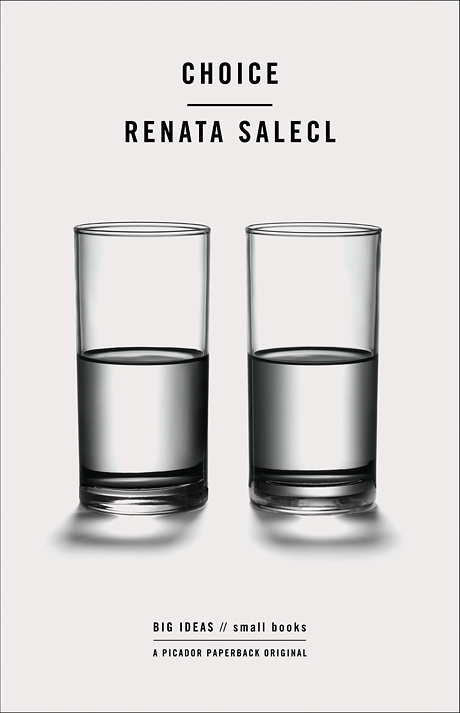
Two stunningly beautiful, and sadly unused, designs by Henry Sene Yene with photographs by Jon Shireman for Picador’s BIG IDEAS // small books series. Picador decided not to publish the book. You can see Henry’s other designs for the series here.
While the series hasn’t published a bestseller, and is unlikely to do so, readers care about NYRB Classics and are loyal to it. This is a monumental accomplishment at a moment when cultural loyalty is extremely fickle. Frank and Kramer did it using a frills-free, deceptively simple editorial strategy: give readers good books consistently, respect them, engage them, and they’ll stick with you.
The Ultimate Online Bookclub — A little late to the party, but Viv Groskop discovers Twitter is the place to share book opinions and gossip (and stalk authors apparently) in The Telegraph (via Source Books publisher Dominique Raccah on Twitter of course!):
Twitter allows you to discuss books and authors with other fans online without having to set up a blog or invent some dodgy chat room identity. If you “follow” the right people… you soon discover that Twitter brings you compelling snippets from publicists, book fanatics, bloggers and authors themselves. With reading recommendations galore, it is the book addict’s paradise.
The New Narrative — Creative Nonfiction magazine is seeking interesting stand-alone narrative nonfiction blog posts (2000 words or less) to reprint in their next issue. Nominate something from your own blog, or from a friend’s. Closing date is this Monday (April 26, 2010).
And finally…
A Fan of the Form — Author and publisher Dave Eggers talks to On The Media about the McSweeney’s newspaper Panorama:
I like the curatorial, the calmness, the authority of a daily paper. But I do think that it’s a time to make the paper form more robust and more surprising and beautiful and expansive. People still want to read long form literary journals and nonfiction, etc., and so why can’t the print medium do that and be that home and leave the Internet to do the more quick thinking and quick reacting things?
 Edward Gorey book cover set on Flickr (via This Isn’t Happiness).
 Because who doesn’t want a remote-controlled mountaineer’s harness to peruse their bookshelf? Dwell features the Berlin home of typographer Erik Spiekermann and his wife, designer Susanna Dulkinys: